
Reviewed · MARDI HIMAL TREKS
4 Days Mardi Himal Base Camp Trek from Pokhara
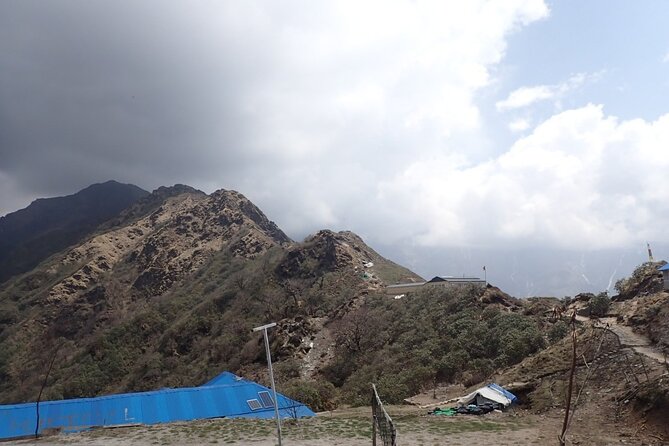
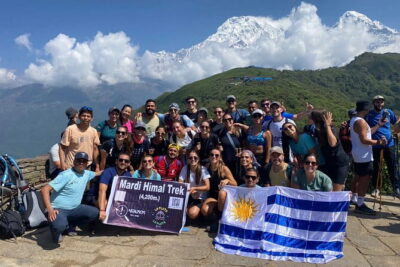
Mardi Himal gives you a remarkably quick route from Pokhara to high Himalayan views. In four days, you move from terraced fields and rhododendron forest to Mardi Himal Base Camp at about 4,500 meters, with Machhapuchhre and the Annapurna peaks in view.
I like the peaceful trail and the small-community feel of the teahouses. I also like that the price includes transport, lodging, a guide, and both trekking permits. The main catch is the pace: four days means steep ups and downs, and the final altitude gain is not a soft introduction to mountain trekking.
Key points to know
- A short route to serious altitude: You reach about 4,500 meters in only four days, so fitness and pacing matter.
- Quiet forest walking: The route passes through terraced farmland, rhododendron forest, and thick evergreen woodland.
- Strong guide feedback: Guides Amrit and Biru receive repeated praise for safety, pacing, friendliness, and explanations of Nepali culture.
- Private trip format: Only your group participates, while transportation to and from the trail uses a shared jeep.
- Good coverage for $299: Lodging, guide service, permits, first aid, pickup, drop-off, and trail transport are included.
- A sunrise-focused trek: An early start for Base Camp is built around mountain views in the first light.
Why Mardi Himal works as a four-day Himalayan trek
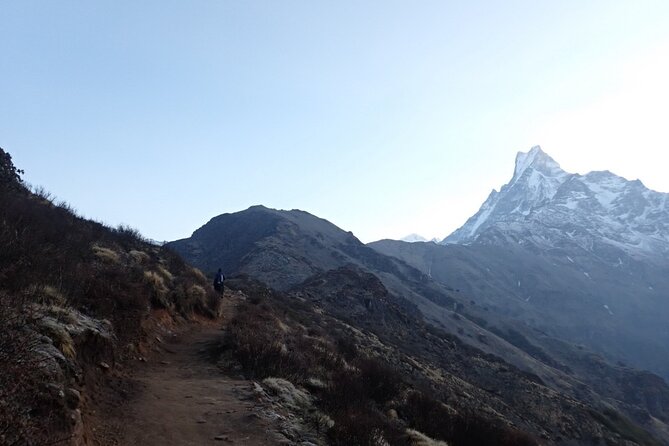
The appeal is simple: you get a high mountain finish without committing to a long Annapurna circuit or a much longer base-camp journey. Starting from Pokhara, this route moves quickly into the hills, then through forest and ridge country toward Mardi Himal.
That short schedule is both the strength and the warning. You spend less time arranging transport and accommodation, but you have fewer spare hours for tired legs, poor weather, or a slower pace. I would think of this as a compact mountain trek, not a casual walk with a few scenic stops.
The route reaches approximately 4,500 meters. At that height, the physical demands are real even though the trip lasts only four days. You need a moderate fitness level, and you should be comfortable walking uphill and downhill on rough mountain trails for several hours a day.
The private format is useful for pacing. You are not tied to a large group moving at one fixed speed. If you book with Amrit or Biru, the available feedback points to guides who pay attention to safety, explain local life, and keep the walk moving without turning it into a race.
More Mardi Himal Treks in Pokhara:
- Pokhara: 4-Day Mardi Himal Trek
★ 4.9 · 59 reviews - Private Mardi Himal Trek
★ 5.0 · 42 reviews - From Pokhara: 4-Day Mardi Himal Base Camp Trek
★ 4.9 · 31 reviews
Day 1: Terraced fields and the forest around Forest Camp
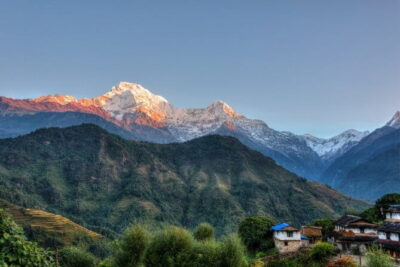
The opening day takes about six hours and leads gradually through terraced farmland and rhododendron forest. This is a pleasant way to begin because the scenery changes in stages. You start with cultivated hillsides, then enter thicker woodland as the trail climbs.
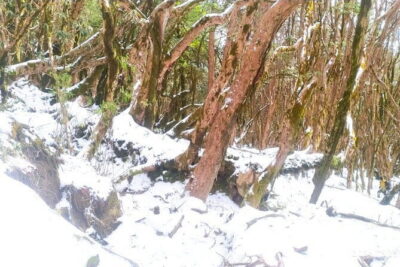
The forest is one of Mardi Himal’s great pleasures. Instead of walking beside a busy road for most of the day, you spend much of the route among trees and mountain vegetation. In season, rhododendrons add color, though the route’s appeal does not depend on flowers alone. The shade and quiet give the first day a calm rhythm.
Australian Camp is noted as a fine viewpoint along the way. It adds an early chance to look across the mountain country before the trek becomes more remote. The exact sequence of stops can depend on the trail and local arrangements, but the day is built around a gradual climb toward Forest Camp.
Forest Camp is your first overnight area. Accommodation is in a teahouse or guesthouse, which means a simple mountain stay rather than a hotel-style room. You should value the location and local hospitality more than comfort extras. The benefit is that your overnight stay supports small mountain businesses and lets you spend the evening close to the trail.
The six-hour estimate is manageable for a reasonably fit walker, but do not read relatively effortless as flat. You will still walk on a mountain trail, with regular uphill sections and later downhill work. Good shoes and a light pack will make a noticeable difference.
Day 2: Evergreen forest and the climb toward higher ridges
Day two also lasts about six hours. The route continues through dense forest, with evergreen growth covering much of the trail. This section is less about one dramatic viewpoint and more about the gradual change in altitude and atmosphere.
The forest provides shade, but it can also make the day feel repetitive if you expect constant wide mountain views. I see that as a fair trade. The trees offer a quieter walk and a sense of being away from the busier trekking corridors. You are moving through a living mountain environment rather than simply checking off viewpoints.
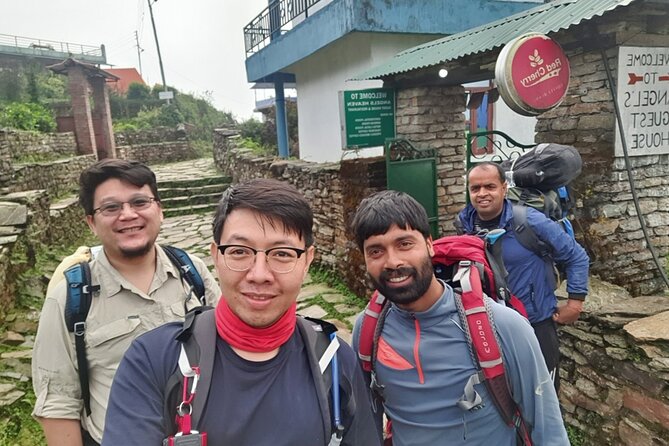
The trail cuts through thick woodland as it rises toward the higher parts of the Mardi Himal route. Your guide becomes especially useful here. Guides such as Amrit and Biru are praised for keeping a steady pace and explaining mountain culture and Nepali life along the way. Those conversations can give a simple forest walk more meaning.
Accommodation remains in a teahouse or guesthouse. The tour includes the lodging, but personal spending is not included, so you should plan for your own additional costs. The supplied details do not specify meals as part of the package, so confirm meal arrangements and budget separately before setting off.
This is also the day when you should pay attention to how your body handles the climb. The next morning begins early and takes you higher. Drink regularly, walk at a controlled pace, and tell your guide if you feel unwell. The private setup gives you a better chance of adjusting the pace than a large fixed group would.
Day 3: Sunrise at Mardi Himal Base Camp
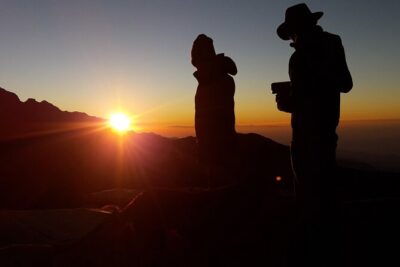
Day three is the high point of the trip, both literally and visually. The early morning start is designed to reach Mardi Himal Base Camp around sunrise. The walk to Base Camp takes about five hours, followed by roughly two hours at Badal Danda.
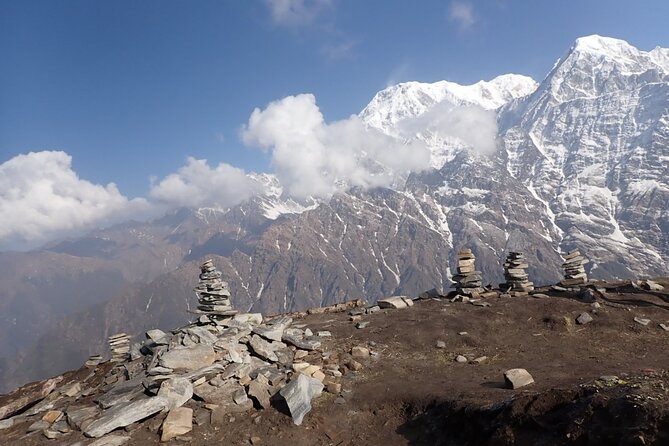
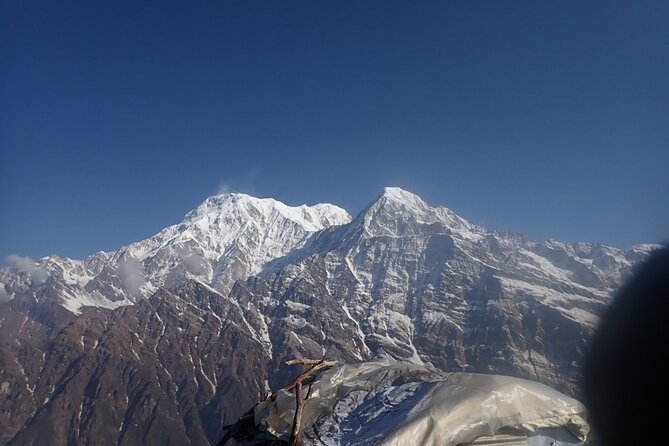
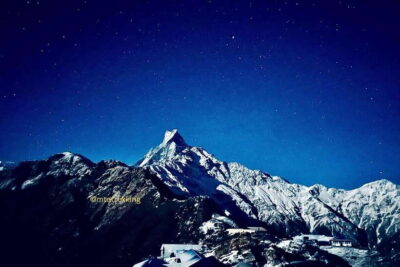
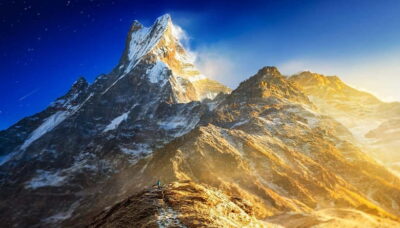
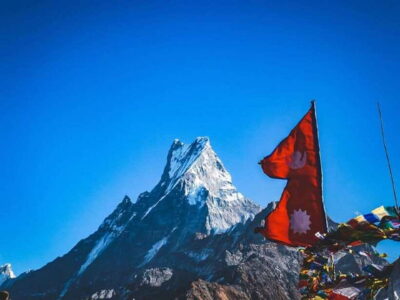
The early alarm is not just a scheduling nuisance. Morning light is the reason for the start. From the Base Camp area, you can expect a broad view toward Annapurna’s peaks, with Machhapuchhre among the major mountain sights associated with this route.
This is the day that rewards the effort of the forest walking. The route opens up as you reach the higher ridges, replacing enclosed woodland with big Himalayan views. The contrast is part of the charm: one day you are under trees, and soon after you are facing snow peaks and open mountain space.
At roughly 4,500 meters, Base Camp is not a place to treat casually. The altitude can make a five-hour walk feel harder than the distance suggests. Your guide’s role matters here, particularly for keeping the group together and watching for signs that someone is struggling.
Badal Danda is another major viewpoint and a highlight for sunrise photography. The information provided describes it as a place with a sweeping view of the Annapurna peaks and one of the most memorable sunrise locations on the route. Even if cloud blocks the peaks, the ridge setting can still make the stop worthwhile, but mountain weather is never guaranteed.
The two-hour stay at Badal Danda gives you time to take in the view before the descent. Do not spend all your energy rushing for photographs. You still have a demanding fourth day, and the route down to Sidhing includes steep sections.
A few more Pokhara trips to weigh up
- Poon hill Trek 3 days
★ 5.0 · 176 reviews - Trekking in Annapurna/Langtang/Everest/Upper Mustang regions
★ 5.0 · 161 reviews - Pokhara: 4-Day Ghorepani, Poonhill & Ghandruk Mountain Trek
★ 5.0 · 132 reviews - Ghorepani – Poon Hill Trek 3N-4D
★ 5.0 · 125 reviews
Day 4: The steep descent from Badal Danda to Pokhara
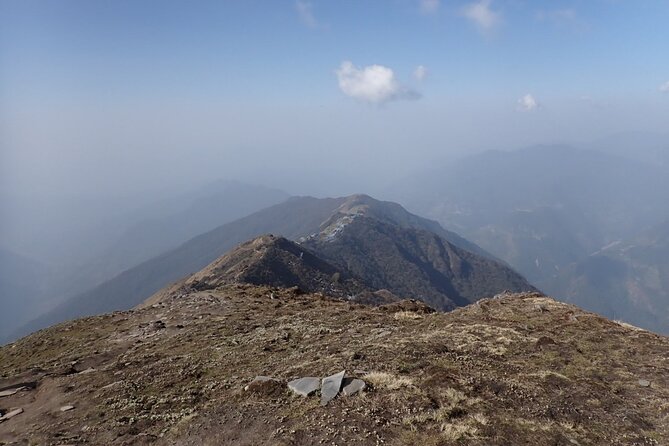
The final day lasts about seven hours and follows the route toward Sidhing before returning to Lakeside in Pokhara. From Badal Danda, the trail turns through thick forest at the base of Machhapuchhre.
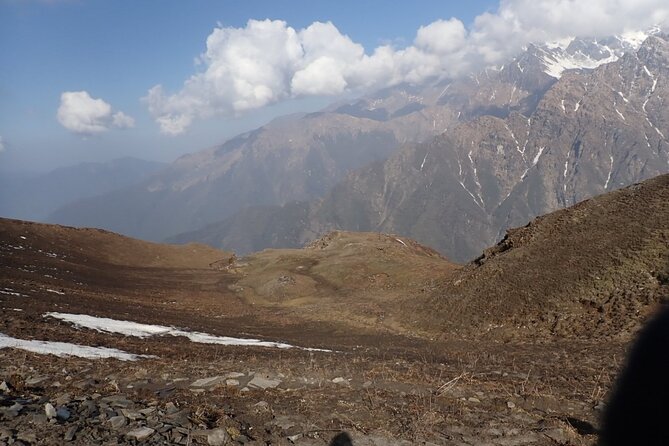
Downhill walking can sound easy after a high-altitude climb, but it often tests your knees and balance more than an ascent. The descent is described as steeper and more difficult in places, so trekking poles may be worth bringing if you use them. The mountain trail is the focus here, not a gentle stroll back to town.
The forest gives you a different view of the route than you had on the way up. You can notice how quickly the mountain setting changes as you lose altitude. The finish at Lakeside provides a clear contrast with the teahouse nights and remote trail sections.
Transportation is part of the package, including hotel pickup and drop-off and shared jeep transport to and from the starting point. Since the jeep is shared, you should not expect a private vehicle for every road transfer, even though the trek itself is described as private for your group.
What the $299 price really covers
At $299 per person, the package offers solid practical value if you want a guided trek with most of the essential arrangements handled. The price includes:
- Hotel pickup and drop-off
- A professional English-speaking guide
- Teahouse or guesthouse accommodation
- Shared jeep transport to and from the trail
- Annapurna Conservation Area Permit
- TIMS Card
- A first aid kit carried by the guide
- A private trip for your group
Permits alone are an important part of the price because you do not need to arrange the Annapurna Conservation Area Permit or TIMS Card yourself. Transport also matters. Getting from Pokhara to the trailhead and back can be inconvenient if you have to organize each vehicle separately.
The value is less clear if you want a fully inclusive package. Personal expenses are excluded, and the supplied details do not say that meals are included. Ask about food costs, drinks, extra charging fees, and any other small mountain expenses before departure.
You also need to supply a digital passport copy and a passport-size photo before the trek so the permits can be issued. That is a minor administrative task, but forgetting it could create trouble close to the start date.
Teahouse nights and the local side of the route
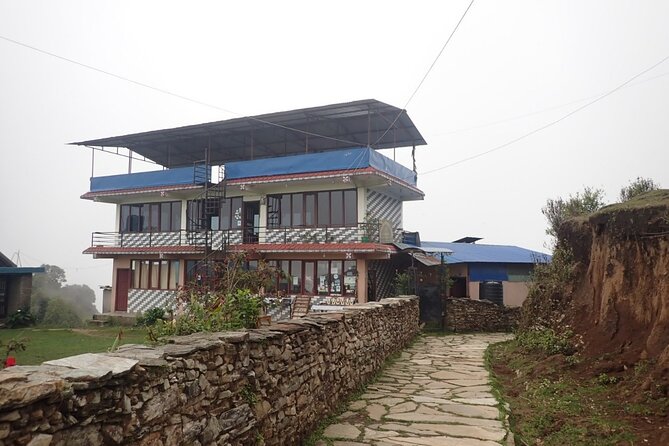
The accommodation is simple teahouse or guesthouse lodging run by local communities. These stays are part of the experience, not just a place to sleep. You get closer to mountain life and have a chance to speak with people who live along the route.
Do not book this expecting resort comfort. The supplied information does not promise private luxury rooms, heating, meal plans, or other hotel features. Instead, the value is in having a bed near the trail and spending evenings in small mountain settlements.
The guides add another layer. Amrit is repeatedly praised for being supportive, professional, fun, and attentive to the group’s pace. Biru receives similar praise for calm leadership, safety, and explanations of mountain culture and Nepali lifestyles. Guide quality can change the feel of a short trek, because you spend several long days walking together.
The strongest praise centers on human service rather than just scenery. That matters to me. Mountain views are powerful, but a guide who communicates clearly and notices when you need a slower pace can make the difference between a rewarding trip and a miserable one.
Who should book this trek
I would recommend this trek to you if you want Himalayan scenery but have only four days available from Pokhara. It suits hikers with moderate fitness who can manage six to seven hours of walking and accept steep climbs, steep descents, and basic lodging.
It is also a good fit if you prefer a private group and want a local guide rather than arranging every permit and transfer yourself. The route’s quieter forest sections should appeal to you if crowded trekking corridors are a concern.
I would hesitate to recommend it if you have no recent walking experience, dislike uneven mountain trails, or want a slow itinerary with rest days. Reaching about 4,500 meters in four days leaves little room for an easy adjustment period.
The trip may also feel too compressed if your main goal is to spend long periods in each village. The four-day format prioritizes high views and a fast return to Pokhara.
Practical preparation for the four days
Keep your pack light. You will carry it along uphill and downhill trails, and the altitude makes every unnecessary item feel heavier. Bring clothing suitable for changing mountain conditions, comfortable walking shoes, and basic personal supplies.
Your guide carries a first aid kit, but that does not replace your own medication or personal essentials. Since personal expenses are excluded, carry money for items you may need along the trail.
Give your passport copy and passport-size photo to the operator before the travel date. Confirmation is provided at booking, and pickup is offered from your Pokhara hotel.
The cancellation terms are generous if your plans change early: cancel at least 24 hours before the start time for a full refund. Inside that 24-hour window, the payment is not refunded and changes are not accepted.
Should you book the Mardi Himal Base Camp trek?
Book it if you want a short, organized route to high Himalayan views and you are ready for genuine mountain walking. The combination of forest trails, sunrise at Base Camp, Annapurna views, local teahouses, permits, transport, and a private group gives the $299 price a sensible balance.
Choose another format if you need a slower schedule, hotel comfort, included meals, or a low-effort sightseeing trip. Mardi Himal is compact, but it is not easy. For a fit walker with limited time in Pokhara, and with a guide such as Amrit or Biru, it offers a focused mountain experience with very little wasted time.
FAQ
How long is the Mardi Himal Base Camp trek from Pokhara?
The experience lasts approximately four days. Daily walking times are about six hours on days one and two, five hours to Base Camp on day three, and seven hours on the final day.
How high does the trek go?
The route reaches approximately 4,500 meters at Mardi Himal Base Camp.
Is transportation from Pokhara included?
Yes. Hotel pickup and drop-off are included, along with shared jeep transportation to and from the trekking starting point.
Is this a private tour?
Yes. Only your group participates in the trek, although the road transportation uses a shared jeep.
What accommodation is provided?
Accommodation during the trek is in a teahouse or guesthouse.
Are permits included in the price?
Yes. The Annapurna Conservation Area Permit and TIMS Card are included.
Do I need to provide passport documents?
Yes. A digital copy of your passport and a passport-size photo are needed before the travel date so the trekking permit can be issued.
What fitness level is required?
A moderate level of physical fitness is required. You will walk up and down mountain trails for several hours each day, with the highest point reaching about 4,500 meters.
More 4-Day Experiences in Pokhara
- 4-Day Private Poon Hill Trekking Tour
★ 5.0 · 58 reviews - Pokhara: 4-Day Private Trek Tour
★ 4.9 · 43 reviews - Poon Hill Trek from Pokhara 4 Days
★ 5.0 · 27 reviews - 4 Days Poon Hill Trek from Pokhara
★ 5.0 · 26 reviews
Just added around Pokhara
- Pokhara: Pokhara Highlights Tour by Bus★ 3.6 · 10 reviews
- Pokhara in 5 Hours: Lake, Museum, Cave, Falls & Pagoda Hill★ 4.5 · 16 reviews
- Discover Pokhara in Style: Private Vehicle Service with Driver★ 5.0 · 5 reviews
- 7-Day Trek to Annapurna Base Camp from Pokhara★ 5.0 · 12 reviews
- Annapurna Base Camp Trek from Pokhara and Kathmandu★ 5.0 · 7 reviews
- 4 Day Mardi Himal Base Camp Trek from Pokhara★ 5.0 · 18 reviews
- 6 days Annapurna Basecamp Trek★ 5.0 · 16 reviews
- Beautiful Sarankot Sunrise with Full Day Sightseeing in Pokhara★ 4.5 · 3 reviews
Mardi Himal Treks, compared.
Browse the lists this tour appears in