
Reviewed · HIKING & TREKKING
6 days Annapurna Basecamp Trek
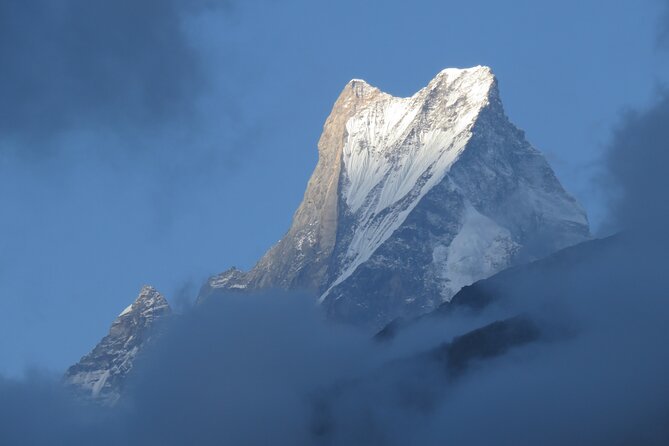
An early sunrise at Annapurna Base Camp is the prize here. As light reaches Annapurna I, the 8,091-meter peak changes color above a huge 360-degree wall of snow and rock. You also cross high suspension bridges, pass Gurung villages, and walk through rhododendron forests on a route designed to reach the base camp in only six days.
I like the sensible package: private transportation, a licensed guide, teahouse lodging, five breakfasts, and required gear are included. I also like the human scale of the route, from the 285-meter bridge at Jhinu Danda to villages tied to Nepal’s famous Gurkha tradition. The catch is simple: six days leaves little room for a slow pace, and the itinerary lists some very long trekking days, so you need moderate fitness and a willingness to start early.
Key points before you book
- Sunrise at Annapurna Base Camp: The early light on Annapurna I is the main reward, with mountain views in every direction.
- A short six-day route: This itinerary moves quickly from Pokhara to the Annapurna Sanctuary and back.
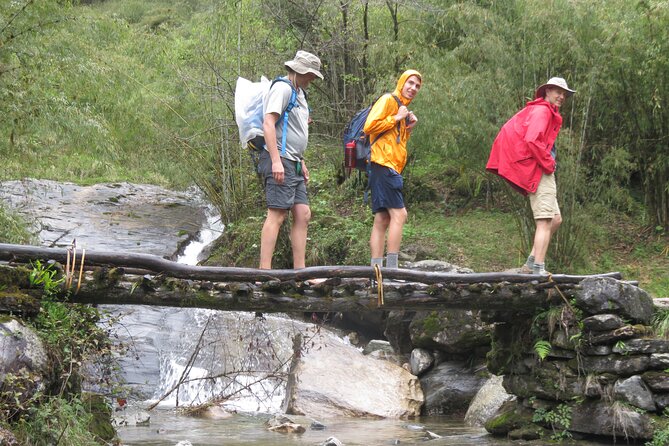
- Jhinu Danda suspension bridge: You cross a 285-meter bridge hanging 135 meters above the Kimrong River.
- Rhododendron forest walking: The route passes through forests with more than 30 species of rhododendron.
- Practical inclusions: Teahouse accommodation, breakfast, private transport, a licensed guide, and a duffle bag or sleeping bag are covered.
- Extra costs to plan for: Lunch, dinner, insurance, drinks, internet, charging, toiletries, tips, and a porter are not included.
Why six days to Annapurna Base Camp is appealing
The Annapurna Base Camp Trek is one of Nepal’s best-known mountain walks because it brings you into a high valley surrounded by major peaks without requiring a long expedition. This version begins in Pokhara and aims to complete the route in six days, making it useful if you have limited time.
The route moves from foothills and villages into the Annapurna Sanctuary. You see the setting change in stages: road travel and lower villages give way to suspension bridges, forest paths, river valleys, and cold high country. That steady change is more satisfying than simply arriving at a viewpoint by vehicle.
The provider describes this as the shortest and safest Annapurna Base Camp itinerary. Treat that as a description of the planned route, not a promise that the walk will feel easy. Mountain conditions, weather, trail work, and your own pace still matter.
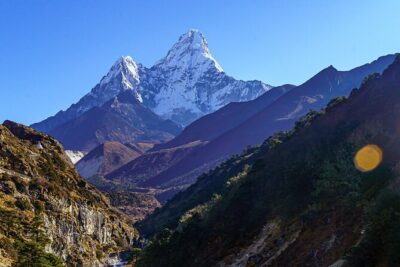
The strongest reason to choose this trip is the scenery packed into a short schedule. You get views of Annapurna South, Hiunchuli, Machhapuchchhre, Annapurna III, and Annapurna I, along with the villages and forests that make the walk feel like a journey rather than a single mountain photo stop.
A few more Pokhara trips to weigh up
- Poon hill Trek 3 days
★ 5.0 · 176 reviews - Trekking in Annapurna/Langtang/Everest/Upper Mustang regions
★ 5.0 · 161 reviews - Pokhara: 4-Day Ghorepani, Poonhill & Ghandruk Mountain Trek
★ 5.0 · 132 reviews
Day 1: Chhomrong and the long bridge at Jhinu Danda
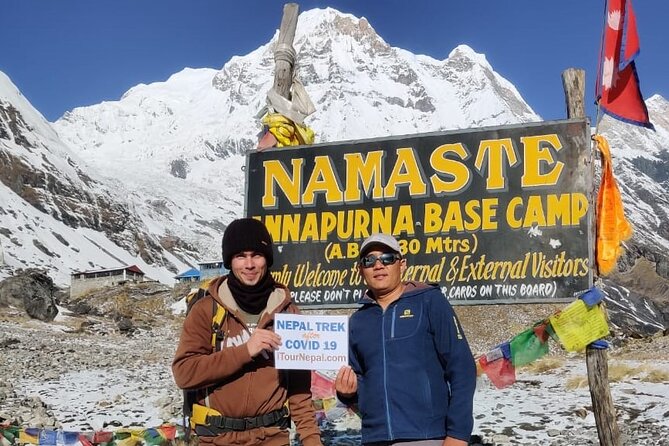
The first day starts with about three hours of private driving from Pokhara toward the trail area near Jhinu Danda. That road transfer saves walking time, but the day is still substantial. The itinerary allows about 12 hours for the full day, so you should expect an early start and a demanding opening.
Chhomrong sits at 2,150 meters and is one of the first major viewpoints on the route. From here, you can look toward Annapurna South at 7,219 meters, Hiunchuli at 6,441 meters, and Machhapuchchhre, also called Fishtail. The village gives you a useful first look at the scale of the mountains before the trail enters narrower country.
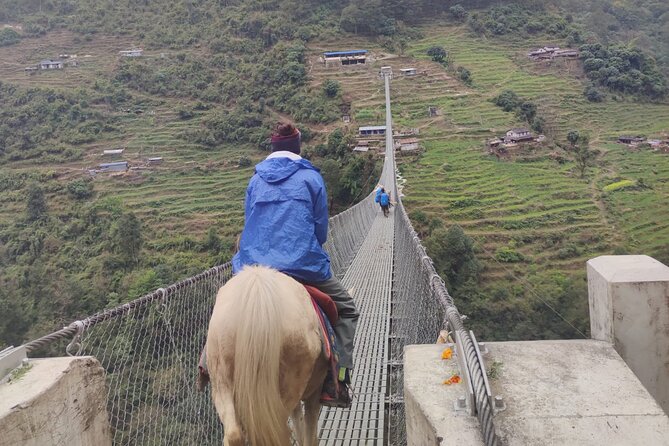
The walk near Jhinu Danda includes one of the trip’s memorable pieces of engineering: a 285-meter suspension bridge hanging 135 meters above the Kimrong River. If you dislike exposed crossings, this may be your first serious test. If you enjoy them, it is an excellent way to begin, with the river far below and the hills opening around you.
The first day combines road travel, village walking, and a major bridge crossing. That variety is a strength, but the schedule may feel tight if you have just arrived in Pokhara or are not used to long walking days.
Day 2: From Chhomrong into the Annapurna Sanctuary
The second day begins with morning views of Annapurna South and Fishtail. From Chhomrong, the trail rises and falls across the foothills before entering the Annapurna Sanctuary, so do not expect a simple uphill march.
This up-and-down pattern is important to understand. A route can gain altitude overall while still sending you down into gullies and back up the other side. Those repeated changes can tire your legs more than a steady climb, especially when the day is listed at roughly 12 hours.
The sanctuary marks a shift in mood. Villages become less frequent, the Modi River valley becomes more important, and the mountains begin to feel closer. You are no longer simply walking beneath the peaks. You are moving toward the enclosed mountain basin that gives the trek its sense of arrival.
Breakfast is included, but lunch and dinner are not. That arrangement lets you choose meals at the teahouses, though you should budget for two meals each day and remember that prices can rise as the route moves farther into the mountains. Drinks, machine coffee, internet, charging, and toiletries may also cost extra.
Day 3: Along the Modi River through rhododendron forest
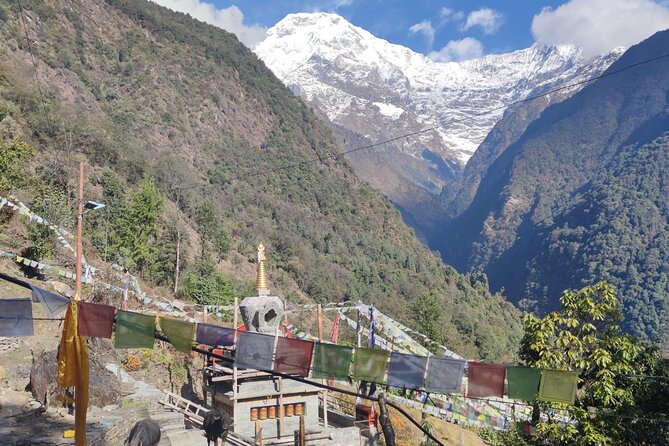
The third day focuses on the Modi River valley around Dovan, which lies between Hiunchuli and Mardi Himal. The trail gradually follows the Modi River upstream through thick rhododendron forest.
This is one of the route’s most appealing contrasts. Snow peaks may be the headline, but the forest gives the trek color, shade, and a sense of depth. The area has more than 30 species of rhododendron, so the walk can feel very different depending on the season and flowering conditions.
Clearings in the forest provide views of Fishtail and other peaks. The changing sight lines keep the walking interesting. One moment you are enclosed by trees, and the next you may find a mountain framed between branches.
The word gradually should not fool you into expecting an easy day. The itinerary again gives about 12 hours, and the trail continues upstream. You should be prepared for sustained walking, uneven ground, and the effects of increasing altitude, even though the supplied details do not specify exact daily distances or elevations.
Dovan also puts you deeper into the valley, where cold conditions and basic teahouse facilities matter more. The included sleeping bag or duffle bag can be useful, and anti-slip crampons are supplied when required. Ask the operator before departure what gear is expected for your dates.
Same mountains, a completely different kind of day:
- ZipFlyer Nepal – The World’s Steepest Zip-line
★ 5.0 · 608 reviews - Bungee Pokhara by HighGround Adventures
★ 5.0 · 366 reviews - From Pokhara: Sarangkot Sunrise Himalayas Tour
★ 4.7 · 218 reviews - ATV Adventure Tour in Pokhara, Nepal
★ 5.0 · 194 reviews
Day 4: The final approach to Annapurna Base Camp
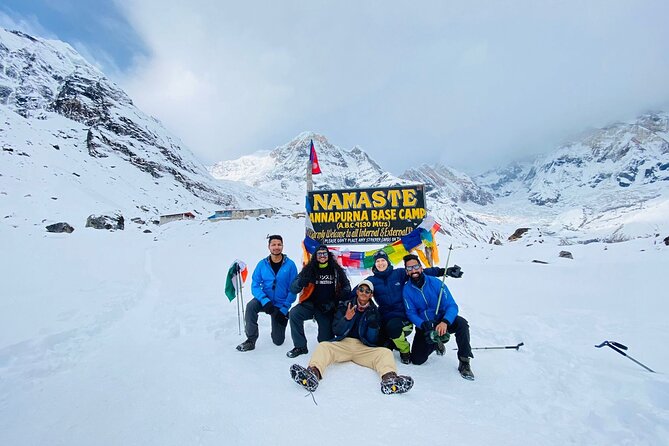
The fourth day is the dramatic approach. From Deurali, the trail follows the Modi Khola upstream toward Annapurna Base Camp, with open views of Fishtail, Annapurna III, Annapurna South, Annapurna I, and other peaks.
This section is valuable because the mountain views become less obstructed. Earlier forest walking gives way to a more exposed mountain setting, and the destination feels close in a visual sense even if the walking remains hard.
Annapurna I reaches 8,091 meters and is the 10th-highest mountain in the world. You do not need to be a serious mountaineer to appreciate that fact from base camp. The setting brings the scale home in a way that a distant viewpoint cannot.
The itinerary marks admission to Annapurna Base Camp as included, but the more important cost is physical. Day four is listed at about 12 hours, and the route is not a casual sightseeing walk. If you are worried about pace, discuss that before booking. The company can provide a licensed guide, but the published price does not include a porter.
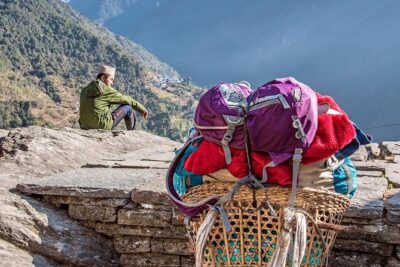
At $30 per day, porter service is a separate expense. For a fast six-day schedule, a porter can make a real difference by carrying your main bag while you keep a lighter daypack. You also need personal insurance, which is not included.
Day 5: Sunrise over Annapurna I
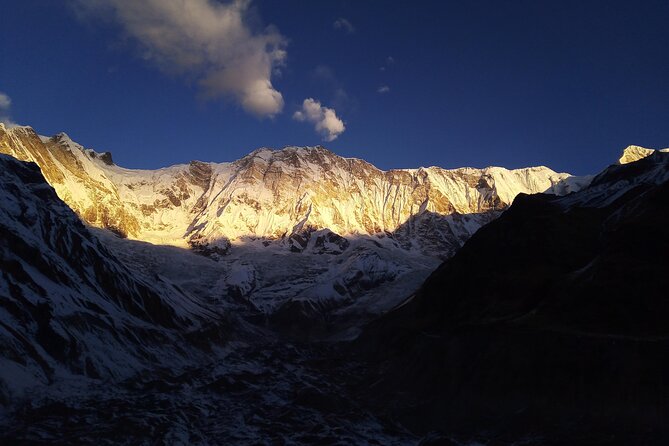
Day five begins at the trip’s high point, both literally in the route and emotionally in the schedule. Early rays reach the surrounding peaks, and the changing color of Annapurna I is the key sight.
The 360-degree setting makes sunrise especially worthwhile. You are not looking at one isolated mountain. Annapurna I, Annapurna South, Annapurna III, Fishtail, and other peaks form a broad ring around the sanctuary.
The morning is described as easy, but the full day is still listed at about 12 hours because the return begins afterward. Take your time with photographs, but remember that weather can change mountain views quickly. Clear conditions are never guaranteed.
Leaving base camp the same day also creates the main logistical strain of this itinerary. You get the sunrise, then begin retracing the route rather than adding a spare night at the top. That is the tradeoff for completing the trek in six days.
If your priority is reaching Annapurna Base Camp within a short holiday, this schedule makes sense. If your priority is long mornings, relaxed meals, and extra time for weather, a longer itinerary would likely suit you better, though this particular package is built around six days.
Day 6: Back toward greenery and Pokhara
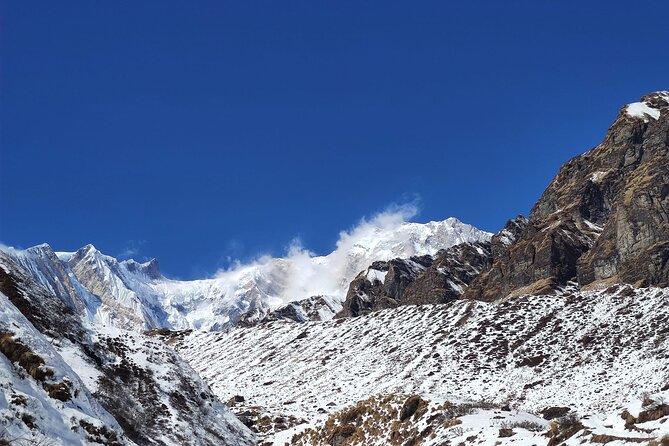
The last day brings you out of the cold, narrow valley and back toward greener foothills and settled areas. The route includes views across layered hills and the Modi River valley, giving you a final change of scale.
After several days among high peaks, ordinary greenery can feel surprisingly welcome. This is not just a return transfer. It helps you notice how far the route has taken you from the lower country.
Private transportation is included, which simplifies the final return. Pickup is offered, and the tour has a maximum group size of 20 people. That is small enough for basic coordination, but it is not a private walking party unless you arrange a private departure.
A group of 20 can also move at different speeds. Your licensed guide is responsible for keeping the group organized and helping with safety, but you should ask how the operator handles different walking abilities before you confirm.
What the $450 price really covers
At $450 per person, the price is attractive for a six-day Himalayan trek because several major items are bundled together. You receive all fees and taxes, private transportation, five breakfasts, teahouse accommodation, a licensed, experienced, insured guide, and selected equipment.
The word teahouse means practical mountain lodging rather than a full-service hotel. The supplied details do not promise room style or private bathrooms, so you should expect basic accommodation and possible small charges for Wi-Fi, device charging, and toiletries.
Meals are the biggest gap in the advertised price. Lunch and dinner are separate, as are bottled drinks and machine coffee. Insurance is also your responsibility, and you should not treat the included guide insurance as a substitute for your own coverage.
Tips for the guide and porter are not included. Porter service costs $30 per day if you choose it. A realistic budget therefore needs to sit above the headline price, especially if you want a porter and regular drinks or charging.
The value is strongest if you want a guided trek with transport and gear arranged in advance. It is less attractive if you already have equipment, prefer to choose every teahouse yourself, or want a slower route with more flexible days.
Guides, safety, and the human side of the trek
The company uses licensed guides and places clear emphasis on safety. Past arrangements connected with iTour Nepal include guides named Saroj and Ajaya, as well as a porter named Samir, though your assigned team should be confirmed directly before departure.
The most useful quality in a mountain guide is not simply the ability to point out peaks. You want someone who watches the group’s pace, explains the route, helps with practical decisions, and responds calmly when plans change. The company’s strongest praise centers on care, organization, flexibility, and personal attention.
That matters on a six-day route. There is less spare time, so clear communication becomes part of the service. Ask who will guide your departure, how many people will be in your group, and how the team handles a participant who cannot keep the planned pace.
The cultural side is also worth your attention. Chhomrong and the surrounding villages are associated with the Gurungs, a community famous for its Gurkha soldiers. The route offers a look at village life in the Annapurna foothills, not just a series of mountain viewpoints.
You should behave as a respectful visitor in the villages and teahouses. The details of cultural activities are not specified, so do not book this expecting a formal cultural program. The value is in seeing daily life along the route.
Who should book this trek
I would recommend this trip to you if you have six days available, moderate physical fitness, and a clear goal of reaching Annapurna Base Camp. It suits someone who wants a guided route from Pokhara and prefers to have transport, lodging, breakfast, and basic equipment organized together.
It also suits repeat visitors who value a family-run operator and direct coordination. Several clients returned to iTour Nepal for later trips, including customized combinations with cultural touring, Upper Mustang, Bandipur, and Chitwan. That does not guarantee the same guide or service on your departure, but it suggests the company can handle more than one fixed walking program.
I would be cautious if you dislike long walking days, need a generous rest schedule, or want certainty about every meal and room detail before setting out. The six-day plan is efficient, but efficiency in the Himalayas can mean less breathing room.
You should also think carefully about porter service. If carrying a full pack would slow you down, the extra $30 per day may be money well spent. If you are comfortable carrying your own gear, the base price remains relatively lean.
The activity is not described as accessible for people with limited mobility. It requires moderate fitness, includes long days, uneven mountain paths, suspension bridges, and changing conditions. Ask the operator for a current route assessment if you have any health concerns.
Booking details and cancellation
Confirmation is received at booking, and mobile tickets are supported. Pickup is offered, and the route is near public transportation, though private transportation is included in the package.
The tour is commonly booked about 40 days ahead. That is useful planning guidance, especially if you need fixed dates or want to coordinate flights and hotel nights in Pokhara.
You can cancel for a full refund if you do so at least three full days before the local start time. Cancellations or changes inside that period are not accepted for a refund.
Should you book the six-day Annapurna Base Camp Trek?
Book it if Annapurna Base Camp is your main Nepal goal and your schedule is tight. The sunrise, the enclosed mountain views, the rhododendron forest, the Gurung villages, and the suspension bridges give you a strong range of scenery in a short period.
The $450 price is good for what it includes, but it is not the final amount you will spend. Add meals, insurance, drinks, tips, possible charging and internet fees, and perhaps $30 per day for a porter.
My main advice is to judge the itinerary by its longest days, not its best photographs. If you can manage the pace and accept basic teahouse conditions, this is a practical way to reach the Annapurna Sanctuary with a guide and much of the planning handled for you. If you want more rest and flexibility, choose a longer trek instead of forcing this six-day version.
FAQ
Where does the Annapurna Base Camp Trek begin?
The experience is based in Pokhara, Nepal. Pickup is offered, and private transportation is included.
How long is the trek?
The advertised duration is six days, approximately. Several itinerary days are listed at about 12 hours, so you should prepare for long walking days.
What fitness level do I need?
A moderate level of physical fitness is required. The itinerary includes uphill and downhill walking, suspension bridges, forest paths, and long days in mountain terrain.
Is a guide included?
Yes. The package includes a licensed, experienced, and insured guide. Specific guide assignments should be confirmed with iTour Nepal before departure.
Is a porter included?
No. Porter service is available for $30 per day. Tips for the guide and porter are also separate.
What accommodation is included?
Teahouse accommodation is included. The supplied details do not specify room type or bathroom arrangements.
Are meals included?
Five breakfasts are included. Lunch and dinner are not included, and bottled drinks and machine coffee cost extra.
What equipment is provided?
A duffle bag or sleeping bag is included, and anti-slip crampons are provided when required. Personal insurance, toiletries, Wi-Fi, and charging costs are not included.
Just added around Pokhara
- Pokhara: Pokhara Highlights Tour by Bus★ 3.6 · 10 reviews
- Pokhara in 5 Hours: Lake, Museum, Cave, Falls & Pagoda Hill★ 4.5 · 16 reviews
- Discover Pokhara in Style: Private Vehicle Service with Driver★ 5.0 · 5 reviews
- Annapurna Base Camp Trek from Pokhara and Kathmandu★ 5.0 · 7 reviews
- 4 Day Mardi Himal Base Camp Trek from Pokhara★ 5.0 · 18 reviews
- 7-Day Trek to Annapurna Base Camp from Pokhara★ 5.0 · 12 reviews
- Beautiful Sarankot Sunrise with Full Day Sightseeing in Pokhara★ 4.5 · 3 reviews
- Round The Phewa★ 4.5 · 8 reviews
Hiking & Trekking, compared.
Nagarkot Sunrise View and Day Hiking from Kathmandu
Read our review →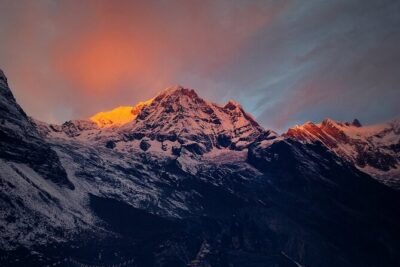
Browse the lists this tour appears in