
Reviewed · ANNAPURNA BASE CAMP TREKS
Annapurna Base Camp Trek from Pokhara and Kathmandu
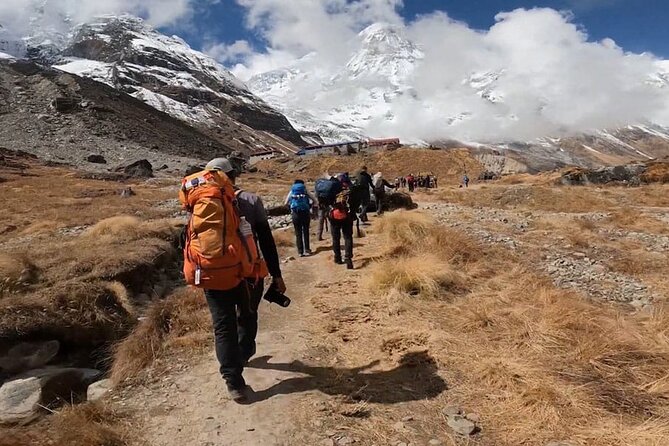
Annapurna Base Camp gives you a rare mountain payoff without requiring a long expedition. In ten days, this private trek moves from Pokhara through forest, stone villages, and high mountain country to the broad amphitheater at Annapurna Base Camp, then returns by the same general route. The hot springs at Jhinu Danda are a fine reward after the hard miles.
I like the small-group format, since you get more direct help from a local guide than on a large departure. I also like the all-in-one price: transport, permits, meals, accommodation, and porters are covered, which makes planning much easier. The main caution is the demanding uphill walking and the unclear start point, since the details mention both Kathmandu pickup and Pokhara Airport.
Key points before you book
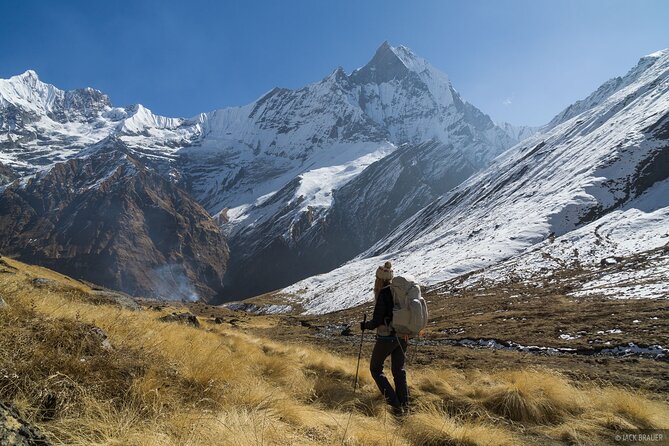
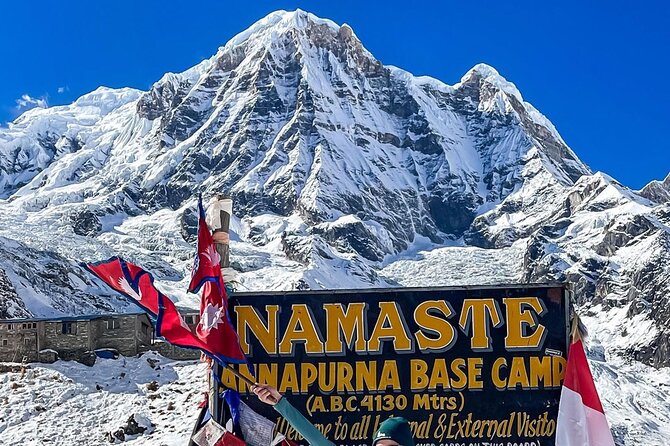
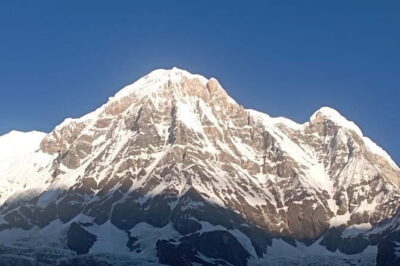
- Reach Annapurna Base Camp on day five, with panoramic mountain views at the heart of the massif.
- Walk through rhododendron forests and villages, rather than spending the entire trek on a bare high-altitude route.
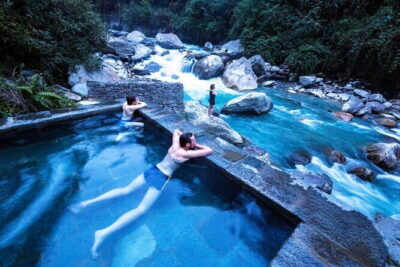
- Soak in Jhinu Danda’s natural hot springs after the descent from the base camp.
- Travel privately with your own group, not in a large mixed departure.
- Meals, permits, porters, lodging, and transportation are included, though drinks and personal expenses are not.
- Plan around moderate fitness and good weather, since the trek includes sustained climbs and weather can force changes.
What the $1,150 price really covers
At $1,150 per person, this is not simply a guided walk. The package includes private transportation, permits and other fees, accommodation, meals, and porters. That matters in Nepal, where arranging each part separately can take time and create uncertainty during a trek.
The value is strongest if you want a managed trip rather than a do-it-yourself route. You are paying for transport between trailheads, a guide who can communicate in English, Hindi, or Japanese, meals during the trekking days, and help with luggage through porters. The private format also means your group is not tied to strangers’ pace or preferences.
The price does not cover drinks or personal expenses. Bring extra money for beverages and anything beyond the supplied meals and services. The meal information is a little inconsistent: the daily plan lists breakfast, lunch, and dinner on most trekking days, while the inclusions also mention ten lunches. I would ask the company to confirm exactly which meals are covered before paying.
More Annapurna Base Camp Treks in Pokhara
- Kathmandu/Pokhara: 5-Day Annapurna Base Camp (ABC) Trek
★ 4.9 · 72 reviews - Private 7 – Day Annapurna Base Camp Trekking
★ 5.0 · 50 reviews - Annapurna Base Camp Trek (8 days)
★ 5.0 · 45 reviews
Day 1: Getting from Kathmandu or Pokhara to the trail
The opening day is the least clear part of the plan. One section says pickup is from your hotel in Kathmandu, with your hotel name and address needed for arrangements. Another meeting-point detail lists Pokhara Airport as the start.
That difference is important. The trek itself begins after a drive from Pokhara to Nayapul, while the final day takes you from Pokhara to Kathmandu by private vehicle. If you are already in Pokhara, confirm whether day one is meant to include a transfer from Kathmandu or whether the listed airport meeting point is the correct starting place.
This is a practical matter, not a small technicality. Kathmandu and Pokhara are several hours apart by road, and the package does not make the connection clear. Get the pickup location, first-night accommodation, and transport schedule confirmed in writing.
Day 2: Nayapul to Chhomrong
The trekking begins with a drive from Pokhara to Nayapul. From there, you walk toward Chhomrong through forest and mountain villages.
This is a good opening section because it introduces the two sides of the Annapurna route: natural scenery and daily village life. You are not dropped straight into a high-altitude camp. Instead, the route builds gradually through wooded hills and settled areas before the harder upper sections.
The wording describes the destination as Chumrung in one place and Chhomrong elsewhere. These refer to the same well-known village on the route, but the spelling should be confirmed if you are checking accommodation or mapping the trek.
Expect a serious first trekking day. The route gains and loses height through Nepal’s steep middle hills, so distance alone will not tell you how tiring it feels. Keep your pace steady, drink often, and let the guide set a sensible rhythm.
Day 3: Chhomrong to Dovan through rhododendron country
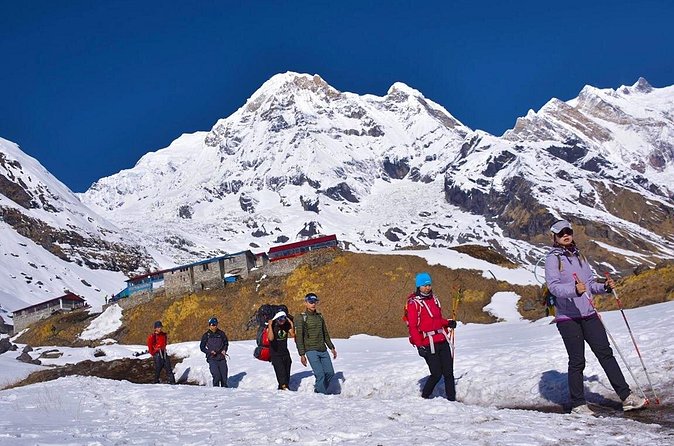
From Chhomrong, the trail heads toward Dovan, passing through rhododendron forests and climbing toward higher ground. The forest gives the walk a softer feel than the exposed sections near base camp, though the uphill work continues.
Rhododendrons are one of the signature plants of the Annapurna region. In bloom season, they can add bright color to the route. Outside bloom season, the forest still provides shade and a changing setting as you move higher.
Breakfast, lunch, and dinner are listed for this day. That takes one more daily task off your plate, but drinks are not included. Budget for tea, bottled drinks, or other beverages separately.
Dovan marks a more serious stage of the ascent. You are now moving beyond the lower villages, and your body has less time to recover between climbs. A private group can help here because the walking pace can be adjusted to your condition.
Same mountains, a completely different kind of day:
- ZipFlyer Nepal – The World’s Steepest Zip-line
★ 5.0 · 608 reviews - Bungee Pokhara by HighGround Adventures
★ 5.0 · 366 reviews - From Pokhara: Sarangkot Sunrise Himalayas Tour
★ 4.7 · 218 reviews - ATV Adventure Tour in Pokhara, Nepal
★ 5.0 · 194 reviews
Day 4: Dovan to Deurali and the high forest
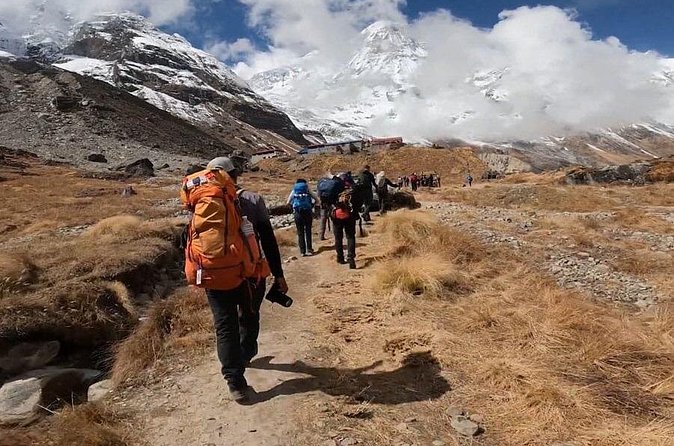
The fourth day goes from Dovan to Deurali, with more altitude gain and dense forest. The reward is the growing sense that the major mountain destination is close.
This is often the kind of day that looks easy on a schedule and feels harder on foot. The route continues upward, and the combination of climbing, rough trail, and thinner air can slow you down. You do not need to race. Save energy for the following morning, when the trail reaches Annapurna Base Camp.
The description promises spectacular mountain views, but conditions in the high country can change quickly. Clear weather may open wide views, while cloud can hide the peaks. The company states that the experience depends on good weather, so flexibility matters.
Your guide is an important part of this section. The operator provides English, Hindi, and Japanese language options, but the supplied information does not name the individual guide assigned to your group. Ask for that name and for a clear outline of the daily walking plan before departure.
Day 5: Deurali to Annapurna Base Camp
This is the high point of the trip, both literally and emotionally. You leave Deurali and walk to Annapurna Base Camp, entering the mountain amphitheater surrounded by the Annapurna massif.
The appeal is not just reaching a sign or viewpoint. Base camp places you close to the peaks, with broad views in several directions when the weather is clear. After several days of forest and village walking, the open mountain setting feels like a real change of scene.
The schedule puts this achievement on day five, which keeps the ascent compact. That is efficient, but it also means the climb is concentrated into a short period. If you have little recent walking experience, the trek may feel strenuous even though the stated fitness requirement is moderate.
Take time at base camp rather than treating it as a quick photo stop. The mountain setting is the main reason to choose this route, and the quiet moments can be as memorable as the arrival itself. Weather may limit views, so patience is useful.
Day 6: Returning from base camp to Bamboo
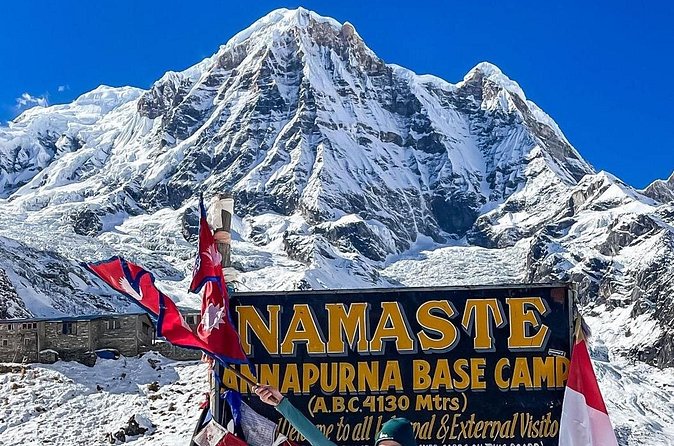
The descent runs from Annapurna Base Camp to Bamboo. You retrace much of the route, but going down does not mean the day is effortless.
Descending can be hard on knees and ankles, especially after the long climb. Trekking poles, if you use them, can help, though the package does not list equipment. Pack in a way that keeps essentials easy to reach, since you will want water, layers, and snacks close at hand.
The scenery changes as you lose altitude. High mountain surroundings give way again to forest, and the air may feel less demanding. Meals are included according to the daily plan, but personal drinks remain your responsibility.
This is another reason the private format has value. Your group can stop when needed and avoid being pushed by a fixed large-party schedule. The tradeoff is that you remain responsible for keeping the pace realistic and telling the guide early if you are struggling.
Day 7: Bamboo to Jhinu Danda and the hot springs
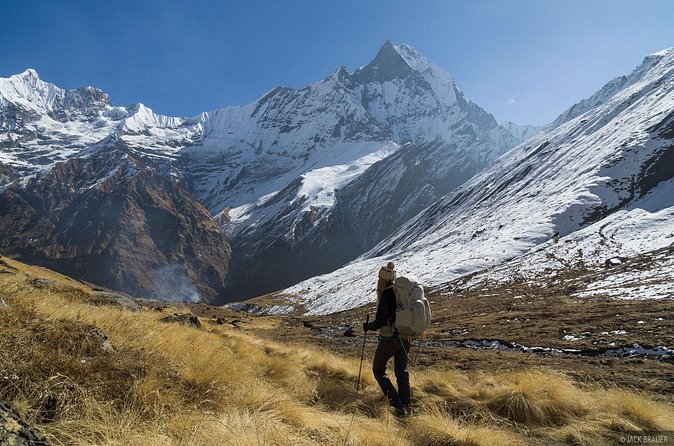
From Bamboo, the route continues to Jhinu Danda. The main attraction here is the chance to relax in natural hot springs after days of uphill and downhill walking.
Jhinu Danda adds something beyond mountain views. A soak gives your trip a slower, more local-feeling pause, and it breaks up the return journey in a memorable way. It is also a welcome comfort after the physical work of base camp.
Do not mistake the hot springs for a full rest day. You still need to complete the trek to Jhinu Danda, and the descent can be tiring. Bring a small day bag with whatever you need for the walk and the evening, while porters handle the heavier luggage included in the package.
Day 8: Jhinu Danda to Nayapul, then back to Pokhara
The final trekking section takes you from Jhinu Danda to Nayapul. From there, private transport returns you to Pokhara.
This day combines walking and road travel, so it can feel long even though the hardest climbing is behind you. The payoff is a comfortable return to Pokhara, where you can shower, eat at your own pace, and enjoy a proper break.
The itinerary includes breakfast, lunch, and dinner on this day. Since personal expenses are not included, set aside money for anything extra once you reach Pokhara.
Day 9: A free day around Pokhara
A rest day in Pokhara is one of the better choices in this schedule. After the trek, you can spend the day around the lakeside area, visit local cafes, or simply enjoy the city’s natural setting without another early trail start.
I like this buffer because it gives your body time to recover before the road journey to Kathmandu. It also means the trek does not end with an immediate rush to catch transport.
The plan leaves the day open, so the exact activities are yours to choose. No meals are specifically listed for day nine, which makes it sensible to confirm whether food is included or whether you should plan independently.
Day 10: Private vehicle to Kathmandu
The final day takes you from Pokhara to Kathmandu by private vehicle. This closes the trip with a road transfer rather than another walk.
Private transport is useful here because you are not left to arrange the return yourself. Still, road travel can take much of the day, so do not schedule a tight onward connection without confirming the expected arrival time.
The meal section lists breakfast, lunch, and dinner for this day, though that is unusual for a transfer day and should be checked with the operator. The activity ends back at the meeting point, but the supplied details do not clearly state the exact Kathmandu drop-off location.
Guides, group size, and the human side of the trip
This is a private activity, so only your group participates. That is a strong choice if you want direct contact with the guide, flexible pacing, and less social pressure. It is less attractive if you prefer the easy group camaraderie or lower cost that can come with a larger departure.
The operator offers English, Hindi, and Japanese-speaking guides. The available information does not provide a guide’s full name for this specific trek. The company’s wider service is associated with Santosh, who is singled out in its communications, but you should not assume he will lead your Annapurna trek. Ask who your guide will be.
The company also presents sustainability as part of its approach, with benefits intended for local communities and environmental protection. That is encouraging, but the details do not specify the exact conservation or community measures. If this matters to you, ask how porters are supported and how waste is handled along the route.
Fitness, comfort, and what to clarify
You need moderate physical fitness for this trek. The route includes repeated climbs, higher altitude, long descents, and several consecutive walking days. You do not need to be an elite athlete, but you should be comfortable walking uphill for extended periods.
Accommodation is included, though the type and standard are not specified. The same is true of porter arrangements and the exact daily walking hours. Ask about these points before departure:
- The confirmed pickup point, Kathmandu or Pokhara Airport
- The name and language of your guide
- The type of accommodation on the trail
- Which meals are included on each day
- What the porters carry and what weight limit applies
- The expected walking time for each stage
- What happens if weather changes the schedule
The tour offers mobile ticketing and confirmation at booking. It is also near public transportation, though private transport is part of the package. Cancellation is free up to 24 hours before the start time. Inside that window, the amount paid is not refunded. If poor weather cancels the trip, you are offered a different date or a full refund.
Who should choose this Annapurna trek?
I would choose this package if you want the major Annapurna Base Camp experience with planning handled for you. It suits couples, families with appropriate fitness, and private groups that value their own guide and vehicle.
It is also a good fit if Jhinu Danda’s hot springs and a full Pokhara rest day appeal to you. Those details give the trip more variety than a simple walk to base camp and back.
I would hesitate if you want a slow acclimatization schedule, exact daily timings, or clearly listed accommodation standards before booking. The ten-day plan is compact, and several practical details need confirmation. The itinerary is workable, but you should ask questions rather than assume.
Should you book it?
Book this trek if you want a private, organized route to Annapurna Base Camp with meals, permits, porters, transport, and a guide included for $1,150 per person. The hot springs and Pokhara rest day add real value, while the strong praise for the company’s planning, professional service, and affordability supports confidence in the operator.
Before committing, resolve the Kathmandu versus Pokhara pickup issue and confirm meal coverage, lodging, guide assignment, and walking times. If those answers suit your needs and you are ready for sustained mountain walking, this is a practical way to experience one of Nepal’s great treks without managing every detail yourself.
FAQ
Where does the Annapurna Base Camp trek start?
The trekking portion starts after a drive from Pokhara to Nayapul. The supplied meeting information also lists Pokhara Airport, while the pickup instructions mention Kathmandu hotels, so confirm the exact starting arrangement before booking.
How long is the experience?
The complete experience lasts approximately ten days, including trekking, transport between Kathmandu and Pokhara, and a rest day in Pokhara.
Is this a private tour?
Yes. Only your group participates in the activity.
What languages are available for the guide?
Guides are available in English, Hindi, and Japanese.
Are meals included?
Breakfast, lunch, and dinner are listed for most trekking days. The inclusions also mention lunch, so confirm the exact meal schedule with the provider before departure.
Is transportation included?
Yes. Private transportation is included, including the transfer from Pokhara to Nayapul and the return journey from Pokhara to Kathmandu.
Are drinks included?
No. Drinks and other beverages are not provided, so you should budget for them separately.
What fitness level is required?
You should have a moderate level of physical fitness. The trek includes forest walking, sustained climbs, higher-altitude sections, and long descents.
What is the cancellation policy?
You can cancel at least 24 hours before the start time for a full refund. Cancellations or changes made within 24 hours are not refunded or accepted. If poor weather causes the company to cancel, you can choose another date or receive a full refund.
More Hiking & Trekking in Pokhara
- Poon hill Trek 3 days
★ 5.0 · 176 reviews - Trekking in Annapurna/Langtang/Everest/Upper Mustang regions
★ 5.0 · 161 reviews - Pokhara: 4-Day Ghorepani, Poonhill & Ghandruk Mountain Trek
★ 5.0 · 132 reviews - Ghorepani – Poon Hill Trek 3N-4D
★ 5.0 · 125 reviews
Just added around Pokhara
- Pokhara: Pokhara Highlights Tour by Bus★ 3.6 · 10 reviews
- Pokhara in 5 Hours: Lake, Museum, Cave, Falls & Pagoda Hill★ 4.5 · 16 reviews
- Discover Pokhara in Style: Private Vehicle Service with Driver★ 5.0 · 5 reviews
- 4 Day Mardi Himal Base Camp Trek from Pokhara★ 5.0 · 18 reviews
- 7-Day Trek to Annapurna Base Camp from Pokhara★ 5.0 · 12 reviews
- 6 days Annapurna Basecamp Trek★ 5.0 · 16 reviews
- Beautiful Sarankot Sunrise with Full Day Sightseeing in Pokhara★ 4.5 · 3 reviews
- Round The Phewa★ 4.5 · 8 reviews
Annapurna Base Camp Treks, compared.
Kathmandu to Annapurna Base Camp (ABC) 5-Day Trek
Read our review →
Kathmandu/Pokhara: 5-Day Annapurna Base Camp (ABC) Trek
Read our review →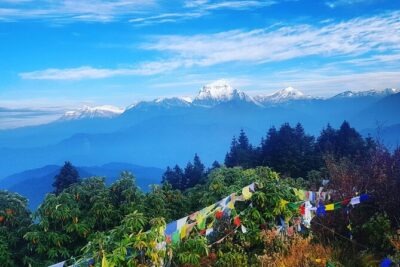
11-Day Hike Tour to Annapurna Base Camp Bliss in Kathmandu
Read our review →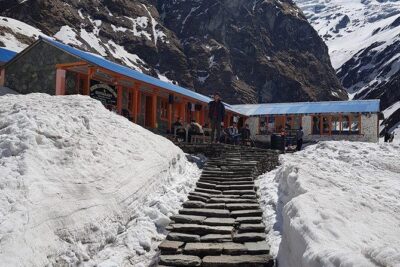
Browse the lists this tour appears in