
Reviewed · GHOREPANI POON HILL TREKS
Poon Hill Trek from Pokhara 4 Days
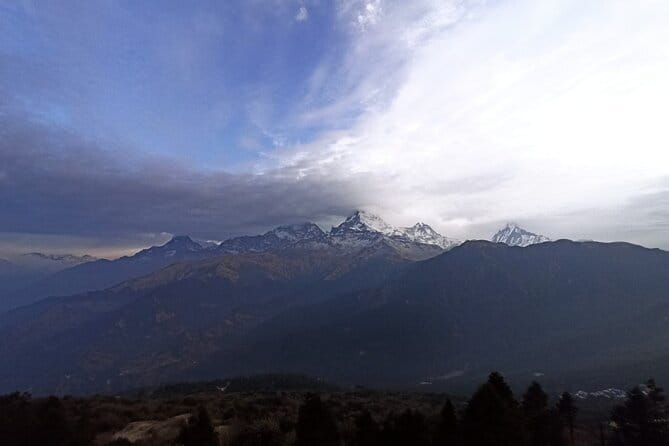
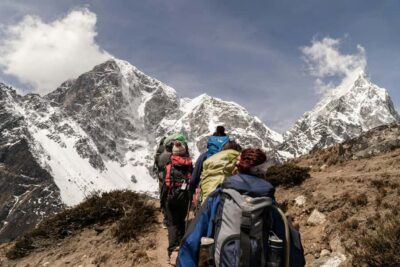
The best part of the Poon Hill Trek is the sunrise walk. You leave before dawn, climb to the viewpoint, and watch the first light reach Annapurna, Dhaulagiri, Fishtail, and nearby peaks. It is a big Himalayan view without committing to a long expedition.
I like the changing scenery, from terraced hills and subtropical forest to high mountain viewpoints. I also like the four-day format, which gives you a real village-to-village trek while keeping the trip manageable from Pokhara. The main catch is the walking: this is called an accessible trek, but steep stone steps and seven-hour days still demand decent fitness.
Key points to know before you book
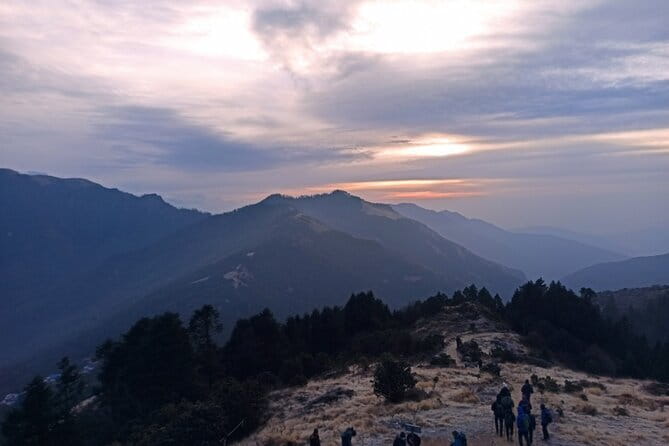
- Sunrise at Poon Hill: Start before dawn for the trek’s main reward, broad views of the Annapurna and Dhaulagiri ranges.
- Four days from Pokhara: The route links Ulleri, Ghorepani, Poon Hill, Ghandruk, and Pokhara in a compact mountain trip.
- Private group experience: Only your own party takes part, with an English-speaking trekking guide.
- Village-based walking: You pass through Magar and Gurung communities, with teahouse accommodation along the route.
- Local bus transfers: Shared local buses handle the road sections to and from the trail, keeping the price down.
- Good value at $230: The price includes transport, lodging, permits, guide services, and hotel pickup and drop-off, but not personal spending.
Why Poon Hill works so well as a short Himalayan trek
Poon Hill is a smart choice if you want a taste of Nepal’s mountain country without spending two weeks on a trail. The route gives you forests, fields, villages, streams, and snowy summits in a short span. You are not simply walking to one viewpoint and returning. Each day changes the setting.
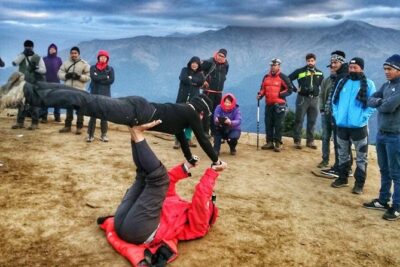
The trek also has a useful cultural side. Magar and Gurung villages line the route, and the walk gives you a chance to see mountain life beyond Pokhara’s hotels and cafés. The people are known for welcoming visitors, but you should still treat villages as homes rather than photo sets. Ask before taking close-up pictures and keep your pace respectful.
At $230 per person, the package is priced as a practical, guided trek rather than a luxury mountain holiday. You get hotel pickup and drop-off, shared local bus transfers, a guide, permits, a TIMS card, and guesthouse accommodation. That bundle removes several chores that can be awkward to arrange on your own.
The tradeoff is comfort. You should expect simple guesthouse lodging, not a private mountain resort. Personal expenses are separate, so budget for meals, drinks, snacks, and anything else you buy along the way. The supplied details do not give a meal package, so ask exactly what is covered before departure.
More Ghorepani Poon Hill Treks in Pokhara
- Poon hill Trek 3 days
★ 5.0 · 176 reviews - Pokhara: 4-Day Ghorepani, Poonhill & Ghandruk Mountain Trek
★ 5.0 · 132 reviews - Ghorepani – Poon Hill Trek 3N-4D
★ 5.0 · 125 reviews
Day 1: Pokhara to Nayapul, then the stone steps to Ulleri
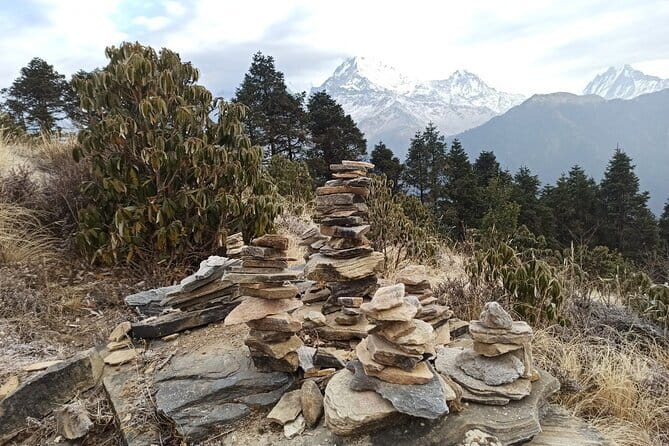
The first day begins with pickup in Pokhara and a local bus ride to Nayapul. The drive takes about an hour and brings you to the usual starting area for this trek. Shared transport helps keep the cost reasonable, though it can feel less polished than a private vehicle.
From Nayapul, you start walking toward Ulleri at about 2,070 meters, or 6,791 feet. The full day is listed at roughly seven hours, so do not treat this as a gentle stroll. Ulleri is known for its long uphill section, and the first day asks your legs to get used to sustained climbing early.
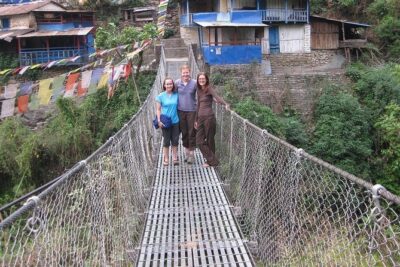
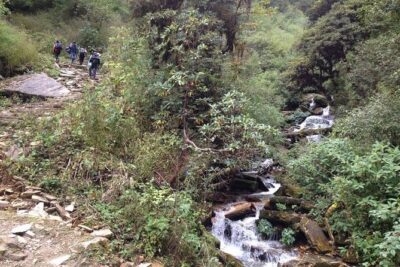
The reward is the shift from road travel to mountain walking. You move past terraced fields, forest, and mountain streams, with the valley opening and closing as the trail rises. The terraced hillsides show how carefully people farm steep ground in this part of Nepal.
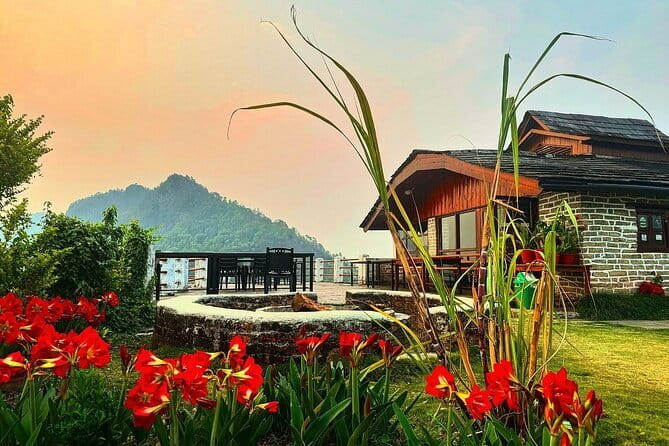
Ulleri is a useful overnight stop because it breaks the climb into manageable stages. Your accommodation is in a guesthouse, included in the package. Conditions are simple, and the day’s effort can make a hot meal and a bed feel especially welcome.
For this first morning, I would keep your daypack light and carry water, rain protection, a warm layer, and snacks. The data does not specify porter service, so do not assume someone else will carry your large bag. Confirm this before you leave Pokhara.
Day 2: Ulleri to Ghorepani through Magar country
Day two covers about six hours and takes you toward Ghorepani. One notable stop is Banthali, a village associated with the Magar community. The cultural setting matters here because the walk is not only about reaching a viewpoint. You are passing through settled mountain country, where farming, paths, homes, and guesthouses share the same steep terrain.
The route continues through rhododendron and oak forest. In season, rhododendrons can add strong color to the trail, while the oak sections provide a more enclosed woodland feel. Even when flowers are not in bloom, the forest gives the route variety and shade.
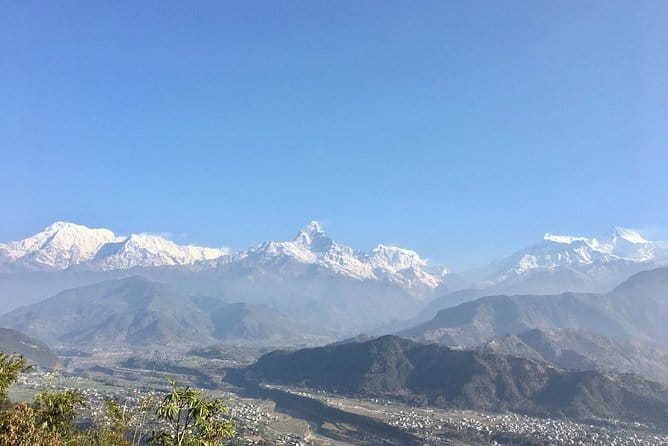
Views toward Annapurna South begin to shape the day. Annapurna South rises to 7,219 meters, or 23,684 feet, and the mountain appears as part of a larger chain of peaks that becomes more important as you approach Ghorepani.
Ghorepani is more than a bed for the night. It is the staging point for the early Poon Hill climb, so the second night is timed around the next morning’s pre-dawn start. You will want to organize clothing, water, and a headlamp or phone light before going to sleep.
The main consideration is the pace. Six hours on a mountain trail can feel much longer than six hours on a flat road. You should be comfortable walking uphill and downhill for several hours, and you should tell your guide early if your breathing, feet, or knees are struggling.
Day 3: Poon Hill sunrise, then the trail to Ghandruk
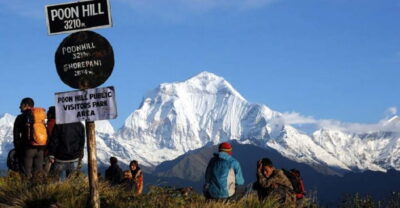
Day three contains the trip’s signature moment. You leave before sunrise and walk to the Poon Hill viewpoint. The climb is timed so you can reach the top before the light spreads across the peaks.
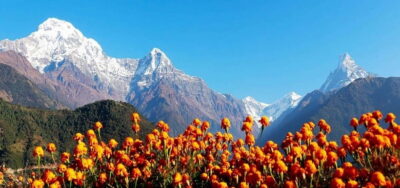
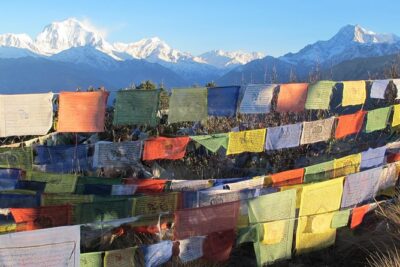
At the viewpoint, you wait for the sun to rise over the Himalayas. The first rays reach the Annapurna and Dhaulagiri ranges, and the view can include Annapurna I, Annapurna South, Dhaulagiri, Machhapuchhre, also called Fishtail, and Hiunchuli. Weather controls how much you see, so the sunrise is a genuine highlight but never a guaranteed performance.
This early start is both the strength and the nuisance of the trip. The reward is the quiet, changing light. The cost is a cold, dark walk after a short night. Bring warm clothing and be ready for a climb before breakfast.
After Poon Hill, you continue toward Ghandruk. The day is listed at about seven hours, making it the busiest part of the route. You will have already climbed before dawn, then continue through forest and mountain villages. Pace yourself rather than racing to the viewpoint.
Ghandruk is a particularly appealing stop because it is a well-known Gurung village with strong mountain views and a distinct local character. The route gives you time to see village paths and homes instead of keeping you at a single lookout. It is a good place to slow down after the early climb.
Some descriptions call Poon Hill suitable for beginners and families. That is fair only with a sensible definition of beginner. You do not need advanced mountaineering skills, but you do need moderate physical fitness, patience on steps, and the ability to handle long walking days.
Same mountains, a completely different kind of day:
- ZipFlyer Nepal – The World’s Steepest Zip-line
★ 5.0 · 608 reviews - Bungee Pokhara by HighGround Adventures
★ 5.0 · 366 reviews - From Pokhara: Sarangkot Sunrise Himalayas Tour
★ 4.7 · 218 reviews - ATV Adventure Tour in Pokhara, Nepal
★ 5.0 · 194 reviews
Day 4: Ghandruk back to Pokhara
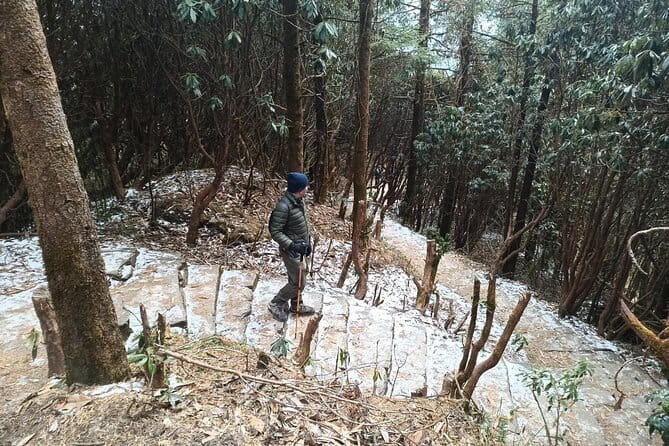
The final day begins with a downhill walk from Ghandruk toward the road connection and Pokhara. It is listed at around six hours. Downhill walking can sound easy, but steep steps often test knees more than uphill sections test lungs.
The route passes through rhododendron forest and gives you more chances to look back at the mountains. Annapurna I, Annapurna South, Dhaulagiri, Fishtail, and Hiunchuli may appear along the way when the weather is clear. The farewell views are part of the route’s charm, though clouds can change the scene quickly.
A scenic return makes this a satisfying four-day loop rather than a simple out-and-back walk. You finish with the sense of having crossed varied terrain and visited two different village areas, Ulleri and Ghandruk.
The package includes drop-off after the trek. Since the return road details are not specified, ask your operator where the vehicle meets the walking route and how long the final transfer usually takes. That small point can matter if you have a flight, hotel check-in, or another booking in Pokhara.
What the $230 price really covers
The price makes sense for someone who wants the practical parts handled. Hotel pickup and drop-off save you from arranging the first and last transfers. Shared local buses are included according to the route, and an English-speaking guide leads the walk.
Permits and the TIMS card are included as well. You need to provide passport details and a photo, with a selfie accepted for the permit process. Send those details promptly so there is no delay in preparing the paperwork.
Guesthouse accommodation is included, which is essential on a four-day route. The package does not include personal expenses. Since the supplied information does not specify meals, drinks, hot showers, charging, or other guesthouse extras, ask about those costs before you set off.
The booking is described as a private trek, even though the road transfers use shared local buses. That means your walking group is limited to your own party, while the transport to and from the trail is not necessarily private.
The price is strongest when you value a guide and organized permits. If you already know the route and prefer to arrange every guesthouse and bus yourself, you may find the package less necessary. For a first Nepal trek, the convenience is easier to justify.
Guides, organization, and the personal feel
A guide can make a major difference on a short trek because the schedule is tight. You need someone who can keep the group moving without turning the route into a race, explain local customs, and adjust the pace when the mountain says slow down.
Guides connected with this operator include Dadhi, Milan Rai, Sagar, Sham, and Bikram, while Purna Bahadur has also worked as a porter. Your assigned guide may be different, so confirm the name before departure. The important point is that the experience is private, not a large fixed group with strangers.
The guide’s cultural role is as useful as the route knowledge. You pass through Gurung and Magar communities, and a good guide can explain what you are seeing without turning village life into a staged show. Several accounts of the service praise polite, helpful guiding and careful arrangements, which fits the tour’s private format.
Still, do not expect the guide to remove every physical challenge. A well-organized trek remains a trek. Carry the items you need during the day, follow your guide’s advice, and be honest about your fitness.
The sunrise, the weather, and the risk of expectations
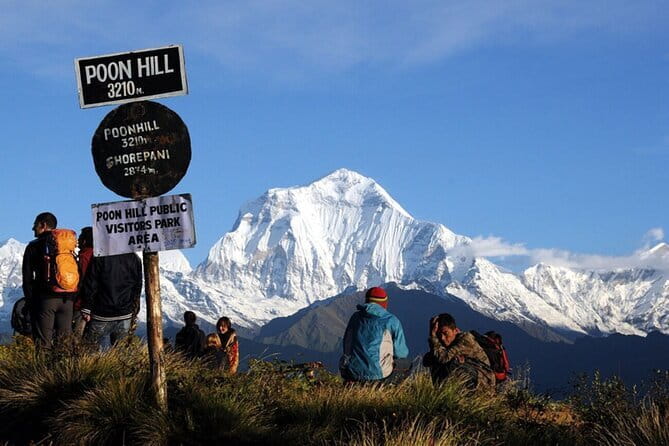
Poon Hill is famous because the viewpoint delivers a wide Himalayan panorama with a relatively short approach. That is the reason to book this route. The sight of dawn reaching the peaks can be unforgettable.
But mountain weather is not under the operator’s control. Clouds, rain, mist, or poor visibility can hide the range. The supplied experience notes praise excellent weather on some departures, but that should not be read as a promise for your dates.
The best approach is to value the walk even if the summit view is partial. Forests, fields, villages, and changing light still make up the route. Bring proper layers and rain protection rather than packing only for the sunny photograph you hope to take.
Who should choose this trek?
I would recommend it to you if you have four days, are based in Pokhara, and want a compact introduction to Himalayan walking. It also suits people who prefer a private group and want permits, transport, and a guide arranged in advance.
It can work for families and first-time trekkers who have moderate fitness and realistic expectations. The word accessible means no technical climbing, not flat paths or effortless days.
I would be cautious if you dislike early mornings, steep steps, simple guesthouses, shared bus rides, or long walking days. I would also avoid scheduling a tight flight immediately after the trek unless you have confirmed the return timing.
Free cancellation is available up to 24 hours before the start time for a full refund. Cancellations or changes inside that 24-hour window are not refunded or accepted, based on local time.
Should you book the Poon Hill Trek from Pokhara?
Book it if the idea of a pre-dawn climb to a Himalayan sunrise appeals to you and you want the rest handled in a compact package. The combination of Poon Hill, Ghorepani, Ghandruk, village culture, permits, lodging, and guide service gives you a lot in four days.
Skip it if you want a relaxed sightseeing holiday or private transport at every stage. The local buses and long walking days are part of the value, but they are also the parts most likely to test your patience.
For most fit visitors with limited time in Nepal, this is a sensible first trek. Confirm the guide’s name, meal arrangements, luggage help, and return timing before paying. Then pack for cold mornings, muddy weather, and steep steps, not just clear mountain photos.
FAQ
How long is the Poon Hill Trek from Pokhara?
The experience lasts approximately four days. The walking days are listed at about seven hours, six hours, seven hours, and six hours.
What places does the trek visit?
The route includes Nayapul, Ulleri, Ghorepani, Poon Hill, Ghandruk, and Pokhara.
Is transportation included?
Yes. Hotel pickup and drop-off are included, along with round-trip transfers by shared local bus according to the scheduled route.
Is the trek private?
Yes. Only your own group participates in the trekking activity. The local bus transfers are shared.
Is accommodation included?
Yes. Guesthouse accommodation is included during the trek.
Is a guide provided?
Yes. An English-speaking trekking guide is included.
Are permits included?
Yes. The trekking permit and TIMS card are included. You must provide passport details and a photo, and a selfie can be used for the photo requirement.
What happens if I cancel?
You can receive a full refund if you cancel at least 24 hours before the experience start time. Cancellations and changes made less than 24 hours in advance are not refunded or accepted.
More 4-Day Experiences in Pokhara
- Pokhara: 4-Day Mardi Himal Trek
★ 4.9 · 59 reviews - 4-Day Private Poon Hill Trekking Tour
★ 5.0 · 58 reviews - Pokhara: 4-Day Private Trek Tour
★ 4.9 · 43 reviews - From Pokhara: 4-Day Mardi Himal Base Camp Trek
★ 4.9 · 31 reviews
More Hiking & Trekking in Pokhara
- Trekking in Annapurna/Langtang/Everest/Upper Mustang regions
★ 5.0 · 161 reviews - Pokhara: Annapurna Foothills Day Hike with Transfers
★ 5.0 · 100 reviews - Kathmandu/Pokhara: 5-Day Annapurna Base Camp (ABC) Trek
★ 4.9 · 72 reviews - From Pokhara: 3-Day Ghorepani Poon Hill Trek with Guide
★ 4.9 · 68 reviews
Just added around Pokhara
- Seti George and Thrilling Suspension Bridge Tour at Pokhara★ 4.5 · 3 reviews
- Tandem Paragliding in Pokhara★ 4.8 · 8 reviews
- Pokhara: Suspension Bridge Private Tour- 30 Min Village Walk★ 4.8 · 9 reviews
- Pokhara: Visit Best Seven Tourist Destination by Sharing Bus★ 3.4 · 10 reviews
- Pokhara: Sunrise Tour to Sarangkot★ 5.0 · 3 reviews
- Pokhara Sightseeing By Bus: Day Trip★ 4.6 · 7 reviews
- Pokhara Sightseeing By Bus – Day Trip★ 3.2 · 8 reviews
- Pokhara: Sarangkot Sunrise & Panoramic Annapurna View Tour★ 4.8 · 10 reviews
Ghorepani Poon Hill Treks, compared.
4-Day Ghorepani, Poonhill & Ghandruk Mountain Trek
Read our review →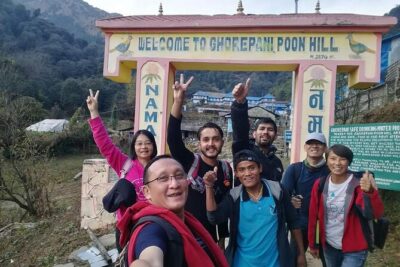
Browse the lists this tour appears in