Reviewed · ANNAPURNA BASE CAMP TREKS
Pokhara: 7-Day Annapurna Base Camp Via PoonHill & Hot Spring
The big draw here is the route’s double reward: Poon Hill at sunrise and Annapurna Base Camp at 4,130 meters. You get a quick taste of classic Himalayan scenery, then push farther into the mountains before ending with a hot spring soak at Jhinu Dada.
I like the efficient seven-day plan and the care built into the guiding. Guides such as Mahesh and Prakash have been praised for answering questions, adjusting the pace, and looking after trekkers, while porters such as Bishal, Avinesh, and Sujal have added strong support. The catch is simple: this is a demanding trek, with long uphill and downhill days, high altitude, and basic mountain accommodation.
Key points to know before booking
- Poon Hill reaches 3,210 meters, giving you a major sunrise viewpoint early in the trek.
- Annapurna Base Camp rises to 4,130 meters, the physical high point and main goal of the route.
- The final day includes Jhinu Dada hot springs, a welcome break for tired legs.
- A private group and live guide allow more direct communication and possible pace adjustments.
- The $267 price includes major trek costs, including permits, meals on the full package, accommodation, guide expenses, and 4WD transport.
- Porters, drinks, insurance, bottled or boiled water, showers, and personal costs are extra, so budget beyond the headline price.
Why this seven-day route works
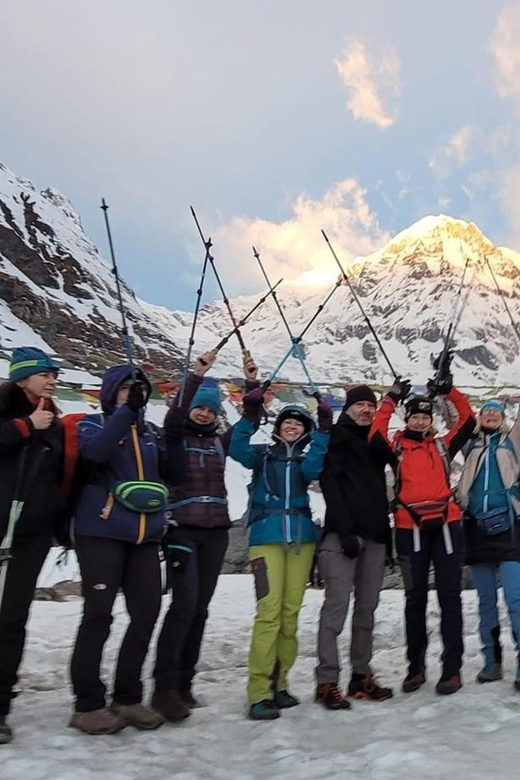
The Annapurna Base Camp trek is famous for bringing you into a huge natural bowl surrounded by high peaks. This version adds Poon Hill first, so you get a broad sunrise view before following the Modi River toward the base camp.
That makes the trip feel full without requiring a very long holiday. In seven days, you see villages, forests, rivers, mountain viewpoints, high-altitude scenery, and hot springs. You also avoid spending the whole trek on one type of trail.
The route is not easy. You begin with a vehicle ride and a steep walk to Ghorepani, then climb Poon Hill before descending and later gaining altitude again. Day 5 reaches 4,130 meters, and the return involves several hours of downhill walking. I would choose this only if you are comfortable with sustained walking and can handle simple tea house conditions.
The private-group format is useful here. At this altitude, people move at different speeds. A guide who can adjust the route to your ability, as Mahesh did on one departure, can make the difference between a hard but rewarding day and a miserable one.
More Annapurna Base Camp Treks in Annapurna Region
- Pokhara: 7 Day Annapurna Base Camp Trek
★ 4.9 · 38 reviews - From Pokhara: 10-Day Poon Hill and Annapurna Base Camp Trek
★ 5.0 · 7 reviews - Annapurna Base Camp Heli Tour
★ 5.0 · 7 reviews
Day 1: Pokhara to Ulleri and Ghorepani
Your first day begins with pickup in Pokhara and a scenic 4WD drive toward Nayapul. The drive takes about three hours, then the walking section to Ghorepani takes roughly four hours.
The road follows streams and passes through small villages before reaching Ulleri. From there, you continue on foot through rhododendron forest toward Ghorepani, at about 2,840 meters.
This is a smart first night for the route because it places you close to Poon Hill. You do not spend the whole next morning making a long approach to the viewpoint. Instead, you can get up early, walk to the sunrise position, and return to Ghorepani for breakfast.
The day has a practical drawback: the combination of a long drive and four hours of uphill walking can feel tougher than the clock suggests. The ascent from the lower villages to Ulleri and Ghorepani is the main work. Wear shoes with good grip, keep your day bag light, and do not treat the drive as a rest day.
Your overnight stay is in a tea house. Accommodation on this route is part of the mountain experience, but it is not a hotel holiday. Expect basic facilities and plan to pay separately for showers, charging, drinks, and some personal services.
Day 2: Poon Hill sunrise, Tadapani, and Chuile
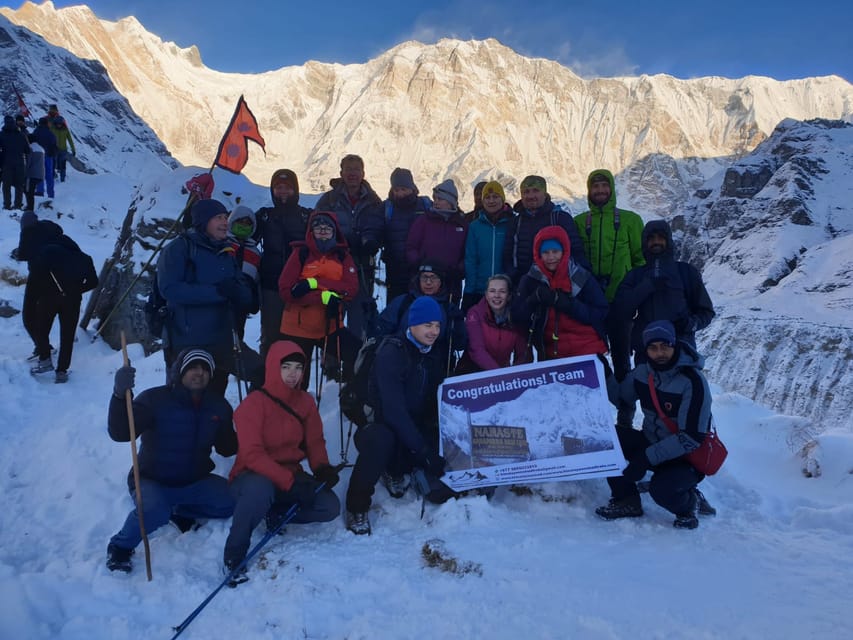
Day 2 begins with the trek’s first major highlight. You climb to Poon Hill at 3,210 meters for sunrise and mountain views, then return to Ghorepani for breakfast.
The viewpoint is valuable because it gives you a wide look at the Annapurna range and surrounding peaks. It also offers a different kind of mountain view from Annapurna Base Camp. At Poon Hill, the reward is a broad panorama. At base camp, the peaks surround you more closely.
After breakfast, you descend toward Tadapani and continue to Chuile, at around 2,400 meters. The walking time is about six hours, and much of the route passes through forest.
This is a full day, not just a sunrise outing. The early start can leave you tired before the main walk begins, while the descent puts pressure on knees and thighs. Still, the day has excellent variety: sunrise, village stops, forest trails, and changing views as you lose altitude.
The overnight stay is in a hotel in Chuile. The route description also refers to Tadapani and Chuile together, so your exact overnight point may depend on the day’s arrangements and pace. Ask the operator to confirm the night’s accommodation before departure if this matters to you.
Day 3: Chuile to Sinuwa beside the rivers
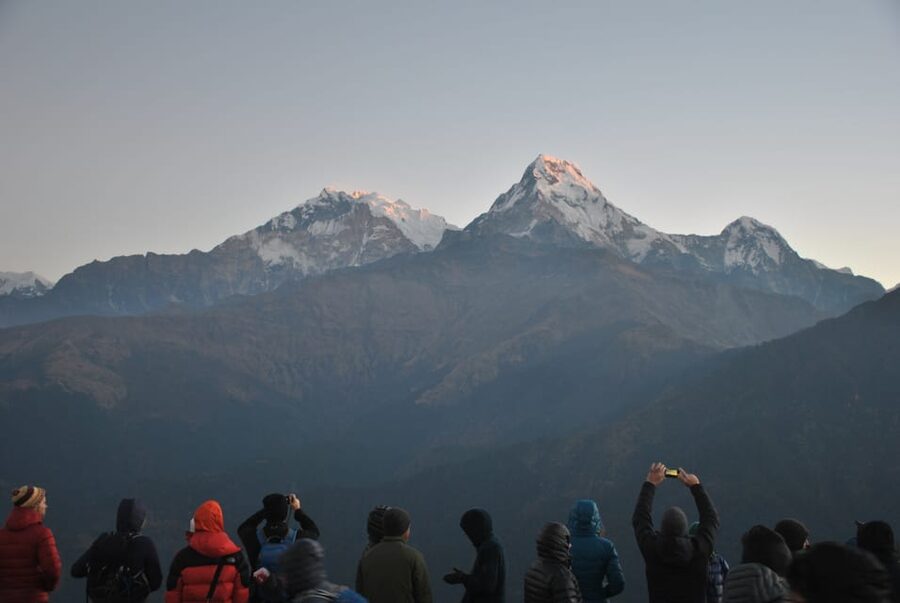
The third day takes you toward the Annapurna Base Camp section. You cross the meeting point of the Kumrung and Modi Rivers and then continue alongside the water.
The route takes about five hours and finishes at Sinuwa, around 2,170 meters. Compared with the previous day, this is a useful transition. You leave the higher Poon Hill area and enter the river corridor that leads deeper into the Annapurna region.
I like this part because the river gives the day a clear sense of direction. Instead of simply walking from one village to another, you follow a natural route toward the mountains. The sound and presence of the water also break up the long walking hours.
Do not read the lower altitude as proof that the day is easy. Trekking includes repeated rises and falls, and the route may feel tiring after the early morning and long descent of Day 2. Keep your pace steady. Your guide can help you avoid turning the first few days into a race.
More Ghorepani Poon Hill Treks in Annapurna Region
- Pokhara: 2 & 3 Days Ghorepani Poon Hill Private Guided Trek
★ 4.9 · 27 reviews - Pokhara: 2-Day Short & Sweet Ghorepani Poon Hill Guided Trek
★ 5.0 · 6 reviews - Pokhara: 3-Day Ghorepani, Poon Hill and Ghandruk Guided Trek
★ 4.4 · 4 reviews - Pokhara: Poon Hill Trek
★ 5.0 · 3 reviews
Day 4: Sinuwa to Dovan and Deurali
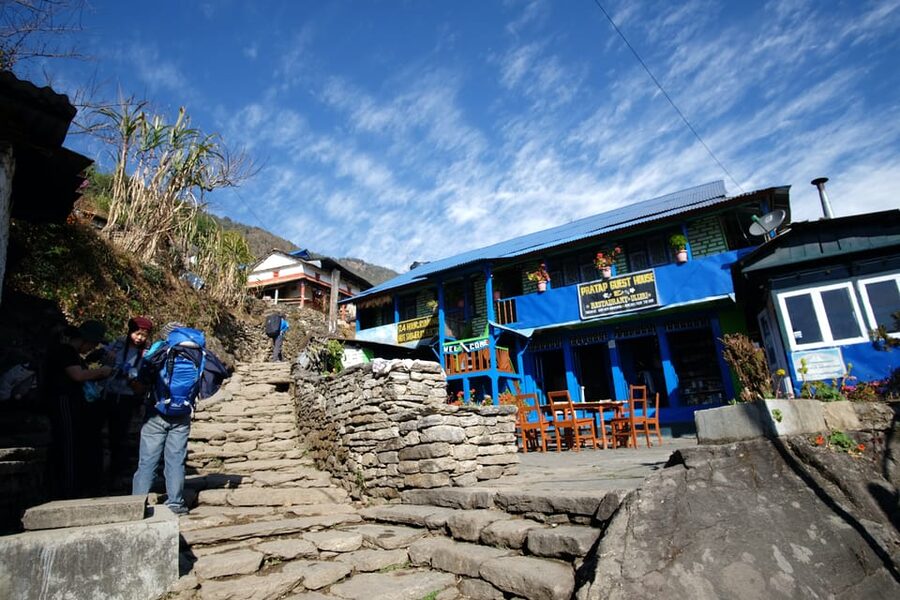
Day 4 covers about six hours from Sinuwa to Deurali, at 3,200 meters. You pass through bamboo and rhododendron forests, reach Dovan, and continue upward.
This is where the trek starts to feel more serious. The route gains altitude again, and Deurali places you close to the final approach to base camp. Along the way, you get views toward Annapurna and Machhapuchhre, also known as Fishtail Mountain.
The forests make this day more than a simple climb. Bamboo and rhododendron create a different setting from the open viewpoint at Poon Hill and the river corridor below. The changing scenery is one reason this itinerary earns its place as a multi-day trek rather than a fast out-and-back excursion.
Deurali at 3,200 meters is also an important night for pacing. You are preparing for the 4,130-meter base camp the next day. Eat properly, drink enough water, and tell your guide if you feel unwell. The supplied information does not include a medical evacuation plan, and rescue insurance is not included, so you need to arrange suitable travel and rescue cover yourself.
Day 5: The climb from Deurali to Annapurna Base Camp
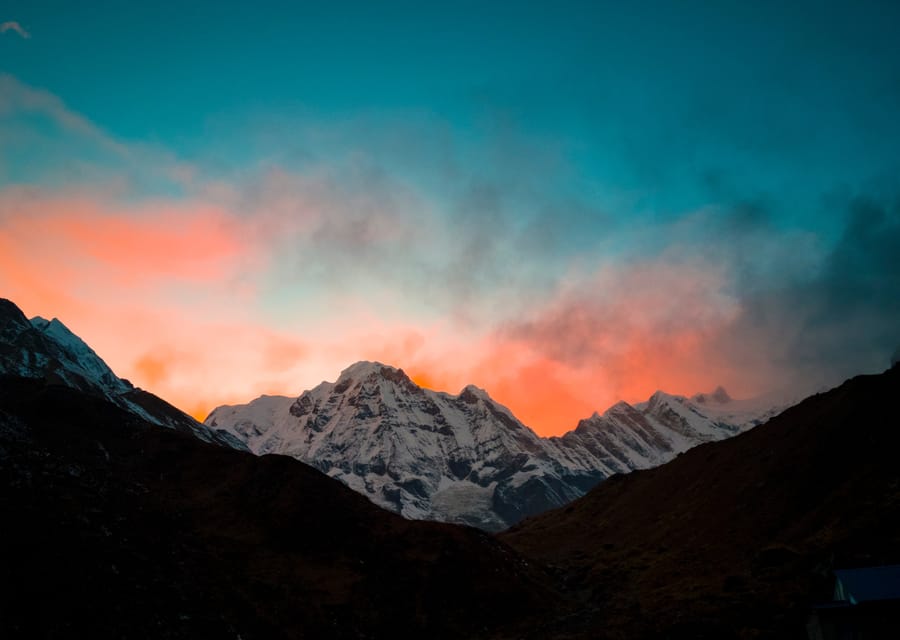
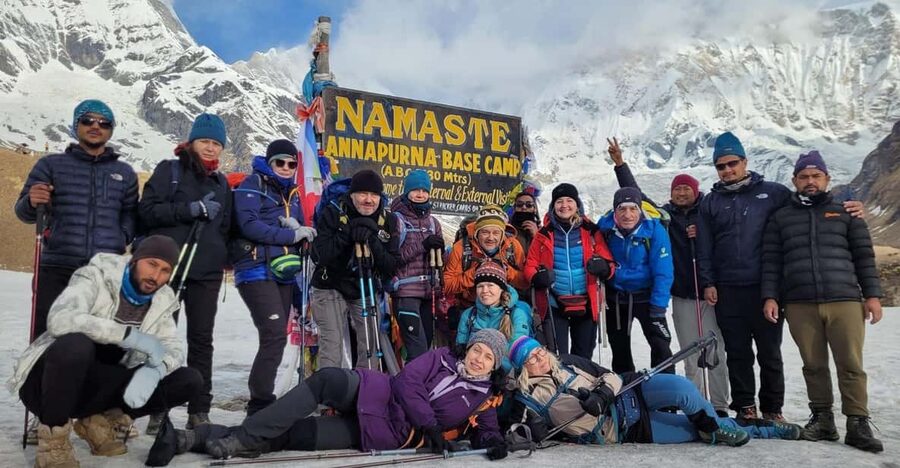
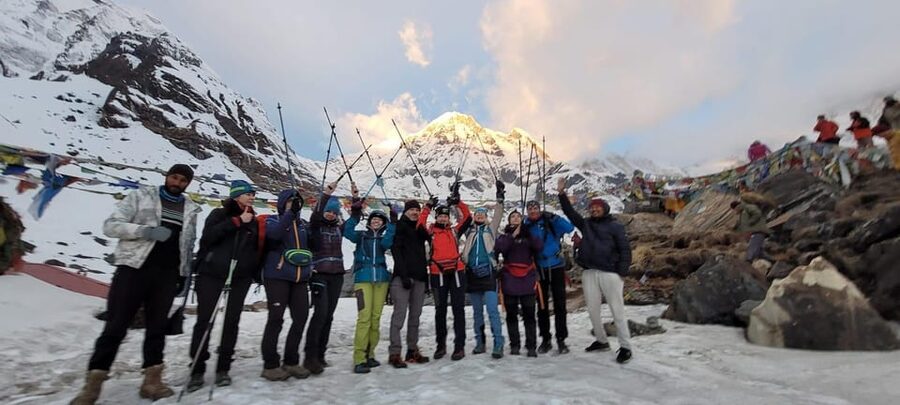
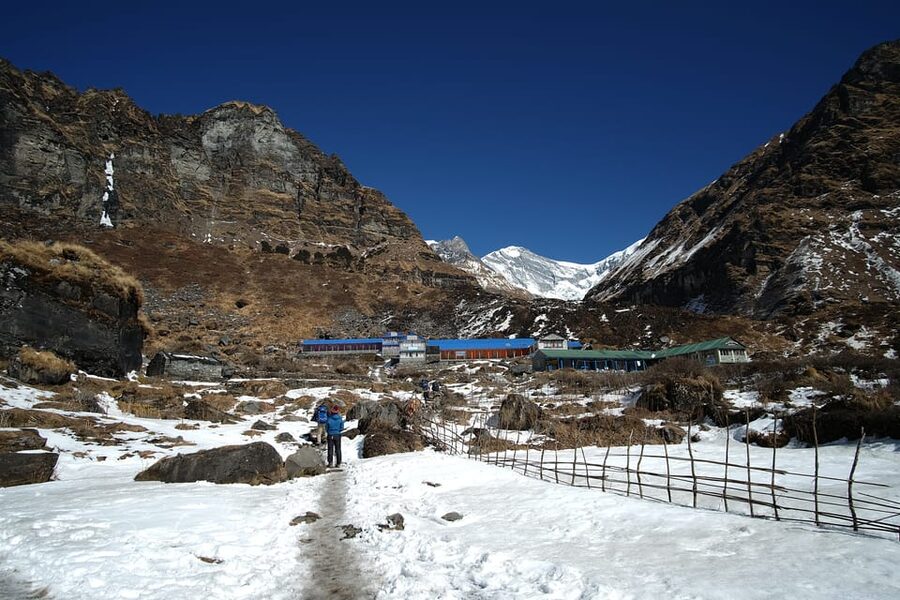
This is the central day of the trip. You walk for about six hours from Deurali to Annapurna Base Camp, reaching 4,130 meters.
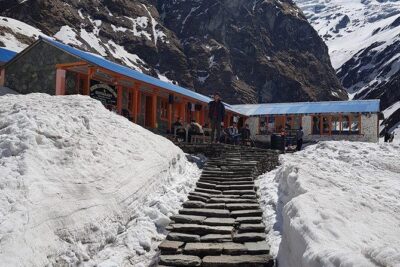
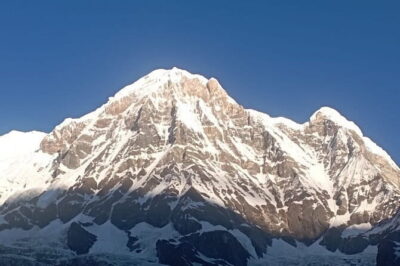
The route leads into an enormous mountain amphitheater, with snow-covered peaks and dramatic glacier scenery around you. This is the moment the earlier village walks, forests, river crossings, and altitude gains come together.
The base camp itself is not just a signpost or a quick photo stop. The setting is the reward. You have reached a high point surrounded by some of the most impressive peaks in the Annapurna region.
The main concern is altitude. The itinerary moves from Deurali at 3,200 meters to base camp at 4,130 meters in one day. Six hours of walking at that height can be demanding even for a fit person. Walk slowly, listen to your guide, and do not hide symptoms because you want to reach the destination.
The supplied plan does not give a separate acclimatization day. That keeps the trip to seven days, but it also makes the schedule more intense. I would favor this version if your time is limited and you want a concentrated route. If you prefer a slower altitude plan, ask about alternatives before booking.
Day 6: Returning from base camp to Bamboo
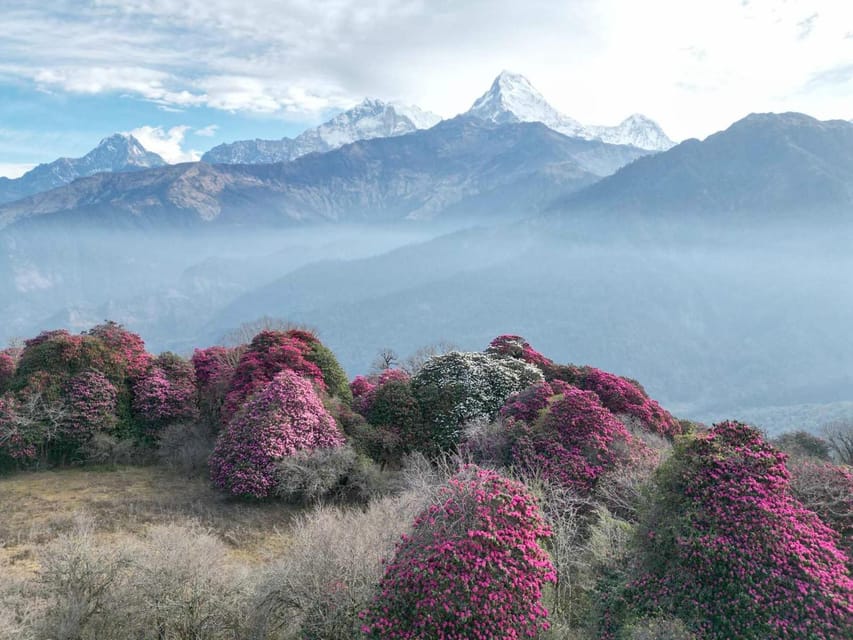
After the base camp night, you retrace the route to Bamboo at about 2,300 meters. The walking time is around six hours.
This day is mostly downhill, but downhill is not the same as easy. After the long ascent and high-altitude night, your knees and feet may feel the strain. Trekking poles can help, and careful footing matters on uneven sections.
The return route gives you another chance to see the mountains and forests, this time with the satisfaction of knowing you have reached the goal. The change in altitude should also feel noticeable as you descend.
Bamboo is a practical overnight stop. It breaks up the return journey and keeps the final day manageable. You are not expected to walk all the way back to Pokhara from base camp, which would make the schedule far too punishing.
Day 7: Bamboo to Jhinu Dada and Pokhara
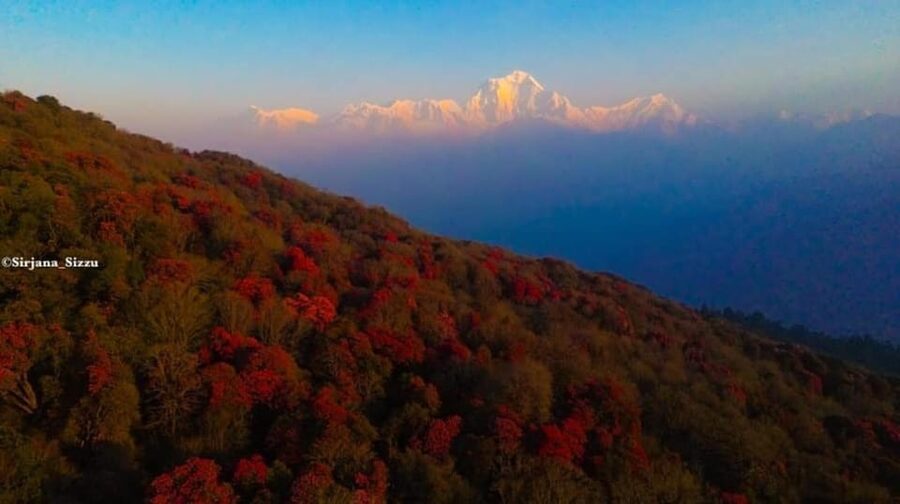
The final day combines a five-hour trek, a hot spring visit, and a 2.5-hour drive back to Pokhara.
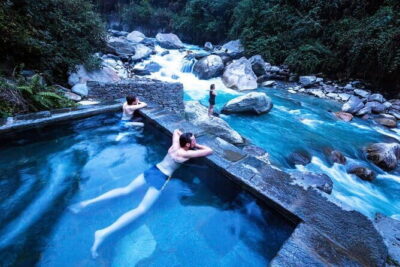
You descend from Bamboo to Jhinu Dada, at about 1,600 meters, then have around two hours to relax in the natural hot springs. After several days of climbing and descending, this is exactly the kind of ending that makes practical sense.
The hot spring is not an optional decorative extra. It gives your legs a chance to rest before the final transfer and adds a distinct local experience to the trek. Bring suitable swimwear and a small towel if you have room, although towels are not listed among the included items.
After the soak, you trek for about 30 minutes to Samrung and board a jeep for Lakeside Pokhara. The drive takes roughly 2.5 hours. Your return time can vary with the trek pace and road conditions, so avoid scheduling an important evening flight immediately afterward.
What the $267 price really covers
At $267 per person, this trip offers good value if you choose the full package and make use of the included services. The price covers an English-speaking or local guide, hotel pickup and drop-off, permits, necessary paperwork, the Trekkers Information Management System fee, government taxes, trek accommodation, and 4WD transportation according to the itinerary.
The full package also includes breakfast, lunch, and dinner during the trek. Confirm that your booking is for the full package, since the meal inclusion is specifically tied to that option.
The operator also covers the guide’s meals, accommodation, salary, equipment, insurance, and transport. That matters because guide costs can otherwise appear later as add-ons.
The price does not cover porters, though they are available to purchase. It also excludes soft and hard drinks, bottled or boiled water, showers, battery charging, laundry, phone calls, bar bills, and other personal costs.
Travel and rescue insurance is not included. Neither are international flights, the Nepalese visa fee, sightseeing entrance fees, or extra nights in Pokhara caused by early arrival, late departure, or an early return from the mountains outside the planned schedule.
I would not judge the value by the $267 figure alone. Add money for water, drinks, charging, showers, personal spending, insurance, and a porter if you want help carrying your bag. Even with those additions, the package covers the major structural costs of a seven-day private trek.
Guides, porters, and the private-group advantage
The strongest part of the service is the attention from the trekking team. Guides named on recent departures include Mahesh and Prakash, and their roles went beyond leading the path. They answered questions, explained the area, adjusted the route to walking ability, and helped keep the trip enjoyable.
Porters including Bishal, Avinesh, and Sujal have also been singled out for their work and companionship. Porter service is not included in the headline price, so arrange it in advance if you do not want to carry your own larger bag.
The activity is offered as a private group with live guiding in English, Hindi, or Nepali. That is a strong fit for couples, families with suitable fitness, or friends who want a schedule shaped around their group rather than a large fixed party.
The guide quality still matters more than the label private. Ask who will lead your departure, how many people will be in the group, whether a porter is included in your chosen package, and what happens if someone needs to slow down.
Food, accommodation, and what to pack
Meals are included during the trek on the full package, with breakfast, lunch, and dinner provided. The information does not specify menus, so you should not book this expecting a particular cuisine or a wide restaurant selection.
Accommodation is in available tea houses and hotels along the route. The mountain nights are part of the trade-off for reaching base camp in seven days. A sleeping bag is listed as something to bring, and I would take that recommendation seriously.
Pack for changing conditions rather than for one warm Pokhara day. The suggested list includes:
- Passport or ID card
- Comfortable walking shoes
- Sunglasses and sunscreen
- A jacket
- Comfortable clothing
- Sleeping bag
- Trekking gear
You will also want a small day bag for water, sun protection, warm layers, and personal items. Bottled or boiled water is extra, as are showers and battery charging, so plan how you will manage those costs and needs.
Pregnant women should not book this activity. The altitude, long walking days, and basic mountain conditions make the trip unsuitable.
Who should choose this trek?
I would choose this route if you have seven days, want both Poon Hill and Annapurna Base Camp, and prefer a private group with guide support. It suits someone who wants a compact schedule packed with different scenery and does not mind early starts or long walking days.
It is also a good option if a guide who can adjust the pace is important to you. The presence of named guides with strong care and communication skills is encouraging, but you should still confirm the guide assigned to your date.
I would hesitate if you have little experience with sustained walking, dislike basic accommodation, or want a relaxed holiday with plenty of spare time. The route reaches 4,130 meters without a scheduled acclimatization day, and the combination of early Poon Hill sunrise, long ascents, and descents asks a lot from your legs.
The trek is not suitable for pregnant women. Everyone else should arrange travel and rescue insurance and discuss medical concerns with a qualified professional before booking.
Booking flexibility and practical details
Hotel pickup and drop-off are available, and you should wait in your hotel lobby 10 minutes before the scheduled pickup. Starting times vary, so check availability for your chosen date.
Free cancellation is available up to 24 hours before the activity for a full refund. You can also reserve now and pay later, which helps if your Pokhara plans are still shifting.
The package is designed for a direct start from Pokhara and a return to Lakeside Pokhara on Day 7. Do not assume that an extra Pokhara night is included if you arrive early, leave late, or return early because of a change outside the scheduled itinerary.
Should you book the Annapurna Base Camp via Poon Hill trek?
Book it if you want a high-value, tightly planned Himalayan trek that combines a famous sunrise viewpoint, a 4,130-meter base camp, forest and river walking, and a hot spring finish.
Before paying, confirm three things: that you are buying the full package with meals, whether a porter is included or available at an extra cost, and which guide will lead your group. Then budget for insurance, water, showers, charging, drinks, and personal expenses.
For a fit person with limited time, this seven-day route offers a lot. For someone who wants slow acclimatization or hotel comfort, it may be too compressed and too basic. Make the choice based on your legs, not just your holiday calendar.
FAQ
How long is the Annapurna Base Camp via Poon Hill trek?
The trek lasts seven days, beginning and ending in Pokhara.
What is the highest point on the trek?
Annapurna Base Camp is the highest point, at 4,130 meters. Poon Hill reaches 3,210 meters.
Does the route include Poon Hill sunrise?
Yes. On Day 2, you climb to Poon Hill for sunrise and mountain views before returning to Ghorepani for breakfast.
Is the group private?
Yes. The activity is offered as a private group with a live guide.
Which languages are available for the guide?
Guiding is available in English, Hindi, and Nepali.
Are meals included?
Breakfast, lunch, and dinner are included during the trek when you choose the full package.
Is transportation included?
Yes. The itinerary includes 4WD jeep transportation according to the group size and scheduled route, including the Pokhara transfers described in the program.
Is travel and rescue insurance included?
No. Travel and rescue insurance are not included and must be arranged separately.
More 7-Day Experiences in Annapurna Region
- Annapurna Base Camp Trek from Pokhara 7 Days
★ 5.0 · 19 reviews - 7 days Nepal Motorcycle tour
★ 5.0 · 12 reviews - Kathmandu to Langtang Valley 7-Day Trek
★ 5.0 · 11 reviews - Pokhara: 7-Day Annapurna Base Camp Trek & Natural Hot Spring
★ 5.0 · 11 reviews
More Spa & Hot Springs in Annapurna Region
- Pkr/Kathmandu: 5-Day Annapurna Base Camp & Hot spring Trek
★ 5.0 · 6 reviews - Pokhara: Amazing 7-Day ABC Trek with Natural Hot Spring
★ 5.0 · 5 reviews - Pokhara: 5-Day Annapurna Base Camp Trek with Hot Spring
★ 5.0 · 3 reviews - Whole Day Massage & Spa With Lunch
★ 5.0 · 54 reviews
Just added around Annapurna Region
- Pokhara: Poon Hill Trek★ 5.0 · 3 reviews
- Pokhara: Day Hiking to Australian Base Camp with Lunch★ 5.0 · 4 reviews
- Pokhara: Hike To Australian Base Camp★ 3.5 · 4 reviews
- Pokhara: Annapurna Foothills Private Day Hike with Transfers★ 5.0 · 3 reviews
- From Pokhara: Annapurna View Day Hike★ 5.0 · 3 reviews
- Pokhara: Amazing 7-Day ABC Trek with Natural Hot Spring★ 5.0 · 5 reviews
- Pokhara: 5-Day Annapurna Base Camp Trek with Hot Spring★ 5.0 · 3 reviews
- Pokhara: 4-Day Mesmerizing Mardi Himal Guided Trek★ 4.8 · 9 reviews
Annapurna Base Camp Treks, compared.
Kathmandu to Annapurna Base Camp (ABC) 5-Day Trek
Read our review →
Kathmandu/Pokhara: 5-Day Annapurna Base Camp (ABC) Trek
Read our review →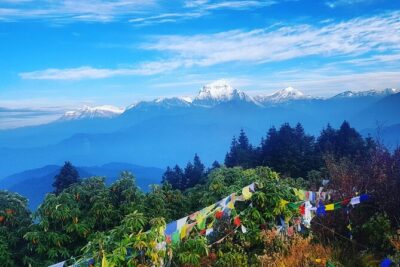
11-Day Hike Tour to Annapurna Base Camp Bliss in Kathmandu
Read our review →