
Reviewed · ANNAPURNA BASE CAMP TREKS
Private 7 – Day Annapurna Base Camp Trekking
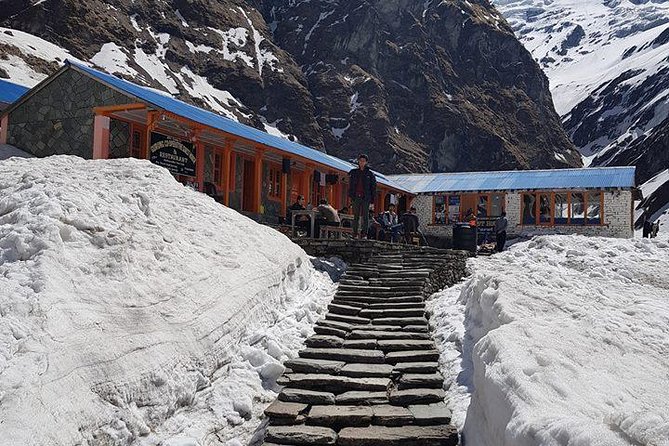
Reaching Annapurna Base Camp in seven days is the headline here, but the real pleasure is the steady change in scenery: stone steps, river bridges, bamboo forest, alpine woodland, icy walls, and finally a great bowl of snow-capped peaks. You sleep in tea houses, eat along the trail, and travel with your own guide and porter rather than joining a large group.
I like the private format, since your guide can respond to your pace and needs. I also like the practical package: meals, lodges, permits, porter service, transport, a trekking map, water purification, and oxygen saturation checks are included. Guides such as Sanjay, Amar, Laxman, Andrea, and Ram have been praised for personal care and sensible changes to plans.
The main caution is the pace. Seven days is short for a high-altitude trek, and the route includes long uphill stretches, 2,500 stone steps, and up to eight hours on foot in one day. You need moderate fitness, travel insurance, and a willingness to accept basic tea-house lodging.
Key points to know before you book
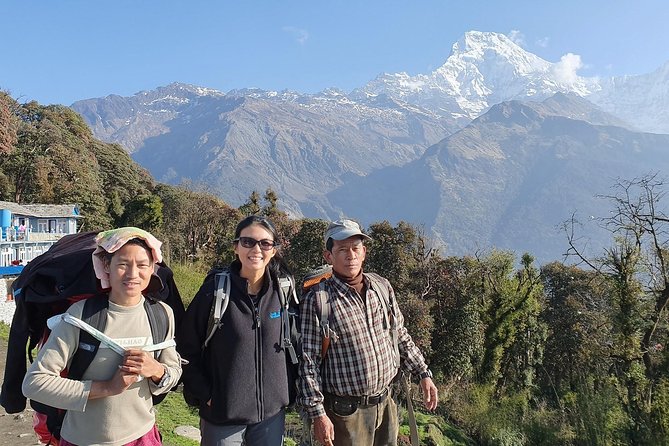
- A private seven-day route from Pokhara: Only your party takes part, with a start at 8:15 am from Pokhara Lakeside and a return to the same meeting point.
- Guide and porter costs are included: A government-registered trekking guide and porters are covered, along with their expenses.
- Meals and tea-house lodging are part of the price: The package includes seven breakfasts, six lunches, six dinners, and lodge accommodation along the trail.
- The route mixes forest, villages, and high mountain views: Expect Chhomrong, Sinuwa, Bamboo, Deurali, Annapurna Base Camp, and Jhinu Danda hot spring.
- The hardest day is likely the eight-hour stretch: Day five includes time at base camp and a long return through the Annapurna region.
- The price covers important logistics: At $625 per person, permits, overland transport, rescue assistance, water purification, and government charges are included.
Why this short Annapurna route works
This trek gives you a compact taste of the Annapurna region without asking you to organize every detail yourself. From Pokhara, the operator handles the transport, permits, guide, porter, food, and lodging, leaving you to concentrate on walking and adjusting to the changing altitude.
The private setup matters. You are not tied to the speed of a large group, and the supplied experiences show that the team has adjusted plans when people needed a different pace or schedule. That flexibility is useful on a mountain route, where weather, fitness, and tired legs can change the day quickly.
The route is not a gentle stroll. The stone stairways around Chhomrong can be tiring, and the trail repeatedly rises and falls. One especially honest description of the route is that it contains plenty of forest walking and stairs, with the mountain views providing the payoff. I would take that seriously: the scenery is excellent, but your knees will have an opinion.
At $625, the value is strongest if you want a guided trek with the major costs bundled together. You are paying for a private experience, a government-registered guide, porters, accommodation, six days of lunch and dinner, permits, road transport, and practical safety support. You still need to budget separately for hotel stays in Kathmandu and Pokhara, travel insurance, and tips.
More Annapurna Base Camp Treks in Pokhara
- Kathmandu/Pokhara: 5-Day Annapurna Base Camp (ABC) Trek
★ 4.9 · 72 reviews - Annapurna Base Camp Trek (8 days)
★ 5.0 · 45 reviews - Annapurna Base Camp Trek from Pokhara 7 Days
★ 5.0 · 19 reviews
Day 1: Chhomrong and the first mountain views
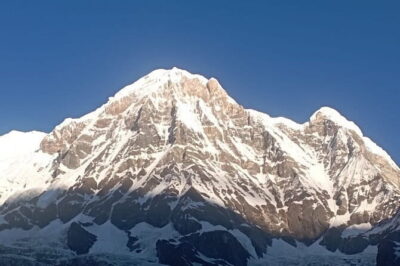
The first day centers on Chhomrong, a village with an impressive breakfast setting. From the terrace, you can look toward Annapurna I at 8,091 meters and Machhapuchhre at 6,997 meters while getting ready for the trail.
After breakfast, the plan calls for a private jeep journey of about two and a half hours. The day is listed at roughly three hours, so this is more of a positioning day than a long walk. That is useful because it puts you into the trekking area quickly, but you should clarify the exact pickup and road details before departure.
Chhomrong is important to the route because it links the lower villages with the trail toward Annapurna Base Camp. You begin with village life and broad mountain views rather than spending the first day grinding up a long trail.
Your start point is at 8:15 am in Pokhara Lakeside, at the stated meeting point on Lakeside Road. Pickup is offered, but the exact arrangement should be confirmed when you book.
Day 2: Stone steps, Sinuwa, and Bamboo
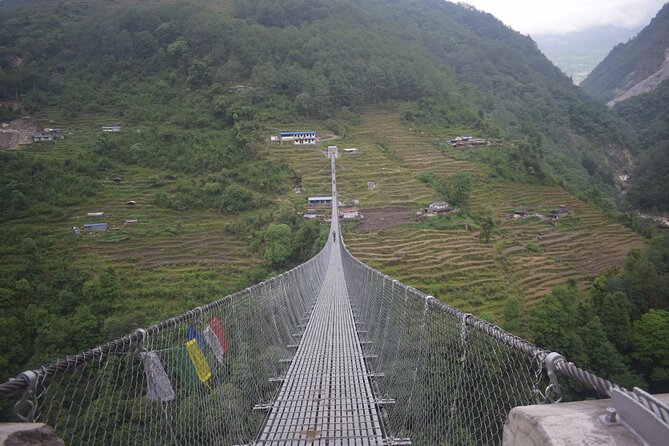
Day two brings the route’s first serious physical test. You descend 2,500 stone steps and cross a bridge above the Chhomrong Khola before climbing again toward Sinuwa.
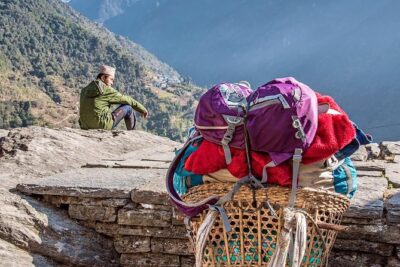
This is classic Himalayan trail design: down first, up later. The descent can feel harder than expected, especially if you are carrying a daypack. The guide and porter arrangement helps because you do not need to carry all your gear yourself.
Lunch is planned at Sinuwa, followed by the trek to Bamboo. The walking time is about six hours. Bamboo is surrounded by forest, so this section is less about grand mountain views and more about the texture of the trail, river sounds, trees, steps, and passing village routes.
I like this day because it shows you what the trek really is. You are not simply walking toward a viewpoint. You are following an old mountain route that rises and falls through working villages and forest.
Day 3: Dovan, the Weeping Wall, and Deurali
From Bamboo, the trail climbs toward the Himalaya Hotel area, passing Dovan along the way. The route continues beside dramatic rock faces and a section known as the Weeping Wall, with a local shrine adding a small cultural detail to the walk.
The day is listed at about five hours, though the effort can feel greater because the trail keeps gaining height. You will pass through changing forest and continue along the river corridor toward Deurali.
Deurali is the night’s destination. This is the point where the route begins to feel more alpine, and the scenery becomes less like a village walk and more like a mountain approach. An icy cave and rock stacks are among the features described for the route ahead.
The guide’s role becomes especially useful here. A good guide can keep the group moving at a sensible rate, watch how you are handling the climb, and help with small practical needs before they become bigger problems.
Same mountains, a completely different kind of day:
- ZipFlyer Nepal – The World’s Steepest Zip-line
★ 5.0 · 608 reviews - Bungee Pokhara by HighGround Adventures
★ 5.0 · 366 reviews - From Pokhara: Sarangkot Sunrise Himalayas Tour
★ 4.7 · 218 reviews - ATV Adventure Tour in Pokhara, Nepal
★ 5.0 · 194 reviews
Day 4: The approach to Annapurna Base Camp
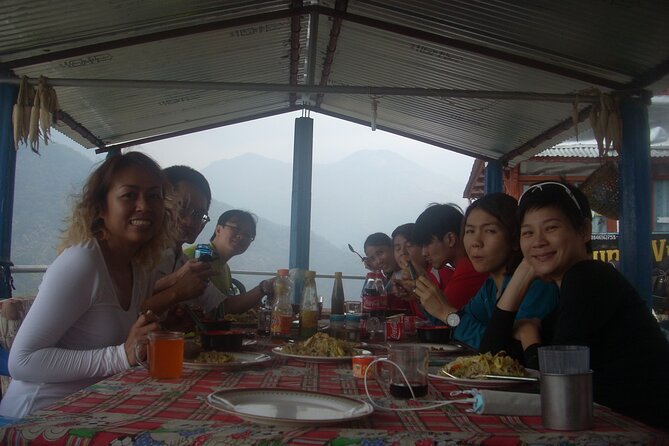
Leaving Deurali, you follow the Modi River and climb through alpine forest toward Annapurna Base Camp. The path passes neatly arranged rock stacks, an icy cave, and increasingly open mountain surroundings.
This is the day when the journey’s purpose becomes clear. The route is no longer mainly about villages and forest. You are moving into a high mountain setting, with the trail and weather demanding more attention.
The listed walking time is about five hours. That figure should not be treated as a guarantee, since personal pace and trail conditions can affect the day. You should also keep your schedule flexible, since the experience requires good weather and can be moved if conditions make the route unsuitable.
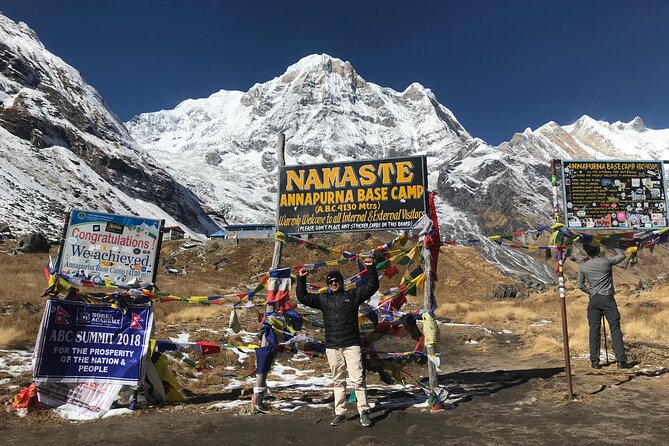
Reaching base camp is the emotional high point of the trek. The reward is not a single monument or staged attraction. It is the feeling of arriving in the mountains after several days of steady walking, with the Annapurna massif opening around you.
Day 5: A full day around the base camp region
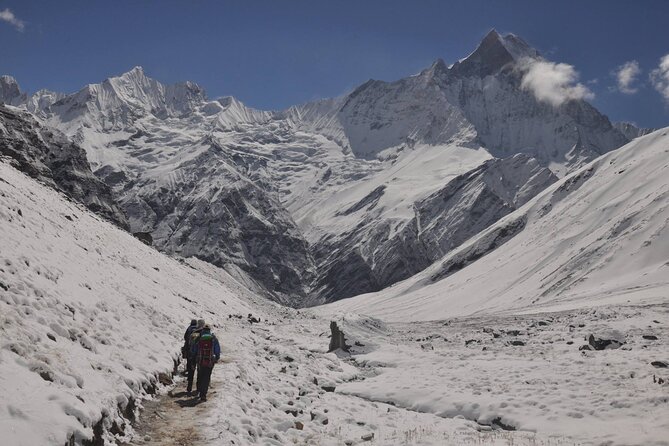
Day five is the longest day, listed at about eight hours. It begins with time to explore Annapurna Base Camp, where the high mountain setting offers a 360-degree view of the surrounding peaks.
This is the day to keep your camera handy, but do not let photography turn the morning into a rushed checklist. Give yourself time to look around, take in the rock, snow, sky, and mountain walls, and enjoy the fact that you reached the destination on foot.
The day also begins the return toward the lower Annapurna region. The published schedule moves from the base camp area toward the route below, with the descent continuing through the trekking corridor. The long walking time makes this the day that requires the most stamina.
Because the schedule is compact, ask the operator to confirm exactly where you sleep on this night and how the descent is divided. The provided day-by-day outline places the route back toward the Bamboo and lower valley area, while the next day continues toward Jhinu Danda. That is not necessarily a problem, but a clear briefing will help you understand the overnight stops.
Day 6: Returning through Bamboo to Jhinu Danda
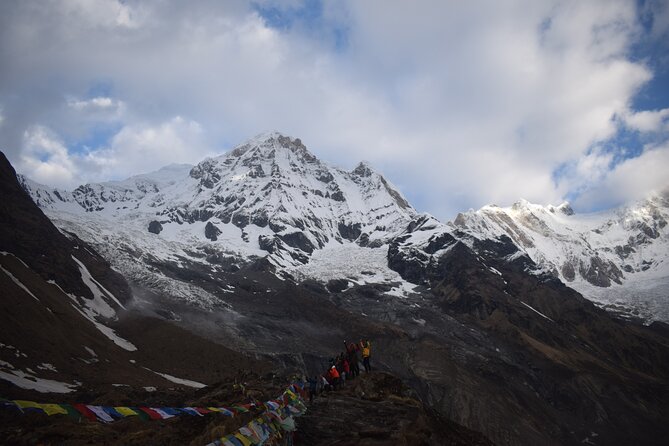
The sixth day continues through bamboo forest and toward Sinuwa, then descends toward the Chhomrong River. The walking time is about six hours.
This section gives you a different view of the same route. Uphill stretches that seemed endless on the way in become downhill sections, although descending stone steps can be hard on tired knees. Use trekking poles if you normally rely on them, and keep your pace controlled rather than racing toward the finish.
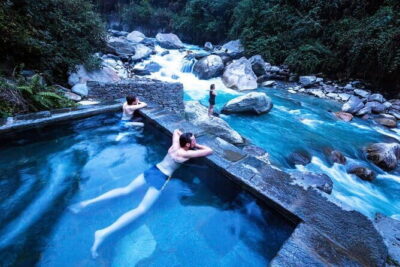
The destination is Jhinu Danda, known for its hot spring. This is a smart choice for a late-trek stop because it gives you a chance to rest after several demanding days. The information provided does not specify how long you spend at the spring, so ask your guide about the timing and access on the day.
The mix of forest walking, river crossings, village paths, and hot-spring time makes this a pleasant contrast to the high mountain setting at base camp. It also reminds you that the Annapurna route is as much about local communities and changing terrain as it is about snow-covered peaks.
Day 7: Jeep ride back to Pokhara
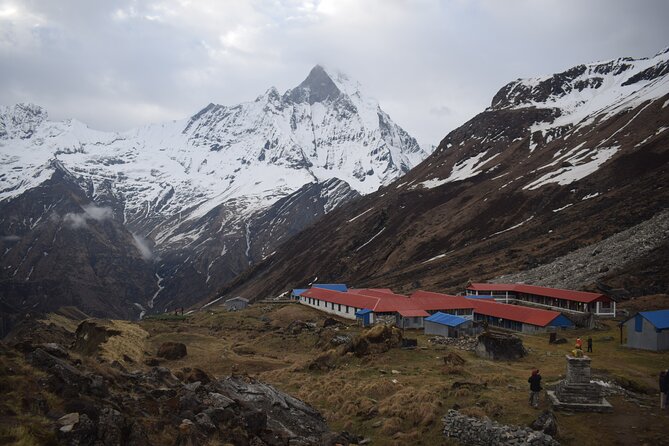
The final morning begins with breakfast and another look toward Annapurna I and Machhapuchhre. After a short walk to Samrung, you board a private jeep for the drive back to Pokhara along the Baglung highway.
The listed duration is about three hours. Road travel in the mountains can be tiring, but private transport means your group is not waiting for a larger tour party. The experience ends back at the Pokhara meeting point.
This last morning is a fitting close. You begin and end with views from the Pokhara area, while the days in between take you deep into the Annapurna route. Keep the rest of your day reasonably open in case road conditions affect the arrival time.
What the $625 price really covers
The price is not just payment for a walking guide. It bundles several costs that can quickly become confusing when you arrange a Nepal trek yourself.
Included are lodge accommodation, meals on the trek, the Annapurna Conservation Area Permit and other necessary permits, overland transport listed in the schedule, a trekking map, water purification, a duffle bag, oxygen saturation checks, emergency rescue assistance, public liability insurance, government tax, and service charges.
The meal allowance is seven breakfasts, six lunches, and six dinners. Hotel accommodation in Kathmandu and Pokhara is not included, so you need to arrange those separately. Travel insurance is also your responsibility, and you should not treat the included emergency rescue assistance as a substitute for a proper policy.
Tips for your guide and porter are not included. Carry suitable cash for that purpose, though the amount is not specified here.
At this price, I see good value for someone who wants a private, organized trek rather than a bare-bones guiding service. The value is less compelling if you already have your own guide, porter, permits, transport, and tea-house arrangements in place.
The people who make the private format useful
The operator uses government-registered guides and local porters. Specific guides connected with this experience include Sanjay, Amar, Laxman, Andrea, Ram, Kumar, Min, and Ritika.
The strongest pattern in the feedback is personal care. Sanjay was singled out for support throughout the journey. Amar and the management team were praised for accommodating changes, while Laxman was credited with route knowledge and encouragement. Andrea and porter Surya were also praised for their hospitality and support.
That does not mean you can request a particular guide and assume availability. It does show the sort of service the company aims to provide: close attention, help with pacing, and willingness to discuss what you like or dislike.
The private group format is best for couples, friends, or families who want to walk together without strangers setting the pace. It also suits people who may need small changes to the plan, though major changes should never be assumed without confirmation.
Fitness, comfort, and practical preparation
You need a moderate level of physical fitness. The main challenge is not one spectacular climb, but the repeated up-and-down trail, long stair sections, and the eight-hour day near base camp.
Tea-house lodging is included, but this is not a hotel-based holiday. You should expect simple mountain accommodation and a basic trekking routine. The supplied information does not specify room arrangements, bathroom facilities, heating, or electrical charging, so ask about those points if they matter to you.
Pack light enough for daily comfort and use the provided duffle bag for the porter-carried gear. The guide and porter carry costs are included, but you should still bring a daypack with essentials for the day’s walk.
The operator provides water purification and oxygen saturation checks. Those are useful practical touches, especially as you move higher, but they do not remove the need to pay attention to how you feel. Travel insurance is required advice here, particularly because mountain rescue can be expensive.
The trek requires good weather. If poor conditions cancel the experience, you can choose another date or receive a full refund. For the same reason, do not schedule an important flight or fixed activity immediately after the return to Pokhara.
Who should book this trek
I would choose this trek if you want a private route to Annapurna Base Camp, have about a week available, and prefer having transport, meals, permits, a porter, and lodging handled for you.
It suits first-time Nepal trekkers who want support without joining a large group. It also works for people who value a flexible pace and direct contact with one guide.
I would think twice if you want leisurely walking days, upgraded accommodation, or a schedule with plenty of spare time. Seven days is efficient, but it leaves less room for bad weather, illness, or a slower pace than a longer Annapurna itinerary would allow.
The route has a satisfying mix of experiences: mountain villages, forests, bridges, rivers, shrines, rock formations, a hot spring, and the base camp panorama. The views are the prize, but the route earns them through plenty of stairs.
Should you book the private Annapurna Base Camp trek?
Book it if $625 covers the services you want and you are comfortable with a physically demanding seven-day schedule. The private guide and porter arrangement, included meals and lodges, permits, transport, and safety support make this a practical package for a first Annapurna trek.
Before paying, confirm the exact overnight stops after base camp, pickup details in Pokhara, tea-house arrangements, and the guide assignment. If you have moderate fitness, proper insurance, and realistic expectations about stairs and simple lodging, this trek offers a strong way to reach Annapurna Base Camp without managing every mountain detail yourself.
FAQ
Where does the Annapurna Base Camp trek start?
It starts at the specified meeting point on Lakeside Road in Pokhara, Nepal. The start time is 8:15 am.
Where does the trek finish?
The activity ends back at the meeting point in Pokhara after the return journey by private jeep.
How long does the experience last?
The trek lasts approximately seven days.
Is this a private trek?
Yes. Only your group participates in the activity.
Are a guide and porter included?
Yes. One government-registered trekking guide and porters are included, along with their expenses.
Are meals included?
Yes. The package includes seven breakfasts, six lunches, and six dinners.
Is accommodation included?
Yes. Lodge accommodation along the trek is included. Hotel accommodation in Kathmandu and Pokhara is not included.
Is travel insurance included?
No. Travel insurance is not included, and you should arrange it before the trek.
What happens if bad weather cancels the trek?
You can choose a different date or receive a full refund if the experience is canceled because of poor weather. For a full refund under the normal cancellation policy, you must cancel at least 24 hours before the start time.
More Hiking & Trekking in Pokhara
- Poon hill Trek 3 days
★ 5.0 · 176 reviews - Trekking in Annapurna/Langtang/Everest/Upper Mustang regions
★ 5.0 · 161 reviews - Pokhara: 4-Day Ghorepani, Poonhill & Ghandruk Mountain Trek
★ 5.0 · 132 reviews - Ghorepani – Poon Hill Trek 3N-4D
★ 5.0 · 125 reviews
Just added around Pokhara
- Seti George and Thrilling Suspension Bridge Tour at Pokhara★ 4.5 · 3 reviews
- Tandem Paragliding in Pokhara★ 4.8 · 8 reviews
- Pokhara: Sunrise Tour to Sarangkot★ 5.0 · 3 reviews
- Pokhara: Suspension Bridge Private Tour- 30 Min Village Walk★ 4.8 · 9 reviews
- Pokhara: Visit Best Seven Tourist Destination by Sharing Bus★ 3.4 · 10 reviews
- Pokhara Sightseeing By Bus: Day Trip★ 4.6 · 7 reviews
- Pokhara Sightseeing By Bus – Day Trip★ 3.2 · 8 reviews
- Pokhara: Sarangkot Sunrise & Panoramic Annapurna View Tour★ 4.8 · 10 reviews
Annapurna Base Camp Treks, compared.
Kathmandu to Annapurna Base Camp (ABC) 5-Day Trek
Read our review →
Kathmandu/Pokhara: 5-Day Annapurna Base Camp (ABC) Trek
Read our review →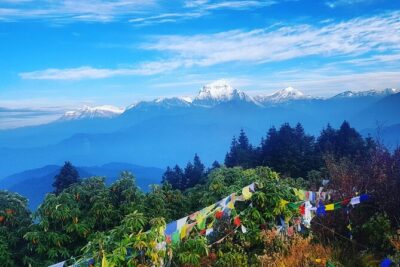
11-Day Hike Tour to Annapurna Base Camp Bliss in Kathmandu
Read our review →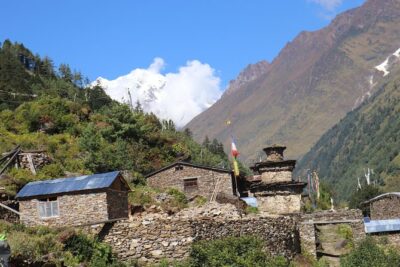
Browse the lists this tour appears in