Reviewed · ANNAPURNA BASE CAMP TREKS
From Pokhara: 10-Day Poon Hill and Annapurna Base Camp Trek
The real prize here is the two-part mountain journey: first, you climb to Poon Hill for a sunrise over the Annapurna and Dhaulagiri ranges, then continue into the high Annapurna Sanctuary to reach base camp at 4,130 meters. You get grand peaks, Gurung villages, terraced hillsides, thick forests, and a proper high-mountain finish.
I like the unhurried 10-day pace, with most walking days taking about three to six hours, and I like the way the route mixes viewpoints with village life. Guides such as Biru, Arjun, and Bikram have been praised for patience, route planning, and adjusting the pace when needed.
The main caution is altitude and weather. Rain can hide the peaks, especially in September, and one trekker needed an extra three days after developing altitude sickness. You need reasonable fitness, flexible expectations, and travel insurance that covers emergency rescue.
Key Details Before You Book
- Poon Hill comes before base camp: You see the sunrise viewpoint early in the trek, then continue toward Annapurna Sanctuary.
- The highest overnight is Annapurna Base Camp: At 4,130 meters, this is the most demanding section and the point where altitude matters most.
- You stay in guesthouses: Accommodation is included, but food, drinks, hot showers, WiFi, charging, and heater use cost extra.
- The group is private: You walk with your own party and guide rather than joining a large mixed group.
- The scenery changes every day: Expect terraced fields, rhododendron and bamboo forests, suspension bridges, mountain villages, and snow-covered peaks.
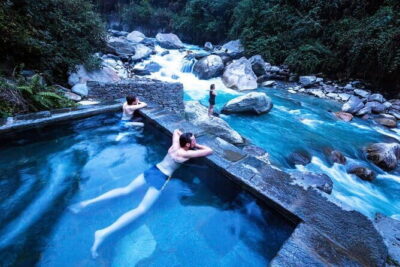
- The final reward is Jhinu Danda: A stop at the natural hot springs gives tired legs a welcome break before returning to Pokhara.
Why This Route Works So Well
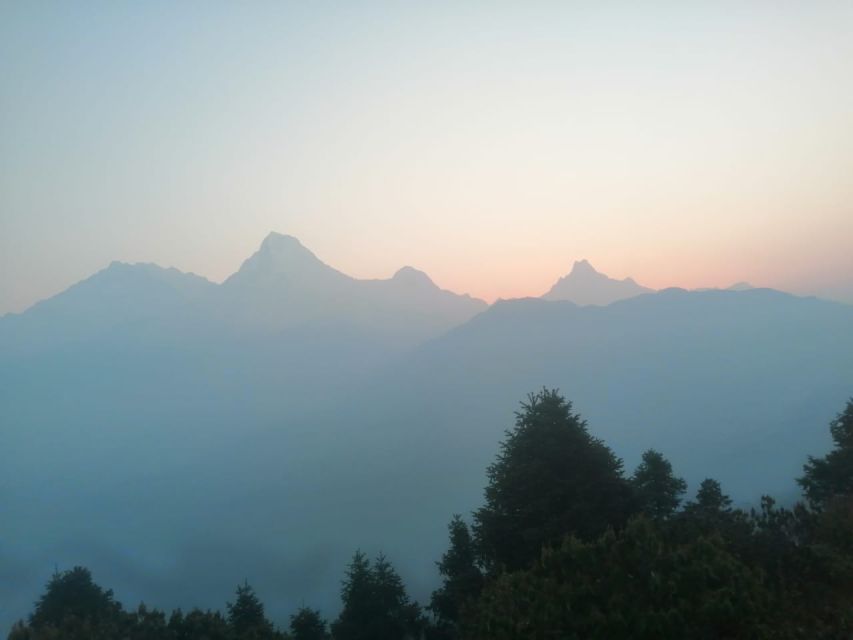
I like this trek because it gives you two very different Himalayan experiences. Poon Hill is a classic viewpoint trek, with a relatively short climb to 3,210 meters and a wide view over Annapurna and Dhaulagiri. Annapurna Base Camp is more enclosed and dramatic, with the trail entering a high mountain bowl surrounded by peaks.
That variety matters. You are not spending ten days walking toward one distant summit with little change along the way. The route moves from low hills and rice terraces into rhododendron woods, then through narrow valleys and finally into the open Annapurna Sanctuary.
The price is $310 per person. For a private trek lasting ten days, that is a useful value if you want a guide, permits, guesthouse accommodation, private transfers, and basic first-aid support arranged for you. The price does not cover meals, drinks, insurance, rescue, or optional tips, so your real budget will be higher.
At altitude, small comforts add up. One useful estimate is to prepare at least $30 to $40 per day if you plan to pay for heater use, WiFi, battery charging, and hot showers. You can spend less by limiting these extras, but bring enough Nepalese rupees for the upper sections of the route.
More Annapurna Base Camp Treks in Annapurna Region
- Pokhara: 7 Day Annapurna Base Camp Trek
★ 4.9 · 38 reviews - Annapurna Base Camp Heli Tour
★ 5.0 · 7 reviews - Pkr/Kathmandu: 5-Day Annapurna Base Camp & Hot spring Trek
★ 5.0 · 6 reviews
Day 1: Pokhara to Nayapul and Tikhedhunga
The day begins with pickup in the Lakeside area of Pokhara and a private-car drive to Nayapul. The trip takes about an hour and a half, leaving you with a full first walking day without the fuss of arranging local transport.
From Nayapul, the trail passes small villages and terraced fields, following the Modi Khola area toward Tikhedhunga. The overnight stop sits at 1,577 meters, so this is a sensible introduction to the route before the serious climbing starts.
The walking is not yet the hardest part. You can use this day to settle your boots, check your daypack, and learn how your guide manages breaks. Guesthouse accommodation is included, but meals and drinks are yours to buy.
Day 2: Ulleri Steps and Ghorepani
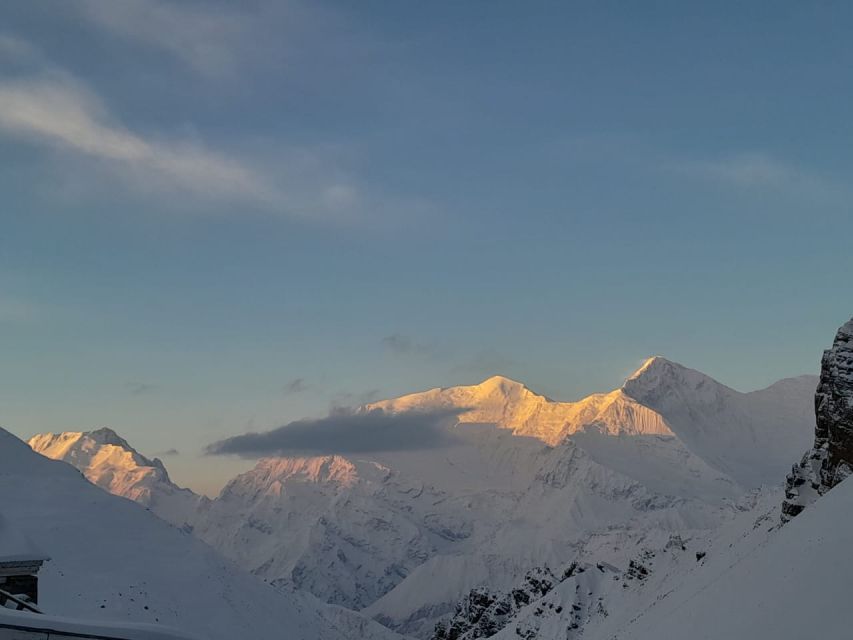
Day two brings the first real test: the steep stone steps at Ulleri. This climb can feel long, especially if you are not used to repeated stairs, but the route then continues through rhododendron and marigold forests toward Ghorepani.
Ghorepani sits at 2,874 meters and gives you your first broad mountain views. On a clear day, you can see parts of the Annapurna and Dhaulagiri ranges. The village is also the staging point for the early morning climb to Poon Hill, so expect an early start the next day.
I appreciate the way the itinerary places this viewpoint near the beginning rather than saving every highlight for the final days. You get a major reward early, which helps keep the long approach to base camp in perspective.
Day 3: Poon Hill Sunrise and Tadapani
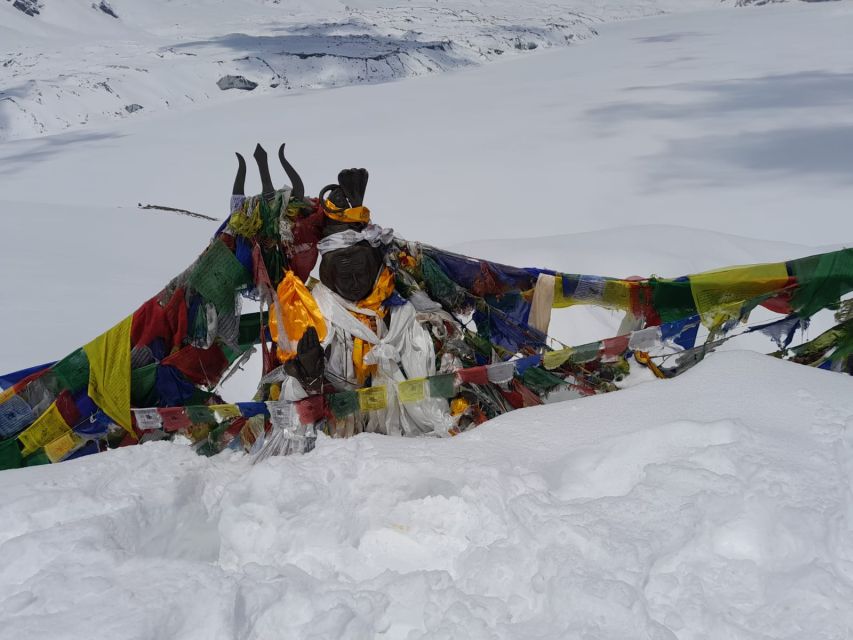
The morning begins before breakfast with the walk to Poon Hill at 3,210 meters. The viewpoint is famous for sunrise, and the appeal is simple: as the light changes, the snow-covered peaks of the Annapurna and Dhaulagiri ranges come into view.
After returning to Ghorepani for breakfast, you continue through forest and rhododendron-filled valleys to Tadapani at 2,630 meters. This is a full day, but the early viewpoint walk and the later forest trail give it a pleasant rhythm.
Clouds can spoil the sunrise, particularly in wetter months. You should treat clear views as a bonus rather than a promise. The walk still has value in poor weather, but the big mountain silhouettes may appear only for a few minutes.
More Ghorepani Poon Hill Treks in Annapurna Region
- Pokhara: 2 & 3 Days Ghorepani Poon Hill Private Guided Trek
★ 4.9 · 27 reviews - Pokhara: 2-Day Short & Sweet Ghorepani Poon Hill Guided Trek
★ 5.0 · 6 reviews - Pokhara: 7-Day Annapurna Base Camp Via PoonHill & Hot Spring
★ 5.0 · 6 reviews - Pokhara: 3-Day Ghorepani, Poon Hill and Ghandruk Guided Trek
★ 4.4 · 4 reviews
Day 4: Tadapani to Chhomrong
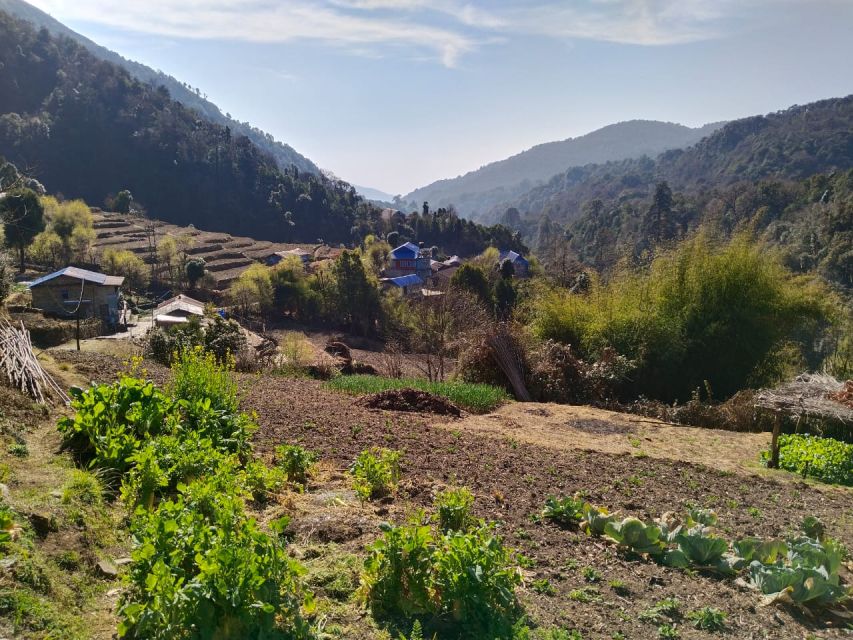
The trail descends through lush forest toward Gurjung village, then drops to the Kimrong Khola before climbing again to Chhomrong. This up-and-down pattern is typical of the middle hills, where losing height does not mean the day is getting easier.
Chhomrong is a large Gurung village at 2,170 meters. It has fine views toward Annapurna South and Machhapuchhre, also called Fishtail. The village is an important stop because it marks the route into the Annapurna Sanctuary.
This is a good day to notice how much the scenery has changed since Nayapul. Terraced fields and settled villages give way to steeper slopes and thicker forest. You still have local life around you, but the route now feels more remote and more focused on the mountains.
Day 5: Chhomrong to Bamboo
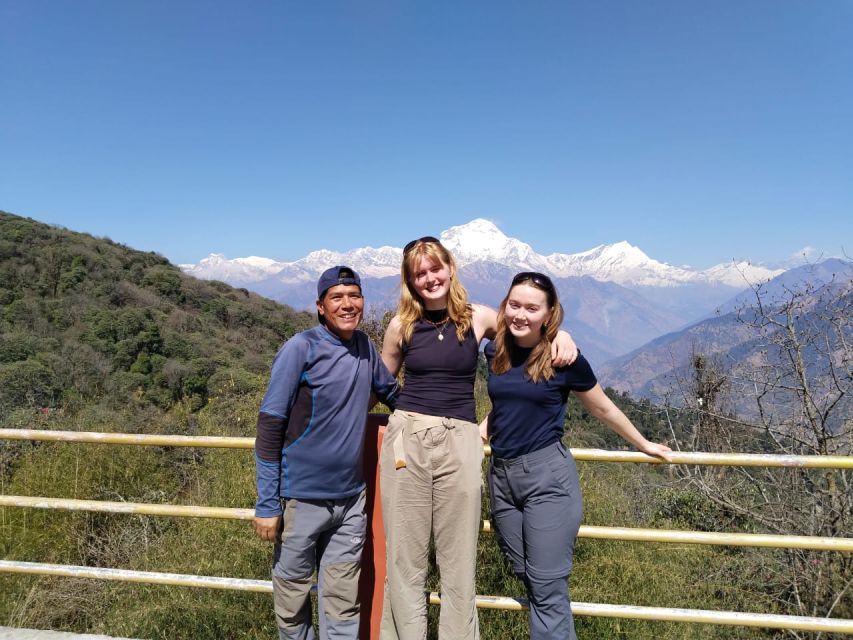
From Chhomrong, you descend to the Chhomrong Khola and cross a suspension bridge. Then comes another climb to Sinuwa, followed by a trail through bamboo and rhododendron forest.
Bamboo is at 2,310 meters. The overnight stop is not a high point, but the trail has already begun to feel more enclosed. Forest shade helps in warm weather, while wet conditions can make the path slippery.
The route requires patience here. You may gain and lose height several times, and the daily distance can feel harder than the simple elevation figures suggest. The private format helps because your guide can adjust the walking speed and rest stops instead of keeping you tied to a large group.
Day 6: Bamboo to Deurali
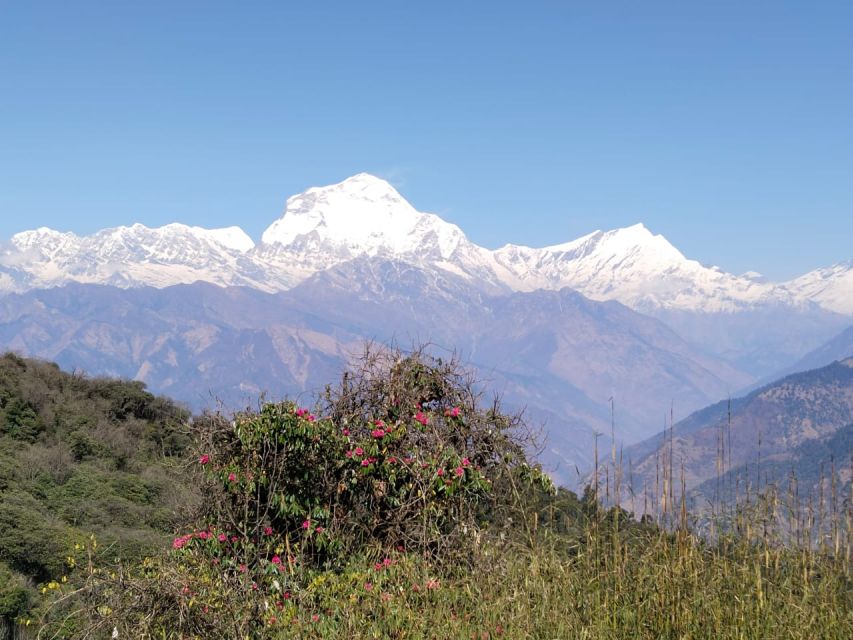
The trail continues through bamboo forest and along the Modi Khola valley. You pass the Himalayan Hotel and Hinku Cave before climbing steadily to Deurali at 3,230 meters.
This is when altitude becomes a more serious concern. The pace should stay steady and controlled, and you should tell your guide about headaches, unusual tiredness, nausea, or poor sleep. A good guide will watch your condition, but you must also speak up early.
The route is physically demanding without being a race. Guides who have led this trek, including Arjun, have adjusted plans when altitude sickness appeared. One departure was extended by three days to allow a safer pace, a useful reminder that the stated ten days is a plan, not a reason to ignore your body.
Day 7: Deurali to Annapurna Base Camp
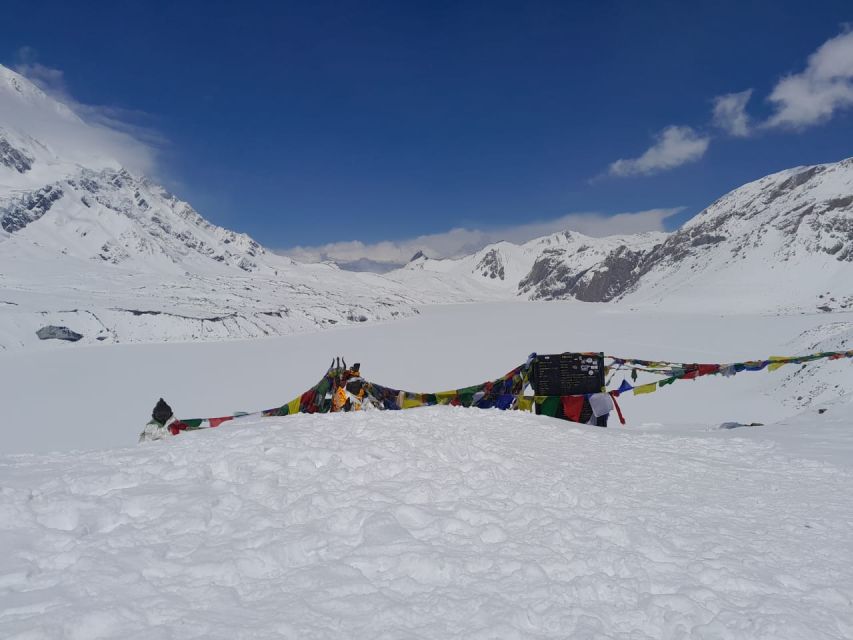
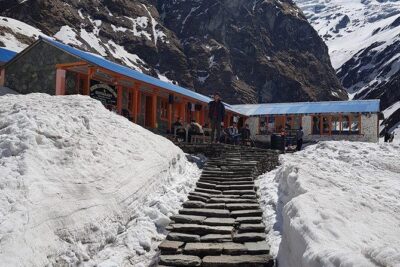
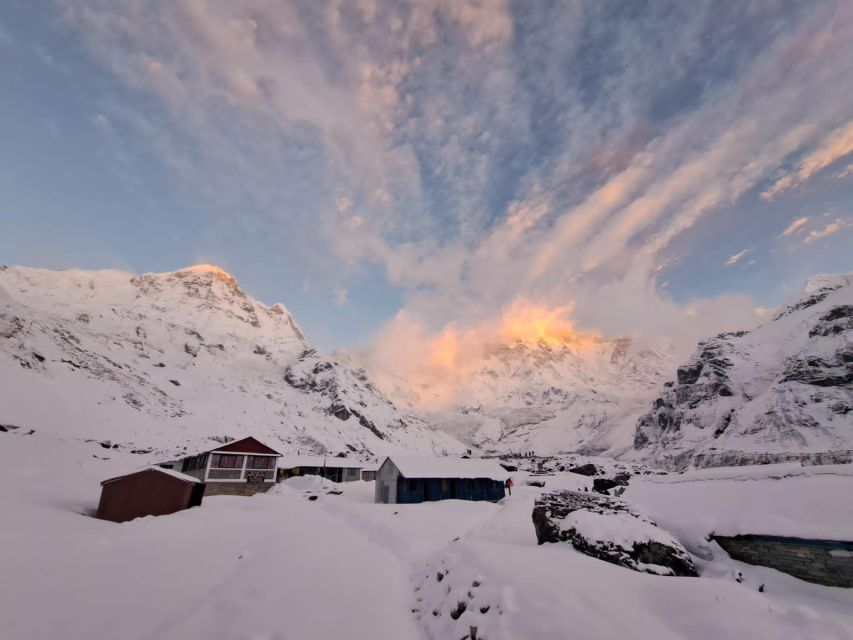
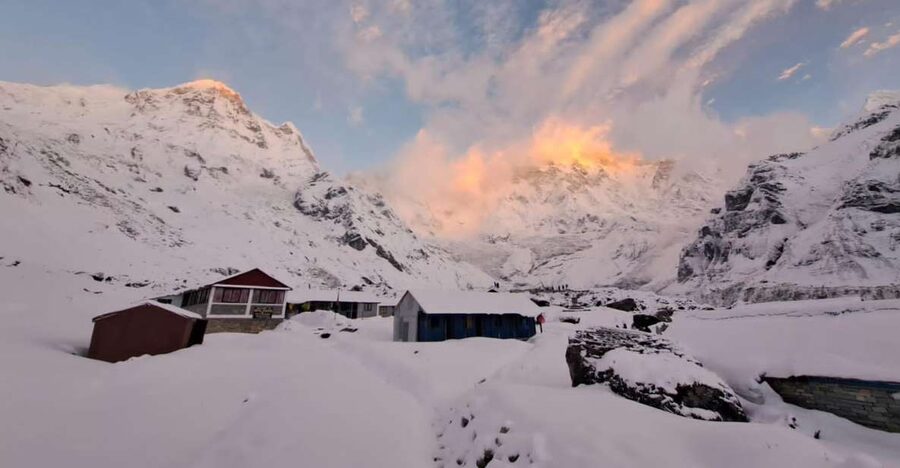
This is the main day. From Deurali, the trail follows a narrow valley that opens into the Annapurna Sanctuary. You pass Machhapuchhre Base Camp at 3,700 meters, then continue to Annapurna Base Camp at 4,130 meters.
The setting changes quickly. The valley opens and the surrounding peaks feel much closer, including Annapurna I at 8,091 meters, Machhapuchhre at 6,993 meters, and Hiunchuli at 6,441 meters. You may also see Annapurna II, III, and IV, along with Dhaulagiri and Nilgiri from suitable viewpoints along the wider route.
Reaching base camp is the emotional high point. You are surrounded by towering snow-covered summits rather than looking at them from a distant ridge. The overnight stay gives you time to absorb the setting, but remember that the air is thin and the night can be cold.
Do not judge the day only by distance. At this height, a slow pace is sensible. The guide’s role matters most here, from monitoring how you feel to keeping the group moving at a safe rate.
Day 8: Sunrise at Base Camp and Bamboo
You rise early for sunrise over the mountains, then begin the long descent through Deurali to Bamboo. The morning light can change the appearance of the peaks within minutes, so have warm layers ready and keep your camera accessible.
Descending is easier on your lungs, but it can be tough on knees and thighs. Wet stone, uneven steps, and fatigue require careful footing. This is a day when trekking poles, if you use them, could be especially helpful, though they are not listed as included equipment.
Returning to Bamboo makes the route feel more manageable. You have completed the highest point, but the trek is not finished. The following descent to Jhinu Danda is part of the experience, not just a way to reach the road.
Day 9: Bamboo to Jhinu Danda and the Hot Springs
The trail continues downhill through forest to Chhomrong, where you stop for lunch, then descends farther to Jhinu Danda at 1,780 meters. The height loss is welcome after base camp, though the steep steps can still test tired legs.
Jhinu Danda is best known here for its natural hot springs. Soaking after several days on the trail is a practical pleasure, not a luxury. It gives you a chance to relax before the final walking and driving day.
The hot springs also make this stop more than a basic overnight break. If you are considering leaving the route by jeep at Jhinu Danda, I would favor staying for the planned night and enjoying the springs, since that is one of the distinct features of the final section.
Day 10: Nayapul and Back to Pokhara
The final trail section runs from Jhinu Danda to Nayapul. From there, a private car takes you back to Pokhara, ending the trip.
After ten days of walking, the return to town can feel abrupt. Still, the private transfer is useful. You do not need to negotiate a ride after a long trek, and pickup and drop-off within the Lakeside area are included.
Guides, Pace, and Private Trek Benefits
The strongest part of this experience is the guide support. Biru has been described as patient, organized, and attentive to comfort and safety. Bikram has been praised for adjusting speed, explaining local people and nature, and keeping the daily plan clear. Arjun has adapted the route when altitude problems required extra time.
You should not assume you will receive a particular guide unless the provider confirms it. But these examples show what to ask for: a guide who can explain the next day, manage guesthouse bookings, notice changes in your condition, and let a slower hiker keep a comfortable pace.
The private group setup is especially helpful for this route. Walking times are flexible, and one departure recorded three to six hours of walking per day, depending on the terrain and how the body felt. The itinerary still has fixed overnight points, but the pace between them can be more personal than on a large group departure.
Guided trekking also adds a layer of local contact. The trail passes Gurung villages, terraced farmland, and mountain communities, and a good guide can provide context that you would miss while simply following signs.
Weather, Seasons, and What to Pack
Spring, from March to May, and autumn, from September to November, usually offer the best chance of stable weather and clear mountain views. Even then, mountain weather can change quickly.
September can bring rain and cloud. You may walk for several days with limited views, then suddenly see the peaks when the sky opens. That can be frustrating, but it is part of the route’s reality. Keep your focus on the forest, villages, and changing trail as well as the summits.
Bring:
- Passport or ID card
- Passport-sized photo
- Comfortable, broken-in walking shoes
- Travel insurance
- Warm layers and rain protection
- Enough money for food, drinks, charging, WiFi, showers, and heater use
Plastic bottles and pets are not allowed. Food and drinks are available for purchase, but they are not included in the $310 price.
Who Should Book This Trek
I would choose this trek if you want a serious Himalayan walk with a private guide, but you do not want to arrange every permit, transfer, and guesthouse yourself. It suits people who value a moderate daily rhythm and want both a famous sunrise viewpoint and a high base-camp finish.
It is also a good match for slower hikers who benefit from flexible pacing. The ten-day schedule is less rushed than shorter versions of the route, although you still need to handle steep stairs, long descents, and altitude.
I would not choose it if you need wheelchair access, are pregnant, or want a soft sightseeing holiday. The route is physically demanding, and emergency rescue is not included. Travel insurance must cover trekking and rescue costs.
The booking terms are flexible: you can cancel up to 24 hours before the activity for a full refund, and reserve now without paying immediately. Those policies help if your Nepal plans are still moving, but they do not replace insurance.
Should You Book It?
Book this trek if you want the full progression from Pokhara’s lower hills to Annapurna Base Camp, with Poon Hill, village stays, forest trails, and Jhinu’s hot springs along the way. The strongest reasons are the private format, adaptable guiding, and ten-day pace.
Before paying, confirm who your guide will be, what porter support is arranged, and the expected extra budget for meals and high-altitude services. If you can accept cloudy days and prepare for altitude, this is a well-balanced route with a memorable finish at 4,130 meters.
FAQ
How long is the Poon Hill and Annapurna Base Camp trek?
The trek lasts 10 days, beginning and ending in Pokhara. The route includes Poon Hill, Annapurna Base Camp, and a return through Jhinu Danda.
What is the highest point of the trek?
Annapurna Base Camp is the highest point, at 4,130 meters. Poon Hill reaches 3,210 meters, and Machhapuchhre Base Camp is at 3,700 meters.
Is food included in the price?
No. Food and drinks are available for purchase but are not included in the $310 price. Extra charges may also apply for heater use, WiFi, charging, and hot showers at higher elevations.
What accommodation is provided?
Accommodation is provided in guesthouses along the route. The experience includes overnight stays at places such as Tikhedhunga, Ghorepani, Tadapani, Chhomrong, Bamboo, Deurali, Annapurna Base Camp, and Jhinu Danda.
Is transportation from Pokhara included?
Yes. Pickup and drop-off within the Lakeside area are included, along with private-car transfers between Pokhara and Nayapul.
What languages can the guide speak?
Guides are available in Nepali, English, and Hindi. A professional English-speaking trekking guide is included.
More Hiking & Trekking in Annapurna Region
- Pokhara: 1-Day Scenic Australian Camp & Dhampus Guided Hike
★ 4.9 · 24 reviews - From Pokhara: Day Hiking Australian Camp & Dhampus
★ 5.0 · 17 reviews - Pokhara: 4-Day Mesmerizing Mardi Himal Guided Trek
★ 4.8 · 9 reviews - Kathmandu/Pokhara: Annapurna Circuit Trek 10 days
★ 5.0 · 6 reviews
Just added around Annapurna Region
- Pokhara: Poon Hill Trek★ 5.0 · 3 reviews
- Pokhara: Day Hiking to Australian Base Camp with Lunch★ 5.0 · 4 reviews
- Pokhara: Hike To Australian Base Camp★ 3.5 · 4 reviews
- Pokhara: Annapurna Foothills Private Day Hike with Transfers★ 5.0 · 3 reviews
- From Pokhara: Annapurna View Day Hike★ 5.0 · 3 reviews
- Pokhara: Amazing 7-Day ABC Trek with Natural Hot Spring★ 5.0 · 5 reviews
- Pokhara: 5-Day Annapurna Base Camp Trek with Hot Spring★ 5.0 · 3 reviews
- Pokhara: 4-Day Mesmerizing Mardi Himal Guided Trek★ 4.8 · 9 reviews
Annapurna Base Camp Treks, compared.
Kathmandu to Annapurna Base Camp (ABC) 5-Day Trek
Read our review →
Kathmandu/Pokhara: 5-Day Annapurna Base Camp (ABC) Trek
Read our review →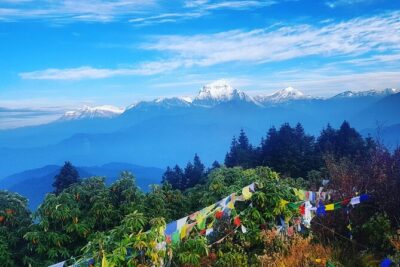
11-Day Hike Tour to Annapurna Base Camp Bliss in Kathmandu
Read our review →