
Reviewed · ANNAPURNA BASE CAMP TREKS
Pkr/Kathmandu: 5-Day Annapurna Base Camp & Hot spring Trek
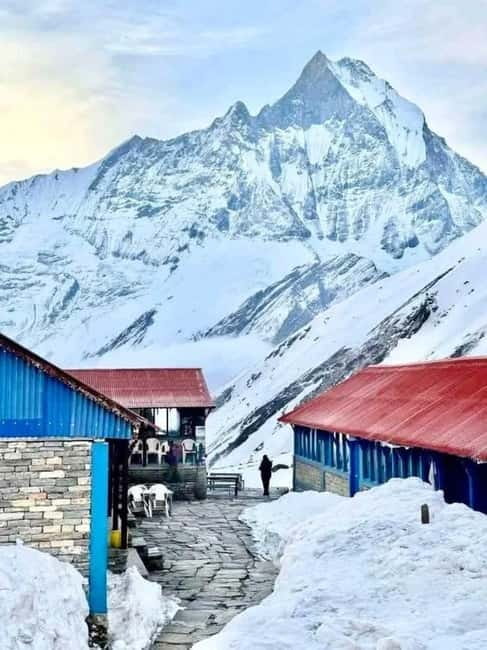
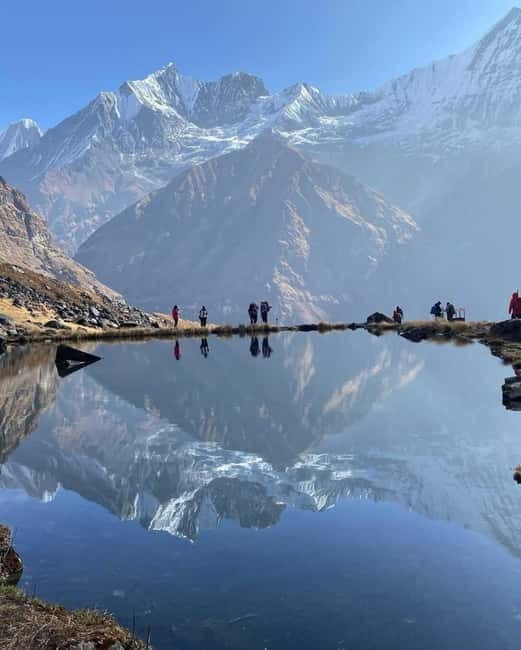
Annapurna Base Camp is the prize here: a high, enclosed mountain bowl ringed by Annapurna I, Machapuchare, and Hiunchuli. Reaching 4,130 meters in only five days makes this a serious trek, but the route also brings waterfalls, Gurung villages, forest paths, and a hot spring stop at the end.
I like the private group format, which lets your guide set a sensible pace, and I like that equipment such as sleeping bags, duffle bags, and trekking poles can be borrowed. Guides including Sagar, Raj, Shiva, and Nareen have earned especially warm praise for safety, organization, and encouragement.
The trade-off is clear: this is a compressed schedule with long walking days and little spare time for altitude adjustment. You need good fitness, proper shoes, warm layers, and a willingness to walk in cold, wet, or snowy conditions.
Key points to know before booking
- 4,130-meter finish: Reach Annapurna Base Camp after walking through Machhapuchhre Base Camp and the high sanctuary.
- Five demanding days: Expect up to seven hours of trekking on some days, with steep and uneven sections.
- Private guide support: English, French, Japanese, and Chinese guiding is available, with guides such as Sagar, Raj, Shiva, and Nareen named among the active team.
- Hot spring finale: Stop at Jhinu Danda on the return route, if conditions and timing allow.
- Simple mountain lodging: Spend four nights in mountain guest houses, usually in tea-house settlements along the trail.
- Flexible starting point: Begin from Pokhara, or add the Kathmandu to Pokhara flight option.
Why this five-day ABC trek is appealing
Many Annapurna Base Camp programs take longer. This one packs the route into five days, making it attractive if your Nepal visit is short or you want to fit the trek between time in Kathmandu and Pokhara.
The route gives you a good range of Himalayan scenery. You start among lower-elevation villages and river valleys, then climb through dense forest before reaching the bare, colder country around Machhapuchhre Base Camp and Annapurna Base Camp. The change happens quickly, which is part of the excitement and part of the physical challenge.
I also like the balance between mountain drama and local life. You are not simply walking toward a viewpoint. You spend nights in small tea-house settlements, pass through traditional Gurung communities, and share meal and rest stops with a guide who can explain the area and help manage the pace.
The published price of $60 per person looks like a budget starting rate rather than a single all-inclusive price. Included arrangements depend on the option you choose. Budget bookings may exclude meals and porters, while the all-inclusive choice can include both. A Kathmandu departure can also require an added return flight cost unless that option is selected.
That distinction matters. A low headline price can be good value for a strong hiker carrying some personal gear, but you should confirm exactly what your package covers before paying. The value improves when you need a guide, permits, accommodation, transport, borrowed equipment, meals, and porter support in one arrangement.
More Annapurna Base Camp Treks in Annapurna Region
- Pokhara: 7 Day Annapurna Base Camp Trek
★ 4.9 · 38 reviews - Annapurna Base Camp Heli Tour
★ 5.0 · 7 reviews - From Pokhara: 10-Day Poon Hill and Annapurna Base Camp Trek
★ 5.0 · 7 reviews
Day 1: Pokhara to Simrung, then the climb to Sinuwa
The day begins with hotel pickup in Pokhara. From there, a shared jeep takes roughly two to three hours to Simrung via Nayapul. If you start in Kathmandu, the stated plan includes a 30-minute flight to Pokhara, followed by the road transfer.
Simrung is the trailhead for this version of the route. The first trekking section to Sinuwa takes around four to five hours, with a maximum altitude of about 2,340 meters. That is not yet extreme altitude, but it is a real first day, especially after the road journey.
Sinuwa makes sense as an overnight stop because it places you inside the trekking route rather than spending the night near the road. Expect simple mountain guest-house accommodation, not hotel comfort. This is the time to sort your sleeping bag, refill water, check your layers, and tell your guide if the pace feels too fast.
The shared jeep is practical but not luxurious. Road conditions in mountain areas can make a two-hour estimate feel longer. If you are prone to motion sickness, keep water and any usual medication close at hand.
Day 2: Forest paths, waterfalls, and Deurali at 3,230 meters
From Sinuwa, you walk for about five to six hours toward Deurali. The route passes through dense forest and small settlements, including Himalaya, a tea-house stop that breaks up the climb.
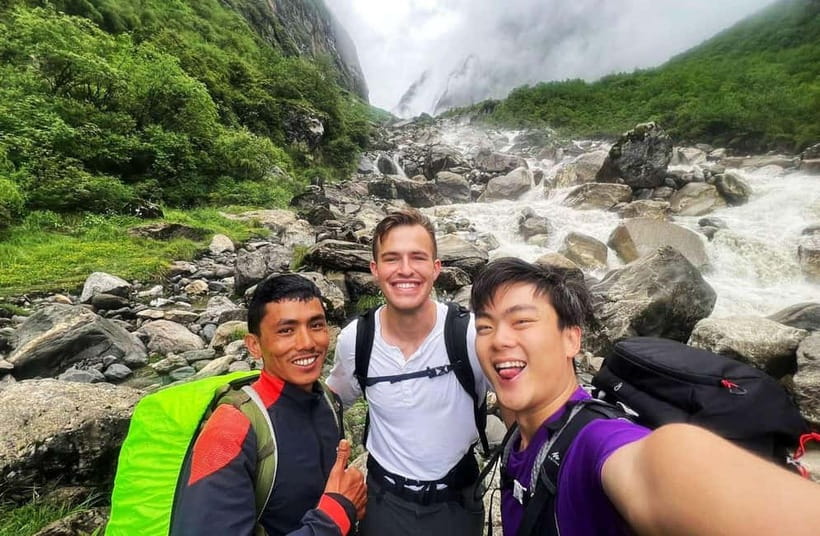
This is one of the most attractive walking days because the surroundings change constantly. You move beside rivers and through thick woodland, with waterfalls appearing along the trail. The forest offers shade, but it can also hold moisture, so mud and slippery stones are possible when rain is present.
Deurali sits at roughly 3,230 meters. That gain in height is significant, and your body may begin to notice the thinner air. Walk at the pace your guide sets, drink water regularly, and do not treat the tea-house breaks as wasted time. They are useful for eating, warming up, and checking how you feel.
The route is described as moderate to challenging, and Day 2 is where that label becomes more meaningful. You are not walking on a flat path between scenic stops. You are gaining height through forest, with some steep sections and a long day on your feet.
Day 3: Machhapuchhre Base Camp to Annapurna Base Camp
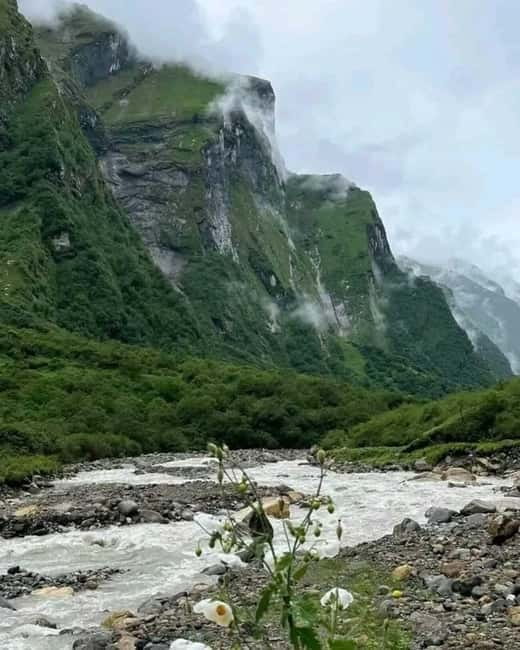
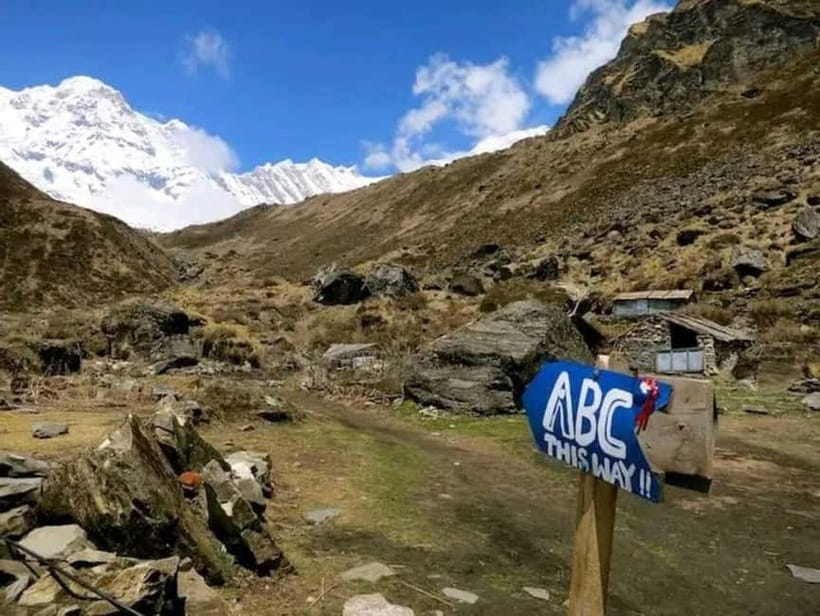
Day 3 is the trek’s main event. From Deurali, you walk for about five to six hours to Annapurna Base Camp, passing through Machhapuchhre Base Camp on the way.
Machhapuchhre Base Camp, often called MBC, is not the final high point, but it marks a major change in the route. The forest thins out, the air feels colder, and the surrounding mountains become much more immediate. From here, the trail enters the high mountain bowl of the Annapurna Sanctuary.
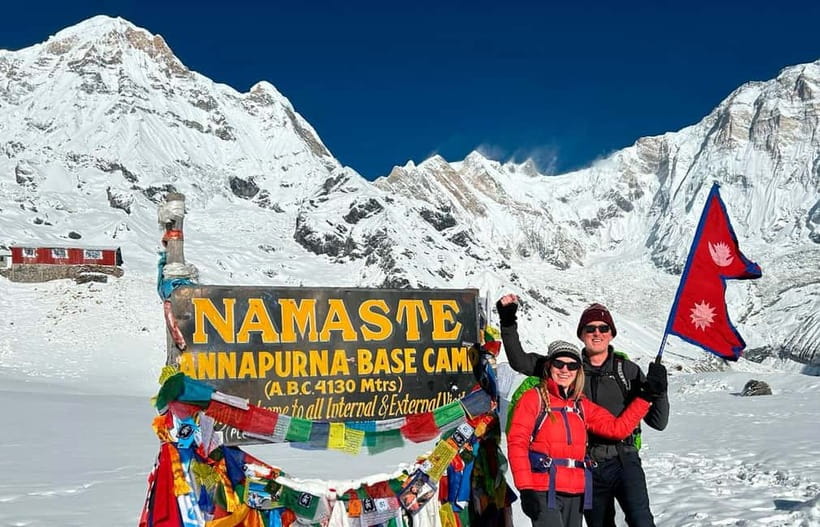
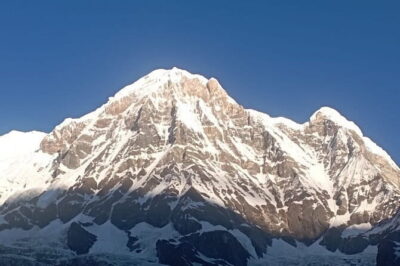
The final walk to ABC reaches 4,130 meters. The great reward is the enclosed view of the Annapurna range, with Annapurna I, Machapuchare, and Hiunchuli among the major peaks around you. Annapurna I rises to 8,091 meters and is identified here as the world’s tenth-highest mountain.
This is also the day when altitude can become the main concern. A five-day itinerary leaves less room for your body to adjust than a longer schedule. Headache, nausea, unusual tiredness, or breathing trouble should be taken seriously. Tell your guide early rather than trying to prove something.
Your overnight stay is in a tea house at Annapurna Base Camp. The setting is the point, not luxury. Cold temperatures are possible, and weather can turn quickly. Pack warm clothing where you can reach it without emptying your whole bag.
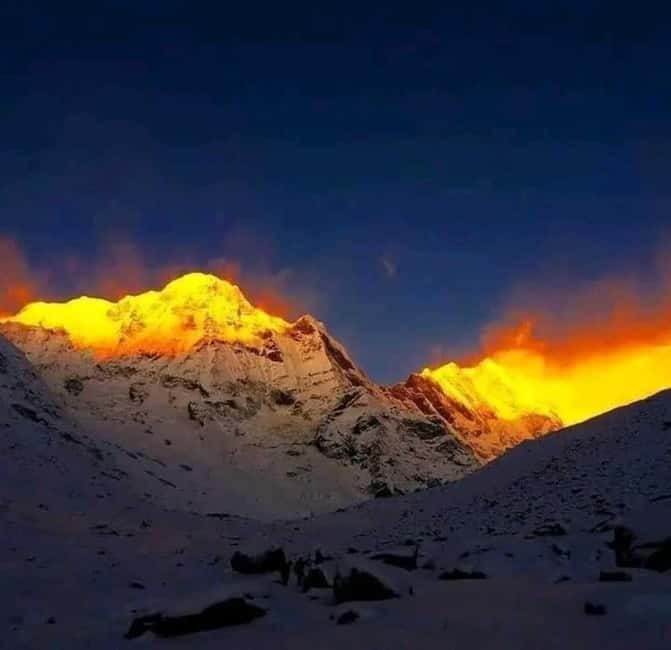
If the sky is clear, sunset toward the west adds another memorable moment. But do not judge the trek by one perfect photograph. Cloud, snow, rain, and wind can hide the peaks, and mountain weather is never fully under your control.
Same mountains, a completely different kind of day:
- Pokhara: 2 & 3 Days Ghorepani Poon Hill Private Guided Trek
★ 4.9 · 27 reviews - Pokhara: 1-Day Scenic Australian Camp & Dhampus Guided Hike
★ 4.9 · 24 reviews - From Pokhara: Day Hiking Australian Camp & Dhampus
★ 5.0 · 17 reviews - Luxury Chitwan Jungle Safari Package (2Nights/3Days) Resort
★ 4.3 · 16 reviews
Day 4: Sunrise at ABC and the long return to Bamboo or Sinuwa
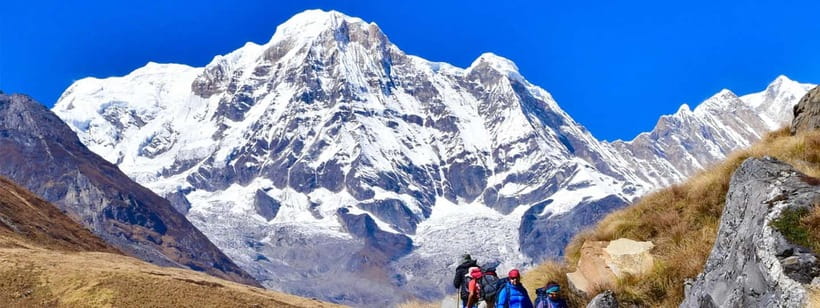
The early morning view is one of the strongest reasons to spend the night at base camp. Sunrise around Machhapuchhre Base Camp and the surrounding peaks can bring sharp light to the mountain walls before clouds build later in the day.
After breakfast, you retrace the route through Deurali, Himalaya, and Dobhan. The walking time is listed as six to seven hours, so this is not an easy downhill stroll. Descending can be hard on knees and ankles, particularly after a cold night and a high-altitude morning.
The overnight stop is at Bamboo or Sinuwa, depending on the exact plan and trail conditions. Dropping to around 2,340 meters gives your body a useful break from the altitude, but you will still need to keep moving carefully. Trekking poles are valuable on this day. They may be included or available to borrow, but one booking reported that poles were not provided and the guide made bamboo substitutes, so confirm this before departure.
This is also where a good guide earns the fee. Sagar has been praised for setting a safe pace and handling accommodation and meals. Raj and porter Naron were credited with helping a last-minute trip succeed, while Shiva was singled out for an efficient itinerary and strong guiding. Those details matter on a route where timing, weather, and fatigue all affect the day.
Day 5: Jhinu Danda hot springs and the drive to Pokhara
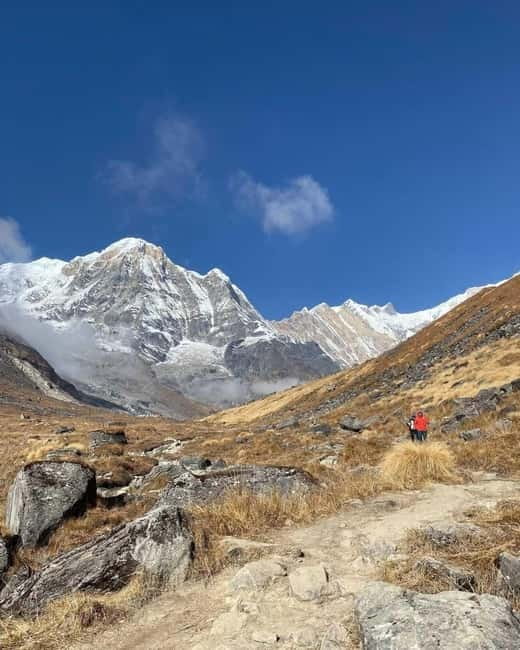
The final trekking section takes around three to four hours to Simrung via Jhinu Danda. The hot spring stop is optional, but it is a welcome idea after four days of walking.
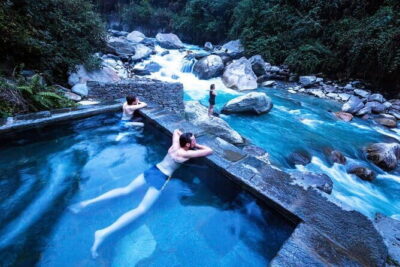
Jhinu Danda gives the route a different kind of finish. Instead of ending with one more mountain viewpoint, you can soak in natural hot spring water before completing the trail and taking the jeep back to Pokhara. The stop depends on your timing and the route arrangement, so ask your guide how much time is available.
The drive from Simrung to Pokhara takes another two to three hours. The stated arrival and hotel drop-off time is approximately 5 p.m. That makes this a full final day, not a quick transfer after breakfast.
If you have an evening flight or a fixed appointment in Pokhara, leave some margin. Mountain roads and trekking pace can vary. The package includes hotel pickup and drop-off in Pokhara, which simplifies the start and finish.
Guides, porters, and the human side of the trek
The strongest part of this experience is the guide support. The named guides include Sagar, Raj, Shiva, and Nareen, with porters such as Naron, Visnu, Aziz, and Bimal appearing in the operating team. You may not receive a particular guide, so ask who is assigned before departure if that matters to you.
The useful qualities here are practical ones: keeping the group together, checking comfort, arranging accommodation, managing meals when included, and explaining local culture and weather. One recent booking praised Sagar for making the pace feel right. Another highlighted Nareen’s care in cold, rain, and snow, especially for hikers with limited trekking experience.
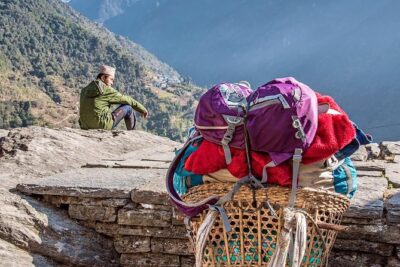
Porter arrangements deserve a close look. A porter may be included with the all-inclusive option but not with a budget or Kathmandu option. If you are new to multi-day trekking, carrying only a daypack can make the steep sections much more manageable.
The trek is listed as a private group experience. That gives you more control than a large fixed group, but it does not remove the physical demands. A private guide can adjust pace and breaks, not flatten the trail or shorten the climb to 4,130 meters.
What to pack for cold, wet mountain conditions
The basic list is sensible, but you should take it seriously. Bring warm clothing, hiking shoes, sunscreen, water, a camera, travel insurance, and suitable trekking gear.
Warm layers matter most on the ABC and MBC nights. Weather can bring cold, rain, or snow, and one booking specifically described difficult conditions involving all three. Keep a waterproof layer and spare warm clothing easy to reach.
Borrowed sleeping bags, duffle bags, and trekking poles may be available. Do not assume every item will automatically be waiting at pickup. Confirm the equipment list before leaving Pokhara, especially if you are an inexperienced hiker.
You should also carry personal essentials in a small daypack, including water and any medication you need. Alcohol and drugs are not allowed on the activity. Travel insurance is not included, and it is especially important for a high-altitude trek.
Who should book this five-day route?
This trip suits you if you want the Annapurna Base Camp experience but have only five days for the walking portion. It is also a good match if you value a private guide, simple tea-house nights, mountain scenery, and a route that includes both villages and high peaks.
It is less suitable if you have a low fitness level, mobility limitations, heart problems, respiratory problems, or a history of altitude sickness. The route reaches 4,130 meters quickly, and the schedule does not leave much spare time.
The best seasons are March to May and September to November. Those months generally offer the most favorable trekking conditions, but the information provided still warns that weather can change quickly. You should be ready for cold temperatures outside those ideal periods too.
The available guiding languages are English, French, Japanese, and Chinese. If language support is important, confirm that your preferred language is available for your departure.
Is the $60 price good value?
It can be, but only after you identify the package type. The base arrangement includes major practical pieces such as a trekking guide, permits, four nights of mountain lodging, shared jeep transfers from Pokhara, first aid, and certain borrowed equipment.
The all-inclusive option can add meals and a porter. A budget option may leave those costs with you, and a Kathmandu departure may require return flight tickets between Pokhara and Kathmandu. Drinks, including hot, cold, and alcoholic drinks, are not included.
At $60 per person, this is attractive if the listed inclusions match your needs. I would not book based on the number alone. Ask about meals, porter support, flights, equipment, and the exact pickup time. One booking found the organization short on advance information, including departure time, trekking poles, weather, and packing needs.
That is a fixable weakness, but it places some responsibility on you. Get the practical details in writing before the trek starts.
Should you book the Annapurna Base Camp trek?
Book it if you want a fast, demanding route to ABC with private guiding, tea-house accommodation, traditional villages, and the option of a hot spring finish. The guides and porters have received especially strong praise for kindness, safety, pacing, and care, which is valuable on a short high-altitude schedule.
Think twice if you need a relaxed itinerary, dislike simple accommodation, or have not prepared for long days in cold conditions. Five days is efficient, but it is not gentle.
My advice is to choose the all-inclusive version if you want fewer decisions on the trail, confirm equipment and departure times before arrival, and treat altitude symptoms seriously. For a fit hiker with limited time in Nepal, this can offer a lot of mountain experience for a modest starting price.
FAQ
How long is the Annapurna Base Camp trek?
The activity lasts five days. Trekking times range from about three to seven hours per day, not including road transfers.
Where does the trek start?
You can begin from Pokhara, with pickup from a hotel in the Lakeside Pokhara area. A Kathmandu option includes a flight to Pokhara if that option is selected.
What altitude does Annapurna Base Camp reach?
Annapurna Base Camp reaches approximately 4,130 meters. The itinerary also passes Machhapuchhre Base Camp before reaching ABC.
Is a guide included?
Yes. The activity includes a trekking guide, and private group guiding is offered. Guiding languages include English, French, Japanese, and Chinese.
Are meals and a porter included?
Meals and a porter are included if you select the all-inclusive option. They are not included in the budget or Kathmandu option unless added separately.
Can I visit a hot spring?
Yes. The final day passes through Jhinu Danda, where a natural hot spring visit is optional.
What are the best months for this trek?
The recommended seasons are March to May and September to November. Weather can still be unpredictable, so bring warm clothing and prepare for cold conditions.
More Spa & Hot Springs in Annapurna Region
- Pokhara: 7-Day Annapurna Base Camp Via PoonHill & Hot Spring
★ 5.0 · 6 reviews - Pokhara: 5-Day Annapurna Base Camp Trek with Hot Spring
★ 5.0 · 3 reviews - Whole Day Massage & Spa With Lunch
★ 5.0 · 54 reviews - Shirodhara and Sound Healing Spa Experience in Kathmandu
★ 5.0 · 52 reviews
More Hiking & Trekking in Annapurna Region
- Pokhara: 4-Day Mesmerizing Mardi Himal Guided Trek
★ 4.8 · 9 reviews - Kathmandu/Pokhara: Annapurna Circuit Trek 10 days
★ 5.0 · 6 reviews - Pokhara: 2-Day Short & Sweet Ghorepani Poon Hill Guided Trek
★ 5.0 · 6 reviews - Pokhara: Amazing 7-Day ABC Trek with Natural Hot Spring
★ 5.0 · 5 reviews
Just added around Annapurna Region
- Pokhara: Poon Hill Trek★ 5.0 · 3 reviews
- Pokhara: Day Hiking to Australian Base Camp with Lunch★ 5.0 · 4 reviews
- Pokhara: Hike To Australian Base Camp★ 3.5 · 4 reviews
- Pokhara: Annapurna Foothills Private Day Hike with Transfers★ 5.0 · 3 reviews
- From Pokhara: Annapurna View Day Hike★ 5.0 · 3 reviews
- Pokhara: Amazing 7-Day ABC Trek with Natural Hot Spring★ 5.0 · 5 reviews
- Pokhara: 5-Day Annapurna Base Camp Trek with Hot Spring★ 5.0 · 3 reviews
- Pokhara: 4-Day Mesmerizing Mardi Himal Guided Trek★ 4.8 · 9 reviews
Annapurna Base Camp Treks, compared.
Kathmandu to Annapurna Base Camp (ABC) 5-Day Trek
Read our review →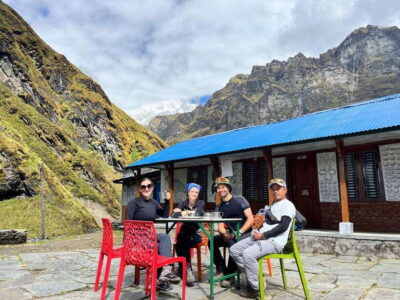
Kathmandu/Pokhara: 5-Day Annapurna Base Camp (ABC) Trek
Read our review →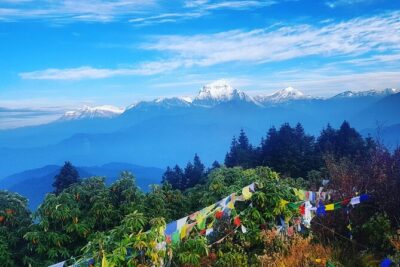
11-Day Hike Tour to Annapurna Base Camp Bliss in Kathmandu
Read our review →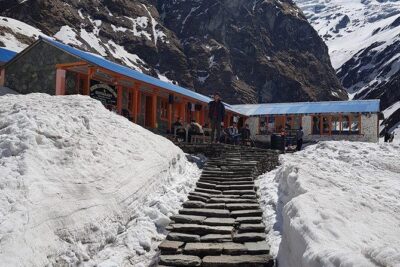
Browse the lists this tour appears in