
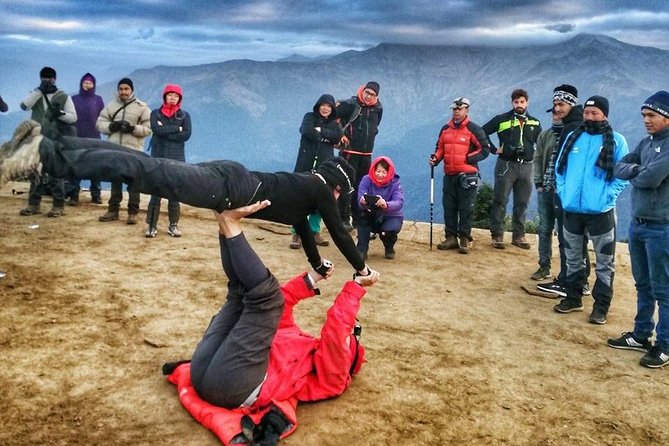
Reviewed · GHOREPANI POON HILL TREKS
Poon hill Trek 3 days
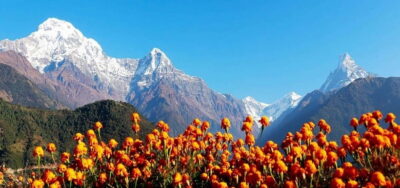
Poon Hill is the prize here: a sunrise lookout with views toward Annapurna I, II, and III, Dhaulagiri, Tukuche Peak, Nilgiri, Mardi Himal, Manaslu, and the Kali Gandaki Valley. You reach it on a three-day Himalayan trek from Pokhara, with a local guide handling the practical work along the way.
I like the small group limit of 12, which gives your guide a fair chance to watch the pace and help when the trail gets tough. I also like that meals, permits, transport, a porter, hiking poles, and a kit bag are arranged for you. The main drawback is the first day: the climb to Ulleri includes more than 3,000 stone steps, so this is short in duration but not a soft introduction to trekking.
Key points to know before you book
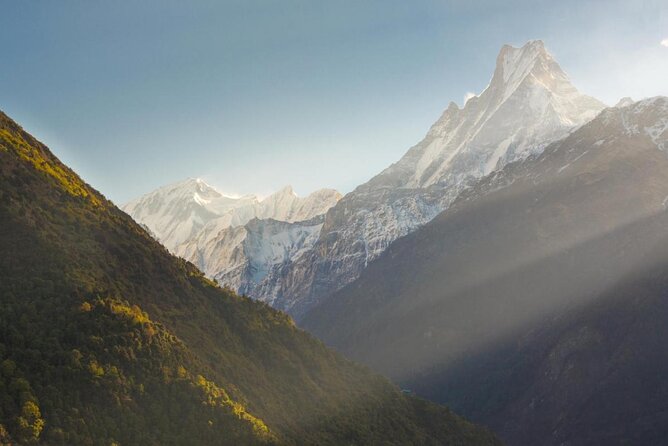
- Sunrise at Poon Hill: The lookout gives you a wide Himalayan view, including Annapurna, Dhaulagiri, Nilgiri, and Tukuche Peak.
- A demanding first day: The 3,000-plus steps to Ulleri make the opening climb the hardest part for many hikers.
- Small-group trekking: The group is capped at 12 people, with one porter provided for every two people.
- Useful inclusions: ACAP and TIMS permits, meals during the trek, private transport, a guide, hiking poles, and a kit bag are covered.
- Mountain village scenery: You pass Gurung and Magar villages, rhododendrons, the Kali Gandaki Valley, and the Jomsom horizon.
- Best for short schedules: The trek offers a real Himalayan walk without committing to a week or more in the mountains.
Why Poon Hill works as a short Himalayan trek
Poon Hill is one of Nepal’s most popular short treks for good reason. You get a mountain walk, village life, forest scenery, and a major sunrise view in only three days. That makes it a useful choice if you are based in Pokhara, have limited time, or want to test your legs before considering a longer Nepal trek.
Do not confuse short with easy. The total walking time is listed at roughly 15 to 18 hours, spread over three days. The trail includes a steep staircase section, and you need a moderate level of physical fitness. You do not need to be an elite hiker, but you should be comfortable walking uphill for several hours and handling repeated stone steps.
The best part is the sense of progress. You begin with transport from Pokhara, then trade the city for mountain paths, villages, and forest. By the time you reach Poon Hill, the sunrise feels earned rather than simply delivered from a roadside viewpoint.
More Ghorepani Poon Hill Treks in Pokhara
- Pokhara: 4-Day Ghorepani, Poonhill & Ghandruk Mountain Trek
★ 5.0 · 132 reviews - Ghorepani – Poon Hill Trek 3N-4D
★ 5.0 · 125 reviews - From Pokhara: 3-Day Ghorepani Poon Hill Trek with Guide
★ 4.9 · 68 reviews
Day one: Pokhara, transport, and the long climb to Ulleri
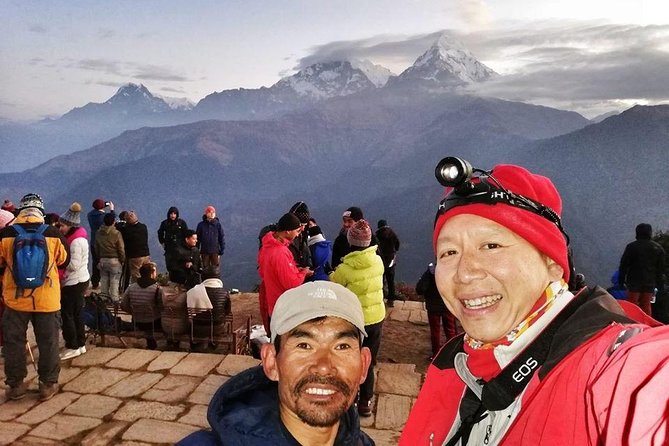
The meeting time is 8:15 in the morning, and pickup is offered. Private transportation is included, which removes one of the usual early-trip hassles. You do not have to arrange every transfer yourself before the walking begins.
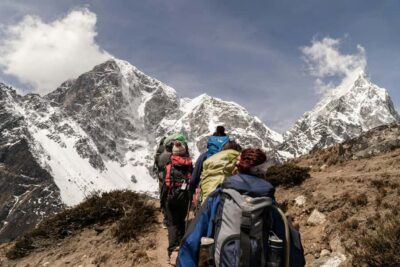
The first day is the physical test. The route toward Ulleri includes more than 3,000 steps, a detail worth taking seriously when you decide if this trek suits you. Break the climb into small sections, keep your pace steady, and do not try to match the fastest person in the group.
This is where the guide matters most. A good guide will help set a workable rhythm, point out places to rest, and keep the group moving without turning the day into a race. Sabin is one guide associated with this trek who is described as attentive to pace and willing to stop for breaks. Guide assignments can change, but the small-group format should still make personal support more likely than on a large departure.
The first day also brings the initial mountain views and the chance to see how your body reacts to the altitude and effort. You should treat it as a proper hiking day, not a casual stroll after breakfast. The reward is a mountain settlement and the knowledge that the hardest staircase section is behind you.
Gurung and Magar villages along the trail
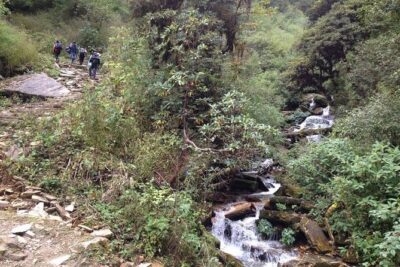
The villages are not just places to pass through on the way to a viewpoint. They give the trek its human scale. The route includes Gurung and Magar settlements, where the built environment and daily life feel very different from Pokhara.
You will not be spending days in each village, so keep your expectations realistic. This is a trekking route first, not a village homestay program. Still, walking through these communities helps you understand the area better than a quick drive to a viewpoint would.
The local guide adds value here by helping you notice details you might otherwise miss. The tour description specifically points to mountain flora and fauna, as well as colorful rhododendrons. In season, the rhododendron trees can bring strong color to the forest sections. The exact display depends on the time of year, so do not book solely for flowers unless you have confirmed your dates carefully.
The changing scenery also helps break up the effort. One hour may be stone steps, another forest, and later a village path with wider views. That variety is one reason this route feels like a proper trek despite its compact schedule.
Day two: reaching the Poon Hill area
The second day takes you deeper into the mountain route and closer to the main goal. The precise walking schedule can vary, so you should ask the operator for the current overnight location and daily distances before departure. The supplied details confirm a three-day plan, organized accommodation, and meals, but they do not provide a full hour-by-hour route.
What you can count on is a continuing mix of uphill and downhill walking, mountain forest, and views opening across the high country. The guide and porter arrangement keeps you from carrying every item yourself. One porter is provided for every two people, a useful ratio for a short trek with a small group.
You will still need a daypack with your water, extra layer, personal items, and anything you need during the day. The porter system is helpful, but it does not mean you can arrive without preparing for changing conditions. Pack lightly and keep essentials close to you.
The food plan is simple and practical: breakfast, lunch, and dinner are included during the trek. That matters because finding meals each day can otherwise add time and uncertainty. All beverages are excluded, including soft drinks, coffee, beer, and other caffeinated or alcoholic drinks, so budget separately for those.
Same mountains, a completely different kind of day:
- ZipFlyer Nepal – The World’s Steepest Zip-line
★ 5.0 · 608 reviews - Bungee Pokhara by HighGround Adventures
★ 5.0 · 366 reviews - From Pokhara: Sarangkot Sunrise Himalayas Tour
★ 4.7 · 218 reviews - ATV Adventure Tour in Pokhara, Nepal
★ 5.0 · 194 reviews
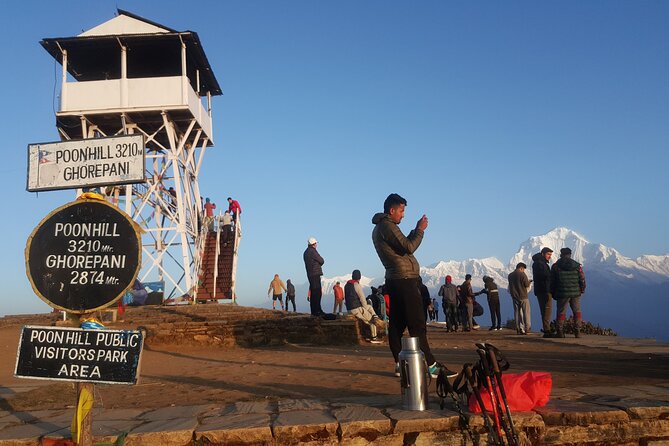
Sunrise at Poon Hill and the mountain panorama
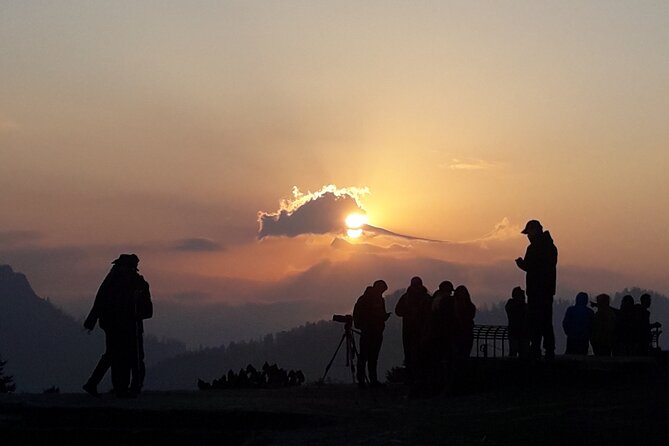
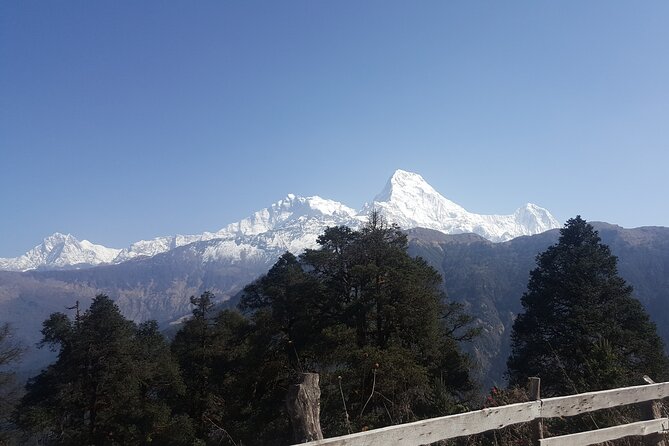
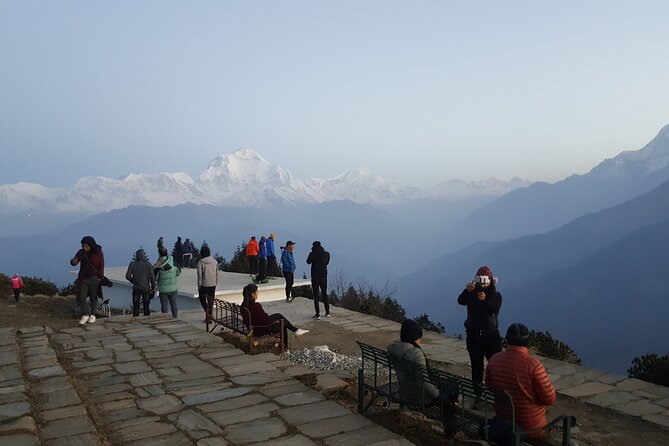
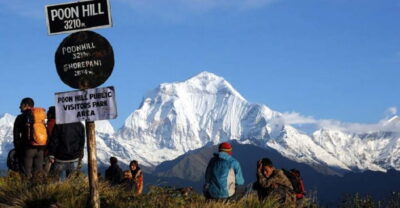
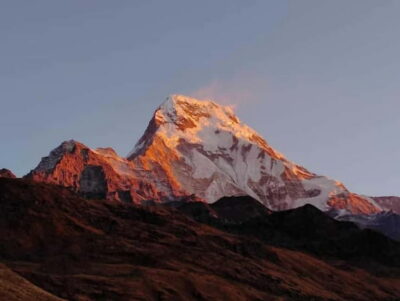
The sunrise is the clear centerpiece. From Poon Hill, the view includes Dhaulagiri at 8,167 meters, Tukuche Peak at 6,920 meters, Mardi Himal, Manaslu, Annapurna I, Annapurna II, Annapurna III, Nilgiri, and Khopra Danda.
That is a serious list of Himalayan peaks from one lookout. The view also reaches across the Kali Gandaki Valley toward the Jomsom horizon. Gurung and Magar villages, forest, and rhododendron country fill out the lower view, so you are not looking only at distant snow.
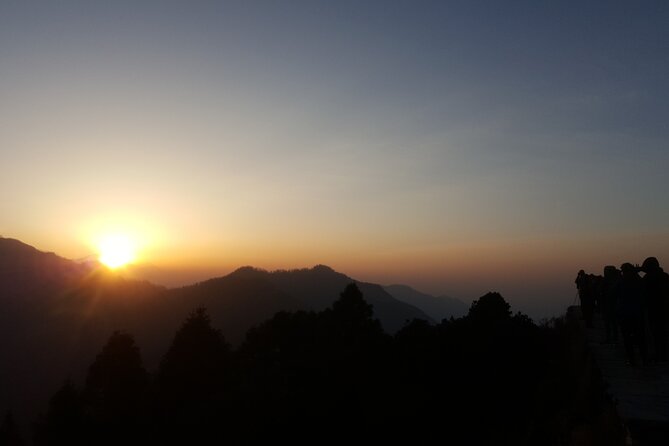
Sunrise is never guaranteed. Clouds can hide the peaks, and mountain weather can change quickly. One recent account describes getting clear conditions after several cloudy days, which is a useful reminder that timing and luck both matter. You should go for the walk and the setting, not only for a perfect photograph.
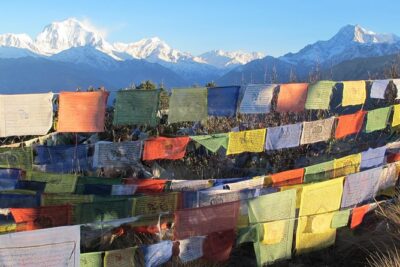
The early start also changes the mood of the trek. You are outside before the day has fully begun, waiting for the light to reach the ridges. Bring warm layers and keep your expectations flexible. Even when the peaks are partly covered, the high viewpoint and changing sky can still make the climb worthwhile.
The guide, porter, and small-group setup
The group limit is no more than 12 people. That is small enough to make a real difference on a steep trail. You can ask questions without competing with a crowd, and the guide can better notice if someone needs a slower pace or a short rest.
The guide organizes the main practical details, including accommodation and meals during the trek. That lets you focus on walking rather than sorting out each overnight stop. It is a particularly good setup if this is your first Himalayan trek or your first time walking in Nepal.
The porter ratio is one for every two people. You should still pack responsibly and respect the porter’s workload. A small personal bag is useful for water, snacks, sun protection, a phone, and spare clothing.
The equipment list includes hiking poles and a kit bag. Micro spikes are provided from December through February, which is a sensible seasonal touch. Their inclusion does not mean every winter day will be icy, but it gives you extra help if trail conditions require it.
What the $230 price really covers
At $230, the trek offers more than a guided walk. The price includes private transportation, a guide, a porter at a ratio of one per two people, breakfast, lunch, and dinner during the trek, ACAP and TIMS permits, a kit bag, hiking poles, and winter micro spikes from December through February.
That bundle gives the price solid value, especially if you would otherwise have to arrange permits, transport, meals, equipment, and porter support separately. The small group also adds value because you are not paying for a bare transfer with a large crowd.
Accommodation is arranged as part of the trek’s mountain plan, and trip feedback describes the overnight places as clean and comfortable. However, the provided price details do not clearly list hotel accommodation in Pokhara, and Pokhara hotel costs are specifically excluded. Plan to pay for your city stay separately.
Drinks are also extra. The exclusion list calls out soft drinks, beer, and caffeinated beverages, so bring a little spending money for anything you want beyond the included meals. Tips for the guide and porter are not included either.
One odd exclusion is scuba equipment. It has no practical connection to a Himalayan trek, so you can safely treat that line as irrelevant to your planning. The meaningful extra costs are Pokhara accommodation, drinks, and tips.
Fitness, timing, and what to pack
You need moderate physical fitness. That means you should be able to walk uphill for sustained periods, manage many steps, and keep going for three days. The trek is not presented as technical climbing, but the staircase to Ulleri can feel hard if you are not used to hills.
Your best preparation is simple: walk uphill before you arrive, practice on stairs, and wear shoes you already trust. Do not bring brand-new footwear to Nepal. Hiking poles are included, which can help with both the climb and the downhill sections.
Pack layers rather than one heavy item. Sunrise at Poon Hill can be cold even when Pokhara feels mild. A small daypack, water, sun protection, personal medication, and spare socks are sensible basics.
The tour provides a kit bag, but the supplied details do not say exactly what size it is or what you may place inside. Ask before departure if you want to know how your main luggage will be handled. You should also confirm the current accommodation plan and daily walking times.
Who will enjoy this trek most
I would choose this trek if you want a concentrated taste of Nepal’s mountain country. It fits first-time hikers who are reasonably fit, people with only three days available, and anyone staying in Pokhara who wants more than a short scenic drive.
It also suits hikers who value help with logistics. Permits, meals, transport, guide support, porter service, poles, and a kit bag are all arranged. You can spend more attention on the trail and less on administration.
I would hesitate if you dislike steep steps, early starts, basic mountain accommodation, or uncertain weather. The route is short enough for a tight schedule, but it still asks for real effort. If your fitness is low or you want a relaxed sightseeing trip, this is not the right fit.
The small group helps, but it does not remove the physical challenge. A guide can slow the pace and offer support, yet you still have to climb those steps yourself.
Practical booking notes from Pokhara
The tour starts at 8:15 in the morning, and pickup is offered. It is also near public transportation, which gives you another way to reach the meeting point if needed. Confirmation is provided at booking, and the maximum group size is 12.
The trek is mobile-ticket friendly, so you can keep the booking on your phone. Save the key details before leaving your hotel, especially if you expect weak mobile service outside Pokhara.
The cancellation terms are strict: the booking is non-refundable and cannot be changed for any reason. Check your dates, fitness, and plans carefully before paying. You should also ask about current weather conditions, the exact daily route, and what the kit bag includes.
Should you book the 3-day Poon Hill Trek?
Yes, if you want a short but genuine mountain trek with a famous sunrise, local village scenery, and practical support built into the price. The combination of a 12-person limit, included permits, meals, transport, guide, porter, and hiking equipment makes $230 a reasonable package for the time involved.
Go in knowing that the first day is hard, the weather may block the peaks, and drinks, Pokhara hotels, and tips cost extra. If you accept those limits and prepare for the 3,000-plus steps to Ulleri, Poon Hill gives you a strong first taste of the Himalayas without taking over your entire Nepal trip.
FAQ
How long does the Poon Hill Trek take?
The trek lasts three days, with approximately 15 to 18 hours of total activity time.
Where does the trek start?
It starts from Pokhara, Nepal. Pickup is offered, and the meeting time is 8:15 am.
How many people can join the group?
The group has a maximum of 12 people.
What meals are included?
Breakfast, lunch, and dinner are included during the trek.
Are permits included in the price?
Yes. The ACAP permit and TIMS permit are included.
Is transportation included?
Yes. Private transportation is included, and pickup is offered.
Is a porter provided?
Yes. The package includes one porter for every two people.
Are hiking poles and winter equipment included?
Hiking poles and a kit bag are included. Micro spikes are provided from December through February.
What fitness level do I need?
You should have a moderate level of physical fitness. The route includes more than 3,000 steps leading to Ulleri, so it requires sustained uphill walking.
More 3-Day Experiences in Pokhara
- Pokhara: 3-Day Ghorephani and Poon Hill Private Trek
★ 5.0 · 58 reviews - 3-Day Poon Hill Trek from Pokhara.
★ 5.0 · 45 reviews - From Kathmandu/Pokhara: Private 3-Day Chitwan Safari Tour
★ 4.7 · 34 reviews - From Pokhara: Budget 2 Night 3 days Poon hill trek
★ 5.0 · 20 reviews
More Hiking & Trekking in Pokhara
- Trekking in Annapurna/Langtang/Everest/Upper Mustang regions
★ 5.0 · 161 reviews - Pokhara: Annapurna Foothills Day Hike with Transfers
★ 5.0 · 100 reviews - Kathmandu/Pokhara: 5-Day Annapurna Base Camp (ABC) Trek
★ 4.9 · 72 reviews - Pokhara: 4-Day Mardi Himal Trek
★ 4.9 · 59 reviews
Just added around Pokhara
- Seti George and Thrilling Suspension Bridge Tour at Pokhara★ 4.5 · 3 reviews
- Tandem Paragliding in Pokhara★ 4.8 · 8 reviews
- Pokhara: Sunrise Tour to Sarangkot★ 5.0 · 3 reviews
- Pokhara: Suspension Bridge Private Tour- 30 Min Village Walk★ 4.8 · 9 reviews
- Pokhara: Visit Best Seven Tourist Destination by Sharing Bus★ 3.4 · 10 reviews
- Pokhara Sightseeing By Bus: Day Trip★ 4.6 · 7 reviews
- Pokhara Sightseeing By Bus – Day Trip★ 3.2 · 8 reviews
- Pokhara: Sarangkot Sunrise & Panoramic Annapurna View Tour★ 4.8 · 10 reviews
Ghorepani Poon Hill Treks, compared.
4-Day Ghorepani, Poonhill & Ghandruk Mountain Trek
Read our review →
Browse the lists this tour appears in