
Reviewed · EVEREST BASE CAMP TREKS
Everest Base Camp Trekking
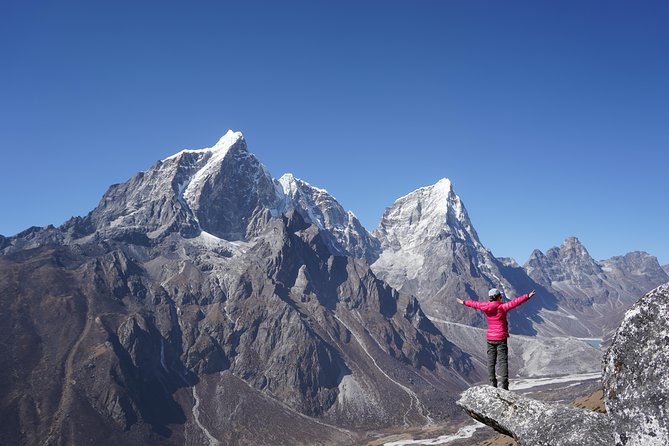
Everest Base Camp is not a quick mountain outing. It is a 14-day high-altitude trek through pine forests, Sherpa villages, glacial valleys, and some of the highest peaks on earth. You fly from Kathmandu to Lukla, walk most days, sleep in teahouses, and finish at Base Camp and Kala Patthar before retracing the route.
I like the small group of no more than 10, which gives your guide room to keep an eye on your pace and condition. I also like that meals, teahouse lodging, and local transportation are included, so you can focus on walking instead of arranging each night’s bed and every meal.
The main caution is altitude. This is aimed at active, moderately fit people with strong physical fitness, and the route includes steep, rocky sections. Weather can affect flights and walking conditions, so you need patience, suitable clothing, and some flexibility.
Key things to know before you book
- Lukla begins the real adventure: The flight to Tenzing-Hillary Airport brings you straight into the Khumbu region and includes mountain views from the air.
- Namche is more than a stop: You get an acclimatization day here, with a short hike to a viewpoint and time to use shops, bakeries, restaurants, ATMs, and internet cafes.
- The route builds altitude carefully: Nights in Phorse, Dingboche, Lobuche, and nearby villages break up the climb toward Base Camp.
- Base Camp is only part of the payoff: The sunrise walk to Kala Patthar provides the clearest featured mountain viewpoint on the schedule.
- Guides are central to the experience: Trekkers have specifically praised guides including Biru, Ambar, and Ramesh for safety, help, and steady company.
- The price covers useful basics: At $1,350 per person, the package includes teahouse accommodation, meals, and local transportation, but you should confirm any items not listed before departure.
Why this Everest Base Camp route works
This itinerary uses a classic out-and-back route, but it avoids making the climb a mad dash. You spend time at Namche Bazaar for acclimatization, then continue through Phorse and Dingboche before reaching the higher settlements near Everest Base Camp.
That pacing matters. The trek is not simply a long walk with a famous finish. Your body needs time to adjust as the air gets thinner, and the planned rest day in Namche gives you a useful pause early in the route.
The group size is another practical strength. With a maximum of 10 people, the guide can give more direct attention than on a large coach-style tour. You still need to walk at the group’s general pace, but the format should feel more personal and easier to manage.
The operator has been associated with guides such as Biru, Ambar, and Ramesh. Porters including Kanchar are also named in the trip feedback, with special praise for their help and care. That personal support matters here, since a guide is not just pointing out peaks. The guide helps you follow the route, handles day-to-day logistics, and watches for signs that altitude or fatigue is becoming a problem.
More Everest Base Camp Treks in Kathmandu:
- Everest Base Camp Trek – 14 Days
★ 5.0 · 1,499 reviews - Everest Base Camp Trekking – 13 Day
★ 5.0 · 365 reviews - Everest Base Camp Trek -14 Days
★ 5.0 · 321 reviews
Days 1 and 2, Kathmandu to Lukla
Your trip begins at Tribhuvan International Airport in Kathmandu. An airport representative meets you and arranges a private tourist vehicle to your hotel. You can rest after arriving or visit the company office to go over trip details.
That first day is deliberately light. Kathmandu can be tiring after an international flight, and giving yourself time to settle in is sensible. It also gives you a chance to ask questions before the mountain portion begins.
On Day 2, you leave early after breakfast for the domestic airport terminal. The flight to Lukla is short in schedule but big in scenery, with views of sunrise on snow-covered peaks.
You land at Tenzing-Hillary Airport, the gateway for the trek. From here, the city disappears quickly and the route becomes a foot journey through the Khumbu region. Flights operate in all weather conditions according to the trip information, but that does not mean weather will be convenient. Pack patience as well as warm clothing.
Day 3, pine forests and the entrance to Sagarmatha National Park
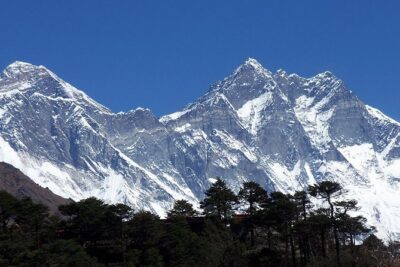
The first full walking day leads through pine forest beside the Dudh Koshi River. You also get views of Mount Thamserku, one of the striking peaks in this part of the route.
The walk passes several settlements before reaching a checkpoint and the entrance to Sagarmatha National Park. This is a satisfying change of pace from Kathmandu and Lukla. You are no longer simply moving between transport points, you are following a mountain trail through villages and river valleys.
The early section helps you find your walking rhythm. It is still a serious hike, but the forest and river make the day feel more varied than a bare uphill march.
Day 4, acclimatizing around Namche Bazaar
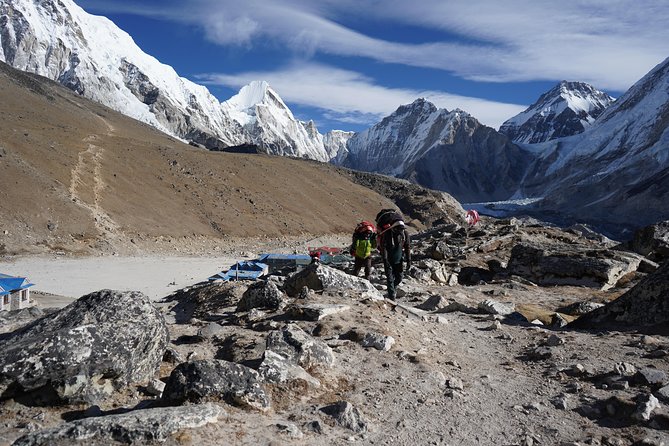
Namche Bazaar is the largest settlement in the Khumbu region and one of the most useful places on the route. It has ATMs, internet cafes, restaurants, bakeries, and other facilities that become less common as you climb.
You spend the day here for acclimatization, but this is not a day of complete idleness. A short hike to a nearby viewpoint helps your body adjust while giving you a first broad look at the surrounding peaks.
I like this pause because it adds both practical value and local character. Namche is a working mountain town, not just a sleeping stop. You can rest, eat, look around, and prepare for the harder days ahead.
Do not treat the amenities as a reason to overpack or assume you will find the same choices higher up. The trip includes meals and teahouse accommodation, but the character of the settlements changes as you gain altitude.
A few more Kathmandu trips to weigh up
- Nagarkot Sunrise View and Day Hiking from Kathmandu
★ 5.0 · 471 reviews - Annapurna Circuit Trek with Tilicho Lake
★ 5.0 · 368 reviews - Annapurna base camp trek 5 Days
★ 5.0 · 252 reviews - Everest Base Camp Trekking – 2025/2026
★ 5.0 · 199 reviews
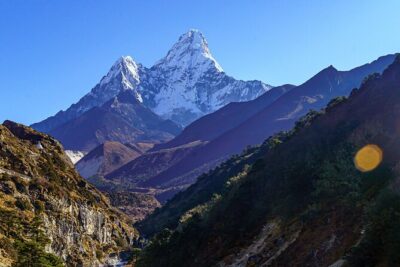
Day 5, Namche to Phorse beneath Ama Dablam
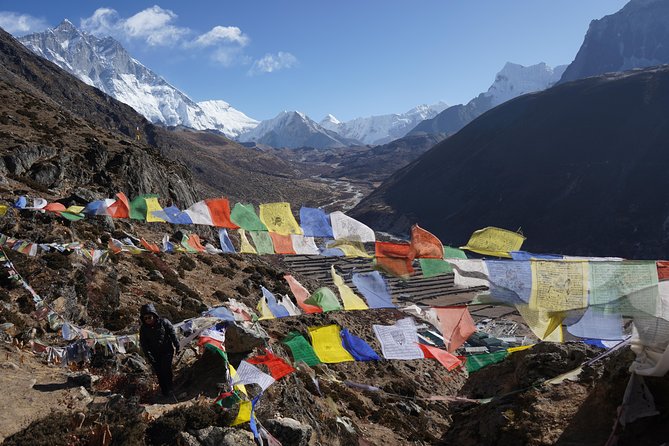
After breakfast, the route leaves Namche for Phorse. The trail reaches Mugla Pass, where you can see Mount Ama Dablam, Mount Khumbu, and Mount Thamserku.
The views are a major reward on this day, but the route also requires care. You descend toward the Dudh Koshi and cross the river before continuing. That combination of pass, descent, river, and village makes the day feel like a real progression through the Khumbu rather than a simple climb.
Phorse provides a quieter overnight stop than Namche. From here onward, convenience becomes less important than rest, steady pacing, and following the guide’s lead.
Day 6, Buddhist culture and the road to Dingboche
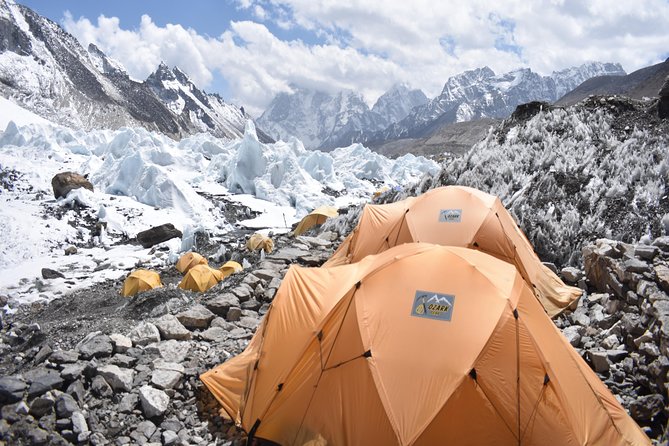
The day from Phorse to Dingboche begins with a visit to the largest Buddhist monastery in the region. This adds a cultural layer to the trek that you would miss if you treated the route as only a mountain challenge.
The path continues through alpine forest to Pangboche, a large village in the upper part of the route, then on through Shomare and other settlements toward Dingboche. The vegetation thins as you climb, and the surroundings begin to feel more exposed.
Dingboche is an important staging point before the highest section. By now, you are walking at altitude and should pay close attention to your condition. The guide’s role becomes more valuable here, since the right response to fatigue is not always to simply push harder.
Days 7 and 8, glacial valleys and memorial stones
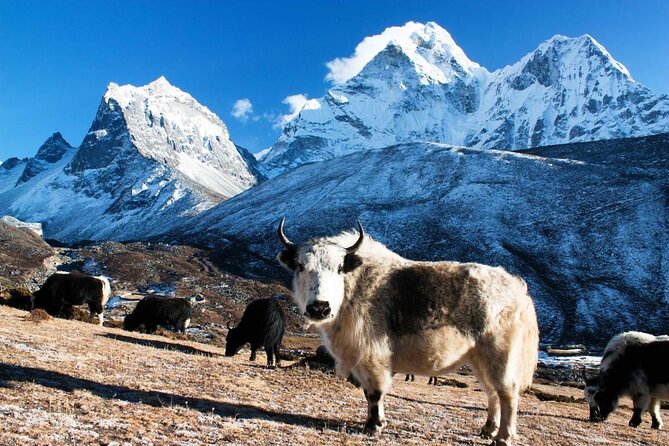
From Duglha, the route climbs through the Khumbu Khola valley. You pass Dusa, associated with yak herders, and Phulung Karp, identified as the camp of the first successful Everest expedition in 1953.
The itinerary also includes a view of Chola Lake. These details give the route a stronger sense of place. You are walking through an area shaped by seasonal herding, historic climbing expeditions, Buddhist practice, and glacial terrain.
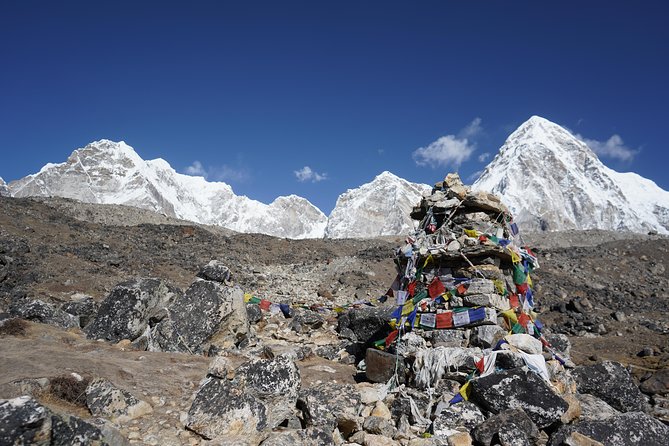
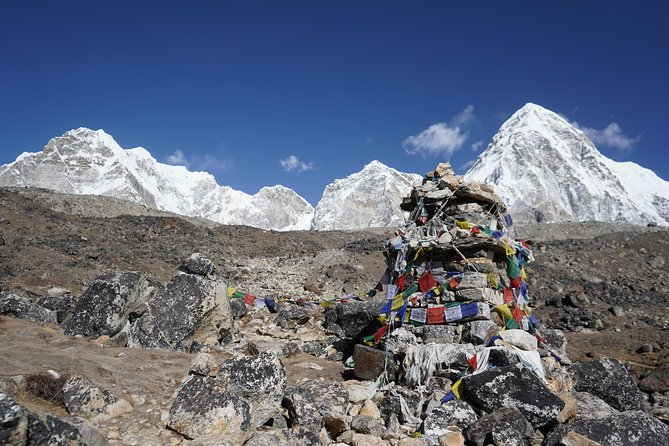
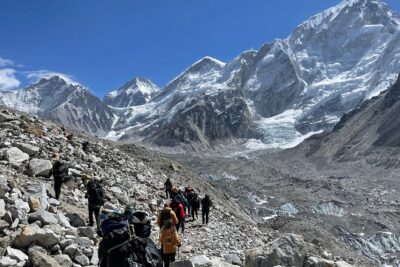
The next day takes you up the steep terminal moraine of the Khumbu Glacier. The climb toward Chupki Lhara leads over slopes scattered with boulders, including collections of stones decorated with prayer flags.
This is a demanding section, and the footing may be rough. You should expect to walk slowly and keep your balance rather than chase a fast pace. The prayer flags and stone markers provide a quiet human presence in an otherwise severe setting.
Day 9, Everest Base Camp
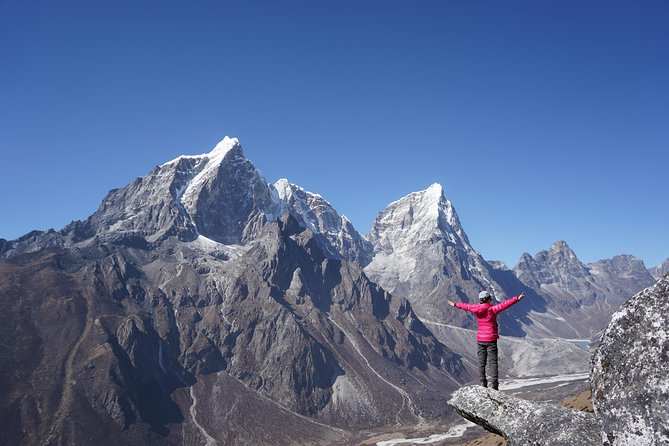
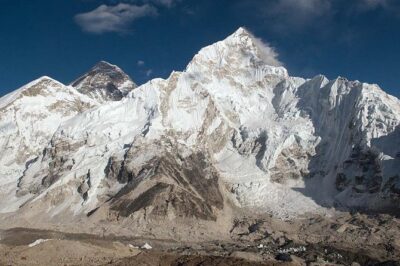
Day 9 is the route’s main target. At Thangma Riju, you get a 360-degree view of snow-covered mountains. One important detail is easy to miss: Mount Everest itself is not visible from this point.
You then continue along the Everest Base Camp route and reach the world’s highest mountain. Base Camp is listed as a 30-minute stop, with no admission charge. The short stated stop does not mean the day is easy. Getting there involves high altitude, rough trail, and the accumulated effort of the previous week.
Base Camp is a powerful place because it represents the endpoint of a long approach, not because it offers a comfortable sightseeing platform. The surrounding glacier and climbing history give the stop meaning, while the guide helps you stay focused on safe movement and a sensible pace.
You should also keep expectations realistic. The route reaches Everest Base Camp, but it does not take you up Mount Everest, and the best scheduled view of Everest comes on the following morning from Kala Patthar.
Day 10, sunrise at Kala Patthar
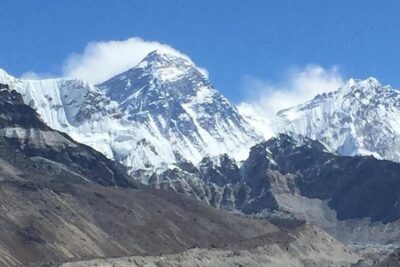
The trek begins very early so you can reach Kala Patthar as darkness gives way to morning light. This is timed for sunrise and mountain views, including Mount Everest and nearby peaks such as Lingtr, as described in the route information.
Kala Patthar is listed as a 30-minute stop, but the early start and climb make this one of the most memorable and strenuous parts of the trip. You will need warm layers and a willingness to walk before dawn.
I consider this viewpoint essential to the itinerary. Base Camp connects you with the route and the climbing story, while Kala Patthar gives you the broad mountain view many people picture when they think of Everest.
The schedule also makes clear why fitness matters. You are not only completing a high-altitude trek, you are doing an early morning ascent after already reaching Base Camp. The reward is strong, but you should not underestimate the effort.
Days 11 and 12, descending through Pheriche and Pangboche
After Kala Patthar, the route turns back toward Duglha. You pass through Pheriche and Orsho, then Shomare before reaching Pangboche.
The descent is easier on your lungs but not necessarily on your legs. Long downhill sections can be hard on knees, and tired trekkers should avoid rushing. On reaching Pangboche, you have time to explore the old village monastery.
That monastery visit brings the cultural side of the route back into view after the glacier and Base Camp days. It is a useful reminder that the Khumbu is home to communities with their own religious traditions and daily routines, not simply a corridor for climbers.
Day 12 continues down steep trails toward the Dudh Koshi. The final stretch includes rough, rocky ground and a suspension bridge. Walk slowly, stay balanced, and let the guide set a safe rhythm.
Days 13 and 14, Lukla, Kathmandu, and departure
On Day 13, you take the mountain flight from Lukla back to Kathmandu. Once in the capital, you have time for shopping and walking around the city, followed by an evening celebration for completing the trek.
This return day is another place where weather can affect plans. The itinerary includes the flight, but mountain aviation is never the part of the journey to treat casually. Keep your schedule flexible if you have an important onward connection.
Your final day allows more shopping and sightseeing around Kathmandu Valley before your scheduled flight from Tribhuvan International Airport. The arrangement gives you a useful buffer after the trek, although you should still check how much time you have before heading to the airport.
What the $1,350 price really gives you
At $1,350 per person, the value depends on how much planning you want to hand over. Teahouse accommodation, meals, and local transportation are included, along with airport pickup and a guided small-group format.
For a route with domestic flights, multiple mountain settlements, acclimatization planning, lodging coordination, and a return to Kathmandu, that is a meaningful package. You are paying for organization as much as for the walking itself.
The information does not list every possible cost or inclusion, so ask the provider to confirm what is covered before paying. In particular, check any items that matter to your budget beyond the stated lodging, meals, and local transport.
The group discount option may improve the value for people booking together. Mobile tickets and confirmation at booking also make the administrative side simple, while a valid passport and full passport details are required for everyone at the time of booking.
Who should book this trek
This is a good choice if you want Everest Base Camp with a guide handling the route and basic logistics. It suits active people who can manage repeated days of walking, steep trails, rocky descents, and high-altitude conditions.
It also suits solo hikers who want the security of a group. The small format gives you company without putting you into a huge party, and the guide can help with practical needs along the way. Guides such as Biru, Ambar, and Ramesh have been singled out for making people feel safe and cared for.
I would not choose this trip if you want a relaxed holiday with guaranteed transport times or hotel comfort every night. The trek operates in all weather, includes an early domestic flight, and reaches places where the physical demands are the main event.
Free cancellation is available if you cancel at least 24 hours before the local start time. Changes or cancellations inside that window are not accepted for a refund.
Should you book the Everest Base Camp trek?
Book it if reaching Everest Base Camp matters to you and you want a guide, meals, teahouses, and transport arranged in one package. The strongest features are the sensible acclimatization stop in Namche, the small group, the cultural stops, and the sunrise visit to Kala Patthar.
Skip it if you are not comfortable with hard walking or if your schedule cannot absorb weather-related changes. For the right person, this is a demanding but well-structured way to reach the Khumbu, with enough support to let you concentrate on the trail, the villages, the prayer flags, and the mountains.
FAQ
Where does the Everest Base Camp trek begin?
The experience begins at Tribhuvan International Airport in Kathmandu, Nepal. An airport representative meets you and arranges transport to your hotel.
How long does the trek last?
The full experience lasts approximately 14 days, including arrival and departure days in Kathmandu, the flight to Lukla, the trek, the return flight, and time in Kathmandu.
How many people can join the group?
The group has a maximum of 10 participants.
Is airport pickup included?
Yes. Pickup is offered from Tribhuvan International Airport, followed by transport to the hotel in a private tourist vehicle.
Is accommodation included?
Yes. Teahouse accommodation is included as part of the trek.
Are meals included?
Yes. Meals are included in the tour package.
Is the trek suitable for all fitness levels?
No. The experience requires strong physical fitness and is intended for active, moderately fit people.
Is a passport required?
Yes. You need a current valid passport on the day of travel. Passport name, number, expiry date, and country are required for all participants at booking.
Can I cancel for a full refund?
Yes, if you cancel at least 24 hours before the experience start time. Cancellations or changes made less than 24 hours in advance are not accepted for a refund.
Just added around Kathmandu
- Private Half-Day Tour of Boudhanath and Pashupatinath Temples in Kathmandu★ 4.5 · 9 reviews
- Private Half-Day Tour of Kathmandu Durbar Square and Swayambhunath Temple★ 4.5 · 11 reviews
- Namobuddha Monastery Hiking Day Tour via Panauti from Kathmandu★ 5.0 · 15 reviews
- Private Full-Day Kathmandu City Tour★ 5.0 · 9 reviews
- Private Day Tour in Kathmandu Valley Rim with Bhaktapur Sightseeing★ 5.0 · 3 reviews
- Private Half Day Budhanilkantha Tour★ 5.0 · 6 reviews
- Private Day Tour: Patan and Bhaktapur from Kathmandu★ 4.5 · 6 reviews
- Private Day Tour – Sacred Journey to Namo Buddha★ 5.0 · 5 reviews
Everest Base Camp Treks, compared.
Everest Base Camp Trek with Helicopter Return from Gorakshep to Lukla
Read our review →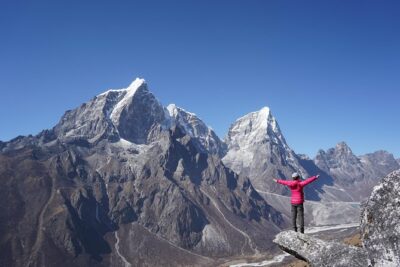
Browse the lists this tour appears in