
Reviewed · ANNAPURNA CIRCUIT TREKS
Annapurna Circuit Trek with Tilicho Lake
The real prize here is the route’s variety. In 16 days, you move from river valleys and pine forest to dry high country, ancient monasteries, Tilicho Lake, and the hard-earned crossing of Thorong La. You also get a hot-spring soak and a Poon Hill sunrise before heading back to Kathmandu.
I like two things right away: the price includes the daily basics that quickly add up in Nepal, and a guide handles the route, permits, meals, and changing transport. The smaller group, capped at 15, should also make the long days easier to manage. The main drawback is simple: this is a challenging high-altitude trek, not a casual walking holiday, and the 3 a.m. start for Thorong La will test your legs and patience.
Key points at a glance
- Tilicho Lake detour: Spend extra days reaching one of the world’s highest lakes, including an early morning climb from base camp.
- Thorong La crossing: The trek’s toughest day takes you over one of the world’s highest mountain passes.
- Full-board trekking: Breakfast, lunch, and dinner are included throughout the 16-day program.
- Practical transport plan: Drive from Kathmandu to the trailhead, use local transport after Muktinath, and return by tourist bus from Pokhara.
- More than mountain views: Expect village life, Thakali communities, monasteries, suspension bridges, hot springs, and terraced farmland.
- Small-group format: The maximum group size is 15, with an experienced, government-licensed trek leader and porter support.
Why this Annapurna route is worth the effort
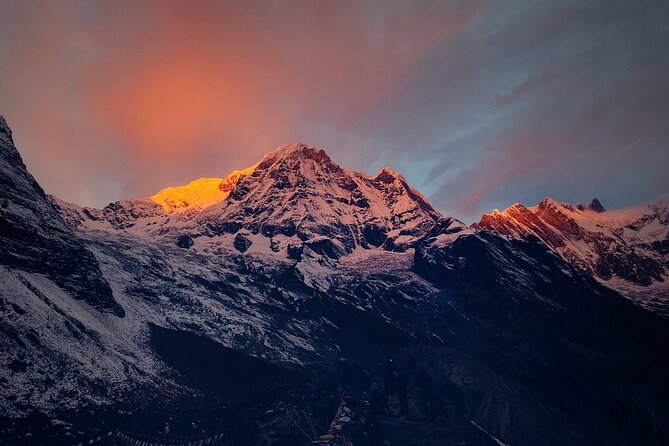
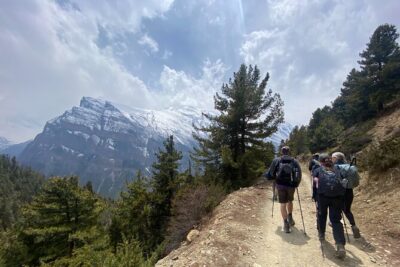
The Annapurna Circuit is appealing because it changes character almost every day. You begin with a long road journey from Kathmandu, then walk through cultivated valleys and forest. As you gain height, the trees thin out and the air turns colder and drier. Later, the route reaches high passes and stark mountain country before dropping toward Muktinath, Tatopani, and the forests around Ghorepani.
Adding Tilicho Lake makes the trip more demanding, but it also gives the route a clear centerpiece. The lake is not reached by simply pulling up in a vehicle or taking a short walk. You spend a night near its base, start early to avoid strong afternoon wind, and climb for roughly two to three hours on a steep trail. That effort is the point. The lake feels earned.
You also have the comfort of a fixed plan. Tea house or lodge accommodation, three meals a day, permits, guide services, porter support, and key ground transport are covered. That lets you concentrate on walking instead of sorting out every night’s room, meal, permit, or bus connection.
Still, do not mistake included logistics for an easy trip. The route includes long walking days, steep climbs, rough mountain paths, and high-altitude exposure. The supplier asks for moderate physical fitness, but I would frame it more strongly: you should be fit, active, and ready to walk uphill for several hours on consecutive days.
More Annapurna Circuit Treks in Kathmandu
- Annapurna Circuit Trek
★ 5.0 · 94 reviews - Annapurna Circuit Trek
★ 5.0 · 35 reviews - Annapurna Circuit Trek
★ 5.0 · 34 reviews
Days 1 to 4: Kathmandu to the upper Marsyangdi valley
Day 1: A long road to Besishar and Syange
The trip starts with an early drive from Kathmandu. The stated drive takes about six to seven hours and covers roughly 190 kilometers, heading toward Besishar and the trail area around Syange.
This is not a scenic train ride. Nepal’s mountain roads can make a modest distance feel like a full day, yet the drive gives you your first look at rural villages, farms, rivers, and distant mountain ranges. An air-conditioned vehicle is included for the relevant road transfers.
Treat this day as a transition, not a sightseeing day. You will likely be glad to have a guide managing the movement and arrival details. The first stop is associated with Sandup Choeding Gompa, adding a touch of local religious culture before the walking begins.
Day 2: Suspension bridges, waterfalls, and Tal
After breakfast, you cross a suspension bridge and climb toward Tal, where the route enters the Manang region. The setting changes quickly, with waterfalls feeding the river and sandy river beaches opening beside the trail.
Tal is memorable because it feels like a proper mountain settlement rather than just a roadside stop. The walking includes a steep climb, so even this early day asks for steady pacing. I would keep your pack light and let the guide set the rhythm. The route is more enjoyable when you save energy for the days ahead.
Same mountains, a completely different kind of day:
- Everest Base Camp Trek – 14 Days
★ 5.0 · 1,499 reviews - Private Kathmandu Sightseeing Tour | UNESCO World Heritage sites
★ 5.0 · 756 reviews - Everest Base Camp Helicopter Tour landing at Everest View Hotel
★ 5.0 · 668 reviews - Half day cooking class in Thamel kathmandu
★ 5.0 · 607 reviews
Day 3: Forest walking toward Chame
The trail follows a river through pine, fir, oak, and maple forest on the way to Chame, the administrative center of Manang district. The forest gives you shade and a softer start to the high-country section.
Mountain views begin to appear above the trees, including Lamjung and parts of the Annapurna range. Chame is a useful overnight point because it marks the gradual shift from low valley walking to a more alpine trip. You are still surrounded by greenery, but the sense of height is growing.
Day 4: Paungda Danda and the first grand rock walls
This day takes you through a steep, narrow valley toward Paungda Danda, a dramatic curved rock face rising about 1,500 meters from the river. It is one of the route’s most striking geological features.
From here, you can see Annapurna II to the south and Pisang Peak to the northeast. The trail is not simply a walk toward a viewpoint. You move through a confined valley and then gain a wider sense of the mountain structure around you. Good shoes matter here, as steep and narrow paths are part of the day.
Days 5 to 7: Pisang, Manang, and a vital rest day
Day 5: Upper Pisang and Manang
The upper route through Pisang and Geru is chosen for its mountain views. Annapurna II, Annapurna III, Annapurna IV, Gangapurna, Tilicho, and Pisang Peak all come into the picture as you climb.
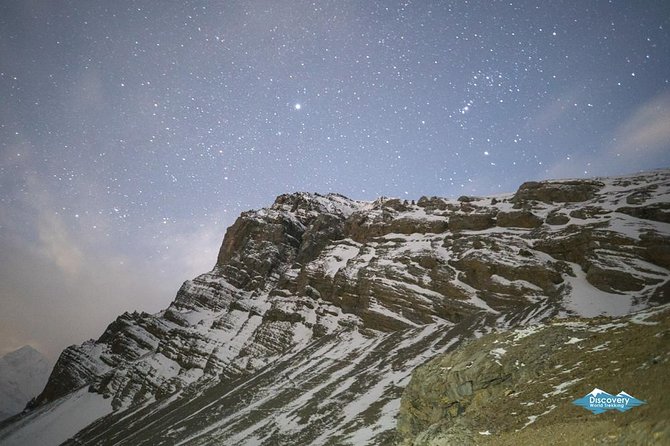
This is also where the physical character of the trek becomes clearer. The air turns cold, dry, and harsher. A village walk that felt manageable at lower elevations can feel much harder here, so drink regularly and avoid rushing. Your guide is useful not just for navigation, but for watching how you are coping with the altitude.
The stop at Manang Airport is more a route marker than an attraction. The real value of the day is the upper trail and its views across the surrounding peaks.
Day 6: Acclimatization around Manang
This is a rest and acclimatization day, though you are not expected to sit indoors. The plan includes an early hike to Gangapurna Lake and Base Camp, time to admire Annapurna III, Tilicho, Pisang, and Chulu peaks, and a walk around Manang village and its monastery.
This pause is one of the smartest parts of the schedule. The body needs time to adjust before the route climbs higher. I like that the day combines a purposeful walk with a look at local life. Manang gives you a chance to slow down, inspect the village, and prepare clothing and gear for colder conditions.
Day 7: Khangsar and the road to Tilicho
The next section follows an upper route down toward a river, across conifer forest, and into the Tibetan-influenced settlement of Khangsar. The walk takes roughly three hours to reach the village, followed by another hour or so toward the overnight area.
The day is described as easier than some of the others, but do not read that as effortless. You are positioning yourself for Tilicho Lake, and the trail includes changing surfaces and mountain exposure. Khangsar is important because it feels like a cultural and geographic shift. The architecture and setting reflect the high valley’s Tibetan influence.
Days 8 and 9: The hard-earned arrival at Tilicho Lake
Day 8: Landslide country and Tilicho Base Camp
The path to Tilicho Base Camp passes through an area of landslides and unusual rock formations. It is an easy path in parts, but the terrain demands attention. You continue until the base camp, with views toward Tilicho Peak and snow-covered mountains.
The night at base camp is practical rather than luxurious. Tea house lodging is included, and meals are part of the package, but high mountain accommodation should be approached with modest expectations. You are here to rest before the early climb, not to expect hotel comforts.
Day 9: Tilicho Lake before the afternoon wind
Start early. The route climbs steadily for two to three hours, and the timing helps you avoid the stronger wind that often arrives later in the day. The climb is steep and consistent, so this is a day for short steps and patience.
Tilicho Lake is the visual high point of the detour. It is described as the highest lake in the world and is also known as the Great Ice Lake. Snow-covered peaks surround the water, creating a stark setting that feels very different from the forested valleys lower down.
Weather matters greatly here. The experience requires good conditions, and a mountain trek can be altered by poor weather. The route gives you an extra day near the lake, which is valuable, but you still need to accept that high mountain plans can change.
Days 10 to 12: Khangsar, Thorong Phedi, and Thorong La
Day 10: From Khangsar toward Yak Kharka
You descend toward uninhabited Khangsar village, pass Tare Gumba, an old monastery said to be about 1,000 years old, and follow a rock wall out of Khangsar. The trail then crosses a bridge and enters the Thorong Khola valley before climbing toward Yak Kharka.
This is a day of shifting terrain and route connection. After the special detour to Tilicho Lake, you rejoin the main circuit. The monastery provides a quiet cultural pause, while the valley walk turns your attention back to the pass ahead.
Day 11: Thorong Phedi
The route climbs to Thorong Phedi, a small settlement used by trekkers preparing for the pass crossing. The views include Mount Gundang, Mount Syagang, Thorung Peak, and Mount Khatungkan.
The stop is functional. You are there to sleep, eat, and prepare for the hardest day. Keep your evening simple. Organize your clothing, water, and headlamp before bed. The next morning begins at about 3 a.m., and you will not want to search through your bag in the dark.
Day 12: Thorong La, the trek’s biggest test
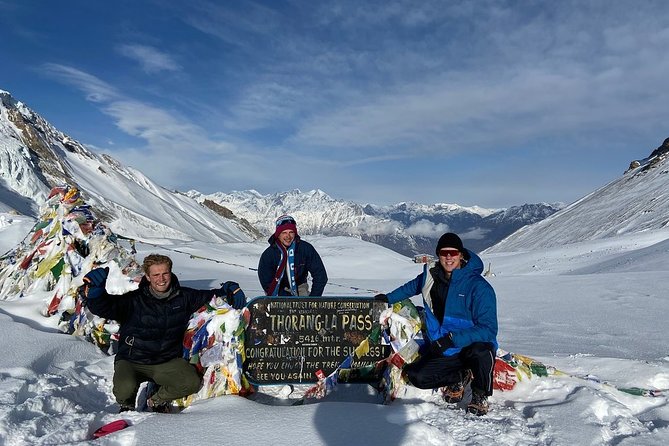
Crossing Thorong La is the most demanding part of the trip. It is the highest point of the trek and one of the highest passes in the world. The early start is designed to get you across before conditions become more difficult later in the day.
You will need to push yourself, but this should not become a race. Use the guide’s pace, take sensible breaks, and pay attention to how your body feels. The combination of steep climbing, cold air, thin air, and an early start can make this a very long day.
This is also the day when the value of guided support becomes clearest. A guide keeps the group on the marked route and helps manage the schedule. Porter support means you do not need to carry every item yourself, though you still need a daypack with personal essentials.
Days 13 to 15: Muktinath, Tatopani, Ghorepani, and Poon Hill
Day 13: Muktinath and the Tatopani hot springs
After the pass, you visit Muktinath Temple before continuing by car toward Tatopani. The change from high pass to road transport is welcome after the previous day’s effort.
Tatopani is known for its natural hot springs. Soaking here gives tired legs a break and adds a very different pleasure to the trip. The public transportation from Muktinath to Tatopani is included, so you are not left to arrange this connection yourself.
Day 14: Thakali villages and rhododendron forest
You climb toward Ghorepani through Sikha and Chitre, villages associated with the Thakali people. The route crosses terraced farmland, then enters forests of rhododendron, birch, and magnolia.
This is one of the route’s most varied walking days. You get cultivated hillsides, mountain views, village life, and forest in one stretch. Ghorepani is the overnight base for the next morning’s sunrise walk, so expect another early start.
Day 15: Poon Hill sunrise
The climb to Poon Hill reaches 3,210 meters. From the top, the stated view includes the Annapurna and Dhaulagiri massifs, Machhapuchhre, also called Fishtail, Mount Manaslu, and surrounding rice terraces.
Poon Hill is popular with photographers for good reason. The sunrise adds a final visual reward after the harder high-pass section. Do not expect solitude at a famous viewpoint, but the broad mountain panorama gives the day a strong finish.
Day 16: Returning to Kathmandu
After breakfast, you travel back to Kathmandu by tourist bus. A 225-minute flight is also available, but it is not included in the package.
The bus is the budget choice and keeps the quoted price lower. It can also make for a long final day, so keep your expectations practical. The trek finishes in Kathmandu, with a farewell dinner included.
What the $1,093 price really covers
At $1,093, the price is appealing because it bundles many costs that can otherwise create a pile of small bills. You receive:
- Tea house or lodge accommodation during the trek
- Breakfast, lunch, and dinner throughout the 16 days
- One night in a selected Pokhara hotel with breakfast
- Annapurna Conservation Area Permit and TIMS card
- Licensed guide and porter support
- Guide and porter wages, insurance, lodging, meals, and transport
- Transport from Kathmandu to the trail area
- Public transport from Muktinath to Tatopani
- Tourist bus from Pokhara to Kathmandu
- Government and local taxes
- Rescue-operation assistance in a complicated health situation
- Farewell dinner and a completion certificate
The important catch is that unspecified costs are excluded. You should ask the operator to clarify personal drinks, snacks, equipment rental, tips, and the optional flight before paying. The package clearly covers the main structure of the trip, but not every personal expense.
Who should book this trek?
I would choose this trip if you want the full Annapurna Circuit experience with a major side trip, but do not want to organize every lodge, meal, permit, guide, and bus yourself. It suits fit adults, active families, and small groups who enjoy long walking days and can tolerate basic mountain accommodation.
It is less suitable if you want a relaxed holiday, private rooms every night, or a flexible schedule with short walking days. The Thorong La crossing and Tilicho Lake climb are serious commitments. A moderate fitness label should not persuade you to underprepare.
The company has field staff who have been praised by name, including guides Hari Gurung, Suresh, and Dev, and porters such as Damar, Sangkar, Bikesh, Asis, and Monis. Assignments can vary, so confirm your guide and porter team before departure. The strongest practical quality is the human support: guides explain the mountains and villages, while porters carry the main load and help keep the group moving.
The maximum group size is 15. That is still large enough for a social walk, but small enough for a guide to keep track of the group more easily than on a mass departure.
Booking details you should weigh carefully
Pickup is offered, and the experience uses a mobile ticket. Confirmation is sent within 48 hours, subject to availability. The activity is near public transportation, but much of the route itself is remote and reached by local overland travel.
The experience is non-refundable and cannot be changed for personal reasons. If poor weather cancels the trip, you are offered another date or a full refund. The same applies if the minimum number of participants is not reached, with the option of another experience.
Should you book it?
Book this trek if Tilicho Lake matters to you and you want the Annapurna Circuit handled by a licensed guide-led team. The included meals, permits, lodging, porter support, and transport make the $1,093 price good value for a 16-day route.
Before booking, be honest about your fitness and ask for a precise packing list and full details of excluded expenses. If you are ready for steep trails, an early Thorong La start, basic lodges, and changing mountain conditions, this is a strong way to see Nepal’s Annapurna region without carrying the full planning burden yourself.
FAQ
How long does the Annapurna Circuit with Tilicho Lake take?
The trek lasts approximately 16 days, beginning and ending in Kathmandu.
What is the price of the trek?
The listed price is $1,093.
Is accommodation included?
Yes. Tea house or lodge accommodation with meals is included during the trek, along with one night in a selected hotel in Pokhara with breakfast.
Are meals included?
Yes. Breakfast, lunch, and dinner are included for the 16-day program.
Are permits included?
Yes. The Annapurna Conservation Area Permit and Trekkers Information Management System card fee are included.
Is a guide provided?
Yes. The trip includes a government-licensed, experienced trek leader from Discovery World Trekking. Porter support is also included.
How many people can join the group?
The maximum group size is 15 participants.
Is the flight from Pokhara to Kathmandu included?
No. The return tourist bus from Pokhara to Kathmandu is included. A 225-minute flight can be chosen instead, but it costs extra.
What happens if bad weather cancels the trek?
If poor weather causes cancellation, you are offered a different date or a full refund. If the minimum number of participants is not met, you are offered another date or experience, or a full refund.
More Hiking & Trekking in Kathmandu
- Everest Base Camp Trekking
★ 5.0 · 485 reviews - Nagarkot Sunrise View and Day Hiking from Kathmandu
★ 5.0 · 471 reviews - Everest Base Camp Trekking – 13 Day
★ 5.0 · 365 reviews - Everest Base Camp Trek -14 Days
★ 5.0 · 321 reviews
Just added around Kathmandu
- Namobuddha Monastery Hiking Day Tour via Panauti from Kathmandu★ 5.0 · 15 reviews
- Private Half-Day Tour of Boudhanath and Pashupatinath Temples in Kathmandu★ 4.5 · 9 reviews
- Private Half-Day Tour of Kathmandu Durbar Square and Swayambhunath Temple★ 4.5 · 11 reviews
- Private Full-Day Kathmandu City Tour★ 5.0 · 9 reviews
- Private Day Tour in Kathmandu Valley Rim with Bhaktapur Sightseeing★ 5.0 · 3 reviews
- Private Half Day Budhanilkantha Tour★ 5.0 · 6 reviews
- Private Day Tour: Patan and Bhaktapur from Kathmandu★ 4.5 · 6 reviews
- Private Day Tour – Sacred Journey to Namo Buddha★ 5.0 · 5 reviews
Annapurna Circuit Treks, compared.
15-Day Private Annapurna Circuit Trek from Kathmandu
Read our review →
Annapurna Circuit Trek with Tilicho Lake (16 Days)
Read our review →Browse the lists this tour appears in