
Reviewed · EVEREST BASE CAMP TREKS
Everest Base Camp Trek with Helicopter Return from Gorakshep to Lukla
The best feature here is the helicopter return from Gorakshep to Lukla. After walking all the way to Everest Base Camp and climbing Kala Patthar, you do not have to retrace the long route down. You get a short, dramatic flight over the Khumbu instead, followed by the scheduled flight from Lukla to Kathmandu.
I like the careful acclimatization plan, with rest and climbing days in Namche and Dingboche. I also like the practical support: one porter for every two people, an oxygen saturation monitor, filtered trail water, permits, meals, and airport transfers are all built in. The drawback is the price, $3,000 per person, and the altitude is no small matter. This is described as requiring moderate fitness, but you still need to handle long uphill days above 4,000 meters.
Key points to know before booking
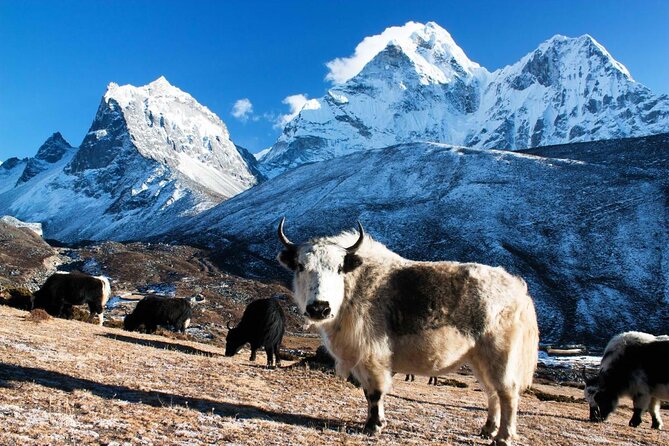
- 20-minute helicopter flight: The shared flight from Gorakshep to Lukla saves the return trek and gives you a new view of the Khumbu Valley.
- Two acclimatization stops: Namche Bazaar and Dingboche help your body adjust before the highest walking days.
- Kala Patthar is the view day: At 5,555 meters, this climb is demanding, but it offers the strongest mountain panorama of the trip.
- Small organized groups: The maximum group size is 14, with a licensed English-speaking guide and one porter for every two people.
- Solid practical coverage: Permits, domestic flights, meals, trekking accommodation, staff costs, filtered water, and basic medical equipment are included.
- Strong guide support: Guide teams have included Ram, Rajendra, Madan, and Raj, with porters such as Bishal, Saman, Jit, Sher, Girija, and Pesal on different departures.
What the $3,000 price buys you
At first glance, $3,000 is a steep price for a 12-day trek. But this is not just a walking package. It includes the Kathmandu hotel, airport transfers, the Kathmandu to Lukla airfare, the helicopter from Gorakshep to Lukla, trekking permits, accommodation, food, guide and porter costs, staff insurance, filtered water, and a farewell dinner.
The helicopter is the big cost item. It also changes the feel of the trip. A standard Everest Base Camp trek usually requires several days of walking back to Lukla. Here, you pay to replace that descent with a shared flight, which is valuable if your time is limited or your knees would rather not repeat the same trail.
I would still check exactly how the helicopter flight is handled before paying. It is described as a shared ride, so you should not expect a private charter. Weather matters in the Khumbu, and poor conditions can affect both the helicopter and the Lukla flights. The operator states that a weather cancellation brings either a different date or a full refund, but weather-related changes can still disrupt your wider Nepal plans.
The package also includes a three-star hotel in Kathmandu for two nights, with breakfast. In the mountains, accommodation is twin-sharing guesthouse lodging. Attached toilets are specified in Lukla, Phakding, and Namche, but you should not assume the same comfort level at every higher stop.
More Everest Base Camp Treks in Kathmandu:
- Everest Base Camp Trek – 14 Days
★ 5.0 · 1,499 reviews - Everest Base Camp Trekking
★ 5.0 · 485 reviews - Everest Base Camp Trekking – 13 Day
★ 5.0 · 365 reviews
Day 1: Kathmandu arrival and a useful briefing
Your first day is simple and sensible. An official meets you at Tribhuvan International Airport and transfers you by private tourist vehicle to your hotel. You then meet the guide for a pre-trip briefing.
This is more important than it sounds. Use the meeting to check your duffel, ask how the porter load will be divided, and confirm the next morning’s airport timing. The domestic flight to Lukla leaves early, so this is your best chance to settle practical questions before the trek begins.
The two Kathmandu hotel nights, one at the start and one after the mountains, give the trip a clear beginning and end. Lunch and dinner in Kathmandu are not included, so set aside extra money for those meals, drinks, and personal purchases.
Day 2: Lukla to Phakding, your first Himalayan walk
The flight from Kathmandu to Lukla takes about 35 minutes and lands at Tenzing and Hillary Airport at 2,804 meters. It is a scenic start, but the short flight does not mean the day is effortless. You begin walking almost as soon as you arrive.
The route to Phakding introduces you to the basic rhythm of the trek: stone paths, forest, river crossings, mountain villages, and porters moving at a steady pace. Phakding is lower than Lukla, which makes it a reasonable first overnight stop while your body begins adjusting.
You receive breakfast, lunch, and dinner during the trek. Standard drinks are included with meals, but alcoholic, hot, and cold drinks are not, so budget separately for those.
Day 3: The long climb to Namche Bazaar
The walk from Phakding to Namche takes about six hours. The trail follows the Dudh Koshi and crosses the river several times on suspension bridges decorated with prayer flags.
This is where the trek begins to feel serious. The path climbs toward Namche, and the altitude becomes more noticeable. Your guide’s pace matters here. A rushed start can make the next days harder, while a steady pace gives you a better chance to enjoy the route.
Namche is a major stop for the trek because it is both a trading center and an acclimatization base. Accommodation here includes an attached toilet, according to the package, which is a welcome comfort after a full walking day.
A few more Kathmandu trips to weigh up
- Nagarkot Sunrise View and Day Hiking from Kathmandu
★ 5.0 · 471 reviews - Annapurna Circuit Trek with Tilicho Lake
★ 5.0 · 368 reviews - Everest Base Camp Trek -14 Days
★ 5.0 · 321 reviews - Annapurna base camp trek 5 Days
★ 5.0 · 252 reviews
Day 4: Acclimatizing around Namche
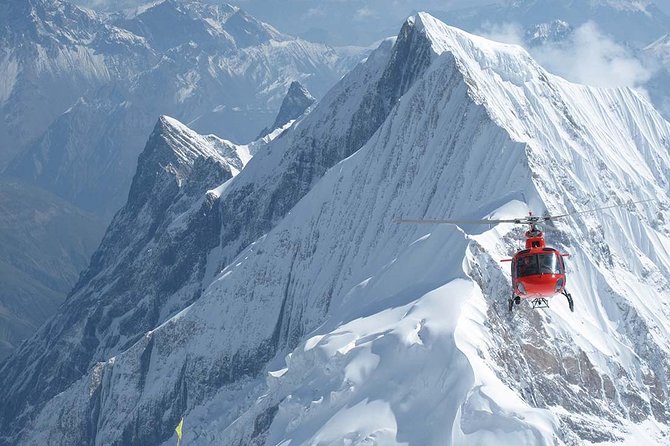
You do not simply spend the day sitting indoors. The plan includes a short hike around Namche to help your body adjust to thinner air. An Everest View Point walk offers mountain views and a sunrise, with the exact visibility depending on weather.
This is a valuable rest day, even though you still walk. At high altitude, rest does not mean wasting time. It gives you a chance to move higher for a few hours, then sleep back at a lower elevation than the day’s highest point.
I would treat this day seriously. Keep your pace easy, drink the filtered water supplied along the trail, and tell your guide if you develop a headache or feel unusually tired. The company carries an oxymeter to check oxygen saturation and provides a first-aid kit, but no piece of equipment replaces honest communication.
Day 5: Tengboche and its mountain monastery
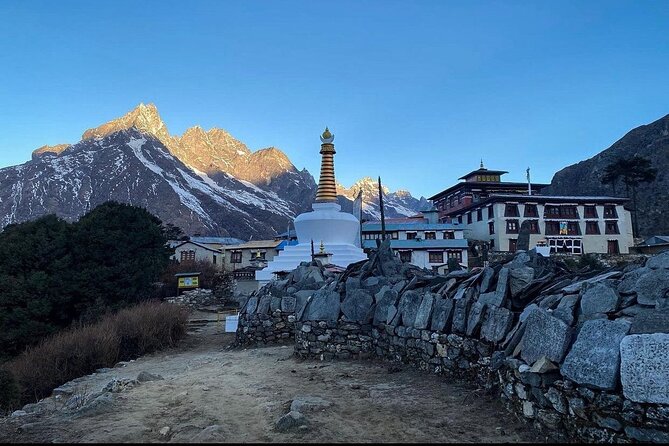
The trail follows the Dudh Koshi toward Tengboche at 3,860 meters. You pass through forest and cross the Imja Khola by suspension bridge before the climb to the village.
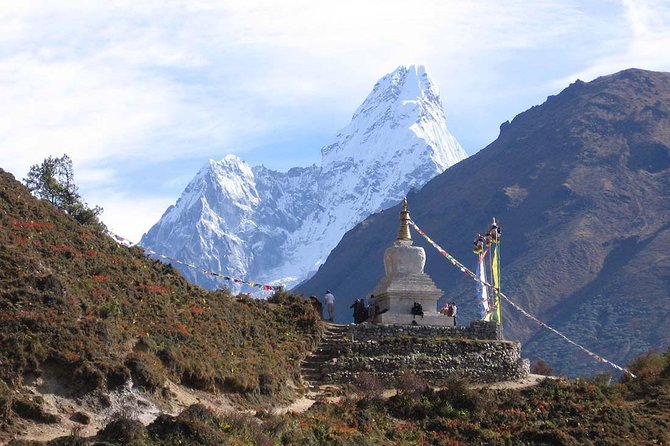
Tengboche is one of the most memorable stops because of its monastery and open mountain setting. The monastery gives the trek a cultural layer beyond the physical challenge. You are not only walking toward a famous peak. You are moving through a working Himalayan region shaped by Buddhist practice, trade, and mountain travel.
This is also one of the longer days listed in the schedule. Do not judge the trek by distance alone. At nearly 4,000 meters, a modest climb can take much longer than it would at home.
Day 6: Dingboche and the change in scenery
From Tengboche, the trail drops to Debuche, crosses another bridge, and climbs through Pangboche. The route passes mani stones, which mark the Buddhist character of the region, before continuing toward Dingboche.
Dingboche sits at about 4,410 meters and feels more exposed than the lower forest sections. The trees thin out, the air feels drier, and the walking becomes more about pacing than speed.
You should expect simple mountain accommodation here. Food and lodging are covered, but personal drinks and equipment are not. A good sleeping bag, warm layers, sun protection, and sturdy footwear are your responsibility.
Day 7: Nangkartshang Peak for altitude practice
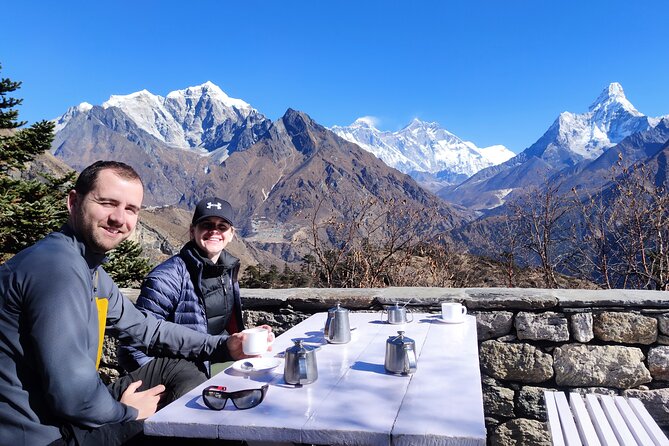
The second acclimatization day is based around a climb toward Nangkartshang Peak above Dingboche. You do not advance toward Base Camp, and that is the point.
The hike gives you a controlled test at altitude. You can climb as high as the day’s plan allows, enjoy views from above Dingboche, and then return to the same lodging. This creates a useful climb high, sleep lower pattern without committing to another overnight increase.
The day can be tiring, especially after the climb from Tengboche. I like the structure, but you need to resist the urge to race to the viewpoint. The goal is acclimatization, not a personal speed record.
Day 8: Lobuche beside the Khumbu Glacier
The route toward Lobuche follows the lateral moraine of the Khumbu Glacier. You also pass stone memorials honoring climbers who died on nearby summits.
This section gives the trip a more serious tone. Everest is no longer just a distant white peak. The memorials make the risks of high-altitude climbing visible, while the glacier shows the scale and force of the mountain environment.
Lobuche is high, cold, and basic. The schedule lists another long walking day, so conserve energy. Your guide and porter team become especially useful here. The porter carries your main luggage, but you still need a daypack with water, layers, snacks, and personal essentials.
Day 9: Everest Base Camp at 5,365 meters
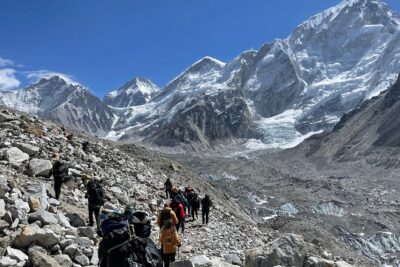
This is the main goal: a difficult walk beside the Khumbu Glacier to Everest Base Camp at 5,365 meters.
The trail is not a simple road to a sign. You walk on uneven ground near the glacier, with altitude affecting every step. Your pace may slow sharply, and that is normal. The distance, cold, footing, and elevation combine to make this one of the hardest days.
Base Camp itself changes with the season. During spring, it may be active with expedition teams and equipment. At other times, it can feel quieter. You will not climb Everest from here, but reaching the camp gives you a close look at the starting point for serious Himalayan expeditions.
The day is physically demanding, and you should not expect much spare energy afterward. This is one reason the helicopter return is useful. You do not have to spend several more days walking the same route down after reaching the main objective.
Day 10: Kala Patthar at 5,555 meters
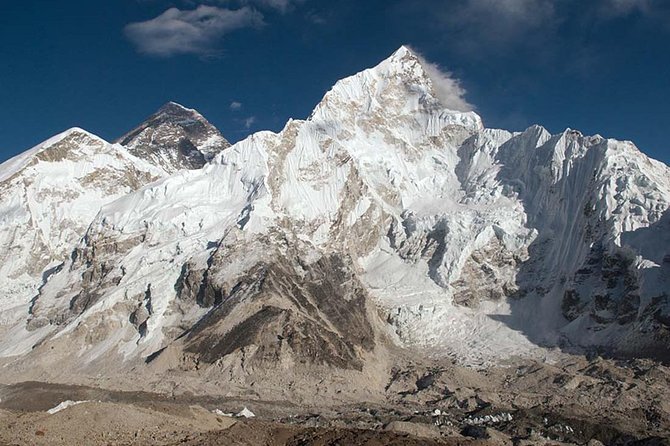
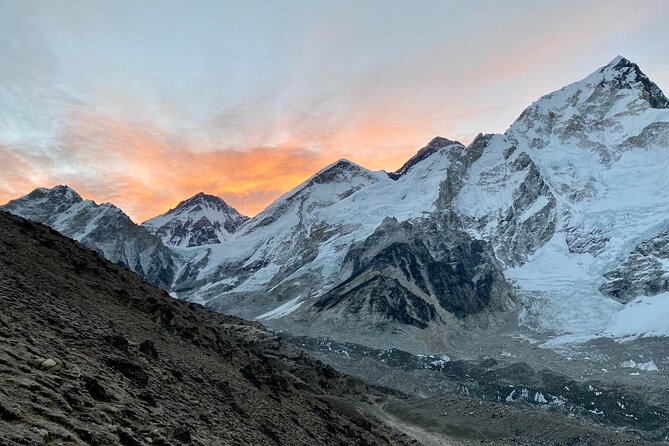
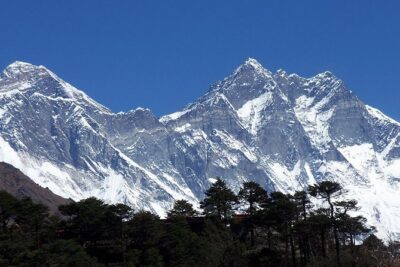
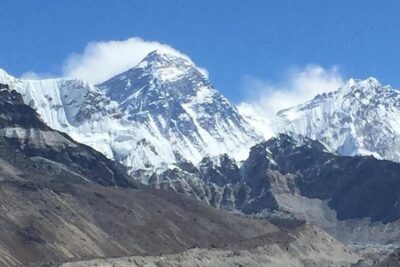
Kala Patthar is often the visual high point of the trek. The climb reaches 5,555 meters and is described as one of the most difficult days, but the reward is a broad view toward Everest and the surrounding Himalayan peaks.
Many people find this viewpoint more satisfying for mountain views than Base Camp itself. Base Camp puts you close to the glacier and expedition route, while Kala Patthar gives you a higher vantage point. If clouds move in, the view can be reduced, so patience and weather luck matter.
This is a morning when your warm clothing and sun protection count. High-altitude sunlight can feel fierce, even when the air is cold. Go slowly, follow your guide’s advice, and keep your expectations realistic. The summit is an achievement, but the safe return matters more.
The helicopter from Gorakshep to Lukla
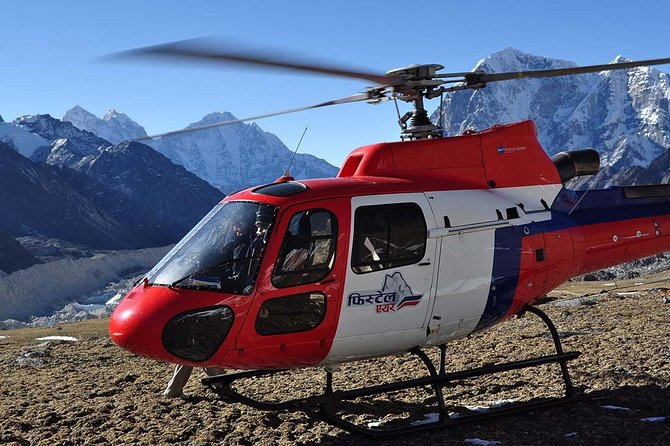
The special feature of this trip is the shared helicopter flight from Gorakshep to Lukla. The flight takes about 20 minutes and replaces the return trek through the lower villages.
From the air, you get a sharp change of perspective. The bridges, valleys, glaciers, and ridgelines that required days of walking become part of a single view. It is not just a shortcut. It is a memorable final look at the route.
The flight is also the part most exposed to weather and operating conditions. Keep your schedule flexible, and do not plan an important international connection immediately after the return from the mountains. The package includes the helicopter ride and the Lukla to Kathmandu airfare, but mountain aviation rarely rewards a tight timetable.
Day 11: Lukla to Kathmandu
After reaching Lukla, the scheduled flight back to Kathmandu takes about 35 minutes. A vehicle then transfers you to your hotel.
The itinerary places the helicopter transfer and the Kathmandu flight close together, but exact timing can change. Ask your guide how the day is unfolding once you reach Gorakshep. If weather delays the helicopter, your arrival in Kathmandu may also move.
This is a good reason to keep Day 12 simple and avoid booking a same-day international departure. The program includes a final Kathmandu night, which provides a useful buffer.
Day 12: Departure from Tribhuvan International Airport
The final day brings a transfer to Tribhuvan International Airport. Airport pickup and drop-off are included through a private tourist vehicle.
You leave with the biggest costs already handled, but personal equipment, travel insurance, Nepal’s entry visa, international airfare, departure tax, drinks, and staff tips remain outside the price. Tipping is expected, so plan for it rather than treating it as an unexpected extra.
Food, water, porters, and medical support
All standard trekking meals are included: breakfast, lunch, and dinner. The package lists 11 breakfasts, 9 lunches, and 10 dinners, plus a farewell dinner on the final Kathmandu night.
Filtered trail water is supplied using a Katadyn Pocket Water Filter. Seasonal fruit is also included. This reduces the need to buy bottled water, though you still need a reusable bottle or hydration system.
One porter is assigned for every two people. That ratio is a strong practical feature, but pack sensibly. Your porter carries the main load, not every item you might want during the day.
The guide is a local, licensed, English-speaking professional trained in first aid. The team also carries an oxymeter and medicine. Guides such as Ram, Rajendra, Madan, and Raj have led different departures, while porter teams have included Bishal, Saman, Jit, Sher, Girija, and Pesal. Names and assignments can change, but the repeated focus on guide care and encouragement is important for a trek where morale matters.
Who should book this trek?
This suits you if you want the full walking experience to Everest Base Camp but do not want to spend several days retracing the route afterward. It also suits people who value organized support, fixed logistics, and a small group rather than arranging each village and flight on their own.
You need moderate physical fitness, but I would read that requirement conservatively. The trek includes long days, steep climbs, uneven paths, suspension bridges, cold conditions, and altitudes above 5,000 meters. No guide can guarantee that your body will acclimatize well.
The trip is less suitable if you need luxury accommodation, dislike early starts, or want a relaxed mountain holiday. The helicopter return saves time, but it does not make the ascent easy.
Booking requires at least two people, and the group can reach 14 participants. Confirmation is provided at booking. Cancellation allows a full refund when made at least six full days before the start time, with smaller or no refunds closer to departure. Read the timing rules carefully because the cut-off uses local Nepal time.
Should you book the Everest Base Camp helicopter return?
I would book this if you want Everest Base Camp, Kala Patthar, structured acclimatization, and a faster return without arranging separate guides, permits, porters, food, and flights. The included helicopter ride gives the trip a clear advantage over a standard out-and-back trek, especially for a 12-day schedule.
I would hesitate if $3,000 stretches your budget or if you need complete control over dates and transport. Weather can affect the helicopter and Lukla flights, and the trek itself remains physically demanding despite the shorter return.
For the right person, the value is in the complete package: local support, safety equipment, meals, permits, porters, and a dramatic flight after the hardest walking is done. Prepare properly, keep your schedule flexible, and this is a strong way to reach the world’s most famous base camp without spending extra days on the same trail.
FAQ
How long is the Everest Base Camp trek with helicopter return?
The experience lasts approximately 12 days, including arrival in Kathmandu, the trek, the helicopter transfer to Lukla, the flight back to Kathmandu, and departure.
What is the price per person?
The listed price is $3,000 per person.
Is a helicopter flight included?
Yes. A shared helicopter ride from Gorakshep to Lukla is included.
How long is the helicopter flight?
The helicopter ride from Gorakshep to Lukla takes about 20 minutes.
What is the maximum group size?
The maximum group size is 14 travelers.
Is there a minimum booking requirement?
Yes. A minimum booking of two people is required.
Are meals included during the trek?
Yes. Breakfast, lunch, and dinner are included during the trekking portion. A farewell dinner is also included.
Are Kathmandu meals included?
Breakfast is included at the Kathmandu hotel for two nights. Lunch and dinner in Kathmandu are not included.
Is travel insurance included?
No. You must arrange travel insurance that covers emergency rescue and evacuation.
What happens if bad weather cancels the experience?
If poor weather causes a cancellation, you will be offered a different date or a full refund.
More Helicopter Tours in Kathmandu
- Everest Base Camp Helicopter Tour landing at Everest View Hotel
★ 5.0 · 668 reviews - Everest Base Camp Helicopter Tour landing at Hotel Everest View
★ 5.0 · 218 reviews - Everest Base Camp helicopter tour with landing
★ 5.0 · 61 reviews - Everest Base Camp Helicopter Tour with Hotel Everest View Landing
★ 5.0 · 52 reviews
Just added around Kathmandu
- Private Half-Day Tour of Kathmandu Durbar Square and Swayambhunath Temple★ 4.5 · 11 reviews
- Namobuddha Monastery Hiking Day Tour via Panauti from Kathmandu★ 5.0 · 15 reviews
- Private Half-Day Tour of Boudhanath and Pashupatinath Temples in Kathmandu★ 4.5 · 9 reviews
- Private Full-Day Kathmandu City Tour★ 5.0 · 9 reviews
- Private Day Tour in Kathmandu Valley Rim with Bhaktapur Sightseeing★ 5.0 · 3 reviews
- Private Half Day Budhanilkantha Tour★ 5.0 · 6 reviews
- Private Day Tour: Patan and Bhaktapur from Kathmandu★ 4.5 · 6 reviews
- Private Day Tour – Sacred Journey to Namo Buddha★ 5.0 · 5 reviews
Everest Base Camp Treks, compared.
Browse the lists this tour appears in