
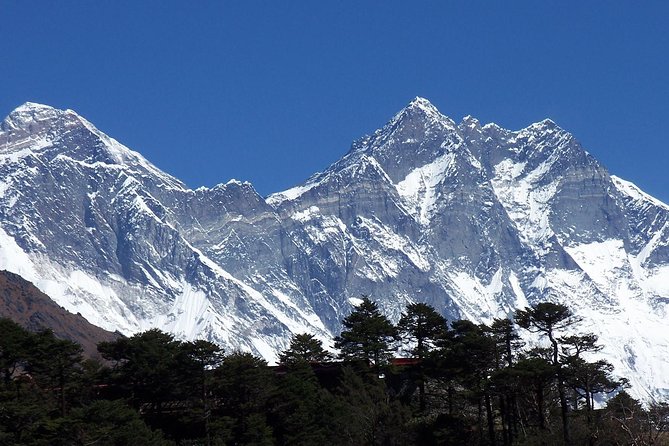
Reviewed · EVEREST BASE CAMP TREKS
Everest Base Camp Trek – 14 Days
The best part of this 14-day Everest Base Camp trek is its steady pace. You fly from Kathmandu to Lukla, walk through Sherpa villages and Buddhist sites, and build in two acclimatization days before reaching 5,365 meters. I like the porter service, which lets you hike with a lighter daypack, and I like that emergency planning, filtered trail water, permits, and domestic flights are handled for you. The main caution is altitude: this is a serious physical challenge, not a scenic stroll.
I also like the small-group setup, capped at 14 people, with recent groups sometimes numbering about eight. Guides including Maddy, Kishor, Chris, and Rajendra have been praised for care, humor, organization, and safety. The less cheerful bit is the luggage limit of 15 kilograms on the domestic flight, plus the possible $250 single supplement if you do not share a room or group.
Key points at a glance
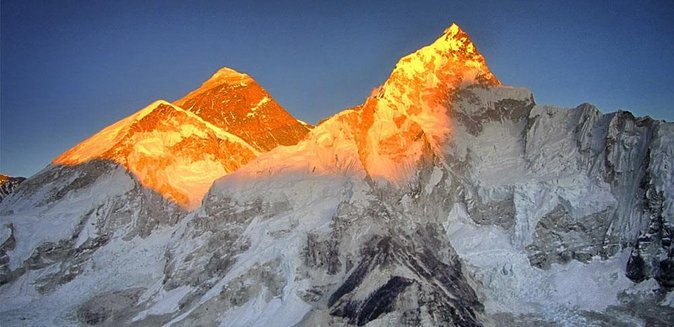
- Kala Patthar at 5,555 meters: The highest point on the route gives you the clearest planned mountain viewpoint of the trip.
- Two acclimatization days: You pause in Namche Bazaar and Dingboche instead of rushing uphill every day.
- Porter support for 11 days: One porter is assigned for every two clients, so you carry only your personal daypack.
- Lukla flight logistics: Flights may use Manthali Airport during peak trekking months because of congestion at Kathmandu airport.
- Sherpa culture along the trail: Namche, Tengboche, Pangboche, and Dingboche add village life, monasteries, museums, and prayer stones to the walk.
- Strong practical inclusions: The price covers permits, staff costs, meals on the trail, accommodation, flights, filtered water, and emergency evacuation arrangements.
What the 14-day Everest Base Camp route feels like
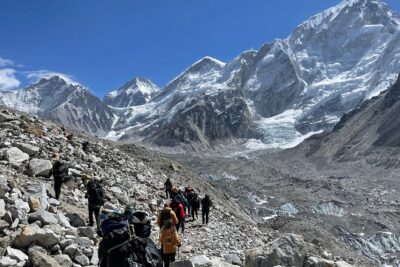
This is a walking trip first, with scenery providing the reward. You spend most days on mountain trails, crossing suspension bridges, passing mani stones, and climbing through the Khumbu region toward Everest Base Camp.
The route begins at about 2,860 meters in Lukla and rises to 5,365 meters at Base Camp. That change in altitude explains the length of the program. A faster schedule might look attractive on paper, but the overnight stops in Namche Bazaar and Dingboche give your body time to adjust.
You should expect a moderate to demanding trek, with some long days and steep uphill sections. The itinerary describes the physical requirement as moderate, but the altitude makes that label easy to underestimate. You need a reasonable level of fitness and the ability to walk for several hours on uneven ground.
More Everest Base Camp Treks in Kathmandu:
- Everest Base Camp Trekking
★ 5.0 · 485 reviews - Everest Base Camp Trekking – 13 Day
★ 5.0 · 365 reviews - Everest Base Camp Trek -14 Days
★ 5.0 · 321 reviews
Days 1 and 2: Kathmandu to Lukla
Your first day starts with an airport pickup at Tribhuvan International Airport. An Ace the Himalaya representative meets you outside the terminal and transfers you to your Kathmandu accommodation in a private tourist vehicle.
You have two nights in Kathmandu included, with twin-share, three-star accommodation and breakfast. Lunch and dinner in the capital are your responsibility, which gives you freedom to choose your own food and budget.
The flight to Lukla is short, scenic, and important to the whole trip. During busy trekking months, flights may operate from Manthali Airport in Ramechhap rather than Kathmandu. That change affects your transfer arrangements and usually means an earlier start, so check the departure details closely before you go.
Lukla is where the walking begins. The airport stop itself is brief, but the arrival marks a sharp change from city travel to mountain travel. Your guide and porter team take over, and the group sets off toward the Dudh Koshi valley.
Days 3 and 4: Namche Bazaar and the first acclimatization stop
The trail follows the Dudh Koshi and crosses several suspension bridges decorated with prayer flags. You enter Sagarmatha National Park, then climb toward Namche Bazaar, the best-known trading town in the Everest region.
Namche is more than a place to sleep. It is a useful pause where the group adjusts to thinner air, and it is one of the most interesting villages on the route. The town is also your first strong taste of the Sherpa world that shapes the trek.
The following day is set aside for acclimatization. You take a shorter hike to the Sherpa Museum, which explains local customs, mountaineering, and the history of the area. The program also gives you time to rest in Namche rather than pushing toward the next overnight stop.
I consider this one of the trip’s best design choices. A rest day can feel frustrating when you are eager to reach Base Camp, but a careful ascent matters far more than rushing. Your guide can also watch how you are responding to the altitude before the trail gets higher.
Days 5 and 6: Tengboche and Dingboche
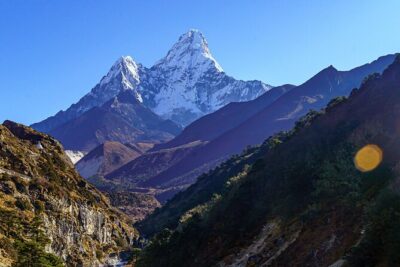
From Namche, the trail continues beside the Dudh Koshi, with mountain views opening up along the way. You descend toward Debuche, cross the Imja Khola, and climb through Pangboche, where mani stones add a clear Buddhist presence to the route.
Tengboche sits at about 3,860 meters and is home to Tengboche Gompa. The monastery is one of the route’s major cultural stops. The setting matters as much as the building, with the trail, forested slopes, rushing water, and high peaks creating one of the trip’s most memorable scenes.
The next day brings you to Dingboche. The route continues through Pangboche and into a higher, more exposed part of the valley. At this point, the altitude becomes a central part of the experience. You may find that a distance that looked easy on a map takes much longer than expected.
The guide’s role becomes especially valuable here. A licensed, first-aid-trained English-speaking guide is included, along with staff insurance, medicine, equipment, and emergency planning. That does not remove the risks of high altitude, but it means you are not managing the route and safety decisions alone.
A few more Kathmandu trips to weigh up
- Nagarkot Sunrise View and Day Hiking from Kathmandu
★ 5.0 · 471 reviews - Annapurna Circuit Trek with Tilicho Lake
★ 5.0 · 368 reviews - Annapurna base camp trek 5 Days
★ 5.0 · 252 reviews - Everest Base Camp Trekking – 2025/2026
★ 5.0 · 199 reviews
Day 7: Nangkartshang Peak acclimatization hike
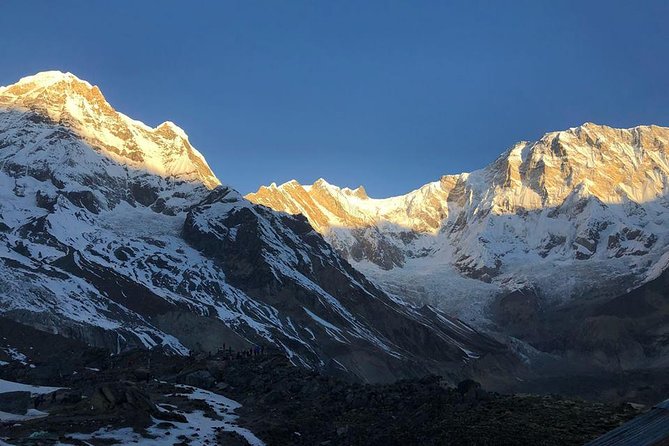
Dingboche has a second acclimatization day, but it is not simply a day off. You hike toward Nangkartshang Peak above the village, gaining height during the day before returning to sleep lower down.
This is a sensible mountain routine: climb higher, then rest at a lower altitude. The viewpoint gives you a chance to see more of the surrounding peaks without adding another overnight stop.
You should treat this day as part of the trek, not as a rest day in the ordinary sense. It can be tiring, especially after the climb from Namche through Tengboche. Still, it helps break up the hardest part of the ascent and gives your guide another chance to assess your condition.
Day 8: Lobuche and the Khumbu Glacier
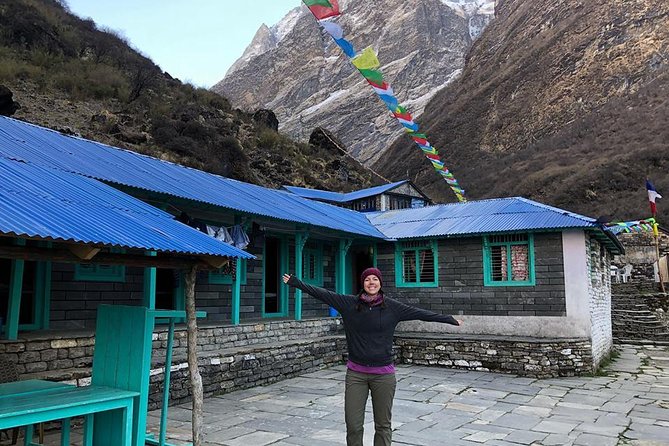
The trail moves toward Lobuche along the lateral moraine of the Khumbu Glacier. The surroundings become more stark and the air thinner as you approach the high point of the trek.
One of the most serious stops along this section is the collection of stone memorials honoring climbers who died on nearby peaks. This gives the route a sober human dimension. Everest is not just a postcard or a personal achievement. It is also a place where mountaineering has demanded a high price.
The walk to Lobuche prepares you for the next day’s long outing. Your pace matters more than speed now. Keep your daypack light, drink the filtered water supplied on the trail, and follow the guide’s instructions about breaks and altitude symptoms.
Day 9: Everest Base Camp at 5,365 meters
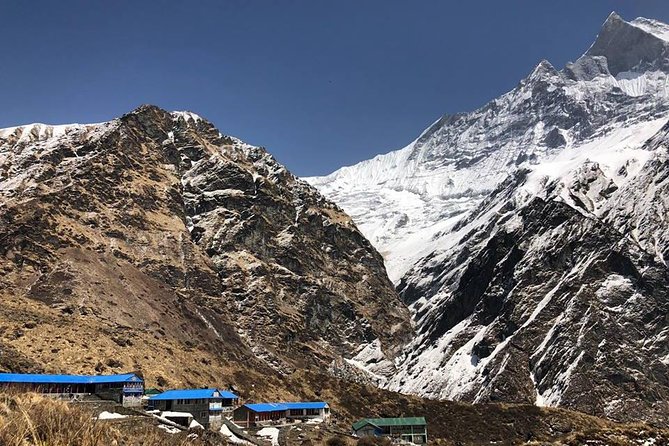
This is the day most people picture when they book the trek. From Lobuche, you walk along the Khumbu Glacier and continue to Everest Base Camp, at 5,365 meters.
The final approach is difficult. The distance may not look extreme, but the altitude, uneven trail, and glacier terrain make each step more demanding. The time at Base Camp is listed as about 30 minutes, which is enough for photographs and a short pause before the return walk.
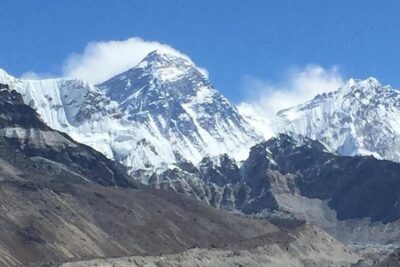
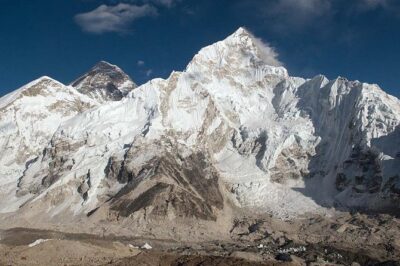
It is worth setting expectations correctly. Everest Base Camp is a major mountaineering staging area, but it is not the best viewpoint of Mount Everest itself. The surrounding peaks and glacier are dramatic, and reaching the camp is a personal milestone, but the clearest Everest view on this itinerary comes from Kala Patthar the following day.
The route can look different by season. In spring, there may be expedition activity at Base Camp, while other periods can feel quieter. The supplied program specifically notes the possibility of seasonal activity, but conditions change from year to year.
Day 10: Kala Patthar at 5,555 meters
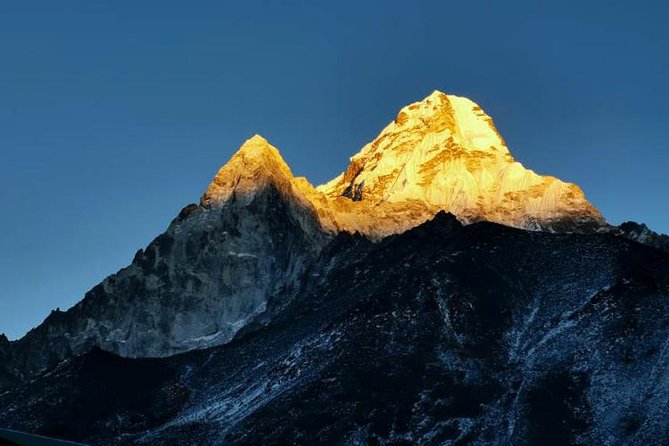
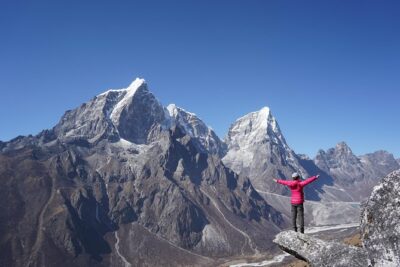
Kala Patthar is often the visual high point of the trek. The climb reaches 5,555 meters and is described as one of the hardest but most rewarding mornings of the itinerary.
The ascent is short compared with the full trek, yet altitude makes it tough. The payoff is the viewpoint, with the best planned mountain panorama of the route and a much stronger view toward Everest than you get at Base Camp.
You should not judge this day by speed. Move slowly, take breaks, and listen to your guide. If you have reached Base Camp the day before, you already know how thin the air feels. Kala Patthar adds another 190 meters of elevation, and that difference matters.
For many people, this is the moment that justifies the effort and cost. Base Camp is the named goal, but Kala Patthar often provides the more satisfying photograph and the stronger sense of place.
Days 11 and 12: Retracing the trail to Lukla
After the high point, you begin the long descent through Pangboche and Tengboche, returning to Namche Bazaar. The scenery changes as you lose altitude, and breathing usually feels easier.
The descent is not effortless. Knees and ankles take pressure on downhill sections, and the day back to Namche can still be long. Your porter continues supporting the group, and the guide remains responsible for keeping the pace manageable.
Day 12 takes you from Namche toward Lukla, where the trek began. The final walking day gives the group time to reflect on the route and the achievement. It also brings a practical benefit: you sleep in Lukla before the return flight instead of trying to reach the airport from a distant village.
Days 13 and 14: Flying back to Kathmandu and going home
The return flight from Lukla to Kathmandu takes about 35 minutes when operating as planned. You get a last look at the mountains, then transfer back into the city.
Flights in mountain regions can be affected by conditions, and the itinerary does not promise a fixed flight experience beyond the included sector. Build some flexibility into your international travel plans if possible. The final day provides an airport transfer to Tribhuvan International Airport for your departure from Nepal.
The program ends at the same airport where it began. That door-to-door structure is useful after two weeks of walking, especially if you would rather not arrange local transfers yourself.
What the $1,800 price really covers
At $1,800 per person, the cost is not just payment for a guide and a bed. It includes Kathmandu transfers, two nights of three-star accommodation with breakfast, trekking accommodation, domestic flights, permits, staff wages, staff insurance, staff equipment, medicine, most meals, and porter service.
You also receive an Ace the Himalaya duffel, trekking map, sun hat, completion certificate, filtered trail water using a Katadyn Pocket Water Filter, seasonal fruit, and a first-aid kit. Emergency medical evacuation arrangements are included for the worst-case situation, but your own travel insurance must cover high-altitude rescue and evacuation.
The porter ratio is one porter for two clients. That is a useful middle ground. You are not hauling a full load uphill, but the system still limits how much each person can bring. The domestic flight allowance is 15 kilograms, so pack carefully and expect to carry your valuables and daily necessities yourself.
You pay extra for Kathmandu lunches and dinners, alcoholic drinks, hot and cold drinks, personal trekking equipment, international airfare, visa costs, and tips. Tipping is expected, so include it in your real budget rather than treating the advertised price as the final figure.
A single booking can use the listed price, but a $250 supplement applies if no one is available to share accommodation or if you request a solo departure. The maximum group size is 14, though recent departures have included smaller groups of about eight. That size is small enough for personal attention without requiring you to pay for a fully private trip.
Guides, porters, and the human side of the trek
A high-altitude trek depends heavily on the local team. The program includes a government-licensed English-speaking guide trained in first aid, plus porters for 11 days.
Recent guide names connected with this departure include Kishor, Chris, Maddy, and Rajendra Khatry. Porters such as Saman and Sher have also been singled out for good humor, care, and hard work. You are not guaranteed a particular person, but these names give you a useful sense of the staff experience associated with the company.
The strongest praise centers on organization, kindness, safety awareness, and personal support. That matters more than polished talk when you are tired, cold, or struggling with the altitude. The best guide is the one who notices a problem early, explains what is happening, and keeps the group moving at a sensible pace.
You should also remember that porter support is a working relationship, not a reason to overpack. Keep your own daypack comfortable, respect the staff, and budget for tips.
Who should book this trek?
I would choose this trip if you want the classic Everest Base Camp route but do not want to manage permits, lodges, domestic flights, guides, porters, meals, and emergency planning yourself.
It suits a solo person who wants the social ease of a small group. It also works well for friends or couples who want structure but still want time to experience Sherpa villages and Buddhist sites along the trail.
You should think twice if you dislike long walks, uneven terrain, basic trekking accommodation, or cold high-altitude conditions. The itinerary calls for moderate fitness, but Base Camp and Kala Patthar demand real effort. This is not the right choice if you expect a comfortable sightseeing holiday with short walks.
The program is also less suitable if you need complete control over your schedule. Flights to and from Lukla are a fixed part of the route, and peak-season operations may involve Manthali Airport. The reward is a carefully organized classic route, not total flexibility.
Booking, cancellation, and practical details
Confirmation is provided at booking, and pickup is available from Tribhuvan International Airport. Nepal visas can be obtained on arrival, according to the supplied information.
The cancellation terms are worth reading before you pay. Cancel at least six full days before the local start time for a full refund. Cancellation two to six full days ahead brings a 50 percent refund, while cancellation less than two full days ahead receives no refund. Changes follow the same cutoffs.
The experience is booked around 80 days in advance on average. That is useful planning advice for a route with limited flights, guides, porters, and mountain accommodation, especially during March through May and October through November.
Should you book the Ace the Himalaya 14-day trek?
I would book it if your goal is a classic Everest Base Camp trek with sensible acclimatization, porter support, and a clear list of included costs. The two acclimatization days, Kala Patthar viewpoint, licensed guide, emergency planning, and small-group limit give the itinerary a strong practical base.
I would not book it without first checking your insurance, fitness, luggage plan, and flight arrangements. The $1,800 price offers good value because it covers so many costly pieces, but drinks, gear, tips, Nepal visa, international flights, and high-altitude rescue insurance still belong in your budget.
For a first Himalayan trek, this is a well-supported way to reach Base Camp without turning every detail into your own job. Go for the mountains, accept the long days, and give the altitude the respect it deserves.
FAQ
How long is the Everest Base Camp trek?
The experience lasts approximately 14 days, including airport transfers, Kathmandu accommodation, domestic flights, trekking days, acclimatization stops, and the return to Nepal’s international airport.
Where does the trek start and finish?
It starts at Tribhuvan International Airport in Kathmandu, continues by air to Lukla, and finishes with an airport drop-off at Tribhuvan International Airport after returning from Lukla.
Is the Kathmandu to Lukla flight included?
Yes. The Kathmandu to Lukla and Lukla to Kathmandu airfare, including airport departure tax, is included. During peak trekking months, flights may operate from Manthali Airport in Ramechhap instead of Kathmandu because of airport congestion.
What accommodation is included?
You receive twin-share, three-star accommodation in Kathmandu for two nights with breakfast. On the trail, twin-share guesthouse accommodation is included, with attached toilets in Lukla, Phakding, and Namche.
Are meals included?
Breakfast is included in Kathmandu. Breakfast, lunch, and dinner are included during the trek. Lunch and dinner in Kathmandu, alcoholic drinks, and hot and cold drinks are not included.
Is porter service provided?
Yes. Porter service is provided for 11 days, with one porter for every two clients. The domestic flight luggage allowance is 15 kilograms.
What fitness level is required?
You should have a moderate level of physical fitness. The route includes long walking days, steep climbs, high altitude, Everest Base Camp at 5,365 meters, and Kala Patthar at 5,555 meters.
Is travel insurance included?
No. You must arrange travel insurance that covers emergency high-altitude rescue and evacuation. The operator does include emergency evacuation arrangements and a comprehensive first-aid kit, but that does not replace your own insurance.
Just added around Kathmandu
- Private Half-Day Tour of Boudhanath and Pashupatinath Temples in Kathmandu★ 4.5 · 9 reviews
- Private Half-Day Tour of Kathmandu Durbar Square and Swayambhunath Temple★ 4.5 · 11 reviews
- Namobuddha Monastery Hiking Day Tour via Panauti from Kathmandu★ 5.0 · 15 reviews
- Private Full-Day Kathmandu City Tour★ 5.0 · 9 reviews
- Private Day Tour in Kathmandu Valley Rim with Bhaktapur Sightseeing★ 5.0 · 3 reviews
- Private Half Day Budhanilkantha Tour★ 5.0 · 6 reviews
- Private Day Tour: Patan and Bhaktapur from Kathmandu★ 4.5 · 6 reviews
- Private Day Tour – Sacred Journey to Namo Buddha★ 5.0 · 5 reviews
Everest Base Camp Treks, compared.
Everest Base Camp Trek with Helicopter Return from Gorakshep to Lukla
Read our review →Browse the lists this tour appears in