
Reviewed · ANNAPURNA BASE CAMP TREKS
Pokhara: 5-Day Trek to Annapurna Base Camp and Hot Springs
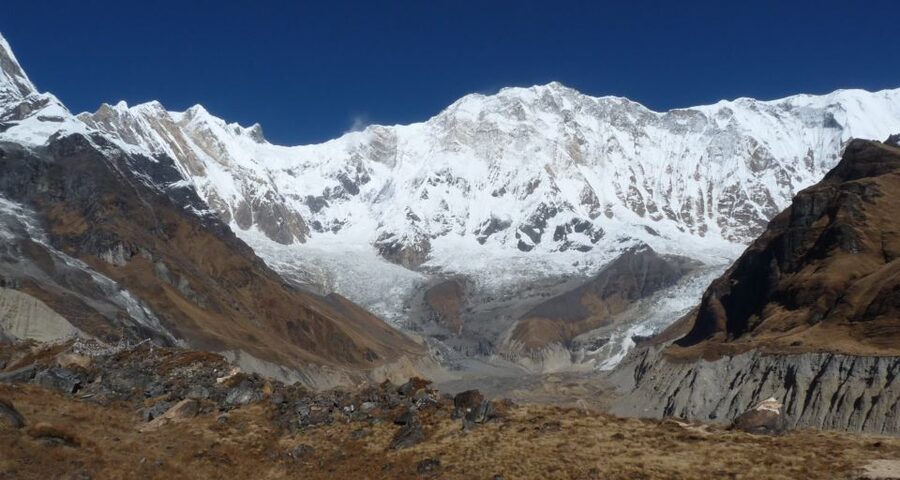
The best part of this trek is the way it packs Annapurna Base Camp and Jhinu’s hot springs into five demanding days. You begin with a jeep ride from Pokhara, follow the Modi Khola River, sleep in mountain lodges, and reach 4,120 meters before descending through the sanctuary.
I like the practical setup: permits, TIMS registration, hotel transfers, and guide costs are handled for you. I also like the chance to rest in Jhinu’s hot springs, a welcome finish after steep trails and a hard descent. The main caution is the pace. Five days leaves little room for a slow adjustment, and the advertised details contain conflicting references to five and seven days, so confirm the exact schedule before paying.
Key points to know before booking
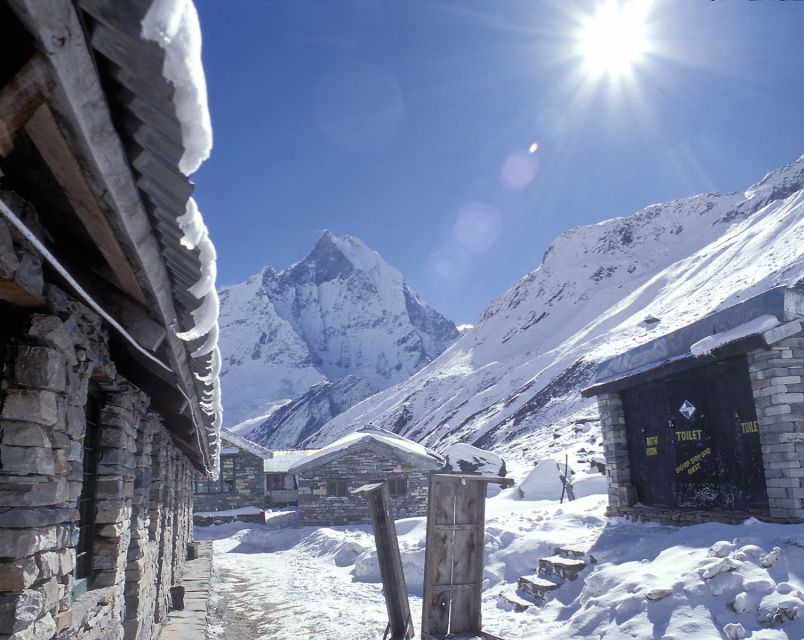
- Base Camp at 4,120 meters: The highest night comes on day three, with a short but demanding hike from Deurali.
- A real mountain route: You cross streams, pass waterfalls and villages, and follow the Modi Khola River toward the Annapurna Sanctuary.
- Jhinu hot springs included in the route: The soak comes near the end, after the long descent from Base Camp.
- Sharing jeep transfers: Transport runs between Pokhara and the road end near Jhinu, which saves time but gives you less control over departure details.
- Guide-led and permit-supported: A government-registered English-speaking guide accompanies you, while conservation and TIMS permits are included.
- Budget choice matters: Meals and a porter are included only with the all-inclusive option, not with the budget option.
The five-day route, and the schedule question
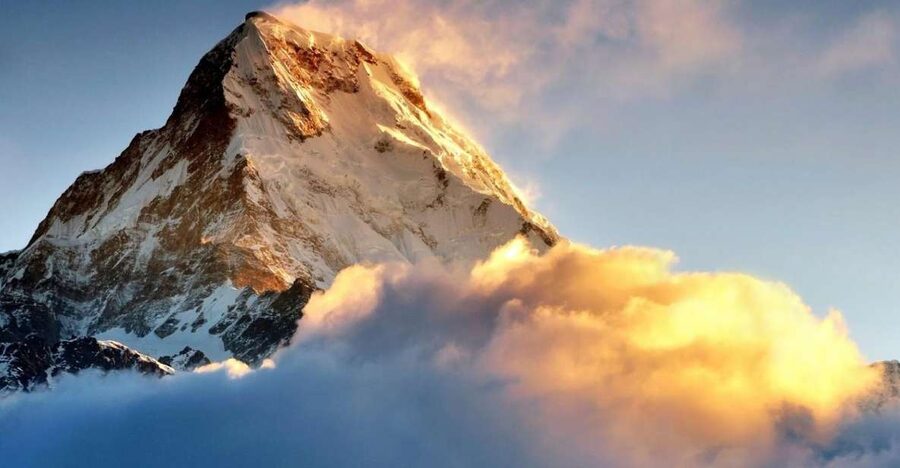
The published day-by-day plan is a five-day trek, but the longer description also refers to a seven-day journey and even labels some days inconsistently. The actual itinerary gives you this sequence: Pokhara to Sinuwa on day one, Deurali on day two, Annapurna Base Camp on day three, Sinuwa on day four, and Pokhara via Jhinu on day five.
That shorter schedule is possible because the jeep takes you close to the trailhead. It is not the same as starting farther down the valley and adding several walking days. I would ask the operator to confirm three points before departure: your exact road endpoint, where you sleep each night, and whether the hot spring stop happens on the final day as listed.
The price is $206 per person. That is a fair package if you choose the all-inclusive option and value the permits, guide, lodging, and transport. It is less complete if you select the budget option, since meals and porters then cost extra. You should also set aside money for drinks, showers, laundry, phone calls, battery charging, bottled or boiled water, and personal expenses.
More Annapurna Base Camp Treks in Pokhara
- Kathmandu/Pokhara: 5-Day Annapurna Base Camp (ABC) Trek
★ 4.9 · 72 reviews - Private 7 – Day Annapurna Base Camp Trekking
★ 5.0 · 50 reviews - Annapurna Base Camp Trek (8 days)
★ 5.0 · 45 reviews
Day one: Pokhara to Samrung and Sinuwa
Your morning begins with hotel pickup in Lakeside Pokhara or from the airport. You travel by shared jeep toward Samrung and the last road access near Jhinu, with the drive taking about three hours according to the schedule.
The road transfer is a useful time saver. It allows you to reach the walking section without spending the first day on a long approach hike. Shared transport also means you may have less say over stops and departure timing, so keep your daypack handy and arrive at the hotel lobby or apartment entrance five to ten minutes early.
From the road, you trek for about four hours toward Sinuwa. The route follows the Modi Khola River and passes small villages, farmland, crossings, waterfalls, and forest. The scenery changes quickly, which makes this a good introduction to the region: you are not simply walking uphill on one bare trail.
Sinuwa is around 2,200 meters in the published plan. You stay in a tourist-standard lodge, usually a simple tea-house style property rather than a full-service hotel. Private accommodation is included, but you should not expect city comforts. Bring toiletries, a change of clothes, and enough cash for the extras that mountain lodges often charge separately.
Day two: Forest trails from Sinuwa to Deurali
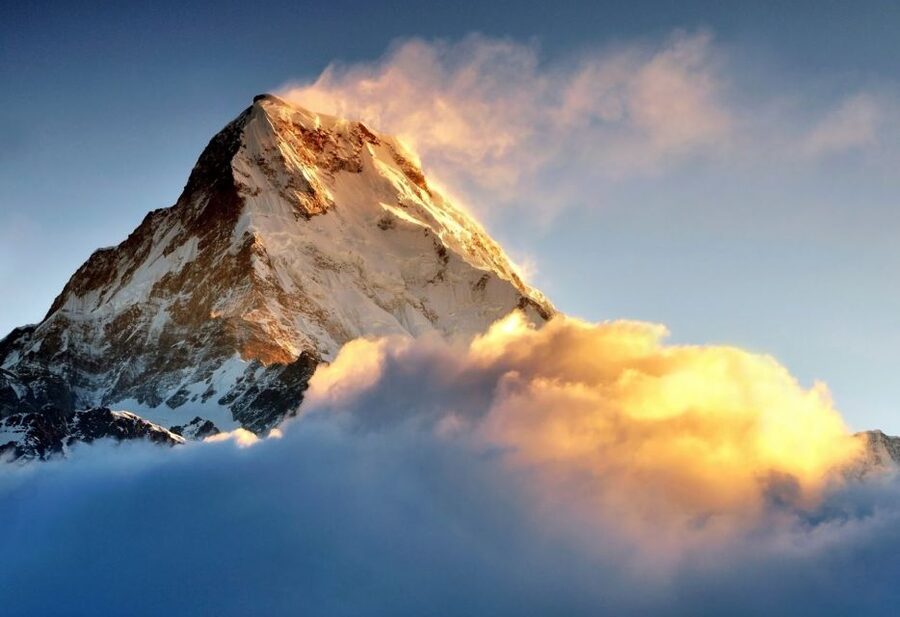
Day two is the longest steady climb toward Deurali, at about 3,230 meters. The walk takes six to seven hours, and the trail leads through dense forest, with frequent uphill sections and mountain scenery opening through the trees.
You pass through Chhomrong, one of the larger villages on this route. It is an important point in the trek because it gives you a sense of the settled mountain communities that support the trail. The village also breaks up the climb before you continue into quieter forest.
The altitude begins to matter here. You are not yet at Base Camp, but the gain from Pokhara is substantial. Walk at a pace you can maintain, drink regularly, and tell your guide if you develop a headache, unusual tiredness, or other health concerns. The guide is expected to watch your condition and adjust the walking pace when needed. A past booking specifically praised guide Tanka for doing this, though guide assignments can change.
Deurali is a practical overnight stop rather than a sightseeing destination. Its value is its position on the route. You are close enough to Base Camp that the following day’s walk can be completed in five to six hours, but you still need to be ready for cold conditions and a higher sleeping altitude.
Day three: Deurali to Machhapuchhare Base Camp and ABC
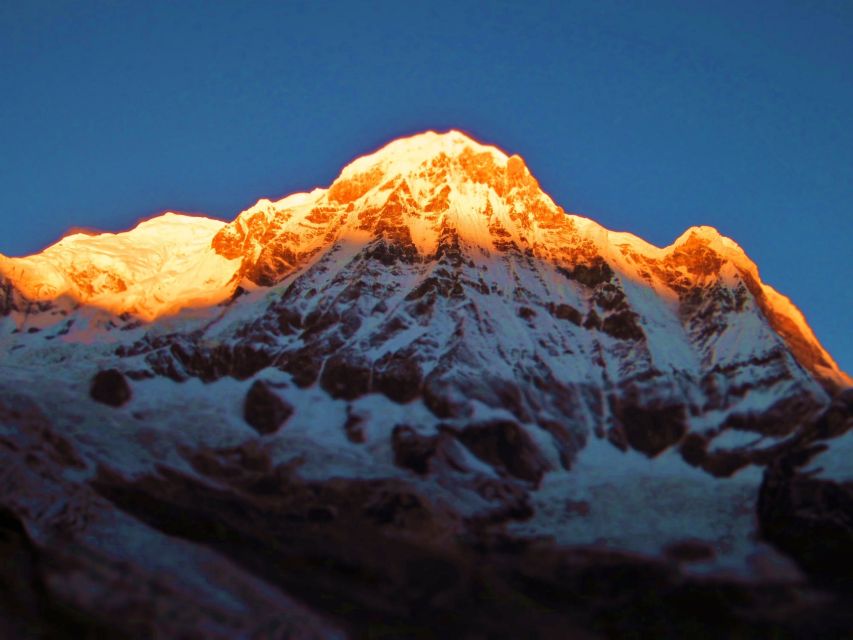
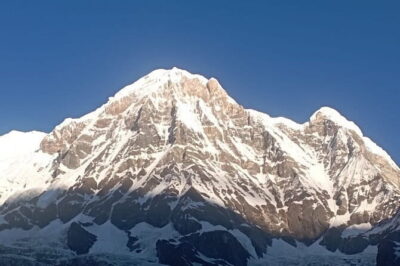
The third day brings the main reward. You hike from Deurali across streams toward Machhapuchhare Base Camp, then continue through the Annapurna Sanctuary to Annapurna Base Camp at 4,120 meters.
This is where the scenery becomes especially powerful. Glacial rivers, waterfalls, high peaks, and broad mountain views surround the route. You pass through the Ablation Valley, described as a hollow corridor between the glacier and the mountain, before crossing the hills toward Base Camp.
The distance and time may look manageable on paper, but altitude changes the effort. Five to six hours at this height can feel far harder than a similar walk near sea level. The final approach deserves patience. You are climbing on the same day that you reach your highest sleeping point, so there is little value in racing ahead.
At Annapurna Base Camp, you spend the night in a mountain lodge. Accommodation is basic, and the high-altitude setting means you should pack warm layers, a hat, gloves, and a dry change of clothes. Sunglasses and sunscreen are important too, since bright mountain light can be tiring even on a cool day.
This is the day for your best photographs, but the weather can change quickly in the mountains. Keep your phone or camera protected from cold and moisture, and do not build your plans around a guaranteed clear view. The route itself remains worthwhile because the sanctuary, streams, cliffs, and glacier corridor provide plenty to see along the way.
Same mountains, a completely different kind of day:
- ZipFlyer Nepal – The World’s Steepest Zip-line
★ 5.0 · 608 reviews - Bungee Pokhara by HighGround Adventures
★ 5.0 · 366 reviews - From Pokhara: Sarangkot Sunrise Himalayas Tour
★ 4.7 · 218 reviews - ATV Adventure Tour in Pokhara, Nepal
★ 5.0 · 194 reviews
Day four: The long descent to Sinuwa
After the high point comes the hardest day for many people. You descend from Annapurna Base Camp to Sinuwa in seven to eight hours, dropping roughly 1,600 meters from Base Camp to the lower village area.
Downhill walking sounds easy until your knees begin to complain. The trail can be steep, and tired legs make uneven steps more awkward. Good hiking shoes with reliable grip are essential. Trekking poles are not listed among the required items, but you might find them useful if you already own or can arrange them.
The route leads out through the Annapurna Sanctuary and back through the valley. You get a different view from the ascent, with the mountain scenery opening behind you as you lose height. This is also a good time to reduce your pace. The goal is not simply to reach Sinuwa quickly, but to arrive with enough strength for the final day.
A porter is included only if you select the all-inclusive option. If you choose the budget plan, you pay extra for a porter if you need one. This is an important decision for a five-day itinerary because the quick pace and steep descent can make a lighter daypack especially valuable.
Day five: Jhinu hot springs and the return to Pokhara
The last day starts with a shorter walk from lower Sinuwa toward Jhinu Danda. The published plan allows about four hours of trekking, followed by roughly three hours by shared jeep back to Lakeside Pokhara.
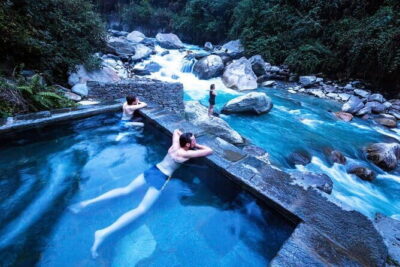
Jhinu is the trip’s comfort stop. After several days of climbing and descending, you can rest in the hot spring baths and let your legs recover before the final transfer. The springs are not a side trip added from nowhere. They fit naturally into the route and give the five-day plan a more satisfying ending than simply walking back to a road and boarding a vehicle.
You continue through farmland around the river before reaching the transport point. The return drive may feel long after the hike, but having the jeep arranged is a major convenience. You do not need to organize a separate vehicle from the trail end.
Guides, porters, and the human side of the trek
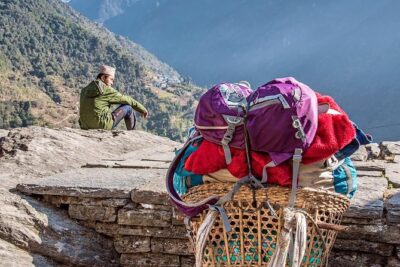
The tour uses government-registered English-speaking trekking guides. Their role goes beyond finding the trail. A good guide can help set a sensible pace, answer questions about local nature and culture, and notice when altitude or fatigue is becoming a concern.
Guide Tanka and porter Chhabi were named in one seven-day booking, with Tanka praised for careful pacing and health checks and Chhabi for his physical effort and calm manner. That experience also points to a useful practical detail: guide and porter assignments may vary, so do not assume those two will lead every departure.
The included guide package covers salary, accommodation, and meals for the guide. It does not automatically cover your meals or a porter unless you select the all-inclusive option. Read that distinction carefully. A low headline price can rise once you add food and luggage help.
What the $206 price really covers
At $206, the package includes several costs that can otherwise be easy to overlook: hotel pickup and drop-off, shared jeep transport, tourist-standard private accommodation, conservation permits, TIMS registration, a professional guide, guide expenses, VAT, and service charges.
That makes the price useful for someone who wants a managed trek rather than a do-it-yourself arrangement. You are paying for the framework that gets you from Pokhara to Base Camp and back without separately arranging permits, road transport, and a guide.
The budget option does not include meals or a porter. Drinks are also excluded across the options, including hot, cold, and alcoholic drinks. Carry extra funds for water, showers, laundry, phone calls, bar bills, and battery charging. Travel and rescue insurance is not included and is strongly recommended for a high-altitude trek.
Free cancellation is available up to 24 hours before the activity for a full refund, and you can reserve now and pay later. Those terms offer useful flexibility, but they do not remove the need to check the inconsistent five-day and seven-day wording before booking.
Who should choose this trek
I would choose this trip if you want the classic Annapurna Base Camp route but have only five days available and prefer a guide to handle the permits and transport. It suits people who are comfortable with six to eight hours of trekking, steep climbs, and a major descent.
It is less suitable if you want leisurely walking, long rest stops, or a soft landing at altitude. Pregnant people and those with heart problems are specifically advised not to take this activity. Everyone else should consider personal fitness, hiking experience, and access to travel and rescue insurance.
Pack a daypack, comfortable hiking shoes, proper hiking shoes or boots, sunglasses, a sun hat, sunscreen, insect repellent, toiletries, warm layers, and spare clothes. Carry your passport or ID card for the permit process. Pets, weapons, and sharp objects are not allowed.
Should you book the Annapurna Base Camp and hot springs trek?
Book it if the combination of high mountain scenery, a guided route, and Jhinu’s hot springs matches your priorities. The strongest value comes from the included permits, transport, lodging, and guide, not from luxury. You get a focused route with very little wasted time.
Before you commit, confirm the five-day schedule in writing. Ask which meals are included, whether you want the all-inclusive package, and what porter costs. If you are fit, prepared for basic lodges, and ready for a demanding pace, this is a compact way to reach Annapurna Base Camp from Pokhara. If you prefer more time to adjust to altitude, seek a longer version of the route instead.
FAQ
How long is the Annapurna Base Camp trek?
The scheduled activity lasts five days. The detailed route runs from Pokhara to Sinuwa, then Deurali, Annapurna Base Camp, Sinuwa, and back to Pokhara via Jhinu.
Where does the trek start?
Pickup is provided from hotels in Lakeside Pokhara or from the airport. A shared jeep takes you toward Samrung and the last road access near Jhinu before the walking sections begin.
How high is Annapurna Base Camp?
Annapurna Base Camp is listed at 4,120 meters above sea level.
Is transport from Pokhara included?
Yes. The package includes hotel pickup and drop-off, plus a shared jeep between Pokhara and the trail access near Jhinu.
Are meals included?
Meals are included when you select the all-inclusive option. They are not included with the budget option. Drinks are not included.
Is a porter included?
A porter is included with the all-inclusive option. With the budget option, you pay an additional charge if you need one.
Are permits included?
Yes. Conservation entry permits and the Trekkers’ Information Management System permit are included.
What should I bring?
Bring your passport or ID card, comfortable and hiking shoes, sunglasses, a sun hat, sunscreen, insect repellent, toiletries, a change of clothes, and a daypack. Travel and rescue insurance is recommended.
More Spa & Hot Springs in Pokhara
- From Pokhara: 5-Day Annapurna Basecamp Trek with Hot Springs
★ 4.9 · 26 reviews - Pokhara: 7-Day Annapurna Base Camp Trek & Natural Hot Spring
★ 5.0 · 11 reviews - Whole Day Massage & Spa With Lunch
★ 5.0 · 54 reviews - Shirodhara and Sound Healing Spa Experience in Kathmandu
★ 5.0 · 52 reviews
More Hiking & Trekking in Pokhara
- Poon hill Trek 3 days
★ 5.0 · 176 reviews - Trekking in Annapurna/Langtang/Everest/Upper Mustang regions
★ 5.0 · 161 reviews - Pokhara: 4-Day Ghorepani, Poonhill & Ghandruk Mountain Trek
★ 5.0 · 132 reviews - Ghorepani – Poon Hill Trek 3N-4D
★ 5.0 · 125 reviews
Just added around Pokhara
- Seti George and Thrilling Suspension Bridge Tour at Pokhara★ 4.5 · 3 reviews
- Tandem Paragliding in Pokhara★ 4.8 · 8 reviews
- Pokhara: Sunrise Tour to Sarangkot★ 5.0 · 3 reviews
- Pokhara: Suspension Bridge Private Tour- 30 Min Village Walk★ 4.8 · 9 reviews
- Pokhara: Visit Best Seven Tourist Destination by Sharing Bus★ 3.4 · 10 reviews
- Pokhara Sightseeing By Bus: Day Trip★ 4.6 · 7 reviews
- Pokhara Sightseeing By Bus – Day Trip★ 3.2 · 8 reviews
- Pokhara: Sarangkot Sunrise & Panoramic Annapurna View Tour★ 4.8 · 10 reviews
Annapurna Base Camp Treks, compared.
Kathmandu to Annapurna Base Camp (ABC) 5-Day Trek
Read our review →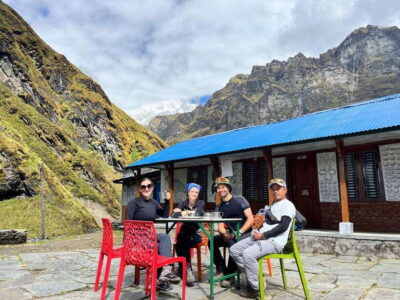
Kathmandu/Pokhara: 5-Day Annapurna Base Camp (ABC) Trek
Read our review →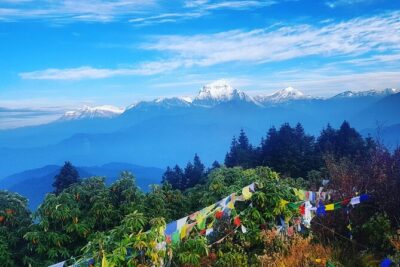
11-Day Hike Tour to Annapurna Base Camp Bliss in Kathmandu
Read our review →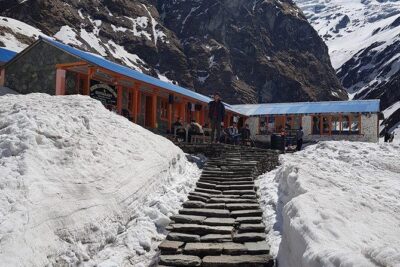
Browse the lists this tour appears in