
Reviewed · GHOREPANI POON HILL TREKS
Pokhara: 5-Day Ghorepani and Poon Hill Private Trek
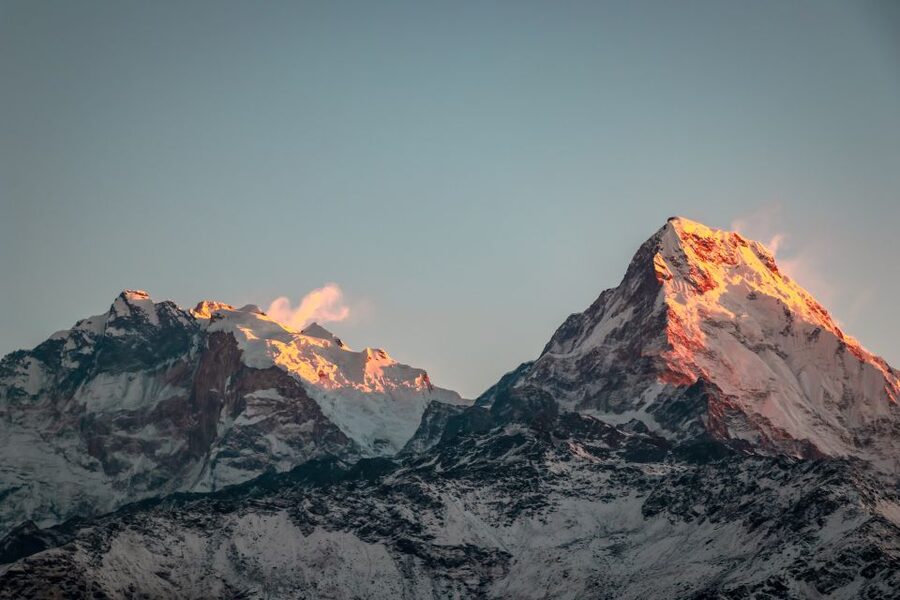
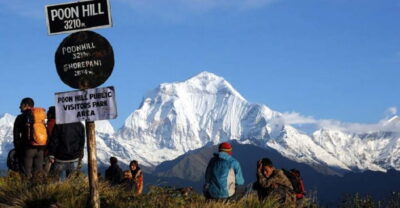
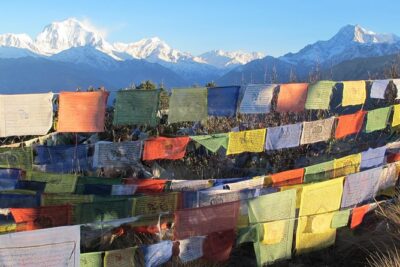
The best moment comes before breakfast on Poon Hill, when a short but steep climb ends with sunrise over Dhaulagiri, Annapurna South, Hiunchuli, and Machhapuchhre. The mountains catch the first light while you stand above the rhododendron forests, and it is a fine payoff for all those stone steps.
I like the route’s mix of mountain views and village life, not just a march from one lodge to the next. I also like the private format: guides such as Bidur and Paras can slow the pace, help with meals, and shape the walk around your needs. The catch is simple: this is called an easy trek, but it contains a lot of stairs, especially on the climb toward Ghorepani and Poon Hill.
Key points before you book
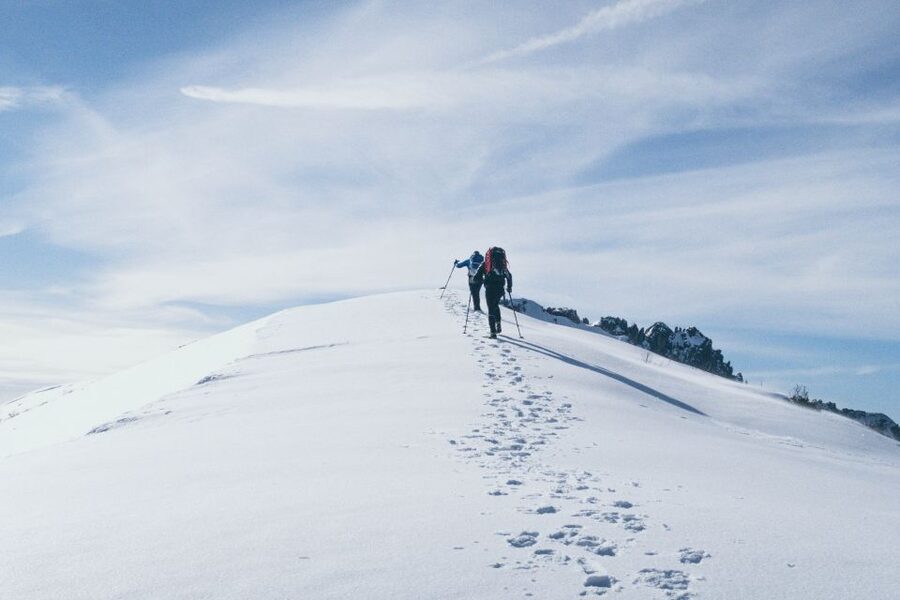
- Poon Hill sunrise at 3,210 meters: The main prize is a Himalayan dawn with views toward Dhaulagiri, Annapurna South, Hiunchuli, and Machhapuchhre.
- Four nights in guesthouses: You stay in local teahouse-style accommodation rather than camping, with meals available to buy along the route.
- Private guide and flexible pace: English- and Hindi-speaking guides can help with ordering food, arranging daily details, and setting a walking speed that suits you.
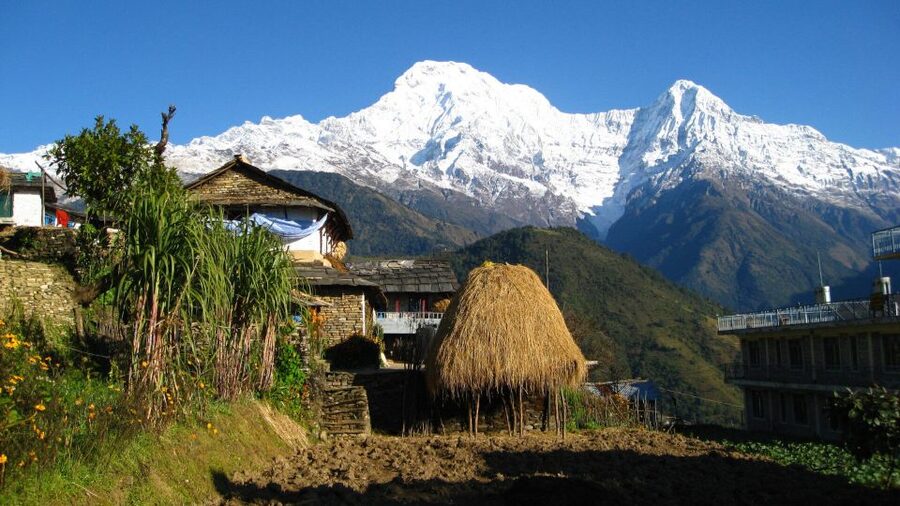
- Gurung culture in Ghandruk: The final village stop adds traditional architecture, local life, and views of the Annapurna and Machhapuchhre ranges.
- A compact Annapurna trek: In five days, you get forests, farmland, rivers, waterfalls, villages, and high mountain viewpoints without committing to a long expedition.
- Pokhara pickup and transport: The package includes pickup from a Pokhara hotel or airport, the road journey to Nayapul, and the return drive.
Why this five-day route works so well
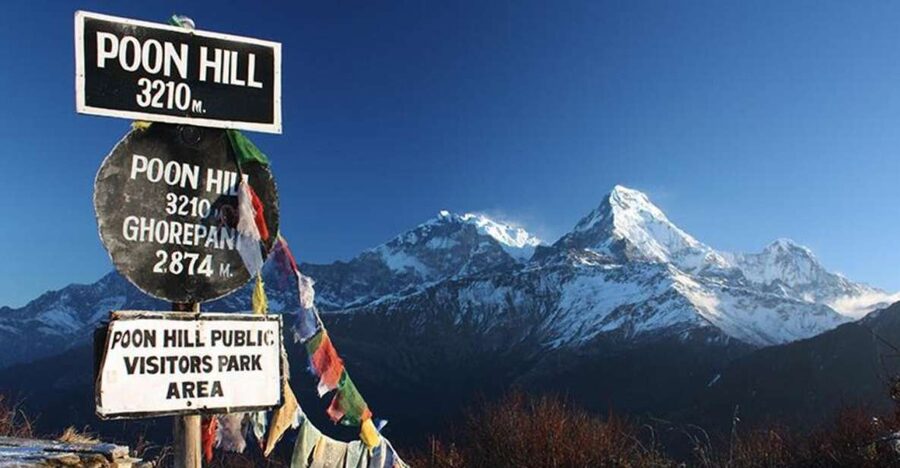
The Ghorepani and Poon Hill trek is one of Nepal’s best short walks because it gives you a real taste of the Annapurna region without requiring weeks away from home. You begin in Pokhara at 820 meters and reach Poon Hill at 3,210 meters, so the route still feels like a proper mountain trek. Yet each night is spent in a guesthouse, and the trail eventually returns you to Pokhara by road.
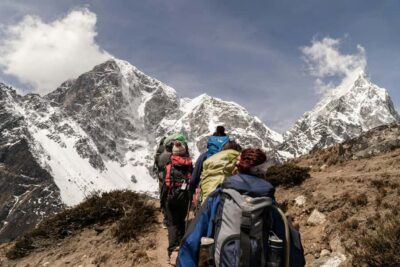
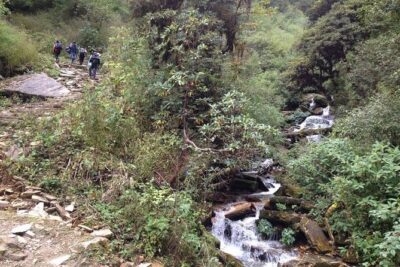
The scenery changes often enough to keep the walking interesting. Lower sections pass rice fields, terraced farmland, streams, and small settlements. Higher up, rhododendron forests frame the trail, with openings that reveal the Annapurna and Dhaulagiri ranges.
The private setup matters here. You are not tied to a large group’s pace, and the supplied guiding service has included people such as Bidur and Paras. Bidur, in particular, is described as relaxed, organized, and helpful with food orders, bills, Wi-Fi, and lodge arrangements. That sort of support is useful when you are tired and would rather look at the mountains than work out the evening logistics.
Still, do not mistake short for effortless. The route has many stone steps. One recent trekker made a point of saying to prepare for a lot of stairs. Your fitness does not need to be extreme, but you should be comfortable walking uphill and downhill for several hours.
More Ghorepani Poon Hill Treks in Pokhara
- Poon hill Trek 3 days
★ 5.0 · 176 reviews - Pokhara: 4-Day Ghorepani, Poonhill & Ghandruk Mountain Trek
★ 5.0 · 132 reviews - Ghorepani – Poon Hill Trek 3N-4D
★ 5.0 · 125 reviews
Day 1: Pokhara to Nayapul, then Tikhedhunga at 1,570 meters
Your morning begins in Pokhara, at about 820 meters. Pickup is included from a Pokhara hotel or airport, followed by the scenic drive to Nayapul, which sits at 1,070 meters and serves as the trailhead.
The road trip is part of the experience, not just a transfer. Pokhara gives way to rural scenery, with hills, fields, and mountain views appearing along the route. Once you reach Nayapul, you begin walking through villages and terraced farmland.
The first day ends at Tikhedhunga, at 1,570 meters. This is a moderate introduction to the trek. You gain roughly 500 meters from the trailhead, but the surface and steps make the walk feel more physical than the numbers suggest.
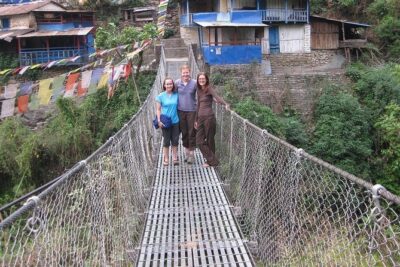
The appeal of this section is its gradual change from city surroundings to village paths. You pass through cultivated land and settlements, with views toward the Annapurna and Dhaulagiri ranges when the weather allows. Rivers, small waterfalls, and roadside tea stops add variety.
Your guide can set the pace and suggest breaks. That is especially helpful on day one, when you are still adjusting to carrying your pack and walking on uneven ground. The overnight stay is in a guesthouse, with meals available for purchase.
Day 2: Tikhedhunga to Ghorepani at 2,850 meters
Day two is the biggest uphill push of the trek. You leave Tikhedhunga at 1,570 meters and climb to Ghorepani, at 2,850 meters. The gain is about 1,280 meters, so this is the day to keep a steady pace rather than race ahead.
The route passes through forests and hillside villages. The famous rhododendron woods become more prominent as you climb, especially in spring when flowers may add bright color to the trail. Even outside the flowering season, the forest gives the walk shade and a sense of moving well into the mountains.
Ghorepani is a useful overnight stop because it gives you time to rest before the early climb to Poon Hill. The village has traditional houses and teahouses, and its position high on the route brings a cooler, more mountain-focused feel than the first night.
This day can be tiring. The route is often described as easy in the sense that it does not require technical climbing, but the stairs are real. Take short breaks, drink regularly, and let your guide judge the pace. A private group has an advantage here: you can stop without worrying about holding up a larger party.
At Ghorepani, try to organize your warm clothes and headlamp before bed. The Poon Hill start is early, and you will want to leave without rummaging through your bag in the dark. The exact departure time is not specified, so your guide will set it according to sunrise and local conditions.
Day 3: Ghorepani to Poon Hill at 3,210 meters, then Tadapani at 2,610 meters
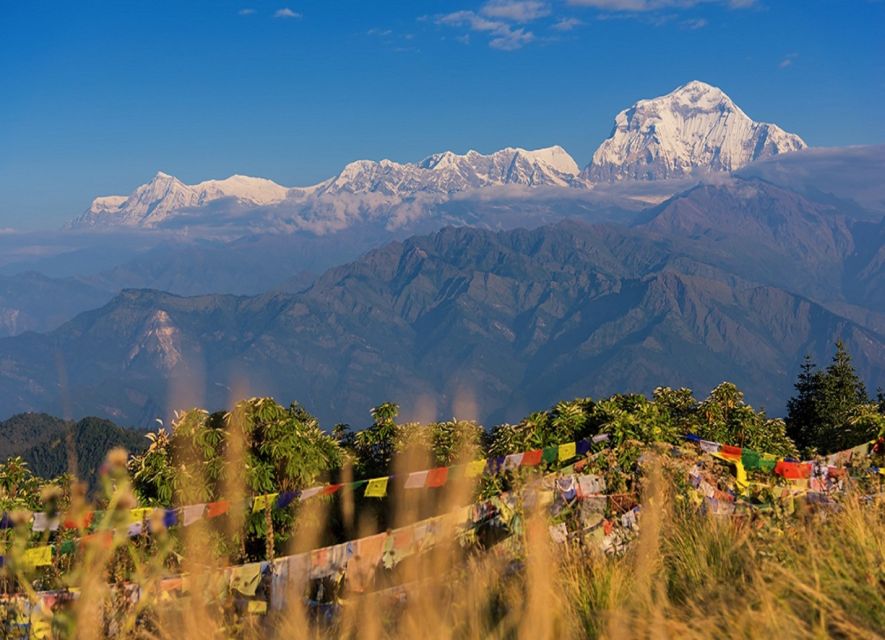
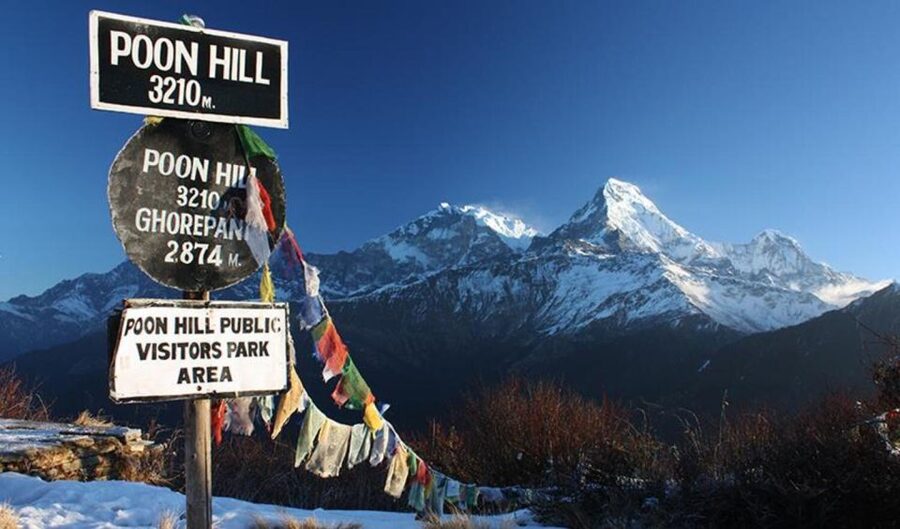
This is the signature day. You wake before dawn and climb from Ghorepani to Poon Hill, which reaches 3,210 meters. The ascent is short compared with the previous day, but it is steep in places, and the early hour makes it feel harder.
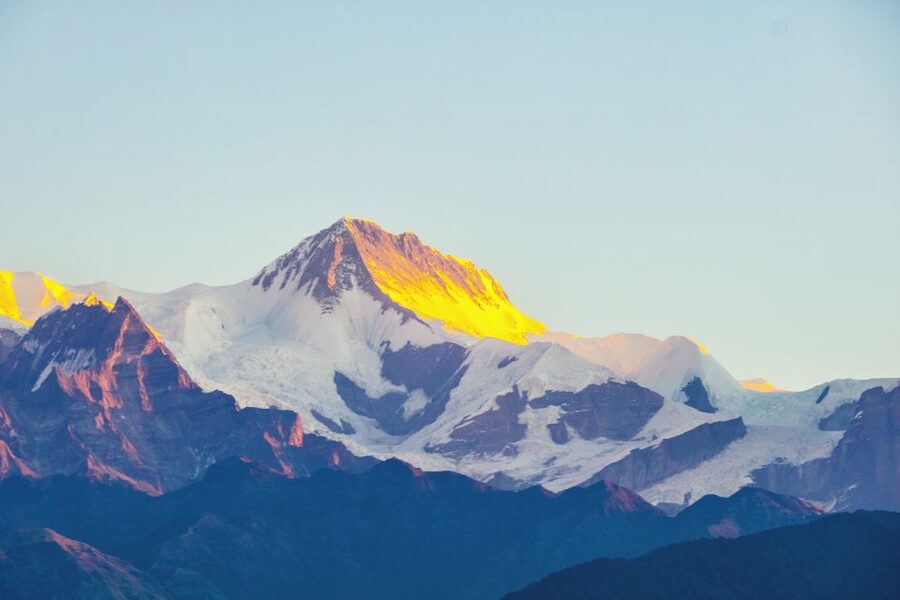
At the top, the reward is a wide Himalayan view. The sunrise can light up Mt. Dhaulagiri, Annapurna South, Hiunchuli, and Machhapuchhre, also called Fishtail. The appeal is not only the height. It is the timing: you watch the mountains change color as daylight spreads across the ridges.
Poon Hill is the emotional high point of the trek, but it is worth keeping expectations tied to weather. Mountain views depend on clear conditions. The walk still has value in cloudier weather, yet the famous sunrise panorama may be limited.
After returning to Ghorepani for breakfast, you continue to Tadapani at 2,610 meters. The trail moves through rhododendron forests, with mountain glimpses appearing between the trees. You lose some elevation from Poon Hill by the end of the day, but the total walking time can still make this a full day.
Tadapani is a practical overnight stop surrounded by forest. It breaks up the route toward Ghandruk and gives you a quieter mountain evening after the excitement of sunrise. Your guide can also help arrange meals and lodge details, a small service that becomes more welcome after a long day on foot.
Same mountains, a completely different kind of day:
- ZipFlyer Nepal – The World’s Steepest Zip-line
★ 5.0 · 608 reviews - Bungee Pokhara by HighGround Adventures
★ 5.0 · 366 reviews - From Pokhara: Sarangkot Sunrise Himalayas Tour
★ 4.7 · 218 reviews - ATV Adventure Tour in Pokhara, Nepal
★ 5.0 · 194 reviews
Day 4: Tadapani to Ghandruk at 1,940 meters
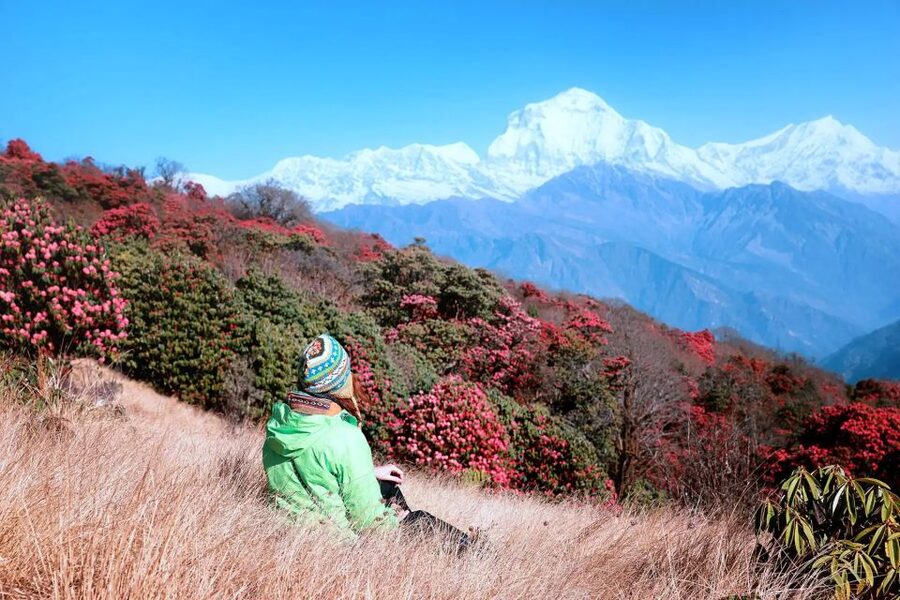
Day four takes you downhill from Tadapani at 2,610 meters to Ghandruk at 1,940 meters. The descent is less demanding on your lungs than the climb to Ghorepani, but downhill stairs can test tired knees.
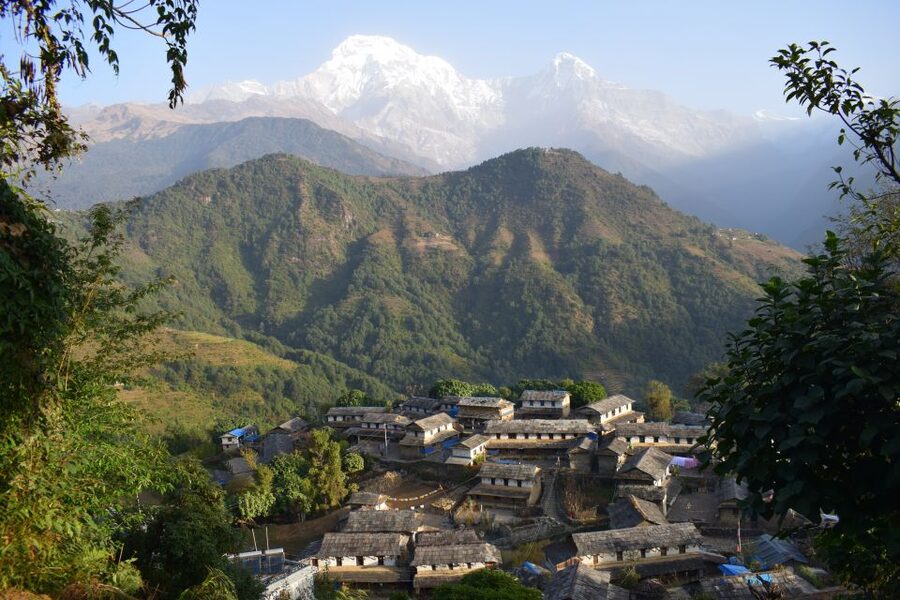
Ghandruk is more than a sleeping point. It is a picturesque Gurung village known for traditional architecture and strong cultural character. The village gives you a chance to see how the route’s mountain communities differ from the forests and farmland below.
The mountain views remain a major part of the setting, particularly toward Annapurna and Machhapuchhre. Ghandruk also feels like a good place to slow down. After two demanding mountain days, you can spend time walking through the village, looking at the houses, and taking in the surrounding hills rather than simply pushing toward the next checkpoint.
This is where a guide adds real value beyond navigation. Bidur, one of the guides associated with this trek, has provided explanations about mountain names, local towns, Nepali culture, politics, and economics. You should ask questions as you walk. The trail becomes more meaningful when you understand the communities and places around you.
The overnight guesthouse is included, while meals are bought separately. That arrangement gives you choice, but you should budget for food and drinks each day rather than treating the advertised price as all-inclusive.
Day 5: Ghandruk to Nayapul at 1,070 meters, then Pokhara
The final walking day takes you downhill from Ghandruk at 1,940 meters to Nayapul at 1,070 meters. The route returns through villages and rural scenery before ending at the roadhead.
This last section is a useful change of mood. You have left the highest forests behind, and the walk brings you back toward the lower hills and transport network. Depending on your pace, the descent may feel straightforward or tiring. Your guide can keep the day relaxed and arrange breaks as needed.
At Nayapul, you take the included transport back to Pokhara at 820 meters. The return to the lakeside city gives you a clear end to the trek, with time to rest after four nights in mountain guesthouses.
The road transfer is particularly valuable on a five-day schedule. It prevents the trek from using another day for a long return walk and lets you spend your limited time on the most scenic parts of the route.
What the $187 price really covers
At $187 per person, this trek offers good value if you want a guided, private route with transport and permits arranged. The price includes taxes and service charges, TIMS and other entrance permits, an English-speaking trekking guide, four nights of guesthouse accommodation, and round-trip transportation.
That is a useful package for a first Himalayan trek. You do not need to arrange the Pokhara pickup, find transport to Nayapul, book each lodge yourself, or handle the permits independently. A guide also helps with communication and practical tasks in the villages.
The important omission is food. All meals are available to buy, but they are not included. Rescue costs in an emergency are also excluded. I would treat those as essential budget items and check what insurance you have before setting out.
The price is strongest for people who value help with the details. Bidur has been praised for sorting out meal orders, bills, and Wi-Fi, while Paras has adapted the route to individual needs. Those tasks may sound minor, but they save time and reduce stress when you are tired, hungry, or dealing with unfamiliar customs.
Guides, pace, and the private group advantage
The tour provides a live guide in English or Hindi and operates as a private group. That combination suits you if you want conversation and help without joining a large party.
A private group does not make the route flat or effortless, but it can make the effort more manageable. You can walk slowly, stop for tea or coffee, and ask for explanations without matching a fixed group schedule. One guide has been praised for letting the group set its own pace, which is exactly what many short-trek visitors need.
The guide also acts as a bridge to village life. Ordering food, arranging bills, and communicating at guesthouses are practical matters, but they are also part of the cultural experience. You get a smoother introduction to local places without turning the walk into a tightly managed procession.
Guide quality can affect your experience more than almost anything else in a trek like this. Names associated with the service include Bidur and Paras, but guide assignment may depend on availability. If a particular guide is important to you, ask the operator before booking.
Guesthouses, meals, and what to pack
Four nights of accommodation are included in guesthouses. The information does not specify individual properties or room arrangements, so you should not book this expecting a particular hotel standard. Think of the accommodation as a practical base for sleeping, eating, and recovering between walking days.
Meals are not part of the $187 price. You can buy food along the route, and the guide can help you order. This is convenient, but it means the final cost will be higher than the headline price.
Pack for changing temperatures. Pokhara is much lower than Ghorepani and Poon Hill, while the sunrise start is likely to feel cold. Warm layers, sturdy walking shoes, a small daypack, and a headlamp are sensible choices based on the early Poon Hill climb and the stair-heavy trail.
You should also keep rain protection close at hand. The supplied details do not promise a particular season’s weather, and mountain visibility can change quickly. Your guide will be the best source for day-to-day decisions on the trail.
Who will enjoy this trek most
I would choose this route if you have five days, want mountain views, and prefer guesthouses to camping. It suits people who want a genuine walk through the Annapurna region but do not have time for a longer itinerary.
It is also a good fit for first-time trekkers who want support. The route is considered relatively easy because it does not involve technical climbing, and the guide can help with pace, food, permits, transport, and accommodation.
You should think carefully if stairs are difficult for you. The route is not a gentle stroll, and the climb to Ghorepani followed by the early Poon Hill ascent can be demanding. A private group helps, but it does not remove the physical work.
This trek also suits curious walkers. If you enjoy asking about mountain names, Gurung culture, village life, and the countryside, a guide such as Bidur can add much more than route directions.
Booking flexibility and practical details
Pickup is included from any hotel or airport in Pokhara. The activity lasts five days, and starting times depend on availability, so confirm the departure schedule before you finalize your plans.
You can cancel up to 24 hours in advance for a full refund, and the reserve-now, pay-later option keeps your plans flexible. These terms are useful if your Pokhara schedule is still shifting.
The overall rating is 5 from four verified bookings, with praise focused on the guides, flexible pacing, organization, and the Poon Hill sunrise. Those strengths match what matters most on this route: a steady guide, sensible lodging arrangements, and enough time to enjoy the trail instead of rushing through it.
Should you book the Ghorepani and Poon Hill trek?
I would book it if you want the best mountain payoff in a short Nepal itinerary. The sunrise at 3,210 meters, the rhododendron forests, the Gurung village of Ghandruk, and the included transport make a strong five-day package.
I would not book it expecting an all-inclusive holiday or an effortless walk. Meals cost extra, rescue costs are not covered, and the many stairs require honest preparation.
For most people with reasonable walking fitness, the balance is good: real Himalayan views, village contact, a private guide, and four nights indoors, all for $187 per person before meals. Ask about the assigned guide, prepare for the steps, and keep your mornings free for an early start. If those points suit you, this is a smart short trek from Pokhara.
FAQ
How long is the Ghorepani and Poon Hill trek?
The trek lasts five days, including transportation from Pokhara to Nayapul at the start and the return drive from Nayapul to Pokhara at the end.
What is the highest point on the trek?
The highest point is Poon Hill, at 3,210 meters. The route also reaches Ghorepani at 2,850 meters and Tadapani at 2,610 meters.
Is transportation from Pokhara included?
Yes. Round-trip transportation is included, with the outward journey from Pokhara to Nayapul and the return journey from Nayapul to Pokhara. Pickup is available from a Pokhara hotel or airport.
Are meals included in the price?
No. Meals are available for purchase along the route, but the tour price does not include them.
What type of accommodation is included?
The package includes four nights in guesthouse accommodation. Specific guesthouses and room arrangements are not stated.
What languages does the guide speak?
The activity provides a live guide in English or Hindi. The guide service includes an experienced trekking guide for the private group.
More 5-Day Experiences in Pokhara
- From Pokhara: 5-Day Annapurna Basecamp Trek with Hot Springs
★ 4.9 · 26 reviews - From Pokhara: 5-Day Mardi Himal Base Camp Trek
★ 5.0 · 10 reviews - Pokhara: 5-Day Trek to Annapurna Base Camp and Hot Springs
★ 5.0 · 4 reviews - Annapurna base camp trek 5 Days
★ 5.0 · 252 reviews
More Hiking & Trekking in Pokhara
- Trekking in Annapurna/Langtang/Everest/Upper Mustang regions
★ 5.0 · 161 reviews - Pokhara: Annapurna Foothills Day Hike with Transfers
★ 5.0 · 100 reviews - Kathmandu/Pokhara: 5-Day Annapurna Base Camp (ABC) Trek
★ 4.9 · 72 reviews - From Pokhara: 3-Day Ghorepani Poon Hill Trek with Guide
★ 4.9 · 68 reviews
Just added around Pokhara
- Seti George and Thrilling Suspension Bridge Tour at Pokhara★ 4.5 · 3 reviews
- Tandem Paragliding in Pokhara★ 4.8 · 8 reviews
- Pokhara: Sunrise Tour to Sarangkot★ 5.0 · 3 reviews
- Pokhara: Suspension Bridge Private Tour- 30 Min Village Walk★ 4.8 · 9 reviews
- Pokhara: Visit Best Seven Tourist Destination by Sharing Bus★ 3.4 · 10 reviews
- Pokhara Sightseeing By Bus: Day Trip★ 4.6 · 7 reviews
- Pokhara Sightseeing By Bus – Day Trip★ 3.2 · 8 reviews
- Pokhara: Seti River Rafting Adventure with Hotel Pickup★ 5.0 · 5 reviews
Ghorepani Poon Hill Treks, compared.
4-Day Ghorepani, Poonhill & Ghandruk Mountain Trek
Read our review →
Browse the lists this tour appears in