
Reviewed · EVEREST BASE CAMP TREKS
From Kathmandu: Private 14-Day Everest Base Camp Trek
Everest Base Camp is the main event here, but the real strength of this 14-day private trek is the careful climb toward it. You fly from Kathmandu to Lukla, walk through Sherpa villages, pause twice for acclimatization, and reach EBC at 5,364 meters before tackling Kala Patthar at 5,545 meters.
I like the included domestic flights, permits, national park fees, equipment, meals, and airport transfers. I also like the personal support: you travel with an experienced guide and Sherpa porter, and guides named in past trips include Raj Tamang, Prakash Neupane, and Pratip. The main caution is altitude. This is a serious trek, not a sightseeing stroll, and Lukla flights can be affected by weather.
Key points to know before booking
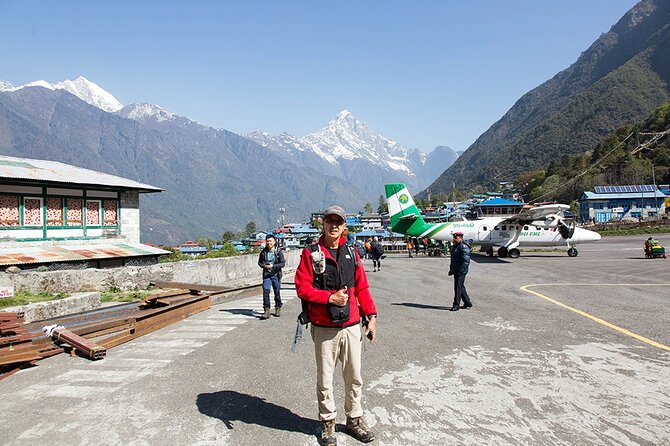
- Lukla starts the adventure: The 30-minute flight to Tenzing Hillary Airport is short, scenic, and weather-sensitive.
- Two acclimatization days help: You spend one day in Namche Bazaar and another in Dingboche before higher elevations.
- Kala Patthar gives the big view: The early-morning hike reaches 5,545 meters, higher than Everest Base Camp itself.
- Private means personal support: Only your group takes part, with a guide and Sherpa porter assigned to help you.
- Much of the major cost is covered: Flights, permits, park fees, lodging, meals, gear, and transfers are included.
- The price is not the final bill: At $1,650 per person, you still need to budget for a Nepal visa, insurance, personal spending, unspecified meals, and tips.
Kathmandu to Lukla, where the walking begins
Your first day is set aside for arrival at Tribhuvan International Airport in Kathmandu. A Cordial Trek representative picks you up, takes you to your hotel, and helps you settle in. The airport transfer matters after an international flight, especially when you are also preparing for a demanding mountain trip.
On day two, you take a roughly 30-minute flight to Lukla’s Tenzing Hillary airstrip. The airport is described as one of the world’s most challenging, so the flight is a practical part of the trek rather than a minor transfer.
You meet your support staff in Lukla and begin walking toward Phakding. The schedule gives you about 18 hours for this stage, which means an overnight stay rather than a long continuous activity. Keep your plans flexible around the flight. The package requires good weather, and a delayed or canceled flight can affect the route.
The provided domestic ticket covers Kathmandu to Lukla and back. That is a major convenience, since arranging this key connection yourself would add another moving part to an already complex trip.
More Everest Base Camp Treks in Kathmandu:
- Everest Base Camp Trek – 14 Days
★ 5.0 · 1,499 reviews - Everest Base Camp Trekking
★ 5.0 · 485 reviews - Everest Base Camp Trekking – 13 Day
★ 5.0 · 365 reviews
Namche Bazaar and the first acclimatization day
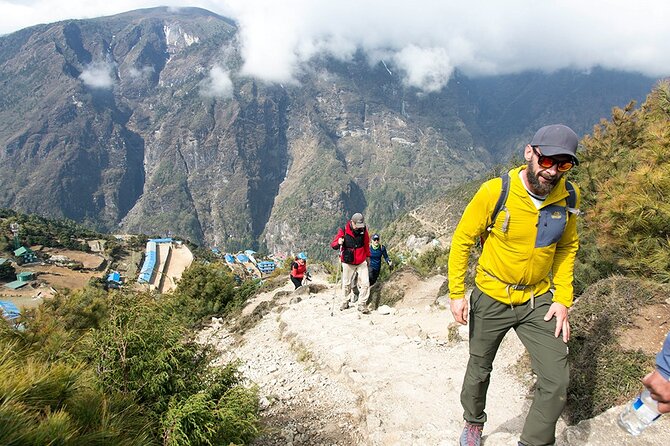
Day three takes you from Phakding to Namche Bazaar in about six hours. The route reaches 3,438 meters, so this is where the climb begins to feel serious. You pass through Manjo village and enter the Khumbu region, with mountain scenery and Sherpa settlements replacing Kathmandu’s urban pace.
Namche Bazaar is more than a stopping point. It is the main trading center of the upper Khumbu and your first useful pause at altitude. The itinerary gives you a full fourth day here to adjust, which is one of the most sensible features of the plan.
That acclimatization day includes a guided hike to the Everest View Point and Hotel Everest View. The hotel, opened in 1971, sits inside Sagarmatha National Park and offers broad views of the surrounding peaks. You do not simply spend the day sitting in a lodge, but you also avoid gaining altitude too quickly.
I like this balance. A rushed itinerary may look efficient on paper, but altitude does not care about your calendar. Namche gives you time to notice how your body is reacting before the route climbs higher.
Deboche and the cultural side of the Khumbu
On day five, you walk from Namche Bazaar to Deboche. The trek takes about six hours and reaches an elevation listed as 3,820 meters. The route includes views and villages along the way, with the mountain setting becoming more pronounced as you move deeper into the Khumbu.
Deboche is also a useful base for experiencing the cultural side of the route. The itinerary later includes Tengboche Monastery, one of the best-known religious sites in the area, so the trip is not only about collecting a photograph at Base Camp.
The next day leads from Deboche to Dingboche in about five hours. You pass near the Lobuche River and reach 4,360 meters. The elevation gain is the important detail here. The walking time may sound manageable, but thin air makes ordinary uphill sections much harder.
At this point, a guide’s judgment becomes valuable. Past trips have specifically praised guides such as Raj Tamang for checking physical condition, suggesting suitable choices, and keeping a systematic approach to the trek. That does not remove the physical challenge, but it gives you someone watching the details that are easy to miss when you are tired.
Dingboche, the second pause before the high country
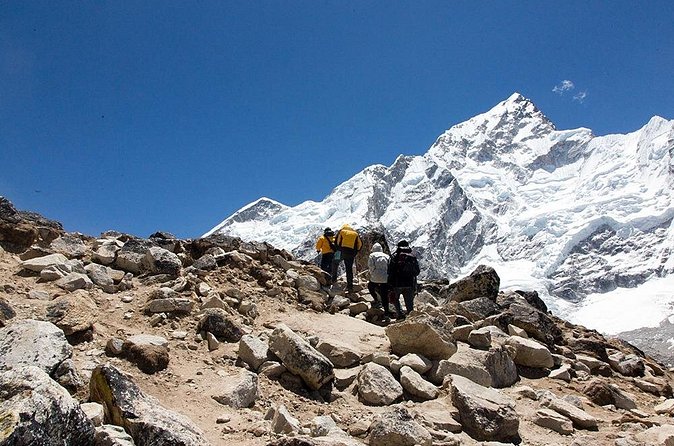
Day seven is another acclimatization day, this time in Dingboche at 4,360 meters. You receive a guided outing to adjust to the altitude before pushing toward Lobuche and Gorakshep.
This is the second major safety feature in the itinerary. The route does not race from Namche straight to Base Camp. Instead, it builds in a pause at a higher camp, giving you more time to find out how your body handles the conditions.
You should still approach this day seriously. Acclimatization is not a guarantee against altitude sickness, and the tour information requires a moderate level of fitness. Travel insurance is compulsory, and you should treat that as essential rather than optional paperwork.
Dingboche is also the point where the trek becomes less forgiving. Days are shorter in walking time, but the altitude makes every section count. Listen to your guide and be ready for the fact that your pace may slow.
A few more Kathmandu trips to weigh up
- Nagarkot Sunrise View and Day Hiking from Kathmandu
★ 5.0 · 471 reviews - Annapurna Circuit Trek with Tilicho Lake
★ 5.0 · 368 reviews - Everest Base Camp Trek -14 Days
★ 5.0 · 321 reviews - Annapurna base camp trek 5 Days
★ 5.0 · 252 reviews
Lobuche and the approach to Everest Base Camp
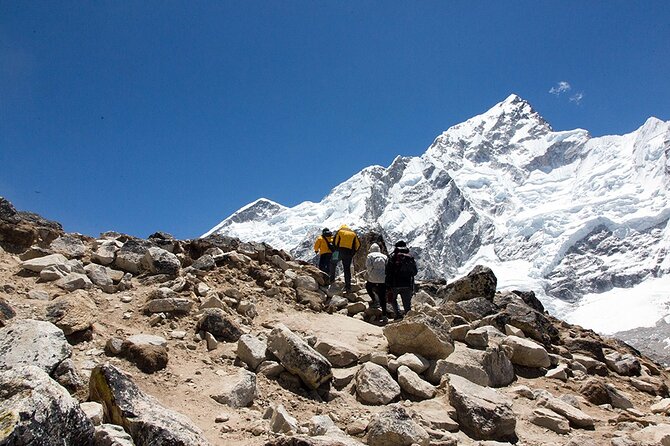
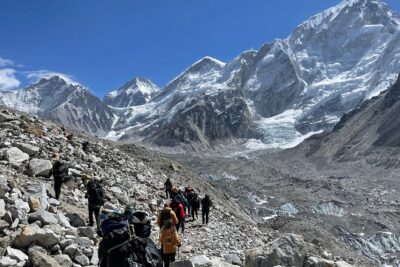
On day eight, you walk from Dingboche to Lobuche in four to five hours. The route reaches 4,940 meters and brings you close to the Khumbu Glacier. The settlement of Lobuche is a high mountain stop, so the purpose is simple: rest, eat, and prepare for the biggest day ahead.
The distance is not the only measure of difficulty. At nearly 5,000 meters, even a modest walking day can demand patience. You will want warm layers, water, and easy access to the supplied sleeping bag and down jacket.
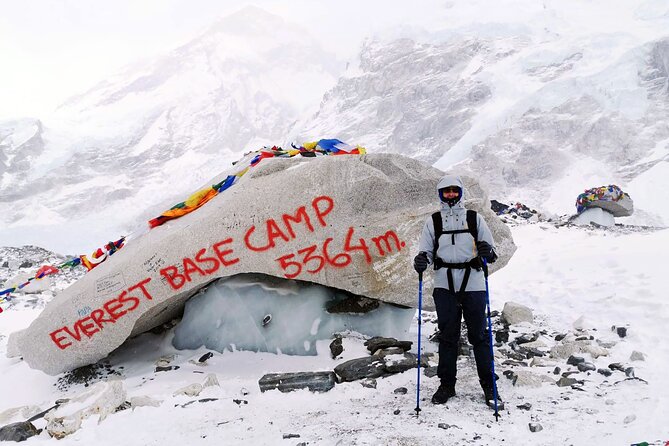
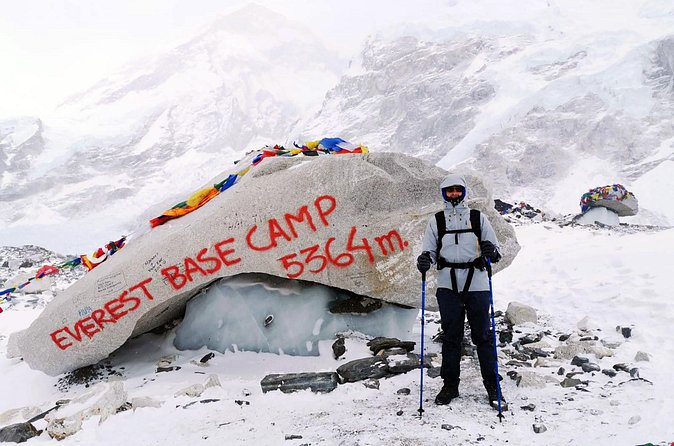
Day nine is the push from Lobuche to Gorakshep, followed by the walk to Everest Base Camp. Gorakshep sits at 5,164 meters, while EBC reaches 5,364 meters. The itinerary lists about 18 hours for this day, with the Base Camp visit given roughly one hour, so this is likely to be one of the longest and hardest sections of the trip.
Everest Base Camp lies inside Sagarmatha National Park. Reaching it is the emotional high point for most people on this route, but it is worth keeping expectations realistic. You do not summit Everest from here. You reach the famous base area used by climbers, surrounded by the Khumbu setting that makes the walk worthwhile.
The route connects you with the early Everest story, including the 1953 ascent by Sir Edmund Hillary and Tenzing Norgay Sherpa. Your guide can add local context along the way, and the company’s staff are repeatedly singled out for helping with organization, food, transport, and pacing.
Kala Patthar, the best high viewpoint
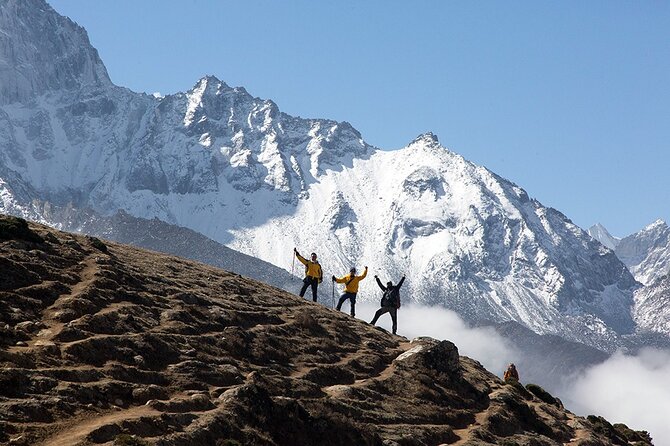
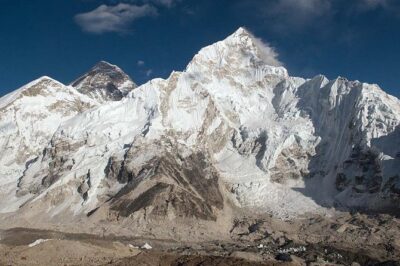
The early morning on day ten is reserved for Kala Patthar. The walk is described as a three-hour round trip via Gorakshep, reaching 5,545 meters. That makes Kala Patthar higher than Everest Base Camp and one of the most demanding parts of the journey.
This is the viewpoint I would value most in the schedule. Base Camp gives you the destination, but Kala Patthar is designed for the broad mountain view. The early start also aims to make the most of the morning conditions, though mountain weather is never guaranteed.
You should not underestimate the climb because it is only three hours. At 5,545 meters, the thin air is the challenge. Your guide’s role is especially important here, and you should follow advice about pace, rest, and turning back if you feel unwell.
After Kala Patthar, the trip turns downhill, but the return still requires work. High-altitude fatigue accumulates, and the descent is not automatically easy on your knees.
Tengboche, Pheriche, and the return to Namche
Day eleven takes you from Pheriche back to Namche Bazaar via Tengboche in about six to seven hours. The itinerary highlights Tengboche Monastery, giving you a chance to connect the mountain route with the religious traditions of the Khumbu.
The return route is welcome because you begin losing altitude, and the air should gradually feel easier. You finish in Namche, where the plan allows time for local pubs and cafés. That evening provides a more relaxed change after the high camps.
The route description places Pheriche into this return day, even though the earlier schedule lists Dingboche and the high camps. This is one detail I would confirm with the operator before departure, along with the exact overnight locations and walking distances.
On day twelve, you walk from Namche to Lukla via Phakding in about seven to eight hours. It is a long final walking day, but reaching Lukla gives you a clear endpoint for the trek. The evening includes time at the local bazaar and a farewell with the crew.
The itinerary also mentions a celebratory gathering in Lukla. It does not specify the format, so think of it as a chance to thank the staff and mark the end of the walking portion rather than a guaranteed formal event.
Returning to Kathmandu and what is included
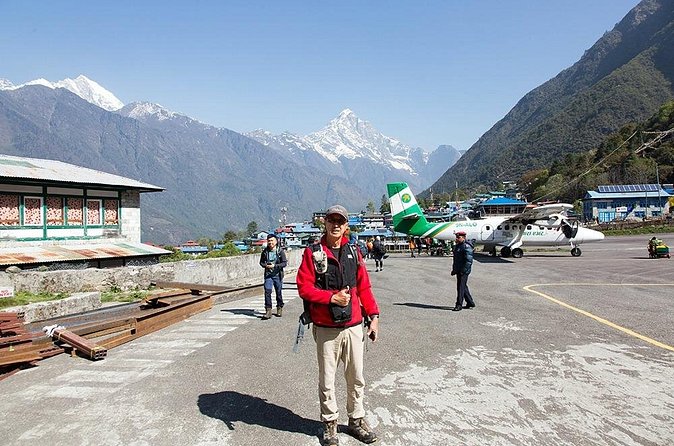
Day thirteen brings the flight from Lukla back to Kathmandu. You say goodbye to the support crew in Lukla, fly to the capital, check into your hotel, and have free time in the evening.
Day fourteen is the final departure day. You receive a trip certificate and are taken to the airport three hours before your flight. The airport drop-off is useful, but make sure your international departure time matches the schedule and allow for possible changes caused by mountain flights.
The included package is broad:
- Return flights between Kathmandu and Lukla
- Airport transfers
- Accommodation
- An experienced trekking guide and Sherpa porter
- Trekking permits and national park fees
- A down jacket, sleeping bag, and duffle bag on a returnable basis
- Lunches, dinners, and breakfasts as specified
- Trekking map, company T-shirt, and trip certificate
The meal information lists 11 lunches, 12 dinners, and 13 breakfasts. It also says unspecified meals are excluded, so ask exactly which Kathmandu meals, snacks, drinks, or other food costs are covered.
You pay separately for personal expenses, a Nepal visa, compulsory travel insurance, guide and porter tips, and any solo-traveler surcharge. Tips are described as gratitude for the guide and porter, so include them in your trip budget even though no amount is stated.
Is $1,650 good value?
At $1,650 per person, the price looks reasonable for a private 14-day program that includes the Lukla flights, permits, park fees, lodging, airport transfers, guide, porter, gear, and most meals. Those items can add up quickly when booked separately.
The private format is a strong part of the value. Your group travels on its own, which can make pacing and daily decisions more personal than on a large shared departure. Past trips have praised Cordial Trek staff for handling transport, accommodation, food, and tickets, and for trying hard to secure direct Kathmandu to Lukla flights during a difficult period.
Still, price comparisons need care. A solo surcharge may apply, and the package does not include a visa, insurance, personal spending, all meals, or tips. Ask for the group size, the exact hotel standards, the porter’s load limits, and the policy for flight disruption before you pay.
The equipment loan also adds value, particularly if you do not want to buy a down jacket, sleeping bag, or duffle bag for one trek. Confirm the sizing and condition of the equipment before leaving Kathmandu.
Who should book this Everest Base Camp trek?
I would recommend this trip to you if you want the classic Everest Base Camp route with a private support team and a clear day-by-day plan. It suits people who prefer having flights, permits, lodging, meals, and transfers organized in one package.
You should have moderate physical fitness and be ready for multiple days of walking, including six to eight-hour stages. The highest points reach more than 5,500 meters, so previous mountain experience is helpful, though it is not listed as a requirement.
This is not the best choice if you need a fixed schedule with no weather risk. Lukla flights depend on conditions, and the cancellation terms are strict within 24 hours. If poor weather cancels the activity, you are offered another date or a full refund, but you should still keep spare time in your Nepal plans.
The repeated praise for guides such as Raj Tamang, Prakash Neupane, and Pratip points to the human side of the service. Good guidance matters here because a careful pace, honest altitude advice, and help with logistics can shape the whole trip.
Final call: a well-supported classic route
Book this trek if you want Everest Base Camp without arranging every permit, lodge, flight, and transfer yourself. The strongest reasons are the two acclimatization days, private support, included gear, and the combination of EBC with Kala Patthar, Namche, and Tengboche.
Think twice if you are not comfortable with high altitude, long walking days, weather-related flight changes, or extra costs beyond the advertised price. Before booking, confirm the exact meal plan, flight arrangements, solo surcharge, accommodation details, and return route through Pheriche.
For a fit person who accepts those conditions, this is a practical way to experience the Khumbu and reach Everest Base Camp with a local team nearby.
FAQ
How long is the Everest Base Camp trek?
The experience lasts approximately 14 days, from arrival in Kathmandu through the final airport transfer.
Is this a private trek?
Yes. This is a private activity, and only your group participates.
What flights are included?
Domestic flights between Kathmandu and Lukla are included, both outbound and return.
Is airport pickup provided?
Yes. Airport transfers are included, with pickup on arrival in Kathmandu and airport drop-off on the final day.
Which major places are visited?
The itinerary includes Lukla, Namche Bazaar, Everest View Point, Deboche, Dingboche, Lobuche, Gorakshep, Everest Base Camp, Kala Patthar, Tengboche, Pheriche, and Kathmandu.
How high does the trek go?
Everest Base Camp is listed at 5,364 meters, and Kala Patthar reaches 5,545 meters.
Are meals included?
Breakfast, lunch, and dinner are included in the stated quantities: 13 breakfasts, 11 lunches, and 12 dinners. Any unspecified meals are not included.
What happens if bad weather cancels the trek?
If poor weather causes cancellation, you are offered a different date or a full refund. Cancellations made at least 24 hours before the start time also qualify for a full refund, while cancellations within 24 hours are not refunded.
Just added around Kathmandu
- Private Half-Day Tour of Boudhanath and Pashupatinath Temples in Kathmandu★ 4.5 · 9 reviews
- Private Half-Day Tour of Kathmandu Durbar Square and Swayambhunath Temple★ 4.5 · 11 reviews
- Namobuddha Monastery Hiking Day Tour via Panauti from Kathmandu★ 5.0 · 15 reviews
- Private Full-Day Kathmandu City Tour★ 5.0 · 9 reviews
- Private Day Tour in Kathmandu Valley Rim with Bhaktapur Sightseeing★ 5.0 · 3 reviews
- Private Half Day Budhanilkantha Tour★ 5.0 · 6 reviews
- Private Day Tour: Patan and Bhaktapur from Kathmandu★ 4.5 · 6 reviews
- Private Day Tour – Sacred Journey to Namo Buddha★ 5.0 · 5 reviews
Everest Base Camp Treks, compared.
Everest Base Camp Trek with Helicopter Return from Gorakshep to Lukla
Read our review →Browse the lists this tour appears in