
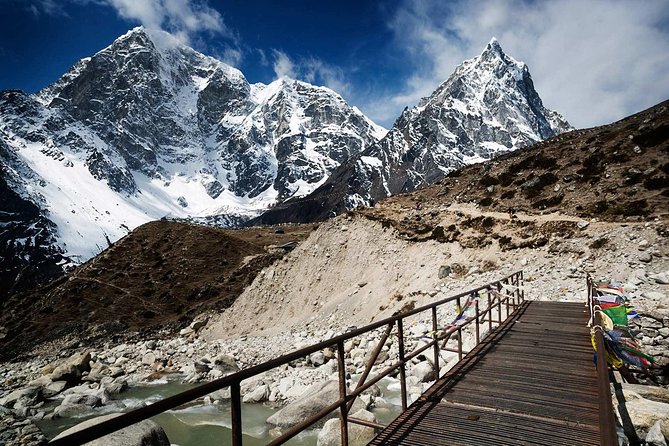
Reviewed · EVEREST BASE CAMP TREKS
Everest Base Camp Trek with Helicopter Return – 10 Days
The best part of this 10-day Everest Base Camp trek comes after the hard work: you reach Kala Patthar, look across Everest and the Khumbu peaks, then return to Kathmandu by helicopter instead of retracing the trail. That shortcut saves several walking days and gives you a thrilling aerial view of Nepal.
I like the careful all-in-one setup, with Lukla flights, lodge stays, meals, porters, permits, airport transfers, and mountain gear included. I also like the small group size, capped at 15, and the personal service from guides such as Dipak, Ram, and Ramesh. The main caution is the pace: this is a demanding high-altitude trek, and ten days leaves little room for delays or feeling unwell.
Key points at a glance
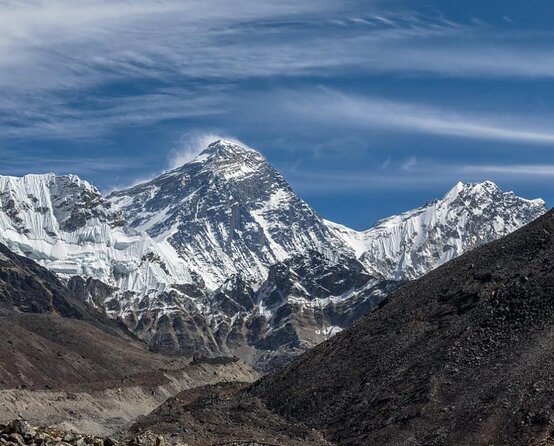
- Kala Patthar helicopter return: After the summit viewpoint, you fly back toward Kathmandu by shared helicopter rather than hiking down to Lukla.
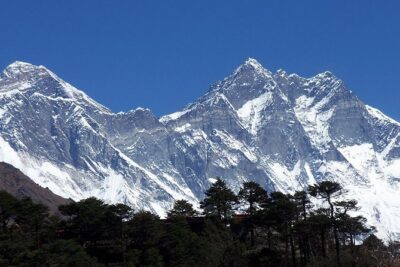
- Four major Himalayan peaks: The route offers views connected with Everest, Lhotse, Makalu, and Cho Oyu.
- Two acclimatization stops: Namche Bazaar and Dingboche give you scheduled rest and adjustment time.
- Mountain support included: You receive a guide, one porter for every two trekkers, meals, permits, a sleeping bag, down jacket, duffle bag, and walking pole.
- Small group format: The group limit is 15 people, which should make trail decisions and daily coordination easier.
- Weather matters: Lukla flights and the helicopter return depend on suitable conditions, so flexibility is important.
What the $3,400 price really covers
At $3,400 per person, this is not a cheap mountain holiday. It is also much more than a simple walking route. The fee bundles the expensive and complicated pieces: the flight from Kathmandu to Lukla, a helicopter flight back from the Everest region, Kathmandu hotel accommodation with breakfast, trekking lodges, three meals a day during the trek, airport transfers, permits, a guide, porters, and trekking equipment.
That package has real value if you want one company to handle the details. The porter arrangement is one porter for two trekkers, and the operator covers the porter’s transport, food, lodging, salary, equipment, and insurance. You are not left to arrange those pieces in Nepal.
I also like that a down jacket, sleeping bag, duffle bag, walking pole, trekking map, and trip certificate are included. You should still confirm sizes, condition, and pickup arrangements before departure, but this reduces the amount of bulky equipment you need to bring from home.
The exclusions are worth reading carefully. Lunch and dinner in Kathmandu are not included. Drinks throughout the trek are extra, including tea, coffee, hot chocolate, boiled water, bottled water, soft drinks, and beer. Phone calls, internet, laundry, hot showers, battery charging, bar bills, visa fees, and tips also come from your own pocket.
For me, the price makes the most sense if the helicopter return is a major priority. A standard trek takes longer because you must walk back through the same region. This trip trades a higher price for speed, convenience, and a memorable flight after the hardest part of the route.
More Everest Base Camp Treks in Kathmandu:
- Everest Base Camp Trek – 14 Days
★ 5.0 · 1,499 reviews - Everest Base Camp Trekking
★ 5.0 · 485 reviews - Everest Base Camp Trekking – 13 Day
★ 5.0 · 365 reviews
Day 1: Kathmandu arrival and an easy start
You are met at the airport and taken by private vehicle to your Kathmandu hotel. The rest of the day is free, so you can rest or explore the city at your own pace.
That quiet first day matters. The next morning begins early, and the route quickly moves from city streets to high mountain trails. I would use this time to organize your bags, check your trekking gear, and keep the evening simple.
Your Kathmandu accommodation includes breakfast. Lunch and dinner do not, so plan for those meals separately. The Nepal entry visa fee is also excluded, and the instructions ask you to bring accurate US dollar cash and two passport photographs for faster processing.
Day 2: The short flight to Lukla and the walk to Phakding
The day starts around 6:15 a.m. with the domestic airport transfer. The flight to Lukla takes about 30 minutes, then you meet the trekking crew and begin walking toward Phakding.
Lukla is the gateway for the Everest region. From here, you enter the Sagarmatha National Park, a protected area and UNESCO World Heritage Site. The early trail brings green scenery and views toward Kusum Kanguru, a gentler introduction than the high, rocky stages still ahead.
The itinerary lists a long overall day, so you should not think of the short flight as an easy travel morning. You still need to begin walking soon after landing. This is also where the trip’s logistics become real: your guide, porters, and lodge arrangements take over from the airport transfer.
Day 3: Namche Bazaar and the Hillary suspension bridge
After breakfast, the route follows the Dudh Koshi River through pine forest. You cross the Hillary suspension bridge and pass the entrance checkpoint for Sagarmatha National Park before climbing toward Namche Bazaar.
Namche is the Sherpa capital and the main gateway to the upper Everest region. It is not just an overnight stop. It is where the trail changes from a lower valley walk to a serious high-altitude trek, and its scheduled acclimatization day is one of the most useful parts of the plan.
You can visit the Sherpa Museum in Namche, which focuses on local culture and traditions. Admission is not included, and the listed visit lasts about 30 minutes. The day is shown as roughly 12 hours, so you should expect a demanding walking day even though the museum stop is short.
A few more Kathmandu trips to weigh up
- Nagarkot Sunrise View and Day Hiking from Kathmandu
★ 5.0 · 471 reviews - Annapurna Circuit Trek with Tilicho Lake
★ 5.0 · 368 reviews - Everest Base Camp Trek -14 Days
★ 5.0 · 321 reviews - Annapurna base camp trek 5 Days
★ 5.0 · 252 reviews
Day 4: Namche acclimatization and Everest View Hotel
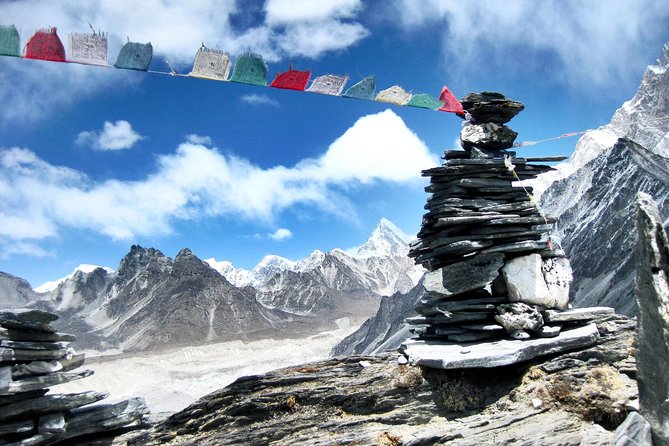
Day 4 is set aside for acclimatization in Namche. You hike toward the Everest View Hotel for views of Mount Everest, with Syangboche along the route.
This is a smart use of time. Instead of pushing higher every day, you gain altitude gradually and spend another night in the same area. The itinerary does not list a separate admission fee for this hike, and it gives you a chance to see the surrounding peaks without carrying your full load to a new lodge.
You should treat this as an active rest day, not a day to spend entirely in bed. The trail still climbs, and the walk helps prepare you for the thinner air above Tengboche. Your guide is the right person to ask about how hard to push on this outing.
Day 5: Tengboche monastery and the harder climb from Punki Tenga
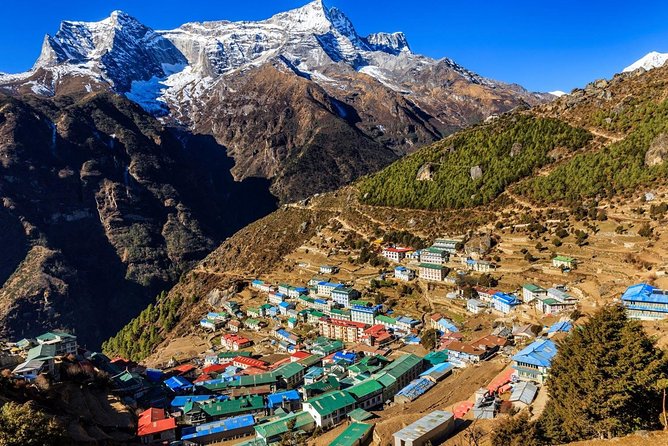
The trail leaves Namche with a mix of smoother sections and short ups and downs. You pass Kayangjuma and Sanasa, cross the Dudh Koshi, and reach Punki Tenga. From there, the route becomes steeper before arriving at Tengboche.
Tengboche is home to the largest monastery in the Khumbu region. Its setting gives this walking day more than mountain views: you also get a look at the religious life that shapes the high valleys of Nepal.
The day is listed at about 12 hours, so pace yourself. The route may feel manageable at first, then the climb after Punki Tenga asks more from your legs. This is a good place to appreciate the guide and porter system, since you can walk with a lighter personal load.
Day 6: Pangboche and the Imja Valley to Dingboche
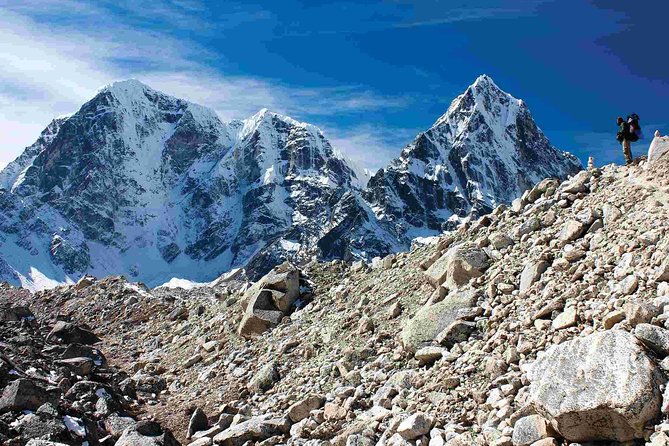
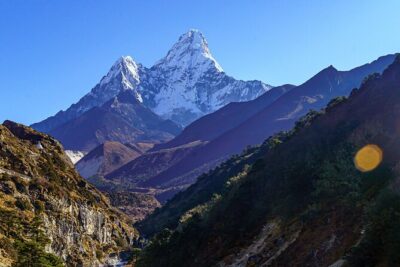
You take the upper trail past chortens, mani walls, and small villages. After crossing the Imja Khola and passing Pangboche at about 3,900 meters, the route enters the Imja Valley and continues toward Dingboche.
The chortens and mani walls add a clear sense of place to the walk. You are not simply moving between lodges. You are passing Buddhist markers and villages that belong to the Khumbu way of life.
Dingboche is another planned acclimatization stop. That pause is especially important because the trail is now at serious altitude, and the next stages lead toward Lobuche and Gorakshep. I would not treat the 10-day schedule as permission to hurry. The helicopter saves time on the way out, but it does not make the ascent easier.
Day 7: Duglha, Chola Lake, and the approach to Lobuche
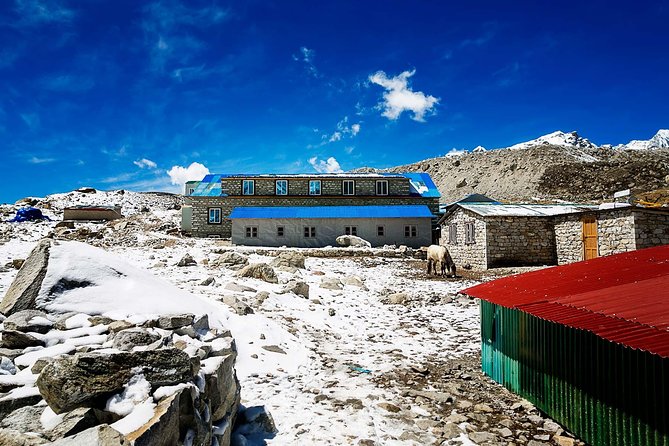
The route climbs through the Khumbu Khola Valley toward Duglha. Along the way, you pass Dusa and Phulung Karpo, reach Chola Lake, cross a small bridge, and continue climbing.
The terrain becomes more demanding here, with repeated uphill sections and high-altitude walking. Lobuche Peak is near the Khumbu Glacier and has east and west summits. Even if you are not climbing the peak, its presence gives this stage a strong sense of approaching the main Everest route.
The itinerary describes the day as a sequence of climbs rather than a quick transfer. Keep your expectations realistic: lodge comfort becomes simpler as you move higher, and the cold and altitude can make ordinary tasks feel slow. Meals are included, but drinks and extras are not.
Day 8: Everest Base Camp and the Khumbu Glacier
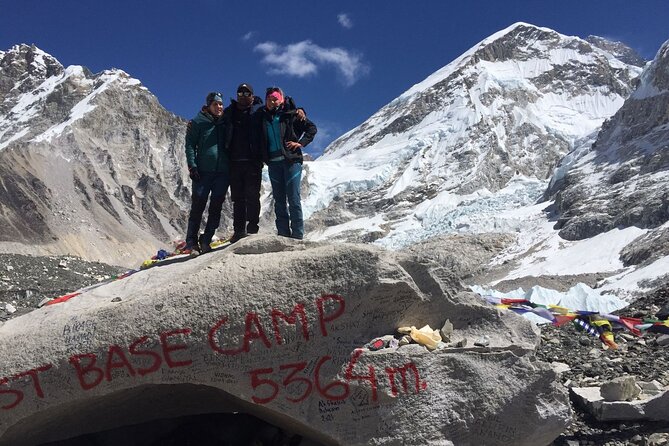
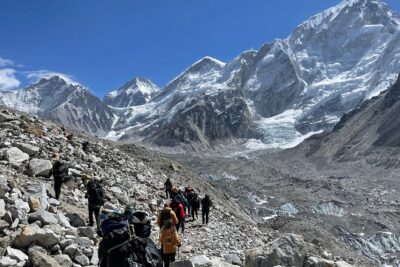
From the high settlement of Gorakshep, you walk through several ups and downs toward Everest Base Camp. The route takes about three hours of steady hiking before reaching the camp area, where you can see the Khumbu Glacier and icefall.
Everest Base Camp is the starting point for expeditions to Mount Everest. The stop itself is listed at about 30 minutes, but the significance is much bigger than the clock suggests. You have crossed the valleys, bridges, forests, and high passes of the approach route to reach this famous point.
You then return to Gorakshep for the night. This is not the summit of Mount Everest, and you should not expect a climbing expedition. It is a trek to the base camp area, followed by the early Kala Patthar viewpoint hike the next day.
Day 9: Kala Patthar, Everest views, and the helicopter flight
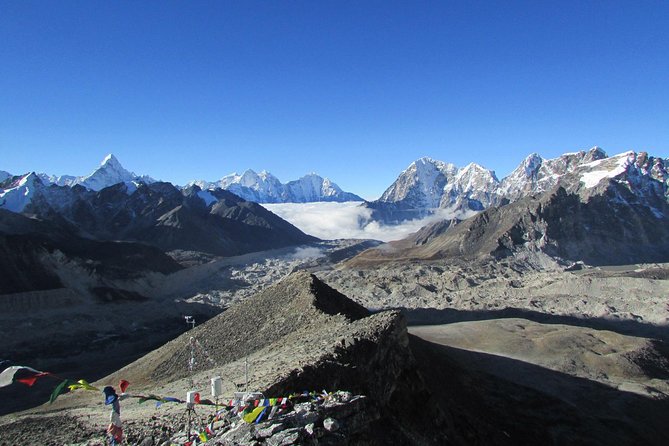
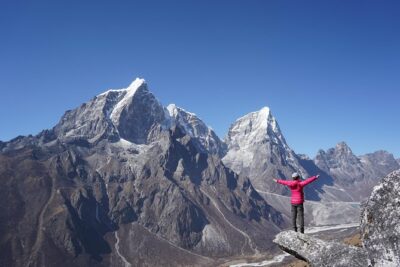
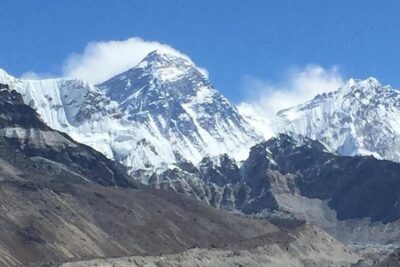
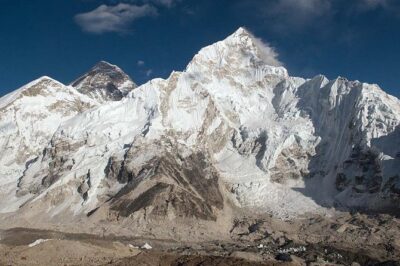
This is the trip’s grand finale. You hike to Kala Patthar, a popular Himalayan viewpoint known for broad views across the Khumbu mountains, including Everest.
The listed stop is about 30 minutes, but the walk to the viewpoint is the key effort of the day. At this altitude, even a short uphill section can feel serious. The reward is a panoramic mountain view and a strong closing moment after the base camp walk.
After Kala Patthar, you return to Kathmandu by shared helicopter. The supplied itinerary describes the flight from Kala Patthar, while the included transport notes refer to a helicopter from Gorakshep. Ask the operator to confirm the exact launch point, flight routing, luggage rules, and what happens if weather prevents the flight.
The helicopter is a genuine time saver, but it is not a guarantee. Mountain weather can stop both the Lukla flight and the return helicopter. If poor weather cancels the flight, the stated options are a different date or a full refund. Since the trek reaches a remote, high-altitude area, keep some flexibility in your wider Nepal plans if possible.
Day 10: Airport transfer from Kathmandu
After breakfast, a private vehicle takes you to the international airport for your flight home or onward journey. The official trip ends here.
The schedule is practical, but avoid booking a tight same-day connection unless you are comfortable with the risks of mountain weather and flight changes. The tour includes the airport transfer, not your international airfare.
Lodges, meals, porters, and daily support
Accommodation during the trek is in guesthouses or lodges, often called tea houses. This gives you a practical way to sleep in villages along the route without carrying camping equipment, but it is not a hotel-style journey.
Breakfast, lunch, and dinner are included during the trek. Drinks are not, and high-altitude lodges can make hot water, showers, internet, and charging additional purchases. Carry enough spending money for these small costs, plus tips for your guide and porters.
An English-speaking trekking guide leads the group, and necessary porters support the load. The service received strong praise for communication and personal care, with guides including Dipak, Ram, and Ramesh Sapkota singled out for help with safety, health, local knowledge, and day-to-day support. Names may vary by departure, so ask who will lead your group.
The group maximum is 15. That is small enough for the guide to keep track of the party, while still large enough that you will not have a private trek. Group sharing also applies to the helicopter, so expect the flight arrangement to depend on available seats and conditions.
Fitness, altitude, and who should book
The operator lists a moderate physical fitness requirement. In plain terms, you need to be ready for repeated full days of uphill and downhill walking, suspension bridges, uneven mountain trails, and high altitude. The schedule includes acclimatization in Namche and Dingboche, but it remains a fast 10-day ascent.
I would choose this trip if you want the classic Everest Base Camp route but have limited time and strongly prefer not to walk back to Lukla. It also suits you if you value a guide, porter support, included meals, and prearranged transport more than independent planning.
I would think twice if you want a leisurely schedule, private helicopter travel, or plenty of spare days for weather delays. The route is not presented as accessible for people with low fitness, and no accessibility details are supplied. Ask direct questions about altitude support, emergency arrangements, luggage limits, and the plan if you cannot continue.
Cancellation and practical booking details
You can cancel up to 24 hours before the experience begins for a full refund. Changes made within 24 hours are not accepted, and cancellations inside that period are not refunded.
The activity may be canceled because of poor weather or because the minimum number of participants is not reached. In either case, the stated options are a different date or experience, or a full refund. Confirmation is provided at booking, and pickup is offered.
Should you book this Everest trek?
Book it if the helicopter return is central to your plan. You get the major Everest Base Camp route highlights, two acclimatization days, a supported tea house trek, and a quick return to Kathmandu, all in a tightly organized 10-day package.
Skip it if you need a slower ascent or cannot handle a demanding high-altitude itinerary. Before paying, confirm the helicopter departure point, what happens after a weather delay, your guide’s name, equipment sizes, and expected extra costs for drinks, showers, charging, meals in Kathmandu, and tips. For a fit hiker who wants the Everest experience without the long walk back, this is a practical, high-value shortcut.
FAQ
How long is the Everest Base Camp trek with helicopter return?
The trip lasts approximately 10 days, including arrival and departure days in Kathmandu.
What time does the tour start?
The listed start time is 6:15 a.m.
Is airport pickup included?
Yes. Airport pickup and drop-off by private vehicle are included according to the itinerary.
Is the flight from Kathmandu to Lukla included?
Yes. The Kathmandu to Lukla flight fare is included.
Is the helicopter flight back to Kathmandu included?
Yes. The helicopter fare is included on a group-sharing basis. The itinerary describes the return after Kala Patthar, while the included transport details refer to departure from Gorakshep, so confirm the exact launch point before booking.
Are meals included during the trek?
Breakfast, lunch, and dinner are included during the trekking days. Lunch and dinner in Kathmandu are not included.
What equipment is supplied?
The package includes a duffle bag, down jacket, sleeping bag, walking pole, and trekking map.
What happens if bad weather cancels the trip?
If poor weather causes cancellation, you are offered a different date or a full refund. The same options apply if the minimum number of participants is not reached.
More Helicopter Tours in Kathmandu
- Everest Base Camp Helicopter Tour landing at Everest View Hotel
★ 5.0 · 668 reviews - Everest Base Camp Helicopter Tour landing at Hotel Everest View
★ 5.0 · 218 reviews - Everest Base Camp Trek with Helicopter Return from Gorakshep to Lukla
★ 5.0 · 161 reviews - Everest Base Camp helicopter tour with landing
★ 5.0 · 61 reviews
Just added around Kathmandu
- Private Half-Day Tour of Boudhanath and Pashupatinath Temples in Kathmandu★ 4.5 · 9 reviews
- Private Half-Day Tour of Kathmandu Durbar Square and Swayambhunath Temple★ 4.5 · 11 reviews
- Namobuddha Monastery Hiking Day Tour via Panauti from Kathmandu★ 5.0 · 15 reviews
- Private Full-Day Kathmandu City Tour★ 5.0 · 9 reviews
- Private Day Tour in Kathmandu Valley Rim with Bhaktapur Sightseeing★ 5.0 · 3 reviews
- Private Half Day Budhanilkantha Tour★ 5.0 · 6 reviews
- Private Day Tour: Patan and Bhaktapur from Kathmandu★ 4.5 · 6 reviews
- Private Day Tour – Sacred Journey to Namo Buddha★ 5.0 · 5 reviews
Everest Base Camp Treks, compared.
Everest Base Camp Trek with Helicopter Return from Gorakshep to Lukla
Read our review →Browse the lists this tour appears in