
Reviewed · EVEREST BASE CAMP TREKS
Everest Base Camp Trek 15 days | Local Guide | Flexible Itinerary
Everest Base Camp is the headline, but the best part of this 15-day trek is the steady approach through Sherpa country. You walk from Lukla to Namche Bazaar, Tengboche, Dingboche, and finally the foot of the Khumbu Glacier, with Kala Patthar at 5,545 meters providing the grand mountain view.
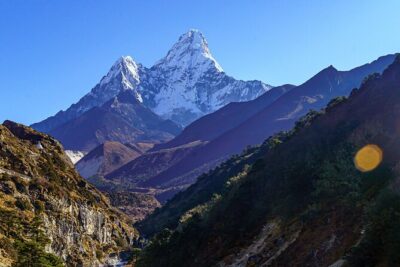
I like two things here. First, the itinerary gives you two acclimatization days, one in Namche and one in Dingboche. Second, the return route passes through Phortse, a quieter trail with fine views of Ama Dablam and Tengboche Monastery. The main caution is simple: this is a hard, high-altitude trek, and weather can disrupt the Lukla flights.
Key points to know
- Everest Base Camp at 5,364 meters: Reach the famous camp at the foot of the Khumbu Glacier after trekking through the upper Khumbu Valley.
- Kala Patthar at 5,545 meters: Start early for the trip’s highest point and views of Everest, Lhotse, Nuptse, and other Himalayan peaks.
- Two acclimatization days: Spend extra time in Namche Bazaar and Dingboche, with short side walks rather than complete rest.
- Private group with local support: An English-speaking, licensed guide leads your group, with one porter for every two people.
- Useful inclusions: Domestic flights, permits, meals, sleeping bag, down jacket, hiking poles, and a trekking map are covered.
- A less crowded return: The route through Pangboche, Phortse, and Mong Danda adds variety after Base Camp.
What the 15-day Everest trek is really like
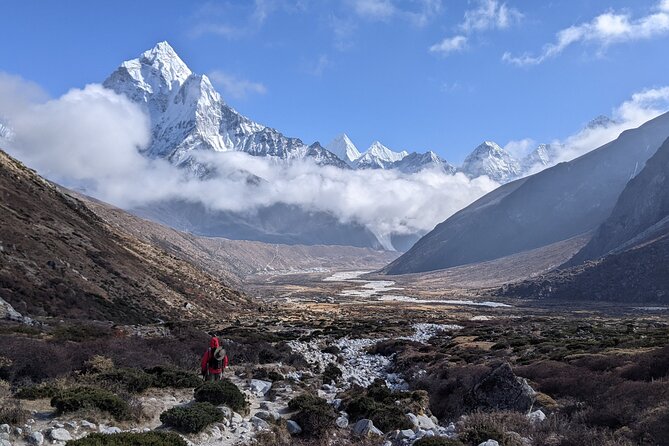
This is a classic Everest Base Camp route with a practical return variation. You fly from Kathmandu, or from Ramechhap when flight operations require it, then walk for roughly ten days through the Khumbu region before returning to Lukla.
The trek is not a sightseeing tour with easy transport between stops. You walk uphill and downhill for several hours most days, sleep in tea houses, and spend time above 3,000 meters. The reward comes in stages: Sherpa villages, suspension bridges, monasteries, glacial valleys, and increasingly close views of the world’s highest peaks.
The advertised price is $1,890 per person. That is a substantial sum, but it covers several costly pieces of a Nepal trek: domestic flights, national park and local permits, a licensed guide, porter support, meals on the trail, tea-house accommodation, and warm gear for use during the trek. You still need to budget for insurance, tips, snacks, drinks, hot showers, charging, and Kathmandu meals.
The tour is private, so your group is not combined with strangers. That matters on a trek because walking pace, rest stops, and decisions about the day are easier to manage. The itinerary is also described as flexible, though flexibility is limited by weather, accommodation availability, flight schedules, and altitude conditions.
More Everest Base Camp Treks in Kathmandu:
- Everest Base Camp Trek – 14 Days
★ 5.0 · 1,499 reviews - Everest Base Camp Trekking
★ 5.0 · 485 reviews - Everest Base Camp Trekking – 13 Day
★ 5.0 · 365 reviews
Day 1: Kathmandu arrival and airport pickup
Your trip begins at Tribhuvan International Airport in Kathmandu. A representative from Life Himalaya Trekking meets you and transfers you to your hotel.
This is a simple first day, but it has practical value. You arrive in Nepal, meet the local team, and have a chance to deal with last-minute questions before heading into the mountains. The airport pickup is included, and the activity operates daily throughout the stated season.
Do not expect the trek itself to begin on arrival day. This is an arrival and transfer day, with the mountain portion starting the next morning.
Day 2: Flying to Lukla and walking toward the Khumbu
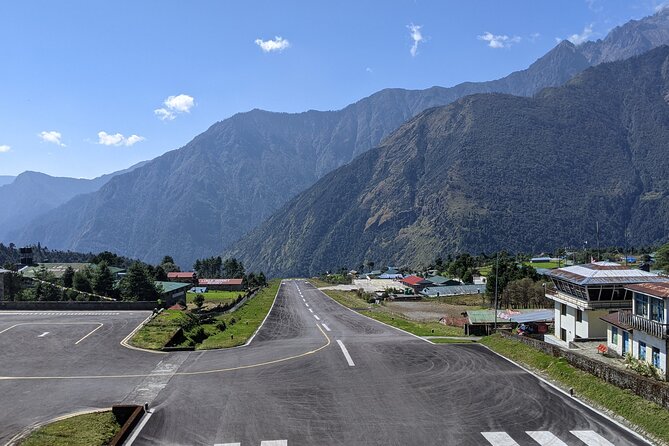
The early flight to Tenzing Hillary Airport in Lukla takes about an hour. Lukla sits at 2,810 meters and serves as the main gateway to the Everest region.
The flight is a memorable part of the trip, but it is also the first point where weather may affect your plans. Poor conditions can lead to delays or cancellation. The company says that weather-related cancellations may be moved to another date or refunded, but you should still carry insurance that covers trekking and emergency costs up to 6,000 meters.
From Lukla, the route begins on foot. Your guide and porters handle the trekking support while you settle into the rhythm of walking, eating, and sleeping at tea houses.
The baggage allowance for the domestic flight is 15 kilograms per person, divided into 10 kilograms of checked luggage and 5 kilograms of hand luggage. Pack carefully. The porters carry 20 kilograms for two people, so each person should keep the load within the stated 10-kilogram share.
Day 3: Hillary Bridge and the climb to Namche Bazaar
The walk to Namche Bazaar takes about five hours and includes the famous Hillary Bridge. The suspension bridge is one of the early visual reminders that this is a mountain trek, not a road trip.
Namche Bazaar is the main Sherpa center in the region and sits at 3,440 meters. The approach includes an uphill finish, so this day can feel harder than the distance suggests. Your guide is meant to set a sensible pace and help you avoid rushing into altitude trouble.
Namche is an important stop because it is the first major elevation gain of the trek. It also has a wider range of services than the smaller villages farther up, though this is still a remote mountain town. Take the evening slowly, drink regularly, and do not treat an early headache as something to ignore.
A few more Kathmandu trips to weigh up
- Nagarkot Sunrise View and Day Hiking from Kathmandu
★ 5.0 · 471 reviews - Annapurna Circuit Trek with Tilicho Lake
★ 5.0 · 368 reviews - Everest Base Camp Trek -14 Days
★ 5.0 · 321 reviews - Annapurna base camp trek 5 Days
★ 5.0 · 252 reviews
Day 4: Acclimatization above Namche
The itinerary keeps you in Namche for another night. This is one of its strongest features.
Acclimatization does not mean lying in bed all day. The plan includes a side excursion to the Hotel Everest View area, with about an hour set aside at the listed stop. You gain height during the day, see more of the surrounding peaks, then return to sleep at the lower elevation of Namche.
The Hotel Everest View stop is not included as an admission ticket, so be prepared for any local charge. The larger point is the gradual adjustment. A short, active day here gives your body a better chance to cope with the higher villages ahead.
Day 5: Tengboche Monastery and Ama Dablam views
After breakfast, you walk toward Tengboche, usually for around five hours. The route rises from Namche and leads to one of the most memorable stops in the region, Tengboche Gompa.
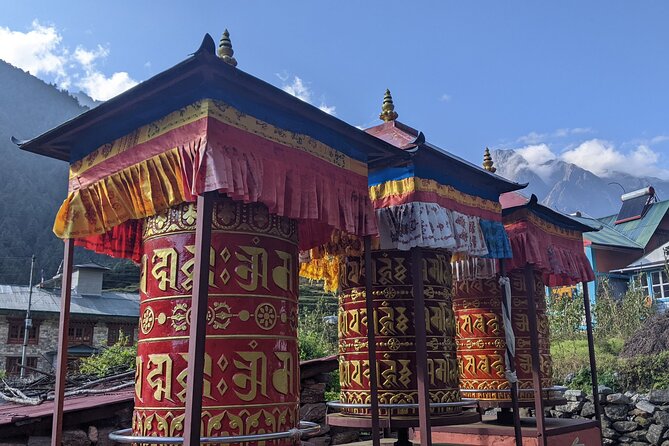
Tengboche Monastery brings culture into what could otherwise become a peak-counting exercise. You pass through Sherpa communities, see a working religious center, and gain a better sense of how local life is tied to the mountains.
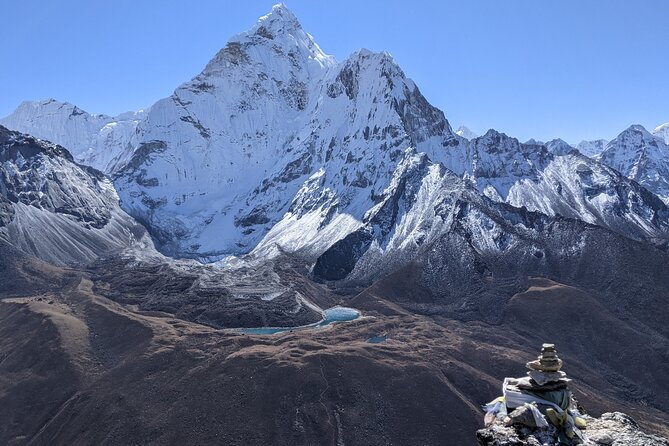
The trail includes an uphill approach, and the altitude begins to make each climb more noticeable. The views around Tengboche are a major payoff, especially toward Ama Dablam. Keep your camera ready, but do not let it slow you down on steep sections.
Day 6: The Imja Khola route to Dingboche
The walk to Dingboche takes about four to five hours. You follow the Imja Khola and cross a bridge before reaching Orsho, where the route divides toward Pheriche and Dingboche.
The trail now feels more open and more remote. Trees become less dominant as you gain altitude, and the mountains take up more of your view. Dingboche sits high, so the effort is not only about distance. The thin air makes ordinary walking feel surprisingly demanding.
This is a good day to follow your guide’s pace rather than trying to prove your fitness. You have another acclimatization day coming, which is one reason this itinerary is more sensible than a rushed schedule.
Day 7: Dingboche acclimatization and side walks
Dingboche provides the second planned acclimatization day. As in Namche, the goal is to remain active without overdoing it.
Side excursions give you a chance to climb a little higher during the day and return to Dingboche to sleep. The village is an important rest point before the trail moves toward Lobuche, Gorak Shep, and Base Camp.
At this height, cold nights, basic facilities, and slower walking are part of the deal. Hot showers and battery charging are not included. You should expect to pay extra for both when available, and hot water or electricity may be limited.
Day 8: Toward Lobuche and the Thukla memorials
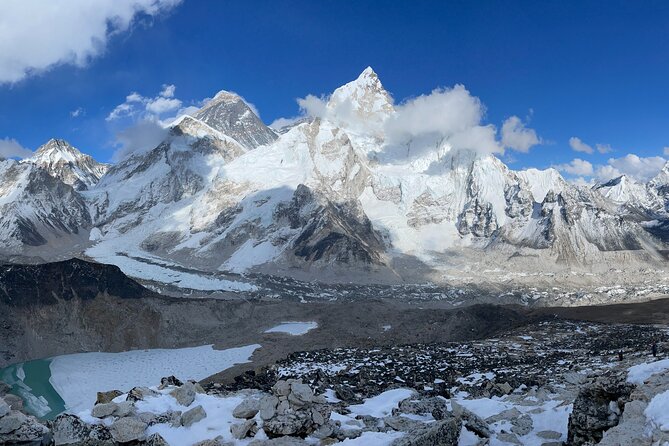
After Dingboche, the trail leads toward Thukla and then onward toward Lobuche. The day brings broad Himalayan views and a steady increase in altitude.
Thukla is a meaningful pause on the route because of its memorial area for climbers and mountaineers who died on Everest and other Himalayan peaks. It is a quiet place to stop and consider the risks behind the famous summit stories.
The walking is not described with a fixed duration for every section, but the day is clearly part of the high-altitude approach. You are now close enough to the major peaks that the scale can feel unreal, while the cold and thin air keep the experience firmly physical.
Day 9: Everest Base Camp at 5,364 meters
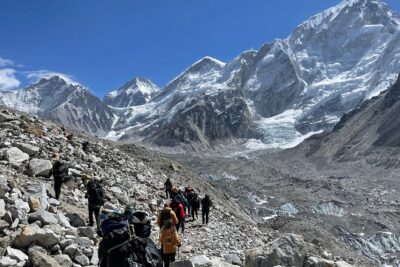
This is the main goal. You walk from the upper Khumbu area toward Everest Base Camp, passing through the stark glacial terrain around Gorak Shep and the Khumbu Glacier.
Base Camp sits at 5,364 meters. The site looks different depending on the season and climbing activity, but the emotional value is the same: you have reached the point from which many Everest expeditions begin. You do not summit Everest from here, and the mountain itself is not always fully visible from Base Camp. That is why Kala Patthar the next morning matters so much.
The listed stop lasts about an hour, admission is included, and the walk back makes this a demanding day. Your guide’s role is important here. Watch for worsening headache, nausea, unusual tiredness, or poor coordination, and report symptoms early.
Day 10: Kala Patthar at sunrise
You start early for Kala Patthar, the highest point of the trip at 5,545 meters. The climb is short in distance compared with the full trek, but the altitude makes it hard.
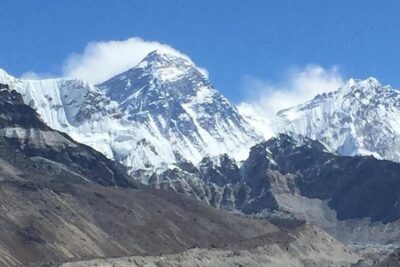
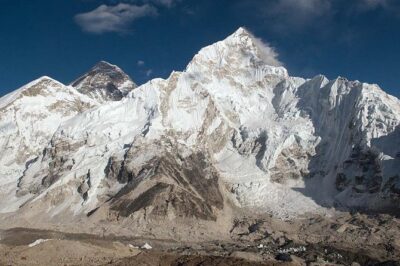
From the top, you look toward Everest, Lhotse, Nuptse, and the surrounding Himalayan peaks. This is generally the best viewpoint for seeing Everest clearly on the route. The listed stop is about 20 minutes and has no admission charge, but you may spend longer depending on weather, pace, and how your group feels.
The early start means cold conditions and a pre-breakfast climb. Bring the down jacket supplied for the trek, use the hiking poles, and keep your hands warm. After Kala Patthar, you descend and continue toward Pangboche.
Day 11: Pangboche to Phortse on a quieter trail
After reaching Pangboche, the return route takes a less crowded trail toward Phortse. This change is a welcome touch after the busy feeling of Base Camp trekking.
You continue to see Ama Dablam, Thamserku, and Tengboche Monastery from different angles. The route gives you a new view of the Khumbu rather than simply repeating every step from the way up.
Phortse is also a useful reminder that the Everest region is more than a corridor to Base Camp. Sherpa villages, grazing areas, bridges, and monastery views make the return just as worthwhile as the approach.
Day 12: Phortse Thanga and Mong Danda
The route drops toward the river flowing from the Gokyo area, then connects with the trail near Phortse Thanga at about 3,680 meters before climbing to Mong Danda.
This is one of the more unusual parts of the itinerary. It uses a less crowded section connected with the Gokyo route, but it does not include the Gokyo Lakes, Gokyo Ri, Cho La, or Renjo La. If you want those places, you need a different itinerary or an agreed extension.
The day includes both descent and ascent. After the physical peak of Base Camp and Kala Patthar, your legs may appreciate the lower elevation, but do not assume the day will feel easy.
Day 13: Returning to Lukla
You retrace the lower section of the route through Toktok, Phakding, Ghat, and Cheplung at about 2,650 meters, followed by the final climb into Lukla.
This is the end of your walking portion. The evening in Lukla gives you a chance to rest, sort your luggage, and enjoy a final night in the Everest region.
The return may feel easier because you are descending, but downhill walking can be tough on knees and ankles. Trekking poles are included for this reason as much as for the uphill sections.
Day 14: Flight back to Kathmandu
You take the earliest possible flight from Lukla to Kathmandu, or to Ramechhap when operations require it. The flight takes about an hour, and the rest of the day is free after hotel check-in.
This buffer day is useful. Mountain flights do not run on your preferred schedule when weather intervenes, and having the final day in the itinerary gives the trip some protection against delays. It is not a guarantee, so your international flight should not be booked too tightly after the trek.
Lunch and dinner in Kathmandu are not included. Use the free afternoon to rest or enjoy a farewell meal, which is separate from the included farewell dinner.
Day 15: Airport transfer and departure
A Life Himalaya representative transfers you to Tribhuvan International Airport according to your flight schedule.
The trek package includes a farewell dinner and an achievement certificate. Tips for guides, porters, and drivers are not included, so bring enough local currency or confirm a practical way to tip before departure.
What the $1,890 price covers
The package has strong practical value for a guided Everest trek. Included items are:
- Flights between Kathmandu or Ramechhap and Lukla
- Private transportation
- Sagarmatha National Park, local rural area, and TIMS permits
- An English-speaking, experienced, licensed guide
- An assistant guide for groups of five or more
- One porter for every two people
- Tea-house accommodation
- Breakfast on 14 days, lunch on 12 days, and dinner on 13 days
- Sleeping bag, down jacket, and hiking poles for use during the trek
- Trekking map and achievement certificate
- Farewell dinner
- All listed fees and taxes
The porter arrangement is especially useful. One porter carries 20 kilograms for two people, allowing you to walk with a lighter daypack. You should still pack with restraint because the domestic flight allowance is limited.
The main extra costs are international transport, visa fees, insurance, Kathmandu lunches and dinners, personal snacks and drinks, extra nights, hot showers, and battery charging. Insurance is listed at about $200 per person and must cover trekking up to 6,000 meters. That is not an optional luxury at this altitude.
Food, lodging, gear, and comfort
You stay in tea houses, with clean and comfortable lodge accommodation promised along the route. Standards become more basic as you go higher, and rooms or services may be limited by the remote setting.
Meals come from the lodge menu, with hygiene emphasized. You should expect simple trail food rather than restaurant variety. Personal snacks and beverages are not included, so bring funds for those purchases.
The sleeping bag and down jacket are supplied and must be returned after the trek. Hiking poles are also included. These items reduce the amount of specialist equipment you need to buy, but you still need suitable trekking clothes, footwear, personal medication, and a daypack.
Hot showers and charging cost extra. At high altitude, both may be unavailable at times. Carry a power bank, though the tour does not state that one is provided.
Safety, guides, and the private format
The company places strong emphasis on safety, comfort, and avoiding altitude sickness. The guide is English-speaking, experienced, and licensed. That matters most on the acclimatization days and at the highest sections, where decisions about pace and symptoms are more important than speed.
Several guide and porter names connected with Life Himalaya’s trekking teams include Raj, Suren, Sonam, Ram, Phurpa, Rabin, Prakash, Sagar, Jal, Ganesh, Vijay, and Teeras. Your assigned team may be different, so confirm the names before departure. The useful point is that the company uses local staff rather than an impersonal remote arrangement.
The private format suits people who want direct support and a group schedule built around their own pace. It also means you should be honest about your fitness before booking. The tour requires a strong physical fitness level, and the altitude cannot be negotiated away with enthusiasm.
Who should book this trek?
I would choose this trip if you want the classic Everest Base Camp route but prefer a private group, local guide, porter support, and two clear acclimatization days.
It suits hikers who can manage repeated days of uphill and downhill walking and who accept basic tea-house conditions. It is also a good match if you want Kala Patthar and a quieter return through Phortse rather than simply retracing the exact route.
I would hesitate if you want a soft adventure, private hotel rooms throughout, guaranteed flights, or included hot showers and charging. I would also reconsider if your schedule has no spare time for weather delays around Lukla.
Cancellation is free up to 24 hours before the start time for a full refund. Changes made within 24 hours are not accepted, and bad-weather cancellations may be moved to another date or refunded.
Should you book it?
Book this Everest Base Camp trek if you value local support, sensible altitude planning, and a private group more than luxury. The strongest parts are the two acclimatization days, the included mountain logistics, the Kala Patthar climb, and the less crowded Phortse return.
Before paying, confirm the exact guide, hotel names in Kathmandu, tea-house standards, flight departure airport, and what happens if weather disrupts Lukla flights. If you are fit, properly insured, and comfortable with basic mountain lodging, the $1,890 package covers many of the expensive essentials and gives you a well-paced route to Base Camp.
FAQ
How long is the Everest Base Camp trek?
The experience lasts approximately 15 days, including arrival and departure days, flights between Kathmandu and Lukla, trekking days, acclimatization stops, and the return to Kathmandu.
What is the highest point on the itinerary?
Kala Patthar is the highest point, at 5,545 meters. Everest Base Camp is at 5,364 meters.
Are flights between Kathmandu and Lukla included?
Yes. Flights from Kathmandu or Ramechhap to Lukla and from Lukla back to Kathmandu or Ramechhap are included for the group and staff.
What luggage allowance applies to the domestic flights?
The stated allowance is 10 kilograms of larger luggage and 5 kilograms of hand luggage per person, for 15 kilograms total.
Are meals included during the trek?
Breakfast is included for 14 days, lunch for 12 days, and dinner for 13 days. Lunch and dinner in Kathmandu, snacks, and personal beverages are not included.
Is trekking equipment provided?
Hiking poles, sleeping bags, and a down jacket are provided for use during the trek and must be returned afterward.
What happens if bad weather cancels a flight or the experience?
The experience requires good weather. If it is canceled because of poor weather, you may be offered another date or a full refund. You can also cancel up to 24 hours before the start time for a full refund.
Just added around Kathmandu
- Private Half-Day Tour of Boudhanath and Pashupatinath Temples in Kathmandu★ 4.5 · 9 reviews
- Private Half-Day Tour of Kathmandu Durbar Square and Swayambhunath Temple★ 4.5 · 11 reviews
- Namobuddha Monastery Hiking Day Tour via Panauti from Kathmandu★ 5.0 · 15 reviews
- Private Full-Day Kathmandu City Tour★ 5.0 · 9 reviews
- Private Day Tour in Kathmandu Valley Rim with Bhaktapur Sightseeing★ 5.0 · 3 reviews
- Private Half Day Budhanilkantha Tour★ 5.0 · 6 reviews
- Private Day Tour: Patan and Bhaktapur from Kathmandu★ 4.5 · 6 reviews
- Private Day Tour – Sacred Journey to Namo Buddha★ 5.0 · 5 reviews
Everest Base Camp Treks, compared.
Everest Base Camp Trek with Helicopter Return from Gorakshep to Lukla
Read our review →Browse the lists this tour appears in