
Reviewed · EVEREST BASE CAMP TREKS
Everest Base Camp Trek
The best part of this trek is the gradual walk from Lukla to Everest Base Camp, through Sherpa villages, Buddhist monasteries, high mountain passes, and some of Nepal’s finest views. You finish at roughly 5,364 meters, or 17,598 feet, so this is a serious high-altitude trip, not simply a long scenic walk.
I like that round-trip flights between Kathmandu and Lukla are included, along with tea-house lodging, a Kathmandu hotel, a licensed guide, airport pickup, and basic first-aid support. I also like the private format, with no more than eight people in one booking. The main drawback is the altitude and the uncertain Lukla flight schedule. You should plan one or two spare days, and you need insurance that covers emergency medical care and repatriation.
Key points before you book
- Lukla flights are included: Airfare from Kathmandu to Lukla and back includes airport tax, but delays and cancellations can affect your schedule.
- The route reaches 5,364 meters: Strong fitness is needed, and you should speak with your doctor before departure.
- You sleep in tea houses for 11 nights: This keeps the price down and puts you close to village life, but comfort is basic.
- The private group is capped at eight: You get a guide assigned to your own group rather than joining a large public departure.
- The package price is not the final budget: Food, drinks, and gratuities add about $500 per person if you follow the stated estimates.
- Guides are central to the experience: The company provides a licensed trekking guide, and the named staff connected with this departure include Bishnu and guide Basu.
What the $999 price really covers
At $999 per person, this trek offers a useful bundle for a route that requires several moving parts. You receive the Kathmandu to Lukla and return flights, airport tax, two nights in a three-star Kathmandu hotel with breakfast, 11 nights in tea houses, a government-licensed guide, airport transfers, government taxes, a first-aid kit, and a company T-shirt.
There is a small inconsistency in the supplied details: one section says three Kathmandu hotel nights, while the included services specify two nights, on days one and 13. I would ask the operator to confirm the exact hotel nights before paying, since this affects both your comfort and your budget.
Food and drinks are not generally included. The stated estimate is $350 per person, and gratuities are listed at $150 per person. That brings the practical total to about $1,499 before insurance, gear, personal purchases, and any costs caused by flight delays.
I see good value here if you want a guided trek and do not want to arrange flights, lodging, permits, and transfers one by one. The price is less attractive if you already have your own guide, gear, and Kathmandu hotel arrangements. The private format also means you are paying for a more controlled group experience rather than the lowest possible shared departure.
More Everest Base Camp Treks in Kathmandu:
- Everest Base Camp Trek – 14 Days
★ 5.0 · 1,499 reviews - Everest Base Camp Trekking
★ 5.0 · 485 reviews - Everest Base Camp Trekking – 13 Day
★ 5.0 · 365 reviews
Days 1 and 2: Kathmandu, Thamel, and the flight to Lukla
Your trip begins with pickup at Tribhuvan International Airport in Kathmandu. A private car and a guide from Himalayan Recreation are provided for arrival and departure assistance, so you do not need to work out your first transfer after a long international flight.
The first day includes time in Kathmandu and Thamel. Thamel is the city’s main visitor district, packed with trekking shops, restaurants, hotels, and places to rent or buy equipment. This is where you can check your clothing, sleeping bag, and pack before heading into the mountains. The guide can help arrange trekking gear in Kathmandu if you need it.
The second day combines several Kathmandu sights with the move toward Lukla. Swayambhunath, often called the Monkey Temple, and Boudhanath Stupa provide a quick introduction to Nepal’s Buddhist and Hindu traditions. The Garden of Dreams is also listed during the city portion of the day.
The flight to Lukla takes about an hour. Lukla is the trailhead for this route, and the short flight saves you a long road journey. It also creates one of the trek’s biggest scheduling risks. Weather can interrupt flights, so keep one or two extra days available at the end of your Nepal trip.
The itinerary places Phakding on this day, with a long listed duration. That makes day two a demanding transition from city sightseeing to mountain walking. Your actual pace will depend on flight timing, weather, and the group’s condition.
Days 3 and 4: Phakding to Namche Bazaar
From Phakding, the route follows the Dudh Koshi River toward Namche Bazaar. The river gives the trail a clear sense of direction, while the path moves through remote villages and mountain scenery. The itinerary assigns roughly 12 hours to the journey, so you should expect a full walking day.
Namche Bazaar is one of the most important stops on the route. It is a high mountain town used by trekkers, guides, porters, and local residents as a trading and supply center. The town is more than a place to sleep. It is also where the itinerary allows a full acclimatization day.
That rest day is one of the smartest parts of the schedule. You do not simply sit indoors, though. The planned walk to Everest View Point gives you a chance to gain a little height and return to Namche, helping your body adjust before the route climbs higher.
The wording for day three lists Namche as a 12-hour stop, while day four gives it a full day. Treat the first as the arrival walk and the second as the acclimatization day. This is also a good place to judge how well you are handling the altitude. If you develop serious symptoms, tell your guide early rather than trying to hide them.
Day 5: Tengboche and its mountain monastery
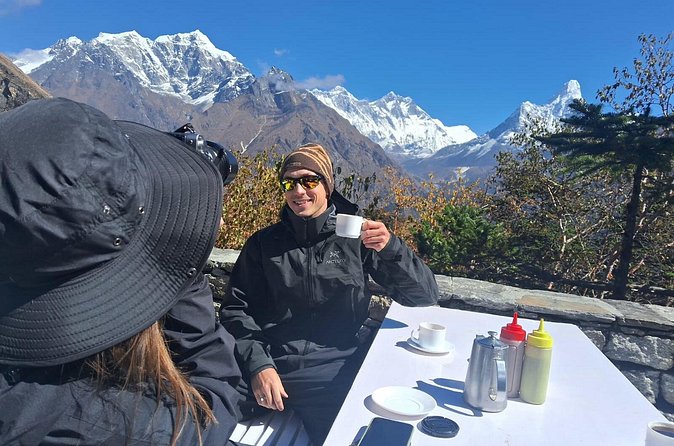
The trail continues to Tengboche, another long walking day. Tengboche is known for its monastery, and the schedule includes a visit to Tengboche Gompa. This gives the route a cultural center, not just a series of mountain lodges.
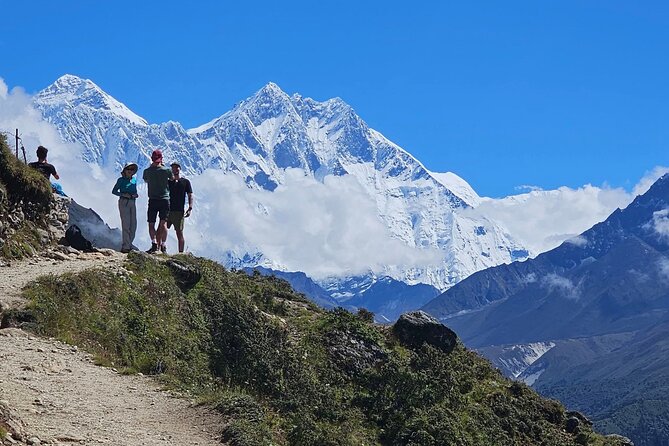
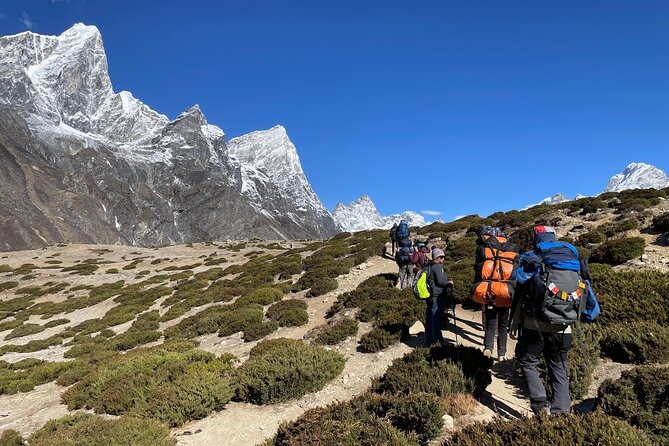
The views here include Ama Dablam and Taboche. Ama Dablam is one of the most recognizable peaks in the Khumbu region, with a sharp profile that often becomes one of the trip’s memorable sights. The exact visibility depends on weather, so do not expect every peak to appear clearly every day.
Tengboche is also a reminder that the trek passes through a living mountain region. Monasteries, villages, and trail communities are part of the journey. A professional guide helps you move through these places respectfully and keeps the focus on a safe route.
A few more Kathmandu trips to weigh up
- Nagarkot Sunrise View and Day Hiking from Kathmandu
★ 5.0 · 471 reviews - Annapurna Circuit Trek with Tilicho Lake
★ 5.0 · 368 reviews - Everest Base Camp Trek -14 Days
★ 5.0 · 321 reviews - Annapurna base camp trek 5 Days
★ 5.0 · 252 reviews
Days 6 and 7: Dingboche, Chukhung, and the thin air
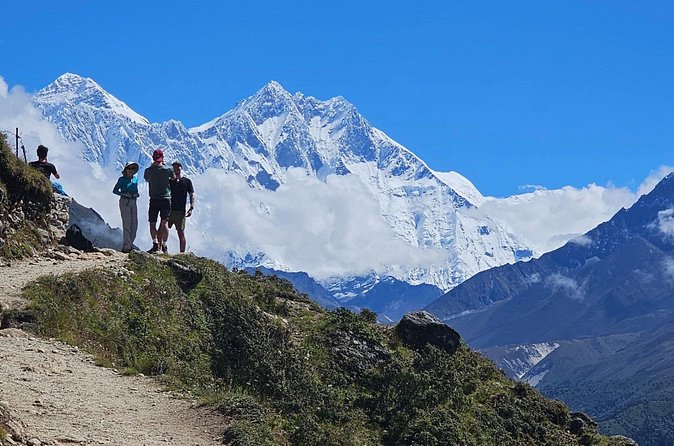
Dingboche is a key high-altitude stop. The itinerary gives you one day to reach it and another day in the area, with Chukhung listed as an additional point of interest. The second day is described as a route toward Island Peak, though this package is not an Island Peak climbing trip.
That distinction matters. You are visiting the area, not signing up for a technical summit attempt. The extra time around Dingboche helps break up the climb toward Base Camp, which is useful because the air becomes thinner and the walking feels harder even when the distance does not look extreme.
The stated fitness requirement is strong. You should be prepared for long days, demanding altitude, and sudden weather changes. Age alone does not predict how you will respond to 5,000-meter conditions, and good low-altitude fitness does not remove the risk of altitude illness.
The guide has basic first-aid training and knows the nearest medical facilities. That is useful support, but it is not a substitute for travel insurance or medical preparation. You are required to show proof of insurance covering medical costs and emergency repatriation on the first day.
Day 8: Lobuche and the Khumbu Glacier
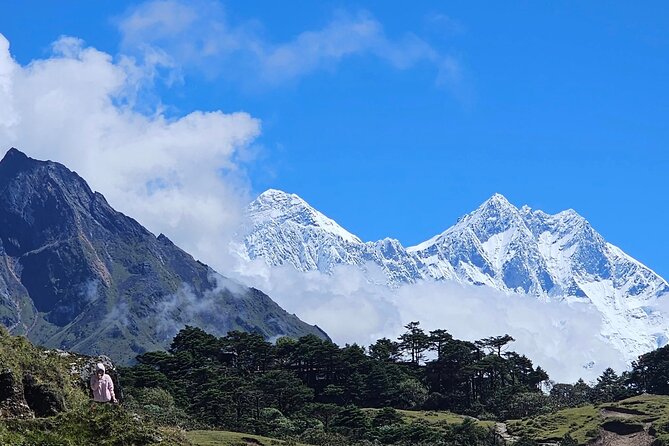
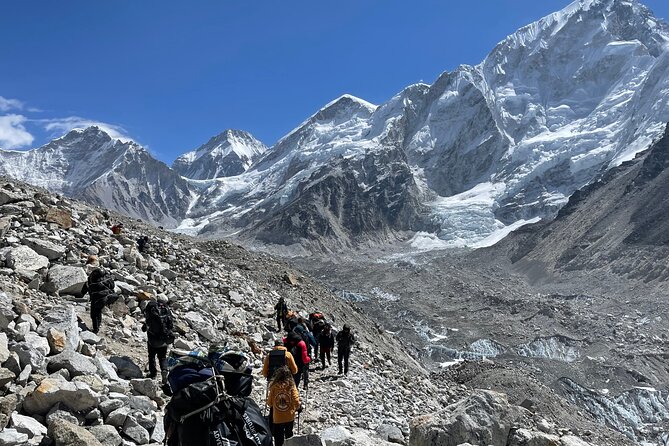
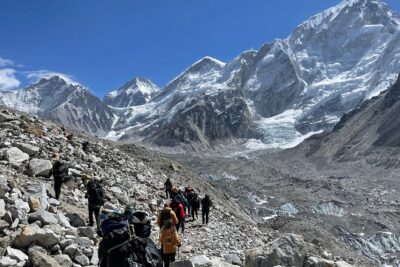
The route continues to Lobuche, with the Khumbu Glacier listed as a stop. This is where the trek feels increasingly remote and severe. The glacier is a major feature of the route, and its ice, rock, and surrounding peaks give the day a stark mountain character.
The itinerary again lists about 12 hours, so do not judge this section by the number of named stops. At this altitude, walking slowly is sensible. Your guide should set a pace that lets the group keep moving without turning every day into a race.
Tea-house accommodation remains part of the package. A tea house is practical mountain lodging, not a standard hotel. You should expect simple rooms and basic facilities, with comfort shaped by the village, weather, and available supplies. The benefit is that you stay close to the route and local communities without paying for a fully private mountain camp.
Day 9: Gorak Shep and Everest Base Camp
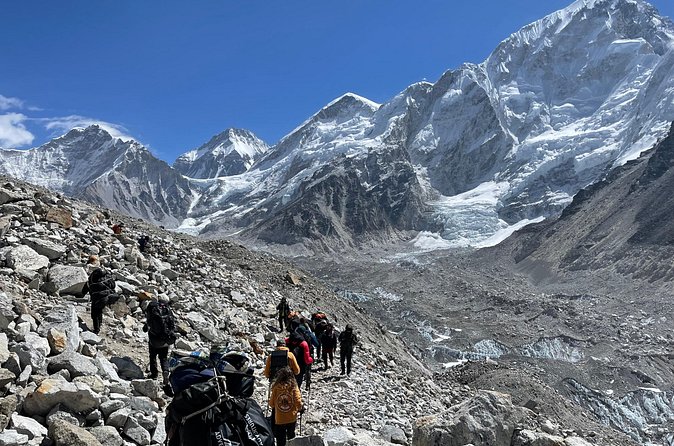
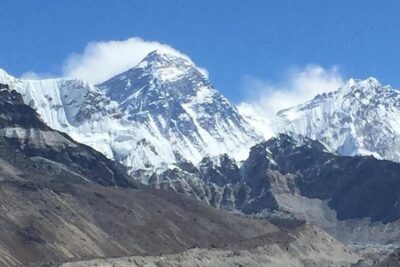
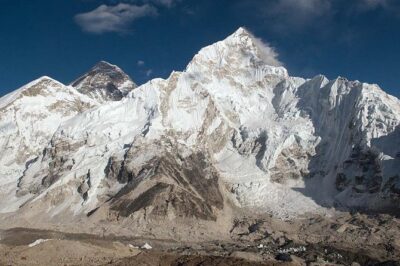
Gorak Shep is the last major lodging point before the Base Camp area. The itinerary gives this day a long duration and also lists Mount Everest and the Khumbu Glacier. The route’s great goal is Everest Base Camp, but the view from Base Camp is not the classic full-face view of Mount Everest that many first-time trekkers expect.
For the broad mountain panorama, Kala Patthar is usually the important viewpoint on this schedule. Base Camp itself is valuable because it is the staging area for Everest expeditions and a physical marker of how far you have walked. The character of the place can change with the climbing season, and weather may limit what you see.
Gorak Shep sits at extreme altitude. Even ordinary tasks can feel slow there. Keep your day simple, follow your guide’s instructions, drink according to medical guidance, and report headaches, nausea, unusual tiredness, confusion, or breathing problems immediately.
The trip description uses the word safely, but no guided trek can remove the risks of altitude, weather, or flight disruption. The guide improves route management and support. Your own preparation and willingness to turn back or change plans remain important.
Day 10: Kala Patthar, Pheriche, and Pangboche
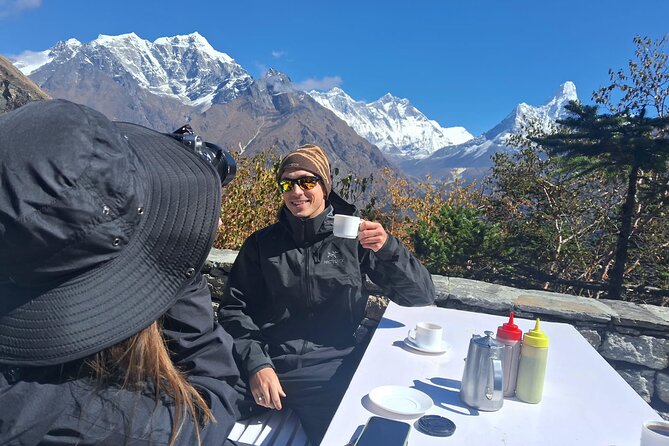
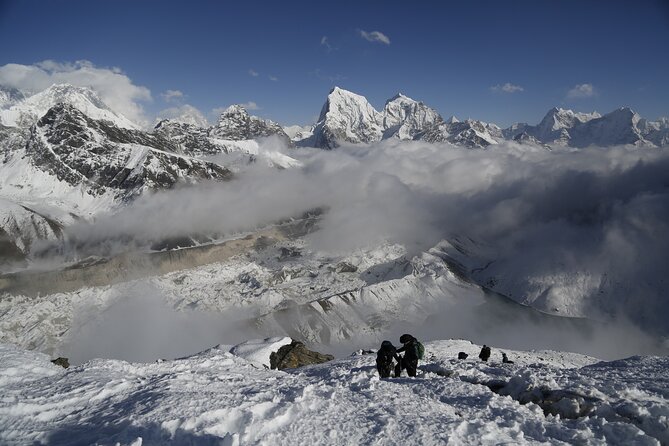
Kala Patthar is the high viewpoint on the return section, listed as a one-hour stop. The short stated visit does not mean the approach is effortless. At this altitude, the climb can be slow, and cold or poor visibility may affect the experience.
The route then drops toward Pheriche and Pangboche. Descending usually feels easier than climbing, but the trail is still long and rough in places. The Pheriche to Dughlha road is included as part of the day, and the schedule again lists long walking periods.
Pangboche brings you back into a lower and more settled section of the route. You are still in the Khumbu, but the return walk gives you a chance to notice villages and mountain views that may have passed in a blur on the way up.
Days 11 to 14: Returning to Kathmandu
Day 11 takes you back to Namche Bazaar. This is a long return walk, but the lower elevation should help your breathing and energy. Namche is a useful place to pause before the final push to Lukla.
Day 12 continues to Lukla, also listed as a 12-hour day. The next morning, the domestic flight returns you to Kathmandu. Again, the flight is weather dependent, so do not schedule an important international connection too tightly after the planned arrival.
Day 14 is listed as the final Kathmandu day. Since the accommodation details mention two Kathmandu nights, confirm how day 14 is handled and exactly when your airport departure transfer takes place. These details are easy to clarify before booking and important for an international itinerary.
Tea houses, meals, and what to pack
The package includes 11 nights in tea houses, but it does not include food and drinks except where specified. Breakfast is included with the Kathmandu hotel nights, and dinner is listed among the inclusions, but the general food estimate still says $350 per person. Ask the operator to clarify which dinners are covered and which meals you should pay for locally.
Pack as lightly as possible. You are expected to carry your own luggage, with a recommended limit of 10 kilograms, or about 22 pounds. Extra luggage can be left at the company office or hotel and collected after the trek.
You can buy or rent required trekking gear in Kathmandu, with help from the guide. That is convenient if you are not bringing a complete high-altitude kit from home. Still, I would not leave every important item until the last minute. Bring essential personal medication, insurance documents, and any gear you already trust.
The required permit documents include a clear color passport copy, two passport-size photos, your occupation, and your home address details. Your passport must have at least six months of validity.
Guides, group size, and the human side of the trek
This is a private activity for your own group, with a maximum of eight people per booking. That size is small enough for a guide to track individual needs, while still giving you company on long walking days.
The operator provides a government-licensed trekking guide with full guide facilities. Basic first-aid training is included, and the guide knows the nearest medical facilities. The named staff connected with the trip include Bishnu and Basu, with Basu receiving especially strong praise for staying attentive and trying to keep the trip running well.
If you need a guide who speaks a language other than English, the stated surcharge is $200 per group. Confirm the language before you book, since this is a group-level fee and not a per-person charge.
Who should book this Everest Base Camp trek?
I would consider this trek a good fit if you want a set route, included domestic flights, tea-house accommodation, and a licensed guide without arranging every part yourself. It also suits people who prefer a private group capped at eight rather than a large departure.
You should think twice if you have limited hiking experience, cannot carry a 10-kilogram pack, or cannot spare extra time for Lukla flight problems. The minimum age is eight, but the age rule does not change the physical demands. A child or older adult still needs strong preparation and medical approval.
The 4.9 rating from 97 reviews and 100 percent recommendation figure point to a well-liked service, especially around guide support and trip organization. I would treat those figures as encouragement, not as a guarantee. High altitude, weather, and basic lodging can shape your experience as much as the operator does.
Cancellation is flexible up to 24 hours before the start time, with a full refund. Inside that 24-hour window, the payment is not refunded and changes are not accepted.
Should you book it?
Book this trek if you want the main Everest Base Camp route handled by one company, with Lukla airfare, a private guide, Kathmandu transfers, and tea houses included. The package gives you a clear structure and useful support, while still leaving room for the remote village experience that makes the Khumbu route special.
Before paying, confirm the two-versus-three-night Kathmandu hotel discrepancy, exactly what dinner includes, and how the company handles Lukla delays. Add the stated $350 food budget and $150 gratuity estimate to the $999 price, buy the required insurance, and reserve spare days. With those points settled, this is a practical guided option for a demanding but memorable Himalayan trek.
FAQ
How long is the Everest Base Camp trek?
The planned duration is approximately 14 days, including time in Kathmandu, the trek between Lukla and Everest Base Camp, the return to Lukla, and the flight back to Kathmandu.
What is included in the tour price?
The package includes airport pickup and drop-off, Kathmandu hotel accommodation, tea-house accommodation during the trek, round-trip Kathmandu to Lukla airfare with airport tax, a licensed trekking guide, government taxes, service charges, a first-aid kit, and a company T-shirt.
Are meals included?
Food and drinks are generally not included, with an estimated additional cost of $350 per person. Breakfast is included with the specified Kathmandu hotel nights, and dinner is listed as an inclusion, so you should confirm the exact meal coverage with the operator.
How high does the trek go?
The trek reaches approximately 5,364 meters, or 17,598 feet, above sea level. The operator advises strong physical fitness and recommends discussing the trip with your doctor before departure.
Do I need travel insurance?
Yes. You must have insurance that covers medical expenses and emergency repatriation, and proof of insurance must be shown to the tour leader on the first day.
What happens if my Lukla flight is delayed or canceled?
Lukla flights can be delayed or canceled. You are advised to keep one or two extra days available, and you should confirm the operator’s current arrangements before departure.
How much luggage should I bring?
You are expected to carry your own luggage, and keeping it under 10 kilograms, or 22 pounds, is recommended. Extra luggage can be left at the company office or hotel and collected after the trek.
What documents are needed for trekking permits?
You need a clear color copy of your passport, a passport with at least six months of validity, two passport-size photos, your occupation, and your home address details.
Just added around Kathmandu
- Private Half-Day Tour of Boudhanath and Pashupatinath Temples in Kathmandu★ 4.5 · 9 reviews
- Private Half-Day Tour of Kathmandu Durbar Square and Swayambhunath Temple★ 4.5 · 11 reviews
- Namobuddha Monastery Hiking Day Tour via Panauti from Kathmandu★ 5.0 · 15 reviews
- Private Full-Day Kathmandu City Tour★ 5.0 · 9 reviews
- Private Day Tour in Kathmandu Valley Rim with Bhaktapur Sightseeing★ 5.0 · 3 reviews
- Private Half Day Budhanilkantha Tour★ 5.0 · 6 reviews
- Private Day Tour: Patan and Bhaktapur from Kathmandu★ 4.5 · 6 reviews
- Private Day Tour – Sacred Journey to Namo Buddha★ 5.0 · 5 reviews
Everest Base Camp Treks, compared.
Everest Base Camp Trek with Helicopter Return from Gorakshep to Lukla
Read our review →Browse the lists this tour appears in