
Reviewed · ANNAPURNA BASE CAMP TREKS
Pokhara: 7-Day Annapurna Base Camp Trek via Ghandruk
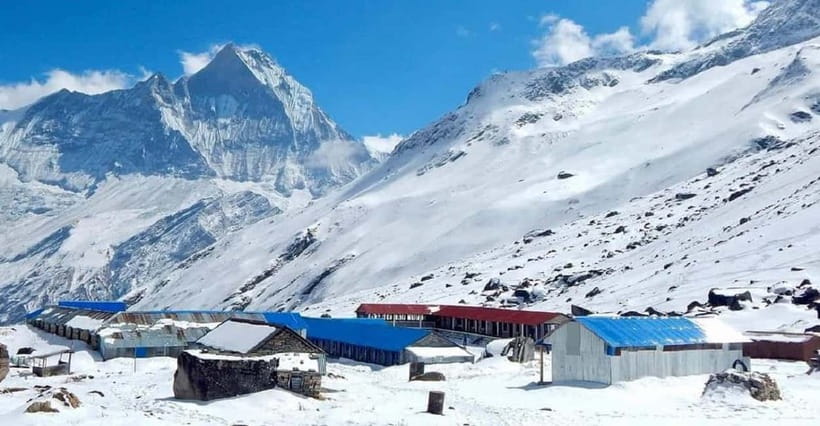
Annapurna Base Camp is the prize here: you reach a high mountain amphitheater at 4,130 meters, then watch sunrise light up Annapurna I, Machapuchare, and Hiunchuli. The route packs Himalayan views and Gurung villages into seven days, with a particularly fine exit through Ghandruk.
I like the mix of terrain, from terraced hillsides and rhododendron woods to stark alpine country above Deurali. I also like that this is a private trek with pickup included, so you are not tied to a large group or left to sort out transport in Pokhara.
The main caution is the tight schedule and unclear porter arrangement. Seven days is efficient, but the walking is demanding, and a porter may cost an additional $20 per day despite some package wording suggesting porter support is included. Confirm exactly what your $179 covers before paying.
Key points to know before you book
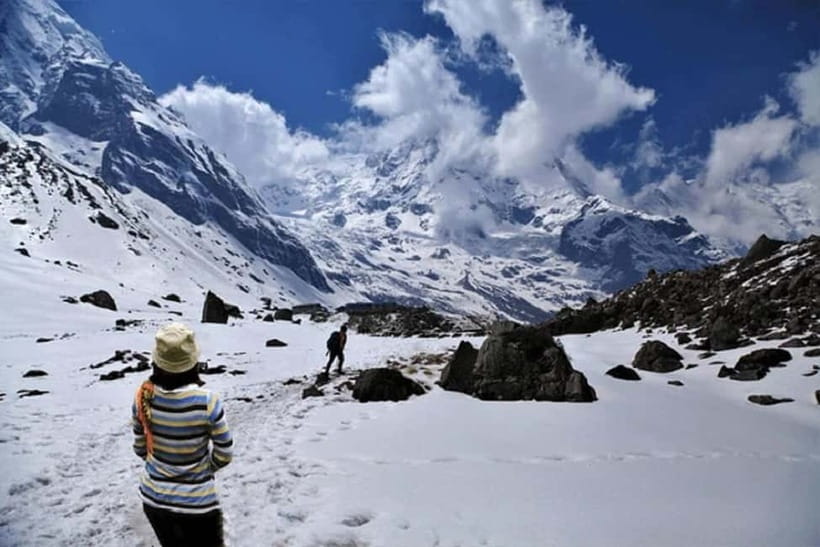
- Sunrise at 4,130 meters: You sleep at Annapurna Base Camp and begin the next day with a sunrise inside the Sanctuary.
- A varied route from Kande: The trek starts with Australian Camp and Pothana, then moves through Landruk, Chhomrong, and forested Modi Khola trails.
- Ghandruk adds cultural depth: The return route passes through a traditional Gurung village instead of simply retracing every step.
- Long days and steep stone stairs: Expect six to seven hours of walking on several days, with repeated climbs and descents.
- Basic mountain accommodation: Tea houses and lodges provide a bed and meals, but Wi-Fi, drinking water, and snacks cost extra.
- Good value with conditions: The $179 price includes permits, guide costs, transport, lodging, and meals depending on the chosen option, but insurance and possible porter fees are separate.
Why the Annapurna Sanctuary is worth the effort
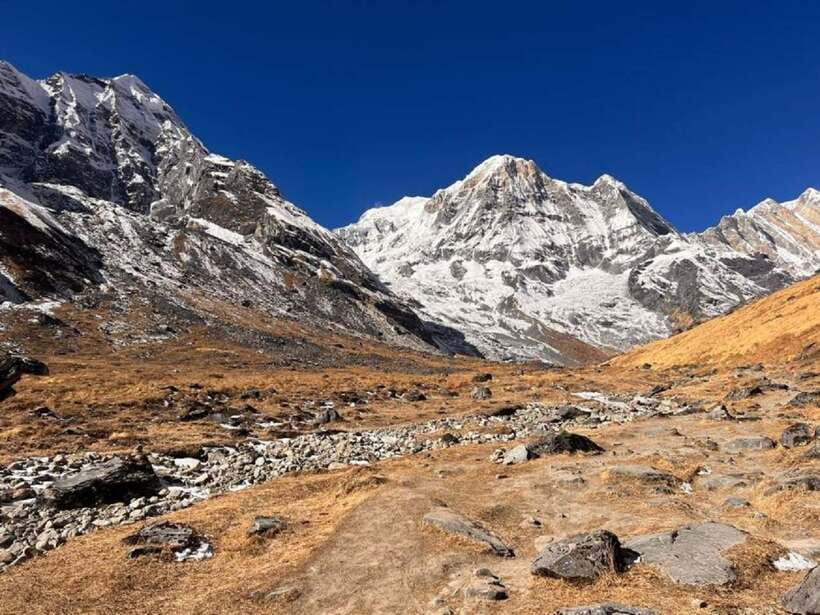
I consider this one of Nepal’s most rewarding short treks because the scenery changes quickly. You begin in the lower foothills, where villages and farm terraces shape the view, then move into thick bamboo and rhododendron forest before reaching a high basin ringed by snow-covered peaks.
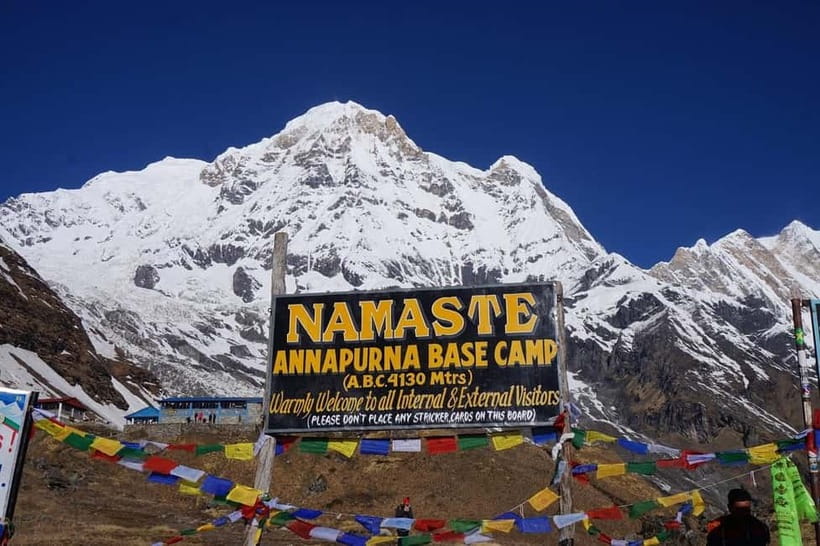
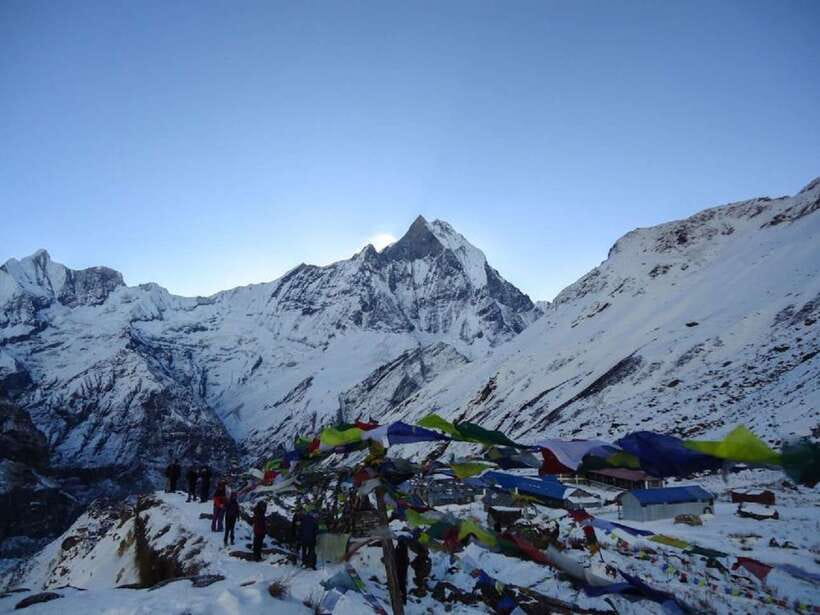
The destination is not just a viewpoint. Annapurna Base Camp sits inside a natural amphitheater, with massive mountains rising around you. Annapurna I, at 8,091 meters, is the famous centerpiece, while Machapuchare gives the approach its distinctive fish-tail profile.
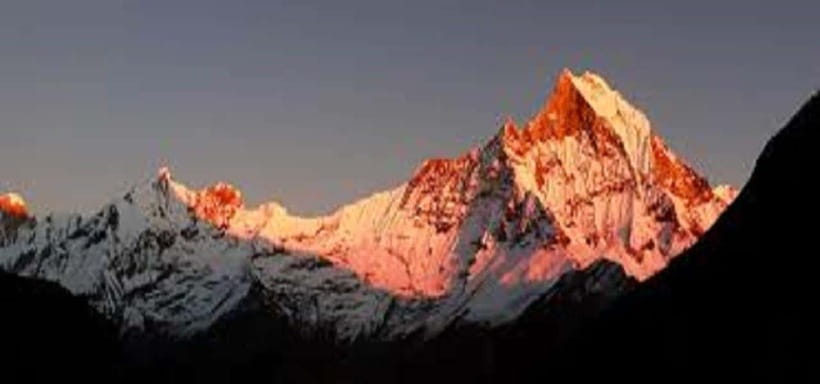
The sunrise matters because the peaks can look gray and distant in flat light. Early morning brings color and sharper outlines. You will be cold, tired, and probably awake before most people would consider reasonable, but this is the moment that gives the trek its emotional payoff.
The route also offers more than mountain scenery. Gurung villages, stone stairways, suspension bridges, farm plots, and forest paths make the walk feel like a journey through a lived-in part of Nepal rather than a direct march toward a summit.
More Annapurna Base Camp Treks in Pokhara
- Kathmandu/Pokhara: 5-Day Annapurna Base Camp (ABC) Trek
★ 4.9 · 72 reviews - Private 7 – Day Annapurna Base Camp Trekking
★ 5.0 · 50 reviews - Annapurna Base Camp Trek (8 days)
★ 5.0 · 45 reviews
Day 1: Kande to Landruk through Australian Camp
Your day begins with a drive of about an hour from Pokhara to Kande at 1,770 meters. Pickup is offered from hotels in the Pokhara Lakeside and Sarangkot areas, as well as Pokhara International Airport. The guide and vehicle are scheduled to arrive five minutes early with your name and booking information.
From Kande, the trail climbs toward Australian Camp and Pothana. This first section is a pleasant introduction to the Annapurna foothills, with forest paths, open ridges, and mountain views when the weather cooperates.
The route then descends toward Landruk, a Gurung village at 1,565 meters. That descent is worth noting. Many people expect the first day to be a gentle warm-up, but going downhill on stone paths can be hard on knees, especially after a flight or a long morning in a vehicle.
You walk for roughly four to five hours. Landruk gives you a comfortable first night at a relatively low elevation, which helps your body adjust before the harder climb ahead. Accommodation is in a basic tea house or lodge, and meals are included if you select the meal package.
Day 2: Landruk, Chhomrong, and Sinuwa
Day two is one of the more demanding sections. You descend toward the river, then climb steadily to Chhomrong before continuing to Sinuwa at 2,340 meters.
Chhomrong is an important village on the route, both as a trail junction and as a place to pause before the forest section. The route includes plenty of stone steps. Nepal trekking often means stairs rather than a smooth dirt path, and this day makes that clear.
After Chhomrong, the trail enters thicker forest and continues toward Sinuwa. Bamboo and rhododendron become more common, and the sound of the Modi Khola river helps define the route.
Plan on six to seven hours of walking. The key issue is pacing. I would rather arrive at Sinuwa with energy left than hurry through Chhomrong and spend the evening nursing sore legs. Your guide can help set the pace, but you should speak up early if the climb is getting too hard.
Sinuwa is higher and cooler than Landruk. It is also a useful point to check your clothing, water supply, and snacks before the long valley walk on day three.
Day 3: Sinuwa to Deurali through bamboo forest
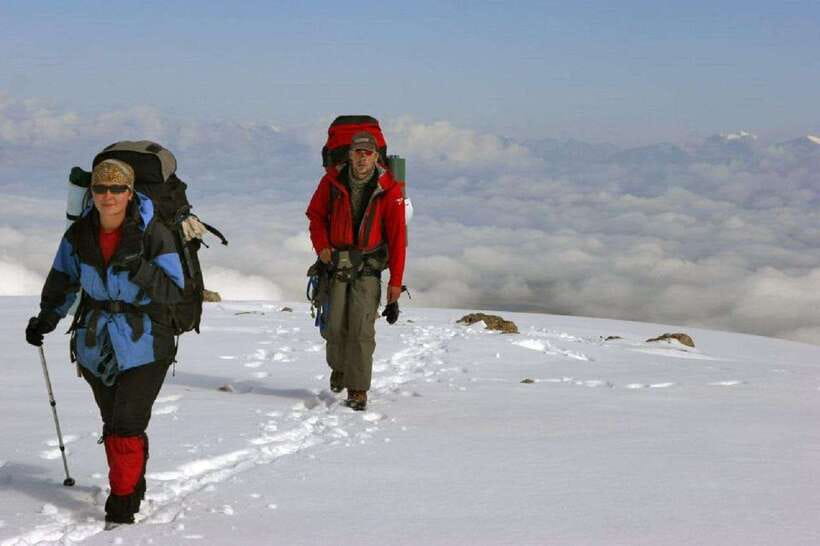
From Sinuwa, the trail follows the Modi Khola valley toward Bamboo, Dovan, and Deurali. This is a beautiful forest day, but it is not an easy one.
You walk through bamboo and rhododendron woods, crossing sections where the trail can feel enclosed and shaded. The forest provides relief from direct sun, yet the repeated ups and downs still require steady effort.
Bamboo and Dovan are useful stopping points because the day is divided into manageable sections. Deurali, at 3,230 meters, is the highest overnight stop before Base Camp. By now, the air is thinner and temperatures can drop sharply, especially after sunset.
The walk takes six to seven hours. At this altitude, I would slow down even if you feel strong. A steady pace, regular water breaks, and warm layers are more useful than trying to arrive early.
Basic tea house accommodation is part of the experience. Expect simple rooms and shared facilities rather than hotel comfort. Wi-Fi and drinking water may cost extra, so carry enough Nepalese cash for these small but frequent expenses.
Same mountains, a completely different kind of day:
- ZipFlyer Nepal – The World’s Steepest Zip-line
★ 5.0 · 608 reviews - Bungee Pokhara by HighGround Adventures
★ 5.0 · 366 reviews - From Pokhara: Sarangkot Sunrise Himalayas Tour
★ 4.7 · 218 reviews - ATV Adventure Tour in Pokhara, Nepal
★ 5.0 · 194 reviews
Day 4: Deurali to Machapuchare Base Camp and ABC
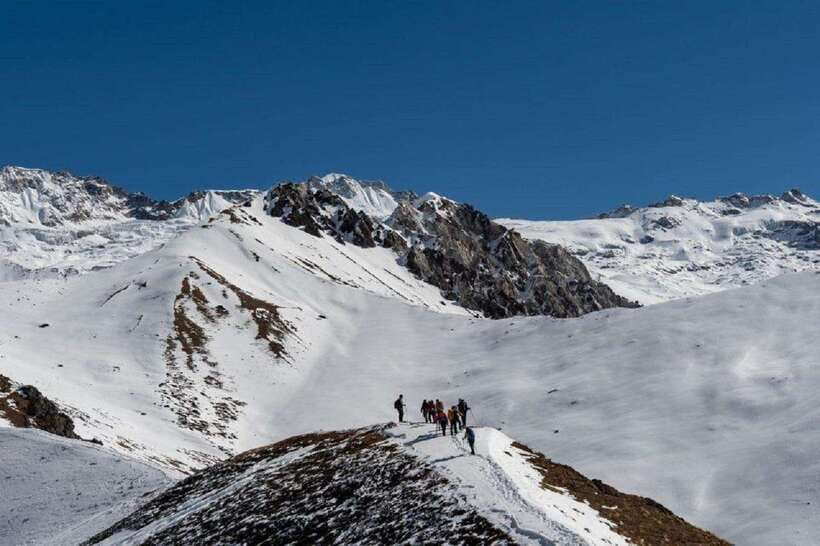
This is the trek’s big day. From Deurali, the forest gives way to alpine country as you move toward Machapuchare Base Camp at 3,700 meters, then continue to Annapurna Base Camp at 4,130 meters.
The walking time is listed as five to six hours, but altitude can make that feel longer. The trail is not simply about distance. Every step requires more effort as the air thins, and you may find yourself stopping often to look back at the peaks.
Machapuchare Base Camp provides a dramatic pause before the final approach. From here, the mountains feel close and much larger than they did from the lower villages. The glacier and peak views become the main event, and the valley opens toward the Sanctuary.
Then comes Annapurna Base Camp. Reaching the basin is satisfying because the surrounding peaks create a sense of enclosure on every side. You are not looking at one mountain from far away. You are surrounded by the high Himalaya.
The overnight stay at 4,130 meters is also the trip’s biggest physical test. Cold-weather clothing is essential, and you should not expect a restful night simply because the walking day is shorter. Headaches, poor sleep, and tiredness can occur at altitude. The provided first aid kit is useful, but travel insurance with suitable mountain coverage is mandatory and emergency rescue is not included in the price.
Day 5: Sunrise at ABC and the long descent
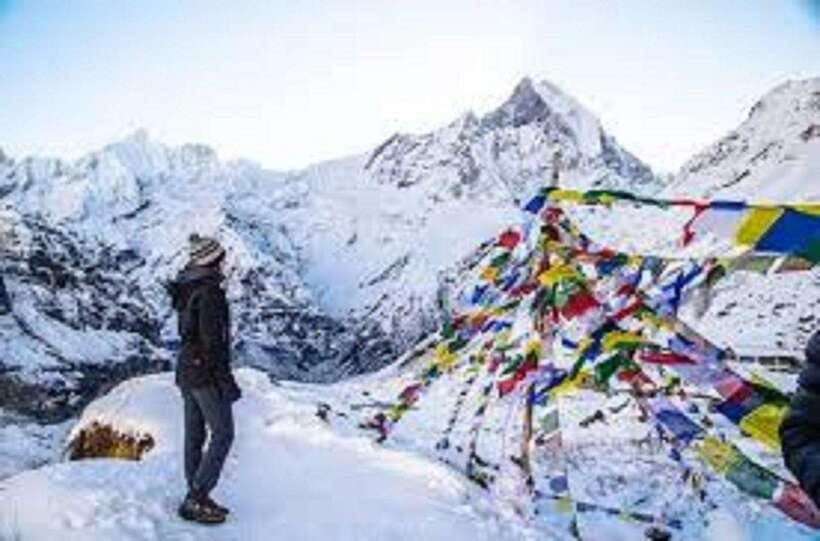
You wake early for sunrise at Annapurna Base Camp. The cold will be part of the deal, so keep your warmest layer and gloves within reach rather than buried in your bag.
After sunrise, you descend by way of Machapuchare Base Camp, Deurali, and Dovan. Depending on pace, the overnight stop is Bamboo or Sinuwa, with Sinuwa listed at 2,340 meters.
The descent takes six to seven hours. It is generally easier on breathing than the ascent, but it can be tough on knees and ankles. Loose ground and stone steps call for careful foot placement. Trekking poles are especially useful here, and a trekking stick can be supplied if needed.
This day is a good reminder that Base Camp is only halfway through the physical challenge. You still have several hours of walking after the sunrise, so do not spend too long outside in the cold before breakfast and the return journey.
Day 6: Sinuwa to Ghandruk
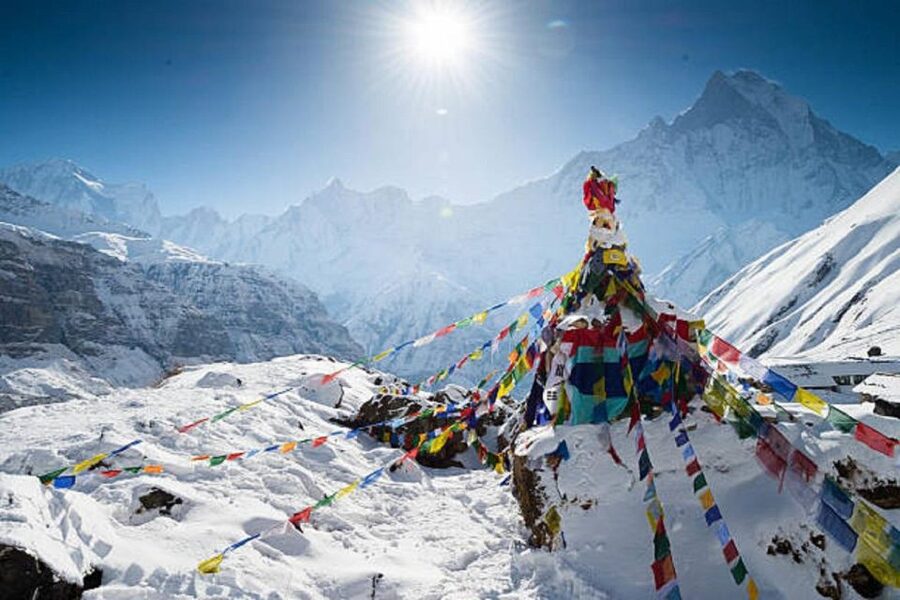
From Sinuwa, you retrace the trail to Chhomrong, then take the route toward Ghandruk. The walking time is about five to six hours.
Ghandruk, at 1,940 meters, is one of the most appealing stops on the itinerary. It is a traditional Gurung village with mountain views and a strong sense of local culture. After the stark alpine basin, the return to village life feels welcome.
This is also where the route gains variety over a simple out-and-back trek. You do repeat some of the trail near Sinuwa and Chhomrong, but the final approach to Ghandruk gives you a different setting and a more settled village experience.
Do not treat Ghandruk as merely a place to sleep. Give yourself time to look around if your walking schedule allows. The village is known for its Gurung character, mountain panoramas, and terraced surroundings.
Day 7: Ghandruk to Birethanti and back to Pokhara
The final walking section descends through villages and farmland to Birethanti at 1,025 meters. It takes about three to four hours, followed by a drive of roughly one hour to Pokhara.
The short final hike sounds easy, but downhill walking can still be tiring after several days on the trail. Use your poles and keep your pace controlled.
Transport arrangements deserve special attention. The package includes round-trip transportation between your hotel, Pokhara International Airport, and the trek starting point. However, one serious complaint about this trip concerned the return vehicle: after finishing earlier than expected, a guest said a Jeep had not been arranged and that a less comfortable, unsafe-feeling bus journey was used instead.
I would confirm the return plan before departure, especially if you want a private vehicle from Birethanti. The schedule can change if you walk faster than expected, and it is better to know how flexible the transport arrangement really is.
What the $179 price really covers
At $179 per person, this trek can offer strong value for a seven-day private journey. The stated inclusions cover permits and local fees, basic tea house accommodation, a government-registered trekking guide, guide and porter-related food, lodging, insurance, salary, transport, and equipment, all government and local taxes, a first aid kit, and trekking gear such as a sleeping bag or trekking stick when needed.
Meals are included during the trek depending on the option you choose. Check that detail carefully. It affects the real cost more than the headline price.
There is also a contradiction worth resolving. The inclusions refer to guide and porter support, while the exclusions say a porter, if needed, costs $20 per day. Ask whether your booking includes a porter, a porter-guide arrangement, or only the guide. Also ask how much luggage the guide is expected to carry.
Your own spending will include travel insurance, snacks, beverages, Wi-Fi, drinking water, and personal purchases. A French guest reported having to pay separately for Wi-Fi and safe drinking water at tea houses. These are not huge costs individually, but you need Nepalese cash because small services add up over a week.
The published rating is 4.3 from three reviews, so the overall picture is positive but not based on a large sample. The mountain route itself receives the strongest praise, while organization and return transport are the areas I would question directly.
Fitness, packing, and altitude advice
You need a reasonable level of fitness and good general health. The schedule includes several six to seven-hour days, steep stone stairs, high-altitude walking, and a descent that can be hard on tired legs.
Pack for warm lower valleys and very cold high elevations. I would bring:
- Comfortable walking shoes and proper hiking shoes
- Warm clothing, a jacket, and extra layers
- Hiking pants and a change of clothes
- A hat and hair tie
- A flashlight or headlamp
- Cash for water, Wi-Fi, snacks, and drinks
- Passport or a copy of your passport
- Hand sanitizer or tissues
- Camera and spare power options
- Trekking gear, including poles if you prefer them
You must provide a passport copy at least one day before the trek so the permits can be arranged. Travel insurance is required, and emergency rescue is available if needed, but rescue costs are not included.
The guide can speak English, Hindi, or Nepali. The trek is arranged as a private group, which is useful if you want a pace suited to your own condition. It does not remove the physical demands, though. A private departure gives you flexibility, not an easier mountain.
Who should book this Annapurna trek
I would recommend this trip to someone who wants the main Annapurna Base Camp experience but has only one week. You get villages, forest, high mountain scenery, a night at Base Camp, and Ghandruk without committing to a much longer route.
It is a good match if you value a private group and included Pokhara pickup. It also suits people who prefer a guide to handle permits, tea house arrangements, and the route.
I would be more cautious if you dislike basic accommodation, need guaranteed private transport, or have little experience with long uphill and downhill walks. You should also avoid booking until the porter fee, meal plan, water costs, and emergency arrangements are clear.
Should you book it?
Book this trek if your priority is reaching Annapurna Base Camp efficiently and you are comfortable with simple lodges, long walking days, and cold nights. The sunrise, mountain amphitheater, forest route, and Ghandruk finish give the itinerary real variety.
Before paying, get written confirmation of four points: exactly what meals are included, whether a porter is included, how return transport from Birethanti will be handled, and which emergency rescue costs your insurance must cover. The scenery deserves a strong recommendation. The organization deserves a few careful questions first.
FAQ
How long does the Annapurna Base Camp trek take?
The trek lasts seven days, beginning and ending in Pokhara.
Where does the trek begin?
You drive from Pokhara to Kande, at an elevation of 1,770 meters, and begin walking from there.
How high is Annapurna Base Camp?
Annapurna Base Camp is at 4,130 meters.
Do I sleep at Annapurna Base Camp?
Yes. The itinerary includes an overnight stay at Annapurna Base Camp on day four.
Is sunrise at Annapurna Base Camp included?
Yes. You watch sunrise at ABC on day five before beginning the descent.
Which villages are included on the route?
The route includes Landruk, Chhomrong, Sinuwa, and Ghandruk, along with the smaller settlements and stopping points of Australian Camp, Pothana, Bamboo, Dovan, and Deurali.
How many hours do I walk each day?
Walking times range from about three to seven hours. The longest days are generally days two, three, and five, at six to seven hours.
Is transportation from Pokhara included?
Yes. Pickup and return transportation are included between designated Pokhara areas, Pokhara International Airport, and the trek route. The final return from Birethanti is described as about one hour by road.
Are meals included?
Meals are included during the trek depending on the option selected. Confirm the specific meal plan before booking.
Is a porter included?
The package information is unclear. It refers to guide and porter support in the inclusions, but also lists a porter at $20 per day under exclusions. Confirm this directly before departure.
Do I need travel insurance?
Yes. Travel insurance is mandatory. Emergency rescue services are available if required, but rescue costs are not included.
Which languages can the guide speak?
Guides are available in English, Hindi, and Nepali.
Can I cancel the booking?
You can cancel up to 24 hours in advance for a full refund, according to the stated policy. You can also reserve now and pay later.
More 7-Day Experiences in Pokhara
- Annapurna Base Camp Trek from Pokhara 7 Days
★ 5.0 · 19 reviews - Pokhara: 7-Day Annapurna Base Camp Trek & Natural Hot Spring
★ 5.0 · 11 reviews - Pokhara: 7 Day Annapurna Base Camp Trek
★ 4.9 · 38 reviews - 7 days Nepal Motorcycle tour
★ 5.0 · 12 reviews
More Hiking & Trekking in Pokhara
- Poon hill Trek 3 days
★ 5.0 · 176 reviews - Trekking in Annapurna/Langtang/Everest/Upper Mustang regions
★ 5.0 · 161 reviews - Pokhara: 4-Day Ghorepani, Poonhill & Ghandruk Mountain Trek
★ 5.0 · 132 reviews - Ghorepani – Poon Hill Trek 3N-4D
★ 5.0 · 125 reviews
Just added around Pokhara
- Seti George and Thrilling Suspension Bridge Tour at Pokhara★ 4.5 · 3 reviews
- Tandem Paragliding in Pokhara★ 4.8 · 8 reviews
- Pokhara: Sunrise Tour to Sarangkot★ 5.0 · 3 reviews
- Pokhara: Suspension Bridge Private Tour- 30 Min Village Walk★ 4.8 · 9 reviews
- Pokhara: Visit Best Seven Tourist Destination by Sharing Bus★ 3.4 · 10 reviews
- Pokhara Sightseeing By Bus: Day Trip★ 4.6 · 7 reviews
- Pokhara Sightseeing By Bus – Day Trip★ 3.2 · 8 reviews
- Pokhara: Sarangkot Sunrise & Panoramic Annapurna View Tour★ 4.8 · 10 reviews
Annapurna Base Camp Treks, compared.
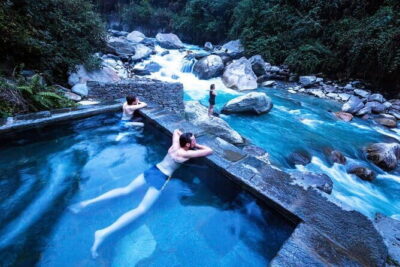
Kathmandu to Annapurna Base Camp (ABC) 5-Day Trek
Read our review →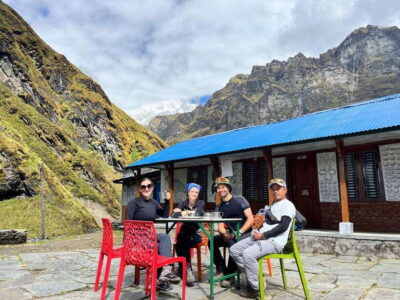
Kathmandu/Pokhara: 5-Day Annapurna Base Camp (ABC) Trek
Read our review →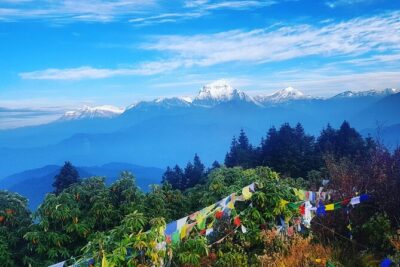
11-Day Hike Tour to Annapurna Base Camp Bliss in Kathmandu
Read our review →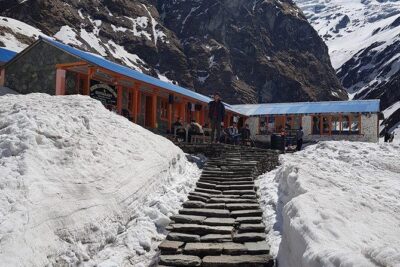
Browse the lists this tour appears in