
Reviewed · ANNAPURNA CIRCUIT TREKS
Kathmandu: 9-Day Annapurna Circuit Trek via Thorong La Pass
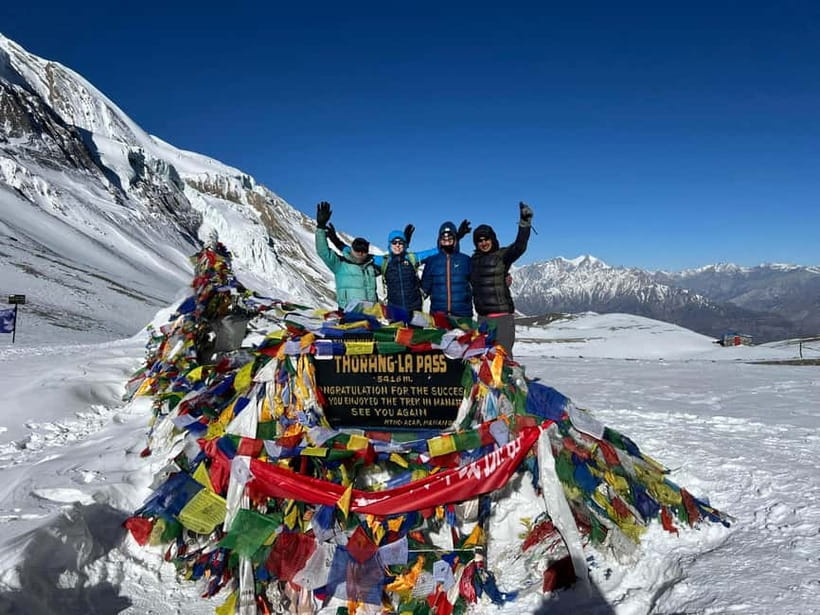
The Thorong La crossing is the heart of this trek, and it is a serious mountain day. You start near 4:00 AM, climb from Thorong Phedi to 5,416 meters, then descend to Muktinath before lunch. The reward is a huge sweep of Himalayan peaks, prayer flags, and the feeling that you have earned every step.
I like two things especially: the route changes scenery almost every day, from pine woods and terraced valleys to Tibetan-style villages and bare high-country slopes, and the extra acclimatization day in Manang gives your body a fair chance to adjust. The guides also get strong marks for care, with Sishir, Parkash, Chakra, and Ghanshyam singled out for patience, humor, and close attention.
The main caution is the pace. Nine days is efficient, not leisurely, and the pass day can be exhausting, particularly the long descent. Cold teahouse nights, basic food, rough roads, and altitude make this a better choice for fit walkers than for first-time hikers looking for a gentle holiday.
Key points to know before you go
- Thorong La reaches 5,416 meters: The pass is the physical and emotional high point, but it demands an early start, steady pacing, and proper clothing.
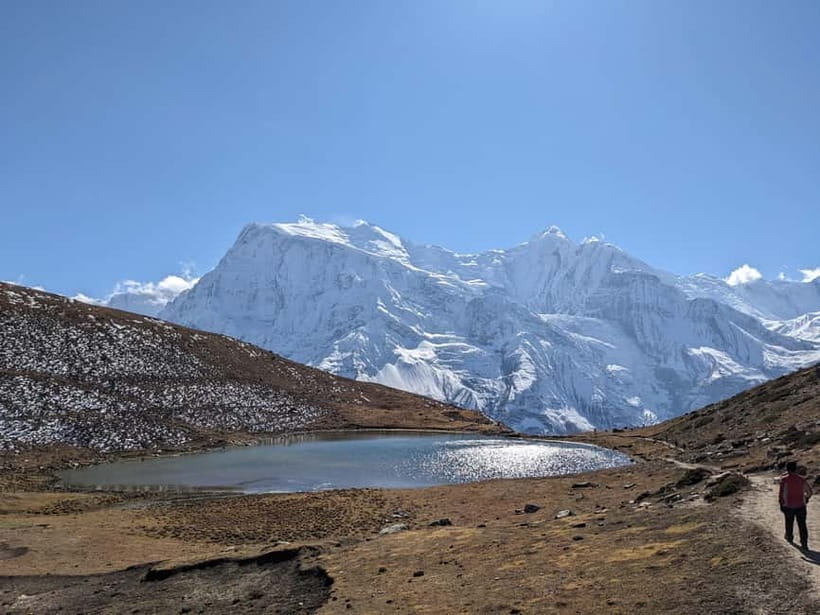
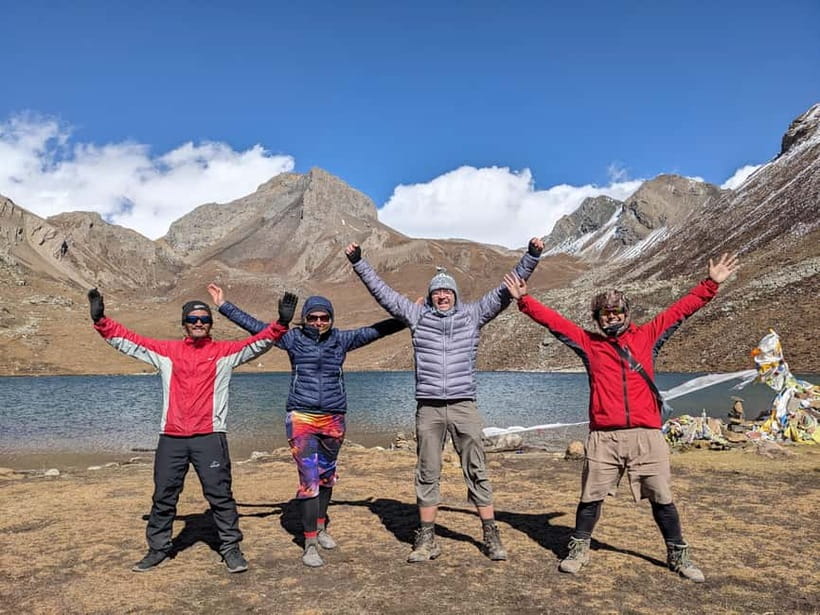
- Manang provides a valuable rest day: Use the optional Gangapurna Glacier Lake or icefall walk as a gentle acclimatization outing, not a race.
- Upper Pisang is a scenic overnight: Its mountain views and local village setting are among the most appealing stops on the route.
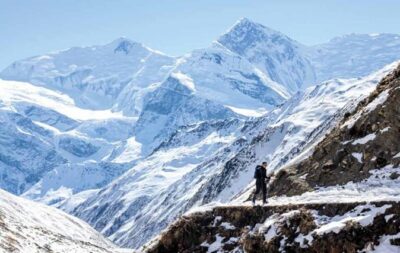
- The route changes sharply: Expect green valleys, forests, fields, Tibetan-influenced villages, alpine pastures, and dry high mountain country.
- Muktinath adds cultural depth: The sacred temple matters to both Hindus and Buddhists and gives the trek a meaningful finish.
- Guiding is a real strength: Guides including Sishir, Parkash, Chakra, Binod, Ramit, and Ghanshyam are noted for route care, encouragement, and help with acclimatization.
Why the Thorong La route earns its place on your Nepal plans
The Annapurna Circuit works because it is not just a mountain walk. In nine days, you move through several distinct parts of Nepal, and the change is easy to feel under your boots.
At first, you pass terraced fields, forest, streams, and busy village life. Higher up, the trees thin out, the air gets colder, and the villages take on a Tibetan character. Then comes Thorong La, followed by Muktinath and the road toward Pokhara.
That variety is the best reason to choose this trek. You are not walking through the same type of scenery for a week. Each day brings a new setting, though the cost is a fairly demanding schedule.
The tour is a private group experience with an English or Hindi-speaking guide. A meeting takes place the day before departure for a briefing, and hotel pickup is provided in Thamel or nearby areas. If you need a porter, one is available for an extra charge, so ask about that before setting out.
More Annapurna Circuit Treks in Pokhara:
- Kathmandu: 10-Day Annapurna Circuit Trek via Thorong La Pass
★ 5.0 · 10 reviews - Annapurna Circuit Trek with Tilicho Lake
★ 5.0 · 368 reviews - Annapurna Circuit Trek
★ 5.0 · 94 reviews
Day 1: Kathmandu or Pokhara to Dharapani by bus and jeep
Your first day is mostly a road journey, lasting about seven to eight hours over roughly 175 kilometers. You take a public bus to Besisahar, then continue by shared local jeep to Dharapani.
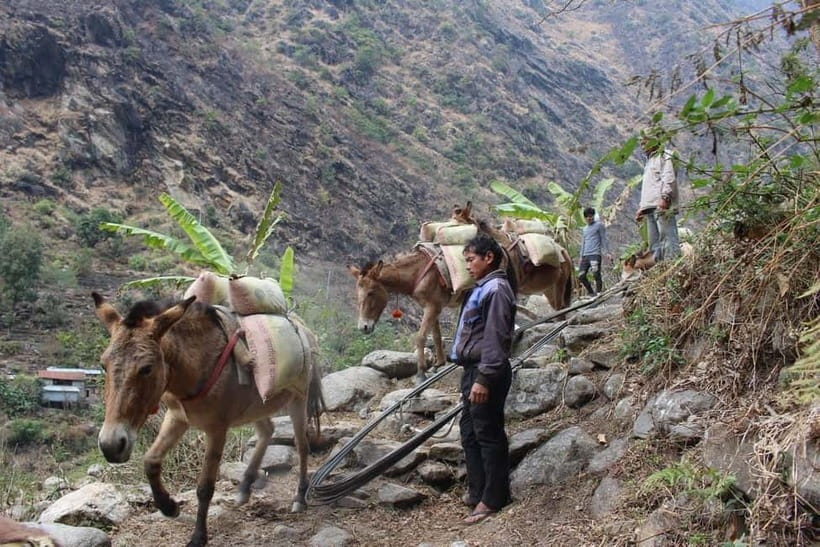
This is not a polished sightseeing transfer. Roads in the mountain region can be slow and tiring, but the views of rolling valleys, terraced farmland, and villages make the journey worthwhile. It also gives you a useful first look at how much daily life in Nepal depends on winding mountain roads.
You sleep in a teahouse in Dharapani. The accommodation is basic, and you should expect a simple room rather than hotel comfort. This is a good evening to organize your daypack, check your layers, and ask your guide about the next walking section.
Day 2: Dharapani to Chame through forest and village country
The walk to Chame covers about 13 kilometers and takes around six hours, reaching approximately 2,670 meters.
The trail passes through pine and oak woods, open fields, streams, and Bhote villages. This is where the trip begins to feel like a proper trek rather than a long transfer followed by a short walk.
Chame offers the first strong sense of being in the Annapurna Circuit. You will notice the cooler air and mountain setting, but the altitude is still manageable for many fit walkers. Your guide can help set a sensible rhythm here. Do not burn energy trying to prove your fitness on the first full walking day.
Day 3: Upper Pisang and the Bhratang Valley
The route from Chame to Upper Pisang takes about five to six hours and covers approximately 15 kilometers. You climb steadily through the Bhratang Valley toward 3,200 meters.
Upper Pisang is one of the more memorable overnight stops because of its position and views. The village provides a chance to slow down, look across the mountains, and meet local residents rather than simply pass through.
You may feel the altitude starting to affect your pace. That is normal. Drink regularly, walk steadily, and tell your guide if you develop a headache, unusual tiredness, nausea, or dizziness. A good guide should watch your condition closely, but you also need to speak up early.
A few more Pokhara trips to weigh up
- Poon hill Trek 3 days
★ 5.0 · 176 reviews - Trekking in Annapurna/Langtang/Everest/Upper Mustang regions
★ 5.0 · 161 reviews - Pokhara: 4-Day Ghorepani, Poonhill & Ghandruk Mountain Trek
★ 5.0 · 132 reviews - Ghorepani – Poon Hill Trek 3N-4D
★ 5.0 · 125 reviews
Day 4: Upper Pisang to Manang with big mountain views
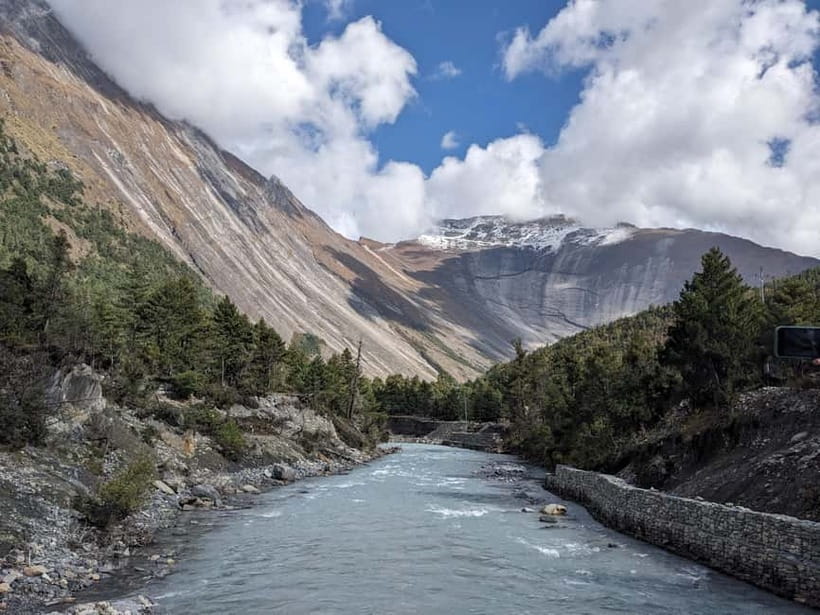
The walk to Manang lasts about five to six hours and covers around 16 kilometers. The trail continues through forests and valleys, with views toward Tilicho Peak, Annapurna III, and Annapurna IV.
Manang is an important pause in the trip. The village is a useful place to rest, eat, sort your gear, and prepare for higher elevations. The supplied schedule gives you an acclimatization day here, which is one of the wisest features of the nine-day plan.
The stated elevations for Manang and the following acclimatization outing vary slightly in the schedule, so treat the numbers as approximate. The practical point is clear: you are now entering high country, and the next few days should be taken seriously.
Day 5: Acclimatization in Manang
This day is not wasted time. It is the day that helps make the pass crossing safer and more realistic.
You can rest in Manang or take an optional walk to Gangapurna Glacier Lake or nearby icefalls. Keep this outing controlled. The goal is to gain some time at altitude and return feeling ready, not to leave yourself tired before the most demanding section.
Several guides have been praised for encouraging a proper rest day instead of rushing the route. One guide specifically advised against forcing the trek into fewer days, and that is good mountain judgment. You might want to finish early, but altitude does not care about your schedule.
Day 6: Manang to Yak Kharka
The walk to Yak Kharka is shorter, around seven kilometers and about four hours, reaching roughly 4,050 meters.
The trail crosses alpine pastures with wide mountain views. The shorter distance gives you time to adjust to the thin air, though a short walking day at this altitude can still feel demanding.
Yak Kharka is mainly a practical overnight stop. Do not expect a large range of facilities. Tea house rooms, basic meals, cold conditions, and limited comforts are part of the deal. This is where a warm sleeping bag becomes important, especially outside the milder trekking months.
Day 7: Thorong Phedi, the final stop before the pass
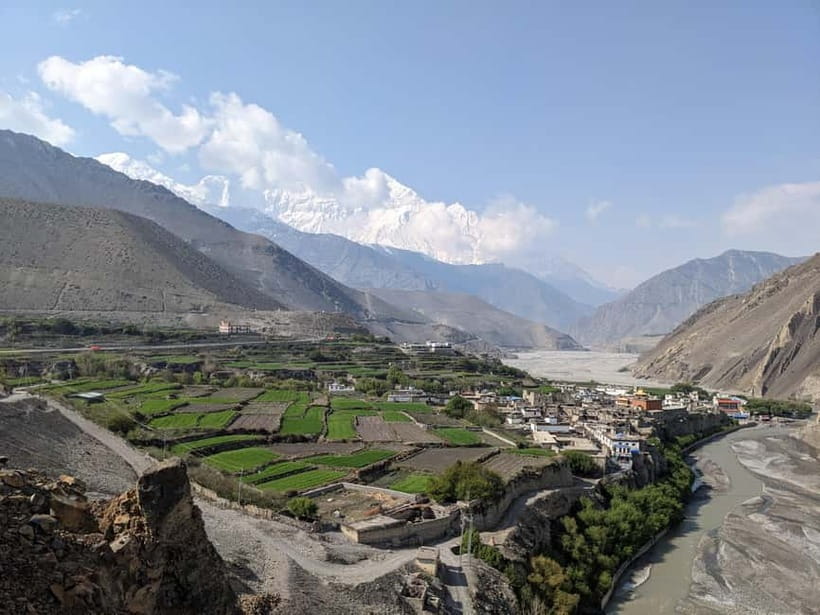
From Yak Kharka, you walk about six kilometers in four to five hours to Thorong Phedi, at approximately 4,450 meters.
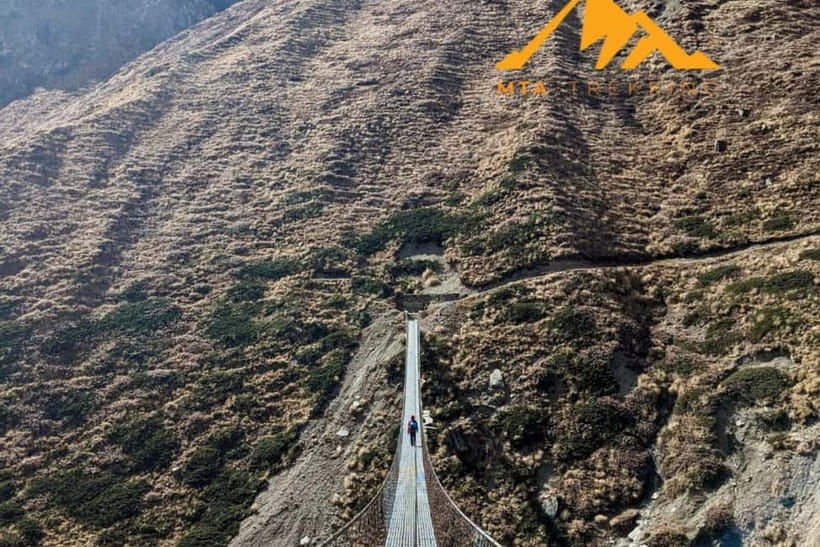
The route follows rocky paths and crosses suspension bridges. The distance looks modest on paper, but altitude makes every climb slower. Take short steps and keep your breathing calm.
Thorong Phedi is the staging point for the pass. This is not the evening for a late meal, extra drinks, or a long social night. Eat, prepare your clothing and headlamp, fill your water supply, and get as much rest as the basic teahouse setting allows.
Day 8: Thorong La Pass and the descent to Muktinath
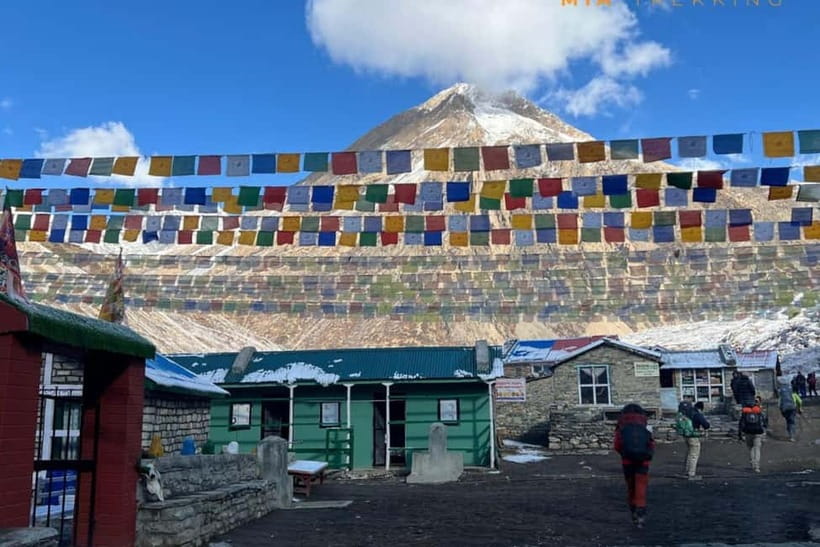
This is the day you came for, and it is also the day to respect most.
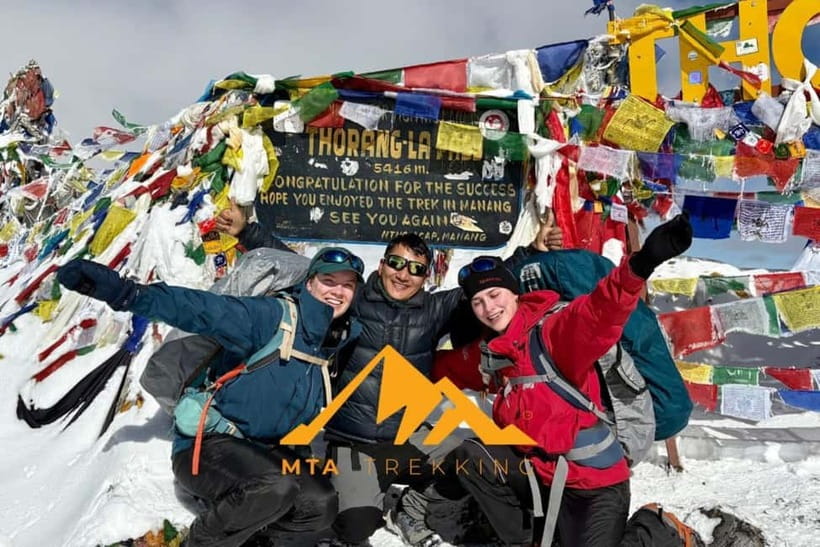
The start is around 4:00 AM so you can cross Thorong La before strong winds usually build later in the day. The climb is hard, with cold air, high altitude, and a steady uphill route. The pass reaches 5,416 meters, making this a major physical achievement even for experienced hikers.
At the top, prayer flags mark the pass and the surrounding Himalayan views open wide. Take a moment, but do not linger too long in the cold. The descent to Muktinath can feel surprisingly long. One account described going down as somehow harder than going up, and that is a useful warning for your knees and feet.
You should reach Muktinath around noon or early afternoon, with lunch and an overnight stay included. The sacred Muktinath Temple is important to Hindus and Buddhists, giving this day more than a physical finish. It connects the trek to the living religious culture of the region.
A trip to Tatopani hot springs is offered as an option after the pass. Taxi costs are not included and are listed at about USD 50, payable by participants. Confirm the exact plan with your guide, since you will already have completed a very long day.
Day 9: From Muktinath toward Pokhara
The final transfer is listed as a five to six-hour bus journey of about 110 kilometers from Muktinath to Pokhara. The inclusions also specify Jomsom to Pokhara by bus, so confirm the precise pickup point and road connection during your briefing.
This is a road day, not a final trekking day. Mountain buses can be slow and tiring, but the transfer lets you finish the circuit without adding several extra walking days.
One night at Hotel Orchid in Pokhara is included, along with a farewell dinner featuring traditional Nepali food in Lakeside. That hotel night matters after a week in teahouses. You get a bed, a shower opportunity, and a more comfortable setting in which to reflect on the pass.
A tourist-standard air-conditioned sofa-seater bus from Pokhara to Kathmandu is also included in the package details. If your plans require that transfer, verify how it fits your booking and departure date.
Teahouses, food, and what to pack
You spend eight nights in tea houses or lodges during the trek. Rooms are simple, and comfort becomes more limited as you climb. Bring a proper sleeping bag, especially if you trek in late autumn, winter, or early spring. Cold was a repeated practical concern, and the supplied gear list specifically points you toward warm layers and a sleeping bag.
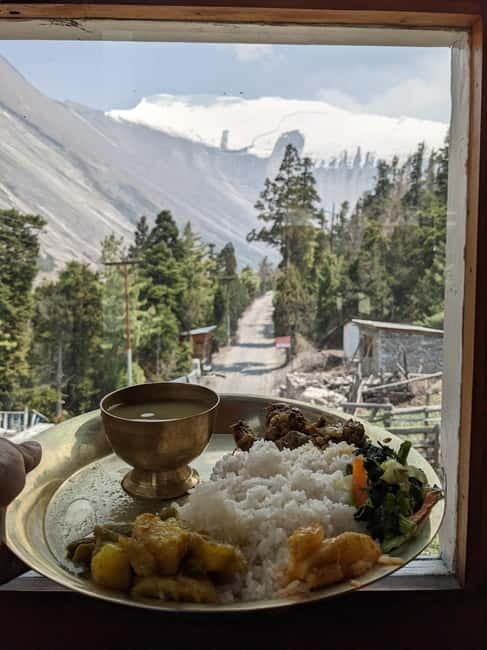
Meals are included for Full Package bookings. Expect breakfast, lunch, and dinner during the walking days, with food that is tasty but fairly similar from one stop to the next. That is normal for a mountain route with limited supplies. Soft drinks, hard drinks, bottled or boiled water, showers, battery charging, laundry, phone calls, and bar bills cost extra.
Pack light, but do not cut corners on warmth. Your essentials include comfortable trekking shoes or boots, quick-dry clothes, sunglasses, a sun hat, sunscreen, a passport or ID copy, and layers that can handle changing weather. Alcohol and drugs are not allowed.
Guides, support, and the value of the package
The strongest part of the service is the guide support. Names connected with this trek include Sishir, Parkash, Chakra, Ghanshyam, Binod, and Ramit. Their roles vary by departure, so you should confirm your assigned guide, but the most useful qualities are clear: route familiarity, patience, humor, hydration reminders, and attention to altitude symptoms.
Parkash was especially noted for checking in often and offering to carry part of a pack on the hardest day. Sishir was praised for helping with acclimatization and keeping the mood light. Chakra encouraged the Manang rest day rather than rushing. These details matter far more than a polished sales description when you are tired at 4,500 meters.
The package also covers permits, TIMS fees, government taxes, guide insurance, staff wages, meals and lodging for staff, transport listed in the plan, luggage storage, and hotel pickup and drop-off. Since no tour price is supplied here, I cannot judge the exact cash cost. I can say that the value depends on how much you would otherwise spend arranging permits, mountain transport, a guide, teahouses, meals, and a Pokhara hotel yourself.
Porter service is extra, as are personal purchases and rescue insurance. Do not confuse guide insurance with your own travel coverage. You need insurance that specifically covers high-altitude trekking and possible rescue.
Who should choose this nine-day schedule?
This trek suits you if you have good fitness, can walk for several hours on consecutive days, and are comfortable with basic lodging. Previous trekking experience is helpful, though one first-time Himalayan trekker found the route manageable with patient guiding and a proper rest day.
It is not a soft introduction to Nepal. The pass day is long, the roads can be rough, and altitude can affect anyone. The trek is not suitable for children under seven, pregnant women, people with altitude sickness, or people with high blood pressure.
The best periods are spring, from March through May, and autumn, from September through November. Spring brings warmer conditions and blooming flowers. Autumn generally offers the clearest views and mild walking temperatures.
Winter can bring cold, snow, and possible trail closures. The June through August monsoon period brings heavy rain and slippery trails, so it is generally a poor choice for this route.
Should you book it?
Book this trek if crossing Thorong La is your main goal and you want a private guided package with transport, permits, teahouses, meals, and a Pokhara hotel already arranged.
Choose it with open eyes. Nine days keeps the route compact, but it leaves little room for delays, illness, or a slower pace. Ask about porter costs, your exact transport from Muktinath or Jomsom, the assigned guide, and the Full Package meal plan before paying.
I would recommend it to fit walkers who want strong scenery, local villages, a respected cultural stop at Muktinath, and the satisfaction of a high pass crossing. I would not recommend it if you want luxury, warm rooms every night, or a relaxed schedule. Bring a serious sleeping bag, respect the Manang rest day, and let your guide control the pace on Thorong La.
FAQ
How high is Thorong La Pass?
Thorong La Pass reaches 5,416 meters above sea level.
How early does the pass day begin?
The trek from Thorong Phedi begins around 4:00 AM so you can cross the pass before winds become stronger later in the day.
Is an acclimatization day included?
Yes. Day 5 is set aside for acclimatization in Manang, with an optional hike to Gangapurna Glacier Lake or nearby icefalls.
What accommodation is provided?
You receive eight nights in tea house or lodge accommodation during the trek and one night at Hotel Orchid, a tourist-standard hotel in Pokhara.
Are meals included?
Breakfast, lunch, and dinner are included during the trek for Full Package bookings. Drinks, bottled or boiled water, and personal purchases are not included.
Is a porter included?
No. A porter can be arranged for an additional cost.
What transport is included?
The package includes hotel pickup and drop-off, travel by bus from Kathmandu to Besisahar, a shared jeep from Besisahar to Dharapani, a bus transfer from Jomsom to Pokhara, and a tourist air-conditioned sofa-seater bus from Pokhara to Kathmandu. Confirm the exact Muktinath and Jomsom connection before departure.
Just added around Pokhara
- Seti George and Thrilling Suspension Bridge Tour at Pokhara★ 4.5 · 3 reviews
- Tandem Paragliding in Pokhara★ 4.8 · 8 reviews
- Pokhara: Sunrise Tour to Sarangkot★ 5.0 · 3 reviews
- Pokhara: Suspension Bridge Private Tour- 30 Min Village Walk★ 4.8 · 9 reviews
- Pokhara: Visit Best Seven Tourist Destination by Sharing Bus★ 3.4 · 10 reviews
- Pokhara Sightseeing By Bus – Day Trip★ 3.2 · 8 reviews
- Pokhara Sightseeing By Bus: Day Trip★ 4.6 · 7 reviews
- Pokhara: Sarangkot Sunrise & Panoramic Annapurna View Tour★ 4.8 · 10 reviews
Annapurna Circuit Treks, compared.
15-Day Private Annapurna Circuit Trek from Kathmandu
Read our review →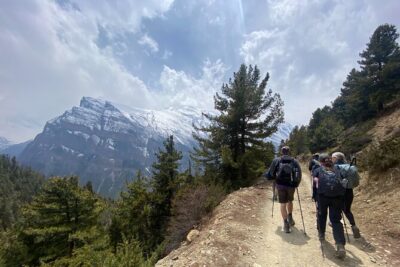
Annapurna Circuit Trek with Tilicho Lake (16 Days)
Read our review →Browse the lists this tour appears in