
Reviewed · ANNAPURNA CIRCUIT TREKS
Annapurna Circuit Trek
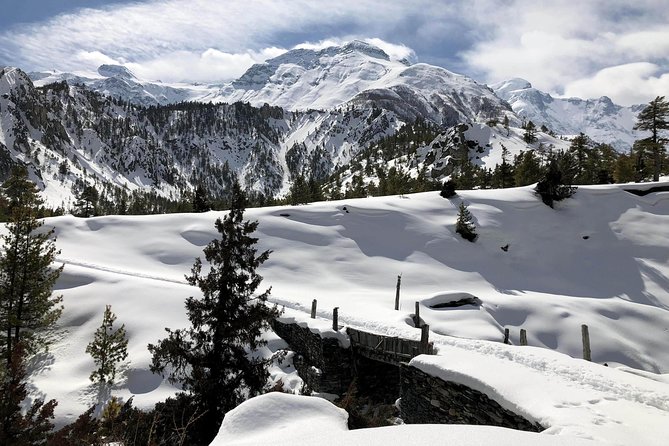
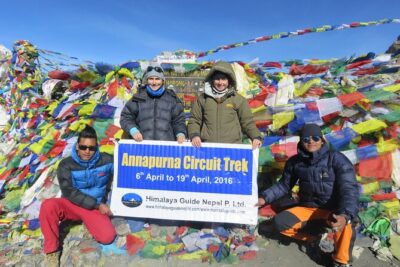
The great draw here is the Annapurna Circuit, a route that changes character every few days. You begin with river valleys and wooded ridges, climb toward Manang, cross the high Thorung La Pass, then descend into the Tibetan-influenced Mustang region and Muktinath.
I like the practical setup: airport transfers, permits, lodging, meals, and a guide are arranged in advance. I also like the two hotel nights in Kathmandu and two in Pokhara, which give you a little breathing room around a demanding trek. The main caution is the pace and altitude. Crossing 5,416 meters is serious business, and the long road rides at the beginning and end are not decorative extras.
Key points to know before booking
- Thorung La reaches 5,416 meters: This is the physical high point and the day that demands the most patience.
- Manang includes an acclimatization day: You can rest or take a short hike to Gangapurna Lake, Bonjo Gumba, or nearby villages.
- Full-board meals are included while trekking: Breakfast, lunch, dinner, and tea are covered, but extras such as bottled water, Wi-Fi, charging, hot showers, and alcohol cost more.
- The tour is private and customizable: Your group travels together, and the pace can be adjusted within the trek plan.
- The package includes useful city stays: Two nights in Kathmandu and two nights in Pokhara, both with breakfast, help soften the rougher tea-house nights.
- The road transfers are long: The ride to Syange takes about eight to nine hours, while Muktinath to Pokhara takes about ten.
Why this route still earns its reputation
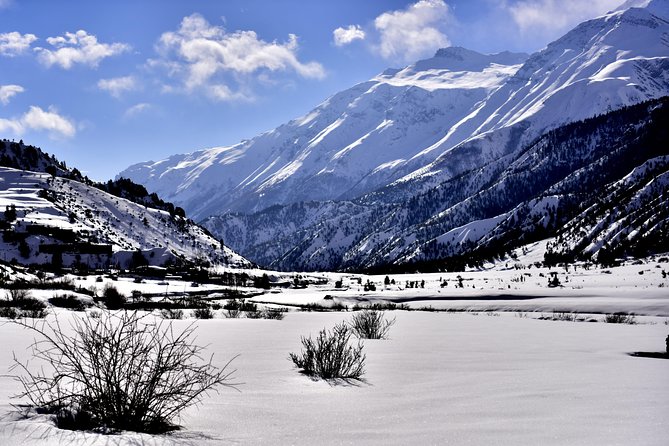
The Annapurna Circuit is not one single mountain view repeated for two weeks. It is a gradual change from lower Himalayan foothills to high alpine terrain, then down into a dry region shaped by Tibetan culture. That variety is the route’s real strength.
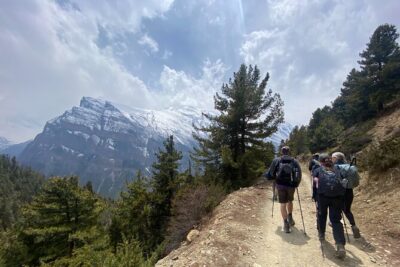
You start near the Marshyangdi River, walking through green woods and steep-sided valleys. Higher up, the air gets thinner, the trees become sparser, and the trail opens toward the peaks around Manang. After Thorung La, the character shifts again as you descend toward Muktinath and Mustang.
This 14-day version removes much of the planning work. You do not need to arrange each lodge, permit, transfer, or meal on your own. A professional trekking guide accompanies the group, carries first-aid medicine, and helps you manage the trail and the high pass.
The route is private, so you are not tied to a large group’s pace. That matters on a mountain trek. You may want to walk slowly on the steep sections, pause for photographs, or take extra time at a viewpoint. The operator describes the trek as customizable, although the overall sequence remains fixed by the road and trail network.
More Annapurna Circuit Treks in Kathmandu
- Annapurna Circuit Trek with Tilicho Lake
★ 5.0 · 368 reviews - Annapurna Circuit Trek
★ 5.0 · 94 reviews - Annapurna Circuit Trek
★ 5.0 · 34 reviews
Day 1: Kathmandu arrival and a useful briefing
Your trip begins at Tribhuvan International Airport, where an office representative meets you and takes you to your hotel by private vehicle. After you rest, the guide provides a briefing about the Annapurna Circuit.
This first day is simple but valuable. Kathmandu can be tiring after an international flight, and having the airport transfer arranged saves you from negotiating transport while jet-lagged. Use the briefing to confirm the walking schedule, what goes into the company duffel bag, and which costs are not covered.
The package includes two nights in Kathmandu with breakfast. Lunch and dinner in the city are not included, so you have the freedom to choose your own restaurants, but you should budget for those meals.
Day 2: The long road to Syange
After breakfast, you leave for Syange. The drive takes about eight to nine hours, and this is one of the least glamorous parts of the itinerary. Still, it gets you to the trailhead without spending additional trekking days on lower sections of the route.
The road ride is part of the current Annapurna experience, not a minor transfer. You will spend a full day seated in a bus or vehicle, with mountain roads making the journey feel longer than the clock suggests. The package specifies tourist bus transport for the long-range journey from Kathmandu toward Besishar, followed by local transport toward the trekking route.
Check the exact starting transfer with the operator before departure. The daily plan identifies Syange as the stop, while the included transport information also names Besishar. That may simply reflect the change from tourist bus to local road transport, but it is worth clarifying.
Day 3: Dharapani and the first full walking day
The trek begins in earnest as you head toward Dharapani. Expect roughly six to eight hours of walking, with a bridge crossing and a trail that follows the river valley.
This day gives you your first taste of the route’s physical rhythm. You walk, eat, rest, and repeat. The trail is not presented as a gentle stroll, so moderate fitness is required. Your guide can help set a pace that is sensible for your group, but you still need to arrive prepared for long days on uneven ground.
Dharapani is an important early stop because it marks your transition deeper into the circuit. The scenery begins to feel more remote, though the route still includes local roads and settlements.
Same mountains, a completely different kind of day:
- Everest Base Camp Trek – 14 Days
★ 5.0 · 1,499 reviews - Private Kathmandu Sightseeing Tour | UNESCO World Heritage sites
★ 5.0 · 756 reviews - Everest Base Camp Helicopter Tour landing at Everest View Hotel
★ 5.0 · 668 reviews - Half day cooking class in Thamel kathmandu
★ 5.0 · 607 reviews
Day 4: Steep ridges and forest near Chame
The route continues toward Chame through steep ridges, green woods, and areas affected by landslides. The listed walking time is about six hours.
This is a day to watch your footing. The description itself warns that some sections require attention, so this is not the place to walk with your eyes fixed on a phone. Keep one eye on the trail and one on the distant peaks.
Chame gives the trip a stronger mountain feel. You are moving higher, and the route begins to trade thick lower-country greenery for more open views and sharper ridges. Your accommodation remains in a lodge or tea house, generally in twin-sharing rooms.
Day 5: Paungda Danda and the approach to Manang
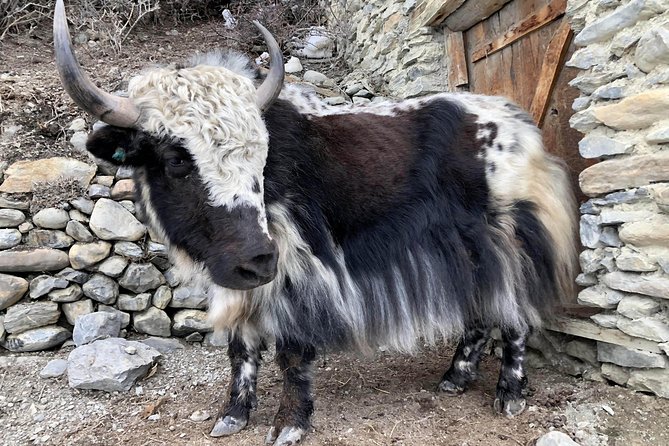
Today’s route passes through a narrow, steep valley and toward Paungda Danda, known for its striking curved rock face rising about 1,500 meters. The walk takes around six hours.
This is one of the itinerary’s more memorable natural features because the scenery changes from close valley walls to large rock formations and wider mountain views. You will want a camera, but the trail still comes first.
The trek then continues toward the Manang area. Accommodation remains basic by city-hotel standards. Tea-house lodging is part of the experience, but it also means you should expect simple rooms and extra charges for comforts such as hot showers, Wi-Fi, charging, and bottled water.
Day 6: Upper Pisang and Manang
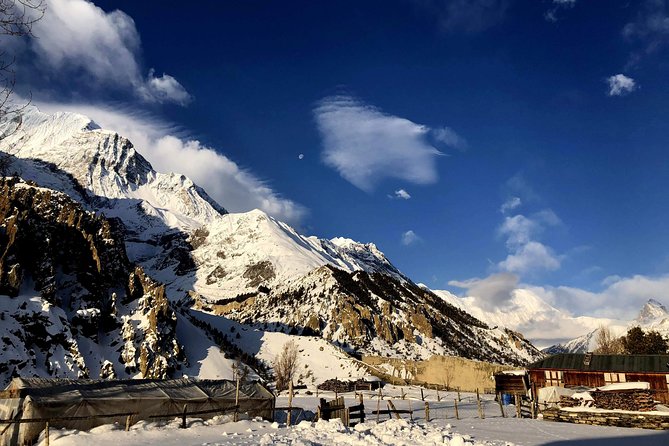
The route passes through Upper Pisang on the way to Manang. The walking day is listed at roughly seven hours, making this one of the longer days before the acclimatization break.
Upper Pisang is an important point in the circuit because you are now properly in the higher section of the route. The valley opens up, and the mountain views become more central to the experience. You are also gaining altitude, so steady walking matters more than speed.
The itinerary’s daily labels are not always perfectly tidy, and one stop is labeled Thorung La even though the description concerns the approach to Manang. Focus on the actual route details rather than the occasional heading. The guide should confirm each day’s destination during the briefing.
Day 7: Acclimatization in Manang
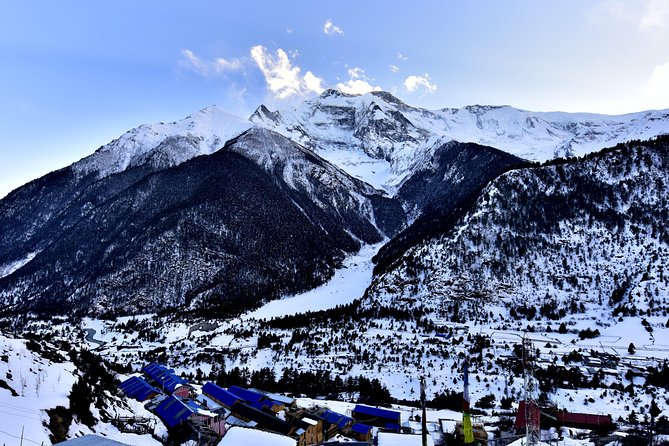
Manang gets a full rest day, which is one of the best features of this plan. You can stay put, walk around the village, or take a shorter hike to Bonjo Gumba, Gangapurna Lake, or toward nearby villages.
At this altitude, a rest day is not wasted time. It gives your body a chance to adjust before the trail climbs higher. You may still feel tired, but the purpose is to keep the next stages manageable.
The available options are flexible rather than locked into one sightseeing schedule. Ask the guide which walk best suits your energy and the conditions. A short outing may be wiser than trying to collect every possible viewpoint.
Day 8: Tenki, juniper, and the higher valley
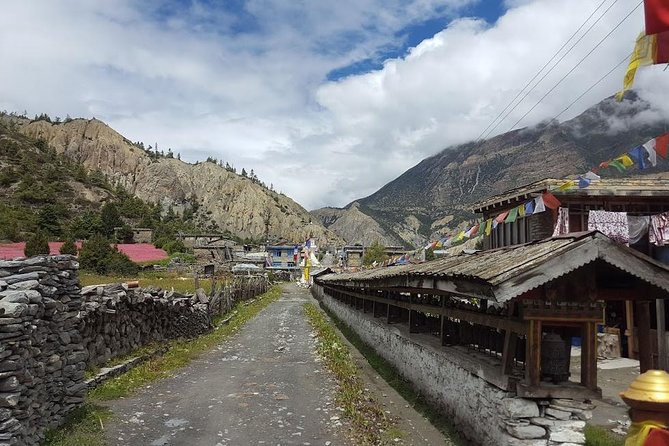
After Manang, the trail continues upward through Tenki and along the northwestern side of the Marshyangdi Valley. The route passes a small stream, juniper trees, and Ghunsa Village. The walking time is about four hours.
The shorter day is helpful after the longer approach to Manang. It also gives you more time to feel the effects of altitude. At this stage, you should walk slowly, drink regularly, and tell the guide if you feel unwell.
This part of the trek feels more exposed and spare than the lower valleys. The combination of small settlements, juniper, streams, and high mountain terrain gives you a clear sense that the circuit is moving into its most demanding section.
Day 9: Thorung Phedi and the final approach
You continue toward Thorung Phedi, crossing a suspension bridge to reach Lather Village and then moving through steep cliffs. The listed walking time is about four hours.
This is a short distance on paper, but altitude changes the equation. The point is not to race to the lodge. You are positioning yourself for the pass crossing, so conserve energy and follow the guide’s pace.
The approach includes steep terrain and exposed sections. Good boots, warm layers, gloves, and a headlamp are sensible items for this part of the trek, although the package does not list personal equipment in the inclusions. The company may provide a duffel bag and sleeping bag if needed, so confirm that before you leave home.
Day 10: Thorung La and Muktinath
This is the big day. You cross Thorung La at 5,416 meters, the highest point of the Annapurna Circuit, then descend west toward Muktinath. The total day takes about eight hours.
The pass is both the main reward and the main concern. At this height, the cold, wind, steep trail, and thin air can turn a normal walking day into a serious physical test. The private format helps because the guide can keep your group together and adjust the pace rather than pushing everyone to match a larger party.
The descent to Muktinath changes the surroundings again. Muktinath Temple is a major religious site, and the area has strong links to both Hindu and Buddhist traditions. It is also the point where the circuit begins to feel more connected to Mustang’s dry, Tibetan-influenced culture.
Your package includes entrance fees and permits, which is helpful on a day when you will have little interest in sorting out paperwork.
Day 11: The long transfer to Pokhara
After breakfast, you leave Muktinath by local bus or shared jeep for Pokhara. The ride takes about ten hours.
This is another demanding transport day, even though you are no longer walking. Mountain roads, changing vehicles, and a long sitting period can make it tiring. The upside is that you cover a large distance without adding more trekking days.
The shared nature of this transfer is worth noting. The overall tour is private, but the Muktinath to Pokhara ride may be shared with other people. That distinction matters if you expect a private vehicle for every part of the trip.
Day 12: A free day beside Phewa Lake
You have a rest day in Pokhara and can explore the valley independently. Two hotel nights in Pokhara are included, with breakfast.
This is a welcome change after tea houses and long walking days. You can keep the day quiet, walk around Pokhara Lakeside, or arrange your own outing. Lunch and dinner are not included at the hotel, so plan for those separately.
The city stay is one of the package’s strongest practical features. It gives you a proper place to recover before returning to Kathmandu, rather than rushing straight from the mountains to an airport.
Day 13: Tourist bus or optional flight to Kathmandu
After breakfast, you return to Kathmandu by tourist bus, a trip of about seven hours. A flight from Pokhara is available for an extra charge.
The bus costs less but takes most of the day. The flight saves time, though the additional price is not specified, so ask before booking if you are considering it. Your Kathmandu hotel and transfer are included, while meals other than breakfast remain your responsibility.
This final city night also provides a buffer before your international departure. That is useful because mountain transport can be affected by road conditions and weather.
Day 14: Airport transfer and departure
The final day includes a private transfer to Tribhuvan International Airport. The listed transfer time is about 20 minutes, though you should allow plenty of time for airport procedures and city traffic.
The tour also provides a trip completion certificate. It is a small extra, but many trekkers enjoy having a physical reminder of the crossing.
What the $1,150 price really covers
At $1,150 per person, the package offers solid value for a private 14-day trek because several expensive or inconvenient pieces are bundled together:
- Airport and hotel transfers by private vehicle
- Two hotel nights in Kathmandu with breakfast
- Two hotel nights in Pokhara with breakfast
- Tea-house lodging during the trek
- Full-board trekking meals, including breakfast, lunch, dinner, and tea
- A professional guide
- Trekking permits and entrance fees
- Long-range bus transport
- Local transport from Muktinath to Pokhara
- Government and local taxes
- First-aid medicine
- Possible use of a company duffel bag and sleeping bag
The price does not include a porter, international flights, visa, tips, city lunches and dinners, alcohol, bottled water, Wi-Fi, charging, hot showers, or other personal expenses. The porter omission is important. You either carry your own daypack and belongings or arrange and pay for porter service separately.
For a private trek with meals, permits, city hotels, and transfers included, the price is appealing. It becomes less attractive if you need a porter, want frequent hot showers and bottled drinks, or choose the optional flight.
Food, lodging, and the small costs that add up
Full board while trekking is a major convenience. You receive breakfast, lunch, dinner, and tea, so you do not need to negotiate every meal along the way.
Tea-house lodging is twin sharing. Facilities are practical rather than luxurious, and the excluded extras can add up over 14 days. Carry enough Nepalese currency for water, showers, charging, Wi-Fi, and personal snacks.
The four included city hotel nights are a clear comfort advantage. Breakfast is covered in Kathmandu and Pokhara, but lunch and dinner are not. You should also budget for tips to the guide and any porter you hire.
Who should book this Annapurna Circuit trek?
This trip suits you if you want the classic route but do not want to plan every permit, lodge, road connection, and meal. It is especially useful for a private group that wants some flexibility in pace.
You should have a moderate level of physical fitness. The trek includes several six to eight-hour walking days, steep ridges, rough sections, and the 5,416-meter Thorung La crossing. A rest day in Manang helps, but it does not make the pass easy.
This is less suitable if you dislike long road journeys, basic tea-house accommodation, or shared transport. It also may not suit you if you want a fully private vehicle from Muktinath to Pokhara or a porter included in the headline price.
Booking well ahead is sensible. The experience is booked, on average, about 105 days before departure, which suggests that planning early is wise for a private departure and preferred travel dates.
The cancellation terms are friendly: you can receive a full refund if you cancel at least 24 hours before the start time. Changes inside that window are not accepted, and poor weather may lead to a different date or a full refund.
Should you book it?
Book this trek if you want a well-organized private Annapurna Circuit with meals, permits, guides, city hotels, and transport handled for you. The itinerary gives you the essential Manang acclimatization day and includes the major reward, Thorung La and the descent to Muktinath.
Before paying, confirm the exact road itinerary, the guide’s experience with high-altitude trekking, what equipment can be borrowed, and the cost of hiring a porter or taking the Pokhara flight. If you accept the long drives, basic lodges, and extra charges for mountain comforts, $1,150 is a sensible package price for this classic route.
FAQ
How long is the Annapurna Circuit Trek?
The experience lasts approximately 14 days, including arrival and departure days, trekking days, a rest day in Manang, a rest day in Pokhara, and transfers between Kathmandu, the trail, Pokhara, and Kathmandu.
Where does the trek begin?
The trip begins with airport pickup at Tribhuvan International Airport in Kathmandu. The road journey then takes you toward the trekking route, with Syange listed as the first trekking-area stop.
Is this a private tour?
Yes. Only your group participates in the private tour or activity. The trek is also described as customizable to suit your needs.
Is a guide included?
Yes. One professional trekking guide is included for the trek. The guide also carries first-aid medicine for the group.
Are meals included?
Breakfast, lunch, dinner, and tea are included during the trek. Breakfast is included with the Kathmandu and Pokhara hotel stays. Lunch and dinner in Kathmandu and Pokhara are not included.
Is accommodation included?
Yes. The package includes twin-sharing lodge or tea-house accommodation during the trek, plus two hotel nights in Kathmandu and two hotel nights in Pokhara.
Is Thorung La included?
Yes. The itinerary crosses Thorung La, also called Thorung Pass, at an elevation of 5,416 meters before descending toward Muktinath.
Is transport included?
Yes. Airport and hotel transfers use private vehicles. Tourist bus transport is included for the long-range journey, and local bus or jeep transport is included from Muktinath to Pokhara. The Pokhara to Kathmandu flight is optional and costs extra.
What is not included in the price?
International flights, the Nepal visa, guide and porter tips, porter service, alcoholic drinks, bottled water, Wi-Fi, charging, hot showers, city lunches and dinners, and other personal expenses are not included.
More Hiking & Trekking in Kathmandu
- Everest Base Camp Trekking
★ 5.0 · 485 reviews - Nagarkot Sunrise View and Day Hiking from Kathmandu
★ 5.0 · 471 reviews - Everest Base Camp Trekking – 13 Day
★ 5.0 · 365 reviews - Everest Base Camp Trek -14 Days
★ 5.0 · 321 reviews
Just added around Kathmandu
- Private Half-Day Tour of Boudhanath and Pashupatinath Temples in Kathmandu★ 4.5 · 9 reviews
- Private Half-Day Tour of Kathmandu Durbar Square and Swayambhunath Temple★ 4.5 · 11 reviews
- Namobuddha Monastery Hiking Day Tour via Panauti from Kathmandu★ 5.0 · 15 reviews
- Private Full-Day Kathmandu City Tour★ 5.0 · 9 reviews
- Private Day Tour in Kathmandu Valley Rim with Bhaktapur Sightseeing★ 5.0 · 3 reviews
- Private Half Day Budhanilkantha Tour★ 5.0 · 6 reviews
- Private Day Tour: Patan and Bhaktapur from Kathmandu★ 4.5 · 6 reviews
- Private Day Tour – Sacred Journey to Namo Buddha★ 5.0 · 5 reviews
Annapurna Circuit Treks, compared.
15-Day Private Annapurna Circuit Trek from Kathmandu
Read our review →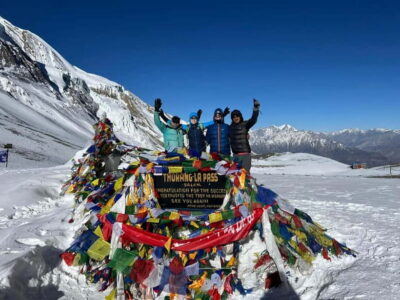
Annapurna Circuit Trek with Tilicho Lake (16 Days)
Read our review →Browse the lists this tour appears in