
Reviewed · ANNAPURNA BASE CAMP TREKS
7-Day Trek to Annapurna Base Camp from Pokhara
Annapurna Base Camp is the prize here: a high mountain sanctuary surrounded by the Annapurna massif, with Machhapuchhre Base Camp on the way and a sharp change from village trails to cold alpine air. You reach it on day four, then retrace the route through forest, river crossings, and hill villages back to Pokhara.
I like two things right away. First, this is a private trek, so your own group sets the walking rhythm rather than being tied to a large departure. Second, the $345 price includes permits, guesthouse accommodation, a guide, trekking poles, and road transfers, which keeps the main trip costs clear.
The catch is that food, drinks, porter service, and tips cost extra. The route also requires strong physical fitness, with several days of about six or seven hours on foot and a climb to roughly 4,130 meters at base camp. The listed 2:15 pm start time also deserves clarification, since the itinerary says hotel pickup begins in the morning.
Key points to know before booking
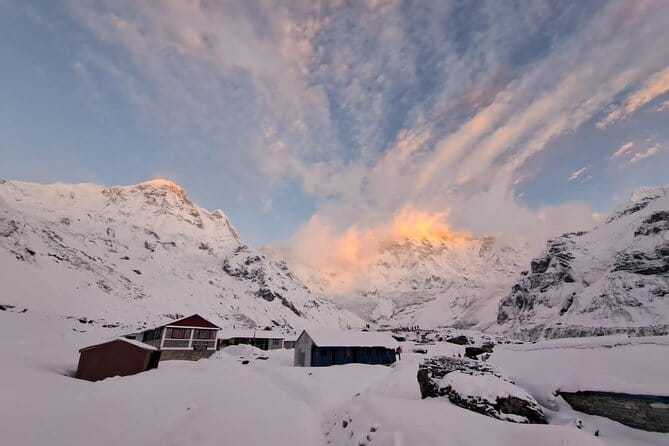
- Annapurna Base Camp on day four: The route reaches Machhapuchhre Base Camp at 3,900 meters before climbing another 730 meters toward Annapurna Base Camp.
- A private group experience: Only your party participates, with an English-speaking trekking guide.
- Village-to-high-mountain route: Ghandruk, Upper Sinuwa, Deurali, Bamboo, and Jhinu Danda give the trek a useful mix of culture, forest, rivers, and high peaks.
- Core costs are covered: Permits, official documents, guesthouse accommodation, a trekking pole, guide, and listed transport are included.
- Plan for extra expenses: Meals, drinks, personal purchases, porter service at $25 per day for one porter shared by two people, and optional gratuities are not included.
- A demanding seven-day schedule: Expect roughly six to seven hours of walking on most days, with steep uphill and downhill sections.
Why this seven-day Annapurna route works
This trek gives you a clear mountain story in a short span. You begin near Pokhara, where roads still connect the route to the outside world, and gradually move through Gurung and Magar communities before entering the Annapurna Sanctuary. By day four, the villages give way to high, open mountain country.
I like that the route is not just a dash toward a viewpoint. Ghandruk gives you a cultural starting point, while the Modi River, rhododendron forest, waterfalls, and suspension bridges add variety to the walking. The return leg also has its own character instead of simply ending at base camp.
The seven-day length is efficient, but it is not easy. You will walk for about six or seven hours on most days, and the trail includes repeated climbs and descents. This is best for someone who already has a good level of fitness and is comfortable spending long days on uneven mountain paths.
The private format matters here. You can ask your guide to explain local communities, mountain names, route conditions, or the official documents being used for the trek. The guide names associated with this experience include Biru, Amrit, and Shiva, although you should confirm who will lead your departure when booking.
More Annapurna Base Camp Treks in Pokhara
- Kathmandu/Pokhara: 5-Day Annapurna Base Camp (ABC) Trek
★ 4.9 · 72 reviews - Private 7 – Day Annapurna Base Camp Trekking
★ 5.0 · 50 reviews - Annapurna Base Camp Trek (8 days)
★ 5.0 · 45 reviews
Day one: Pokhara to Siwai, then Ghandruk
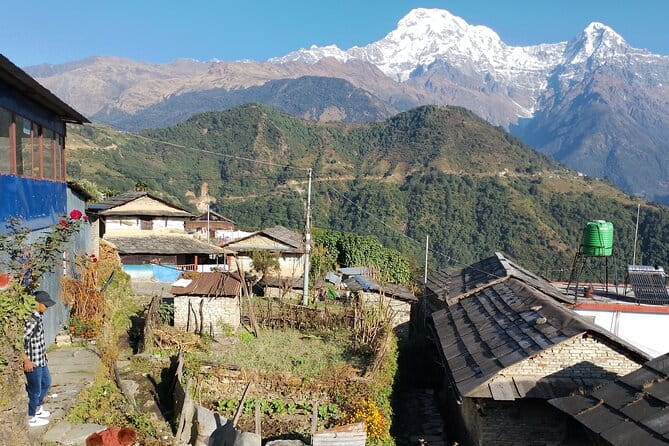
The first morning begins with pickup from a hotel in the Lakeside area, followed by transport to Siwai. From there, you walk toward Ghandruk, with the trail passing near the Modi River, local villages, and hills opening toward the Annapurna region.
Ghandruk is a strong first overnight stop because it introduces the human side of the trek before the route becomes more remote. Gurung and Magar culture is part of the experience, and local food and village traditions give you something to notice beyond the mountain views.
The walking time is listed at about seven hours. That is a serious opening day, especially when road travel comes first. Ask your guide about the exact meeting and departure time, since the booking details list a 2:15 pm start while the itinerary describes a morning pickup. That mismatch may simply be a scheduling error, but it is worth settling before you leave your hotel.
The Siwai transfer is also shared by jeep or bus rather than presented as a private vehicle. Since the trek itself is private, do not assume every road segment uses a vehicle reserved only for your party.
Day two: Ghandruk to Upper Sinuwa
After breakfast in Ghandruk, the trail continues toward Upper Sinuwa. This is described as a strenuous day of about seven hours, with repeated changes in elevation rather than a simple steady climb.
Upper Sinuwa is a practical overnight stop on the route toward the Annapurna Sanctuary. The Sinuwa Hilltop Lodge and Restaurant is listed as the day’s stop, so you can expect a guesthouse-style mountain stay rather than a hotel with extensive facilities.
This is one of the days when pacing matters. The route may feel manageable early on, then become tiring as the uphill sections add up. Keep your daypack light, carry water, and use the trekking pole supplied by the operator. The pole is a small inclusion, but it can be useful on both the uphill sections and the later descents.
Accommodation during the trek is in guesthouses. That keeps the price down and places you close to the route, but you should not book this expecting resort-style comfort. Food and drinks are available to buy, yet they are not part of the $345 package, so budget for meals throughout the seven days.
Day three: Upper Sinuwa through the cooler forest to Deurali
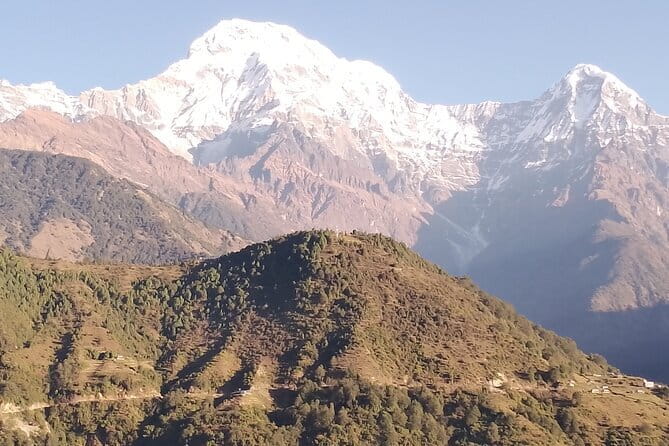
From Upper Sinuwa, the trail heads uphill toward Deurali. The day takes about six hours, and the air becomes cooler as you gain height and move closer to the Annapurna Sanctuary.
This section is valuable because the setting changes in a noticeable way. You leave the warmer village zone and follow a winding route through mountain country, with views of peaks, forests, rivers, and waterfalls along the way. The exact visibility will depend on weather, but the route itself provides a steady build toward the high point of the trek.
Deurali is an important staging point before base camp. By now, the long walking days and rising altitude will be more apparent. Take the evening seriously: eat enough, drink regularly, and tell your guide if you feel unwell. The itinerary does not promise a special altitude program, so your guide’s attention and your own pacing become especially important.
The English-speaking guide is included, and that is one of the better values in the package. A good guide can help with route finding, timing, and basic safety while also explaining the communities and mountains along the way. The trip information describes a normal first-aid kit carried by the guide, but it does not list medical evacuation coverage, so check your insurance separately.
Same mountains, a completely different kind of day:
- ZipFlyer Nepal – The World’s Steepest Zip-line
★ 5.0 · 608 reviews - Bungee Pokhara by HighGround Adventures
★ 5.0 · 366 reviews - From Pokhara: Sarangkot Sunrise Himalayas Tour
★ 4.7 · 218 reviews - ATV Adventure Tour in Pokhara, Nepal
★ 5.0 · 194 reviews
Day four: Machhapuchhre Base Camp to Annapurna Base Camp
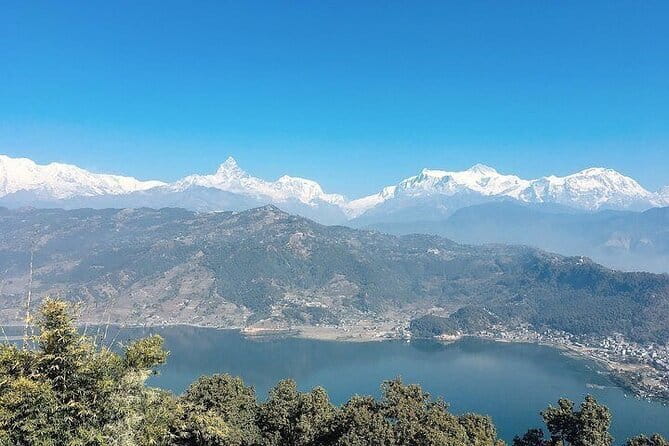
This is the main event. After breakfast, you climb toward Machhapuchhre Base Camp, listed at 3,900 meters, then continue upward to Annapurna Base Camp. The day involves about 730 meters of climbing and takes roughly seven hours.
The appeal is not only reaching the sign or destination. The trail brings you into the Annapurna Sanctuary, where the peaks close around the route and the feeling of enclosure becomes part of the experience. Annapurna Base Camp offers the high alpine setting promised by the trip, with the Annapurna range surrounding the sanctuary.
This will also be the hardest day for many people. The altitude, cold, and long uphill effort can make the final section slow. You should not treat the schedule as a race. Let your guide set a sensible pace, take breaks, and be ready for the possibility that weather affects visibility.
Admission to Annapurna Base Camp is the only itinerary stop specifically marked as included, while the other stops carry no separate admission charge. In practical terms, the major value comes from the organization around the trek: permits, official documents, transport, accommodation, and guiding are bundled rather than left for you to arrange separately.
Day five: The long descent to Bamboo
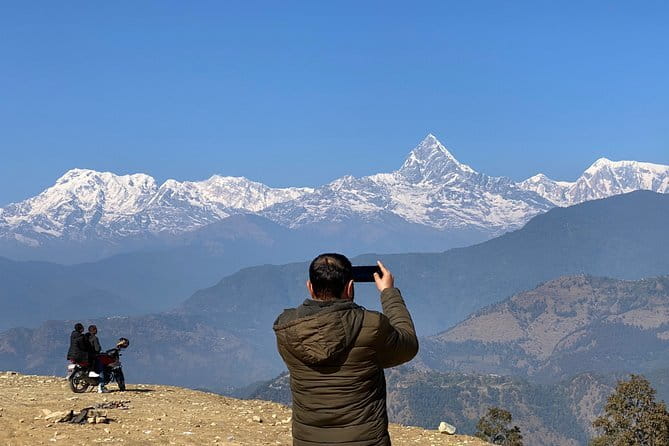
After time at base camp, you return downhill toward Bamboo. The route passes through Deurali, Himalaya, and Dovan before reaching the overnight stop, with about six hours of walking scheduled.
Downhill sounds easy until your knees have spent several days climbing. The trail is described as descending all the way, but you should still expect uneven ground and short changes in grade. Use the supplied pole and take care on wet or loose sections.
Bamboo offers a welcome change of pace after the high point. The return route lets you notice parts of the forest and river corridor that may have passed quickly during the ascent. It also gives you a more realistic sense of how much vertical ground you covered to reach base camp.
A porter is optional and costs $25 per day for one porter shared by two people. If you want help carrying your main bag, arrange this before departure and clarify what weight is acceptable. If you walk with only a daypack, the trek will feel easier, but you still need room for personal items and clothing changes.
Day six: Bamboo to Jhinu Danda
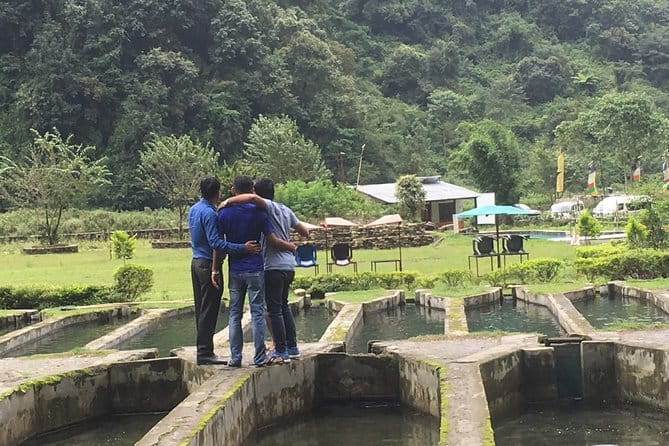
The route from Bamboo to Jhinu Danda includes a short, steep climb to Khuldi Ghar, then a downhill forest section toward Sinuwa Danda. From there, you descend to the Chomrong Khola, cross a bridge, and climb briefly to Chomrong village before continuing to Jhinu Danda.
This is another six-hour day that demonstrates the main character of the trek: you rarely walk on a flat line for long. A bridge can be followed by a climb, and a forest descent can lead to another rise. That rhythm is tiring, but it also keeps the scenery changing.
Jhinu Danda is the final overnight stop before returning to Pokhara. The route description does not specify any additional activity there, so do not book this particular trip solely on the expectation of a hot-spring visit. The key point is its position on the return route and its connection to the final walking day.
Day seven: Jhinu Danda back to Pokhara Lakeside
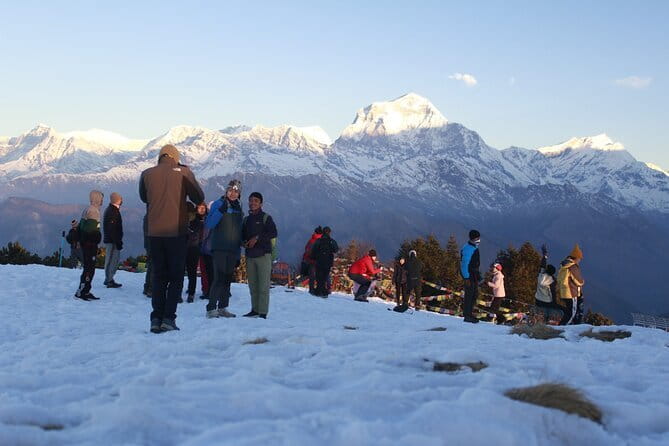
The last day includes a short downhill section and a long suspension bridge crossing to Samrung Khola. At Samrung Khola, you board a local jeep for the journey back to Pokhara, with the road trip taking you to the Lakeside area.
The walking time is listed at about six hours, so this is not merely a quick stroll before transport. Your legs will already be tired, and the bridge and downhill path require attention. Still, reaching the road marks a clear end to the mountain portion.
The return transfer is by shared jeep or bus. That is a sensible, lower-cost arrangement, though road travel in mountain areas can take patience. The package includes the Samrung Khola to Pokhara transfer, along with the initial Pokhara to Siwai ride.
What the $345 price really covers
At $345 per person, the trip offers useful value for a private seven-day trek. The included items are:
- Hotel pickup and drop-off within Pokhara Lakeside
- An English-speaking trekking guide
- Trekking permits and official documents
- Guesthouse accommodation during the trek
- Transport between Pokhara and Siwai
- Transport between Samrung Khola and Pokhara
- One trekking pole per person
- A normal emergency first-aid kit with the guide
That list covers the structure of the trip, but not the full daily budget. You pay separately for food, drinks, personal expenses, porter service, and optional tips. Group discounts are available, which may improve the per-person value for a larger private party.
The private format is the main reason to compare this price carefully with cheaper group departures. If you want only the lowest possible cost, food and porter exclusions may narrow the difference. If you value having only your own party on the trek and want permits, transport, lodging, and a guide organized in advance, the package is easier to justify.
Guides, comfort, and the practical trade-offs
The guide is central to this experience. Biru, Amrit, and Shiva are names associated with the departures, and the available feedback repeatedly highlights friendly support, safety awareness, route information, and good arrangements. Confirm your assigned guide in advance rather than assuming you will receive a particular person.
Accommodation is in guesthouses, and the package does not describe room types or bathroom arrangements. I would ask what is included at each overnight stop, especially if you have specific comfort needs. The same applies to meals, since they are available for purchase but not included.
The trek is near public transportation, and transfers are built into the route. That makes the trip easier to arrange from Pokhara, but the shared jeep or bus may be less comfortable than a private vehicle. You should also confirm the exact pickup time, because 2:15 pm does not fit neatly with the morning departure described for day one.
Cancellation is flexible if your plans change early. You can receive a full refund by canceling at least 24 hours before the local start time. Cancellations or changes within 24 hours are not accepted for a refund.
Who should book this trek
I would choose this trek if you want a compact route to Annapurna Base Camp with a private group, a guide, organized permits, and transport from Pokhara. It suits people who prefer a planned mountain trip but still want village paths, local communities, guesthouse stays, and long days outside.
It is less suitable if you want a gentle holiday, included meals, hotel comfort, or a short walk each day. The route demands strong physical fitness, and the day four climb is a real test. A porter can reduce the load, but a porter will not remove the steep ascents, high altitude, or long descents.
You should also be comfortable with some uncertainty. Mountain weather can affect views, and shared road transport is part of the arrangement. The experience is at its best when you allow time for a slower pace and focus on the complete route, not only the final base camp photograph.
Should you book the Annapurna Base Camp trek?
Book it if the combination of private guiding, organized logistics, and a seven-day mountain route matches your priorities. The strongest parts are the progression from Ghandruk villages to the high sanctuary, the included permits and transfers, and the chance to walk with a guide such as Biru, Amrit, or Shiva if available for your date.
Before paying, confirm the 2:15 pm start time, your guide’s name, the guesthouse standard, and how meal costs will be handled. If you are fit, prepared for six to seven-hour walking days, and willing to pay extra for food and perhaps a porter, this is a well-priced way to reach Annapurna Base Camp from Pokhara.
FAQ
How long does the Annapurna Base Camp trek take?
The experience lasts approximately seven days, beginning and ending in Pokhara.
Where does the trek begin?
Hotel pickup is offered within the Lakeside area of Pokhara. The road transfer goes to Siwai, where the walking portion toward Ghandruk begins.
Is this a private tour?
Yes. Only your group participates in the activity.
Is a trekking guide included?
Yes. An English-speaking trekking guide is included. Guides associated with the experience include Biru, Amrit, and Shiva, but you should confirm the guide assigned to your departure.
Are food and drinks included?
No. Food and drinks are available for purchase during the trek but are not included in the price.
Is porter service included?
No. A porter costs $25 per day, with one porter shared by two people.
What happens if I cancel?
You can receive a full refund if you cancel at least 24 hours before the experience start time. Cancellations or changes made within 24 hours are not refunded or accepted.
More 7-Day Experiences in Pokhara
- Annapurna Base Camp Trek from Pokhara 7 Days
★ 5.0 · 19 reviews - Pokhara: 7-Day Annapurna Base Camp Trek & Natural Hot Spring
★ 5.0 · 11 reviews - Annapurna Base Camp 7 Days Trek from Pokhara
★ 5.0 · 8 reviews - 7 Days Annapurna Base Camp Trek from Pokhara
★ 5.0 · 6 reviews
More Hiking & Trekking in Pokhara
- Poon hill Trek 3 days
★ 5.0 · 176 reviews - Trekking in Annapurna/Langtang/Everest/Upper Mustang regions
★ 5.0 · 161 reviews - Pokhara: 4-Day Ghorepani, Poonhill & Ghandruk Mountain Trek
★ 5.0 · 132 reviews - Ghorepani – Poon Hill Trek 3N-4D
★ 5.0 · 125 reviews
Just added around Pokhara
- Pokhara: Pokhara Highlights Tour by Bus★ 3.6 · 10 reviews
- Pokhara in 5 Hours: Lake, Museum, Cave, Falls & Pagoda Hill★ 4.5 · 16 reviews
- Discover Pokhara in Style: Private Vehicle Service with Driver★ 5.0 · 5 reviews
- Annapurna Base Camp Trek from Pokhara and Kathmandu★ 5.0 · 7 reviews
- 4 Day Mardi Himal Base Camp Trek from Pokhara★ 5.0 · 18 reviews
- Beautiful Sarankot Sunrise with Full Day Sightseeing in Pokhara★ 4.5 · 3 reviews
- 6 days Annapurna Basecamp Trek★ 5.0 · 16 reviews
- Round The Phewa★ 4.5 · 8 reviews
Annapurna Base Camp Treks, compared.
Kathmandu to Annapurna Base Camp (ABC) 5-Day Trek
Read our review →
Kathmandu/Pokhara: 5-Day Annapurna Base Camp (ABC) Trek
Read our review →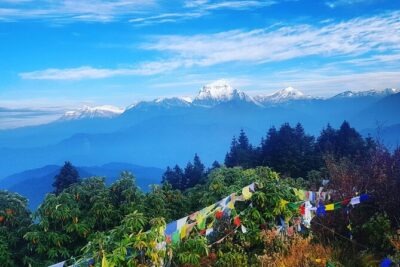
11-Day Hike Tour to Annapurna Base Camp Bliss in Kathmandu
Read our review →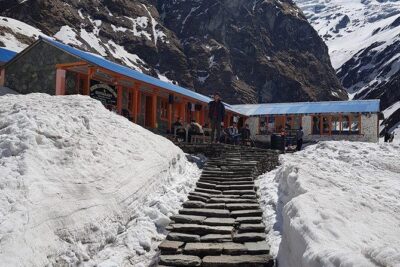
Browse the lists this tour appears in