
Reviewed · ANNAPURNA CIRCUIT TREKS
Kathmandu: 10-Day Annapurna Circuit Trek via Thorong La Pass
Thorong La Pass is the big prize here: at 5,416 meters, it is a serious high-altitude crossing, not just a scenic walk. You begin with bus and jeep travel from Kathmandu, then climb through pine forests, Tibetan-style villages, dry mountain country, and the broad Manang Valley before making the pass and descending to Muktinath.
I like the sensible acclimatization stop in Manang and the care built into the guiding. Guides including Ganesh, Ghanshyam, Prakash, and Chakra have been praised for pacing, meals, hydration, and rest. I also like that permits, meals, tea-house lodging, transport, rescue assistance, and a Pokhara hotel night are included.
The main drawback is the pace and altitude. The 10-day plan is compact, and the pass day reaches nearly 18,000 feet. You need strong fitness, proper gear, insurance with helicopter evacuation, and a willingness to accept cold, basic lodging, and changing mountain conditions.
Key points to know before booking
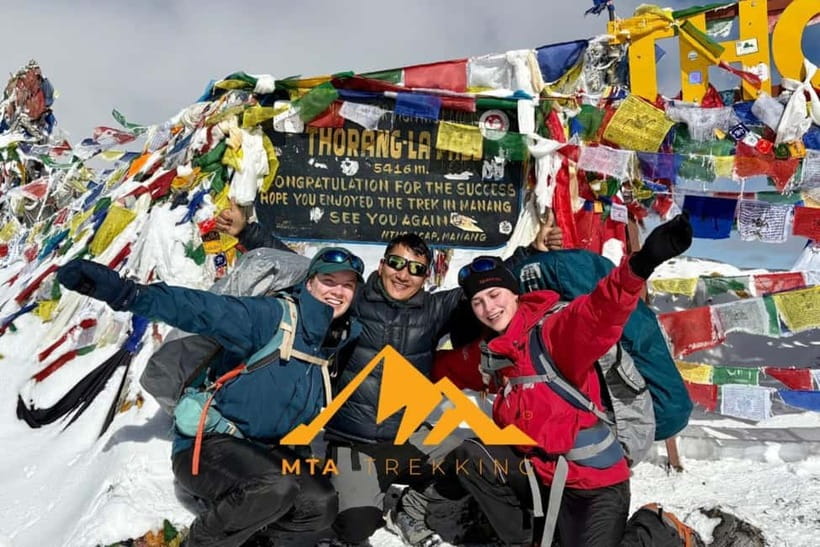
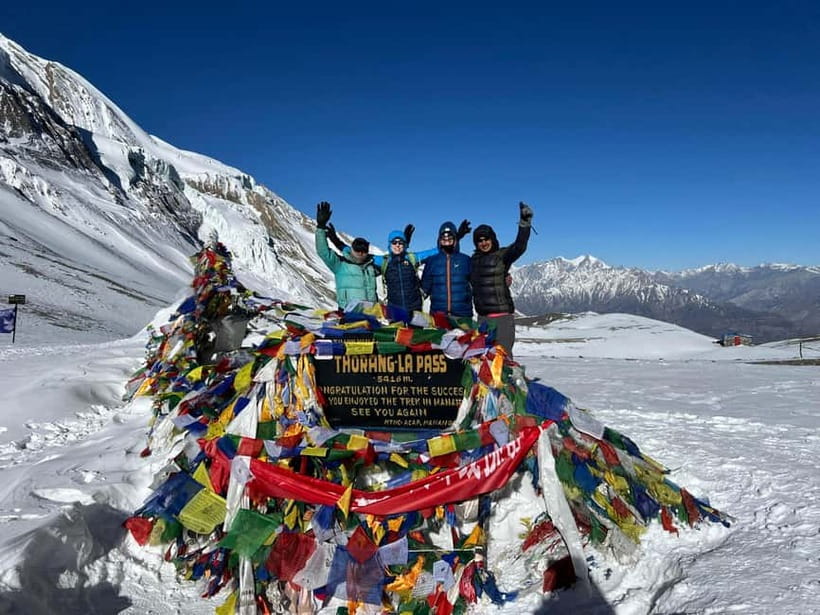
- Thorong La reaches 5,416 meters: The highest point is physically demanding and brings real altitude risk.
- Manang provides the key rest day: You can take a short hike to a stupa or visit Gangapurna Glacier Lake while your body adjusts.
- The route changes dramatically: Expect forests near Chame, broad valleys around Manang, and dry Mustang country after the pass.
- Meals and tea-house lodging are included: Soft drinks, bottled or boiled water, showers, charging, and personal costs are extra.
- Local guiding is a major strength: Guides such as Ganesh, Ghanshyam, Prakash, and Chakra have been praised for careful pacing and cultural insight.
- The trip ends by public bus: Day 10 is an approximately eight-hour ride from Jomsom to Pokhara, so the adventure finishes with a long road journey rather than a flight.
Why Thorong La makes this trek worth the effort
The Annapurna Circuit works because it gives you several different Nepal experiences in one route. You start in the middle hills, where green valleys and forest paths frame the walk. Higher up, the villages feel more Tibetan in architecture and culture. After Thorong La, the scenery turns dry and wide, with Mustang Valley and Dhaulagiri views.
That change is the great pleasure of the route. You are not walking through one repeated mountain setting for 10 days. The trail keeps changing as the air gets thinner and the villages become more sparse.
The pass itself is the emotional center. You leave Thorong Phedi early, climb steadily, and spend seven to eight hours on the full journey to Muktinath. The approach can feel slow at high altitude, but the reward is a huge sense of achievement and views toward Mustang and Dhaulagiri on the descent.
I would not treat the pass as a quick photo stop. The altitude can make every uphill step feel expensive. A guide who watches your breathing, eating, hydration, and rest is worth far more here than a guide who simply knows the trail.
More Annapurna Circuit Treks in Pokhara:
- Kathmandu: 9-Day Annapurna Circuit Trek via Thorong La Pass
★ 5.0 · 17 reviews - Annapurna Circuit Trek with Tilicho Lake
★ 5.0 · 368 reviews - Annapurna Circuit Trek
★ 5.0 · 94 reviews
Kathmandu to Dharapani: a long road into the mountains
The first day begins with a public bus from Kathmandu to Besisahar, usually taking seven to eight hours. From Besisahar, you continue to Dharapani by shared jeep.
This is not a glamorous travel day. Roads in Nepal can be slow, and the bus and jeep combination means you should expect a full day of movement before the walking begins. Still, it gives you a useful view of the countryside, with hills, forests, and changing views along the route.
Dharapani sits at roughly 1,850 meters, according to the trip information provided for this route. Starting the trek here gives you a gradual rise rather than dropping you straight into extreme altitude.
The transport is included, which helps the price make sense. You are not left to arrange the Kathmandu to trailhead connection yourself, though you should be prepared for public transport rather than private comfort.
Dharapani to Chame: forests, temples, and Annapurna II
The second day is a six-hour walk to Chame, reaching about 2,670 meters. The trail passes through grassy areas with views of Annapurna II, then moves into oak and pine forest.
Bagarchhap adds an early cultural stop, with a Bhote village and Buddhist temple. This is one of the first places where the route feels distinct from a standard hill walk. You can see how local settlement patterns, religion, and mountain conditions shape village life.
The path continues to Timang, set below Lamjung Himal, before leveling out toward Chame. Tea-house lodging keeps the night simple. Expect a bed, shared facilities in many places, and a more basic level of comfort than in Kathmandu or Pokhara.
The six-hour walking time is manageable for fit hikers, but you should not judge the trip by this day. The real test comes when the air thins above Manang.
Chame to Upper Pisang: pine forest and the Bhratang Valley
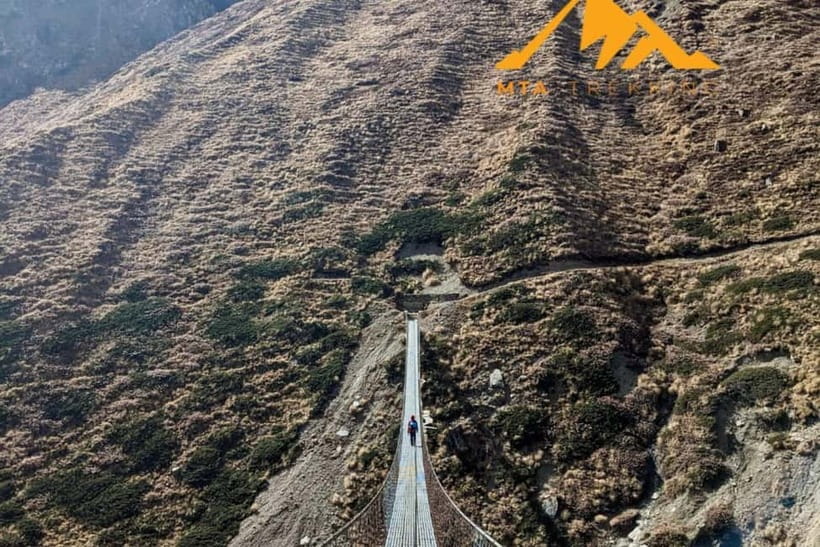
Day three takes five to six hours and reaches about 3,200 meters. You pass apple orchards and continue through the Bhratang Valley, with views of Lamjung Himal along the way.
The route moves between forest, river scenery, and exposed mountain slopes. You then descend toward Pisang or continue to Upper Pisang, depending on the exact overnight arrangement.
Upper Pisang is a useful overnight point because it places you in the high part of the circuit while keeping the daily rise gradual. That matters. One of the best features of this schedule is that the altitude generally increases in steps rather than through one huge jump.
At this point, you will likely notice colder nights and more effort on uphill sections. Eat properly, drink regularly, and tell your guide if a headache or unusual tiredness develops. Pretending you feel fine is a poor strategy at altitude.
A few more Pokhara trips to weigh up
- Poon hill Trek 3 days
★ 5.0 · 176 reviews - Trekking in Annapurna/Langtang/Everest/Upper Mustang regions
★ 5.0 · 161 reviews - Pokhara: 4-Day Ghorepani, Poonhill & Ghandruk Mountain Trek
★ 5.0 · 132 reviews - Ghorepani – Poon Hill Trek 3N-4D
★ 5.0 · 125 reviews
Upper Pisang to Manang: the scenic heart of the route
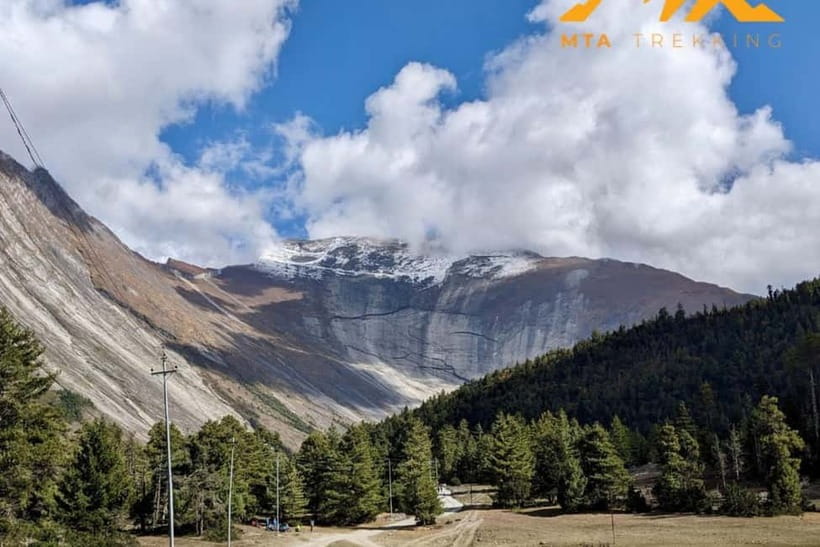
The walk to Manang takes five to six hours and reaches about 3,540 meters. This is one of the most rewarding days because the trail opens into views of the Manang Valley, Tilicho Peak, Annapurna III, and Annapurna IV.
You cross the Marsyangdi River on a wooden bridge and pass through Mungji and Braga. Braga is especially appealing for its traditional mountain setting and Buddhist character, although the supplied schedule does not specify a separate guided visit or entry arrangement.
Manang is more than a place to sleep. It is the main acclimatization base before the final push toward Thorong La. The village gives you a chance to slow down, wash a few clothes if facilities allow, sort your gear, and prepare for a much harsher environment above 4,000 meters.
The guide’s role becomes more important here. Guides praised on this route have encouraged rest, steady eating, hydration, and sensible food choices at higher elevations. One guide also helped arrange purifier tablets for mountain water, though you should confirm what water treatment is supplied before departure.
Manang acclimatization: the day that protects the pass attempt
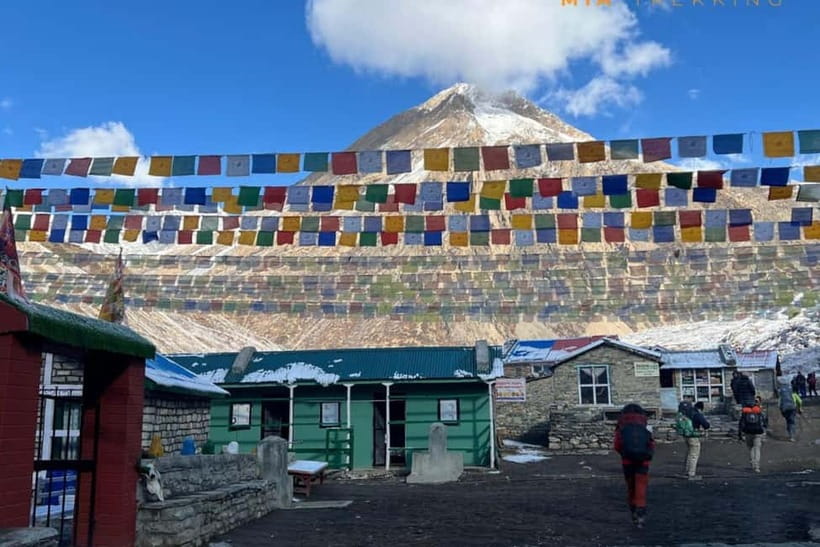
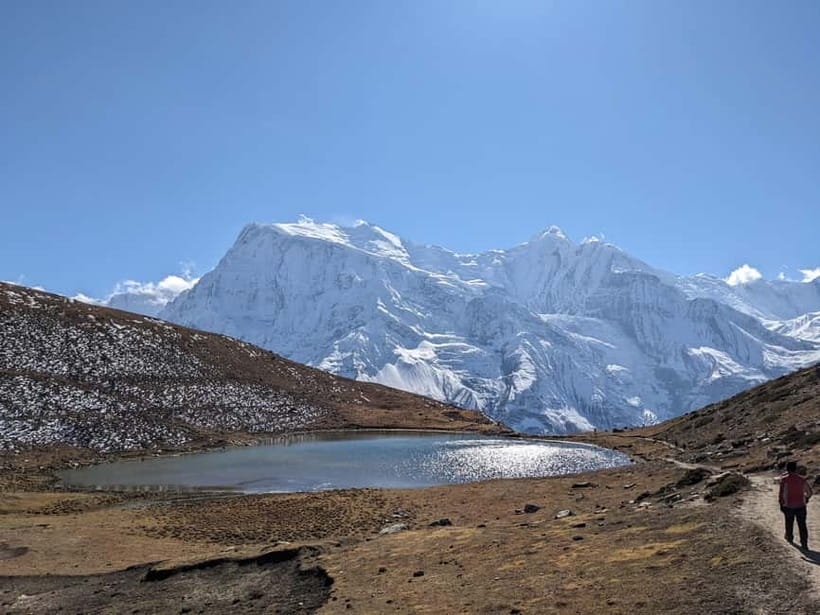
Day five is a rest and adjustment day in Manang, with optional short hikes reaching about 4,050 meters. Suggested outings include crossing a river to see an icefall, hiking to a stupa, or visiting Gangapurna Glacier Lake.
This is not a wasted day. It is the most important part of the itinerary for managing altitude. You gain height during the day, then return to sleep lower in Manang, giving your body a better chance to adjust.
You should keep the optional hike easy. The point is not to prove your fitness. The point is to spend time at altitude, enjoy the views, and return with energy for the pass.
This is also your best chance to learn about local life. The guides associated with this experience are praised for explaining Nepalese customs, religion, geography, and daily life. That local context turns the route into more than a string of mountain views.
Manang to Yak Kharka: short distance, thin air
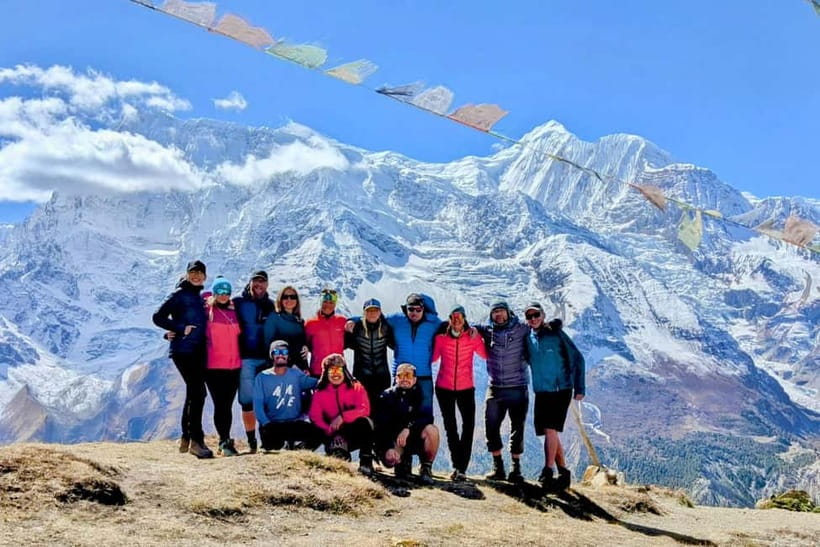
The walk to Yak Kharka takes around four hours and reaches about 4,050 meters. On paper, this is a short day. In practice, the height makes it demanding.
The trail climbs through open country with wide mountain views. You may feel breathless on slopes that would seem easy at home. Walk slowly and keep your own pace. A private group is useful here because the guide can adjust the walking rhythm and rest periods rather than pushing everyone to match a large group.
One of the strongest practical features of the guiding is this attention to small decisions. Guides have helped people conserve energy above 4,000 meters by choosing easier routes, adding rest, and avoiding poor food choices. That sort of judgment can make the difference between reaching Thorong Phedi ready for the pass or arriving exhausted.
Yak Kharka to Thorong Phedi: the final staging point
The next walk takes four to five hours and reaches Thorong Phedi at about 4,450 meters. You first climb toward a hilltop, descend toward the Marsyangdi headwaters, cross a concealed wooden bridge, and then climb again along the river’s right bank.
Thorong Phedi is not the place for a relaxed evening of sightseeing. It is a staging point for the pass. You need to eat, organize your warm clothing, fill your water, and sleep as well as the altitude allows.
The lodging remains tea-house based, so comfort is limited. Personal expenses such as showers, battery charging, laundry, phone calls, and bottled or boiled water are not included. Carrying some cash for these needs is sensible, although the precise amount depends on your habits and what is available on the route.
Thorong La to Muktinath: the hardest and best day
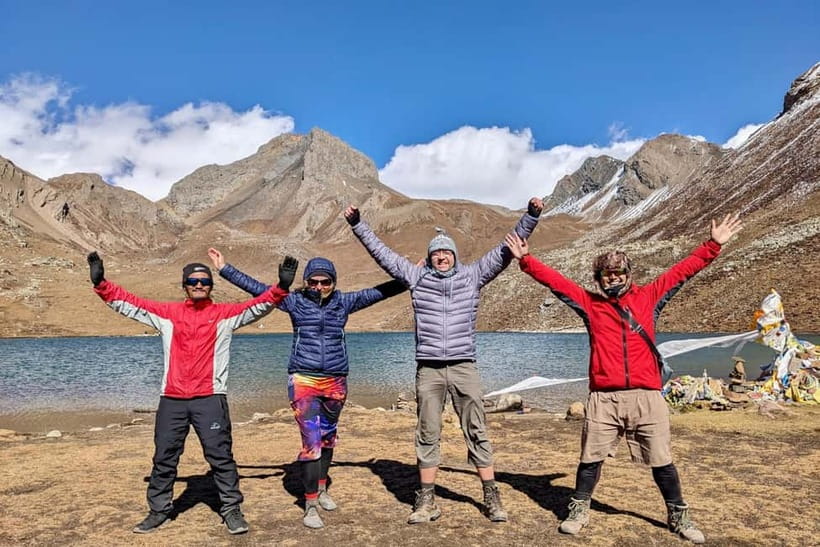
The crossing from Thorong Phedi to Muktinath is listed at seven to eight hours, with a maximum height of 5,416 meters. This is the day that demands the most from you.
Expect an early start. The climb to the pass is steady and exposed, and the cold can be sharp. Your guide should set a careful pace and watch for symptoms of acute mountain sickness. Severe headache, confusion, unusual weakness, vomiting, or worsening breathing are not problems to walk through.
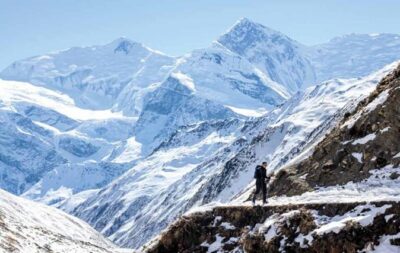
At the top, the pass delivers the big moment: prayer flags, high mountain air, and a view over the Mustang side of the Himalaya. The descent to Muktinath can be a relief, but it still places stress on tired legs and knees.
Muktinath is culturally important to both Hindu and Buddhist communities. The trip includes the route through this area, but it does not specify a private religious tour or entry fees. You can still appreciate the setting and ask your guide about its meaning.
Muktinath to Jomsom via Kagbeni
Day nine takes seven to eight hours toward Jomsom, passing through Kagbeni. This section gives you a different side of the circuit, with drier terrain and a stronger sense of Mustang country.
Kagbeni is a particularly atmospheric village on the route. The schedule allows time to explore it, though you should confirm how much time is available with your guide because the day is long.
The walking here comes after the pass, so do not assume the hard work is over. Your body may be tired, and the changing surface can make the day feel longer than its altitude profile suggests.
Jomsom to Pokhara: an eight-hour public bus finish
The final day is an approximately eight-hour public bus ride from Jomsom to Pokhara. Transport is included, and one night at Hotel Orchid in Pokhara is also part of the package.
This ending is practical rather than indulgent. After nine days of walking, the hotel night gives you a proper place to recover, and the included farewell dinner adds a pleasant closing touch.
The bus ride is worth understanding before you book. It is long, and it is not the same as flying from the mountain region to Pokhara. If you want a faster finish, ask the operator about alternatives, but do not assume they are included.
What the $447 price really covers
At $447 per person, this is a low-cost way to arrange a demanding Himalayan trek, especially because several major expenses are bundled together. You receive hotel pickup in the Thamel area of Kathmandu or the Lakeside area of Pokhara, permits and a TIMS card, transport to the trail, a government-registered local guide, tea-house and lodge accommodation, and all breakfasts, lunches, and dinners during the trek.
You also receive emergency rescue assistance in case of an emergency and one Pokhara hotel night. Those inclusions reduce the amount of planning you must do yourself.
The price does not cover trekking gear, travel and rescue insurance, drinks, bottled or boiled water, showers, laundry, phone calls, battery charging, bar bills, extra porters, international flights, or a Nepal visa. You must also budget for tips and personal purchases, although tips are not specifically listed in the supplied price details.
The largest financial warning is insurance. You need coverage for medical care and helicopter evacuation up to 5,400 meters. Do not assume a normal travel policy is enough.
Who should choose this 10-day route
This trip suits fit adults who want the classic Annapurna Circuit and prefer a private group with a local guide. It is particularly useful for people who want meals, permits, transport, lodging, and a guide arranged in one package.
It is not suitable for children under 15, people over 70, pregnant women, people with respiratory problems, or anyone currently dealing with altitude sickness. Those restrictions are sensible, but age alone does not determine readiness. Your previous hiking experience, general health, and response to altitude matter too.
Bring warm clothing, long trousers, a change of clothes, waterproof bags, sunscreen, sunglasses, hiking shoes, trekking gear, and your passport or ID. Alcohol and drugs are not allowed.
The route is physically demanding but not presented as a race. The best chance of success comes from walking slowly, listening to your guide, eating well, and turning back or descending if serious symptoms appear.
Should you book it?
I would book this trek if you want Thorong La, accept basic tea-house conditions, and value a guide who takes altitude seriously. The most convincing part of the package is not simply the pass. It is the steady progression through Dharapani, Chame, Pisang, Manang, Yak Kharka, and Thorong Phedi, with a full acclimatization day in Manang.
I would hesitate if you want private vehicles, luxury lodging, a short final transfer, or a relaxed schedule. Ten days is efficient, but it leaves little spare time if weather, road delays, or altitude problems slow you down.
For a first high-altitude Nepal trek, the price is appealing because it includes the major route basics. Book only after checking your insurance, gear, fitness, and the exact guide and porter arrangements for your departure.
FAQ
How high is Thorong La Pass?
Thorong La Pass reaches 5,416 meters, or 17,769 feet, above sea level.
How long is the trek?
The experience lasts 10 days, beginning with transport from Kathmandu and ending with a public bus from Jomsom to Pokhara.
Is transportation included?
Yes. The package includes public transport from Kathmandu to Besisahar, a shared jeep from Besisahar to Dharapani, and public transport from Jomsom to Pokhara. Hotel pickup and drop-off are included in the specified Kathmandu Thamel and Pokhara Lakeside areas.
What type of accommodation is provided?
You stay in tea houses and lodges during the trek. One night at Hotel Orchid in Pokhara after the trek is also included.
Are meals included?
Breakfast, lunch, and dinner are included during the trek. Soft drinks, alcoholic drinks, bottled or boiled water, and bar bills are not included.
Is a guide included?
Yes. The package includes an experienced, government-registered local guide. Guiding is available in English and Hindi.
Is this a private group?
Yes. The activity is offered as a private group experience.
Is travel insurance included?
No. You must arrange your own travel and rescue insurance. The operator strongly recommends medical coverage and helicopter evacuation coverage up to 5,400 meters.
What should I bring?
Bring warm clothing, a change of clothes, long pants, a waterproof bag, sunscreen, your passport or identification, trekking gear, hiking shoes, and sunglasses. Personal expenses and trekking gear are not included in the price.
Just added around Pokhara
- Seti George and Thrilling Suspension Bridge Tour at Pokhara★ 4.5 · 3 reviews
- Tandem Paragliding in Pokhara★ 4.8 · 8 reviews
- Pokhara: Sunrise Tour to Sarangkot★ 5.0 · 3 reviews
- Pokhara: Suspension Bridge Private Tour- 30 Min Village Walk★ 4.8 · 9 reviews
- Pokhara: Visit Best Seven Tourist Destination by Sharing Bus★ 3.4 · 10 reviews
- Pokhara Sightseeing By Bus: Day Trip★ 4.6 · 7 reviews
- Pokhara Sightseeing By Bus – Day Trip★ 3.2 · 8 reviews
- Pokhara: Seti River Rafting Adventure with Hotel Pickup★ 5.0 · 5 reviews
Annapurna Circuit Treks, compared.
15-Day Private Annapurna Circuit Trek from Kathmandu
Read our review →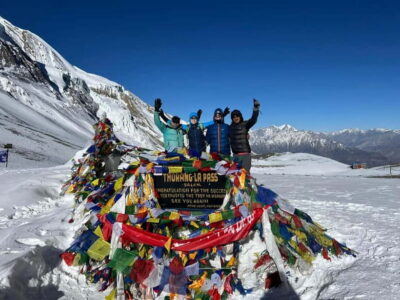
Browse the lists this tour appears in