
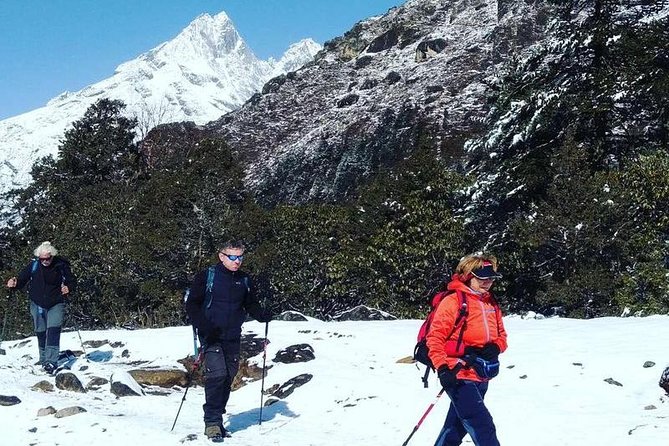
Reviewed · EVEREST BASE CAMP TREKS
Short Everest Base Camp Trek 10 Days
Flying into Lukla is the dramatic opening to this 10-day Everest Base Camp trek. From there, you walk through the Dudh Koshi valley, spend time in Namche Bazaar, visit Tengboche Monastery, and reach the foot of Everest and the Khumbu Glacier. The route packs a lot into a short schedule.
I like that the $1,690 price includes both Kathmandu to Lukla flights, tea house lodging, three daily meals, a sleeping bag, down jacket, and duffel bag. I also like the private format, which lets your group work with one guide rather than being tied to a large departure.
The main consideration is the tight timetable. This is a demanding high-altitude trek, and the published details do not spell out every daily walking distance or acclimatization stop. You should have moderate fitness and be comfortable with a physically serious trip.
Key points at a glance
- Lukla flights are included: The package covers both flights between Kathmandu and Lukla, a major cost and planning concern.
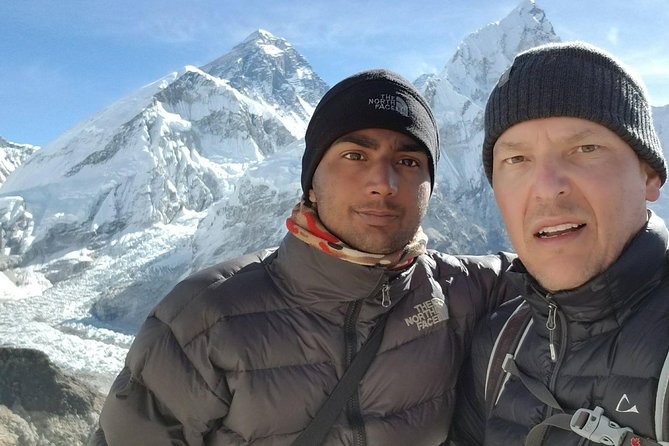
- Everest Base Camp is the main goal: You walk to the base of Mount Everest and see the Khumbu Glacier and Khumbu Icefall area.
- Sherpa culture is part of the route: Namche Bazaar and Tengboche Monastery add more than mountain views.
- Private group format: Only your own group takes part, with guides such as Pradeep, BK, Dhruba Dharel, or Susil assigned depending on availability.
- Useful gear comes with the trek: A sleeping bag, down jacket, and duffel bag are supplied for use during the trek and returned afterward.
- Weather can change plans: Flights and trekking arrangements depend on suitable conditions, with a date change or full refund offered if the experience is canceled for poor weather.
What the 10-day Everest route actually gives you
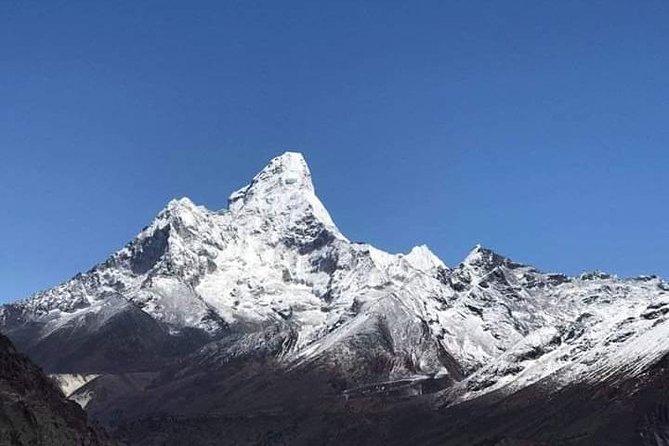
This is a shortened version of the classic Everest Base Camp journey. You begin at Tribhuvan International Airport in Kathmandu, fly to Lukla, and then walk toward Everest through the Khumbu region.
The route is famous for its scenery, but the appeal is not limited to the mountain itself. You pass through areas shaped by Sherpa culture, spend time in Namche Bazaar, and visit Tengboche Monastery. The walk follows the Dudh Koshi river valley before reaching the higher terrain around Everest.
A 10-day schedule suits you if your time in Nepal is limited. It does not suit you if you want a slow, flexible mountain holiday with many spare days. The shorter schedule means the experience is focused and efficient, but it leaves less room for weather delays, rest, or changes in pace.
The operator describes the activity as private, so your group is not combined with other booking parties. That can matter on a hard trek. You can discuss pace and needs with your guide, though you should confirm the exact group size and daily plan before departure.
More Everest Base Camp Treks in Kathmandu:
- Everest Base Camp Trek – 14 Days
★ 5.0 · 1,499 reviews - Everest Base Camp Trekking
★ 5.0 · 485 reviews - Everest Base Camp Trekking – 13 Day
★ 5.0 · 365 reviews
Kathmandu to Lukla, the trip begins with a flight
Your meeting point is Tribhuvan Airport in Kathmandu. The package includes the return flight to Lukla, so you do not need to arrange that important part separately.
The flight is often one of the most memorable parts of the trip. Lukla is the gateway for the Everest region, and the short mountain flight puts you close to the walking route. From Lukla, the trek begins on foot rather than by road.
The supplied information does not give a fixed flight time or a guaranteed departure schedule. That matters because mountain weather can affect air travel. Keep your Kathmandu plans flexible, and avoid arranging an important international connection immediately after the trek.
Airport pickup is offered. The details do not say if airport transfers are provided on every return or only at the start, so ask the operator to confirm what is covered for your arrival and departure.
Following the Dudh Koshi toward Namche Bazaar
The early walking section follows the Dudh Koshi river valley. This gives you a gradual introduction to the region, with changing views, mountain villages, and the first feel of trekking life in the Khumbu.
Namche Bazaar is one of the key stops. It is widely known as the Sherpa capital and is an important social and trading center on the Everest route. You are not simply passing a scenic village here. Namche helps you understand how local communities support life and travel in a high mountain region.
I like this part of the trip because it adds human interest to the mountain scenery. You have a chance to see the lifestyle of the Sherpa people rather than treating the route as a straight march toward a famous viewpoint.
The schedule does not specify how many nights you spend in Namche. That is a useful question to ask before booking, particularly because time at altitude affects how comfortable and safe the trek feels. The tour only states that you should have moderate physical fitness, so you should not treat the route as a casual walk.
Tengboche Monastery and the spiritual side of the trail
Tengboche Monastery, also written as Tyangboche in the supplied details, is another major stop. It is described as an old monastery, and its presence gives the trek a cultural center beyond the natural scenery.
For many people, this is one of the most meaningful parts of the journey. Everest Base Camp is the headline attraction, but Tengboche helps explain the religious and cultural setting of the Khumbu. You can enjoy the mountain route while also seeing a place connected to local Buddhist life.
The information does not promise a private ceremony, a special monastery talk, or a set visiting time. Think of it as a planned stop at an important cultural site, not as a specialist religious tour.
The monastery also breaks up the physical journey. A 10-day trek needs moments that are not only about distance and altitude. Tengboche provides that change of focus.
A few more Kathmandu trips to weigh up
- Nagarkot Sunrise View and Day Hiking from Kathmandu
★ 5.0 · 471 reviews - Annapurna Circuit Trek with Tilicho Lake
★ 5.0 · 368 reviews - Everest Base Camp Trek -14 Days
★ 5.0 · 321 reviews - Annapurna base camp trek 5 Days
★ 5.0 · 252 reviews
The final approach to Everest Base Camp
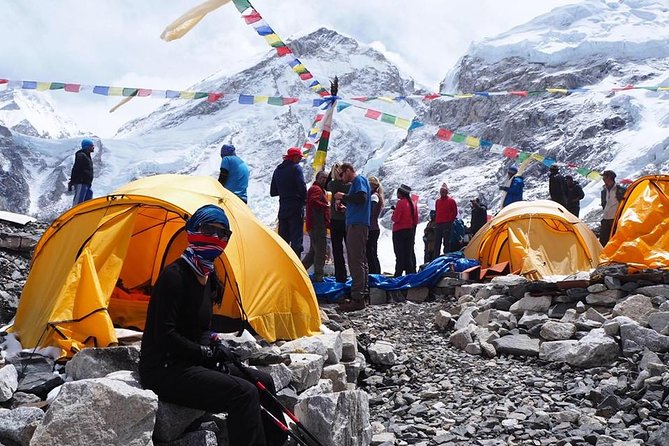
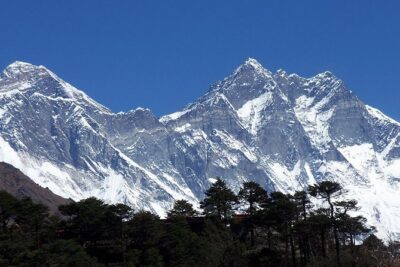
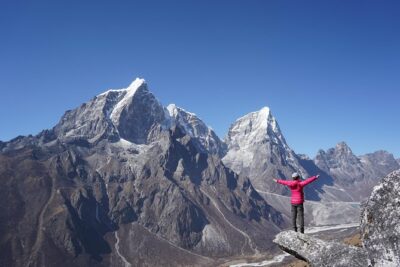
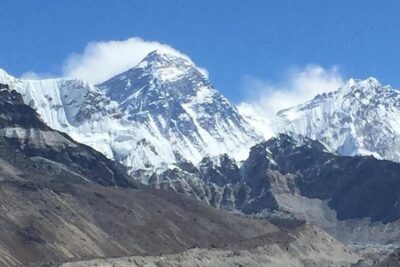
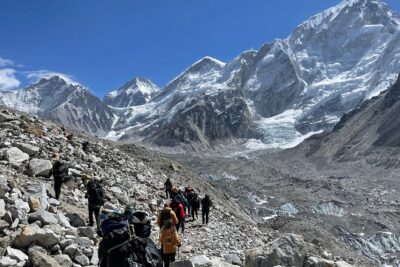
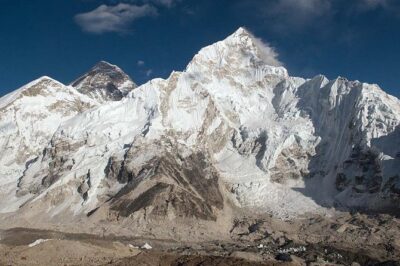
The goal is Everest Base Camp, at the foot of Mount Everest. You also see the Khumbu Glacier and the Khumbu Icefall, along with other high peaks in the Everest region.
The view is not just about one mountain. Everest dominates the story, but the surrounding peaks and glacial features make the approach feel much larger. The route gives you a close look at the high mountain setting that climbers use before attempting the summit.
The supplied details do not state the exact elevation of Base Camp, the daily distances, or the planned overnight villages. I would ask for a day-by-day route before paying, especially if you have not completed a high-altitude trek before.
You should also ask how the guide handles changes in pace or signs of altitude problems. The positive experience reports repeatedly highlight close attention from guides and careful organization. Names specifically associated with the operator include Pradeep, BK, Dhruba Dharel, and Susil. Your guide may be one of these people or someone else, so request the assigned guide’s name and experience before arrival.
What the private guide service adds
The private format is one of the stronger features here. Only your group participates, which can make a demanding trek easier to manage. You are not waiting for a large mixed group at every stop, and you have a direct point of contact for practical questions.
Several guides connected with the operator receive especially warm praise. Pradeep is described as helpful, while BK is noted for local knowledge, attention to detail, and care with safety. Dhruba Dharel is associated with organizing the full journey, and Susil is described as helpful and experienced.
That does not guarantee that every guide will provide the same experience, but it tells you what to expect from the company’s better service model: airport coordination, transport, trekking support, and attention to personal needs.
The operator’s service is also described as handling the trip from arrival in Kathmandu through the trek. That can be valuable if you prefer one local contact instead of arranging flights, lodging, meals, equipment, and airport transport on your own.
Tea house lodging, meals, and supplied equipment
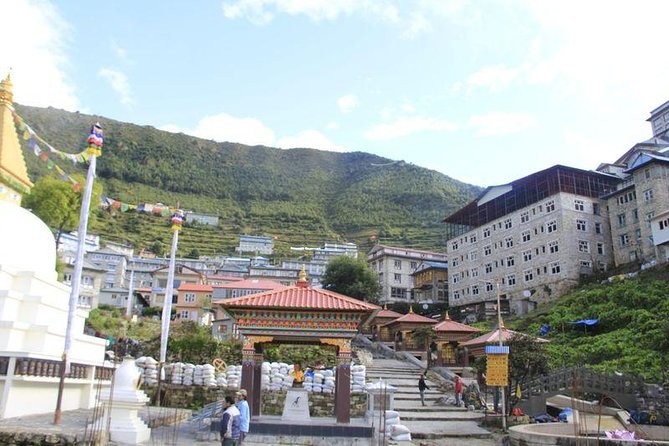
Tea house accommodation is included during the trek. This means you stay in local mountain lodges rather than a large hotel or a fully supported private camp.
Tea houses are practical. They put you close to the route and allow the trek to use existing local businesses. They are not presented as luxury accommodation, so you should expect a simple mountain stay rather than polished hotel service.
Breakfast, lunch, and dinner are included. Coffee and tea are listed as extra, along with bottled water, soda, alcohol, and personal expenses. Budget for drinks and any snacks you want during the walking days.
The package supplies a sleeping bag, down jacket, and duffel bag. You use these during the trek and return them after completing it. That can reduce the cost of buying bulky cold-weather equipment, especially if you are making only one Himalayan trek.
A route map is also included. The description does not list trekking poles, boots, personal clothing, or a first-aid kit, so you should ask what else you need to bring. The operator also states that a porter is not included. If you want porter support, arrange and price it before the trek.
The $1,690 price and what is missing
At $1,690 per person, the package includes several costly and useful items: return Kathmandu to Lukla flights, tea house lodging, three meals per day, local transport described as an air-conditioned vehicle, fees and taxes, a route map, and basic cold-weather equipment.
That gives the tour reasonable value if you want a guided package with the main logistics handled. The flights alone are important to include because they connect the capital with the Everest trekking area.
You still need to pay for personal expenses, drinks, bottled water, alcohol, coffee, tea, travel insurance, and a Kathmandu hotel. A porter is also extra. These are not minor details on a 10-day trip, so add them to your working budget.
The description includes both-way flight tickets, but one experience report refers to a helicopter return. Do not assume a helicopter is part of this package. The standard inclusions specify flights, so confirm any helicopter option and its price separately.
The package does not say that international airfare, visas, medical evacuation, or personal trekking clothing are included. Travel insurance is specifically excluded. For a high-altitude trek, insurance should be treated as an essential purchase, not an optional extra.
Who should choose this trek
I would point this trip toward an active person who wants Everest Base Camp but has only 10 days for the trekking program. It is also a good match if you value having flights, meals, lodging, and equipment organized in one package.
The private setup suits couples, families with suitable fitness, and small groups of friends who want to move together. It may also suit a first-time Himalayan trekker who prefers local guidance rather than trying to arrange every part independently.
I would be more cautious if you want a relaxed pace or have no experience with long uphill walking. The company asks for moderate physical fitness, and the short schedule may feel demanding. Ask for the daily distances, overnight locations, altitude plan, and rest arrangements before committing.
The route also depends on weather. If a flight or trek cannot operate because of poor conditions, the stated policy offers a different date or a full refund. Still, you should leave spare time around the trip and avoid building a tight onward schedule.
Practical questions to settle before departure
The published details answer the main cost and inclusion questions, but not every planning detail. Before you book, ask for:
- The exact day-by-day route and overnight villages
- The scheduled acclimatization plan
- The daily walking hours and distances
- The guide assigned to your group
- The confirmed group size
- The luggage limit for the Lukla flights
- The cost and arrangement for a porter
- The airport pickup and return transfer details
- The process for handling altitude illness or a delayed flight
The trip is booked, on average, 47 days ahead. That suggests planning early is sensible, especially if you have fixed holiday dates. Free cancellation is available up to 24 hours before the start time for a full refund. Changes or cancellations inside that 24-hour window are not accepted for a refund.
Should you book the Short Everest Base Camp Trek?
Book it if you want a private, tightly organized route to Everest Base Camp and value having Lukla flights, tea house lodging, meals, and basic gear bundled into one price. The strongest points are the local guide support, the Sherpa cultural stops, and the practical inclusions.
Take a careful look at the schedule before booking. Ten days is short for a high-altitude trek, and the supplied plan does not provide enough daily detail to judge how hard each stage will be. Ask those questions, buy suitable travel insurance, budget for excluded costs, and keep extra time around the flights.
For an active person with limited time, this is a sensible Everest package. For someone seeking a slow, flexible trek, a longer itinerary may be the better choice.
FAQ
How long is the Short Everest Base Camp Trek?
The trek lasts approximately 10 days.
Where does the experience begin?
It begins at Tribhuvan Airport in Kathmandu, Nepal.
Are flights between Kathmandu and Lukla included?
Yes. Both the Kathmandu to Lukla and Lukla to Kathmandu flights are included.
Is airport pickup available?
Yes. Pickup is offered, with the meeting point listed as Tribhuvan Airport in Kathmandu.
Is this a group or private tour?
It is a private activity. Only your own group participates.
What accommodation is included?
Tea house accommodation during the trek is included.
Are meals included?
Breakfast, lunch, and dinner are included. Coffee, tea, bottled water, soft drinks, and alcoholic drinks are not included.
Is trekking equipment provided?
A sleeping bag, down jacket, and duffel bag are provided for use during the trek and returned after completion. A porter is not included.
What happens if bad weather cancels the experience?
If poor weather causes cancellation, you will be offered a different date or a full refund. You can also cancel up to 24 hours before the start time for a full refund.
Just added around Kathmandu
- Private Half-Day Tour of Kathmandu Durbar Square and Swayambhunath Temple★ 4.5 · 11 reviews
- Namobuddha Monastery Hiking Day Tour via Panauti from Kathmandu★ 5.0 · 15 reviews
- Private Half-Day Tour of Boudhanath and Pashupatinath Temples in Kathmandu★ 4.5 · 9 reviews
- Private Full-Day Kathmandu City Tour★ 5.0 · 9 reviews
- Private Day Tour in Kathmandu Valley Rim with Bhaktapur Sightseeing★ 5.0 · 3 reviews
- Private Half Day Budhanilkantha Tour★ 5.0 · 6 reviews
- Private Day Tour: Patan and Bhaktapur from Kathmandu★ 4.5 · 6 reviews
- Private Day Tour – Sacred Journey to Namo Buddha★ 5.0 · 5 reviews
Everest Base Camp Treks, compared.
Everest Base Camp Trek with Helicopter Return from Gorakshep to Lukla
Read our review →Browse the lists this tour appears in