
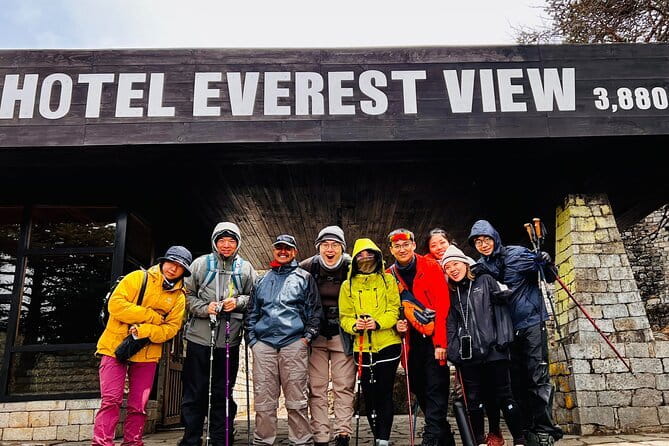
Reviewed · EVEREST BASE CAMP TREKS
14 Days Everest Base Camp Trekking
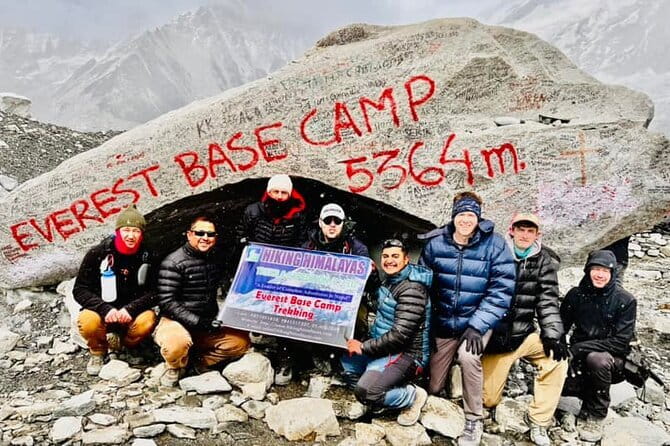
The big prize here is clear: after a mountain flight and days of steady walking, you reach Everest Base Camp at 5,364 meters. The route also gives you Kala Patthar, a high viewpoint with sweeping views of Everest, Nuptse, Ama Dablam, and nearby peaks.
I like the sensible acclimatization days in Namche and Dingboche, and I like that the $1,420 price covers Lukla flights, permits, tea-house lodging, meals, a guide, and porter support. The company’s guides, including Hari, Kapil, and Namo, are repeatedly singled out for calm care and good organization. The main caution is the altitude and the long walking days, some listed at up to 10 hours.
Key points to know before booking
- Lukla flights are included: Round-trip domestic flights from Kathmandu save you a major extra cost and place you directly on the classic Khumbu route.
- Two acclimatization days are built in: You rest in Namche on Day 4 and Dingboche on Day 7, with optional high walks.
- Kala Patthar is part of the route: The early hike to 5,565 meters may provide the best mountain view of the whole trip.
- Tea-house lodging keeps the trek practical: You sleep in the best available twin-sharing lodges rather than camping.
- Porter support is shared: One porter is provided for every two trekkers, with food, lodging, insurance, and equipment support included for staff.
- The price leaves some bills outside: Kathmandu accommodation and food, insurance, personal gear, drinks, showers, tips, and the Nepal visa are extra.
Why this 14-day Everest Base Camp route works
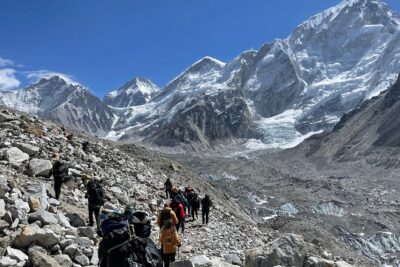
This is the classic approach from Lukla, not a short helicopter visit or a rushed high-altitude sprint. You walk up the Dudh Koshi Valley, pass through Sherpa villages, enter Sagarmatha National Park, and gradually trade forests for rock, ice, and thin air.
The route has a good rhythm on paper. You gain height in stages, pause twice for acclimatization, reach Base Camp, then descend quickly through familiar villages. That return matters. Going downhill is easier on your lungs, though it can still be hard on knees and tired feet.
The private format is another useful point. Only your group participates, so you are not tied to a large public departure. That can make it easier to walk at a suitable pace or ask your guide for help when altitude or fatigue becomes a problem.
Still, do not mistake the word private for easy. Several days are listed at about 10 hours, and the Day 9 visit to Base Camp is especially demanding. You need strong physical fitness, and you should treat the acclimatization days as part of the safety plan, not as spare vacation time.
More Everest Base Camp Treks in Kathmandu:
- Everest Base Camp Trek – 14 Days
★ 5.0 · 1,499 reviews - Everest Base Camp Trekking
★ 5.0 · 485 reviews - Everest Base Camp Trekking – 13 Day
★ 5.0 · 365 reviews
Day 1: Arriving in Kathmandu
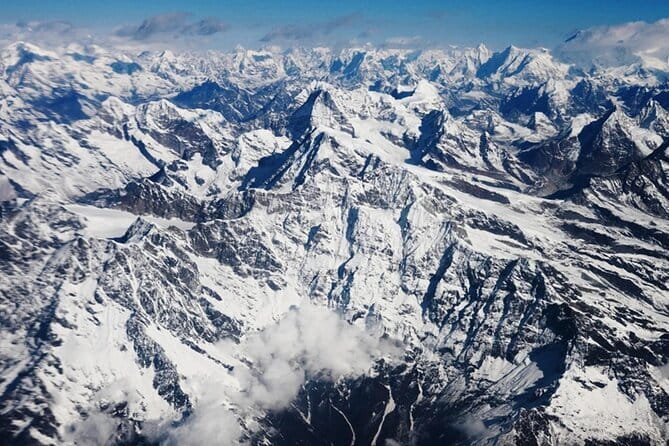
The trip begins with arrival at Tribhuvan International Airport. On a clear flight into Kathmandu, you may get your first view of the Himalayan peaks before you even reach the city.
Ground transport from the airport to your hotel is included in a private vehicle. The exact Day 1 schedule is not fully spelled out, so use this day to meet the support team, check your equipment, and prepare for the early start ahead.
Kathmandu lodging and food are not included. The stated allowance is $45 per day for those costs, so include that in your real budget. A Nepal entry visa can be obtained on arrival at the airport for $40 for 30 days.
Day 2: Lukla to Phakding
The flight to Lukla is short in duration but important to the whole trip. Lukla sits at about 2,850 meters, and its steep mountain runway puts you at the trailhead almost at once.
After meeting your crew, you walk along the Dudh Koshi Valley to Phakding, at about 2,656 meters. The trail is well marked, and this first walking day helps you settle into the pace without immediately sleeping at a much higher altitude.
The itinerary lists this day at up to 10 hours, though the actual walking time can vary. You will stay in a tea house, with twin-sharing accommodation described as the best available at each stop.
Day 3: Phakding to Namche Bazaar
This is where the route begins to feel properly Himalayan. You cross and recross the river on high suspension bridges before reaching Monjo, the gateway to Sagarmatha National Park.
Namche Bazaar sits at about 3,440 meters, between two ridges and beneath the high peaks of the Khumbu. It is a practical overnight stop with lodges, tea shops, and souvenir shops, but the real value is its location as the first major altitude checkpoint.
The climb to Namche can feel tough because the height gain is noticeable. Take the day slowly. Your guide’s job here is not simply to point out peaks, but to watch how you are handling the change in altitude.
A few more Kathmandu trips to weigh up
- Nagarkot Sunrise View and Day Hiking from Kathmandu
★ 5.0 · 471 reviews - Annapurna Circuit Trek with Tilicho Lake
★ 5.0 · 368 reviews - Everest Base Camp Trek -14 Days
★ 5.0 · 321 reviews - Annapurna base camp trek 5 Days
★ 5.0 · 252 reviews
Day 4: Namche acclimatization and Everest View Point
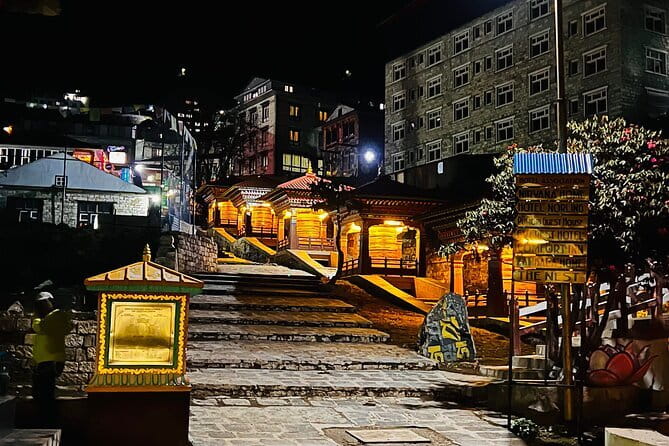
You spend the day in Namche to help your body adjust. The plan includes an outing toward Everest View Point, giving you a reason to walk higher before returning to sleep lower in Namche.
This is one of the strongest parts of the schedule. A rest day does not need to mean sitting indoors all day. A gentle higher walk lets you see more of the Khumbu while keeping the main overnight gain under control.
Namche also gives you a last useful chance to buy small personal items, snacks, or souvenirs. Do not expect city comfort, but you will have more choice here than at the smaller villages ahead.
Day 5: Namche to Tengboche
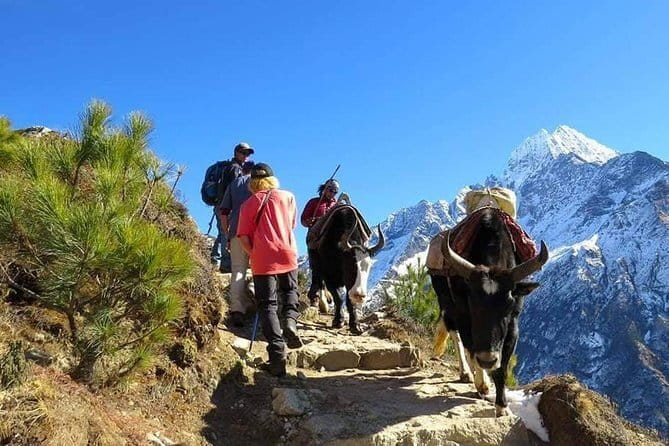
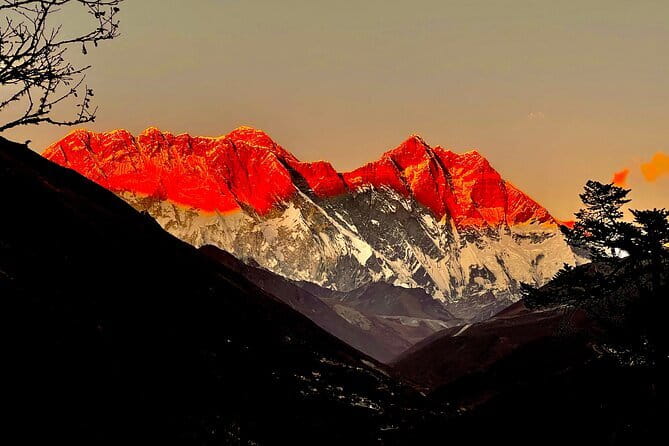
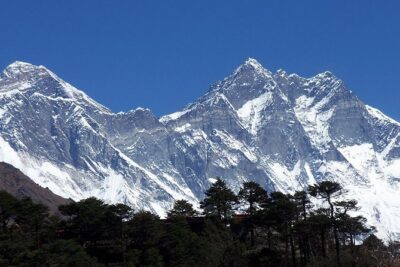
From Namche, the trail contours along the valley high above the Dudh Koshi. This section brings some of the first major mountain views, including Everest, Lhotse, Nuptse, and Ama Dablam.
Tengboche, written as Tyangboche in parts of the itinerary, is known for its monastery and its setting among the high peaks. You pass villages and walk through forest before reaching the settlement at about 3,860 meters.
This is a beautiful day, but the long duration listed, about 10 hours, deserves attention. The trail is not a quick stroll from one village to the next. Pace yourself early, since fatigue becomes a bigger issue as you climb.
Day 6: Tengboche to Dingboche
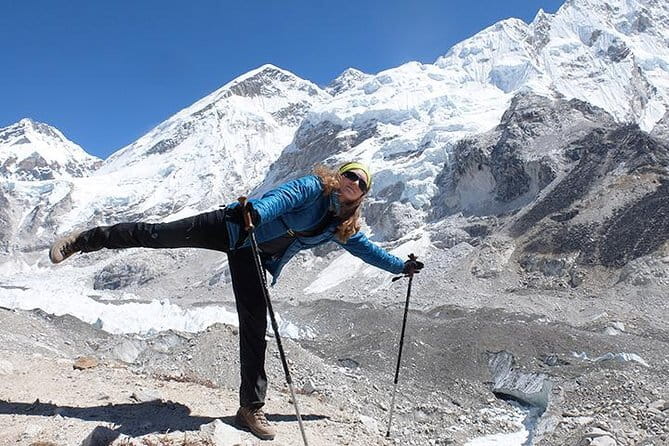
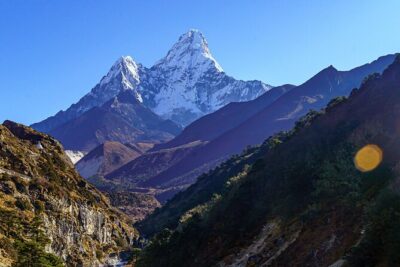
The route drops through forest, crosses the Imja Khola, and climbs toward Pangboche at about 3,985 meters. Pangboche faces Ama Dablam and is noted for its gompa, Mani walls, and mountain views.
You then continue toward Dingboche, around 4,410 meters. Here the scenery changes noticeably. Forest gives way to more open, dry high-country terrain, with fewer trees and a greater sense of exposure.
The gain in altitude is the main challenge. This is another long day, listed at about 10 hours, and you should expect the higher elevation to slow your pace. The included English-speaking guide is especially useful on days like this, when a steady schedule matters more than speed.
Day 7: Dingboche acclimatization
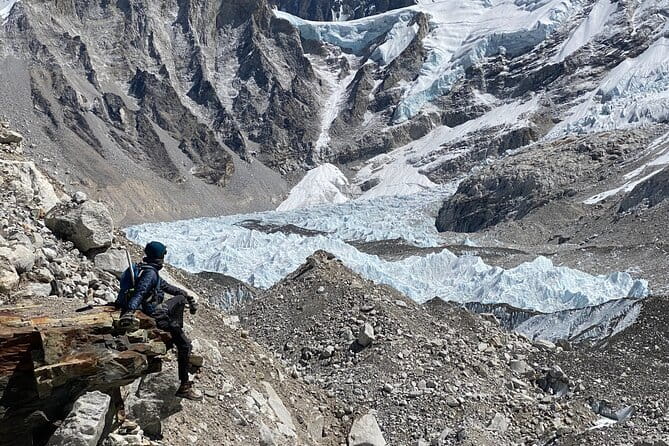
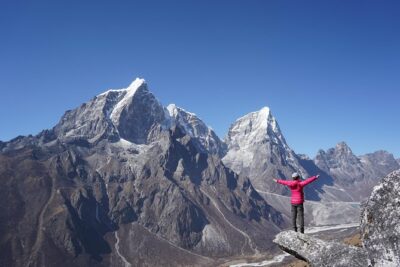
Dingboche is the second major acclimatization stop. The plan allows you to walk up the valley toward Tshola Tsho lake, with Cholatse and Taboche rising sharply nearby, or climb toward Nagarjun at about 5,100 meters.
That optional higher walk gives the day real purpose. You get mountain views and a chance to test your legs, then return to Dingboche for the night. Your guide can help judge how hard to push, but you still need to pay close attention to your own condition.
This is not the point to prove toughness. If you feel unwell, a shorter outing and extra rest may be wiser than reaching the highest optional point.
Day 8: Dingboche to Lobuche
The trail continues up the broad valley beneath Cholatse and Tawache. At Duglha, around 4,620 meters, the tea house makes a natural lunch stop before the steep climb toward the Khumbu Glacier.
From there, you continue to Lobuche. The setting becomes more severe, with high rock, glacier ice, and fewer signs of settled life. The itinerary again allows about 10 hours, so expect a demanding day even though the walking route is clearly established.
This is the section where good preparation pays off. You will want personal trekking equipment that suits cold, changing conditions, although the exact gear list is not provided. Personal equipment is not included in the price.
Day 9: Lobuche, Gorakshep, and Everest Base Camp
You follow the Khumbu Glacier toward Gorakshep at about 5,164 meters. The trail rises around glacier sections and offers strong views of the surrounding peaks.
Gorakshep is the overnight base for the final walk. The itinerary lists one hour to reach it, followed later by a much longer outing to Everest Base Camp. The Base Camp walk is described as taking about five hours each way through ice formations and along the glacier, with a higher return route offering broader views.
This is the emotional high point of the trek, but it is not an easy victory lap. At 5,364 meters, your pace will be slow, and the cold and thin air can make the distance feel longer than it looks on a map.
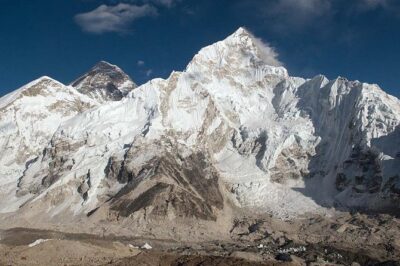
Also, Base Camp itself is not the best viewpoint of Everest. The route wisely adds Kala Patthar the next morning, where the mountain views are more open. Base Camp gives you the destination and the glacier setting. Kala Patthar gives you the grand panorama.
Day 10: Kala Patthar and the descent to Pheriche
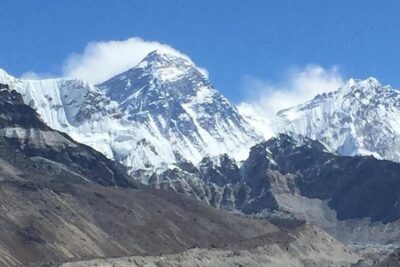
You leave early for Kala Patthar at 5,565 meters. From this high point, the route offers views of Everest, Nuptse, Ama Dablam, Pumori, Lobuche, and other peaks named in the trip plan.
The early start is sensible because mountain views can change as clouds build later in the day. After the climb, you descend through Gorakshep and Duglha toward Pheriche.
The day is listed at about 10 hours, but much of the route is downhill. That helps your breathing, though steep descents can punish your knees after the previous day’s effort. This is a day to use trekking poles if you have them and to keep drinking even when the lower altitude makes the air feel easier.
Day 11: Pheriche to Namche Bazaar
You follow the river and climb back through birch and rhododendron forest toward Tengboche. This return section lets you see the same route from a different direction, with views toward Kwangde, Tawache, Everest, Nuptse, Lhotse, Ama Dablam, Kantega, and Thamserku.
You continue toward Namche Bazaar, where the lower altitude and familiar lodges should feel welcome. The itinerary again lists roughly 10 hours, so this is not merely a relaxed walk back.
The return journey is one of the better reasons to choose a walking route instead of a flight out from a higher village. You get time to notice the shift from alpine rock back to forest and river valleys.
Day 12: Namche to Lukla
The final trekking day follows the Dudh Koshi downhill to Lukla, at about 2,800 meters. You pass back across suspension bridges and through the villages that marked the start of the trek.
A farewell gathering with the Sherpa guide and porter team is planned in Lukla. That celebration has practical meaning too. Your support crew has carried loads, handled tea-house arrangements, and helped keep the group moving for nearly two weeks.
The day is listed at about 10 hours. You may be tired, but reaching Lukla means the hardest high-altitude walking is behind you.
Day 13: Returning to Kathmandu
You head to the airstrip early for the flight back to Kathmandu. The flight is listed at about three hours in the schedule, though the actual air time and airport process are not explained in detail.
Once back in Kathmandu, the rest of the day is free. You can shop, repack, send postcards, or simply enjoy a hot shower and a slower meal. Your Kathmandu hotel and food remain your responsibility, so budget for that extra night.
Because mountain flights can affect plans, keeping this day flexible is wise. The supplied schedule does not spell out a weather backup, so ask the operator how flight delays are handled before departure.
Day 14: Airport transfer and departure
The support team takes you to Tribhuvan International Airport for your flight home. The airport transfer is included, and the scheduled airport segment is listed at about four hours.
The company also mentions options to extend your Nepal stay with activities such as national park game drives, white-water rafting, a Tibet tour, or mountain biking. Those are not part of this $1,420 trek, but they may suit you if your international flight schedule allows extra time.
What the $1,420 price really covers
The price is strong for a guided Everest Base Camp trek because several costly items are already bundled:
- Round-trip Kathmandu to Lukla flights, including departure taxes
- Twin-sharing tea-house lodging during the trek
- Breakfast for 13 days, lunch for 11 days, and dinner for 11 days
- An English-speaking certified guide, including the guide’s food, lodging, and insurance
- One porter for every two trekkers, including the porter’s food, lodging, and insurance
- Trekking permits and government charges
- Private airport and hotel transfers
- A first-aid medical kit, trekking map, and achievement certificate
The price does not cover everything. Kathmandu accommodation and food are listed at $45 per day, while Nepal’s 30-day arrival visa is $40. You also pay for international flights, travel insurance, drinks, snacks, hot showers, personal equipment, and tips.
Hot showers during the trek cost $5 per person. That sounds small, but several small mountain charges can add up. Carry some spending money for tea, snacks, showers, and personal needs.
Guide care and support on the trail
The most consistent strength in the available feedback is staff care. Hari is described as cooperative, calm, and good at keeping arrangements on track. Kapil is praised for expert guidance and attention to the group’s physical and mental condition, while Namo is also named as a friendly and capable guide.
That matters more here than a polished sales pitch. On an Everest trek, a guide must help with timing, altitude concerns, meals, lodging, and route decisions. The support team also includes porters, and the one-porter-for-two-trekkers setup is a common way to share the load while keeping the trip affordable.
The meals and rooms have received strong praise, but tea-house standards can vary from village to village. The promise is the best available twin-sharing lodge, not a private hotel room. You should be comfortable with simple accommodation and shared facilities.
Who should book this trek
I would choose this trip if you want the classic Everest Base Camp route with a guide and porter, but do not want to organize each flight, permit, lodge, and transfer yourself.
It suits a fit adult who can manage long walking days and basic lodging. One family group completed the trek with children, with guides and porters becoming a close part of the group, but the data does not give the children’s ages or the family’s fitness level. Families should ask detailed questions before booking rather than assume the route is suitable for every child.
I would be cautious if you dislike early starts, suspension bridges, basic tea houses, cold conditions, or uncertain mountain flight schedules. The route is demanding even with support.
Should you book the 14-day Everest Base Camp trek?
Book it if the combination of classic route, included Lukla flights, acclimatization days, and personal guide support matches what you want. The $1,420 cost offers good value once you count permits, meals, lodging, staff costs, and domestic flights.
Before paying, confirm the guide assignment, the exact daily walking hours, the flight delay plan, the Kathmandu hotel arrangements, and the recommended equipment list. Also buy travel insurance, since it is not included.
This is a serious mountain trek, not a sightseeing tour with a little walking added. If you prepare properly and respect the altitude, the route gives you both the achievement of reaching Base Camp and the finer reward of seeing Sherpa villages, monasteries, glaciers, forests, and huge peaks at walking pace.
FAQ
Where does the Everest Base Camp trek start?
The trip starts at Tribhuvan International Airport in Kathmandu, Nepal. The stated meeting time is 6:15 am, and private ground transport is included from the hotel to the domestic airport.
Are flights between Kathmandu and Lukla included?
Yes. Round-trip Kathmandu to Lukla flights are included, along with departure taxes.
Are meals included during the trek?
Yes. The package includes breakfast for 13 days, lunch for 11 days, and dinner for 11 days. Food and accommodation in Kathmandu are not included and are listed at $45 per day.
Is accommodation included?
Yes. The trek includes the best available twin-sharing lodge-to-lodge accommodation. Kathmandu accommodation is not included.
Is a guide and porter included?
Yes. One professional English-speaking certified guide is included, along with one porter for every two trekkers. Their food, accommodation, and insurance are included.
What is not included in the $1,420 price?
International airfare, travel insurance, the Nepal entry visa, drinks, snacks, personal trekking equipment, hot showers, tips, gratuities, and Kathmandu food and accommodation are not included. A 30-day Nepal visa can be obtained on arrival for $40.
Just added around Kathmandu
- Private Half-Day Tour of Boudhanath and Pashupatinath Temples in Kathmandu★ 4.5 · 9 reviews
- Private Half-Day Tour of Kathmandu Durbar Square and Swayambhunath Temple★ 4.5 · 11 reviews
- Namobuddha Monastery Hiking Day Tour via Panauti from Kathmandu★ 5.0 · 15 reviews
- Private Full-Day Kathmandu City Tour★ 5.0 · 9 reviews
- Private Day Tour in Kathmandu Valley Rim with Bhaktapur Sightseeing★ 5.0 · 3 reviews
- Private Half Day Budhanilkantha Tour★ 5.0 · 6 reviews
- Private Day Tour: Patan and Bhaktapur from Kathmandu★ 4.5 · 6 reviews
- Private Day Tour – Sacred Journey to Namo Buddha★ 5.0 · 5 reviews
Everest Base Camp Treks, compared.
Everest Base Camp Trek with Helicopter Return from Gorakshep to Lukla
Read our review →Browse the lists this tour appears in