
Reviewed · EVEREST BASE CAMP TREKS
Everest Base Camp Trek
The big draw here is simple: over 15 days, you walk from Lukla to Everest Base Camp at 5,364 meters, then climb Kala Patthar for sunrise views at 5,545 meters. Along the way, you pass Sherpa villages, monasteries, memorials, pine forests, high bridges, and the great peaks of the Khumbu region.
I like the two built-in acclimatization days, especially the stops at Namche Bazaar and Dingboche. I also like that the $1,800 price includes Lukla flights, permits, meals, lodges, a porter, and trekking gear. The main drawback is the altitude and the fixed, non-refundable booking policy. This is not a casual mountain holiday, and Lukla flights can be delayed by weather.
Key Points Before You Book
- Kala Patthar reaches 5,545 meters: This is the highest point on the route and the best place in the schedule for sunrise views of Everest.
- Two acclimatization days help your body adjust: You spend extra time in Namche Bazaar and Dingboche rather than climbing higher every day.
- Lukla flights are included: The route begins and ends with flights between Kathmandu and Lukla, but mountain weather can disrupt the schedule.
- Sherpa culture is part of the route: Villages, prayer wheels, mani walls, monasteries, markets, and the Sherpa Museum give the walk a strong local character.
- A porter is provided for every two trekkers: You carry a lighter daypack, but you still need to pack carefully for cold, altitude, and changing conditions.
- Winter is beautiful but very cold: One winter account describes subzero conditions, while guide Krishna handled the practical details so the trekker could focus on walking.
What the $1,800 Price Really Covers
At $1,800 per person, this trek offers a solid package for a high-altitude route. You receive airport transfers and other ground transportation, three nights in a Kathmandu hotel, 11 nights in trekking lodges, the Kathmandu to Lukla return flights, permits, conservation fees, a guide, porter support, meals, a sleeping bag, a duffel bag, and walking poles.
That list matters because costs add up quickly in the Everest region. The permit and Sagarmatha National Park conservation fees are already handled, and the porter arrangement means one porter works between two trekkers. You do not need to arrange every lodge or meal on the trail yourself.
The meal plan covers breakfast, lunch, and dinner during the trek. Food in a high mountain area is less about gourmet choice than steady fuel, and having the three main meals included makes your daily budget easier to control.
There are still important extras. International airfare, the Nepal visa, personal travel insurance, and tips for the guide and porter are not included. You should also confirm exactly how the 14 breakfasts, 11 lunches, and 12 dinners line up with your hotel and trekking nights, since the package description lists the meal totals separately.
The group size is capped at 12 people. That is large enough for a social walk but small enough for a guide to keep track of the group. If you prefer a private trek or need a slower pace, ask before booking.
More Everest Base Camp Treks in Kathmandu:
- Everest Base Camp Trek – 14 Days
★ 5.0 · 1,499 reviews - Everest Base Camp Trekking
★ 5.0 · 485 reviews - Everest Base Camp Trekking – 13 Day
★ 5.0 · 365 reviews
Day 1: Kathmandu Arrival and a Short Briefing
You arrive at Tribhuvan International Airport, where a representative meets you and takes you to your hotel. The first day is mainly for rest after the flight and preparation for the trek.
A short briefing with the guide gives you a chance to review the route, equipment, timing, and general expectations. Take this day seriously. The next morning begins early, and you will appreciate having your bags organized before the Lukla flight.
Kathmandu also gives you the last easy chance to check personal items. The supplied sleeping bag, duffel bag, and walking poles reduce what you need to bring, but personal insurance, warm clothing, and any medication remain your responsibility.
Day 2: Lukla to Phakding on the First Mountain Trail
The morning flight from Kathmandu to Lukla is part of the experience. You get mountain views from the air, then meet the trekking crew and begin walking toward Phakding.
This first day takes about three hours and is relatively gentle, with a descent through Sherpa villages. Mani walls and prayer wheels appear beside the trail, so the cultural setting begins almost immediately rather than waiting until the higher villages.
Phakding is a useful first stop because you are moving into the trekking rhythm without facing a long, punishing day. You will still notice that the route is more physical than a city walk. Keep your pace steady from the start.
Day 3: River Bridges and the Climb to Namche Bazaar
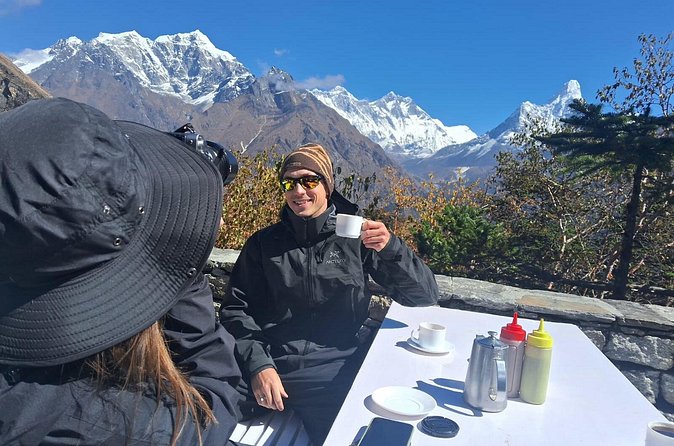
The trail follows the Dudh Koshi River for about six hours. You cross suspension bridges decorated with colorful prayer flags, pass through pine forest, and enter Sagarmatha National Park.
Namche Bazaar is one of the most memorable stops on the route. It is a major Sherpa settlement and a natural place to pause before the trail rises higher. The approach is more demanding than the previous day, so you should avoid racing to the village.
The park entry and conservation fees are included in the price. That is convenient, but the real value here is time. The trail is not only a way to reach Base Camp. It gives you a gradual change from river valleys and forest to bare, high mountain country.
A few more Kathmandu trips to weigh up
- Nagarkot Sunrise View and Day Hiking from Kathmandu
★ 5.0 · 471 reviews - Annapurna Circuit Trek with Tilicho Lake
★ 5.0 · 368 reviews - Everest Base Camp Trek -14 Days
★ 5.0 · 321 reviews - Annapurna base camp trek 5 Days
★ 5.0 · 252 reviews
Day 4: Namche Bazaar Acclimatization
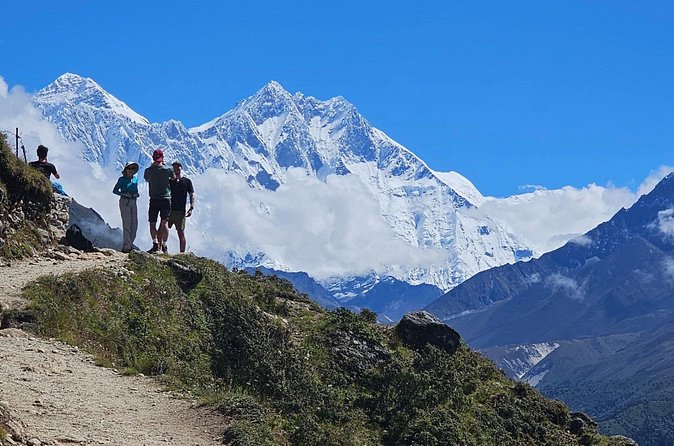
You spend a second night in Namche Bazaar to help your body adjust to altitude. The planned walk lasts about four hours and can include the lively market, local bakeries, the Sherpa Museum, Everest View Hotel, or Khumjung village.
This is one of the smartest features of the schedule. A rest day does not have to mean sitting indoors. A short hike to a higher point, followed by sleep at a lower elevation, gives you mountain views while keeping the day manageable.
You should treat this as a real acclimatization day, not an excuse to exhaust yourself. Drink regularly, walk slowly, and tell your guide if you feel unwell. The itinerary includes a guide for a reason, particularly once the air gets thinner.
Day 5: Namche to Tengboche and Its Monastery
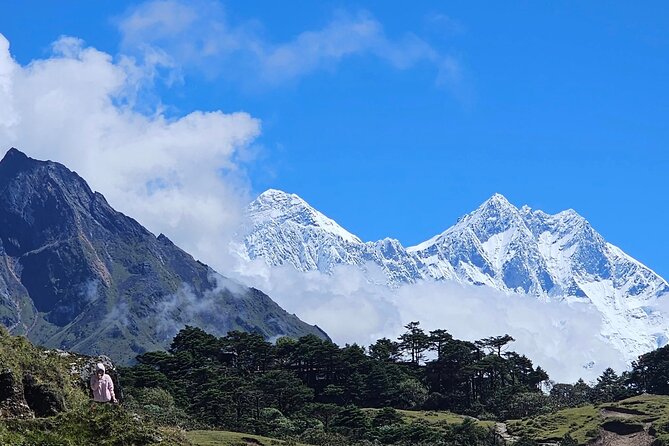
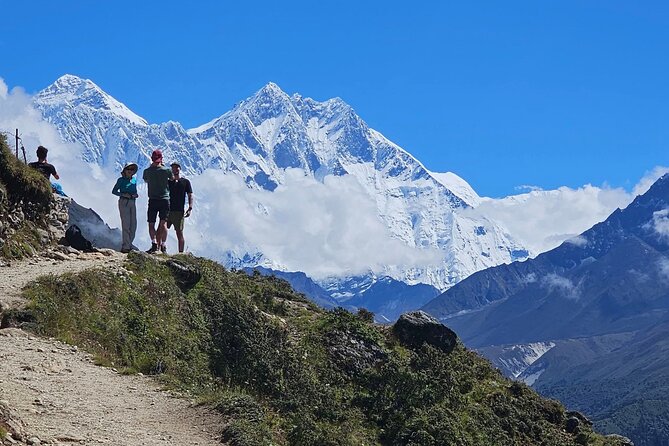
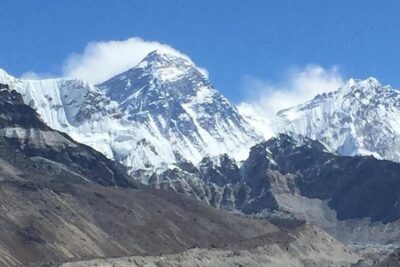
From Namche, the trail climbs with views of Everest, Lhotse, and Ama Dablam. You walk through rhododendron and pine forest, descend toward the Dudh Koshi River, cross a suspension bridge, and then climb again to Tengboche.
The day takes about six hours, with a pattern of uphill and downhill walking. That rhythm can be tiring, but it also keeps the scenery changing. Forest gives way to wider mountain views, and Tengboche brings one of the route’s key cultural stops.
The monastery makes Tengboche special. The exact visit details are not specified, so you should follow your guide’s timing and local instructions. Even without a long visit, the setting gives you a sense of the religious life that shapes the villages along the trail.
Day 6: Tengboche to Dingboche Through Pangboche
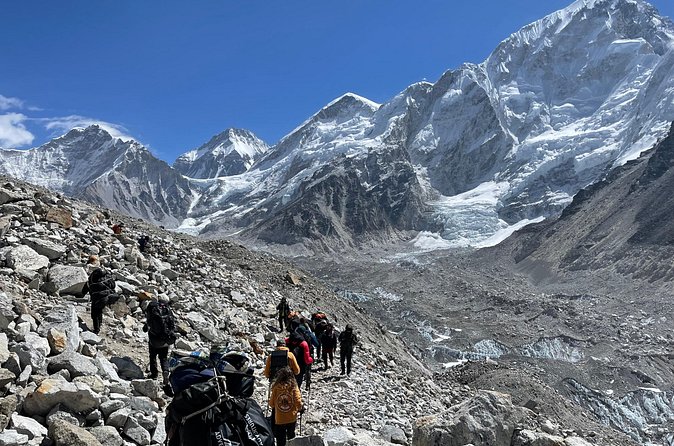
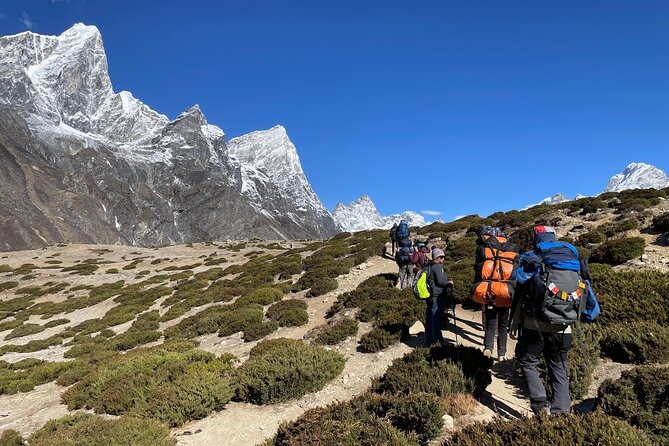
You descend through forest to Debuche, cross the Imja Khola River, and climb toward Pangboche. At this point, the valley begins to feel more open and exposed, with fewer trees and larger views of the peaks.
Pangboche is described as the highest permanent settlement in the region. The trail then continues to Dingboche, where you spend the night after roughly six hours of walking.
Dingboche is an important staging point before the route becomes much higher and colder. The village gives you a place to slow down and prepare for the next acclimatization hike. Keep your warm layers close, even if the lower part of the day feels comfortable.
Day 7: Dingboche and the Nagarjun Hill Hike
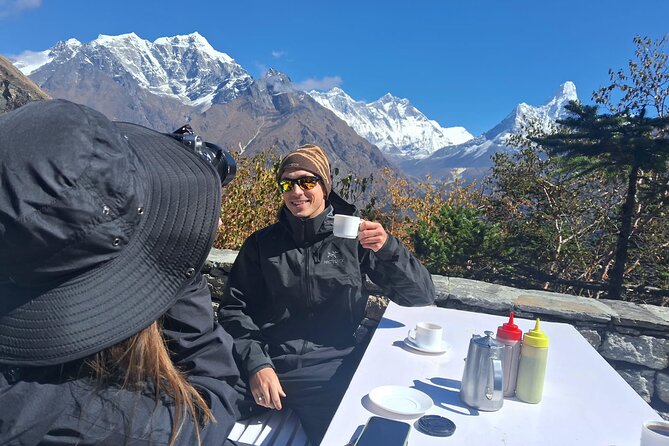
The second acclimatization day includes a scenic hike to Nagarjun Hill at about 5,100 meters. From there, you can see Makalu, Lhotse, and Island Peak before returning to Dingboche for lunch and rest.
This is a demanding acclimatization outing, despite being labeled a rest day. The altitude makes every step harder, and the point is to walk high and sleep lower, not to set a speed record.
The plan gives you a useful break before Lobuche and Gorak Shep. I like that it includes a specific high walk rather than leaving the rest day unplanned. Still, your guide should decide how far you go based on how you are feeling.
Day 8: Dingboche to Lobuche and the Memorial Ridge
The trail climbs for about five hours through rocky country with little vegetation. You pass Dughla, then climb toward the memorial ridge dedicated to climbers who died on Everest.
This section has a different mood from the forested trail near Namche. The sparse surroundings and stone memorials make the cost of high-altitude climbing feel real. You are no longer simply walking through a scenic valley. You are entering a severe environment where weather, altitude, and fatigue matter.
Lobuche is a short walking day by distance, but the height makes it serious. Keep the pace calm and follow the guide’s advice. At this point, the included lodge accommodation is practical rather than luxurious, and a warm meal and a dry sleeping bag become very valuable.
Day 9: Lobuche to Gorak Shep and Everest Base Camp
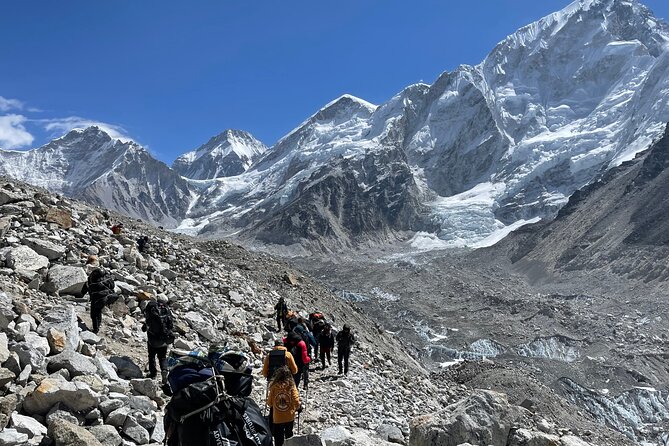
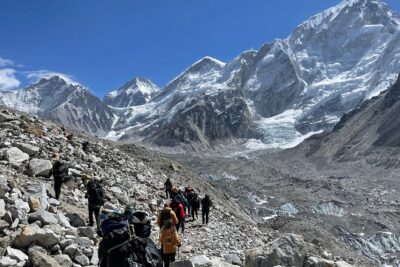
You walk gradually toward Gorak Shep, the last settlement before Base Camp. After lunch, the route continues across rocky ground and glacier moraines to Everest Base Camp, at 5,364 meters.
The full day takes about seven hours. The terrain is uneven, and the high altitude can make the pace slow. Base Camp is a major goal, but the route there is not a polished path or a simple viewpoint. Expect rock, moraine, cold, and a long return to Gorak Shep.
The reward is the setting at the foot of Everest. You are close to the mountain world that attracts climbers from around the globe, even though the summit itself is not visible from every angle. Your guide helps with timing and route choices, which is particularly useful when energy is low.
Day 10: Kala Patthar at Sunrise, Then Down to Pheriche
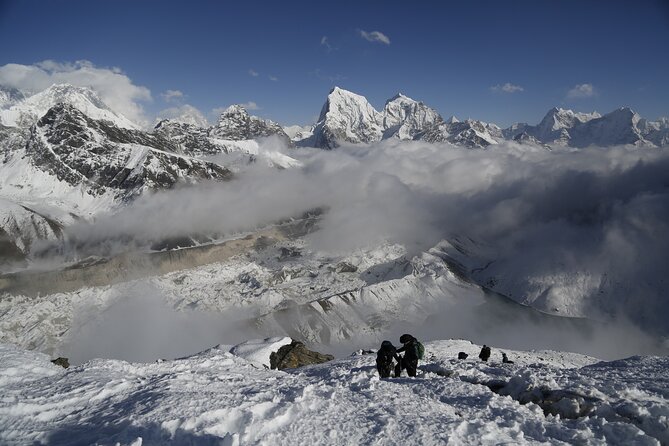
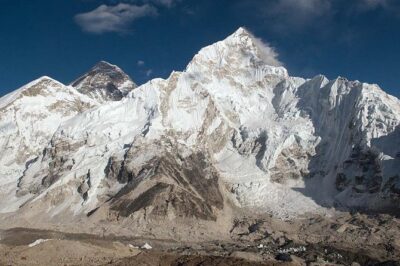
The schedule begins early with the steep climb to Kala Patthar. At 5,545 meters, it is the highest point of the trek and the best planned viewpoint for sunrise over Everest and the surrounding peaks.
You descend to Gorak Shep for breakfast, then continue toward Pheriche. The full day takes about seven hours, so this is not simply a quick summit walk followed by an easy morning.
Kala Patthar is often the visual high point of the trip, but it is also the toughest morning. The cold can be severe, especially in winter. A winter trekker associated with this provider described the conditions as extremely cold, yet found the scenery unforgettable. Guide Krishna was specifically praised for handling the practical side of the walk, allowing the trekker to concentrate on the route.
That is a useful point for you: guide support matters most when you are tired, cold, and above 5,000 meters. Bring proper cold-weather clothing and do not assume the supplied sleeping bag replaces every warm layer you need.
Days 11 and 12: The Long Return to Namche and Lukla
Day 11 takes about seven hours as you retrace the route through Pangboche and Tengboche toward Namche Bazaar. The same trail looks different when you are descending, and the lower air and forest can feel like a welcome change.
You cross suspension bridges again and pass through forest alive with birds. The return is not a free day, though. Seven hours of downhill walking can be hard on knees and feet, especially after the high section.
Day 12 is the final trekking day, also about seven hours, from Namche to Lukla. Pine forest and bridges lead you back toward the airstrip, and the route gives you time to think about the villages and people you encountered.
The final night in Lukla is useful because it keeps the flight day separate from the longest walking days. You still need flexibility, since weather can affect mountain flights.
Day 13: Lukla to Kathmandu by Air
After breakfast, you take the morning flight back to Kathmandu. The flight lasts about 45 minutes and offers one last look at the Himalayas before the change to city life.
A transfer takes you to your Kathmandu hotel, where you have time to rest. The contrast can be sharp. After nearly two weeks of walking, a hotel room and a quiet meal feel like part of the reward.
Day 14: Why the Buffer Day Matters
The extra day is held for delays or cancellations between Lukla and Kathmandu. Mountain weather can change quickly, and this buffer protects your international departure from being scheduled immediately after the return flight.
If the flight runs on time, you have a free day in Kathmandu. The exact activities are not set, so use it for rest or personal sightseeing rather than counting on a specific included tour.
This spare day is one of the most practical parts of the plan. If you have an important flight on Day 15, still give yourself enough protection and confirm the final schedule with the provider.
Day 15: Airport Transfer and Departure
After breakfast, you are transferred to Tribhuvan International Airport for your onward flight. The trek officially ends here.
The starting point is also Tribhuvan International Airport, with a stated meeting time of 7:15 am. Confirm the pickup details after booking, since early airport timing and the Lukla flight schedule make clear communication important.
Guide Support, Porters, and Winter Conditions
The package includes a guide and one porter for every two trekkers. That arrangement lightens your load, but it does not mean you can bring everything you own. Pack for cold nights, long walking days, and changing conditions while keeping your personal bag manageable.
The strongest praise connected with this operator centers on the guide team’s handling of the trek. Krishna is named for a winter trip, and Babu is associated with the company team. You should ask at booking who your actual guide will be and whether Krishna is available, rather than assuming a particular person will lead your group.
Winter brings clear, beautiful mountain views but also severe cold. The supplied sleeping bag is helpful, yet you remain responsible for personal clothing and insurance. A moderate fitness level is required, and that phrase should not be taken lightly. You need to manage repeated six and seven hour walking days at high altitude.
Booking Advice and the Final Call
This trek suits you if you want the classic Everest route, prefer a guided plan, and value having meals, lodges, permits, flights, and basic equipment arranged together. It also suits people who want cultural contact along the trail, not only a quick photo at Base Camp.
It may not suit you if you dislike cold, early starts, basic mountain lodging, long walking days, or uncertain flight schedules. The non-refundable policy is another serious consideration. You cannot change or cancel for a refund, so personal travel insurance is especially important.
I would consider the $1,800 price fair for the services listed, provided the meal counts, hotel nights, lodge nights, equipment, and flight arrangements are confirmed before payment. The two acclimatization days and the Day 14 flight buffer add real value.
Book this trek if reaching Base Camp and Kala Patthar is worth a demanding, carefully paced mountain journey for you. Before paying, ask about guide assignment, winter equipment, porter loads, and the plan if Lukla flights are delayed. Those answers will tell you as much about the experience as the impressive route itself.
FAQ
How long is the Everest Base Camp Trek?
The trek lasts approximately 15 days, including arrival and departure days, trekking days, acclimatization stops, the return to Kathmandu, and a buffer day for possible Lukla flight delays.
What is the highest point on the route?
Kala Patthar is the highest point, at approximately 5,545 meters. Everest Base Camp is at about 5,364 meters.
Are meals included?
Yes. Breakfast, lunch, and dinner are included during the trek. The package lists 14 breakfasts, 11 lunches, and 12 dinners.
Is accommodation included?
Yes. The package includes three nights in a Kathmandu hotel and 11 nights in trekking lodges.
Are flights between Kathmandu and Lukla included?
Yes. The return flight between Kathmandu and Lukla is included. The schedule also includes a buffer day because mountain weather can delay or cancel these flights.
What is not included in the price?
International airfare, the Nepal visa fee, personal travel insurance, and tips for the guide and porter are not included.
Just added around Kathmandu
- Private Half-Day Tour of Boudhanath and Pashupatinath Temples in Kathmandu★ 4.5 · 9 reviews
- Private Half-Day Tour of Kathmandu Durbar Square and Swayambhunath Temple★ 4.5 · 11 reviews
- Namobuddha Monastery Hiking Day Tour via Panauti from Kathmandu★ 5.0 · 15 reviews
- Private Full-Day Kathmandu City Tour★ 5.0 · 9 reviews
- Private Day Tour in Kathmandu Valley Rim with Bhaktapur Sightseeing★ 5.0 · 3 reviews
- Private Half Day Budhanilkantha Tour★ 5.0 · 6 reviews
- Private Day Tour: Patan and Bhaktapur from Kathmandu★ 4.5 · 6 reviews
- Private Day Tour – Sacred Journey to Namo Buddha★ 5.0 · 5 reviews
Everest Base Camp Treks, compared.
Everest Base Camp Trek with Helicopter Return from Gorakshep to Lukla
Read our review →Browse the lists this tour appears in