
Reviewed · EVEREST BASE CAMP TREKS
Everest Base Camp trek with Helicopter return 9 days
The clever part of this nine-day Everest Base Camp trek is the return by helicopter. You walk into the high Khumbu valley, reach Base Camp and Kala Patthar, then trade a long downhill slog for a flight from Gorakshep to Lukla. That saves several days and spares your knees.
I like the built-in rest day at Namche Bazaar, where you take a short acclimatization outing toward the Everest View Hotel. I also like the practical safety setup: an experienced guide, one porter for every two people, and twice-daily checks with an oximeter. The catch is the price, $3,888 per person, and the altitude remains serious despite the short schedule.
Key points at a glance
- Helicopter return from Gorakshep: Finish the high-altitude section without retracing the full trail on foot.
- Kala Patthar at 5,644 meters: The summit gives you the trip’s main mountain-view moment before the flight out.
- One full acclimatization day in Namche: A sensible pause early in the trek, not a wasted day.
- Seven full days in the mountains: The schedule is short by Everest standards, but walking days still reach six to eight hours.
- Guide, porter, permits, meals, and ground transport included: The package covers many of the costly basics.
- Private group format: Only your own group takes part, which can make pacing and daily decisions easier.
Why the helicopter return changes the Everest trek
The classic Everest Base Camp route is an out-and-back walk from Lukla. This trip keeps the approach on foot, which is the part that gives you time to adjust to altitude and see the villages, bridges, forests, monasteries, and glacier valleys. Then, instead of walking back down, you fly from Gorakshep to Lukla.
That is a useful compromise for you if your holiday time is limited. The nine-day plan still includes Namche, Tengboche, Dingboche, Lobuche, Gorakshep, Base Camp, and Kala Patthar. You get the main route without committing to the much longer return walk.
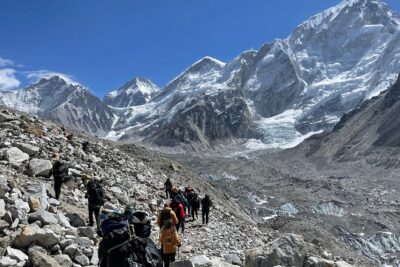
There is no shortcut around the hard part. The trail climbs steadily, and the section above Dingboche becomes steeper and more remote. The final walking day is listed at about eight hours, and the Kala Patthar day is about six hours. You should be comfortable walking for long periods on uneven ground before booking.
More Everest Base Camp Treks in Kathmandu:
- Everest Base Camp Trek – 14 Days
★ 5.0 · 1,499 reviews - Everest Base Camp Trekking
★ 5.0 · 485 reviews - Everest Base Camp Trekking – 13 Day
★ 5.0 · 365 reviews
Day 1: A practical start in Kathmandu
Your airport team collects you at the international terminal, takes you to the hotel, helps with check-in, and carries your bags. After time to rest, you meet the core team and prepare for the trek.
This first day is useful because the following morning begins early. You can use the evening to sort your trekking clothes, charge devices, and ask the guide about the walking pace, meals, altitude checks, and flight plan.
Kathmandu lunches and dinners are not included, so budget separately for those meals. Your international airfare and Nepal visa are also outside the package. These are ordinary exclusions, but they matter when you compare the $3,888 headline price with your full trip cost.
Day 2: Flying to Lukla and walking to Phakding
The flight from Kathmandu to Lukla is short and known for its mountain views. Once you land at Tenzing Hillary Airport, porters join the group and the trek begins toward Phakding.
The first walking day is about four hours. That is a gentle introduction compared with the days ahead, though you still need to take the trail seriously. You are beginning to gain altitude, so a slow pace is a good pace.
The Lukla flight is also one of the schedule’s practical pressure points. Mountain weather can affect flights, and the supplied information does not state how delays are handled. Ask the operator how much flexibility is built into your international flight plans and what happens if the Lukla flight moves.
Day 3: Phakding to Namche Bazaar
From Phakding, the route passes through rhododendron and magnolia forest toward Toktok at about 2,760 meters. The trail continues to Monjo, with bridges near Bengkar Village, before reaching the approach to Namche Bazaar.
This is a six-hour walking day and the first one that feels like a proper mountain trek. The route includes river crossings and sustained climbing. Namche is more than an overnight stop. It is the main trading town of the Khumbu region and your first clear sign that the valley is becoming more remote.
Namche is also where your body starts telling you how it handles altitude. Eat steadily, drink the permitted fluids you choose, and tell your guide about headaches, nausea, unusual tiredness, or poor sleep. The package includes an oximeter check twice daily, but that tool is only part of good altitude care. Your symptoms and pace matter too.
A few more Kathmandu trips to weigh up
- Nagarkot Sunrise View and Day Hiking from Kathmandu
★ 5.0 · 471 reviews - Annapurna Circuit Trek with Tilicho Lake
★ 5.0 · 368 reviews - Everest Base Camp Trek -14 Days
★ 5.0 · 321 reviews - Annapurna base camp trek 5 Days
★ 5.0 · 252 reviews
Day 4: Acclimatizing around Namche and Khumjung
Day 4 is a rest day from the big forward climb, but it is not a day for sitting indoors. The plan includes an outing toward the Syangboche Airstrip and the Everest View Hotel, as well as Khumjung.
The point is to walk higher and sleep lower. That gives your body time to adjust before the route climbs farther up the valley. The five-hour outing may feel surprisingly demanding because Namche is already high, but it is one of the most important days in the itinerary.
I like this part of the plan because a nine-day schedule could easily be too aggressive without a pause. Still, the word rest can mislead you. Bring trekking shoes, water, warm layers, and your camera. You will be walking, not lounging.
Day 5: Namche to Kyangjuma
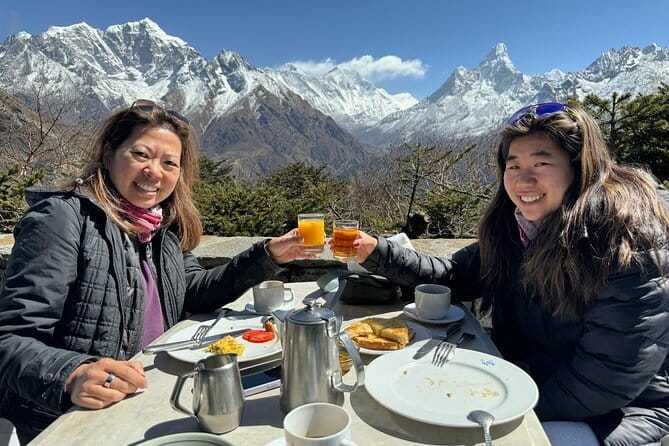
The route leaves Namche and climbs through green foothills toward Kyangjuma at about 3,550 meters. The walking time is listed at roughly five hours, with mountain views along the way and a trail that rises before dropping toward its next section.
Kyangjuma is a useful transition point. You are now moving away from the busier lower route and toward the colder, higher part of the trek. The scenery changes gradually, and the walking becomes more about steady rhythm than covering distance quickly.
The supplied day labels and descriptions are not perfectly consistent in a few places, so confirm the exact overnight village before departure. That is particularly useful if you want family or friends to follow your progress, or if you need to know what facilities are available at each stop.
Day 6: The Tengboche section
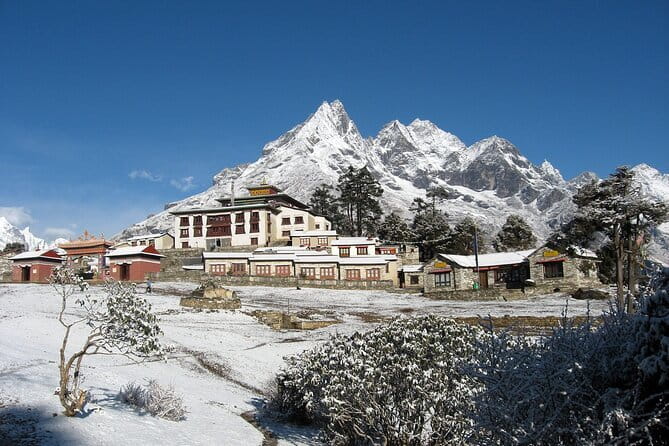
This part of the itinerary includes Tengboche and the descent through rhododendron forest to Deboche at about 3,320 meters. The day is listed at around five hours. An early start is planned so you can see the sunrise from Tengboche before breakfast.
The route may offer a chance to see musk deer, blue sheep, and mountain birds, though wildlife is never guaranteed. The forested walking here gives you a welcome change from the exposed high valley ahead.
Tengboche is also one of the route’s cultural highlights. The supplied plan does not promise a specific monastery visit or ceremony, so you should not book expecting a formal religious program. Still, the area gives the trek a stronger sense of place than a simple march toward a famous point on a map.
Day 7: Dingboche, the Khumbu Glacier, and higher ground
The route moves through the Dingboche area and toward the Khumbu Glacier. After leaving Dingboche, the trail climbs a ridge and rises gradually, with views toward Cholatse and Tawache.
This is a six-hour day and an important change in character. Above Dingboche, the route becomes more remote and steep. Vegetation thins, the air feels colder, and every uphill section takes more time than it would at home.
Your guide’s role matters here. The package includes guide salary, food, lodging, transport, and insurance, so you are not expected to manage the route alone. Ask your guide to set a pace that lets you speak in short sentences without gasping. A fast start can make the following days much harder.
Day 8: Lobuche to Gorak Shep and Everest Base Camp
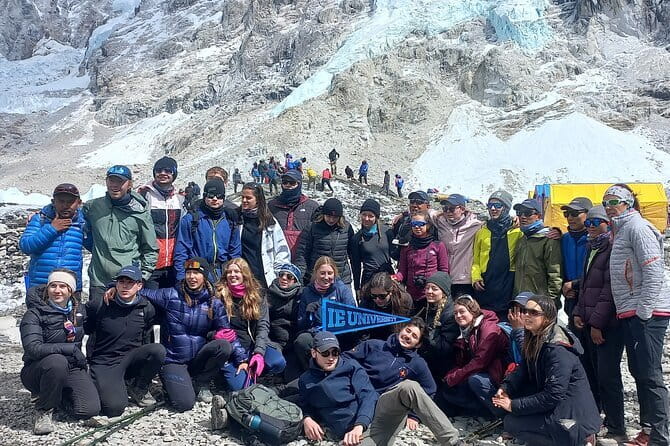
Day 8 is the biggest walking day, listed at about eight hours. From Lobuche, you follow the broad valley toward Gorak Shep, then continue on a rocky trail that becomes steeper with altitude.
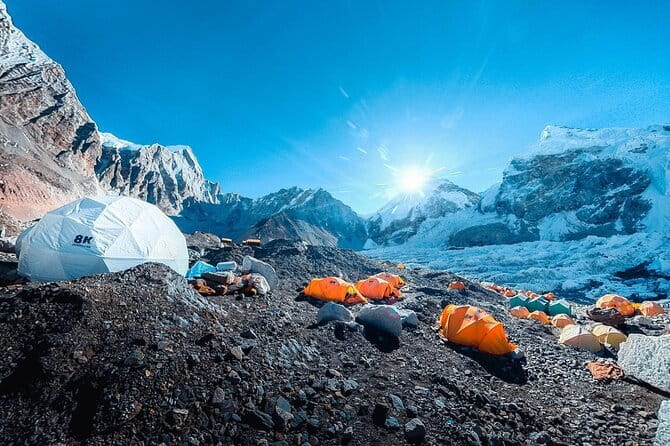
The plan includes the Khumbu Glacier area and the route toward Everest Base Camp. The trail can feel slow here, even when the distance looks modest on a map. Loose rock, thin air, and repeated ups and downs make the walk more tiring than its numbers suggest.
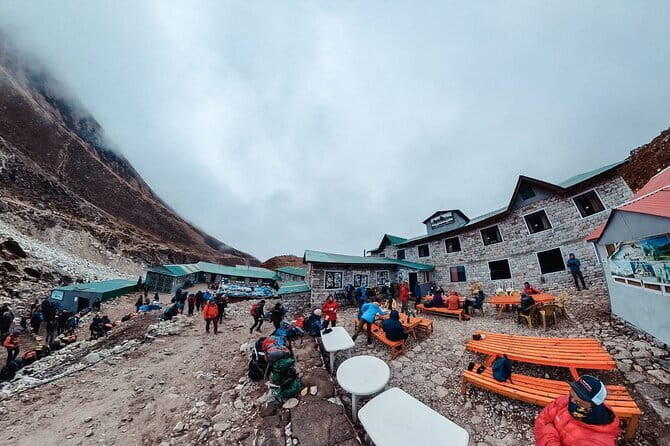
Gorak Shep is the base for the final high point of the trek. Accommodation is in tea houses, and hot showers and phone charging are available for an extra $2 to $5. Those small comforts become more appealing at altitude, so carry some Nepalese rupees or ask ahead about payment methods.
Chocolate, cake, pie, pudding, and other sweet desserts are not included. Neither are alcoholic drinks or hot and cold drinks bought along the route. You receive breakfast, lunch, and dinner for eight days, but extras can add up quickly.
Day 9: Kala Patthar and the flight out
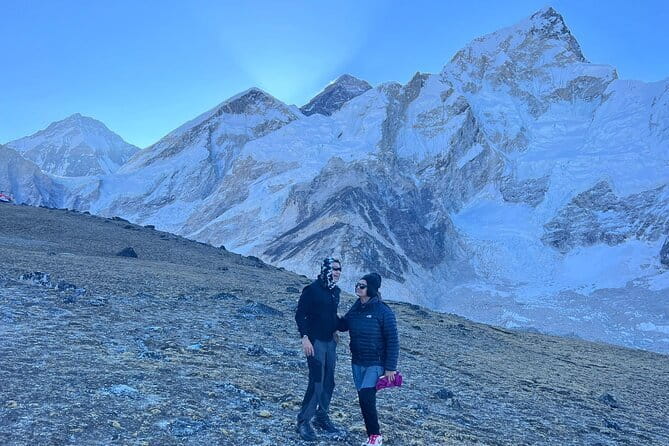
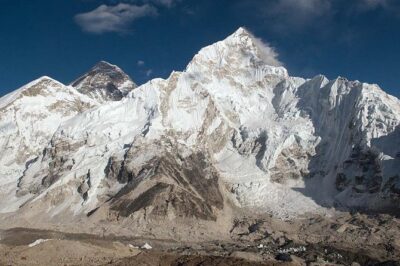
The final morning begins with the climb to Kala Patthar, at 5,644 meters, or 18,519 feet. The trail starts above Gorakshep and is well used, though the altitude makes this short-sounding climb a serious effort.
The early sun creates the best light for the mountain views. Kala Patthar is the trip’s clearest viewpoint, and it gives you a broad look across the Everest area. You do not need a technical climbing background for this walk, but you do need stamina, warm clothing, and patience.
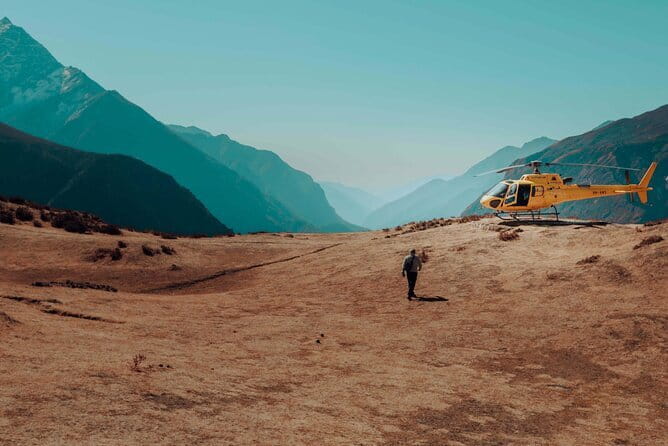
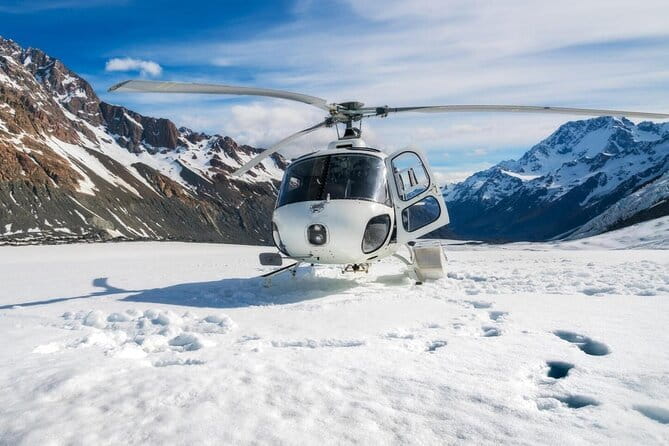
After the high walk, the helicopter takes you from Gorakshep to Lukla. The included services also refer to Kathmandu to Lukla and Lukla to Kathmandu flights, while the detailed plan specifically describes the helicopter from Gorakshep to Lukla. Confirm the final connection before you pay, including whether you fly onward to Kathmandu the same day and what happens if weather interrupts the helicopter.
This flight is not only a time saver. It gives you an aerial view of the route you have just walked, though mountain weather can affect operations. Helicopter capacity, visibility, and landing conditions are practical matters your operator should explain clearly.
What the $3,888 price covers
The price is high, but the package includes several expensive and useful items:
- Private airport and ground transfers
- Kathmandu to Lukla and return flight arrangements as specified
- Helicopter from Gorakshep to Lukla
- An experienced guide
- One porter for every two people
- Guide expenses, including salary, meals, lodging, transport, and insurance
- Trekking permits and required entry fees
- Government taxes and official charges
- First-aid kit and oximeter checks
- Breakfast, lunch, and dinner for eight days
- Trip completion certificate
For you, the real value is convenience. You do not have to arrange permits, a porter, airport transfers, and the high-altitude helicopter separately. The private format may also be worth more if you want your own group rather than a mixed departure.
The cost is less attractive if you already have local contacts, need only a basic walking guide, or are happy to walk back to Lukla. The helicopter is the main premium feature, so confirm its exact route and any conditions before treating it as guaranteed.
You still need to pay for Nepal entry paperwork, international flights, Kathmandu lunches and dinners, personal expenses, drinks, desserts, hot showers, charging, travel and medical insurance, and tips for the guide, porter, and driver. Tipping is expected, so include it in your budget.
Guides, porters, and the private-group setup
The group is private, meaning only your party takes part. That can help if one person needs a slower pace or if you want to stop for photos without negotiating with a large group.
The company has used guides named Raj, Ramesh, Sital, and Ganesh on related Nepal trips. The information does not confirm which guide leads this exact departure, so ask for the guide’s name and experience before booking. That simple question can also clarify language support, group size, porter arrangements, and how altitude concerns are handled.
One porter for two people is a standard practical arrangement. Pack with that limit in mind, and keep your day bag light enough for water, warm layers, medication, snacks, and personal items. Your porter should not be treated as a substitute for careful packing.
Who should choose this trek
I would consider this trip if you have moderate physical fitness, nine days available, and a strong wish to reach Everest Base Camp without spending another week walking downhill. It also suits private groups that want a fixed guide and porter arrangement.
It is less suitable if you are new to long walks, dislike early starts, or want a relaxed holiday. The short schedule leaves little spare time, and the highest walking days are long. You should also have travel and medical insurance that covers your planned activity, since that is not included.
Service animals are allowed, and the activity is near public transportation in its Kathmandu portions. Those details do not remove the physical demands of the mountain route, so ask the operator about your own health concerns before booking.
Booking, cancellation, and small practical matters
Confirmation is provided at booking. Free cancellation is available if you cancel at least 24 hours before the experience begins. Cancellations or changes made within 24 hours are not accepted for a refund, and local time controls the cut-off.
The published rating is 5 from eight reviews, and the strongest praise centers on organization, airport pickup, guide support, and the way the team handled complicated Nepal travel plans. One related Everest trip used helicopter arrangements and other backup planning during unseasonal weather. That is encouraging, but you should still ask what support is available if flights are delayed.
Should you book the Everest Base Camp helicopter return trek?
Book it if you want the essential Everest route in a compact private trip and place real value on avoiding the return walk. The Namche acclimatization day, guide support, included permits, porter, meals, and helicopter make the package easy to manage.
Think twice if $3,888 feels tight once insurance, visas, international flights, drinks, tips, and Kathmandu costs are added. Also confirm the flight details and overnight stops, since the day descriptions contain a few labels that should be clarified.
For fit hikers with limited time, this is a sensible Everest plan. You get the forests, Sherpa villages, high glacier valley, Base Camp area, Kala Patthar, and a memorable flight out. Just remember that the helicopter shortens the itinerary, not the altitude.
FAQ
How long is the Everest Base Camp trek with helicopter return?
The experience lasts approximately nine days, with seven full days in the mountains and a helicopter return on the last day.
What is the highest point on the trek?
The highest point is Kala Patthar at 5,644 meters, or 18,519 feet.
Where does the helicopter fly from and to?
The included helicopter flight is from Gorakshep to Lukla. The package also lists Kathmandu to Lukla and Lukla to Kathmandu flights, so confirm the onward connection to Kathmandu before departure.
Is the trek difficult?
The difficulty is described as moderate. The route becomes steeper and more remote above Dingboche, and walking days can last from about four to eight hours.
Is there an acclimatization day?
Yes. Day 4 is an acclimatization day based around Namche Bazaar, with an outing toward Syangboche, the Everest View Hotel, and Khumjung.
Are meals included?
Breakfast, lunch, and dinner are included for eight days. Kathmandu lunches and dinners, drinks, desserts, and alcoholic beverages are not included.
Are permits and entry fees included?
Yes. Required trekking permits, entry fees, government taxes, and official charges are included.
Is a porter included?
Yes. The package includes one porter for every two people.
Are showers and phone charging included?
No. Tea-house hot showers and phone charging cost about $2 to $5. These charges are paid separately.
What happens if I cancel?
You can receive a full refund if you cancel at least 24 hours before the experience start time. Cancellations or changes made less than 24 hours before the start time are not refunded or accepted.
More Helicopter Tours in Kathmandu
- Everest Base Camp Helicopter Tour landing at Everest View Hotel
★ 5.0 · 668 reviews - Everest Base Camp Helicopter Tour landing at Hotel Everest View
★ 5.0 · 218 reviews - Everest Base Camp Trek with Helicopter Return from Gorakshep to Lukla
★ 5.0 · 161 reviews - Everest Base Camp helicopter tour with landing
★ 5.0 · 61 reviews
Just added around Kathmandu
- Private Half-Day Tour of Boudhanath and Pashupatinath Temples in Kathmandu★ 4.5 · 9 reviews
- Private Half-Day Tour of Kathmandu Durbar Square and Swayambhunath Temple★ 4.5 · 11 reviews
- Namobuddha Monastery Hiking Day Tour via Panauti from Kathmandu★ 5.0 · 15 reviews
- Private Day Tour in Kathmandu Valley Rim with Bhaktapur Sightseeing★ 5.0 · 3 reviews
- Private Half Day Budhanilkantha Tour★ 5.0 · 6 reviews
- Private Full-Day Kathmandu City Tour★ 5.0 · 9 reviews
- Private Day Tour: Patan and Bhaktapur from Kathmandu★ 4.5 · 6 reviews
- Private Day Tour – Sacred Journey to Namo Buddha★ 5.0 · 5 reviews
Everest Base Camp Treks, compared.
Everest Base Camp Trek with Helicopter Return from Gorakshep to Lukla
Read our review →Browse the lists this tour appears in