
Reviewed · EVEREST BASE CAMP TREKS
14-Days Private Everest Base Camp Trek
Everest Base Camp is the main prize, but the real pleasure comes from the slow approach: suspension bridges over the Dudh Koshi, Sherpa villages, Buddhist mani walls, and the first sight of Ama Dablam above the trail. This 14-day private trek gives you time to adjust to altitude instead of racing uphill.
I like the practical setup. Your guide handles permits, lodging, flights, and entrance fees, while a porter carries the heavy gear. I also like the two acclimatization days, especially the one in Namche Bazaar with its cafes, gear shops, and short hikes.
The main caution is that the published schedule contains a few mismatched day descriptions around the return from Everest Base Camp. Confirm the exact route, Kala Patthar timing, and overnight stops with Glorious Eco Trek Nepal before paying. High altitude is serious, and travel insurance is not included.
Key points to know before booking
- A private trek from Lukla to Everest Base Camp: Only your own group takes part, so the guide can adjust the walking pace to your needs.
- Two planned acclimatization days: You spend extra time in Namche Bazaar and Dingboche, with short walks rather than simply sitting still.
- Porter support for two people: One porter is arranged for every two trekkers, making the high trail more manageable.
- Kathmandu, Lukla flights, and tea houses included: The $1,600 price covers two Kathmandu hotel nights, domestic airfare, trek lodging, permits, meals, and transfers.
- Guides praised for care and pacing: Guides including Kalyan Gurung and Parkhidhan Tamang are specifically associated with careful pacing, daily briefings, safety, and support during illness.
- A route with a schedule worth checking: The day headings and descriptions do not always match, so ask for a current, written plan.
Why this Everest Base Camp trek works well
This is a classic approach to Everest Base Camp, beginning with the short flight from Kathmandu to Lukla and continuing on foot through the Khumbu region. You are not simply ticking off a famous viewpoint. You are walking through a high mountain world shaped by Sherpa culture, Buddhist practice, and the demands of life above the clouds.
The private format matters. On a fixed group trek, you may need to keep up with a set pace. Here, your guide can respond to your energy level, weather, and altitude symptoms. That flexibility has real value on a route where one strong day does not guarantee an easy day afterward.
The company’s guides also appear to be a major part of the experience. Kalyan Gurung is praised for managing different abilities, giving daily briefings, and explaining local culture. Parkhidhan Tamang is described as supportive and attentive when a trekker developed a fever and when another person had altitude problems. Those details matter more than a polished brochure once you are tired and short of breath.
The package costs $1,600. That is not just a guiding fee. It includes airport transfers, two nights in a three-star Kathmandu hotel with breakfast, the Kathmandu to Lukla and return flights with airport tax, tea-house lodging, permits, entrance fees, a porter for two trekkers, and most meals on the trail.
You still pay for personal expenses and travel insurance. The price therefore offers solid convenience, but you should ask exactly what meals, rooms, porter weight limits, and flight changes are covered. Small costs can add up in the mountains, especially when you want extra drinks, snacks, Wi-Fi, or personal gear.
More Everest Base Camp Treks in Kathmandu:
- Everest Base Camp Trek – 14 Days
★ 5.0 · 1,499 reviews - Everest Base Camp Trekking
★ 5.0 · 485 reviews - Everest Base Camp Trekking – 13 Day
★ 5.0 · 365 reviews
Day 1: A soft landing in Kathmandu
Your experience begins at Tribhuvan International Airport, where staff meet you and transfer you by private vehicle to the hotel. An airport representative explains the program, which is useful after a long flight and gives you a chance to ask questions before the mountain section begins.
The first night is intentionally simple. You stay in Kathmandu, recover from the journey, and prepare for the flight to Lukla. Two nights in Kathmandu are included in total, with breakfast at the three-star hotel.
Day 2: The scenic flight to Lukla and the first trail
The flight to Lukla takes about 40 minutes. It is one of the most memorable transitions in the trip, moving quickly from Kathmandu to the small mountain airport at Tenzing Hillary Airport.
From Lukla, you begin walking toward the Khumbu villages. The first day is listed as about five hours, with the trail following the Dudh Koshi valley through forest and small settlements. It is a good introduction to the rhythm of the trek, though you should not mistake the shorter opening day for an easy holiday walk.
Flights in this region depend on weather. The cancellation terms state that poor weather may lead to a different date or a full refund, but ask the operator how a delayed Lukla flight affects the rest of your schedule. A single flight disruption can change the whole plan.
Day 3: Suspension bridges and Namche Bazaar
The route continues along the northern bank of the Dudh Koshi River. You cross several suspension bridges, including the Hillary Suspension Bridge, while the trail gradually gains height toward Namche Bazaar.
This is one of the most enjoyable sections because the walking has variety. You get river views, forest, bridges, and the first strong sense that the mountains are closing in around you. The day is planned for about six hours.
Namche Bazaar is more than a place to sleep. It is the main service town on the route, with cafes, restaurants, souvenir shops, gear stores, and Wi-Fi-linked places to sit. The altitude is already significant, so an early night and steady pace are sensible.
A few more Kathmandu trips to weigh up
- Nagarkot Sunrise View and Day Hiking from Kathmandu
★ 5.0 · 471 reviews - Annapurna Circuit Trek with Tilicho Lake
★ 5.0 · 368 reviews - Everest Base Camp Trek -14 Days
★ 5.0 · 321 reviews - Annapurna base camp trek 5 Days
★ 5.0 · 252 reviews
Day 4: Acclimatization around Namche
The schedule gives you a second day in Namche, and that is a very good choice. Your body needs time to adjust to thinner air, and a shorter walk is more useful than forcing another long climb.
You can explore the town or take one of the suggested hikes above Namche, including a walk toward the Hillary viewpoint area. The listed walking time is about five hours, but the point is not distance. The point is to gain some height, return to sleep in Namche, and pay attention to how you feel.
I like this day because it combines practical acclimatization with local life. You can look at gear, have a warm drink, and see how a Sherpa trading center functions before the route becomes more remote.
Day 5: Forest trails and Tengboche Monastery
Leaving Namche, the path rises and falls through forest toward Tengboche. The walking takes about five hours, and the repeated ups and downs can feel harder than the distance suggests.
Tengboche is important for both scenery and culture. The area is known for its Buddhist monastery, and the setting brings together forested slopes, open mountain views, and snow-capped peaks. You may also have a chance to spot wildlife such as musk deer, although sightings are never guaranteed.
This is a day to walk patiently. The trail can feel demanding after the comfort of Namche, but the monastery and mountain views give the day a clear sense of purpose.
Day 6: Pangboche, mani walls, and Dingboche
The route continues toward Dingboche, passing chortens, mani walls, and small villages. These religious features are not decoration. They show how Buddhist belief is part of daily life in the Khumbu, and your guide can add context as you walk.
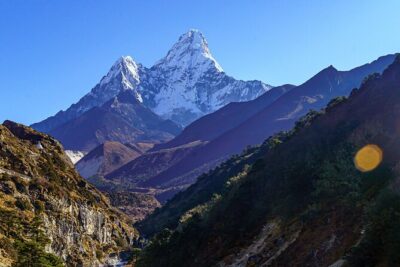
You pass through Pangboche, with views toward Ama Dablam. The mountain is one of the most recognizable sights on this section of the route, and its sharp profile gives you a strong visual marker as the trail climbs higher.
The walking time is listed as about five hours. At this point, the air is thinner and the scenery more exposed. Keep your pace measured, drink regularly, and tell your guide about headaches, unusual fatigue, or other symptoms rather than trying to hide them.
Day 7: Acclimatization above Dingboche
Dingboche receives another acclimatization day. The planned activity is a walk up the ridge above the village, followed by a return to the same lodge.
This is an important part of the design. You gain height during the day but sleep at the same elevation, giving your body time to adjust before the route moves toward Lobuche, Gorak Shep, and Base Camp.
The walk is again listed at about five hours. You should treat it as a conditioning and acclimatization day, not a chance to prove how fast you can climb. The best private guides adjust the pace and can shorten the outing if you are struggling.
Day 8: The high route to Lobuche
The path to Lobuche brings the high Himalaya closer. The trail begins with broad mountain views, then approaches Dusa where the valley narrows. The route also follows part of the first completed Everest Expedition trail, adding a small connection to the history of Himalayan climbing.
This is roughly a five-hour walking day, but the altitude makes the effort feel greater. The surroundings become more stark, and the comfort of lower villages fades. You should expect a basic tea-house night and fewer easy distractions.
The guide’s role becomes especially important here. A good pace, regular breaks, and honest communication about your condition are more useful than rushing to arrive early.
Day 9: Gorak Shep and Everest Base Camp
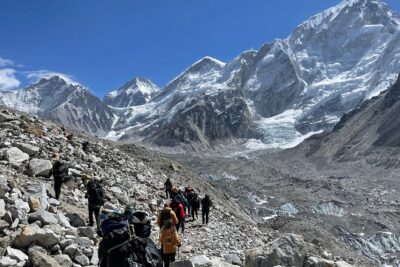
This is the emotional center of the trek. You walk beside the lateral moraine of the Khumbu Glacier and reach Gorak Shep, a small settlement surrounded by snow-capped mountains.
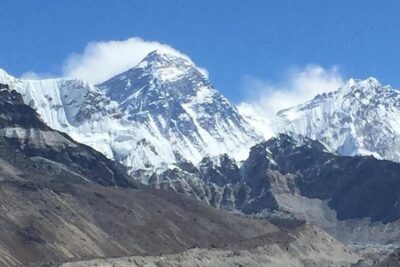
From Gorak Shep, the route continues toward Everest Base Camp. The path over glacial moraine is uneven and can be tiring, even though the listed walking time is about five hours. You are close to the world’s highest mountain, but Base Camp itself is not a summit and does not provide the classic highest viewpoint of Everest.
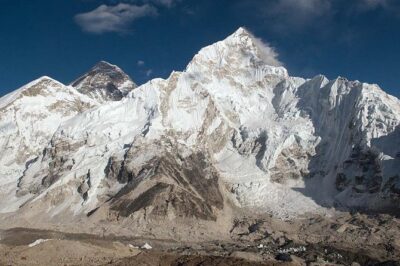
That is why Kala Patthar matters. It is planned elsewhere in the schedule as the main mountain-view walk, and you should ask the company exactly when it happens. Conditions and energy levels can affect the order.
Day 10: Kala Patthar and the beginning of the return
The day heading names Kala Patthar, but the accompanying description begins at Pheriche and describes a descent toward Tengboche through rhododendron and juniper forest. That is a clear point to confirm before booking.
In a standard version of this route, Kala Patthar is used for broad views of Everest and the surrounding peaks, often as an early walk before descending. The supplied plan does not clearly state the exact overnight location or sequence, so request a current day-by-day schedule from the operator.
The return section should feel different from the climb in. You know the villages, the bridges, and the general shape of the route, but descending does not always mean easy. Long downhill sections can be hard on knees, especially after the high point of the trek.
Days 11 and 12: Back through the Khumbu to Lukla
The schedule lists Namche Bazaar on Day 11 and Lukla on Day 12. The Day 11 description again refers to Pheriche, Tengboche, and forest, while the Day 12 description mentions Phakding and the Dudh Koshi River before reaching Lukla.
The broad plan is clear: descend through the familiar villages, cross suspension bridges, and return to Lukla. The exact overnight stop should be confirmed, since the written descriptions do not line up perfectly with the day headings.
This is also a good time to ask how flight delays are handled. Lukla weather can affect departure, and you do not want to build an important international connection too close to the scheduled return flight.
Day 13: Return to Kathmandu
The return flight to Kathmandu takes about 40 minutes. After days on foot, the flight gives you a quick change of pace and a chance to appreciate what you have completed.
A private vehicle transfer is included for airport pickup and drop-off. You return to Kathmandu for the second included hotel night, with breakfast provided as part of the package.
Day 14: Farewell dinner and certificate
The final day includes a farewell dinner organized by Glorious Eco Trek Nepal. You also receive an appreciation certificate after completing the trek.
This is a pleasant closing touch, though it should not be the reason you book. The real value is the organization during the mountain section: permits, accommodation, flights, meals, porter support, and a guide who can help you make sensible decisions when conditions change.
What the $1,600 price really covers
The price is strongest for someone who wants a managed package rather than separate bookings. Included services are:
- Private airport pickup and drop-off
- An English-speaking professional guide
- A porter for every two trekkers
- Two nights in a three-star Kathmandu hotel with breakfast
- Tea-house or lodge accommodation during the trek
- Kathmandu to Lukla and Lukla to Kathmandu airfare, including airport tax
- Trekking permits and entrance fees
- Twelve breakfasts
- Ten lunches
- Ten dinners
- A farewell dinner
- A completion certificate
Personal expenses are not included. Travel insurance is also excluded, and you should treat that as essential for a high-altitude trek. The package information does not state a porter baggage allowance, tea-house room arrangement, or the cost of drinks and snacks, so ask before departure.
Who should book this private EBC trek
This experience suits you if you want the famous Everest Base Camp route but prefer help with the moving parts. It is especially useful if you want airport pickup, domestic flights, permits, lodging, porters, and meals arranged in one package.
The tour is private, so it can suit couples, families, or friends who want to walk together without joining a larger group. The operator lists a moderate physical fitness requirement, but that should not be read as a promise that the trek is easy. High altitude, long walking days, cold conditions, and uneven trails require preparation.
It may not suit you if you want a short mountain holiday, a luxury lodge experience, or a fully flexible schedule with no fixed flight and accommodation plan. It also may not suit you if you are unwilling to buy travel insurance or to turn back if altitude symptoms appear.
Practical questions to settle before departure
Ask for the current route in writing, especially the sequence after Base Camp. The Day 10, Day 11, and Day 12 descriptions do not match their headings, and this is the one part of the plan that needs clarification.
Ask how the guide handles altitude problems, what porter weight is included, and how weather delays on the Lukla flight are managed. The company’s guide team has been praised for adjusting pace, giving daily briefings, helping with illness, and supporting people who could not continue because of altitude sickness. That is encouraging, but you should still know the formal emergency plan.
Pack for a range of conditions and keep essential personal items with you rather than placing everything in porter-carried luggage. The supplied information does not give a packing list, so request one from the operator.
Cancellation is free up to 24 hours before the scheduled start for a full refund. Cancellations or changes within 24 hours are not refunded, though poor weather or failure to meet the minimum number of participants may result in another date, another experience, or a full refund.
FAQ
Where does the trek begin?
The experience begins with pickup at Tribhuvan International Airport in Kathmandu, or at your hotel if arranged. The walking portion begins after the flight to Lukla.
How long is the Everest Base Camp trek?
The total experience lasts approximately 14 days, including Kathmandu stays, flights, trekking days, and the farewell dinner.
Is this a private tour?
Yes. Only your own group participates in the private activity.
Are airport transfers included?
Yes. Private vehicle pickup and drop-off at the airport are included.
Is accommodation included?
Yes. You receive two nights in a three-star hotel in Kathmandu, including breakfast, plus lodge or tea-house accommodation during the trek.
Are meals included?
The package includes 12 breakfasts, 10 lunches, and 10 dinners. A farewell dinner is also included.
Is a porter included?
Yes. One porter is arranged for every two trekkers.
Are the Lukla flights included?
Yes. The Kathmandu to Lukla and Lukla to Kathmandu domestic flights, including airport tax, are included.
Are permits and entrance fees included?
Yes. The necessary trekking permits and entrance fees are included.
Is travel insurance included?
No. Personal expenses and travel insurance are not included.
What happens if bad weather cancels the experience?
If poor weather causes cancellation, you are offered a different date or a full refund. Ask the provider how an individual Lukla flight delay affects the rest of your trip.
Should you book it?
I would consider this trek if you want a private, organized route to Everest Base Camp and value personal support more than a stripped-down budget. The inclusions are useful, the two acclimatization days are sensibly placed, and the guide team has a strong record for pacing, communication, and care when people become ill.
Before booking, get the corrected return schedule in writing and confirm porter limits, flight-delay procedures, and the precise Kala Patthar plan. If those details are clear, the $1,600 package offers a practical way to experience the Khumbu with much of the hard logistics already handled.
Just added around Kathmandu
- Private Half-Day Tour of Kathmandu Durbar Square and Swayambhunath Temple★ 4.5 · 11 reviews
- Namobuddha Monastery Hiking Day Tour via Panauti from Kathmandu★ 5.0 · 15 reviews
- Private Half-Day Tour of Boudhanath and Pashupatinath Temples in Kathmandu★ 4.5 · 9 reviews
- Private Full-Day Kathmandu City Tour★ 5.0 · 9 reviews
- Private Day Tour in Kathmandu Valley Rim with Bhaktapur Sightseeing★ 5.0 · 3 reviews
- Private Half Day Budhanilkantha Tour★ 5.0 · 6 reviews
- Private Day Tour: Patan and Bhaktapur from Kathmandu★ 4.5 · 6 reviews
- Private Day Tour – Sacred Journey to Namo Buddha★ 5.0 · 5 reviews
Everest Base Camp Treks, compared.
Everest Base Camp Trek with Helicopter Return from Gorakshep to Lukla
Read our review →Browse the lists this tour appears in