
Reviewed · COOKING CLASSES
Nepalese Kitchen in Pokhara: Momos or Dal Bhat Cooking Class
Pokhara’s best food lesson may be the one that gets you away from a restaurant table and into Sarita’s home kitchen. You choose between momos, Nepal’s famous filled dumplings, and Dal Bhat, the everyday plate of lentils, rice, vegetables, and spices. Then you chop, season, shape, cook, and eat the result.
I like the small private-group setting, which feels more like cooking with a patient local auntie than attending a formal class. I also like that fresh ingredients, spices, water, transport from Lakeside, and a take-home recipe are included. The main thing to consider is timing: shaping a large batch of momos or preparing the many parts of Dal Bhat can take longer than three hours, especially if you want to work slowly.
Key points to know before booking
- Choose momos or Dal Bhat: Pick a hands-on dumpling lesson or learn Nepal’s classic daily meal.
- Cook in a real home kitchen: Sarita welcomes you into her family home, rather than teaching in a restaurant classroom.
- Expect personal instruction: This is a private group experience, with English, Hindi, and Nepali guidance.
- Come hungry: The food you prepare becomes your meal, and momo sessions can produce a surprisingly large pile.
- Useful take-home skill: You receive a printed or digital recipe, and the momo method can be adapted to other dumplings.
- Lakeside transfers are included: Pickup and drop-off are arranged from Lakeside Road in Lakeside-6, Pokhara.
Why a home kitchen changes the experience
A restaurant can show you what Nepali food tastes like. Sarita’s kitchen shows you how it fits into daily life.
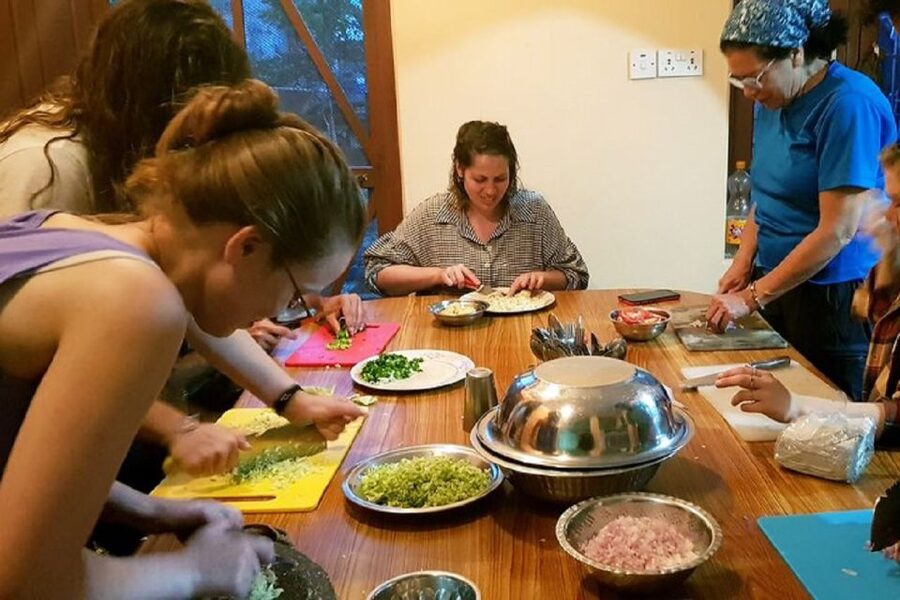
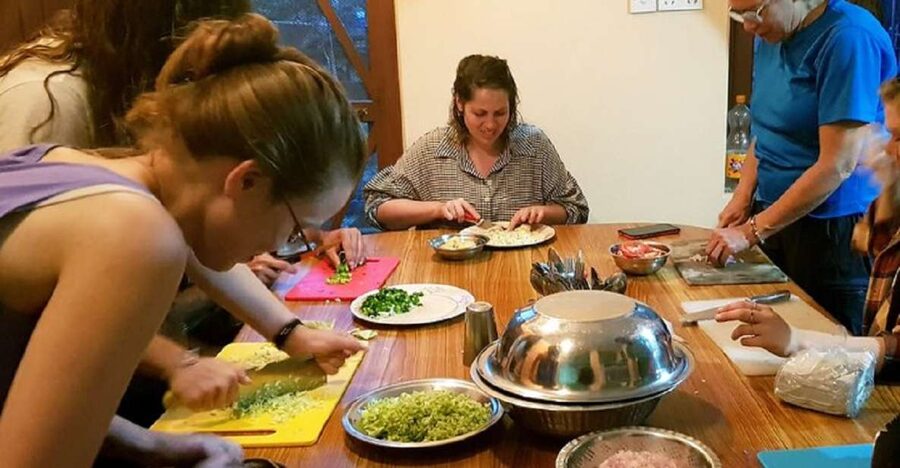
The setting is the key here. You are not simply watching a chef perform. You are working beside a local instructor, using fresh vegetables, spices, and homemade ingredients. Several sessions have included time with Sarita’s family, which adds a human side to the meal without turning the activity into a staged cultural show.
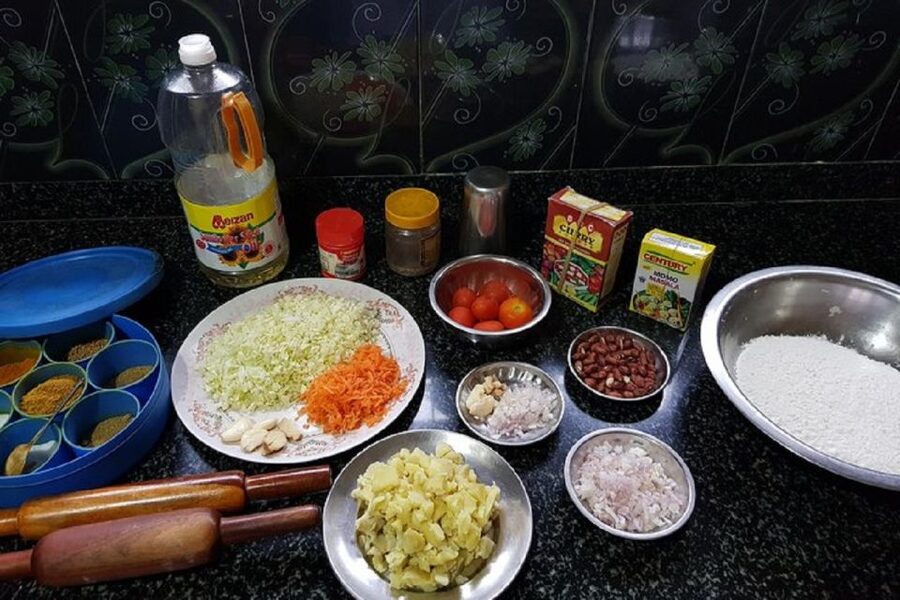
That distinction matters. You see the work behind food you may already have eaten across Nepal. You learn how ingredients are prepared, how seasoning is balanced, and how a dish comes together in a household setting. The kitchen has also been described as clean and well organized, with ingredients prepared before the lesson begins.
Sarita is the main guide named in the experience. Her teaching style suits beginners: she explains each step, answers questions, and lets you do much of the work. English guidance is available, along with Hindi and Nepali. If you speak little Nepali, the English option is useful. If English is not your strength, the teaching can also be adjusted with slower, simpler explanations.
This is not a large class where you stand at the back and watch someone mince vegetables. The private format gives you room to ask why a spice is used, how a filling should feel, or how to shape a dumpling without making a small edible disaster.
A few more Pokhara trips to weigh up
- Nepalese Momos or Dal Bhat Cooking Class (Cook with Delight)
★ 5.0 · 99 reviews - MoMo or Dal Bhat Cooking Class at Aama Kitchen in Pokhara
★ 4.9 · 28 reviews - Pokhara: 3 Hour MoMo cooking class
★ 4.5 · 10 reviews
Starting from Lakeside Road in Pokhara
The listed pickup point is on Lakeside Road, Lakeside-6, Pokhara. Round-trip transfer from the Pokhara Lakeside area is included, which makes the class easy to fit into a stay based around the lake.
Your outing begins with the transfer to the home kitchen. The route itself is not presented as a sightseeing tour with named monuments, so think of the ride as practical transport rather than a major attraction. The itinerary also allows for a photo stop, a visit, guided time, and free time around Pokhara, but the main reason to book is the cooking session.
Pickup is a real convenience, particularly if you are unfamiliar with the city or want to avoid hunting for an address. One point deserves attention: one person had trouble with a taxi driver trying to sell extra services. That does not cancel out the value of included transport, but it is sensible to confirm the pickup and drop-off arrangement before setting off. You can also ask the operator for clear details about who is collecting you.
The transfer is highly rated overall, with 98 percent of ratings giving transport a perfect score. Still, transport in Pokhara can be less predictable in bad weather, so keep a little flexibility around the three-hour activity.
Choosing between momos and Dal Bhat
Your choice of dish changes the feel of the lesson.
Momos: patient shaping and plenty to eat
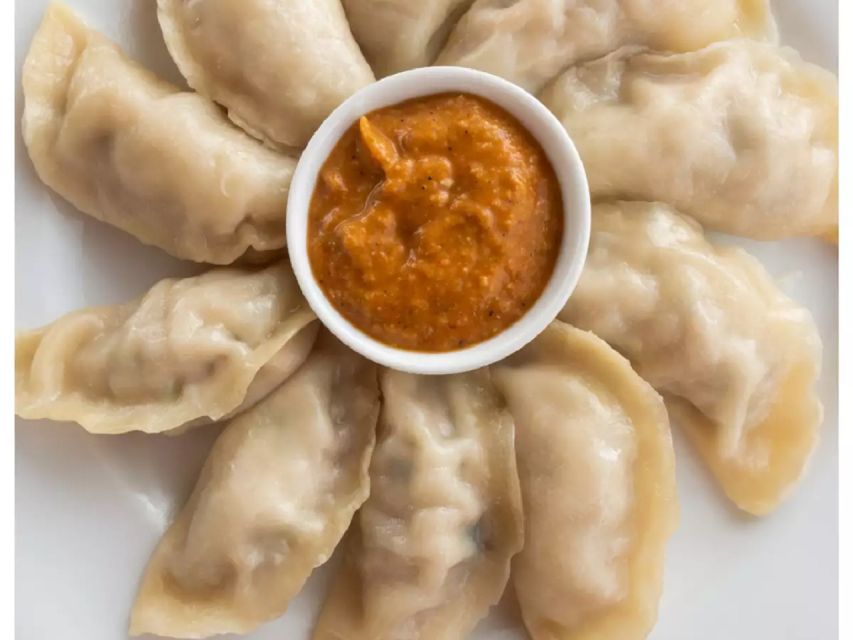
Momos are steamed dumplings filled with seasoned ingredients and served with a dipping sauce. The lesson covers the work that makes them special: preparing the filling, mixing and seasoning, making or handling the dough, shaping the dumplings, and cooking them.
Shaping is harder than it looks. Beginners often make uneven folds at first, and that is part of the fun. Sarita’s patient instruction helps you improve as you go. By the end, your momos may not all look identical, but they should be ready to steam and eat.
Quantity is worth noting. One session produced more than 70 momos, and another person described being very full after the meal. You should arrive hungry, but not so hungry that you rush the preparation. If you have a reusable container, bringing it could be useful for leftovers, although takeaway packaging is not listed as an inclusion.
The best reason to choose momos is that the skill travels well. Once you understand the dough, filling, folding, and steaming process, you can apply the method to other dumplings. One person had already made two more batches at home after the lesson. You may also have the chance to learn variations such as vegetable or cheese momos, but the exact filling can depend on the class arrangement.
Same mountains, a completely different kind of day:
- ZipFlyer Nepal – The World’s Steepest Zip-line
★ 5.0 · 608 reviews - Bungee Pokhara by HighGround Adventures
★ 5.0 · 366 reviews - From Pokhara: Sarangkot Sunrise Himalayas Tour
★ 4.7 · 218 reviews - ATV Adventure Tour in Pokhara, Nepal
★ 5.0 · 194 reviews
Dal Bhat: more steps, more of a full meal
Dal Bhat is Nepal’s most familiar meal, and it offers a broader lesson in how Nepali food is built. You prepare lentils, rice, vegetables, and accompanying dishes, working with spices and seasoning across several pots or stages.
This option is less about one repeated hand skill and more about timing and balance. Dal Bhat can involve many separate preparations, so you learn how a complete meal comes together rather than focusing on a single item. One session included multiple dishes, and the finished meal was described as both filling and delicious.
If you have eaten Dal Bhat throughout Nepal, the class gives you a useful second look. You begin to notice why the meal feels satisfying despite its simple ingredients. You also gain a recipe that can be repeated at home, though you will need access to suitable spices and fresh produce.
Dal Bhat may be the better pick if you want a meal that reflects everyday Nepali cooking. Momos may suit you more if you want a focused technique, a sociable activity, and something you can make repeatedly for friends.
What you actually do during the three hours
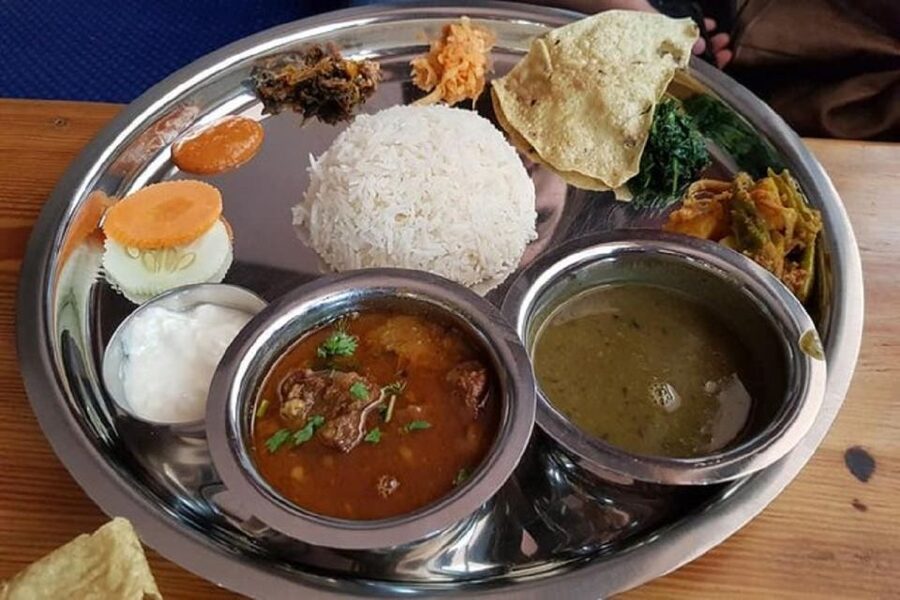
The session begins with an introduction to the ingredients, spices, and cooking methods used in Nepali homes. This early explanation helps you understand what you are handling before the chopping begins.
You then work through the preparation with Sarita. Depending on your choice, you may chop vegetables, mix a momo filling, season ingredients, prepare dough, fold dumplings, or cook lentils and accompanying dishes. The important point is that you are expected to take part. This is not a demonstration followed by a plate placed in front of you.
The teaching is step by step. Sarita has been praised for being patient, clear, friendly, and willing to explain why each method is used. That matters when you are dealing with unfamiliar spices or a dough that refuses to behave.
After cooking, you sit down to eat what you have made. Water is included, and tea or snacks may be offered in the home, but extra food and drinks beyond the class are not included. Do not count on a long menu of alternatives. You choose momos or Dal Bhat, and that prepared dish is the center of the meal.
Conversation is another part of the afternoon. You can ask about food customs, local ingredients, and family life while eating. Several sessions have included the host’s family, and that makes the setting feel warm and personal. It also means this experience is more intimate than polished. If you prefer a quiet, private lesson, that may be a plus. If you want a formal cooking school with professional equipment and a fixed curriculum, this may feel more informal.
The ingredients, spices, and home-cooked result
The food is not an afterthought. Fresh ingredients and spices are included, and the preparation has been described as clean and well organized. Some ingredients have come from homemade sources, including a garden, which adds a direct connection to the household meal.
You will learn more than a list of ingredients. The lesson shows how Nepali cooking depends on preparation and seasoning, not just on heat. You may come away with a better feel for how vegetables are cut, how a filling is mixed, and how spices are added for balance.
The final meal is one of the strongest parts of the experience because you have done the work yourself. A restaurant momo is convenient, but a momo you shaped badly and then watched steam into something delicious has a different reward. Dal Bhat has the same appeal: the many steps make the finished plate feel earned.
Portions can be generous. Momo sessions in particular may leave you facing a mountain of dumplings. That is good value, but it can be a lot of food if you have recently eaten or are not accustomed to heavy meals. Plan your day accordingly.
The take-home recipe is more useful than a souvenir
A cooking class earns its keep after the holiday. This one includes a printed or digital recipe, so you have a practical reminder of the process rather than just a photograph.
A recipe cannot reproduce every bit of hands-on guidance. You may still need to adjust spice levels, dough texture, or cooking time when using ingredients at home. But having the written steps makes it far easier to try again before the lesson fades from memory.
The recipe is also a good reason to choose this over a simple food tour. You are not only tasting Nepali cuisine. You are taking home a way to make it. One person even received the full recipe in their preferred language, though that should not be assumed for every booking.
For momos, the payoff may be especially strong. The folding technique can be practiced in small batches, and the basic method can work with different fillings. For Dal Bhat, the recipe gives you a starting point for a complete meal, although recreating every local ingredient may take some shopping.
What the $28 price includes
At $28 per person, the cost is reasonable for a private three-hour session when you count the ingredients, instruction, prepared meal, water, recipe, and round-trip transfer from Lakeside.
The value is not just the amount of food. You are paying for direct time with a local teacher and access to a private home kitchen. A cheaper restaurant meal would not give you the same practical skill or personal contact. A formal cooking school might offer more equipment, but it may not provide the same everyday setting.
The price works best if you take part fully. If you only want to watch someone cook, you will not get as much from it. The experience rewards people who are happy to chop, mix, fold, taste, ask questions, and accept that their first momo may look a little strange.
Private groups also make the price easier to justify for couples, families, and friends. Solo visitors can book too, and a one-person lesson may feel especially personal. The tradeoff is that a private setting usually has less of the spontaneous energy you might get from a large group of strangers.
Who should book this cooking class?
I would choose this experience if you want a cultural activity that is calm, practical, and connected to ordinary life in Pokhara.
It suits:
- First-time visitors who want more than restaurant meals
- Couples looking for a shared activity
- Families and small private groups
- Beginners who appreciate patient instruction
- Food lovers who want a recipe they can use at home
- People choosing between learning one technique with momos or a full Nepali meal with Dal Bhat
It is less suitable if you want a fast demonstration, a broad tasting menu, or a restaurant-style setting. You should also think twice if you dislike hands-on food preparation or are not comfortable eating a generous serving of the dish you make.
Bring a passport or ID card, with a copy accepted. Comfortable clothing is sensible for a cooking session, though no special equipment is listed. Most important, leave enough room in your schedule for the class to run at its natural pace.
Booking flexibility and practical details
The activity lasts three hours, with starting times dependent on availability. It is guided live in English, Hindi, or Nepali, and the group type is private.
You can cancel up to 24 hours before the activity for a full refund. The reserve-now, pay-later option is useful if you are still arranging your Pokhara schedule. Since the class includes pickup from the Lakeside area, confirm that your accommodation falls within the stated pickup zone.
Snow Peak Tours and Travels operates the experience. The pickup and drop-off point listed is Lakeside Road, Lakeside-6, Pokhara, although hotel pickup has also been arranged for participants staying in the area. Confirm the exact meeting details before the day, especially if your accommodation is outside Lakeside.
Should you book it?
Yes, if you want to connect food with local life and prefer doing over watching. Sarita’s warmth, careful instruction, fresh ingredients, and home setting give this class a personal feel that a standard restaurant meal cannot match.
Choose momos for a focused, hands-on lesson with plenty of folding and a potentially enormous final plate. Choose Dal Bhat for a broader look at how Nepal’s everyday meal is prepared across several steps.
The only real caution is the pace and informality. Three hours can pass quickly, and the home setting may not follow a rigid cooking-school schedule. For most people, that is exactly the appeal. You leave with a full stomach, a recipe, and a better sense of how Nepali food reaches the table.
FAQ
How long does the Nepalese cooking class last?
The class lasts three hours, including the hands-on preparation and the meal you cook.
Can I choose between momos and Dal Bhat?
Yes. The experience offers a choice between making momos or preparing Dal Bhat.
Where does the cooking class take place?
The class takes place in a real Nepalese home kitchen in Pokhara.
Is transportation included?
Yes. Round-trip transfer from the Pokhara Lakeside area is included. The listed pickup and drop-off location is Lakeside Road, Lakeside-6, Pokhara.
What languages does the guide speak?
Live guidance is available in English, Hindi, and Nepali.
Do I receive a recipe after the class?
Yes. A printed or digital recipe is included so you can recreate the dish at home.
Just added around Pokhara
- Seti George and Thrilling Suspension Bridge Tour at Pokhara★ 4.5 · 3 reviews
- Tandem Paragliding in Pokhara★ 4.8 · 8 reviews
- Pokhara: Sunrise Tour to Sarangkot★ 5.0 · 3 reviews
- Pokhara: Suspension Bridge Private Tour- 30 Min Village Walk★ 4.8 · 9 reviews
- Pokhara: Visit Best Seven Tourist Destination by Sharing Bus★ 3.4 · 10 reviews
- Pokhara Sightseeing By Bus: Day Trip★ 4.6 · 7 reviews
- Pokhara Sightseeing By Bus – Day Trip★ 3.2 · 8 reviews
- Pokhara: Sarangkot Sunrise & Panoramic Annapurna View Tour★ 4.8 · 10 reviews
Cooking Classes, compared.
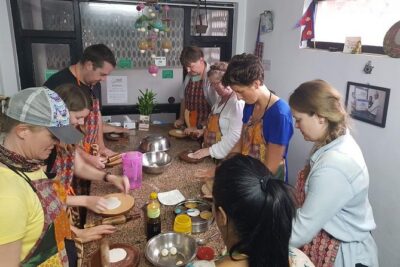
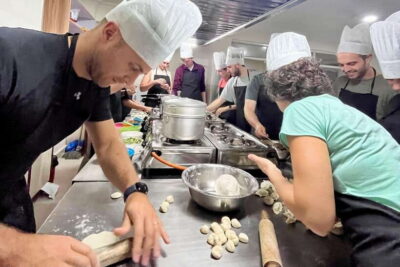
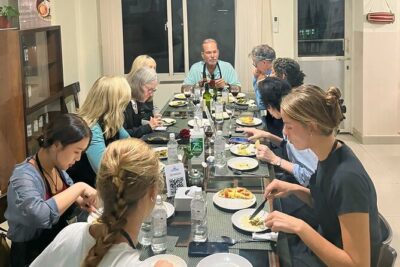
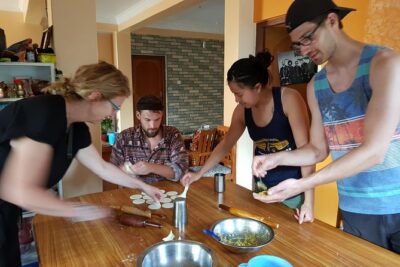
Nepalese Momos or Dal Bhat Cooking Class (Cook with Delight)
Read our review →
The best Private Nepali Cooking Class in Kathmandu
Read our review →
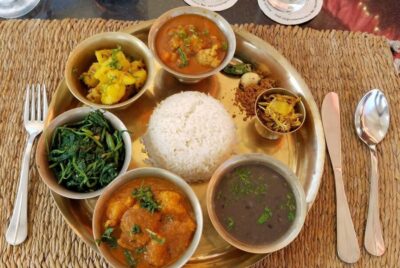
MoMo or Dal Bhat Cooking Class at Aama Kitchen in Pokhara
Read our review →Browse the lists this tour appears in