
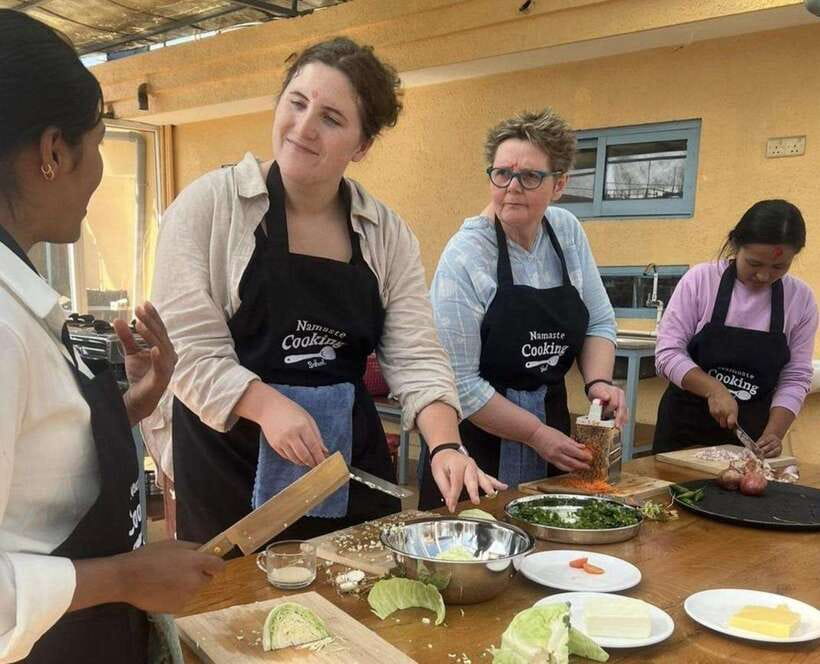
Reviewed · COOKING CLASSES
Local Women Led Nepali Cooking Class
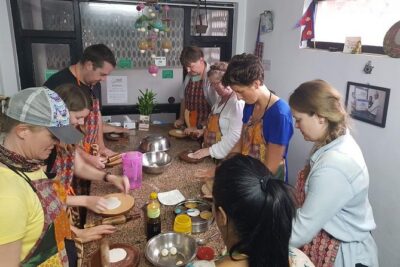
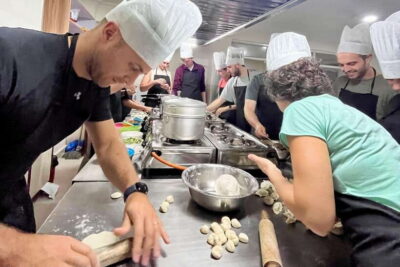
Namaste Cooking School puts women-led empowerment at the center of a hands-on Nepali meal. In three hours, you cook with ingredients sourced from local farmers, learn familiar Himalayan flavors, and sit down to eat the food you made. Sessions may be led by a lively team of four women, with plenty of laughter alongside the cooking.
I like the farm-to-table focus, which gives the class a clear connection to Nepal beyond the tourist district. I also like the small size, limited to eight people, because you should get more time at the worktable instead of watching from the back. The main consideration is that the menu can vary, so this is better for a flexible eater than someone set on preparing one exact dish.
Key points
- Women-led social mission: Your booking supports women who survived trafficking and are building new lives through work and teaching.
- Thamel location: The school sits in the heart of Kathmandu’s main visitor district, making it easy to reach on foot from nearby hotels.
- Three hours of cooking and eating: The class includes preparation, a shared lunch or dinner, and time to enjoy the finished dishes.
- Small group of up to eight: This keeps the session personal and gives you a better chance to take part at the counter.
- Everything needed is included: Ingredients, recipes, and a certificate are covered in the $30 price.
- Flexible booking: You can cancel up to 24 hours ahead for a full refund, and reserve now while paying later.
Why this cooking class matters beyond the meal
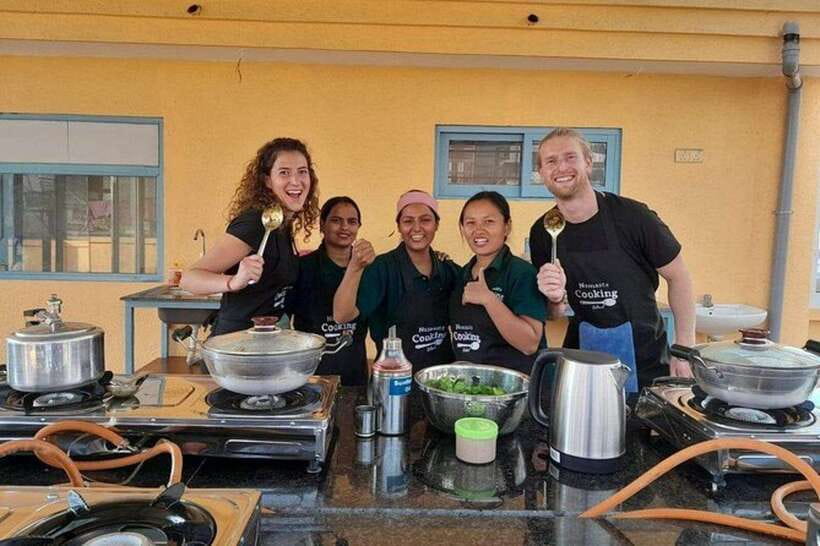
Many cooking classes are pleasant ways to fill an afternoon. This one adds a social purpose that changes how the experience feels. Namaste Cooking School is run by women who survived trafficking, and the class helps support their independence, confidence, and working lives.
That mission does not replace the food. It gives the food more meaning. You are not simply copying a recipe for a souvenir meal. You are spending time with women who use cooking, teaching, and hospitality as part of a new chapter.
The school describes its work in terms of culture and empowerment. That is a useful way to understand the experience. Nepalese food is tied to family routines, local crops, religious traditions, and the practical need to make satisfying meals from available ingredients. Learning a few dishes from instructors connected to that food culture gives you more than a restaurant meal can.
You should still book this as a cooking class first. The social mission is important, but the session must also suit your interests. If you enjoy learning by doing, eating what you prepare, and asking questions in a small group, the combination is strong. If you only want a quick demonstration with little participation, this may feel too active.
A few more Kathmandu trips to weigh up
- Half day cooking class in Thamel kathmandu
★ 5.0 · 607 reviews - Kathmandu: Local Women-Led Nepali Cooking & Momo Class
★ 4.9 · 360 reviews - Kathmandu: Local Lead Nepali Cooking & Momo-Making Class
★ 5.0 · 212 reviews
Arriving in the heart of Thamel
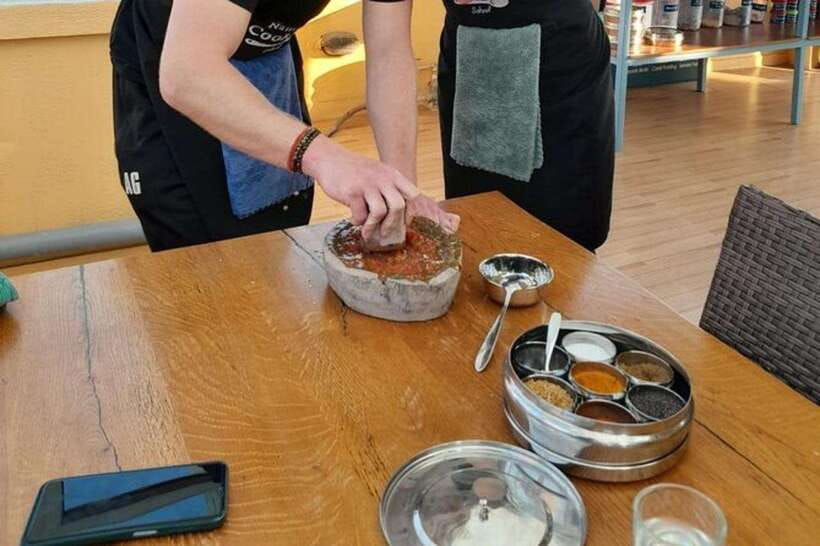
The school is located in Thamel, Kathmandu’s best-known base for visitors. That makes the meeting point practical. You can reach it easily from many hotels, restaurants, shops, and travel offices in the area, though Thamel’s streets can be busy and confusing for a first-time arrival.
A pickup service is available, but the included information also makes clear that hotel pickup and drop-off are not part of the standard price. Confirm the arrangement before booking if you need transportation. Do not assume that a pickup mentioned in the activity description means a private transfer is automatically included.
The central location has another advantage: you can fit the class into a busy Kathmandu schedule. It works well on a day when you are already exploring Thamel, or as a break from temples, markets, and traffic. At three hours, it takes a meaningful part of the day without swallowing the whole afternoon.
The starting time depends on availability. That matters if you are connecting the class with sightseeing or a flight. Check the available session before you commit to other plans, and leave some breathing room if you are crossing Kathmandu by taxi.
Meeting the women behind the stove
The class is taught in English, so you can follow instructions and ask questions without needing a translator. The instructors are women who have survived trafficking, and the school’s purpose is to give them a place to work, teach, and grow.
Expect the tone to be friendly rather than formal. The strongest response to the class describes three hours spent with four cheerful women, with a great deal of laughter and a satisfying meal at the end. Another recent booking praised the instructors as friendly and capable, with everyone having a very good time.
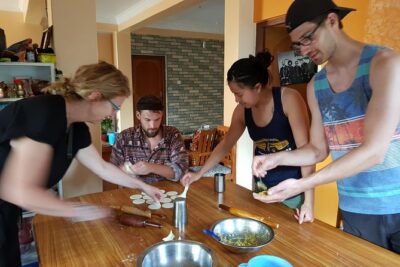
That gives you a useful picture of the mood. This is not presented as a stern professional kitchen where you must keep pace with a chef. It is a social class built around shared work. You may be asked to chop, mix, shape, season, or assemble dishes, depending on the menu for the day.
Because the group is capped at eight, you should have a reasonable chance to participate. Small groups also make it easier to ask about ingredients, cooking methods, and how the dishes fit into everyday Nepali food traditions. The class may be especially enjoyable for solo visitors, couples, and families who want an activity that creates conversation quickly.
The group size can also shape the experience in less predictable ways. Six to eight people may produce a lively table, while a much smaller class may feel quieter and more personal. The available information does not promise a private class, so book with the expectation of sharing the kitchen.
Preparing a Nepali menu from entree to dessert
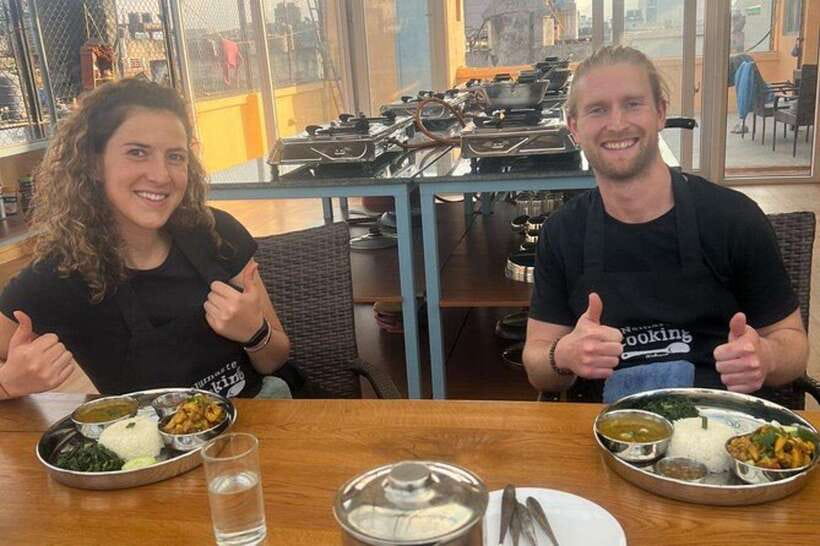
The menu offers a range from entree to main course to dessert. That broad selection is one of the appeal points, since you are not paying for a single recipe demonstration and then leaving. You should expect to work through several parts of a meal.
The exact dishes are not specified, so I would not book with one particular recipe in mind. Menus can depend on the day’s ingredients and the school’s teaching plan. The advantage is variety. You get a wider taste of Nepali cooking and a better sense of how a meal is built.
The farm-to-table approach adds a useful local link. Ingredients are sourced directly from local farmers, with an emphasis on purity and sustainability. That does not mean every item is necessarily grown in the school’s own garden, and it does not promise a particular organic certification. It does mean the class is designed around local supply and fresh Nepali produce rather than a generic international menu.
As you cook, pay attention to the balance of flavors. Himalayan food is not one single style, and Nepali meals can bring together spices, grains, vegetables, pulses, herbs, and other staples in ways that differ from the restaurant version you may know at home. Ask which ingredients are common in Nepali kitchens and which are special to the dish being prepared.
You will also see the practical side of the cuisine. A good cooking class explains not only what to add but why the ingredient matters, when to add it, and how the cooking method changes the result. The available details do not promise a formal lecture, so expect learning through the work rather than a long cultural presentation.
Same mountains, a completely different kind of day:
- Everest Base Camp Trek – 14 Days
★ 5.0 · 1,499 reviews - Private Kathmandu Sightseeing Tour | UNESCO World Heritage sites
★ 5.0 · 756 reviews - Everest Base Camp Helicopter Tour landing at Everest View Hotel
★ 5.0 · 668 reviews - Everest Base Camp Trekking
★ 5.0 · 485 reviews
Cooking, then eating what you made
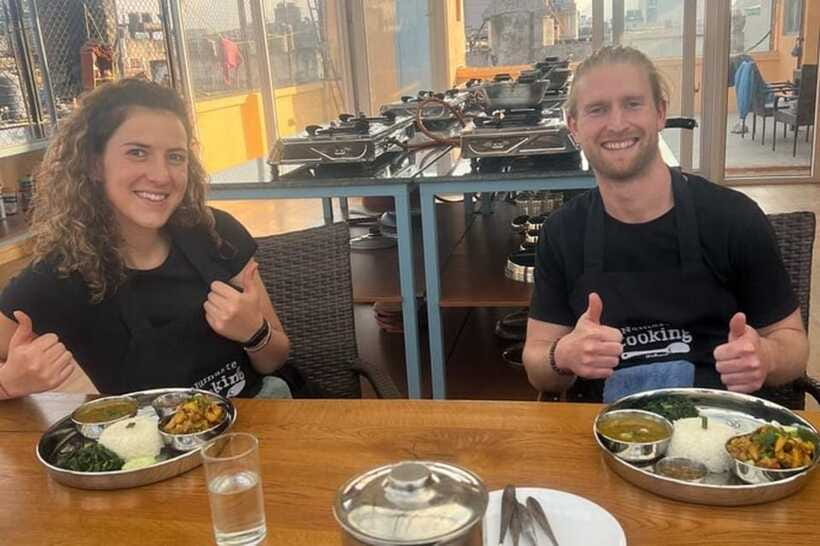
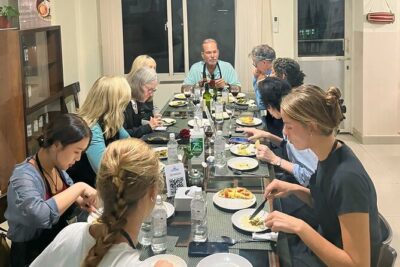
The class includes lunch or dinner with the dishes you prepare. That is a simple feature, but it affects the value of the session. You are not paying separately for a meal after the lesson, and you do not have to wonder if the food you helped make will be discarded.
The shared meal is also the natural payoff of the class. After working at the counter, you get to taste the finished dishes with the people you cooked beside. The social side matters here. A meal eaten together gives the class a warmer ending than a certificate handed over at the door.
The food may be the highlight for you, but keep your expectations practical. You are learning in a limited three-hour session, not completing professional culinary training. The goal is to come away with a few useful methods, a set of recipes, and a better feel for Nepali flavors.
A recipe booklet is included, so you can try the dishes again at home. That makes the experience more durable. Without written recipes, many cooking classes fade into memory once the holiday ends. Here, you have a reference for ingredients and preparation, although the booklet’s format and level of detail are not specified.
The certificate of participation is also included. Treat it as a pleasant souvenir rather than a professional qualification. It marks your time at the school, while the recipe booklet gives you something more practical to use.
What $30 buys you in Kathmandu
At $30 per person, the price includes all cooking ingredients, the class, lunch or dinner, the recipe booklet, and a participation certificate. That is a fair package if you value the hands-on lesson and the social mission, not just the cost of a meal.
You could certainly eat more cheaply in Kathmandu. A basic local meal may cost far less than $30, so the class is not the budget choice if food alone is your measure. You are paying for instruction, preparation, a small group setting, ingredients, and the chance to support a women-led organization.
The value improves if you would otherwise book a separate food tour or cultural activity. In one three-hour block, you get a meal and a practical introduction to Nepali cooking. You also leave with recipes that may help you recreate part of the experience at home.
The price is less attractive if you dislike cooking or already know Nepali food well. You may spend much of the session doing tasks you consider ordinary, and the menu is not detailed enough to guarantee advanced techniques. For most first-time visitors who enjoy food and want a personal connection, the combination is more useful than a standard restaurant dinner.
Pickup can affect your total cost. Hotel pickup and drop-off are not included, even though a pickup service is available. Check the transport terms before you book so the final price does not surprise you.
Who should book this experience
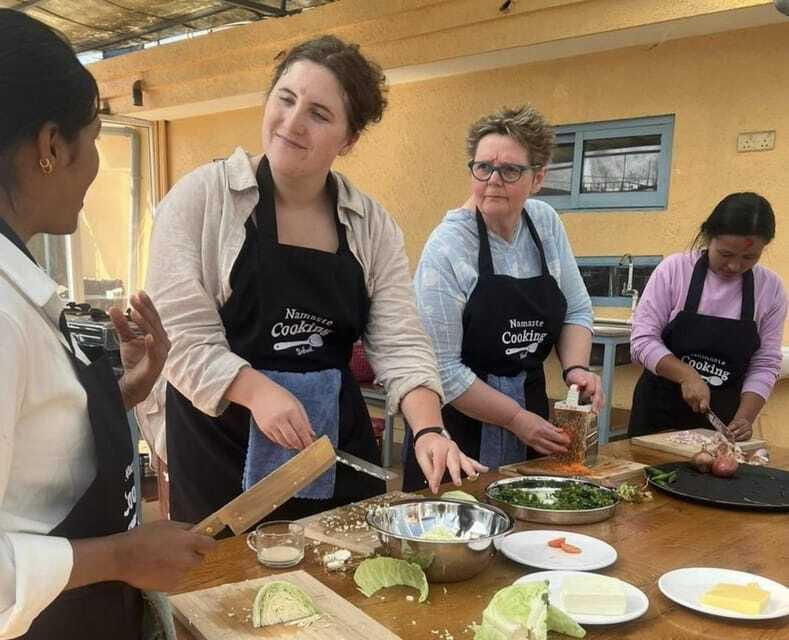
I would point this class toward people who want a direct, human-scale activity in Kathmandu. It fits well for:
- Food lovers who want to learn rather than only eat
- Solo visitors looking for a social setting
- Couples seeking a shared activity
- Families with an interest in practical culture
- Visitors who want to support a women-led social enterprise
- Anyone staying near Thamel who wants a three-hour break from sightseeing
The small group makes it a good choice for people who prefer participation over observation. You should be comfortable following instructions, working with other people, and accepting a menu that may not be announced in full ahead of time.
It may not suit you if you have strict dietary requirements that have not been discussed with the school. The available information does not list allergy procedures, vegetarian options, vegan choices, or substitutions. Ask before booking if these details matter to you.
It is also not the right pick if you want a private transfer, a long market visit, or a full-day food tour. The advertised experience is a three-hour cooking session centered on the school and the meal you prepare.
Booking details worth checking before you go
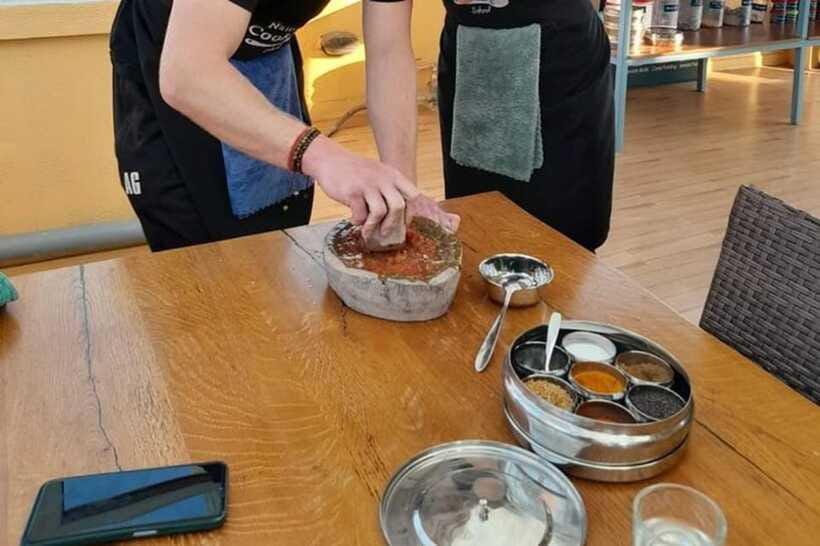
The instructor language is English, and the group limit is eight participants. That is enough information to judge the basic format, but you should still check the starting time and any pickup arrangements before confirming.
You can cancel up to 24 hours in advance for a full refund. The reserve-now-and-pay-later option helps if your Kathmandu schedule is still changing. It lets you hold a place without paying immediately, though you should read the current booking terms for the payment deadline.
The location in Thamel is convenient, but allow time to find the school. Kathmandu traffic can make short distances take longer than expected, and the narrow streets around Thamel are not always easy to navigate quickly.
Wear something comfortable for a kitchen session. The organizers do not provide stated clothing guidance, so avoid bringing an outfit that you would hate to stain. Since no accessibility details are supplied, contact Namaste Cooking School directly if you need information about the kitchen setup or physical access.
Final call: a useful, good-value food experience
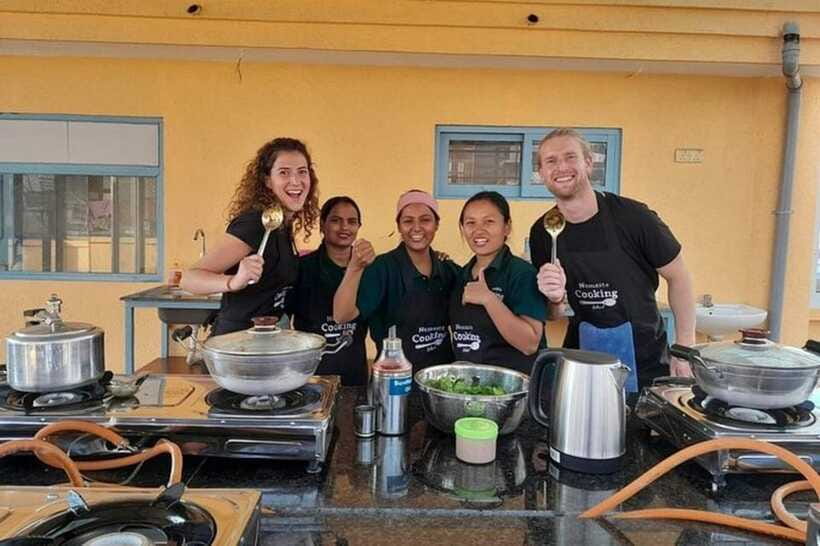
Book this class if you want Nepali food with a personal purpose behind it. The strongest reasons are the women-led mission, the farm-sourced ingredients, the small group, and the fact that your meal, recipes, and ingredients are included in the $30 price.
Go in expecting a friendly, active session rather than a polished cooking show. The menu is not fully specified, and dietary details are not provided, so ask questions before paying if those points are important. For most people who enjoy cooking and want to support local women while learning a few Nepali dishes, this is a thoughtful use of three hours in Thamel.
FAQ
Where is the Nepali cooking class located?
Namaste Cooking School is located in Thamel, in the Bagmati Zone of Nepal.
How long does the cooking class last?
The experience lasts three hours.
How much does the class cost?
The listed price is $30 per person.
What language is the class taught in?
The instructor language is English.
How many people can join the class?
The class is limited to eight participants.
Is a meal included?
Yes. Lunch or dinner with the dishes you prepare is included.
Are the cooking ingredients included?
Yes. All cooking ingredients are included in the price.
Do I receive recipes after the class?
Yes. A recipe booklet is included.
Can I cancel for a full refund?
Yes. You can cancel up to 24 hours in advance of the experience for a full refund.
Just added around Kathmandu
- Namobuddha Monastery Hiking Day Tour via Panauti from Kathmandu★ 5.0 · 15 reviews
- Private Half-Day Tour of Boudhanath and Pashupatinath Temples in Kathmandu★ 4.5 · 9 reviews
- Private Half-Day Tour of Kathmandu Durbar Square and Swayambhunath Temple★ 4.5 · 11 reviews
- Private Full-Day Kathmandu City Tour★ 5.0 · 9 reviews
- Private Day Tour in Kathmandu Valley Rim with Bhaktapur Sightseeing★ 5.0 · 3 reviews
- Private Half Day Budhanilkantha Tour★ 5.0 · 6 reviews
- Private Day Tour: Patan and Bhaktapur from Kathmandu★ 4.5 · 6 reviews
- Private Day Tour – Sacred Journey to Namo Buddha★ 5.0 · 5 reviews
Cooking Classes, compared.
Nepalese Momos or Dal Bhat Cooking Class (Cook with Delight)
Read our review →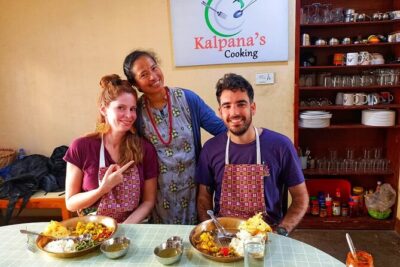
The best Private Nepali Cooking Class in Kathmandu
Read our review →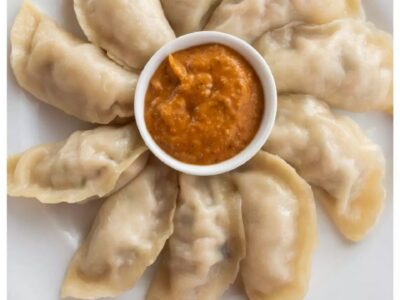
Nepalese Kitchen in Pokhara: Momos or Dal Bhat Cooking Class
Read our review →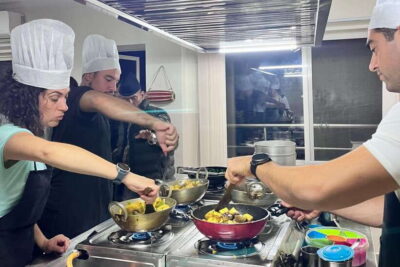
Browse the lists this tour appears in