
Reviewed · WORKSHOPS
Knife Khukuri Making Workshop
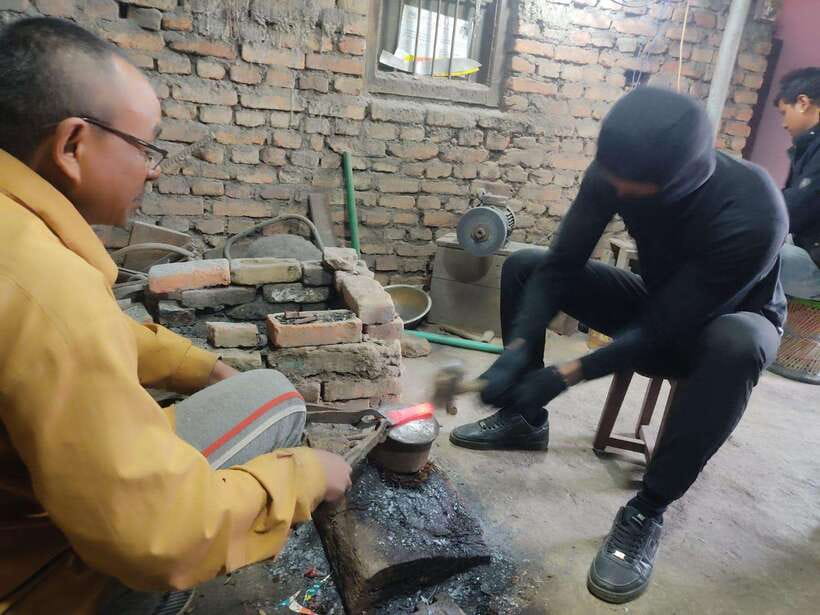
The most memorable part of this four-hour experience is watching a plain piece of metal become a sharp, curved 6-inch khukuri under the hammer of Indra, a blacksmith with more than 40 years of experience. You get to hammer the hot metal and help with the first grinding, while the skilled work stays in the master’s hands.
I like the personal setting in a local family home, and I like that your guide explains the meaning of the khukuri rather than treating it as just a souvenir. The main consideration is that you will not do every step: sharpening and final blade grinding are handled by the blacksmith for safety, and the workshop involves heat, sparks, and standing near active tools.
Key points at a glance
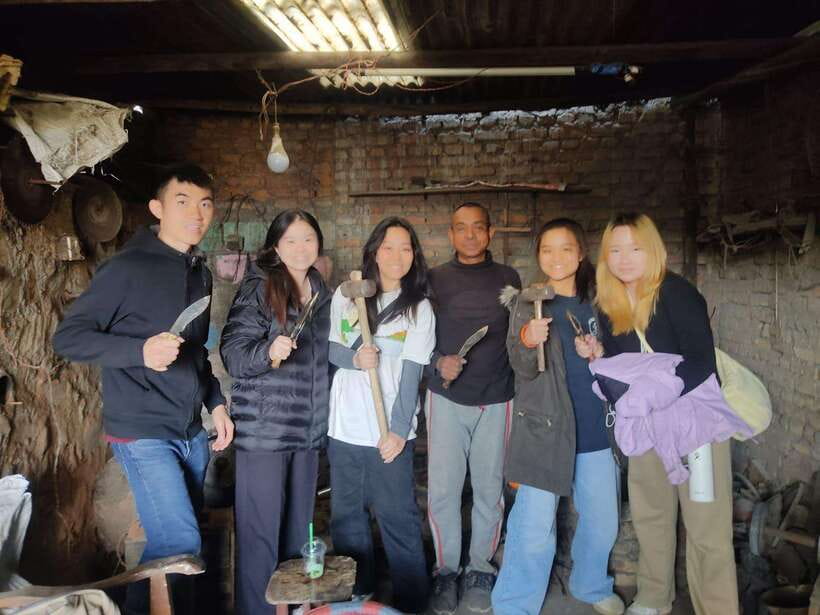
- A 40-plus-year craft tradition: Work with an experienced Nepali blacksmith and see how a rough piece of metal takes shape.
- Hands-on but safely supervised: You can hammer the iron and help with the first grinding, while the host handles the most dangerous work.
- A meaningful Nepali symbol: Learn why the khukuri is linked with Gurkha loyalty, hill communities, and Hindu symbolism.
- A useful souvenir: Take home a sharp, sturdy 6-inch knife with a standard cover.
- Small and personal: Groups are limited to five people, with hotel pickup and drop-off included.
- Good local hospitality: Tea, water, and snacks are provided, and several visitors have been welcomed into the blacksmith’s family home.
Turning scrap metal into a Nepali khukuri
A khukuri is not a decorative prop. It is a working knife with a curved, tempered-steel blade, a wooden or buffalo-horn handle, and a shape suited to chopping and cutting. In Nepal, it is also tied closely to the identity of the Gurkha warrior and to traditional life among the country’s hill communities.
The workshop gives you a chance to understand that object by helping make one. You are not simply choosing a knife from a market shelf. You begin with a rough piece of metal and watch it change through heat, hammering, grinding, shaping, and fitting.
The knife made during this activity is a small khukuri, about six inches long. That size matters. It is easier to handle during the workshop and more practical to pack than a large ceremonial or heavy-duty blade, though you should still check airline and customs rules before flying home with it.
The blacksmith, identified by the host as Indra, has been making knives for over four decades. Some information describes his experience as 42 years, while one account places it at about 45 years. Either way, you are working beside someone who has spent most of his adult life learning how steel behaves under heat and pressure.
A few more Kathmandu trips to weigh up
- Half day cooking class in Thamel kathmandu
★ 5.0 · 607 reviews - Kathmandu: Local Women-Led Nepali Cooking & Momo Class
★ 4.9 · 360 reviews - Kathmandu: Local Lead Nepali Cooking & Momo-Making Class
★ 5.0 · 212 reviews
Hotel pickup and the welcome at the workshop
Your guide picks you up from your hotel lobby and takes you to the blacksmith’s home workshop in Bagmati Zone. Drop-off is included as well, which makes the experience easier to fit into a Kathmandu-area day without arranging a separate taxi.
The group limit is five people. That is a useful size for this kind of activity. You should have a clear view of the work and enough time to ask questions, rather than waiting behind a large crowd for a turn at the anvil.
The welcome is part of the appeal. You may be offered tea, water, and snacks, and the workshop is connected with a local family rather than set up as a polished tourist attraction. One account describes tea and guava from the family garden. Details can vary, but the setting gives the activity a human scale.
Your guide is important here because the blacksmith may be focused on the fire, hammer, and blade. Guides including Namrata, Sajeena, Swayam, and others have helped explain the process in English or Hindi. Namrata has been praised for her warmth and careful arrangements, while Sajeena has been noted for clear English and steady explanations. The guide also helps you ask questions about local customs and the meaning of the knife.
Hammering the hot metal
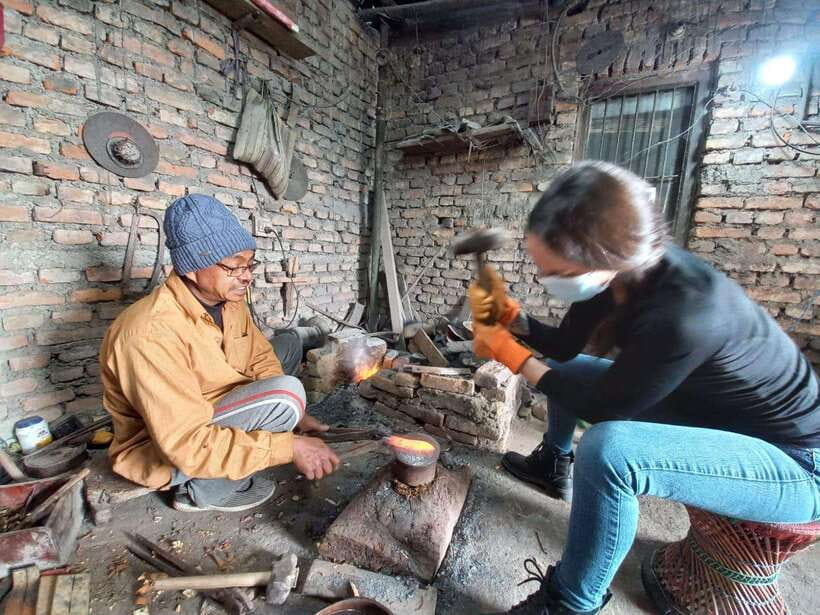
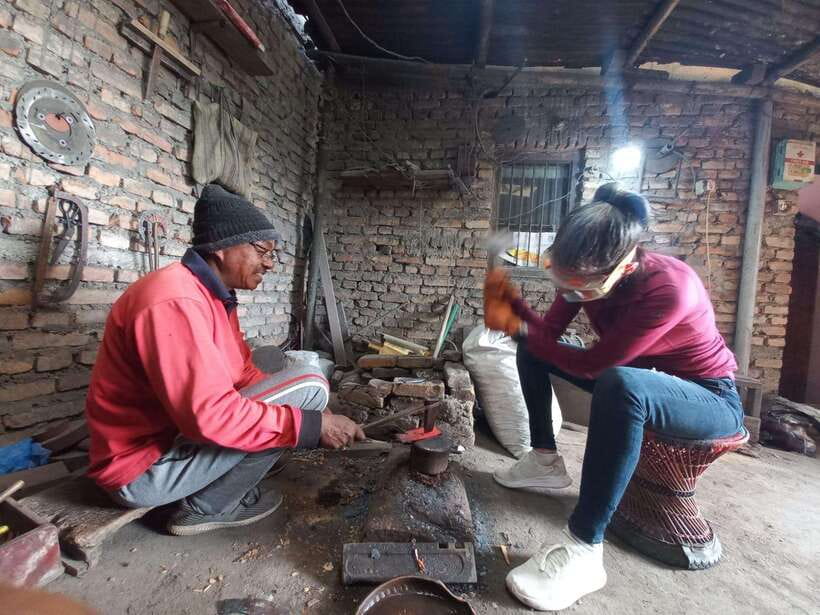
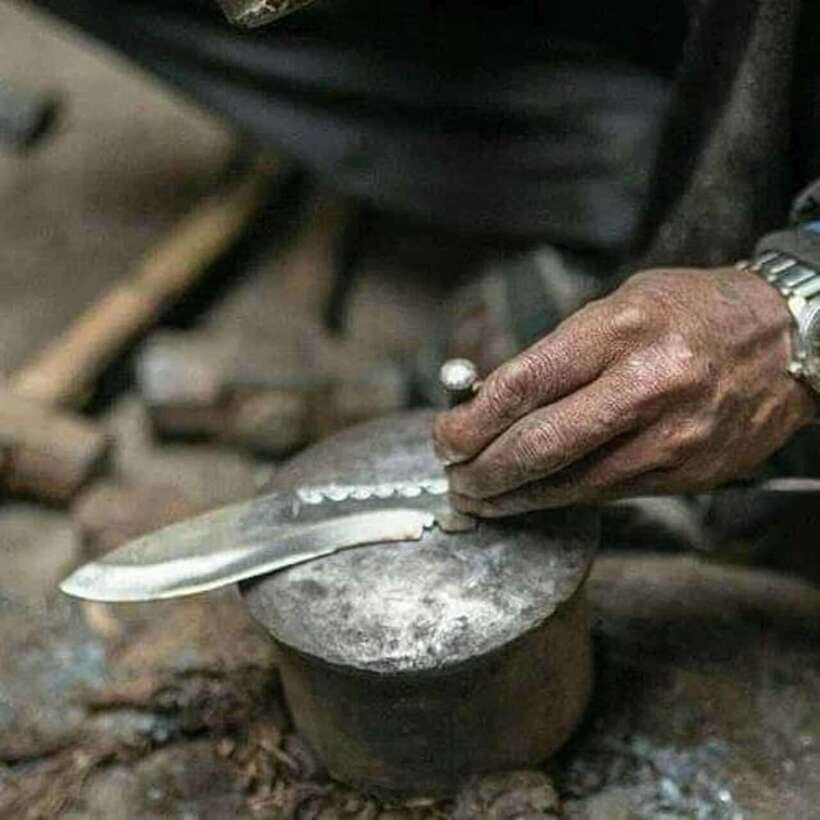
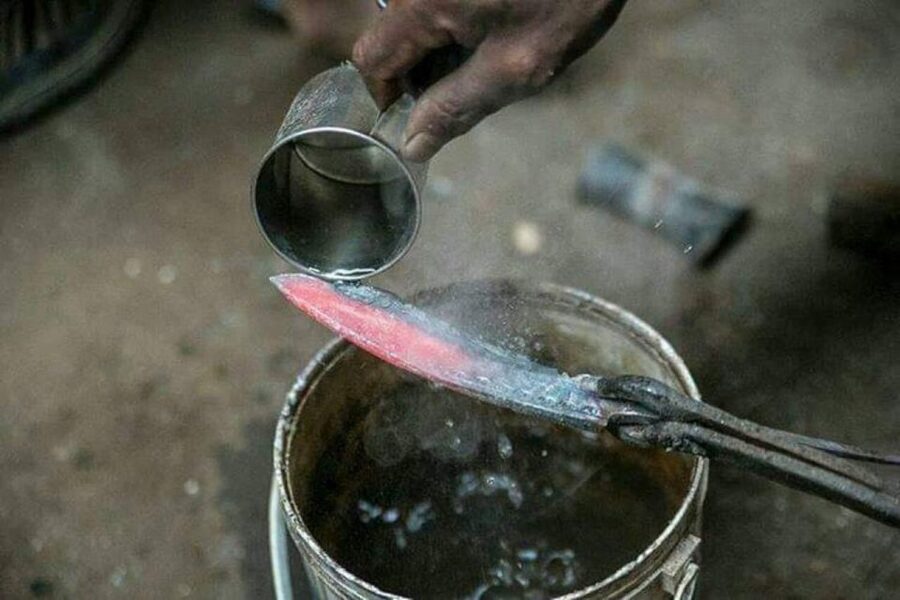
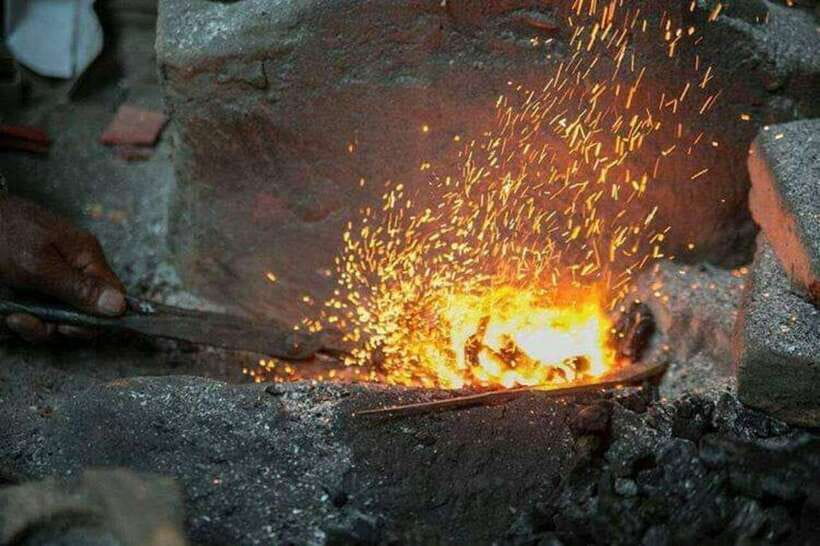
The first real work is hammering. The blacksmith heats the metal and sets it on the anvil, then shows you how to strike it. Your role is carefully limited, but it is not token participation. You get to feel the weight of the hammer and hear the hard ring of metal being shaped.
This is the part I would value most if you enjoy making things. The movement looks simple, but the final shape depends on years of judgment. The blacksmith knows where to strike, how hard to hit, and when to return the metal to the fire.
You will not be expected to form the complete curve or create the final cutting edge yourself. That would be unsafe and would put the quality of the knife at risk. Instead, the experience lets you take part in the easier sections while the professional handles the difficult shaping.
Wear long pants. They are specifically recommended, and they offer better protection than shorts around hot metal and sparks. You should also expect a working environment, not a quiet craft demonstration. The space may be cozy and close to the action, so listen closely to the guide and follow the host’s instructions.
The first grinding and the safety boundary
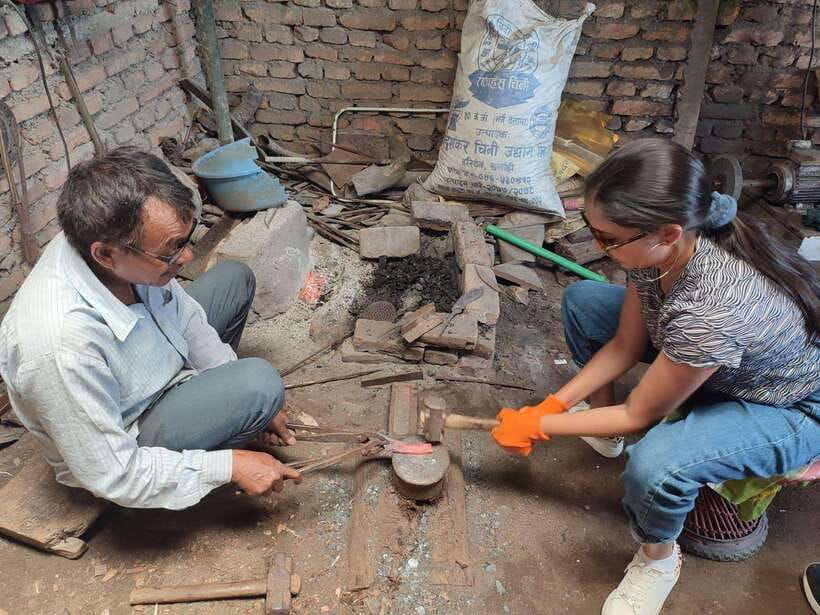
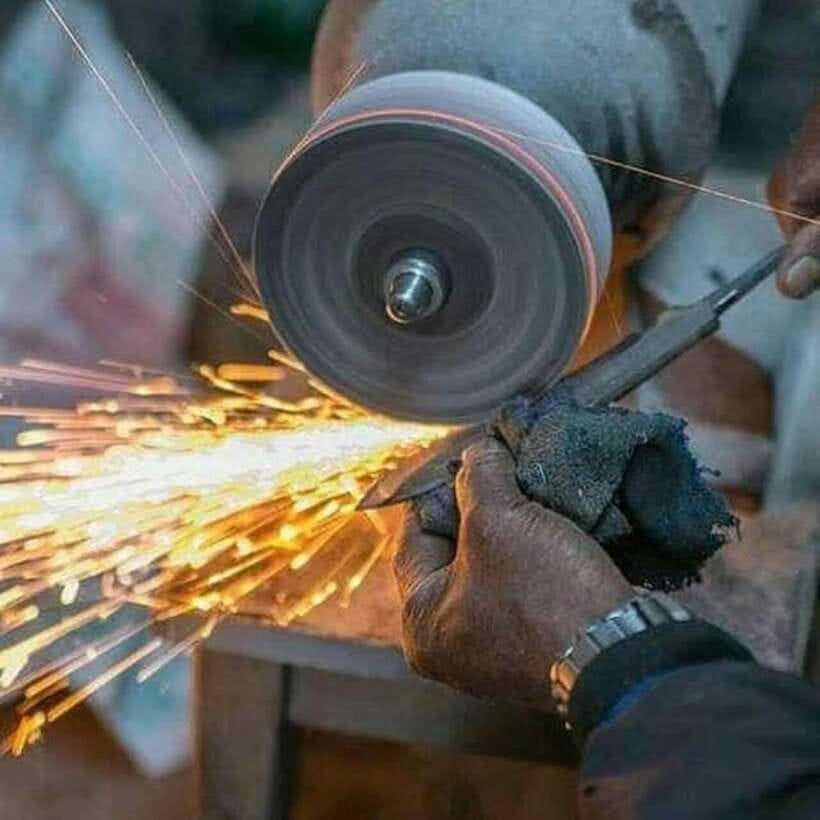
After the metal has taken its rough form, you help with the first grinding. This gives you another direct connection with the process and helps remove some of the roughness left by hammering.
The host handles the later blade grinding and sharpening. This is not a missed part of the experience. A khukuri must be shaped and sharpened with precision, and the grinder creates sparks. You are advised to stay clear during this stage for safety.
That division of work is worth understanding before you book. The activity is hands-on, but it is not a do-it-yourself blacksmith course in which you leave with every skill needed to make another knife. You participate in selected steps and watch the master complete the demanding ones.
The final grinding is also where the knife becomes more than a rough object. The curved profile, clean edge, and balanced shape begin to appear. You get to compare the raw metal from the start with the finished blade at the end, which makes the four-hour session feel like a real process rather than a quick demonstration.
Same mountains, a completely different kind of day:
- Everest Base Camp Trek – 14 Days
★ 5.0 · 1,499 reviews - Private Kathmandu Sightseeing Tour | UNESCO World Heritage sites
★ 5.0 · 756 reviews - Everest Base Camp Helicopter Tour landing at Everest View Hotel
★ 5.0 · 668 reviews - Everest Base Camp Trekking
★ 5.0 · 485 reviews
The handle, cover, and finished knife
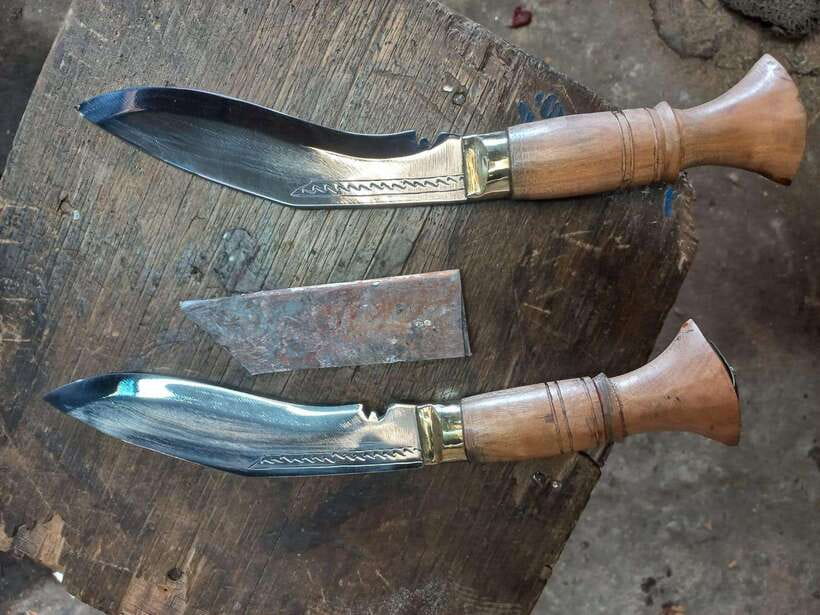
The khukuri traditionally has a wooden or buffalo-horn handle. A small notch near the handle has both a practical and symbolic role. Traditionally, it is said to help keep blood from reaching the handle, and it is linked with Brahma, Vishnu, and Shiva, the Hindu Trinity.
The blade is stored in a scabbard made from wood and leather. A knife cover is included with this activity, so you do not leave with an uncovered blade. A horn or bone cover is available for an additional cost, if you want a more distinctive finish.
The exact amount of handle work you perform may depend on timing and safety. The activity description includes making the handle as part of the wider process, while the clearly defined participant steps are hammering and first grinding. Ask your guide at the beginning which handle and finishing tasks you will be able to take part in during your session.
The finished knife is intended as a souvenir, but it is also a functional tool. A khukuri can be used for shaping timber, chopping meat, and cutting vegetables. Several people have taken home knives they considered sturdy and well made, and one family treated the finished pieces as possible heirlooms.
Why the history adds value
Without context, this could be an enjoyable metalworking class with a knife at the end. The background turns it into a better way to understand Nepal.
The khukuri is associated with the loyalty and courage of Gurkha soldiers, but its importance is not limited to military history. It is also a practical tool used in ordinary life and a traditional object among Nepal’s hill communities. Its curved blade is immediately recognizable, yet its form comes from use, not just decoration.
Your guide can explain the symbols and customs while the blacksmith works. That combination is useful. You see the physical craft and hear why the object matters, instead of receiving a short history talk disconnected from the activity.
I would encourage you to ask about the steel, the handle, the blade curve, and the notch near the grip. The process gives you something to point at, so the answers are easier to remember. You leave with a clearer sense of why a khukuri is part tool, part cultural symbol, and part piece of family craft.
What the four hours feel like
The stated duration is four hours, though some accounts describe the knife itself being completed in under three hours. Allow the full time because pickup, travel, explanations, hospitality, and finishing work are all part of the outing.
The pace is likely to be measured rather than rushed. The metal must be heated, shaped, cooled, ground, and finished in the right order. A blacksmith cannot simply speed up the fire because you have another appointment.
The small group helps keep the session personal. You may be able to ask questions throughout and receive help with your hammering. If you are visiting with family, the activity can be adjusted so participants do as much or as little as their ability allows, though children under 10 are not permitted.
This is not the best choice if you want a quiet indoor craft with no heat, noise, or physical work. It is a better fit if you enjoy workshops, tools, local homes, and the satisfaction of carrying away something made during your visit.
Price and what you receive for $73
At $73 per person, the cost is higher than buying a small knife at a market. That comparison misses the main point. You are paying for hotel transport, a four-hour guided experience, access to the blacksmith’s tools, a finished knife, its standard cover, refreshments, and the time of an experienced craftsperson.
The value is strongest if you want a personal souvenir and a local encounter rather than a bargain blade. You also avoid the uncertainty of choosing a knife without knowing how it was made or what the different shapes and materials mean.
The included transport adds practical value, especially if you are unfamiliar with the area. A guide who can translate and explain also makes a difference. Without that help, you might see the hammering and grinding but miss the cultural details.
The horn or bone cover costs extra, so include that in your budget only if the upgraded finish matters to you. The standard cover is included, and the knife itself is the central keepsake.
Who should book this activity
I would recommend this to adults and older children who enjoy hands-on work, local traditions, and unusual souvenirs. It suits couples, families, and solo visitors because the group is limited to five and the guide can help bridge language gaps.
It is especially good for you if you have already seen temples and heritage sites and want a different side of Nepal. You spend time with a working artisan and a local family, not just in a formal sightseeing setting.
Families should note the age restriction. Children under 10 cannot take part, and even older children should be supervised closely around heat and tools. The activity can accommodate different ability levels, but you should be comfortable following safety instructions.
Knife collectors and craft lovers will get the most from it. If you are mainly seeking a cheap souvenir or a fully independent blacksmith lesson, you may find the price less appealing because the expert completes the hardest stages.
Practical details before you go
Wear long pants and shoes that you can use comfortably around a workshop. The activity information specifically calls for long pants, and you should expect sparks during grinding.
The host or greeter speaks English or Hindi. Guides such as Namrata and Sajeena have provided translation and detailed explanations, but the assigned guide can vary. Tell the operator if you have questions about the process, the blade, or the cover before work begins.
Pickup and drop-off are included from your hotel lobby. The transport service receives a high score, with 86 percent of ratings giving it a perfect mark, so this part of the outing is likely to be handled well.
You can cancel up to 24 hours before the start for a full refund. You can also reserve now and pay later, which helps if your Nepal plans are still shifting. Check the available starting times before booking because the activity runs for four hours and workshop timing matters.
Finally, plan how you will carry the knife home. It comes with a cover, but a khukuri is still a blade. Pack it according to your airline’s rules and do not place it loose in hand luggage.
Should you book the Knife Khukuri Making Workshop?
Book it if you want a personal Nepal souvenir, enjoy seeing skilled work up close, and are happy to take part in selected stages rather than every step. The combination of Indra’s long experience, a small group, local hospitality, and clear guide support gives the activity real substance.
The strongest reasons to go are the hammering, the transformation from raw metal to finished knife, and the chance to understand the khukuri as both a working tool and a Nepali symbol. The main limitation is simple: the blacksmith does the final shaping and sharpening, so this is a guided craft experience, not a complete knife-making course.
At $73, I think it is good value for someone who wants more than a market purchase. Wear long pants, leave room in your schedule, and book this one if a sturdy handmade keepsake sounds better than another standard souvenir.
FAQ
How long does the Knife Khukuri Making Workshop last?
The activity lasts four hours. The knife-making work may take less time, but the full period includes transport, explanations, hospitality, and finishing.
What size knife will I make?
You will make a small khukuri with a blade of about six inches.
Can I do all the knife-making steps myself?
No. You take part in hammering the iron and the first grinding. The host handles the more difficult and risky work, including the final blade grinding and sharpening.
Is hotel transportation included?
Yes. Pickup from your hotel lobby and drop-off are included.
What is included with the finished knife?
The activity includes the tools, the finished knife, a standard knife cover, tea, water, and snacks.
Can I get a horn or bone cover?
Yes. A horn or bone cover can be made for an additional cost.
Is the workshop suitable for children?
Children under 10 are not permitted to take part. Older children may participate according to their abilities, with guidance and assistance as needed.
Just added around Kathmandu
- Private Half-Day Tour of Boudhanath and Pashupatinath Temples in Kathmandu★ 4.5 · 9 reviews
- Private Half-Day Tour of Kathmandu Durbar Square and Swayambhunath Temple★ 4.5 · 11 reviews
- Namobuddha Monastery Hiking Day Tour via Panauti from Kathmandu★ 5.0 · 15 reviews
- Private Full-Day Kathmandu City Tour★ 5.0 · 9 reviews
- Private Day Tour in Kathmandu Valley Rim with Bhaktapur Sightseeing★ 5.0 · 3 reviews
- Private Half Day Budhanilkantha Tour★ 5.0 · 6 reviews
- Private Day Tour: Patan and Bhaktapur from Kathmandu★ 4.5 · 6 reviews
- Private Day Tour – Sacred Journey to Namo Buddha★ 5.0 · 5 reviews
Workshops, compared.
Nepalese Momos or Dal Bhat Cooking Class (Cook with Delight)
Read our review →
The best Private Nepali Cooking Class in Kathmandu
Read our review →
Nepalese Kitchen in Pokhara: Momos or Dal Bhat Cooking Class
Read our review →
Browse the lists this tour appears in