
Reviewed · WORKSHOPS
Knife (Khukuri) Making Workshop- Forge of the Gurkhas
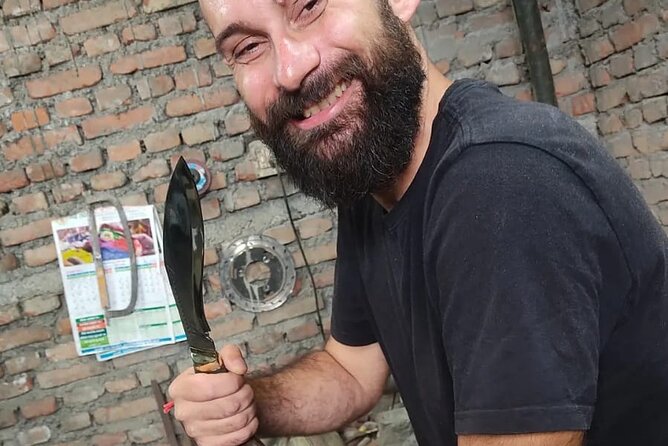
The most memorable part of this Kathmandu workshop is seeing a plain piece of steel become a sharp khukuri, Nepal’s famous curved knife. At Indra’s home forge, you work beside a blacksmith with more than 40 years of experience, rather than simply buying a finished blade in a souvenir shop.
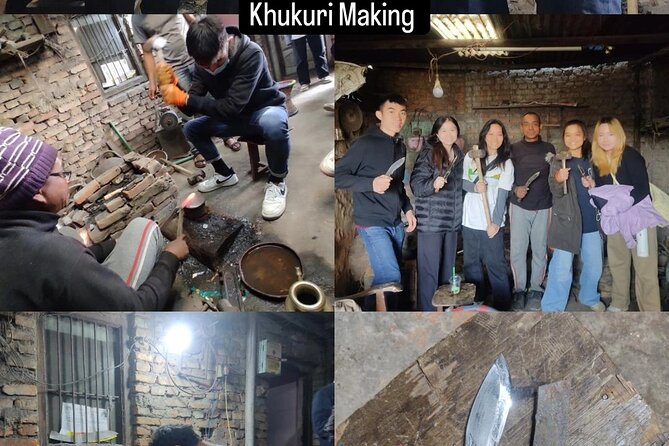
I like the small group size, capped at five, and the hotel pickup that makes the trip simple. I also like the balance between hands-on work and expert control: you hammer the metal and help with early grinding, while the host handles the most dangerous spark-producing work.
The main consideration is that you will not make every part of the knife yourself. Safety and quality control limit your role, and the workshop can run about four to four and a half hours, which may test the patience of young children.
Key points at a glance
- A real six-inch khukuri: You begin with raw steel and leave with a usable knife, not a plastic souvenir.
- Indra’s home forge: The workshop takes place in a modest, traditional setting away from Kathmandu’s tourist-shop circuit.
- Hands-on hammering: You help shape the heated metal, with the blacksmith guiding the work.
- Safe division of labor: The host handles blade grinding that produces dangerous sparks, while you take part in safer stages.
- Personal guidance: Swoyam and Namrata have helped with translation, transport, and conversation during the workshop.
- Small-group format: With no more than five participants, you get a closer look at the craft.
Why a khukuri workshop belongs in your Kathmandu plans
A khukuri is more than a souvenir with a curved blade. It is associated with Nepal’s Gurkha soldiers and is traditional among Nepal’s hill communities. In daily use, the knife can serve many purposes, from shaping timber to cutting meat and vegetables.
The blade has a slight curve and a very sharp edge. Handles are commonly made from wood or buffalo horn, and the finished knife fits into a wood-and-leather scabbard. A small notch near the handle is traditionally linked with the Hindu Trinity of Brahma, Vishnu, and Shiva, as well as with the practical purpose of keeping blood away from the handle.
That background gives the workshop real weight. You are not just learning to hit hot metal. You are taking part in a craft tied to Nepalese work, military identity, household tools, and family tradition.
I especially like that the setting is a working home forge. The experience is described as rustic and primitive, which is precisely the point. You will not get a polished classroom with rows of modern equipment. You get a close look at how a skilled blacksmith can turn recycled steel, including old truck suspension springs, into a practical blade.
A few more Kathmandu trips to weigh up
- Half day cooking class in Thamel kathmandu
★ 5.0 · 607 reviews - Kathmandu: Local Women-Led Nepali Cooking & Momo Class
★ 4.9 · 360 reviews - Kathmandu: Local Lead Nepali Cooking & Momo-Making Class
★ 5.0 · 212 reviews
From Thamel to a home forge in the Kathmandu hills
The usual meeting point is your hotel, with pickup offered in Kathmandu. Guides including Swoyam and Namrata have handled the transfer and translation, and the ride itself can become part of the outing. One guide used the journey to explain Nepal, local places, and things to do in the country.
The forge is in a more remote part of Kathmandu, reached by taxi from the city. That makes this more than an indoor craft demonstration. You get a look at a less polished side of the city and spend time at a local family home.
The pickup is useful after several days of negotiating Kathmandu traffic and directions. It also matters because the workshop is not presented as being in the center of Thamel. If you book close to the start time, confirm your pickup point promptly. The operator has a 24-hour cancellation rule, and same-day changes can be difficult to arrange.
The maximum group size is five people. That is a strong fit for a craft where you need to see the blacksmith’s hands and take turns at the forge. It also means this is not designed for a large tour bus or a quick stop between sightseeing visits.
Meeting Indra, the blacksmith behind the blade
At the forge, you meet Indra, a blacksmith who has spent roughly 40 years making khukuris. His work is the heart of the outing. He demonstrates the difficult parts, keeps the process moving, and helps you produce a blade that looks finished rather than homemade in the least flattering sense.
His apprentices or family members may also assist. An apprentice is available to help if you need a break from the physical work, which is useful because hammering hot metal takes effort. The atmosphere is informal, and time is available for conversation with the blacksmith and his family.
That human contact is one of the best reasons to choose this workshop. You are not separated from the maker by a display case or a retail counter. You see where the craft takes place and how a family setting supports the work.
The guide matters, too. Swoyam has been praised for friendly conversation, translation, and clear English. Namrata has also accompanied participants, helped coordinate the event, and translated during the knife-making process. If you want cultural context as well as mechanical instruction, having a guide present makes a real difference.
Hammering raw steel into a curved khukuri
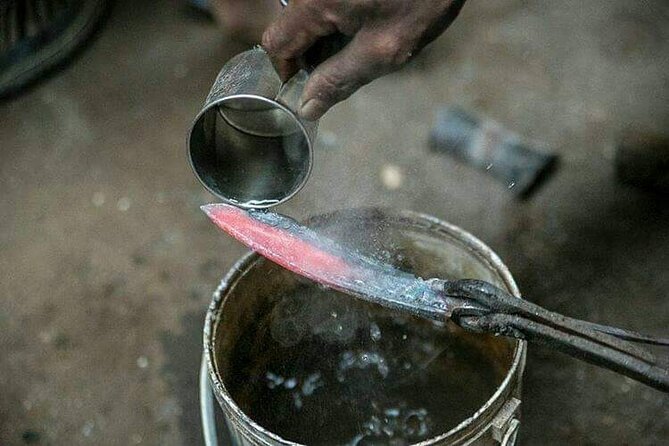
The first major task is hammering. The raw steel is heated, then shaped under the blacksmith’s direction. You take part in striking the metal, helping form the familiar curve and broad body of the blade.
This is the most satisfying hands-on stage because you can see the material change. A scrap of steel becomes recognizably knife-like through repeated heating and hammer work. The transformation also gives you a better sense of why a trained blacksmith’s skill matters. The finished blade may look simple, but its shape comes from controlled force, timing, and years of practice.
You will not be left to guess what to do. Indra demonstrates the movement and helps guide the process. An assistant can step in when you need rest, so you do not have to treat the session like a test of endurance.
Families with children should think about the pace. A four-year-old and six-year-old have taken part, but the full process lasted four to five hours and the children eventually lost interest. If you bring young children, pack something to occupy them and expect adults to do most of the sustained work.
Same mountains, a completely different kind of day:
- Everest Base Camp Trek – 14 Days
★ 5.0 · 1,499 reviews - Private Kathmandu Sightseeing Tour | UNESCO World Heritage sites
★ 5.0 · 756 reviews - Everest Base Camp Helicopter Tour landing at Everest View Hotel
★ 5.0 · 668 reviews - Everest Base Camp Trekking
★ 5.0 · 485 reviews
Grinding, sparks, and the parts you cannot handle
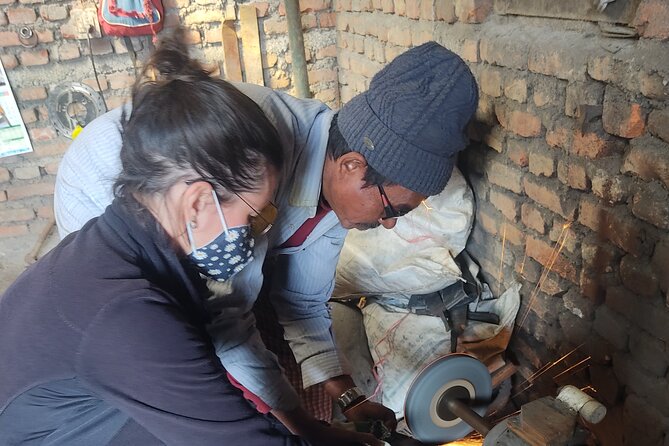
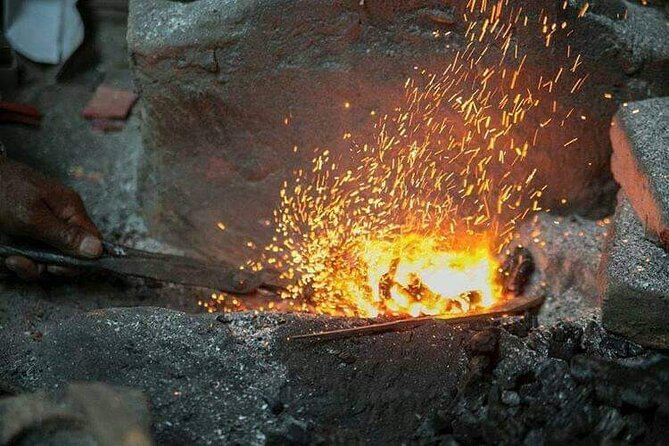
After hammering comes the first grinding stage. You may have the chance to help with an early portion of the grinding, but the host handles the more hazardous blade grinding. Sparks can fly during this process, so you are advised to stay clear.
This division may disappoint anyone expecting a full blacksmithing course. One part of the appeal is making your knife, and you will understandably want to control every step. Yet the limits are sensible. Grinding a sharp blade on workshop equipment is not a casual activity, and the blacksmith’s experience helps protect both you and the quality of the finished khukuri.
The right expectation is participation, not independent manufacture. You hammer the iron, take part in selected shaping and grinding stages, and watch Indra complete the precision work. The result is a better balance than handing a visitor a half-finished object and calling it a workshop.
Stay aware of the host’s instructions around the grinding wheel. The sparks are part of the visual drama, but they are also the clearest safety issue in the session.
Buffing, polishing, and seeing your knife take shape
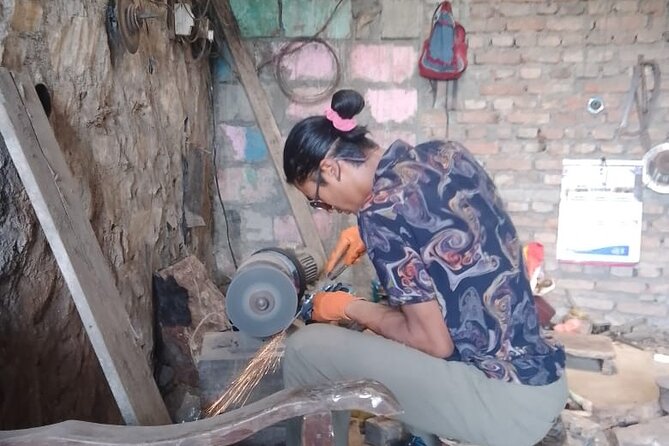
The final stages include buffing and polishing. This is where the rough surface becomes smooth and reflective, and where the knife starts to look like a finished khukuri rather than a piece of worked steel.
You may be allowed to take part in the final buffing and polishing, depending on the safety limits of the host. The workshop gives you a role in the beginning, middle, and end, but Indra remains responsible for the steps that demand the most control.
The standard package includes a small blade of about six inches. That size is easier to carry than a large traditional khukuri and works well as a keepsake or display piece. One participant arranged to make a 10-inch knife for an additional fee, so you can ask about a larger option before booking if that matters to you.
The finished blade is reported to be extremely sharp. Treat it as a real tool, not a toy, even if you originally imagined receiving a small novelty knife. The blade may also be personalized, according to the details shared about the workshop.
What you take home, and why it beats a shop-bought souvenir
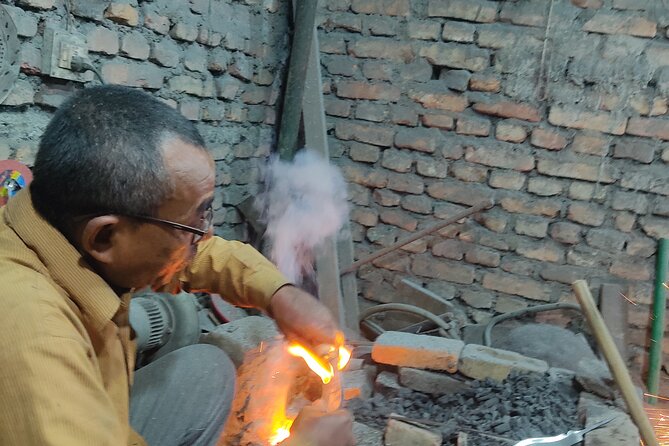
The strongest value here is the connection between the object and the process. Kathmandu has shops selling khukuris, but a knife made during your own session carries a different memory. You remember the raw steel, the hammer blows, the forge, the blacksmith, and the people who helped you finish it.
The knife is also a useful reminder of Nepal’s working traditions. Some of the material is recycled, including truck suspension springs, and the handle uses materials such as wood or buffalo horn. You get a finished object that reflects local craft rather than a generic factory product.
Quality control is worth considering. Two people in one group found cracks in their blades. The operator explained that cracks may not be visible at first and offered replacement knives in such cases. This is not a reason to dismiss the workshop, but it is a reminder that hand-forged work can have flaws and that you should inspect the finished knife before leaving.
Ask about delivery or replacement options if you notice a problem. The operator has said that a new knife can sometimes be made and delivered when a defect appears during the process.
Lunch, tea, and time with the family
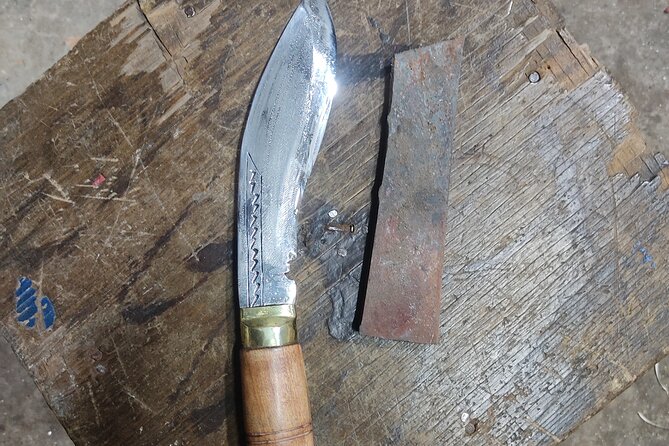
The workshop can include tea and, in some cases, lunch with the family. These details add warmth to what could otherwise be a purely mechanical lesson. A shared meal also gives you time to stop hammering and talk with the guide, blacksmith, and family.
Do not treat the food as the main reason to book. The forge and the knife are the central attractions, and the exact meal details are not fixed in the information available. Still, the welcome matters. Several descriptions emphasize that the hosts treat participants in a relaxed, family-like way.
The informal setting may be a plus or a minus depending on your style. If you want a polished, tightly scheduled activity, this may feel basic. If you prefer meeting people in their own working environment, the simplicity is part of the value.
Is $68 a fair price for four hours?
At $68 per person, the cost is reasonable if you value time, instruction, transport, and the knife itself. The fee covers about four hours of activity, hotel pickup and drop-off are offered, and the standard result is a six-inch khukuri that you helped make.
You are also paying for access to a specialist whose craft would be difficult to experience on your own. A cheaper workshop that only lets you watch may not give you the same sense of ownership. A retail knife may cost less, but it will not carry the story of making it at a Kathmandu forge.
The price is less attractive if you mainly want a quick souvenir or a polished demonstration. Four hours is a substantial block of time, and some of the work must remain in Indra’s hands. Ask about the extra fee for a 10-inch blade if you want a larger knife, since the listed price is for the smaller version.
The group limit of five improves the value. You are less likely to be lost in a crowd, and the guide and blacksmith can give you more direct attention.
Who will enjoy this workshop most?
I would recommend this to adults, couples, families with older children, and anyone interested in tools, metalwork, military traditions, or local craft. It is also a strong choice if you have already seen Kathmandu’s temples and markets and want an activity that takes you into a working home setting.
It suits hands-on people who do not mind getting involved in a slow process. You should enjoy watching a master work as much as you enjoy doing your own part.
It is less suited to very young children who need constant activity, anyone seeking a fully independent blacksmithing class, or anyone uncomfortable around sharp tools, heat, and sparks. People with limited time should also remember that the session can run longer than four hours once transport is included.
Most participants can take part, and the small group helps keep the instruction personal. Still, you should be comfortable with the physical act of hammering and follow the host’s safety directions closely.
Practical booking advice for Kathmandu
Choose a day when you can spare the afternoon without another tight appointment. The listed duration is approximately four hours, while actual sessions described by participants lasted about four to four and a half hours.
Confirm the pickup location early, especially if you are staying outside central Kathmandu. The provider may not be able to collect you from places far outside the city, and late replies can affect both transport and refund arrangements.
The experience includes a mobile ticket, and confirmation is provided at booking. You can cancel for a full refund if you do so at least 24 hours before the start time. Cancellations or changes inside that window are not accepted under the stated policy.
Wear clothes you can use comfortably in a basic forge setting, though no special equipment is listed. Keep valuables and loose plans to a minimum, since the workshop takes time and the knife you receive is genuinely sharp.
Should you book the Forge of the Gurkhas?
Book it if you want a personal Kathmandu memory that you cannot reproduce at a souvenir shop. The combination of Indra’s long experience, a small group, guide support from people such as Swoyam or Namrata, and a knife you help shape makes the $68 fee good value for many visitors.
Go in expecting a guided craft session, not a do-it-yourself blacksmithing course. You will hammer the steel, assist with selected grinding and finishing work, and watch the host handle the riskiest parts. If that balance suits you, this is one of the more distinctive four-hour activities in Kathmandu.
FAQ
How long does the khukuri-making workshop last?
The activity lasts approximately four hours. Some sessions may take about four and a half to five hours, so avoid scheduling another fixed appointment immediately afterward.
What size knife is included?
The standard workshop includes a small khukuri with a blade of about six inches.
Can I make a larger khukuri?
A 10-inch khukuri has been available for an additional fee. Ask about the larger option before the workshop begins.
Which parts of the knife-making process can I do?
You take part in hammering the iron, the first grinding stage, and buffing or polishing at the end. The host handles blade grinding that creates dangerous sparks.
Is hotel pickup available?
Yes. Pickup is offered, and guides have collected participants from hotels in Kathmandu before traveling by taxi to the forge.
How many people can join the workshop?
The maximum group size is five participants.
What is the cancellation policy?
You can cancel for a full refund up to 24 hours before the experience starts. Cancellations and changes made less than 24 hours in advance are not accepted.
Just added around Kathmandu
- Private Half-Day Tour of Boudhanath and Pashupatinath Temples in Kathmandu★ 4.5 · 9 reviews
- Private Half-Day Tour of Kathmandu Durbar Square and Swayambhunath Temple★ 4.5 · 11 reviews
- Namobuddha Monastery Hiking Day Tour via Panauti from Kathmandu★ 5.0 · 15 reviews
- Private Full-Day Kathmandu City Tour★ 5.0 · 9 reviews
- Private Day Tour in Kathmandu Valley Rim with Bhaktapur Sightseeing★ 5.0 · 3 reviews
- Private Half Day Budhanilkantha Tour★ 5.0 · 6 reviews
- Private Day Tour: Patan and Bhaktapur from Kathmandu★ 4.5 · 6 reviews
- Private Day Tour – Sacred Journey to Namo Buddha★ 5.0 · 5 reviews
Workshops, compared.
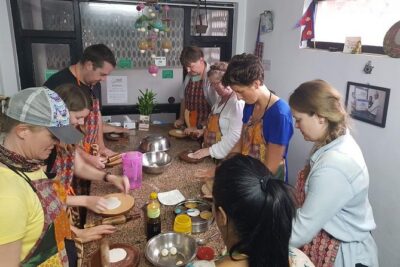
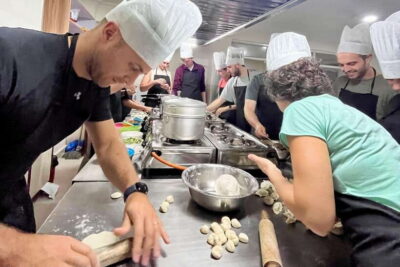
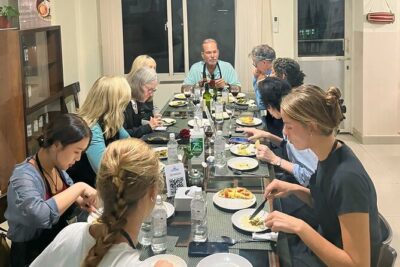
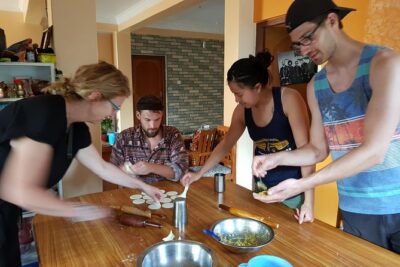
Nepalese Momos or Dal Bhat Cooking Class (Cook with Delight)
Read our review →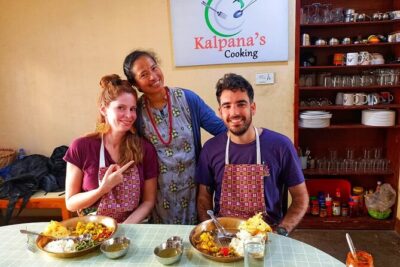
The best Private Nepali Cooking Class in Kathmandu
Read our review →
Nepalese Kitchen in Pokhara: Momos or Dal Bhat Cooking Class
Read our review →
Browse the lists this tour appears in