
Reviewed · UNESCO WORLD HERITAGE TOURS
Kathmandu: Private/Group Tour to 7 UNESCO Sites with Lunch
Kathmandu Valley packs seven UNESCO-listed monument zones into a surprisingly compact area, and this tour attempts to visit every one in a single day. You move from the hilltop stupa of Swayambhunath to old royal squares, then on to sacred Hindu and Buddhist sites. It is a big cultural sampler, not a slow study of one neighborhood.
I like the all-in-one route, especially if you have only a short stay in Nepal. I also like the hotel pickup, shared transport, English-speaking guide, lunch, and bottled water, since moving between seven sites on your own would take more planning. The main drawback is pace: with seven stops, traffic between them, and a maximum group size of 25, some visits will feel brief.
Key points to know before booking
- Seven UNESCO sites in about 7 to 8 hours: You cover the major historic and religious sites of Kathmandu Valley in one packed day.
- Four separate entry fees are not included: The listed fees total $44 per person, in addition to the $50 tour price.
- Bhaktapur gets the longest visit: You have about two hours there, making it the best stop for unhurried wandering.
- Shared transport keeps the price down: Hotel pickup and drop-off are included, but you will travel with a group of up to 25 people.
- Lunch is a light packaged meal: Expect a croissant, muffin, Danish, cookies, banana, juice, and bottled water.
- The guide is central to the experience: An English-speaking guide explains the sites and keeps a complicated route moving.
What the seven-site plan really means
The route links three former royal cities with four major religious monuments. Kathmandu Durbar Square, Patan Durbar Square, and Bhaktapur Durbar Square show different versions of Newar court life, temple design, and urban tradition. Swayambhunath and Boudhanath represent Buddhist Kathmandu, while Pashupatinath is the valley’s major Hindu shrine. Changu Narayan adds an old hilltop temple outside the main city core.
That range is the tour’s great strength. In one day, you see carved courtyards, palace squares, stupas, monasteries, a sacred riverbank, and a temple site tied to Nepal’s early history. You also get a useful first look at how Buddhism and Hinduism share space in the Kathmandu Valley.
The tradeoff is time. The listed stop times add up to roughly seven hours, and the remaining time is used for driving. Traffic can shape the day as much as the schedule does. I would choose this tour to get oriented, then return later to one or two favorite places if your trip allows.
More UNESCO World Heritage Tours in Kathmandu:
- Private Kathmandu Sightseeing Tour | UNESCO World Heritage sites
★ 5.0 · 756 reviews - Kathmandu: Full Day 7 UNESCO Tour with Lunch – Private/Group
★ 5.0 · 415 reviews - Kathmandu: Full Day Top 4 UNESCO Tour with Lunch – Private/Group
★ 5.0 · 269 reviews
Swayambhunath, the hilltop opening view
The day begins at Swayambhunath, an ancient Buddhist stupa set above Kathmandu Valley. It is often called the Monkey Temple because monkeys live around the site. The hilltop position gives you a broad view over the valley, making this a strong first stop for getting a sense of Kathmandu’s size and setting.
The visit is scheduled for about 35 minutes, which is enough to see the main stupa and take in the setting, but not enough for a slow circuit of every shrine and corner. Admission is not included. You should also expect steps or uneven ground at a hilltop religious site, though the supplied information does not specify accessibility details.
I like starting here because the stupa offers both a religious focus and a city view. Listen closely to the guide, since a short explanation can help you understand the symbols, prayer activity, and Buddhist setting before the day moves into the royal squares.
Kathmandu Durbar Square and the old royal center
Kathmandu Durbar Square sits in the heart of old Kathmandu. Palaces, courtyards, and temples crowd the historic center, creating one of the clearest introductions to the valley’s royal past and traditional architecture.
You have about one hour here. That is enough for a guided orientation and a look at the principal structures, but the square rewards extra time if you enjoy architectural details. Admission is separate, and this is one of the three sites grouped under the listed $24 entrance total.
This stop can feel visually dense. Rather than trying to remember every name, I would focus on the way temples, palace buildings, and public courtyards fit together. Your English-speaking guide should help turn a quick walk into a readable story about Kathmandu’s old center.
Patan Durbar Square, where art and faith meet
Patan, also known as Lalitpur, lies about 5 kilometers from Kathmandu. Its Durbar Square is known for its fine traditional art and architecture and for the way Buddhist and Hindu traditions appear side by side.
The tour allows about 1 hour and 30 minutes here, one of the more generous visits of the day. That matters because Patan’s details deserve attention: carved wood, metalwork, temple forms, and the relationship between the square and the surrounding old city.
Patan is also one of the four sites covered by the listed $20 entrance total. Add this fee to the separate $24 group for Kathmandu, Changu Narayan, and Bhaktapur. The arithmetic is important: the advertised $50 price becomes $94 per person if all listed entrance charges apply.
A few more Kathmandu trips to weigh up
- Kathmandu: Full-Day 7 UNESCO Tour with Lunch – Private/Group
★ 4.9 · 247 reviews - Kathmandu: Nagarkot Sunrise View & Morning Hike with Lunch
★ 4.9 · 188 reviews - Kathmandu: Top 4 UNESCO Tour with Lunch – Private/Group
★ 4.9 · 181 reviews - Kathmandu: Nagarkot Sunrise & Hike with Lunch -Private/Group
★ 4.9 · 122 reviews
Changu Narayan, an old temple on a hill
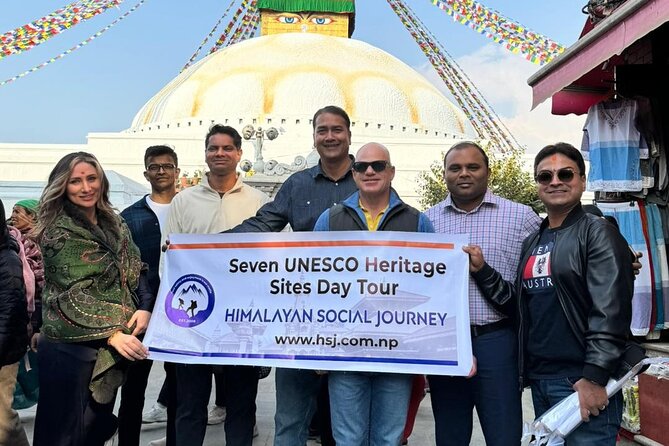
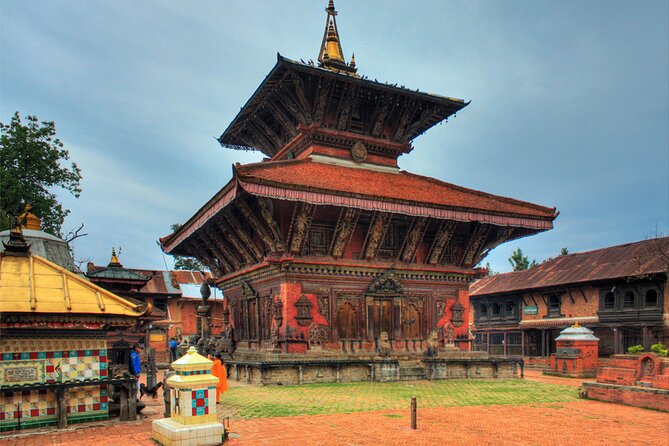
Changu Narayan Temple sits on a hilltop in the village of Changu Narayan near Bhaktapur. It is described as one of Nepal’s oldest temples, with origins linked to the fourth-century Lichhavi period.
The scheduled visit is only 25 minutes, so this is a quick look rather than an extended village visit. The hilltop setting gives the stop a different feel from the dense urban squares, but the short timing means you will need to stay with the group.
Admission is included in the listed $24 group of fees, not in the tour price. Changu Narayan is especially useful for visitors who want to see an older temple setting beyond central Kathmandu, but it is not the stop to choose if you want a long, quiet examination of one monument.
Bhaktapur Durbar Square, the longest and most rewarding pause
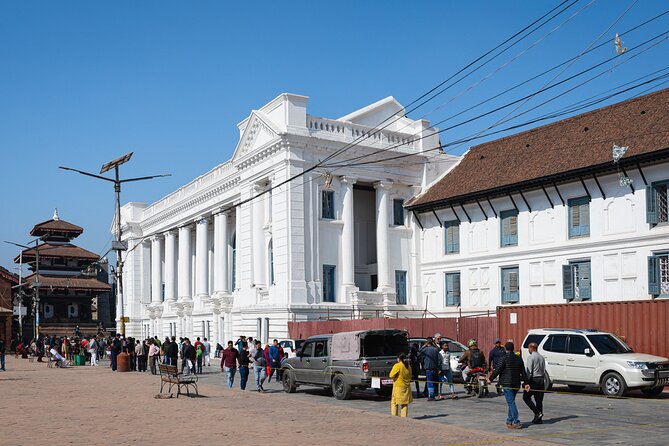
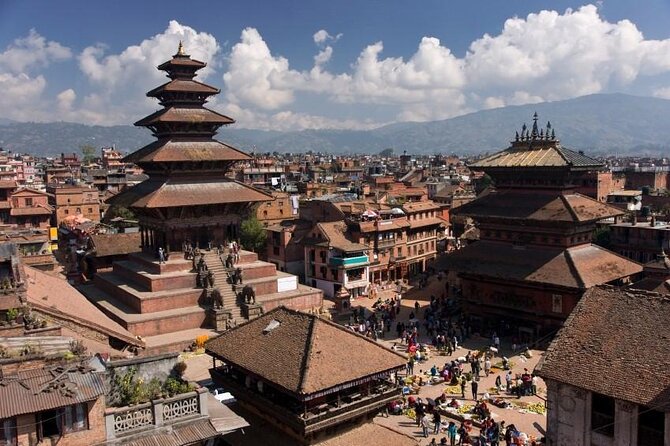
Bhaktapur receives about two hours, the longest stop on the route. The city is known for preserved medieval architecture, temples, palaces, and a strong sense of its former courtly identity.
This is where the schedule gives you the best chance to slow down. You can look beyond the main square and notice how the historic city is arranged around courtyards, shrines, and old buildings. The guide’s explanations are useful here, but you may also appreciate a few minutes simply looking at the architectural details.
Bhaktapur’s admission is part of the listed $24 group. Because the stop is longer, it may also be the point where the day’s pace feels most manageable. Still, two hours passes quickly when the route includes a guided walk and the group must regroup before departure.
Pashupatinath Temple beside the Bagmati River
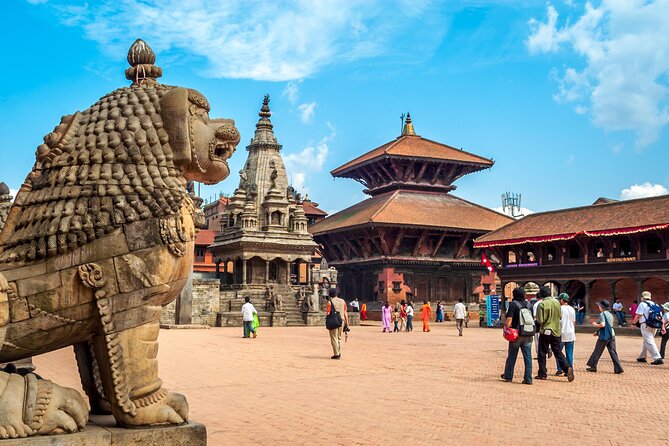
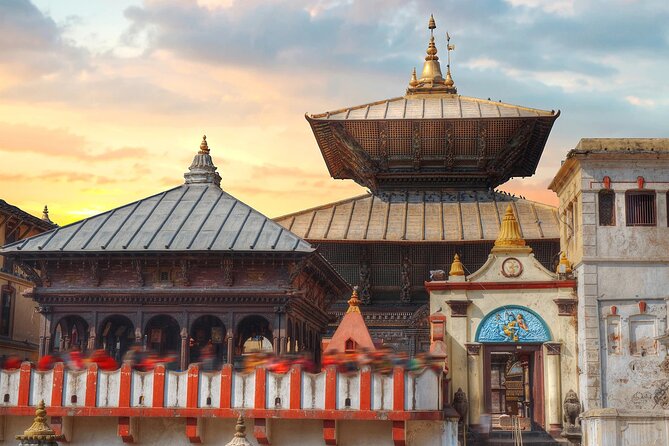
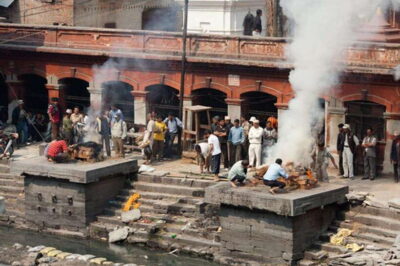
Pashupatinath is one of Nepal’s major Hindu temples and sits beside the sacred Bagmati River. The site draws millions of visitors each year and is connected to the river system that runs toward the Ganges.
The planned visit lasts about one hour. This is a religious site, so approach it with care and pay attention to the guide’s instructions about what you can see and where you can go. The main temple is a particularly important Hindu shrine, and the wider riverbank setting gives the visit a serious, ceremonial character.
Pashupatinath is included in the listed $20 entrance group. The stop is valuable because it shows a different side of the valley from the Buddhist stupas and royal squares. It may also be emotionally weightier than the architectural stops, so a good guide matters.
Boudhanath, a Tibetan Buddhist center
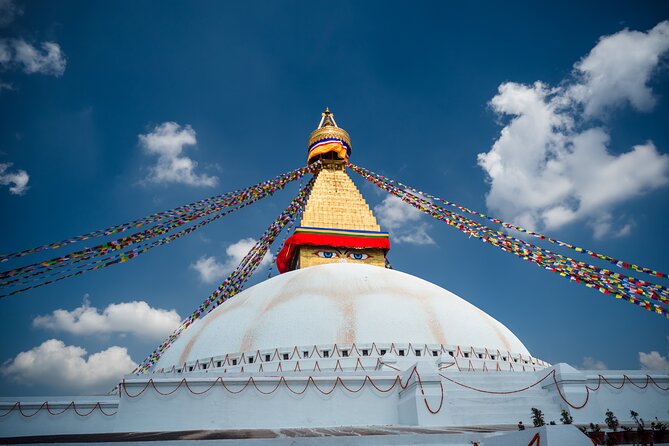
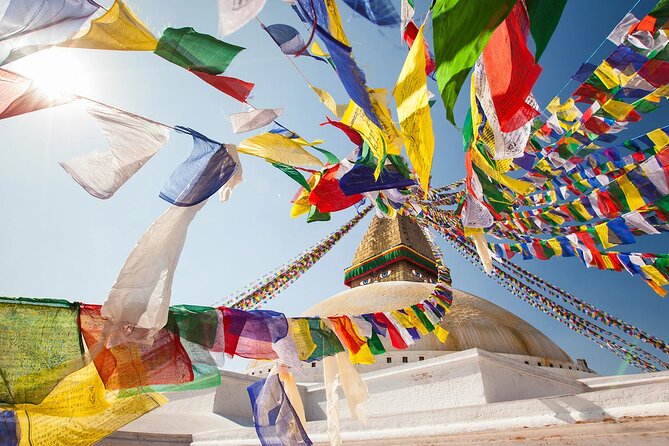
Boudhanath, also written as Bouddhanath, is one of the world’s largest stupas and is described as dating to the fourth century. The stupa is surrounded by Tibetan monasteries and has the feel of a Tibetan village within Kathmandu.
The tour allows about 40 minutes. That gives you time to see the great white dome and its surrounding religious buildings, though not a leisurely exploration of every monastery. Boudhanath is included in the $20 entrance group along with Patan, Swayambhunath, and Pashupatinath.
I would save some energy for this final stop. After a full day of squares, temples, and vehicle time, the large stupa provides a fitting close to the route. The guide can explain how this Buddhist center differs from Swayambhunath, giving you a useful comparison between two major religious sites.
The guide and the value of shared transport
An English-speaking guide is included, and the guide’s role is more than pointing out buildings. The route covers several centuries, two major religions, three former cities, and a large amount of visual information. Clear explanations help you understand what you are seeing instead of simply collecting photographs.
The tour has received a 4.9 rating from 44 reviews, with 98 percent recommending it. The strongest praise centers on organization, communication, and the guide’s ability to explain the sites. That fits the needs of this particular route: a well-managed day is important when seven stops must fit around city traffic.
Transport is shared, with a maximum of 25 people. This keeps the cost lower than a private car, but it can also make departures and regrouping slower. If you prefer quiet, flexible sightseeing, a private arrangement may suit you better. If you want a lower-cost way to cover the valley, shared transport is a sensible choice.
Lunch is practical, not a restaurant meal
Lunch consists of a croissant, muffin, Danish, cookies, banana, and juice. Bottled water is also included. Think of it as a light packed meal that keeps the schedule moving, not a sit-down introduction to Nepali food.
That arrangement has one clear benefit: you do not lose extra time finding and waiting for a restaurant. The downside is equally clear: anyone expecting a full hot meal or a taste of local dishes may be disappointed. If you need a more substantial lunch, plan around the included food rather than assuming a restaurant stop.
What the $50 price does and does not cover
The tour price is listed at $50 per person. It includes hotel pickup and drop-off, shared transportation, an English-speaking guide, government tax and service charges, the packaged lunch, and bottled water.
Entrance fees are extra. The listed charges are $20 for Patan, Boudhanath, Swayambhunath, and Pashupatinath, plus $24 for Kathmandu Durbar Square, Changu Narayan, and Bhaktapur Durbar Square. That adds $44, bringing the stated combined cost to $94 per person before personal expenses.
At that total, the value comes from convenience and coverage. You are paying for transport between seven sites, a guide, hotel service, and a route that would be difficult to arrange in one day without local help. The price is less compelling if you plan to visit only two or three sites or want long, independent visits.
Who should book this day
I would recommend this tour if you have limited time in Kathmandu and want a broad first look at the valley. It suits people who value a clear plan, hotel pickup, and historical context more than a slow pace.
It is also a good fit if you want to compare Buddhist and Hindu sites in one day. Families and first-time visitors may appreciate having transport and a guide handled for them, and most people can participate according to the supplied tour information.
I would hesitate if you dislike group travel, want to set your own timing, or care more about one deep visit than seven short introductions. The maximum group size of 25 is manageable for a major sightseeing route, but it is not the same as a private guide and car.
Booking, weather, and cancellation details
Confirmation is provided at booking, and pickup is offered from your hotel. The tour is available with mobile ticketing and is near public transportation. It requires good weather and a minimum number of participants, so poor weather or an undersubscribed departure can lead to a new date, another experience, or a full refund.
You can cancel for a full refund up to 24 hours before the start time. Cancellations and changes made within 24 hours are not refunded or accepted. The cutoff follows local time.
Should you book this UNESCO day tour?
Book it if your goal is to see all seven UNESCO sites efficiently and understand how they fit into Kathmandu Valley’s religious and royal story. The strong organization, included transport, English-speaking guide, and two-hour Bhaktapur visit make the packed schedule workable.
Skip it if you want a relaxed day, a full Nepali lunch, or time to linger at every temple. Before paying, add the $44 entrance fees to the $50 tour price, then decide if $94 is fair for a full day of transport and guiding. For a short visit, I think the coverage is the main prize. For a longer stay, use this as an orientation day and return on your own to the places that deserve more time.
FAQ
How long does the tour last?
The tour lasts approximately 7 to 8 hours, including the time spent traveling between the seven heritage sites.
What sites are included?
The route includes Swayambhunath, Kathmandu Durbar Square, Patan Durbar Square, Changu Narayan Temple, Bhaktapur Durbar Square, Pashupatinath Temple, and Boudhanath Stupa.
Is hotel pickup included?
Yes. Hotel pickup and drop-off are included.
Is transportation private or shared?
Transportation is shared. The tour has a maximum group size of 25 people.
Is a guide included?
Yes. An English-speaking guide is included.
Are entrance fees included in the $50 price?
No. Entrance fees are listed separately as $20 for four sites and $24 for three sites, for a total of $44 per person.
What lunch is provided?
The included lunch consists of a croissant, muffin, Danish, cookies, banana, and juice. Bottled water is also provided.
Can most people participate?
Yes. The tour information states that most people can participate. Specific accessibility details are not provided.
What is the cancellation policy?
You can cancel at least 24 hours before the start time for a full refund. Cancellations or changes made within 24 hours are not accepted or refunded. If poor weather or an insufficient number of participants cancels the tour, you will be offered another date or experience, or a full refund.
Just added around Kathmandu
- Private Half-Day Tour of Kathmandu Durbar Square and Swayambhunath Temple★ 4.5 · 11 reviews
- Namobuddha Monastery Hiking Day Tour via Panauti from Kathmandu★ 5.0 · 15 reviews
- Private Half-Day Tour of Boudhanath and Pashupatinath Temples in Kathmandu★ 4.5 · 9 reviews
- Private Full-Day Kathmandu City Tour★ 5.0 · 9 reviews
- Private Day Tour in Kathmandu Valley Rim with Bhaktapur Sightseeing★ 5.0 · 3 reviews
- Private Half Day Budhanilkantha Tour★ 5.0 · 6 reviews
- Private Day Tour: Patan and Bhaktapur from Kathmandu★ 4.5 · 6 reviews
- Private Day Tour – Sacred Journey to Namo Buddha★ 5.0 · 5 reviews
UNESCO World Heritage Tours, compared.
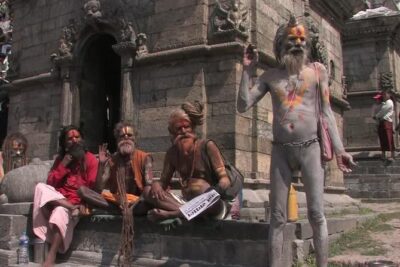
Private Kathmandu Sightseeing Tour | UNESCO World Heritage sites
Read our review →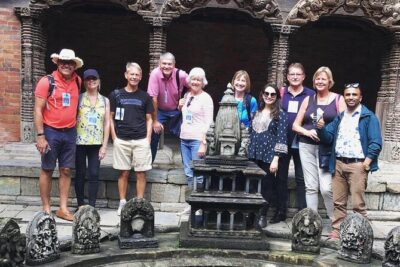
Full Day 7 UNESCO Tour with Lunch – Private/Group
Read our review →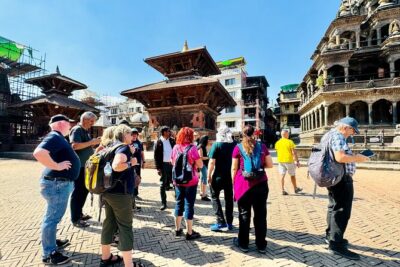
Full Day Top 4 UNESCO Tour with Lunch – Private/Group
Read our review →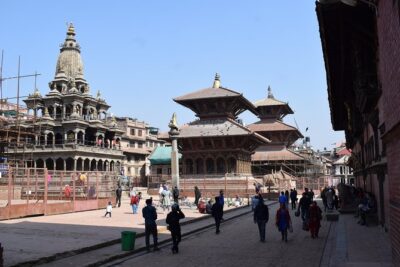
Kathmandu Spiritual Sites: Bodhnath & Pashupatinath Tour
Read our review →
Kathmandu Private Sightseeing Tour | UNESCO World Heritage Sites
Read our review →Full Day 7 UNESCO Tour with Lunch – Private/Group
Read our review →Browse the lists this tour appears in