
Reviewed · UNESCO WORLD HERITAGE TOURS
Kathmandu Spiritual Sites: Bodhnath & Pashupatinath Tour
Pashupatinath’s evening Aarati ceremony is the heart of this tour. As daylight fades, lamps, music, incense, and hundreds of worshippers gather beside the Bagmati River. Earlier, you visit Boudhanath Stupa, meet sadhus, and learn how Buddhist and Hindu beliefs shape daily life in Kathmandu. I like the local public transport and the small maximum group of 12. The main thing to consider is the crowd, noise, walking, and sensitive cremation scenes.
I also like that the tour links two very different faith traditions in one afternoon. Guides such as Amit, Rita, Rozit, Subash, Bipin, and Ramhavi have been praised for clear explanations, patience, photography tips, and careful crowd control. The four-hour schedule is useful if your time in Kathmandu is short, though the fixed 3 pm start and busy temple area may feel intense.
Key points to know before booking
- The Aarati is the evening finale: Arrive at the Bagmati River as worshippers gather for Pashupatinath’s offering of lights.
- Boudhanath is hands-on: Walk around the white stupa, turn prayer wheels, and light a butter lamp if you wish.
- Public transport is part of the experience: The ride from Thamel gives you a small glimpse of ordinary Kathmandu travel.
- The group stays small: A maximum of 12 people allows room for questions and closer help in crowded areas.
- The tour covers serious religious customs: Cremations and mourning families may be visible, so respectful behavior matters.
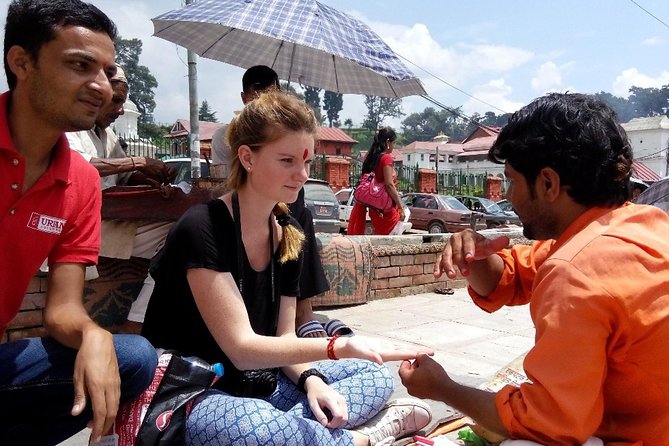
- Extra costs are optional: Palm reading, butter lamps, and photographs or interaction with sadhus are not included in the $60.56 price.
Why this four-hour Kathmandu tour works
Kathmandu can feel confusing at first. Sacred courtyards, shrines, traffic, incense, and everyday commerce all share the same streets. This tour gives you a clear way to approach two major religious sites without spending a full day arranging transport and entrance fees.
The plan starts at 3 pm outside Hotel Marshyangdi in Thamel. From there, you travel to Boudhanath Stupa, spend time learning about Tibetan Buddhism, and then walk roughly 15 minutes toward Pashupatinath Temple. Public transport from Thamel and transport from Pashupatinath back to the endpoint are included.
I see the value in that arrangement. You are not simply dropped at a gate and left to work out the meaning yourself. A local English-speaking guide explains what you are seeing, points out details you could miss, and helps you keep up with the group when the riverbank fills with people.
The tour is listed at $60.56 per person. That includes the guide, entrance fees to both UNESCO sites, public transportation between the main points, and the Aarati experience. For a four-hour outing, it is not the cheapest way to stroll around Kathmandu, but it is a fair price if you want context, transport, and access arranged together.
The price does not cover food, donations to monks or sadhus, palm-reader fees, or optional butter lamps. Keep some Nepalese rupees or suitable small cash available if you want to take part in those extras. The stated palm-reading cost is about $7.50 to $9 per person, while photographs or interaction with sadhus may cost about $7.50.
More UNESCO World Heritage Tours in Kathmandu:
- Private Kathmandu Sightseeing Tour | UNESCO World Heritage sites
★ 5.0 · 756 reviews - Kathmandu: Full Day 7 UNESCO Tour with Lunch – Private/Group
★ 5.0 · 415 reviews - Kathmandu: Full Day Top 4 UNESCO Tour with Lunch – Private/Group
★ 5.0 · 269 reviews
Boudhanath Stupa and the circle of prayer wheels
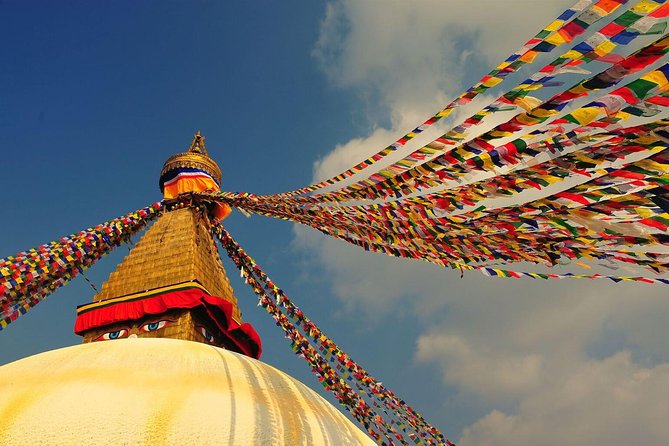
Boudhanath is the first major stop and receives about 1 hour and 25 minutes. The huge white dome, golden details, and watchful Buddha eyes give the site an immediate sense of scale. It is one of Nepal’s largest stupas and a major center of Tibetan Buddhism.
Your visit is not just a photo stop. You can walk clockwise around the stupa, turning the prayer wheels as local Buddhists do. You may also light a traditional butter lamp and offer a prayer. The guide explains how these actions fit into Buddhist practice instead of treating them as decorative rituals.
That explanation matters. Boudhanath is easy to reduce to a large, photogenic monument, especially if you arrive during a busy period. The tour gives you a reason to slow down and notice the people making their rounds, the repeated movement around the dome, and the contrast between quiet devotion and the surrounding city.
The stop can become especially active on a holiday. One review described heavy activity at the stupa, with scenes that seemed worthy of a postcard in every direction. That sounds appealing, but it also means you should expect people, movement, and some difficulty keeping a perfect pace with your guide.
The optional butter lamp is a personal choice, not a required part of the tour. If you choose one, the expense is separate. The same applies to any offerings elsewhere. I would ask the guide about the amount before paying, especially if you are unfamiliar with local customs.
Boudhanath suffered damage in the 2015 earthquakes, but the sites included on this tour have been renovated. That means you see a functioning religious center as well as restored architecture. The important point is that this is still an active place of worship, not a museum arranged for sightseeing.
The short walk toward Pashupatinath
After Boudhanath, the route includes about a 15-minute walk toward Pashupatinath Temple. The full walking distance is approximately 2 kilometers, so comfortable shoes are a good idea.
This is one of the tour’s useful details. You move between the sites in a way that connects the religious centers with ordinary Kathmandu streets. The route is not presented as a long hiking outing, but you should not expect to sit in a vehicle from start to finish.
The public transport element adds another layer. A local bus or taxi ride can feel less polished than a private car, especially in traffic, but that is also the point. You get a small look at how people move around the city rather than spending the whole afternoon behind a tour vehicle window.
If you prefer predictable, quiet transportation, this may be a drawback. If you want a more local outing and can handle a little uncertainty, it adds character. The guide’s role becomes useful here, since the transport and meeting arrangements are already organized.
Pashupatinath Temple and the Bagmati River
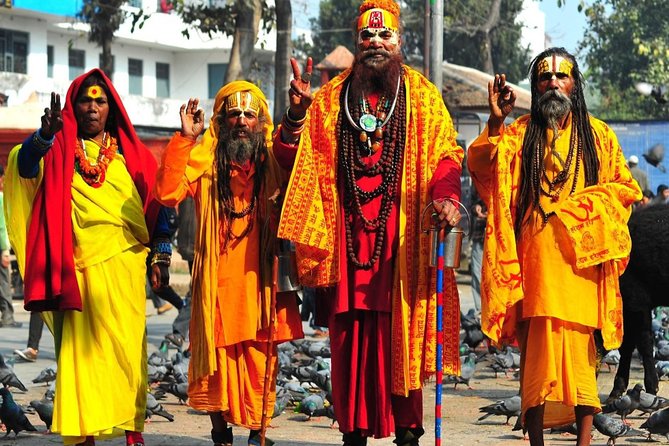
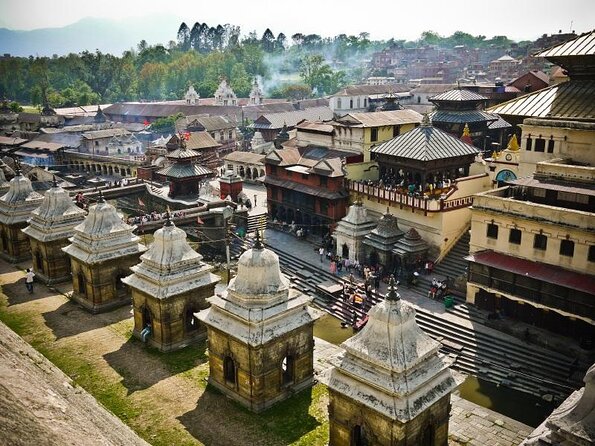
Pashupatinath receives the largest portion of the visit, about 2 hours and 20 minutes. This is one of Nepal’s holiest Hindu shrines and a UNESCO World Heritage site dedicated to Shiva. The temple complex is tied closely to Hindu ideas about birth, death, devotion, and the cycle of life.
Non-Hindu visitors cannot enter the main temple itself, but the surrounding area still offers much to understand and see. Your guide explains Hindu beliefs, the role of Shiva, and the customs connected with the Bagmati River. The focus is on helping you read the place respectfully rather than simply collecting photographs.
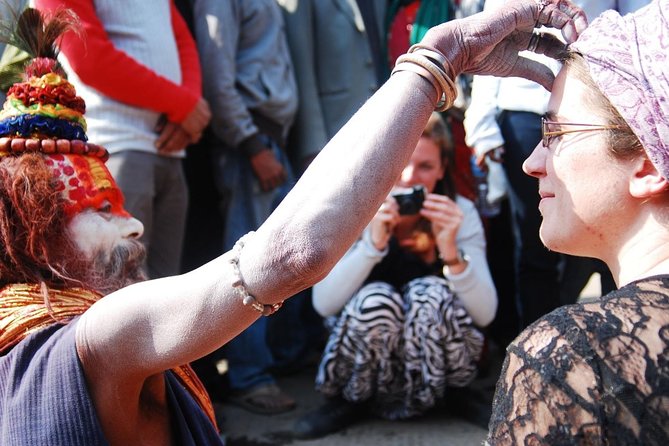
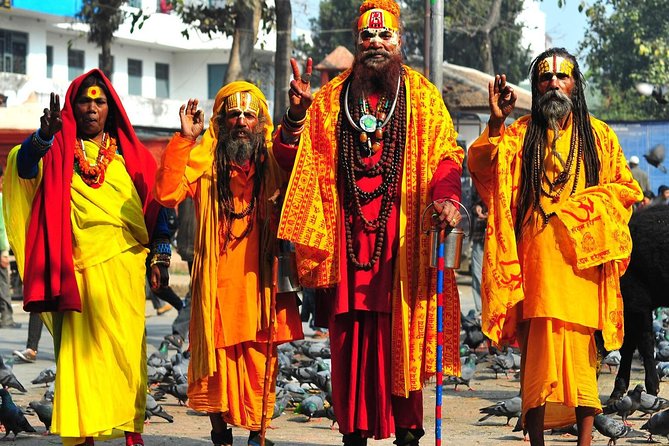
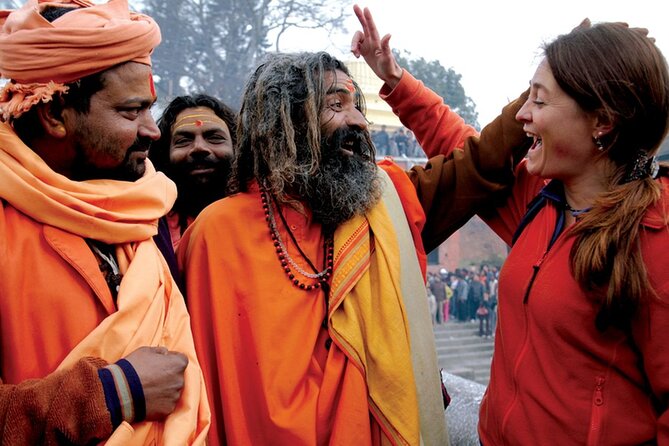
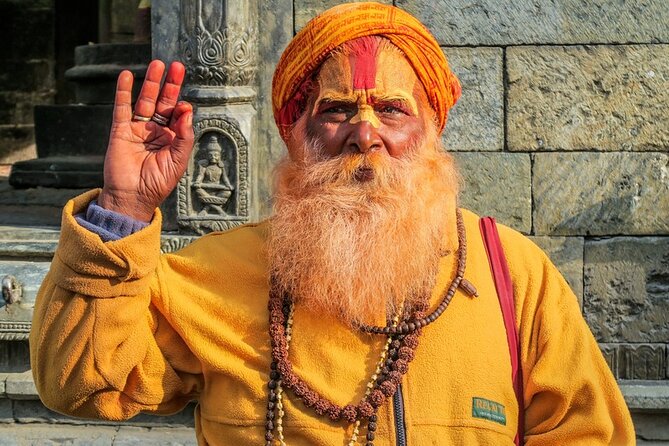
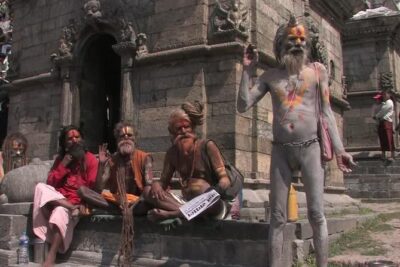
Colorful sadhus are part of the scene. These Hindu holy men are associated with giving up material possessions as a sign of religious devotion. Their clothing, painted faces, and striking appearance can attract attention, but the tour is right to treat interaction as something requiring care.
The supplied information states that photographs or interaction with sadhus may involve a fee of about $7.50. Alms are not included. I would not assume that every sadhu wants to pose, and I would ask your guide before taking a photograph or offering money.
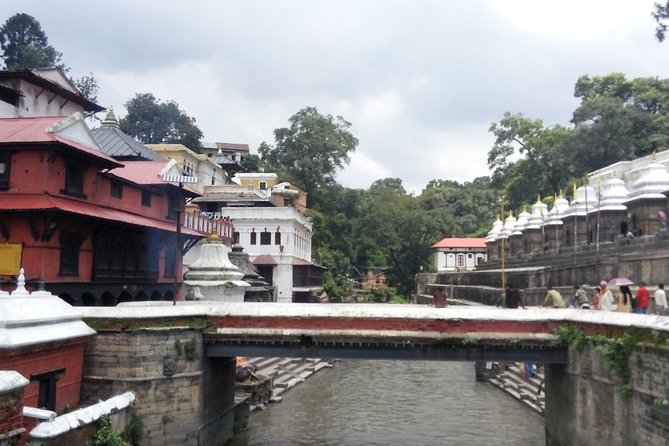
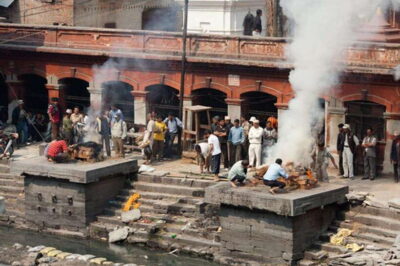
The cremation ghats along the Bagmati River are perhaps the most difficult part of the tour. You may see cremation ceremonies from the public areas outside the temple entrance. This is not a performance, and the families involved are grieving.
The guidance here is clear: do not take photographs or watch the rituals in a way that intrudes on mourning families. Stay with your guide, keep your distance, and let local customs set the boundary. If you know that funeral scenes will be upsetting, think carefully before booking.
At the same time, the riverbank helps explain why Pashupatinath is such an important pilgrimage site. The religious meaning of the place is connected not only to the temple buildings but also to the ceremonies that take place along the water. Your guide can give this context while helping you avoid disrespect.
Same mountains, a completely different kind of day:
- Everest Base Camp Trek – 14 Days
★ 5.0 · 1,499 reviews - Everest Base Camp Helicopter Tour landing at Everest View Hotel
★ 5.0 · 668 reviews - Half day cooking class in Thamel kathmandu
★ 5.0 · 607 reviews - Everest Base Camp Trekking
★ 5.0 · 485 reviews
The Aarati ceremony after sunset
The tour is timed so you can attend the evening Aarati at Pashupatinath. Aarati is an offering of light to Lord Pashupatinath, performed as worshippers gather beside the Bagmati River.
This is the point when the site changes mood. The afternoon light fades, the crowd grows, and attention turns toward the ceremony. Lamps, music, and ritual movement create a strong visual experience, but the meaning comes from the devotion of the people taking part.
You should stay close to your guide during this part. The riverbank can fill quickly, and it is easy to lose sight of a small group in a large crowd. One guide, Ramhavi, was specifically praised for making sure the group stayed together during the ceremony.
The Aarati is valuable because it shows living religion rather than only architecture. You are not looking at an empty monument after closing time. You are watching a ceremony that matters to local worshippers, and your role is to observe quietly and follow the guide’s advice.
Do not expect a private viewing platform or a calm, carefully arranged show. This is a public religious gathering. You may be standing among many people, and sightlines can change. That lack of control is part of the experience, though it can frustrate anyone hoping for uninterrupted photographs.
What the guides add to the experience
The guide can make or break a tour of religious sites. Here, the guide’s job is more than leading you from one entrance to another. You need someone who can explain Buddhist and Hindu practices in plain English, answer questions, handle optional payments, and keep the group together.
Several guides have been praised by name for different strengths. Amit was noted for generous explanations, extra time, and phone-camera tips. Rita was described as helpful and able to adjust the outing to the group’s needs. Rozit was valued for a friendly, local feel, while Subash was praised for strong English and detailed explanations.
Bipin was appreciated for knowing Kathmandu’s small alleyways and good photo locations. Ramhavi received praise for care during the crowded Aarati. These comments suggest that the guide assignment varies, so you should not book expecting one particular person unless the operator confirms it.
The maximum group size is 12. That is small enough for personal questions but not necessarily intimate, especially at the riverbank. One person found the group company less enjoyable than the guide, which is a useful reminder that shared tours depend partly on who else books that day.
A private option may be worth considering if you want a slower pace or have specific questions about religion and customs. The listed format can be small-group or private, but confirm the option and price when booking.
Walking, crowds, and practical comfort
The outing lasts about four hours, with a 3 pm departure from Thamel. You should plan for an afternoon that gradually becomes more crowded and visually intense.
Wear shoes suited to roughly 2 kilometers of walking. The route includes the walk between Boudhanath and Pashupatinath, along with movement through large religious complexes and packed gathering areas.
Keep your group in sight at Pashupatinath. This advice is especially important during Aarati, when the crowd thickens. A phone number for the guide or operator would be sensible to keep handy, even though the tour is designed to return to the starting point.
Children are allowed, and children under six can join free of charge. Still, parents should consider the cremation scenes, crowds, walking, and late-afternoon schedule before bringing very young children.
The tour is near public transportation and most people can take part. The information does not list special accessibility arrangements, so anyone with mobility concerns should ask the operator before booking. The walk and busy temple grounds may be more important considerations than the stated distance alone.
Bring water and dress in a way that suits a religious setting. The supplied details do not set out a formal dress code, but modest clothing is a sensible choice at both sacred sites. Food is not included, so eat beforehand or plan your own meal after the tour ends.
Who should book this experience
I would choose this tour if you have only a short time in Kathmandu and want more than a quick photograph at two famous sites. It brings together Tibetan Buddhist practice, Hindu worship, holy men, public transport, river ceremonies, and a major evening ritual in one compact outing.
It is also a good fit if you want a guide to explain customs that may otherwise be hard to interpret. The strongest guide comments focus on patience, care, local insight, photography help, and detailed religious explanations.
I would hesitate if you dislike crowds, public transport, walking, or scenes connected with death. The cremation area is not something to treat casually, and the Aarati crowd can be difficult for anyone who needs a quiet or controlled setting.
The experience suits adults, couples, solo visitors, and families with older children who can follow respectful behavior. A private booking may be better if you want control over the pace, though the shared group has the advantage of keeping the cost at the listed $60.56.
Booking value and final advice
The strongest value comes from the combination of entrance fees, transportation, a local English-speaking guide, and timing for Aarati. You could visit the sites on your own, but you would need to arrange the route, understand the customs, and manage the crowded riverbank yourself.
The four-hour length is a benefit for a busy Kathmandu schedule. It is long enough to give Pashupatinath proper attention without taking over the entire day. Boudhanath receives less time, but about 85 minutes is enough for a guided circuit and explanation.
The main weakness is that the schedule leaves little room for an unhurried personal visit. A holiday crowd, a slow public transport connection, or a long question session could make the afternoon feel tight. The group may also include people with different interests and walking speeds.
You can cancel for a full refund up to 24 hours before the 3 pm start time. The activity begins and ends at Hotel Marshyangdi in Thamel, and confirmation is provided at booking.
Should you book the Boudhanath and Pashupatinath tour?
Book it if you want a guided introduction to Kathmandu’s religious life, especially if you are short on time. The Aarati ceremony, Boudhanath prayer circuit, and careful explanation of the cremation ghats make this more meaningful than a basic temple transfer.
Skip it if you want a quiet sightseeing walk, dislike public transport, or would rather avoid funeral customs and dense crowds. For most culturally curious visitors who can approach the sites with patience and respect, the $60.56 price is reasonable, and the evening timing gives the tour its strongest moment.
FAQ
How long does the Kathmandu spiritual sites tour last?
The tour lasts approximately four hours. It starts at 3 pm and returns to the meeting point at Hotel Marshyangdi in Thamel.
Where does the tour begin and end?
It begins at Hotel Marshyangdi on Chaksibari Marg in Kathmandu. The activity ends back at the same meeting point.
Which sites are included?
The tour visits Boudhanath Stupa and Pashupatinath Temple, both UNESCO World Heritage sites.
Is transportation included?
Transportation costs from the meeting point to Boudhanath and from Pashupatinath Temple to the endpoint are included. Public transport is used as part of the local experience.
Are palm reading and offerings included?
No. Palm-reader fees, butter lamps, alms to sadhus and monks, and optional photographs or interaction with sadhus cost extra. Palm reading is listed at approximately $7.50 to $9 per person.
Can children join the tour?
Yes. The tour is child-friendly, and children under six are permitted to join free of charge.
Just added around Kathmandu
- Private Half-Day Tour of Boudhanath and Pashupatinath Temples in Kathmandu★ 4.5 · 9 reviews
- Private Half-Day Tour of Kathmandu Durbar Square and Swayambhunath Temple★ 4.5 · 11 reviews
- Namobuddha Monastery Hiking Day Tour via Panauti from Kathmandu★ 5.0 · 15 reviews
- Private Day Tour in Kathmandu Valley Rim with Bhaktapur Sightseeing★ 5.0 · 3 reviews
- Private Half Day Budhanilkantha Tour★ 5.0 · 6 reviews
- Private Full-Day Kathmandu City Tour★ 5.0 · 9 reviews
- Private Day Tour: Patan and Bhaktapur from Kathmandu★ 4.5 · 6 reviews
- Private Day Tour – Sacred Journey to Namo Buddha★ 5.0 · 5 reviews
UNESCO World Heritage Tours, compared.
Private Kathmandu Sightseeing Tour | UNESCO World Heritage sites
Read our review →
Full Day 7 UNESCO Tour with Lunch – Private/Group
Read our review →
Full Day Top 4 UNESCO Tour with Lunch – Private/Group
Read our review →
Kathmandu Private Sightseeing Tour | UNESCO World Heritage Sites
Read our review →Full Day 7 UNESCO Tour with Lunch – Private/Group
Read our review →
Full Day Private Top 4 UNESCO Heritage Tour W/Lunch.
Read our review →Browse the lists this tour appears in