
Reviewed · ANNAPURNA CIRCUIT TREKS
Annapurna Circuit Trek
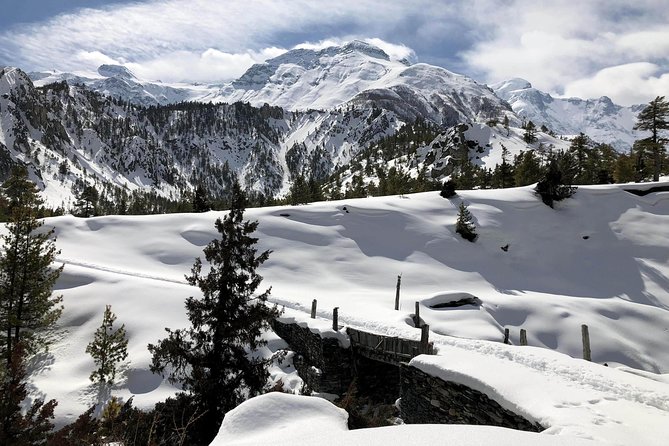
The Annapurna Circuit takes you from rice fields and subtropical forest to Thorong La Pass at 5,416 meters, then down into the dry Mustang region. In two weeks, you see Buddhist villages, the Marsyangdi Valley, Muktinath, apple-growing Marpha, and broad views of the Annapurna and Dhaulagiri ranges. I especially like the sharp change in scenery and the practical support of a guide, porter, permits, meals, and mountain lodging included in the price. The main caution is the demanding schedule, plus a route detail worth confirming: Tilicho Lake, Poon Hill, and some advertised stops do not appear clearly in the day-by-day plan.
I like that this is a private trip, so your group is not tied to strangers or a fixed public departure. I also like the human touch offered by guide Gyanu, whose patience, warmth, and careful support were singled out in a firsthand account. The long road transfers, simple mountain rooms, high altitude, and very early start mean this is not a soft adventure.
Key points to know before booking
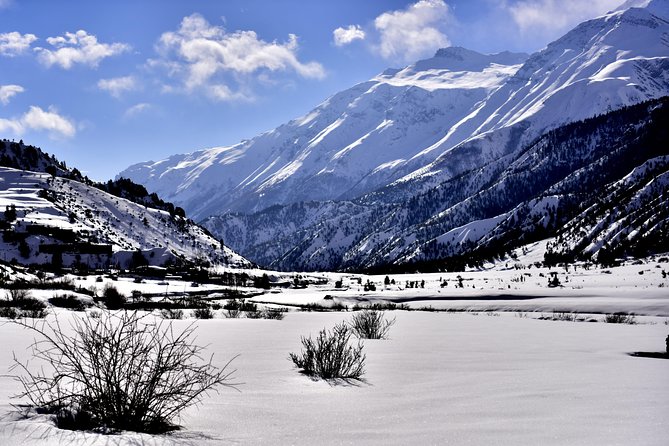
- Thorong La is the physical centerpiece: The pass reaches 5,416 meters, making Day 11 the hardest and most important day of the trek.
- The scenery changes dramatically: Expect forests, paddy fields, river valleys, dry cliffs, ice streams, and high Himalayan views on one route.
- Tilicho Lake needs confirmation: It is listed as a major stop, but the 14-day schedule does not give it a dedicated day.
- A guide and porter are included: Nepal Trail Finder supplies a government-registered guide, luggage porter, permits, insurance, equipment, and first aid support.
- The price covers much of the trekking infrastructure: At $1,175 per person, meals, mountain lodging, transportation, permits, and Kathmandu and Pokhara hotels are included.
- The itinerary mixes trekking and long drives: The route includes a nine-hour local transport journey to Jagat and an eight-hour tourist bus from Pokhara to Kathmandu.
Why the Annapurna Circuit still earns its reputation
The appeal here is not one single viewpoint. It is the steady change under your feet.
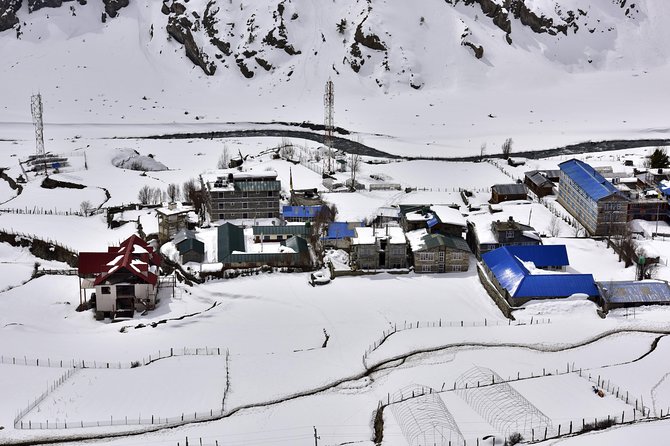
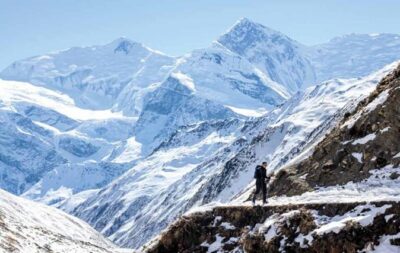
You begin near Kathmandu at 1,350 meters, then move into the Marsyangdi Valley. Early sections bring forest, cultivated fields, river scenery, and villages shaped by Hindu and Tibetan Buddhist traditions. As you climb toward Manang, the air gets thinner and the setting becomes more severe. After Thorong La, you enter Mustang, where the dry cliffs and open slopes feel quite different from the wetter valleys below.
That variety gives the circuit its character. You are not walking through the same mountain scene for two weeks. The route moves from subtropical country to high alpine terrain, then drops toward the Kali Gandaki Valley and the warmer springs at Tatopani.
The mountains are a constant reward, though clouds can affect what you see. The advertised viewpoints include the Annapurna Massif, Dhaulagiri, Tilicho Peak, and the wider Annapurna range. Poon Hill is also included among the listed attractions, with views toward more than 20 peaks in the Annapurna and Dhaulagiri groups.
This is a serious trek, not simply a sightseeing trip with a few walks added. You should have a moderate fitness level and be ready for steep climbs, long days, basic mountain accommodation, and altitude. The route reaches higher than 5,000 meters, so pacing and preparation matter more than speed.
More Annapurna Circuit Treks in Kathmandu
- Annapurna Circuit Trek with Tilicho Lake
★ 5.0 · 368 reviews - Annapurna Circuit Trek
★ 5.0 · 94 reviews - Annapurna Circuit Trek
★ 5.0 · 35 reviews
Days 1 and 2: Kathmandu before the trail
Your first day is an arrival day in Kathmandu at about 1,350 meters. Airport pickup is offered, which is useful after an international flight and removes one early negotiation from the trip.
Day 2 combines Kathmandu sightseeing with trek preparation. The city portion is not described in detail, so you should treat it as an introduction rather than a full city tour. The preparation matters more here. Your guide can help organize the trekking details, while the company handles the TIMS card and Annapurna Conservation Area permit.
The package includes a hotel in Kathmandu on a bed-and-breakfast basis. Meals in Kathmandu are not included, so budget separately for lunch and dinner in the city. Alcohol, soft drinks, snacks, laundry, phone calls, and battery charging also come out of your pocket.
The listed start time is 12:15 am. That is unusually early, so confirm exactly what it refers to. It may relate to transport or the trip’s first departure, but the supplied information does not explain it. A clear pickup arrangement is especially important before the long road journey.
Day 3: The long road to Jagat
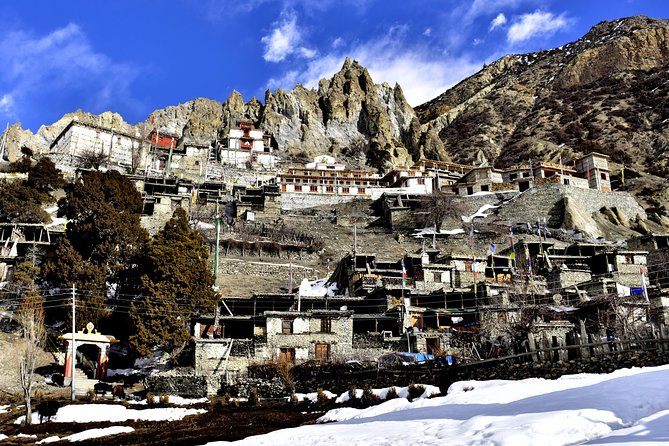
The trek officially begins with a local transport ride from Kathmandu to Jagat, taking about nine hours. This is one of the less glamorous parts of the trip, but it gets you into the Marsyangdi Valley without adding several extra walking days.
Expect a full day on the road rather than a gentle introduction. Local transport can be tiring, and the length of the journey is worth considering if you prefer a trip with fewer transfers. The use of an air-conditioned vehicle is listed among the inclusions, although the itinerary specifically calls this a local transport journey, so ask what vehicle is planned for this section.
Jagat sits at roughly 1,300 meters. From here, the walking begins in earnest. The lower route is where you see the greener side of the circuit, with forests, cultivated land, and river scenery before the trail climbs into the higher valleys.
Days 4 to 6: Dharapani, Chame, and Upper Pisang
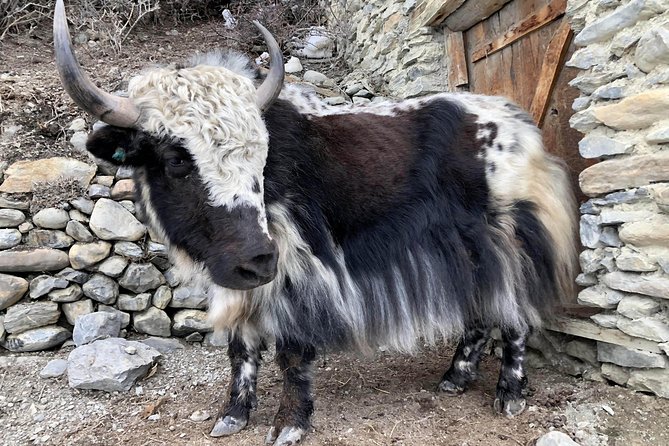
Day 4 takes about five hours of hiking to Danakyu or Dharapani at 2,300 meters. The two place names suggest that the exact overnight stop may depend on local conditions or the final route plan. Either way, this is a useful early gain in height, and you should avoid treating the first walking days as a race.
Day 5 continues to Chame, at 2,670 meters, after about five hours on foot. Chame is one of the key settlements in the Marsyangdi Valley and a practical overnight point. The scenery should feel increasingly mountainous as the route leaves the lower forests behind.
Day 6 leads to Upper Pisang at around 3,300 meters. The day is again about five hours, but altitude makes the same walking time feel harder than it did below. Upper Pisang is important because the route begins to show more of the high valley character, with Tibetan Buddhist cultural influence becoming more visible.
Mountain accommodation is included in a private or shared single or double room arrangement. You should not expect city-hotel standards. The value is in having a bed, meals, and a protected place to sleep along a demanding route.
Same mountains, a completely different kind of day:
- Everest Base Camp Trek – 14 Days
★ 5.0 · 1,499 reviews - Private Kathmandu Sightseeing Tour | UNESCO World Heritage sites
★ 5.0 · 756 reviews - Everest Base Camp Helicopter Tour landing at Everest View Hotel
★ 5.0 · 668 reviews - Half day cooking class in Thamel kathmandu
★ 5.0 · 607 reviews
Day 7: Ghyaru and the approach to Manang
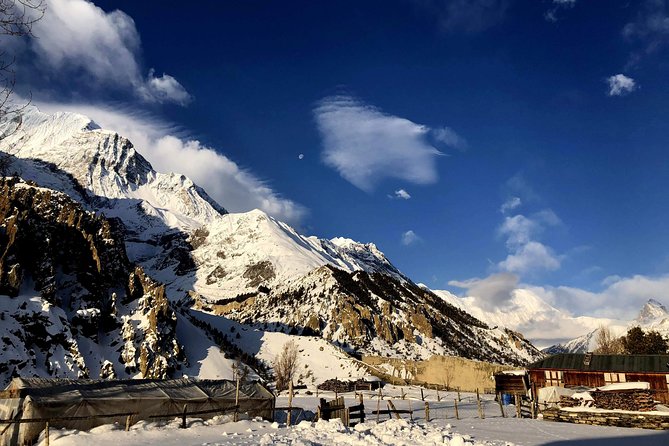
Day 7 is one of the more scenic walking days. You hike up to Ghyaru village and continue to Manang, with about six hours on the trail. Ghyaru is listed separately as a stop, and its elevated position gives you a stronger sense of the valley and surrounding peaks.
Manang sits at about 3,540 meters. This is a major point in the trek because the altitude is now high enough that you need to pay attention to how your body feels. Walk steadily, drink regularly, and tell your guide if you develop problems.
The cultural setting also shifts here. The route passes through Tibetan Buddhist villages and mountain communities that feel quite different from Kathmandu and the lower Marsyangdi Valley. That cultural change is one of the strongest reasons to choose the full circuit rather than a shorter mountain walk.
Day 8: A needed rest day in Manang
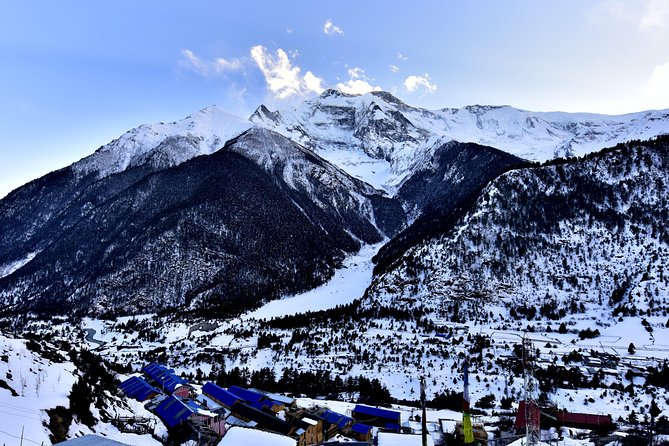
The rest day in Manang is not wasted time. At 3,540 meters, a pause gives you a chance to adjust before the route climbs higher toward Thorong Phedi and the pass.
The plan says to explore Manang Village, but the exact activities are not specified. That is fine. The useful part is having time to walk gently, see the settlement, and prepare for the next altitude gain without adding a full trekking day.
This is also a good point to discuss the route with your guide. The supplied highlights include Tilicho Lake, but the day-by-day schedule does not show where the detour fits. A Tilicho side trip can change the timing and effort of the trek, so ask before booking if it is included in your exact departure plan, how many extra nights it requires, and whether any listed stop will be removed.
Days 9 and 10: Ledar and Thorong Phedi
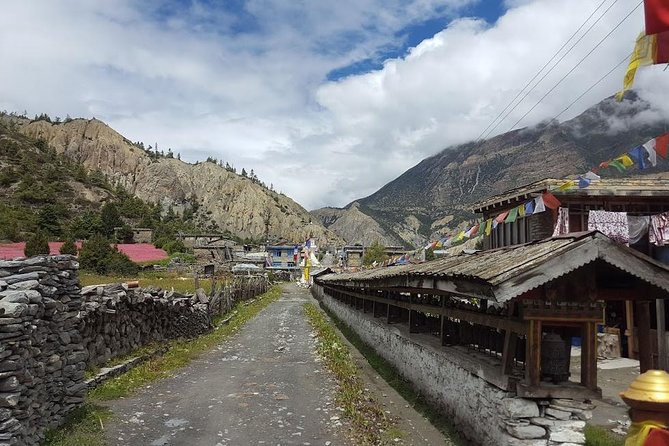
Day 9 climbs to Ledar at 4,200 meters, taking about four hours. Day 10 continues to Thorong Phedi at 4,450 meters in roughly three hours.
These are shorter walking days than the early stages, but they are not necessarily easier. The altitude makes every climb more demanding, and the scenery becomes more exposed. You are approaching the high pass, so the trip becomes less about covering distance and more about conserving energy.
Your guide and porter are particularly valuable here. The porter carries your luggage, while the guide handles the route and helps you judge the pace. The company says guide and porter salaries, food, lodging, equipment, and insurance are included, which removes a large cost and planning burden.
A first aid box is also included. That is useful, but it does not replace travel insurance. Insurance is not part of the price, and you should arrange your own policy before departure.
Day 11: Crossing Thorong La to Muktinath
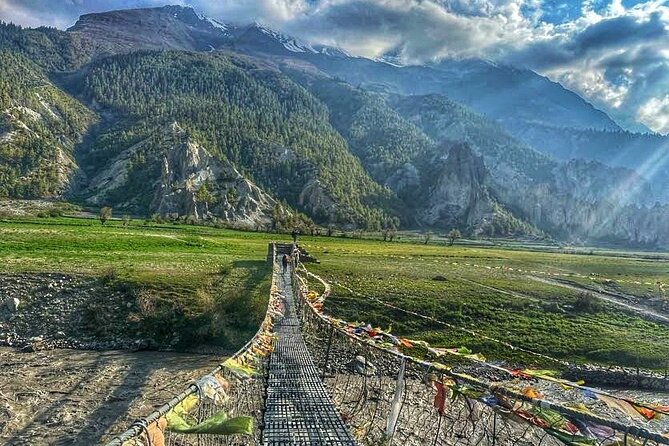
Day 11 is the central challenge: about eight hours of hiking from Thorong Phedi over Thorong La and down to Muktinath. The pass reaches 5,416 meters, so this is a demanding day even for fit walkers.
The reward is a major change in setting. After crossing the pass, you enter Mustang and continue toward Muktinath, a Hindu pilgrimage village. The combination of high mountain terrain and religious importance gives this part of the route unusual depth.
You should approach this day with respect. The information provided does not promise a specific altitude protocol or emergency evacuation plan, so discuss those matters with the operator before departure. Ask how the guide responds if someone cannot continue and what your insurance must cover.
Muktinath is one of the trip’s most meaningful stops. It connects the mountain route with Hindu pilgrimage traditions, while the surrounding region also reflects the Buddhist culture of the high valleys. It is not just a finish line after the pass.
Mustang, Marpha, and the Kali Gandaki Valley
The broader description includes a continuation through the Kali Gandaki Valley, Marpha, Tatopani, Ghorepani, Gurunghe Hill, and Poon Hill. Marpha is described with narrow cobbled lanes, a small monastery, and apple orchards. Tatopani offers hot springs, a welcome contrast after days of cold, high walking.
Poon Hill is a well-known viewpoint in the Annapurna region, and the plan highlights the possibility of seeing more than 20 mountains from there. Ghorepani is connected with this section, while Gurunghe Hill is also listed as a stop.
Here is the important practical issue: the detailed 14-day schedule says Day 11 ends at Muktinath, Day 12 is a six to seven-hour drive to Pokhara, and Day 13 is an eight-hour bus to Kathmandu. It does not clearly include the walks or overnight stays needed for Marpha, Tatopani, Ghorepani, and Poon Hill after Muktinath.
The French account of the route describes a journey from Besishahar to Tatopani, passing Thorong La and taking the Tilicho Lake detour. That suggests the actual operating route may differ from the compact schedule shown here. Do not assume every listed attraction fits into every 14-day departure. Get the final route in writing.
Days 12 to 14: Pokhara and the return home
Day 12 is a drive to Pokhara lasting about six to seven hours. After the high pass, the road transfer gives your legs a break, but it also means the trip ends with substantial time in a vehicle.
Pokhara accommodation is included on a bed-and-breakfast basis. Meals in Pokhara are not included, so plan for those separately. The city can serve as a comfortable transition between the mountains and the airport, though the schedule does not allocate a sightseeing day there.
Day 13 uses a tourist bus from Pokhara to Kathmandu for about eight hours. That is a long return journey, and anyone hoping for a quick finish should consider it carefully. Day 14 ends with a flight from Tribhuvan International Airport.
The package includes a farewell dinner and souvenir, small extras that give the trip a clear ending. International airfare and the Nepal visa fee are not included.
What $1,175 really covers
At $1,175 per person, the price has solid value if you want one company to arrange the main trekking pieces. It includes breakfast, lunch, dinner, tea or coffee with meals, mountain accommodation, Kathmandu and Pokhara hotels with breakfast, transport, permits, taxes, a registered guide, a porter, insurance for the guide and porter, paperwork, a first aid box, farewell dinner, and a souvenir.
That is a meaningful list. The biggest savings come from not having to arrange the TIMS card, conservation permit, guide, porter, mountain lodging, and daily trekking meals separately.
Still, the price is not all-inclusive. You pay for international flights, visa, insurance, city meals, snacks, drinks, WiFi, laundry, phone calls, charging, tips, and donations. Keep extra cash available for personal expenses along the route.
The private format is another value point. Only your group participates, so you have more control than on a large group departure. Ask how many people are in your private group and whether the price changes for solo participants.
The guide, porter, and personal service
Guide Gyanu is the clearest personal name connected with this experience. His patience, warmth, dedication, and practical care were praised in a firsthand account, which fits the sort of support you want on a high-altitude route.
A good guide matters most when the schedule becomes difficult. Gyanu or another assigned guide will be your link to the route, villages, permits, pace, and daily decisions. The operator promises a government-registered guide and a porter, with their costs covered.
You should still ask who your specific guide will be before departure. Confirm the guide’s experience with Thorong La, the Tilicho route if applicable, and the emergency procedure. A personal guide relationship can make a private trek feel far more manageable, but clear communication is essential.
Who should book this trek?
I would choose this trip if you want a classic Nepal trek with major changes in scenery, strong cultural variety, and support already arranged. It suits someone who can handle moderate physical activity and is willing to accept long road journeys and basic mountain rooms.
It is less suitable if you want a relaxed holiday, a short daily walk, or a precisely defined luxury itinerary. The 5,416-meter pass is the main test, and the listed stops need clarification before you pay.
Free cancellation is available when you cancel at least 24 hours before the local start time. If poor weather forces cancellation, you can receive a different date or a full refund. Changes or cancellations inside 24 hours are not accepted for a refund.
FAQ
How long is the Annapurna Circuit Trek?
The experience lasts approximately 14 days, beginning with arrival in Kathmandu and ending with departure from Tribhuvan International Airport.
What is the highest point on the trek?
The highest point is Thorong La Pass at 5,416 meters.
Is Tilicho Lake included?
Tilicho Lake is listed as a stop, but it is not assigned a clear day in the 14-day schedule. Confirm the exact route and any added nights with Nepal Trail Finder before booking.
Are meals included?
Breakfast, lunch, dinner, and tea or coffee with each meal are included during the trekking arrangement. Meals in Kathmandu and Pokhara are not included.
Is accommodation included?
Yes. Hotels in Kathmandu and Pokhara are included on a bed-and-breakfast basis. Mountain accommodation is provided in private or shared single or double rooms.
Are a guide and porter provided?
Yes. The package includes a government-registered guide and a porter to carry luggage, along with their salaries, equipment, food, lodging, and insurance.
What is not included in the price?
International airfare, Nepal visa fees, travel insurance, Kathmandu and Pokhara meals, alcohol, soft drinks, snacks, WiFi, phone calls, laundry, battery charging, tips, donations, and other personal expenses are not included.
Should you book it?
Book this Annapurna Circuit trek if the draw is a supported crossing of Thorong La, not a carefree holiday. The price covers the costly basics, the private format gives your group flexibility, and the route offers an impressive change from green valleys to dry Mustang and high Himalayan passes.
Before booking, get one point settled: the final route. Ask specifically about Tilicho Lake, Marpha, Tatopani, Ghorepani, Poon Hill, and Gurunghe Hill, since the detailed schedule cannot clearly include all of them in 14 days. If Nepal Trail Finder confirms the stops you care about and you are ready for the altitude and long transfers, this is a strong, practical choice for an ambitious first Himalayan trek.
More Hiking & Trekking in Kathmandu
- Everest Base Camp Trekking
★ 5.0 · 485 reviews - Nagarkot Sunrise View and Day Hiking from Kathmandu
★ 5.0 · 471 reviews - Everest Base Camp Trekking – 13 Day
★ 5.0 · 365 reviews - Everest Base Camp Trek -14 Days
★ 5.0 · 321 reviews
Just added around Kathmandu
- Private Half-Day Tour of Boudhanath and Pashupatinath Temples in Kathmandu★ 4.5 · 9 reviews
- Private Half-Day Tour of Kathmandu Durbar Square and Swayambhunath Temple★ 4.5 · 11 reviews
- Namobuddha Monastery Hiking Day Tour via Panauti from Kathmandu★ 5.0 · 15 reviews
- Private Full-Day Kathmandu City Tour★ 5.0 · 9 reviews
- Private Day Tour in Kathmandu Valley Rim with Bhaktapur Sightseeing★ 5.0 · 3 reviews
- Private Half Day Budhanilkantha Tour★ 5.0 · 6 reviews
- Private Day Tour: Patan and Bhaktapur from Kathmandu★ 4.5 · 6 reviews
- Private Day Tour – Sacred Journey to Namo Buddha★ 5.0 · 5 reviews
Annapurna Circuit Treks, compared.
15-Day Private Annapurna Circuit Trek from Kathmandu
Read our review →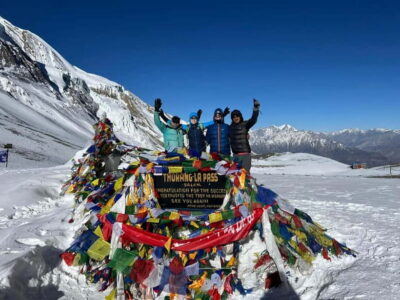
Browse the lists this tour appears in