
Reviewed · ANNAPURNA BASE CAMP TREKS
Annapurna Base Camp Trekking
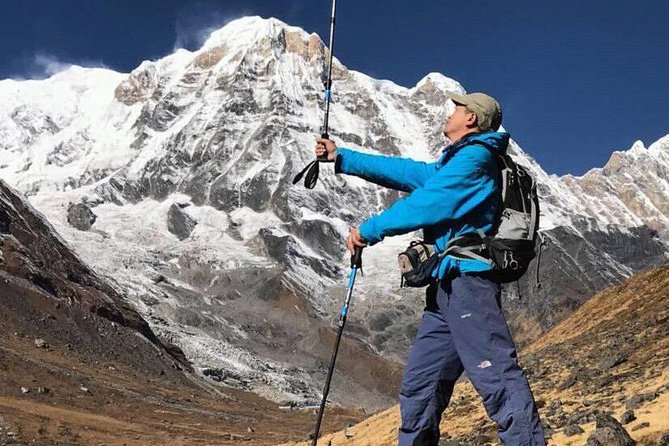
Annapurna Base Camp is the prize here, but the route earns its keep long before you reach the mountain amphitheater. You get sunrise from Poon Hill, rhododendron and bamboo forest, stone stairways, hot springs, and a final approach through Machhapuchhre Base Camp to ABC at 4,130 meters.
I like two things in particular. First, the practical gear package includes a duffle bag, sleeping bag, down jacket, and first aid kit, which saves you from buying or hauling everything yourself. Second, a licensed guide and a porter for every two trekkers make the long stair climbs and changing altitude easier to manage. The named team in the available feedback includes guide Avi and porter Robin, though you should confirm your own staff before departure.
The main drawback is the pace. Twelve days includes long bus rides, several demanding walking days, and a high point above 4,000 meters. Food during the trek, drinks, and hotels in Kathmandu and Pokhara are not included, so the advertised price is useful but not the full cost of the trip.
Key points to know before booking
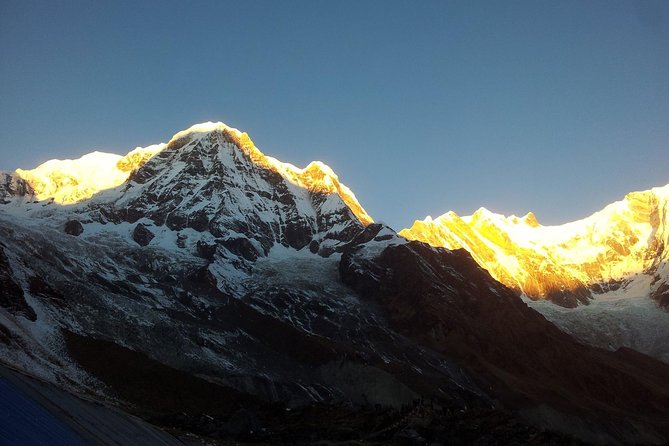
- Poon Hill adds a superb sunrise: The pre-dawn climb from Ghorepani takes about 45 minutes and reaches 3,210 meters.
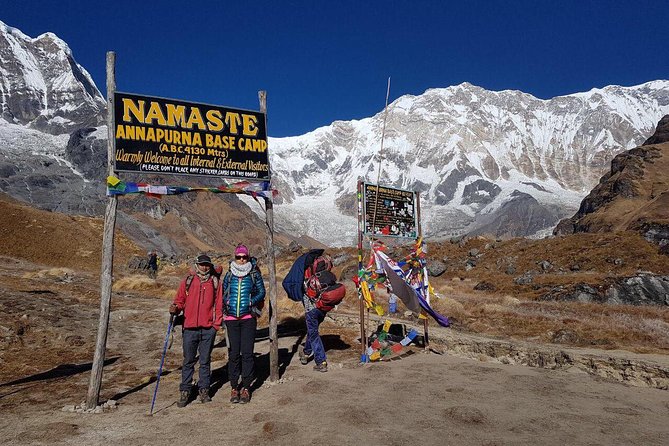
- ABC is reached on foot, not by road: The final approach passes Machhapuchhre Base Camp at about 3,700 meters before reaching Base Camp at 4,130 meters.
- The route mixes effort with recovery: Stone steps and long ascents are balanced by tea house nights, forest sections, and the hot springs at Jhinu Danda.
- Much of the equipment is supplied: You can use the duffle bag, sleeping bag, and down jacket during the trek.
- Transport is handled at both ends: Tourist bus rides connect Kathmandu and Pokhara, with private transfers to and from the trail.
- Meals and city hotels cost extra: Breakfast, lunch, dinner, drinks, and accommodation in Kathmandu and Pokhara are outside the listed price.
What the $749.90 price really covers
At $749.90 per person, this is not simply a guided walk. The fee covers round-trip tourist bus transport between Kathmandu and Pokhara, private transfers to the trailhead and from the finish, tea house accommodation during the hike, permits, government charges, and agency service costs.
It also pays for the guide, porter support, staff wages, staff transport, equipment, insurance, and food for the working team. TIMS registration and the Annapurna Conservation Area Permit are included, so you do not need to arrange those separately.
The gear loan adds real value. A duffle bag is useful because porters carry your main load, while you keep a smaller day pack. The sleeping bag and down jacket are especially helpful on cold nights and at higher elevations. You also receive a T-shirt, trekking map, and trip achievement certificate.
The price needs a little context. Your three daily meals on the trail are not included, and neither are bottled water, soft drinks, juice, or other cold drinks. Hotels in Kathmandu and Pokhara are also extra. If you already plan to stay in those cities, this can be a clean way to separate city costs from trekking costs. If you want an all-inclusive holiday, budget carefully before booking.
A solo participant pays an additional porter cost because the standard arrangement is one porter for two trekkers. The tour is private, meaning only your group participates, but ask how the porter arrangement affects the final cost for one person.
More Annapurna Base Camp Treks in Kathmandu
- Annapurna base camp trek 5 Days
★ 5.0 · 252 reviews - Annapurna Base Camp Trek
★ 5.0 · 111 reviews - Kathmandu to Annapurna Base Camp (ABC) 5-Day Trek
★ 5.0 · 102 reviews
Kathmandu arrival and the early start to Pokhara
Day 1 is a soft landing. A representative meets you at Tribhuvan International Airport and takes you to your Kathmandu hotel. Later, you meet the trek leader for a pre-trip briefing, where the route and practical details are covered.
The next morning begins early, with a stated start time of 6:00 a.m. The bus to Pokhara takes about seven hours. That may sound like a slow start to a mountain trip, but it gives you a useful look at Nepal beyond the main cities and avoids the cost of a separate domestic flight.
Pokhara sits at about 820 meters beside Phewa Lake and serves as the main base for this part of the Annapurna region. The bus ride takes much of the day, so do not plan a packed sightseeing schedule around it. The value is in having the transport organized, not in reaching Pokhara quickly.
You should also note a small scheduling oddity in the supplied plan: Day 2 contains descriptions for both Kathmandu and Pokhara. The practical reading is simple: you depart Kathmandu in the morning and arrive in Pokhara later that day. Confirm the exact pickup point and hotel details before setting out.
Birethanti, Ulleri, and the first real test
From Pokhara Lakeside, a private vehicle takes you toward the trail. The route passes through Birethanti, at roughly 827 meters, and continues toward Tikhedhunga, where the walking begins.
The first hiking section climbs from about 1,480 meters at Tikhedhunga to Ulleri. It takes around four hours and introduces the character of the route: steady uphill work, mountain settlements, and plenty of stairs. You then continue through Nangethanti, around 2,460 meters, before reaching Ghorepani at 2,874 meters.
This is a demanding first walking day because you gain altitude quickly. You should arrive with enough time to eat, organize your sleeping bag, and rest. The tea house setup keeps the night practical rather than luxurious. You get a place to sleep along the trail, but this is not the time to expect hotel-style facilities.
Ghorepani is more than an overnight stop. It positions you for the route’s first major viewpoint and gives you a strong taste of the Annapurna region before the trail turns toward the sanctuary.
Poon Hill sunrise and the forests around Tadapani
Day 4 begins before dawn with the climb to Poon Hill. The walk from Ghorepani takes about 45 minutes and reaches 3,210 meters. If the sky is clear, you can see a broad sweep of Annapurna, Dhaulagiri, and Machhapuchhre as the light reaches the peaks.
This early start is one of the best features of the plan. Poon Hill offers a big mountain view without requiring a separate multi-day side trip. The tradeoff is obvious: you climb in the dark, and cold weather can make the viewpoint feel less pleasant than the photographs suggest. Bring warm layers, even if the lower trail felt mild.
After returning from Poon Hill, you continue toward Tadapani. The walking portion takes about seven hours. Tadapani sits around 2,630 meters and is known for views of Machhapuchhre, Annapurna South, and Hiunchuli.
The route between these villages passes through forest and hillside settlements. You get changing scenery instead of one repeated mountain view, but the long day can be tiring after the early wake-up. This is a good place to use the supplied down jacket at night and keep your duffle bag organized so you are not unpacking everything in a small tea house room.
Same mountains, a completely different kind of day:
- Everest Base Camp Trek – 14 Days
★ 5.0 · 1,499 reviews - Private Kathmandu Sightseeing Tour | UNESCO World Heritage sites
★ 5.0 · 756 reviews - Everest Base Camp Helicopter Tour landing at Everest View Hotel
★ 5.0 · 668 reviews - Half day cooking class in Thamel kathmandu
★ 5.0 · 607 reviews
Chuile and Sinuwa, where the route turns inward
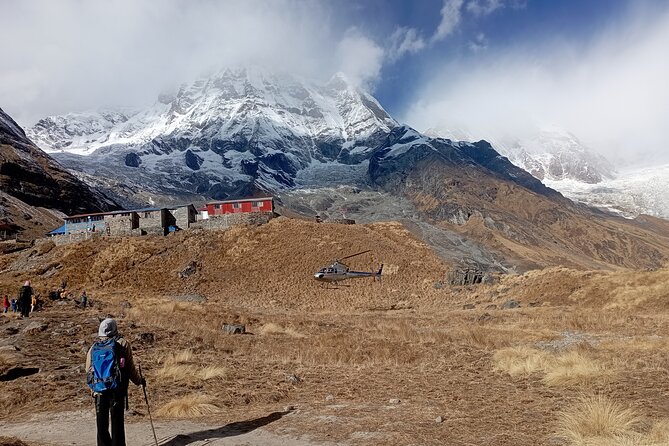
The next section brings you through Chuile, a quiet village at about 2,300 meters, and onward to Sinuwa at roughly 2,340 to 2,360 meters. Chuile is surrounded by forest and terraced fields, with views toward Annapurna South and Hiunchuli.
Sinuwa is an important point on the route because it leads deeper into the Annapurna Sanctuary. It is divided into Lower Sinuwa and Upper Sinuwa, both close in height. The modest difference in altitude is less important than the fact that you are now settling into the rhythm of the high trail.
The day takes around seven hours. You should expect a mix of uphill and downhill sections rather than one steady climb. A guide is useful here not only for navigation, but also for pacing. The safest approach is to walk at a speed that lets you speak in short sentences without gasping.
The tour asks for moderate physical fitness. That phrase should be taken seriously. You do not need technical climbing skills for the route described, but you do need to handle several hours on foot, uneven trail, stairs, and altitude. A little training on hills or long stair sessions will help more than a short burst of flat-ground exercise.
Sinuwa to Deurali and the higher sanctuary
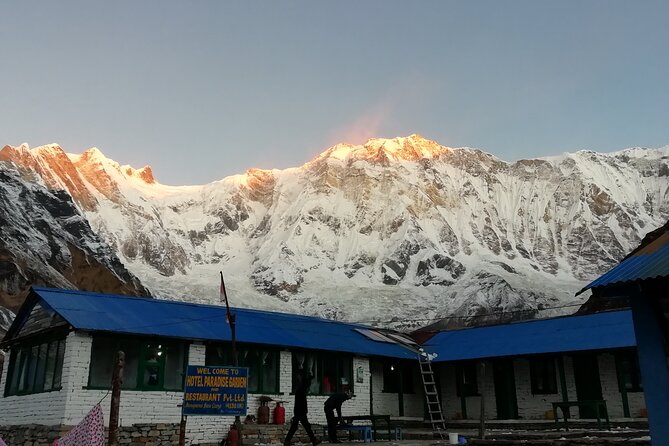
From Sinuwa, the trail continues toward Himalaya and Deurali. This day is split into walking sections of about six and five hours, depending on the precise starting point and overnight arrangement.
The route reaches Himalaya at around 2,890 meters and Deurali at approximately 3,174 meters. The higher you go, the more useful a steady pace becomes. You should not treat the elevation figures as decoration. At this height, tiredness can feel sharper, and the next morning’s climb will be easier if you avoid racing today.
The forest sections gradually give way to a more open mountain setting. That change is part of the appeal of the Annapurna Sanctuary route. You begin among lower villages and cultivated slopes, then move into a bowl surrounded by high peaks.
The guide’s role matters most on days like this. A licensed English-speaking guide can help with timing, route decisions, and basic safety. The first aid kit is also supplied, but it is still wise to bring personal medication and tell the guide about any medical issue before the hike begins.
Machhapuchhre Base Camp and Annapurna Base Camp
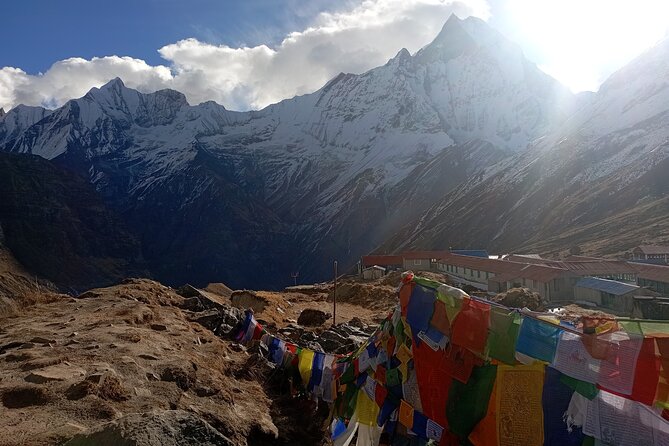
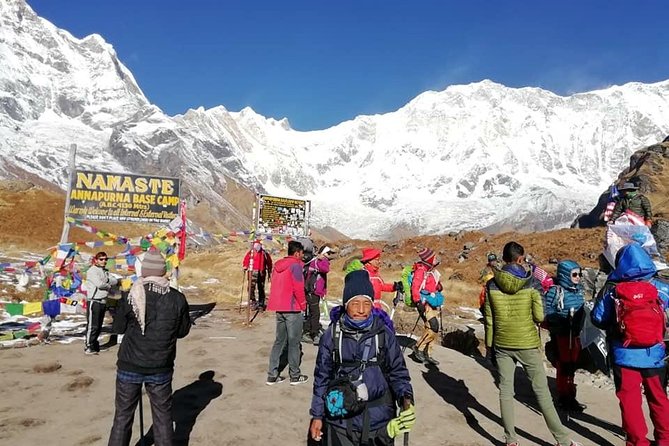
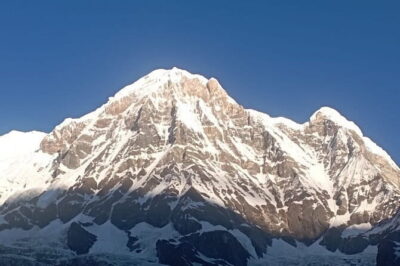
Day 7 is the central achievement of the trip. From Himalaya or Deurali, you continue through the high valley to Machhapuchhre Base Camp, also called MBC, at about 3,700 meters. From there, the route reaches Annapurna Base Camp at 4,130 meters, or about 13,550 feet.
The walking time is listed at around six hours. The final approach is not just a finish line. Machhapuchhre, Annapurna South, Hiunchuli, and other peaks form the mountain setting around the sanctuary, giving you the feeling of entering a natural mountain theater.
You should expect cold conditions at ABC, even if lower villages were warm. The supplied sleeping bag and down jacket have clear value here. Keep water, snacks, gloves, and a warm layer easy to reach rather than buried in the main duffle.
Altitude is the biggest consideration. The plan takes you from Pokhara at about 820 meters to more than 4,000 meters in several days. If you feel unwell, tell your guide at once. Do not hide symptoms to protect the schedule. The trip is private, which can make it easier to discuss a slower pace, but the itinerary still has fixed transfers and tea house stops.
The long descent to Bamboo and Jhinu Danda
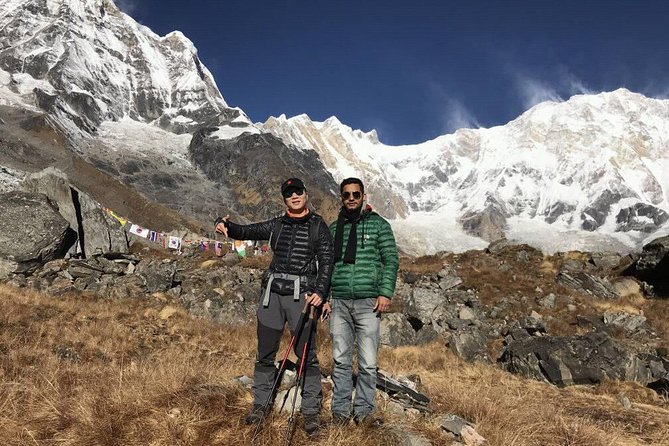
After reaching ABC, the route turns downhill to Bamboo at about 2,350 meters. The descent is listed at roughly seven hours. Downhill walking can sound easy, but it puts pressure on knees and toes, especially after a high-altitude night.
Bamboo offers a lower overnight point and a chance to recover. The trail passes back through the sanctuary, so you see some sections from a new angle. This is one reason the route feels varied rather than like a simple out-and-back walk.
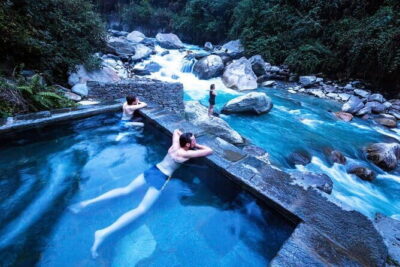
The following day continues from Bamboo to Jhinu Danda at 1,780 meters. It takes about five hours and brings you to one of the trip’s most welcome stops: the natural hot springs.
Jhinu Danda gives the route a change of mood. After cold mornings, steep steps, and long hours at altitude, a hot spring can feel like a proper reward. Admission to the hot spring is not included, so carry a little local currency or confirm the current fee with your guide.
Jhinu hot springs and the return to Pokhara
Day 10 includes about an hour at the Jhinu Danda hot spring, followed by the final walk to Siwa or Ghandruk Phedi, depending on the route used. The trail section takes about five hours and drops to roughly 1,150 meters.
This is still a walking day, so do not think of the hot spring as a complete rest day. It is better viewed as a break within the final stage. After reaching the road, a transfer takes you back toward Pokhara Lakeside.
The end point can vary between Siwa and Ghandruk Phedi. That flexibility may reflect road or trail conditions, but it also means you should ask for the expected finish point before the day begins. The return to Pokhara is part of the package, which removes one more transport decision after a tiring descent.
Pokhara gives you a softer final evening than another night in a high tea house. Your accommodation there is not included, so make sure you know where you are staying and how the transfer connects to it.
The bus back to Kathmandu and the final airport transfer
Day 11 is another long road day, with about eight hours between Pokhara and Kathmandu. The distance is listed at roughly 200 kilometers, but road time matters more than the number. Set aside most of the day.
The tourist bus keeps the basic transport cost in the package, though it will not offer the speed or privacy of a private car. I see this as a fair trade for the price, especially since the trek already includes private transfers at the trail ends.
Day 12 closes with a transfer to Tribhuvan International Airport. The listed airport stop takes about an hour. Keep your departure time in mind when arranging flights, and confirm the pickup plan with the operator rather than assuming the airport transfer will fit any flight schedule.
Guide, porter, and what to pack
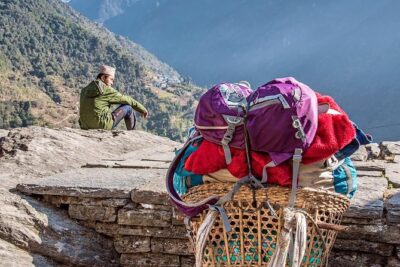
The guide and porter system is one of the strongest practical features. One porter is assigned for every two trekkers, while the guide leads your private group. This lets you walk with a lighter day pack and focus on footing, weather, and pace.
Avi and Robin are the guide and porter names connected with the available trip feedback. One useful detail is the praise for their patience and attention to safety. You should still confirm who will lead your departure, since staff assignments can vary.
The supplied duffle bag, sleeping bag, down jacket, and first aid kit reduce the amount of specialist gear you need to purchase. You will still need suitable walking clothes, sturdy footwear, personal medication, and a small day pack. Because drinks and food are extra, plan for those daily costs rather than assuming the package covers them.
The T-shirt, map, and certificate are pleasant extras, but they are not why you book this trip. The real value lies in the permits, trail transport, staff support, tea house nights, and borrowed cold-weather gear.
Who should book this Annapurna route
I would recommend this trip to you if you want a guided introduction to the Annapurna region and prefer having the main logistics arranged. It suits someone who wants mountain views, village stops, Poon Hill, and ABC in one organized route rather than piecing together transport and permits alone.
It is also a good fit if you want a private trip without paying for a full private porter. The one-porter-for-two arrangement keeps the cost more reasonable while still reducing your load.
I would be more cautious if you dislike long bus rides, basic tea house accommodation, early starts, or paying separately for meals and drinks. The route is not a casual sightseeing tour. Moderate fitness is required, and the altitude above 4,000 meters adds a serious physical factor.
The 5 out of 5 score from 38 ratings and the 100 percent recommendation figure support the experience’s main strengths: personal guide care, safety attention, and a well-supported route. Those figures do not remove the need to prepare. The highest praise is directed at the human support from Avi and Robin, so ask about guide experience, porter arrangements, and emergency procedures before you pay.
Should you book it?
Book this Annapurna Base Camp trek if you value a full route with Poon Hill and ABC, supplied high-altitude gear, permits, tea houses, and organized transport for $749.90. It offers a lot for the price, but remember to add food, drinks, city hotels, and the solo porter supplement if applicable.
Skip it if you want short walks, flexible city time, or an all-inclusive price. For a fit hiker who accepts long days and simple accommodation, this is a well-planned way to reach Annapurna Base Camp without managing every detail yourself. Free cancellation is available up to 24 hours before the local start time, which gives you some final flexibility while you prepare.
FAQ
How long is the Annapurna Base Camp tour?
The tour lasts approximately 12 days, including arrival in Kathmandu, bus transfers between Kathmandu and Pokhara, the trek, and the airport departure transfer.
What is included in the tour price?
The price includes tourist bus transfers between Kathmandu and Pokhara, private transfers to and from the trail, tea house accommodation during the trek, TIMS and Annapurna Conservation Area permits, a licensed English-speaking guide, porter support, staff costs, a duffle bag, sleeping bag, down jacket, first aid kit, T-shirt, map, certificate, government taxes, and agency service charges.
Are meals included during the trek?
No. Breakfast, lunch, dinner, water, soft drinks, juice, and other cold drinks are not included in the listed price.
Are hotels in Kathmandu and Pokhara included?
No. Accommodation in Kathmandu and Pokhara is not included. Tea house accommodation during the trek is included.
How high is Annapurna Base Camp?
Annapurna Base Camp is at approximately 4,130 meters, or 13,550 feet. Machhapuchhre Base Camp is at about 3,700 meters.
Is the tour private?
Yes. Only your group participates in the private tour or activity. Porter support is arranged at one porter for every two trekkers, and a solo traveler pays separately for a porter.
What fitness level is required?
The tour requires a moderate level of physical fitness. You should be ready for walking days lasting about five to seven hours, long uphill sections, downhill sections, early starts, and altitude above 4,000 meters.
More Hiking & Trekking in Kathmandu
- Everest Base Camp Trekking
★ 5.0 · 485 reviews - Nagarkot Sunrise View and Day Hiking from Kathmandu
★ 5.0 · 471 reviews - Annapurna Circuit Trek with Tilicho Lake
★ 5.0 · 368 reviews - Everest Base Camp Trekking – 13 Day
★ 5.0 · 365 reviews
Just added around Kathmandu
- Private Half-Day Tour of Boudhanath and Pashupatinath Temples in Kathmandu★ 4.5 · 9 reviews
- Private Half-Day Tour of Kathmandu Durbar Square and Swayambhunath Temple★ 4.5 · 11 reviews
- Namobuddha Monastery Hiking Day Tour via Panauti from Kathmandu★ 5.0 · 15 reviews
- Private Full-Day Kathmandu City Tour★ 5.0 · 9 reviews
- Private Day Tour in Kathmandu Valley Rim with Bhaktapur Sightseeing★ 5.0 · 3 reviews
- Private Half Day Budhanilkantha Tour★ 5.0 · 6 reviews
- Private Day Tour: Patan and Bhaktapur from Kathmandu★ 4.5 · 6 reviews
- Private Day Tour – Sacred Journey to Namo Buddha★ 5.0 · 5 reviews
Annapurna Base Camp Treks, compared.
Kathmandu to Annapurna Base Camp (ABC) 5-Day Trek
Read our review →
Kathmandu/Pokhara: 5-Day Annapurna Base Camp (ABC) Trek
Read our review →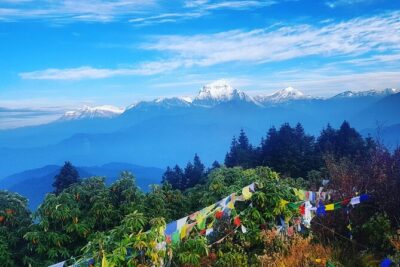
11-Day Hike Tour to Annapurna Base Camp Bliss in Kathmandu
Read our review →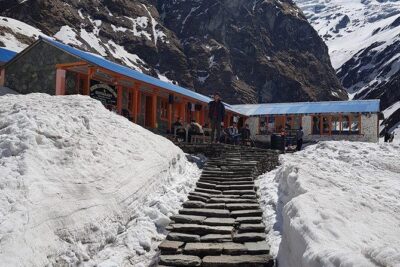
Browse the lists this tour appears in