
Reviewed · ANNAPURNA BASE CAMP TREKS
Annapurna Base Camp Trekking
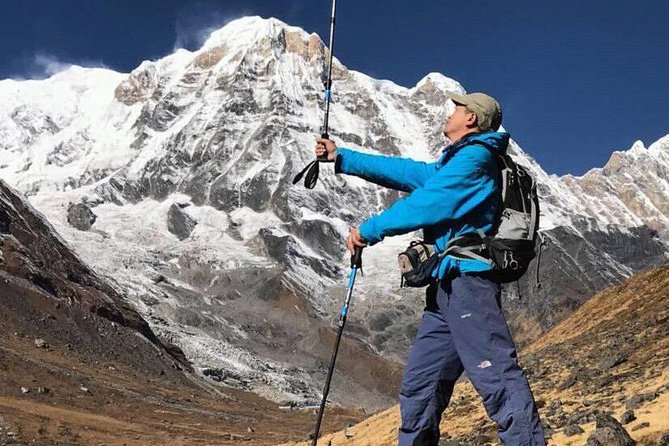
Annapurna Base Camp is the prize here, but the route earns its keep long before you reach the mountains. You move from Kathmandu’s sacred temples and stupas to Pokhara, then walk through rhododendron forests, stone-step villages, bamboo woods, waterfalls, and high mountain valleys before reaching the base camp below the Annapurna massif.
I like the private guide format, which gives you room to adjust the pace and ask for help when the trail gets tough. I also like the practical package: airport pickup, hotels, permits, a porter, tourist-bus transfers, and teahouse meals are arranged for you. The main caution is that this is not a gentle sightseeing holiday. You need moderate fitness, and several days involve steep steps, long descents, and altitude above 3,000 meters.
Key points before you book
- Sunrise at Poon Hill: The early walk to 3,210 meters adds one of the route’s best mountain viewpoints before the trek turns toward Annapurna Base Camp.
- A private trekking team: An English-speaking guide leads your group, with one porter assigned for every two trekkers.
- A full Nepal introduction: You see Pashupatinath, Boudhanath, Patan Durbar Square, and Swayambhunath before heading into the hills.
- Teahouse trekking made simpler: Lodging, breakfast, lunch, and dinner are included during the mountain portion.
- A useful recovery stop: Jhinu Danda includes access to a hot spring after the hardest high-altitude walking.
- Strong personal care: The company’s guides, including Bishnu Bhatta, Vishnu, and Prem dai in past trips, are repeatedly praised for friendly, attentive support. Confirm your assigned guide when booking.
What the $899 price really covers
At $899 per person, this is a practical package for someone who wants the main arrangements handled rather than building the trek piece by piece. You get airport pickup, three-star hotels in Kathmandu and Pokhara with breakfast, teahouse lodging during the trek, permits, government and local taxes, transport between Kathmandu and Pokhara, an English-speaking guide, and porter support.
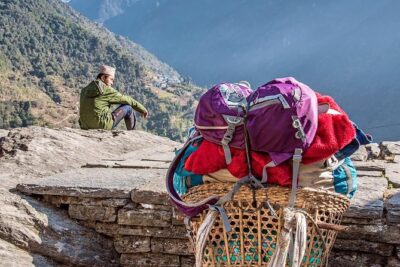
The porter arrangement is one porter for two trekkers. That matters because you can carry a daypack while your larger luggage moves ahead with the trekking team. The package also covers porter salary, insurance, equipment, food, and lodging.
Meals are included in the mountains: breakfast, lunch, and dinner at teahouses. In Kathmandu and Pokhara, only breakfast is included, so you need to budget separately for lunch and dinner there. Drinks, bottled or boiled water, hot water, tea and coffee, showers, laundry, phone calls, battery charging, alcohol, and bar bills are extra.
Sightseeing entrance fees are also not included. This is easy to overlook because the four Kathmandu sites are a major part of the opening day. Carry some local currency for those admissions and for small mountain expenses.
The package is not completely all-inclusive. Tips for guides and porters are separate, and an extra night in Kathmandu or Pokhara is not covered if weather, an early return, a late departure, or an early arrival changes the plan. Even so, the price offers reasonable value if you want a private arrangement and do not want to manage permits, transport, lodging, and porter logistics yourself.
More Annapurna Base Camp Treks in Kathmandu
- Annapurna base camp trek 5 Days
★ 5.0 · 252 reviews - Annapurna Base Camp Trek
★ 5.0 · 111 reviews - Kathmandu to Annapurna Base Camp (ABC) 5-Day Trek
★ 5.0 · 102 reviews
Kathmandu’s four sacred sights on day two
Your first day is simple. A representative from Himalayan Sanctuary Adventure meets you at Tribhuvan International Airport and takes you to your Kathmandu hotel. That airport pickup is useful after a long flight, especially if this is your first time in Nepal.
Day two is a full sightseeing day and a chance to prepare for the trek. The route visits four UNESCO World Heritage sites, each with a different religious and architectural character.
At Pashupatinath, the sacred Hindu temple complex sits beside the Bagmati River. The richly decorated pagoda temple is dedicated to Shiva, and the surrounding area gives you a direct look at one of Nepal’s most important religious centers.
Boudhanath is a huge Buddhist stupa east of central Kathmandu. Its broad white dome and watchful Buddha eyes create a calmer setting than many parts of the capital. The stupa is also an important center for Tibetan Buddhist life in the city.
Patan Durbar Square brings palace courtyards, pagoda temples, bronze religious objects, and the former royal center of Patan together in one compact area. The stone Krishna temple is a particularly notable stop.
Swayambhunath, often called the Monkey Temple, sits on a hill above the Kathmandu Valley. The climb and hilltop setting provide broad views across the city, while the stupa and resident monkeys make this a lively final stop.
Entrance fees are extra, and the day can feel full. I would treat it as a proper cultural introduction rather than a quick photo stop. Wear comfortable shoes, since you will be on your feet before the mountain walking begins.
The long bus ride from Kathmandu to Pokhara
On day three, the trekking staff takes you from your hotel to the tourist bus station early in the morning. The stated pickup time is around 6:30 a.m., with the bus leaving around 7:00 or 7:30 a.m. The drive takes about six hours.
Pokhara is smaller and less hectic than Kathmandu, and its setting beside Phewa Lake gives you a welcome change of pace. The city is a starting point for the trek, not just a transport stop. On clear days, you may see Annapurna, Machhapuchare, Dhaulagiri, Lamjung Himal, and Manaslu from the area.
The bus journey is included, but six hours on a tourist coach can be tiring. Keep water and snacks close, even though mountain meals are included later. Road conditions and traffic can affect the schedule, so do not plan a tight onward connection from Pokhara.
Nayapul to Ulleri: your first real test
The mountain walk begins with a private vehicle from Pokhara to Nayapul. From there, you walk along the Modi Khola for roughly 15 minutes before reaching Birethanti at 1,015 meters.
Birethanti is a large village with shops and teahouses. The route then follows the Bhurungdi Khola through Hille and Tikhedhunga. This first day is described as about five to seven hours, though the stop summary gives roughly six hours.
The route is a good introduction because it starts at a lower altitude and builds gradually. The catch comes with the stone steps toward Ulleri, a large Magar village at about 2,070 meters. If you are not used to repeated uphill steps, this section will make the trek feel real.
Accommodation is in a teahouse. Expect a functional overnight stop rather than hotel comfort. Breakfast, lunch, and dinner are included during the trek, while drinks, hot water, showers, and charging cost extra.
Same mountains, a completely different kind of day:
- Everest Base Camp Trek – 14 Days
★ 5.0 · 1,499 reviews - Private Kathmandu Sightseeing Tour | UNESCO World Heritage sites
★ 5.0 · 756 reviews - Everest Base Camp Helicopter Tour landing at Everest View Hotel
★ 5.0 · 668 reviews - Half day cooking class in Thamel kathmandu
★ 5.0 · 607 reviews
Ghorepani and the rhododendron forests
The climb from Ulleri to Ghorepani usually takes four to five hours. After the steep section, the trail passes through oak and rhododendron forests toward Banthanti and Nangethanti before reaching Ghorepani.
This is one of the prettiest parts of the route. The forest gives shade, and the rhododendrons add seasonal color. The altitude rises to roughly 2,750 to 2,840 meters, depending on the stated elevation used, so you begin to notice the thinner air.
Ghorepani is more than a place to sleep. It is the launch point for the next morning’s walk to Poon Hill. Try to keep your evening quiet and organize your daypack before bed. The early start is worth it, but you will enjoy sunrise more if you are not searching for gloves and a headlamp at the last minute.
Poon Hill sunrise, then on to Tadapani
Day six begins before sunrise with an approximately one-hour walk to Poon Hill at 3,210 meters. The viewpoint is known for broad views of the Annapurna and Dhaulagiri ranges, along with mountain views toward Mustang, Pokhara, and other high peaks.
This is one of the strongest features of the route. You get a major Himalayan viewpoint without waiting until base camp, and the sunrise gives the day a clear sense of occasion. A cup of coffee at the viewpoint is mentioned in the plan, but drinks are generally listed as extra, so confirm what is included locally.
After returning to Ghorepani for breakfast, you continue toward Tadapani. The trail crosses a ridge, then drops through rhododendron forest and past waterfalls. The day lasts about six to seven hours and ends at roughly 2,700 meters.
The early start, descent, ascent, and total walking time make this a demanding day. You should not judge the whole trek by the first morning. Pace yourself and let the guide set a steady rhythm.
Tadapani to Chhomrong and the Modi Khola valley
From Tadapani, the trail descends through a large rhododendron forest before opening onto terraced fields. You pass waterfalls and a suspension bridge, then continue through a mixture of uphill and downhill walking to Chhomrong at about 2,170 meters.
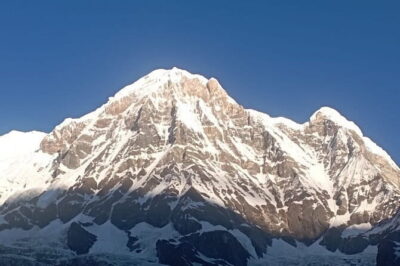
Chhomrong is a striking village below the Annapurna massif. It is also an important route junction and one of the places where the scale of the mountains becomes more obvious.
The following day leads through damp, cool bamboo forest toward Dovan. The path can be steep, and it passes the Himalaya Hotel and Hinku Cave before descending to a river and climbing again to Dovan.
The scenery changes as you gain height. Forest begins to thin, and the valley, cliffs, waterfalls, and glacial river become easier to see. Dhaulagiri is also listed among the mountain views from this section, though visibility depends on weather.
The five to six hours shown for this day may feel longer if the trail is wet. Monsoon conditions can bring lush greenery and a strong sense of life along the path, but rain also means slippery steps, damp clothing, and cloudier mountain views.
Deurali to Annapurna Base Camp
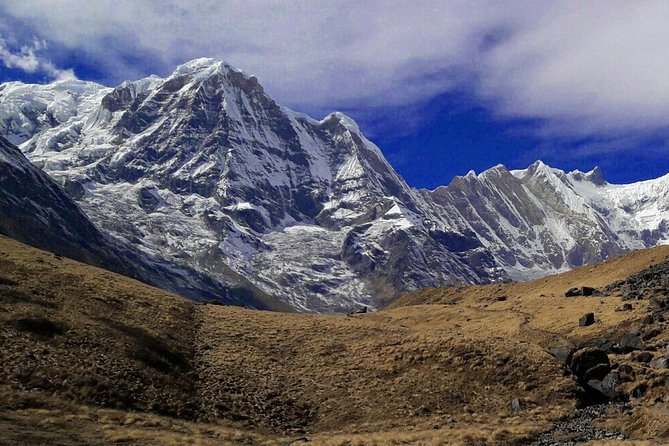
The route from Dovan to Deurali follows the valley in a steady climb. The trail sometimes hugs a rocky cliff and includes steep sections. You then continue toward Machhapuchare Base Camp before reaching Annapurna Base Camp.
The written schedule contains a small naming inconsistency around days nine through eleven. One version lists Deurali twice, while the detailed plan makes clear that the main sequence is Dovan to Deurali, then Deurali to Annapurna Base Camp, followed by a descent to Bamboo. Ask the operator to confirm the final day-by-day schedule before departure.
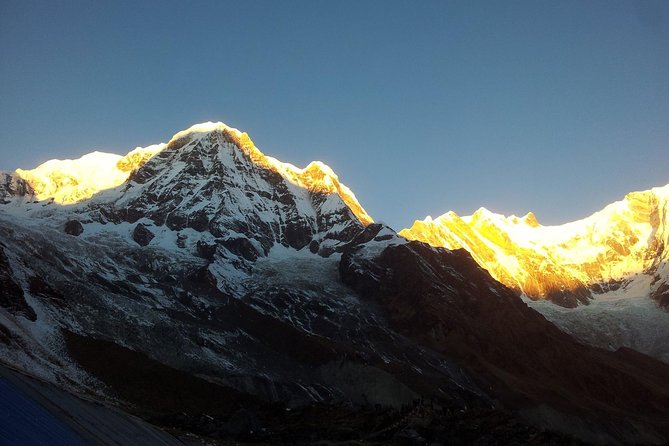
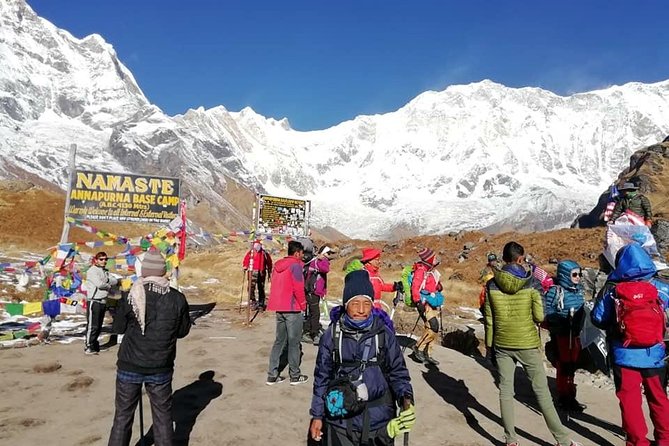
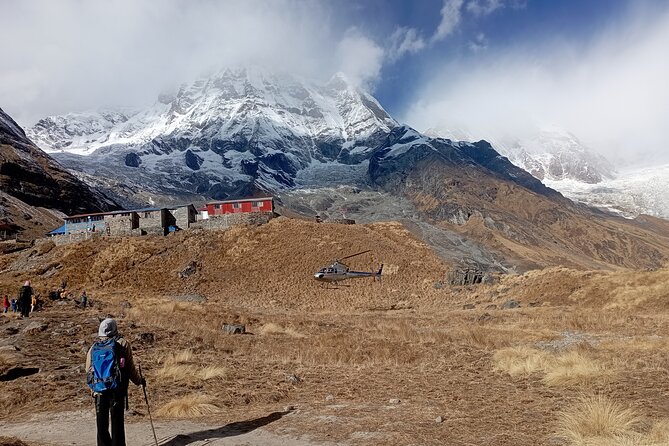
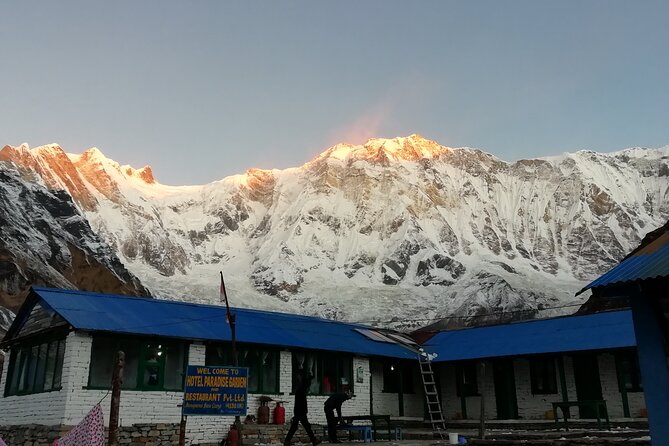
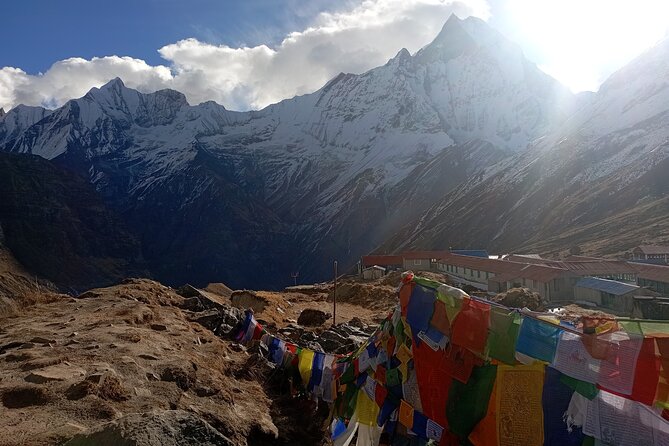
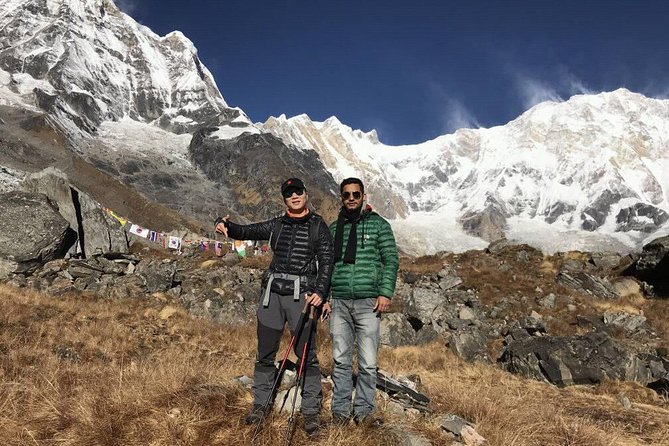
The approach to base camp is the physical high point of the trek. You walk in a more open, high mountain setting, with vegetation becoming sparse and the peaks feeling much closer. The route from Deurali to base camp is listed as five to seven hours.
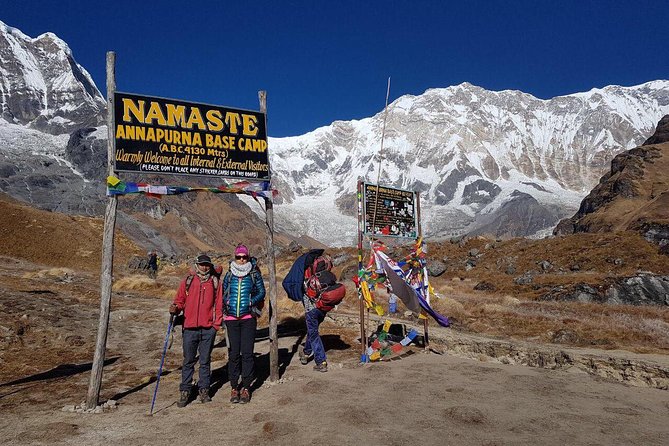
Altitude is the main concern here. Annapurna Base Camp sits at about 4,130 meters, although that elevation is not stated in the supplied schedule. The important point is that you are walking well above 3,000 meters, and your guide’s judgment matters. Tell the guide promptly about unusual fatigue or illness rather than trying to prove something.
The long descent to Bamboo
After time at Annapurna Base Camp, the trail retraces its route past Machhapuchare Base Camp, Deurali, Himalaya Hotel, and Dovan before reaching Bamboo. The day is listed at five to seven hours, with a rapid descent.
Downhill does not mean easy. Descending on stone steps can be hard on knees, and tired legs increase the chance of slips. Trekking poles would be useful, though the supplied information does not say they are provided, so bring your own or ask the company whether they can arrange them.
The Bamboo stop gives you a lower and more sheltered night after the exposed high sections. You continue back toward Chhomrong the next day, stopping there for lunch before descending steeply to the Modi Khola valley.
This return section repeats some of the route, but that has a practical benefit. You recognize the trail, and you see the same forests and bridges from a different direction. The stone steps near Chhomrong can still be tricky, especially after several days of walking.
Jhinu Danda hot springs and the return to Pokhara
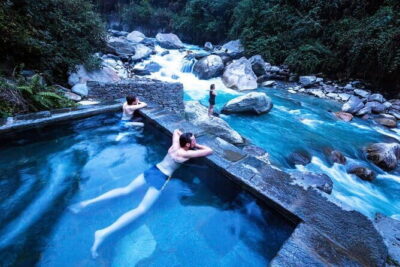
The trek finishes around Jhinu Danda, where you can enjoy a hot spring amid the hills of western Nepal. This is a welcome recovery stop after the base camp push and the long descent.
The schedule describes about five hours of walking to Jhinu Danda and an overnight stay there. The detailed plan then continues to Nayapul and uses a drive back to Pokhara. Another version describes day 12 as a Jhinu overnight and day 13 as the trek to Nayapul followed by the drive. Confirm exactly where you sleep on each night because the condensed itinerary uses slightly different labels.
The drive back to Pokhara marks the end of the walking portion. You spend the night in Pokhara, with breakfast included at the hotel, but lunch and dinner are your responsibility.
On day 14, you take the tourist bus from Pokhara back to Kathmandu after breakfast. The drive is listed at seven to nine hours, so this is another full transport day. The experience is best viewed as a 14-day plan with long road transfers, not 14 days of continuous trekking.
What past praise tells you about the service
The strongest pattern in the available feedback is personal care. Bishnu Bhatta and Vishnu are named in connection with successful Annapurna Base Camp trips, while Prem dai is praised for being friendly. One account describes careful attention to food and comfort from airport arrival onward, including efforts to reduce the risk of stomach trouble.
That kind of support matters on a trek. The guide is not just there to point out the path. You may need help with pacing, meals, lodging, changing weather, and decisions about how far to continue.
The company also received positive comments after a group could not continue to base camp because of weather. That is worth noting. Mountain trekking is partly about knowing when to turn around, and a responsible guide should treat safety as more important than completing a promised endpoint.
Feedback also includes a March 2024 trip by three older friends and a monsoon trek praised for its green scenery. These details suggest the company has handled different ages and seasons, but they do not remove the need for personal preparation. Ask about current trail conditions, your guide’s name, and the plan for weather changes.
Who should book this Annapurna trek?
This trip suits you if you want a guided Himalayan trek but do not want to arrange every hotel, permit, transfer, meal, and porter yourself. It is also a good fit if you value a private group and want some ability to adjust the itinerary.
You should be comfortable walking for four to seven hours on several consecutive days. The route includes steep climbs, steep descents, stone steps, suspension bridges, forest trails, and high-altitude walking. The tour description calls for moderate fitness, which should be taken seriously.
The package is less suitable if you want luxury lodging, a short trek, or every expense covered. Teahouses are practical, not lavish, and many small comforts cost extra. The long bus rides between Kathmandu and Pokhara are also part of the deal.
The advertised start time is 6:45 a.m., but the itinerary gives earlier pickups for the Pokhara transfer. Confirm the meeting time and pickup details after booking. Confirmation is provided at booking, and cancellation is free if made at least 24 hours before the local start time. A cancellation within 24 hours is not refundable.
Should you book it?
I would consider this trek a good-value choice for a first Annapurna Base Camp experience, especially if you want a private guide and a porter without handling the permits and mountain logistics yourself. The combination of Kathmandu’s heritage sites, Poon Hill sunrise, Annapurna Base Camp, and Jhinu Danda’s hot spring gives the trip more variety than a direct base camp route.
Before paying, confirm four things: the exact 14 or 15-day count, the corrected day-by-day schedule around Deurali and Bamboo, the name of your assigned guide, and which sightseeing entrance fees you will pay locally. If you are ready for long walking days and modest teahouse conditions, the $899 package offers a sensible way into the Annapurna mountains.
FAQ
How long is the Annapurna Base Camp trek?
The experience is advertised as approximately 14 days, while the overview also refers to 15 days. The detailed plan runs from airport arrival in Kathmandu through the return bus from Pokhara to Kathmandu, so confirm the exact duration before booking.
Where does the tour begin?
The tour begins in Kathmandu, Nepal, with airport pickup at Tribhuvan International Airport. The listed meeting time is 6:45 a.m., with an earlier pickup around 6:30 a.m. for the transfer to Pokhara on day three.
Is airport pickup included?
Yes. A representative from Himalayan Sanctuary Adventure picks you up from Tribhuvan International Airport and transfers you to your Kathmandu hotel.
Is this a private tour?
Yes. Only your group participates, and the experience includes an English-speaking trekking guide. The itinerary can be adjusted with some flexibility because the tour is private.
What meals are included?
Breakfast is included at the three-star hotels in Kathmandu and Pokhara. During the trek, breakfast, lunch, and dinner are included at the teahouses. Lunch and dinner in Kathmandu and Pokhara are not included.
Are trekking permits included?
Yes. The package includes the necessary paperwork and permits, including ACAP and TIMS, as well as government and local taxes.
Is a porter included?
Yes. One porter is provided for every two trekkers. Porter salary, insurance, equipment, food, and lodging are included.
How fit do I need to be?
You need a moderate level of physical fitness. Walking days generally last about four to seven hours and include steep steps, uphill and downhill trails, forest paths, and high-altitude sections.
Are sightseeing entrance fees included?
No. Entrance fees for the Kathmandu sightseeing stops are excluded. The itinerary includes Pashupatinath, Boudhanath, Patan Durbar Square, and Swayambhunath.
What happens if I need to cancel?
You can receive a full refund if you cancel at least 24 hours before the experience begins. Cancellations or changes made less than 24 hours before the local start time are not accepted for a refund.
More Hiking & Trekking in Kathmandu
- Everest Base Camp Trekking
★ 5.0 · 485 reviews - Nagarkot Sunrise View and Day Hiking from Kathmandu
★ 5.0 · 471 reviews - Annapurna Circuit Trek with Tilicho Lake
★ 5.0 · 368 reviews - Everest Base Camp Trekking – 13 Day
★ 5.0 · 365 reviews
Just added around Kathmandu
- Private Half-Day Tour of Boudhanath and Pashupatinath Temples in Kathmandu★ 4.5 · 9 reviews
- Private Half-Day Tour of Kathmandu Durbar Square and Swayambhunath Temple★ 4.5 · 11 reviews
- Namobuddha Monastery Hiking Day Tour via Panauti from Kathmandu★ 5.0 · 15 reviews
- Private Full-Day Kathmandu City Tour★ 5.0 · 9 reviews
- Private Day Tour in Kathmandu Valley Rim with Bhaktapur Sightseeing★ 5.0 · 3 reviews
- Private Half Day Budhanilkantha Tour★ 5.0 · 6 reviews
- Private Day Tour: Patan and Bhaktapur from Kathmandu★ 4.5 · 6 reviews
- Private Day Tour – Sacred Journey to Namo Buddha★ 5.0 · 5 reviews
Annapurna Base Camp Treks, compared.
Kathmandu to Annapurna Base Camp (ABC) 5-Day Trek
Read our review →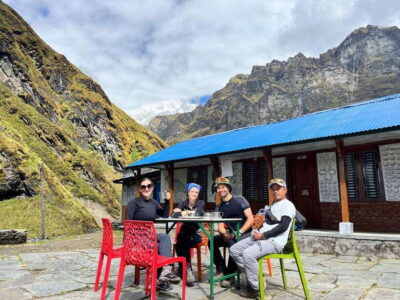
Kathmandu/Pokhara: 5-Day Annapurna Base Camp (ABC) Trek
Read our review →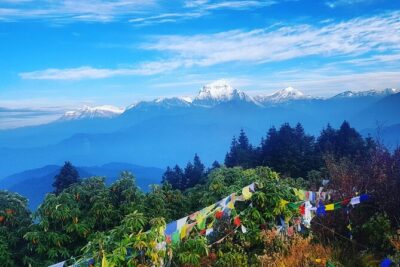
11-Day Hike Tour to Annapurna Base Camp Bliss in Kathmandu
Read our review →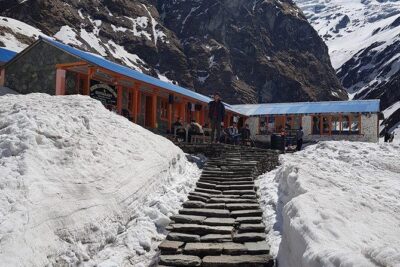
Browse the lists this tour appears in