
Reviewed · ANNAPURNA CIRCUIT TREKS
Annapurna Circuit Trek
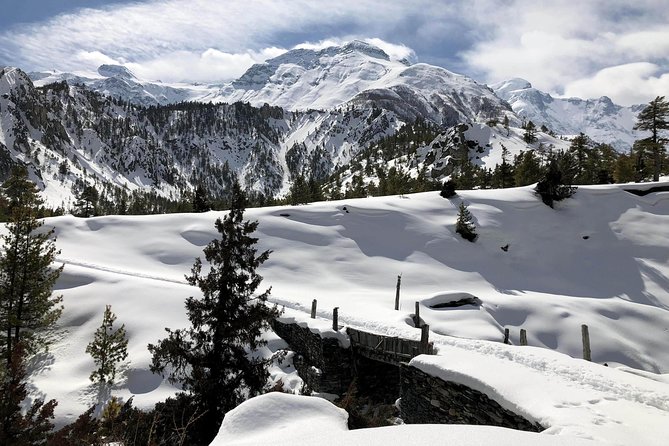
The great draw here is the Thorong La crossing at 5,416 meters, reached after days of walking beside the Marsyangdi River, through pine forests, high mountain villages, and the dry upper Manang region. You finish at Muktinath, then trade your boots for a long scenic ride toward Pokhara.
I like the smart acclimatization day in Manang and the fact that your guide, permits, meals, sleeping bag, down jacket, and duffle bag are included. I also like the human touch: past guide teams have included Shanta, Buddhi Tamang, Pawan, Indaco, Anjan, Suman, and Veer. The main caution is simple: this is a compressed itinerary with several very long days, rough-road drives, and serious altitude.
Key points to know before booking
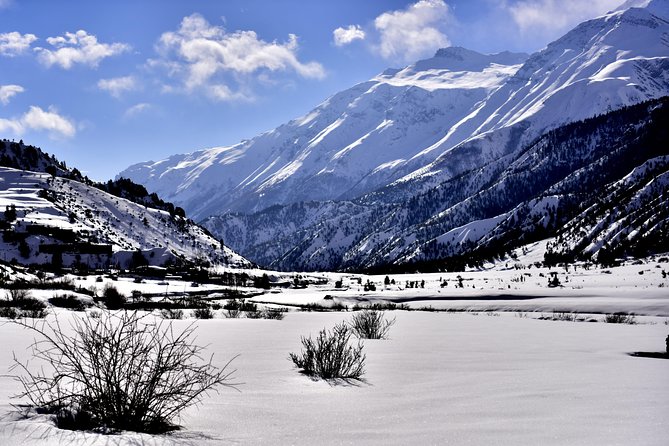
- Thorong La is the centerpiece: You reach the high pass at 5,416 meters, with prayer flags and wide Himalayan views.
- The itinerary uses road access: Drives reach Besisahar and Chame, shortening the walking route but adding long, rough overland days.
- Manang is your acclimatization base: The rest day includes the option to hike toward Gangapurna Lake.
- Tea houses keep the price reasonable: You stay in private local tea houses on a twin-sharing basis rather than high-end lodges.
- The package covers useful basics: Airport transfers, ground transport, meals during the trek, permits, a guide, sleeping bag, down jacket, and duffle bag are included.
- The schedule is physically demanding: The published days can run from 12 to 14 hours, so moderate fitness is the minimum, not a guarantee of ease.
What the $975 price really covers
At $975 per person, this is a strong-value package if you want a guided Annapurna Circuit with most core costs bundled together. You get airport pickup and drop-off, bus and jeep transport, two nights in Kathmandu with breakfast, one night in Pokhara with breakfast, a licensed guide, tea-house accommodation, meals during the trek, the Annapurna Conservation Area permit, seasonal fruit, three cups of tea per day, and basic trekking gear.
That list matters. A sleeping bag, down jacket, and duffle bag can save you from buying or renting bulky equipment before your trip. The included permit also removes one more task from your planning.
The price does not cover travel insurance, bottled water, soft drinks, beer, laundry, dessert, or tips for the trekking crew. Those extras can add up, especially on a high-altitude trek where you may want more drinks and snacks. Bring cash for personal purchases, but do not treat the $975 as an all-inclusive holiday price.
The accommodation is private local tea-house lodging with twin-sharing beds. That gives you a more direct experience of the route and keeps the cost down. It also means you should expect simple rooms rather than hotel comforts. The package is private, so only your own group takes part, which can make the pace and daily routine easier to manage.
More Annapurna Circuit Treks in Kathmandu
- Annapurna Circuit Trek with Tilicho Lake
★ 5.0 · 368 reviews - Annapurna Circuit Trek
★ 5.0 · 94 reviews - Annapurna Circuit Trek
★ 5.0 · 35 reviews
Day 1: Kathmandu arrival and a useful briefing
Your experience starts at Tribhuvan International Airport, where the company provides a transfer to your hotel. The first day is short, with hotel check-in and a group briefing about the trek and practical matters.
This is more important than it may sound. The route involves changing transport, rough roads, long walking days, and a rapid rise in altitude. Use the briefing to confirm your guide, meals, equipment, departure times, and what you will carry each day.
You have time to get settled in Kathmandu, but the itinerary does not promise a full sightseeing program. Think of this day as a landing pad for the trek, not a city tour.
Day 2: The long road to Besisahar
The drive from Kathmandu to Besisahar takes about 12 hours. You leave the Kathmandu Valley and head toward warmer, lower country, with views of villages, farmland, and snowcapped mountains along the way.
Besisahar is in Lamjung and serves as the gateway to the Annapurna Circuit. The scenery changes steadily during the drive, but the length is the real story. You will spend most of the day seated, so this is not a gentle sightseeing transfer.
I would keep your daypack organized and your water close. A long road day can feel tiring before the walking even begins. The reward is reaching the lower Marsyangdi region and positioning yourself for the mountain road toward Chame.
Day 3: Rough roads and mountain scenery on the way to Chame
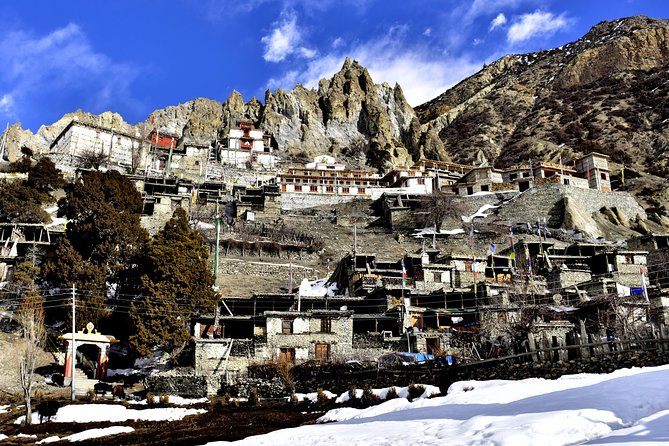
Another long transfer takes you to Chame, the headquarters of Manang district. The road is unpaved, and the drive lasts about 12 hours according to the schedule.
This is where the itinerary saves walking days, but it does not necessarily save energy. Jeep travel on rough mountain roads can be jolting and slow. You pass authentic villages, pine forests, and changing scenery as the route climbs toward the higher country.
The plan specifically warns against taking a jeep beyond Chame as a way to reach Manang faster. A four-wheel-drive vehicle can reach Manang, but going there too quickly raises the risk of altitude sickness. That is a key safety point, not a minor itinerary preference.
Same mountains, a completely different kind of day:
- Everest Base Camp Trek – 14 Days
★ 5.0 · 1,499 reviews - Private Kathmandu Sightseeing Tour | UNESCO World Heritage sites
★ 5.0 · 756 reviews - Everest Base Camp Helicopter Tour landing at Everest View Hotel
★ 5.0 · 668 reviews - Half day cooking class in Thamel kathmandu
★ 5.0 · 607 reviews
Day 4: Walking from Chame toward Manang
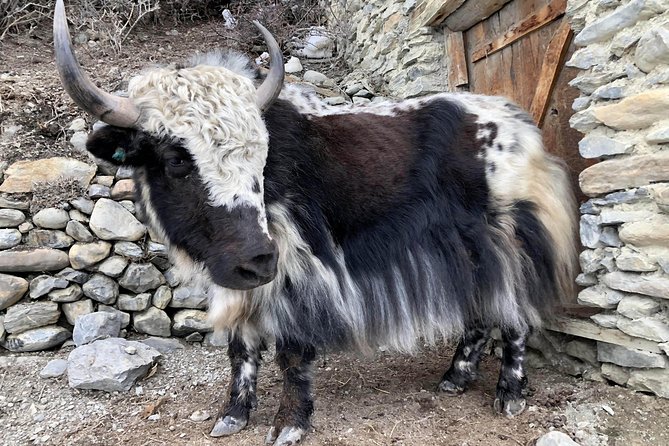
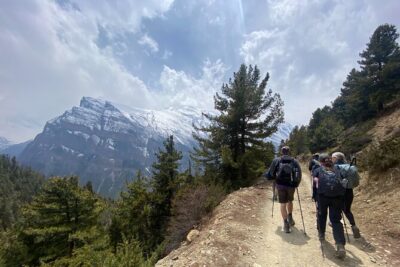
The walking section begins in earnest as you follow the Marsyangdi River upstream toward Bhratang. The route passes through alpine forest and pine trees, with the mountains becoming more immediate as you gain height.
The schedule labels Manang as the stop and gives the day about 13 hours. That is an unusually long day on paper, so confirm the actual walking and driving split with your guide. The route description suggests a demanding uphill progression through Dhu… and onward toward Manang, with the river and forest providing a steady visual thread.
This is a good day to settle into your walking rhythm. You are no longer simply looking at the mountains from a vehicle. You are moving through the valleys that make the Annapurna Circuit feel like a real journey from low country to high country.
Day 5: Pisang, Annapurna views, and slower altitude gain
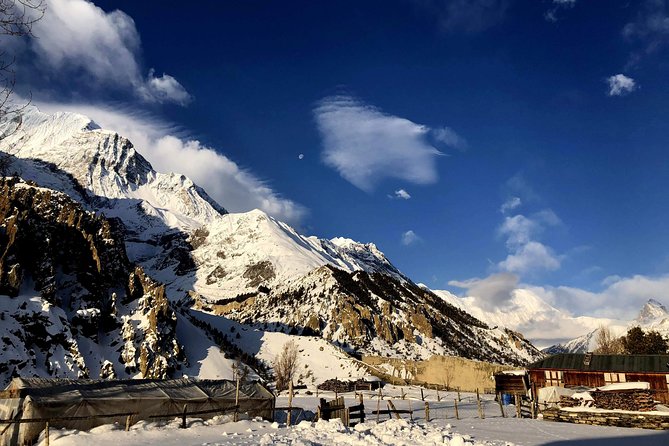
From Pisang, the route enters the Manang Valley and opens toward views of Annapurna II, Annapurna III, and Gangapurna. The altitude rises more slowly here, which is valuable before the higher stages of the trek.
The schedule again lists about 13 hours, though the actual effort will depend on the route used and the day’s walking pace. You should expect uphill sections and thinner air, even if the mountain scenery makes the work feel worthwhile.
Pisang is one of the most appealing points on the circuit because the setting changes from forested river valley to a more open mountain environment. The views become broader, and the villages feel increasingly adapted to high-altitude life.
Day 6: Acclimatization in Manang
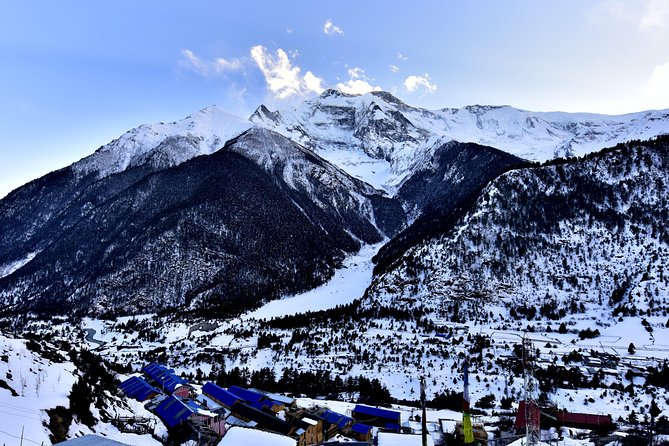
This is the most important rest day in the program. You stay in Manang before heading toward Yak Kharka and Thorong La, giving your body time to adjust to the height.
The suggested outing is a hike to Gangapurna Lake. It is a practical choice because you stay active rather than spending the entire day indoors, while still returning to Manang for the night. The lake is described as especially scenic, with the surrounding high country providing a memorable setting.
Use this day wisely. Ask your guide about the next two stages, check your clothing and sleeping bag, and keep an eye on how you feel. The package is designed for people without much risk of altitude sickness, but no short itinerary can remove that risk entirely.
Day 7: Manang to Yak Kharka
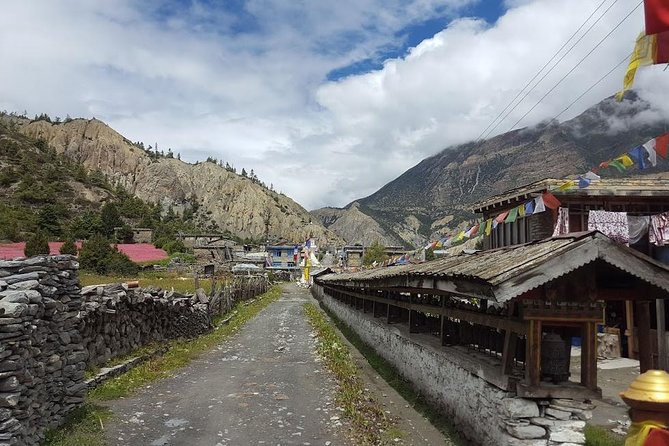
After acclimatizing in Manang, you walk to Yak Kharka. The route crosses small streams and continues through high country with views of Gangapurna and Annapurna.
The listed duration is about 14 hours, making this one of the toughest days on the schedule. Yak Kharka is a small settlement, and the appeal is the setting rather than comfort or entertainment. You are there to rest before the pass, not to find a long menu of activities.
At this point, your guide’s judgment matters. Guides assigned on past departures have included Buddhi Tamang, Shanta, Pawan, Indaco, Anjan, Suman, Veer, and Anos Tamang. The strongest practical role a guide can play here is watching your pace and condition, not simply leading the way.
Day 8: Thorong Phedi and the approach to the pass
The route moves closer to Thorong La, crossing a bridge and climbing beside the Jarjung River toward Thorong Phedi. You stop for a short rest before tackling the final climb described in the schedule.
This day is listed at about 13 hours, so you need to conserve energy from the start. The climb is not just a short mountain walk. It is the setup for the highest point of the trek, and the combination of altitude, cold, and accumulated fatigue can make each uphill section feel slow.
Thorong Phedi is a functional stopping point. Do not expect luxury. The value here is its location, allowing you to be close to the pass before the early start that follows.
Day 9: Crossing Thorong La at 5,416 meters
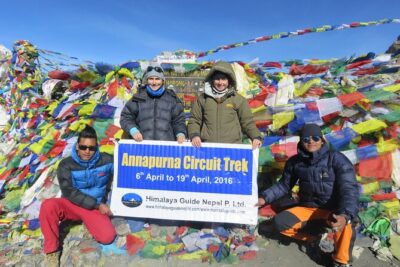
You start early and climb to Thorong La, the defining moment of the Annapurna Circuit. At 5,416 meters, the pass is marked by Buddhist prayer flags and offers broad mountain views across the high country.
The schedule gives this day about 14 hours and lists Muktinath Temple as the stop. That tells you two things: the pass crossing is demanding, and the day continues well beyond the summit. You need warm layers, water, sun protection, and a steady pace.
Muktinath adds cultural meaning to the day. It is not simply the place where the descent ends. The temple is an important destination in the region, and arriving there after the pass gives the day a strong sense of completion.
This is also the point where conditions can affect plans. The experience requires good weather, and a cancellation for poor conditions comes with a choice of another date or a full refund. That policy is reassuring, but you should still allow flexibility around your larger Nepal plans.
Day 10: The scenic but tiring ride to Pokhara
After Muktinath, you drive to Pokhara. The schedule calls this another challenging day, lasting about 14 hours, though the route becomes easier after the pass.
The road provides changing views and a chance to see more of the region without walking every mile. Still, a long vehicle day after Thorong La can feel just as tiring as a hiking day. If you prefer a slow finish, this schedule may feel rushed.
Pokhara gives you a welcome change of pace, with a hotel night and breakfast included. It is a practical place to recover before the return to Kathmandu, rather than an extended stay for exploring the city.
Day 11: Returning to Kathmandu overland
You leave Pokhara in the morning for another long overland journey to Kathmandu, with farm villages and towns along the way. The scheduled duration is about 14 hours, with arrival by afternoon noted in the description.
The gap between the stated time and arrival wording is worth clarifying before departure. Road conditions, traffic, and stops can affect the actual timing. Do not plan a fixed evening activity or a tight onward connection.
The rest of the day is free for individual activities. This can be useful for a final meal, shopping, or simply a shower and quiet rest after several demanding days.
Day 12: Airport transfer and departure
On your final day, the company transfers you from your hotel to Tribhuvan International Airport according to your international flight time. Airport pickup and drop-off are included, which is helpful after a route involving several changes of vehicle.
The itinerary describes this as the end of your time in Nepal, with the option to continue to another destination. Make sure your flight timing is clear to the operator, and keep essential documents and valuables with you rather than in your duffle bag.
Guides, group style, and what past trips reveal
This is a private activity, so your group is the only group taking part. That can be a real advantage on a demanding route. You are not locked into the pace of a large mixed party, and your guide can focus on your group’s condition and timing.
Several named guides appear in past departures, including Shanta, Buddhi Tamang, Pawan, Indaco, Anjan, Suman, Veer, and Anos Tamang. The most consistent praise centers on guides who organize the day well, check on people regularly, explain the route, and keep spirits up when conditions turn difficult.
One useful detail is that poor weather has not always ended the experience, but it can change the plan. Your guide’s flexibility matters when roads or mountain conditions do not cooperate. That said, ask who will lead your departure, since a named guide from one trip is not necessarily assigned to yours.
Fitness, altitude, and packing priorities
The operator asks for moderate physical fitness, but the schedule calls for days of 12 to 14 hours. I would treat this as a serious trek, not a casual scenic walk.
The greatest concern is altitude. The itinerary includes a rest day in Manang, but it still climbs quickly compared with a longer Annapurna Circuit route. The warning about taking a jeep directly to Manang is especially important. Faster transport does not mean safer acclimatization.
The package supplies a sleeping bag, down jacket, and duffle bag. You still need suitable walking clothing, sturdy footwear, sun protection, personal medication, and travel insurance. Sunscreen is especially important at high altitude, and one past participant specifically advised bringing it.
Who should book this Annapurna Circuit?
I would recommend this trip to someone with limited time who wants the classic Annapurna route, accepts long transport days, and prefers a guide-led private experience. It suits people who value mountain villages, changing scenery, tea-house stays, and a major high-pass achievement more than leisurely mornings.
I would hesitate to recommend it to anyone with uncertain fitness, a history of altitude problems, or a strong dislike of rough roads. A longer itinerary would give you more time to adjust and enjoy the route, while this version prioritizes efficiency.
The package is also a good fit if you want practical support without paying for a luxury trek. Meals, permits, basic gear, transport, and a licensed guide are covered, while drinks, insurance, laundry, desserts, and tips remain your responsibility.
Should you book it?
Book this Annapurna Circuit Trek if Thorong La is your main goal and you want a well-supported route at a reasonable $975. The included gear, meals, transport, and permits give the price real value, and the private format is useful on such a demanding schedule.
Before paying, confirm the exact walking hours, the assigned guide, the road conditions, and how the company handles altitude concerns. If you can manage long days and respect the need for acclimatization, this is an efficient way to reach one of Nepal’s great mountain passes. If you want a relaxed trek, choose a longer version instead.
FAQ
How long is the Annapurna Circuit Trek?
The experience is listed as approximately 12 days. The description also refers to a 10-day trek, while the provided schedule runs from arrival in Kathmandu through departure on Day 12.
What is the highest point of the trek?
The highest point is Thorong La Pass at 5,416 meters. The pass is marked by Buddhist prayer flags and offers mountain views.
Is transportation included?
Yes. Airport pickup and drop-off, bus transport, and jeep drives are included. The route includes drives from Kathmandu to Besisahar, onward toward Chame, and from Muktinath to Pokhara.
Are meals included during the trek?
Breakfast, lunch, and dinner are included during the trekking portion. Seasonal fruit and three cups of tea per day are also included. Drinks such as mineral water, beer, and Coke are not included.
Is accommodation included?
Yes. The package includes two hotel nights in Kathmandu with breakfast, one hotel night in Pokhara with breakfast, and private local tea-house accommodation during the trek on a twin-sharing basis.
What happens if the trip is canceled because of bad weather?
If poor weather causes the experience to be canceled, you will be offered a different date or a full refund. You can also cancel for a full refund if you do so at least 24 hours before the start time.
More Hiking & Trekking in Kathmandu
- Everest Base Camp Trekking
★ 5.0 · 485 reviews - Nagarkot Sunrise View and Day Hiking from Kathmandu
★ 5.0 · 471 reviews - Everest Base Camp Trekking – 13 Day
★ 5.0 · 365 reviews - Everest Base Camp Trek -14 Days
★ 5.0 · 321 reviews
Just added around Kathmandu
- Private Half-Day Tour of Boudhanath and Pashupatinath Temples in Kathmandu★ 4.5 · 9 reviews
- Private Half-Day Tour of Kathmandu Durbar Square and Swayambhunath Temple★ 4.5 · 11 reviews
- Namobuddha Monastery Hiking Day Tour via Panauti from Kathmandu★ 5.0 · 15 reviews
- Private Full-Day Kathmandu City Tour★ 5.0 · 9 reviews
- Private Day Tour in Kathmandu Valley Rim with Bhaktapur Sightseeing★ 5.0 · 3 reviews
- Private Half Day Budhanilkantha Tour★ 5.0 · 6 reviews
- Private Day Tour: Patan and Bhaktapur from Kathmandu★ 4.5 · 6 reviews
- Private Day Tour – Sacred Journey to Namo Buddha★ 5.0 · 5 reviews
Annapurna Circuit Treks, compared.
15-Day Private Annapurna Circuit Trek from Kathmandu
Read our review →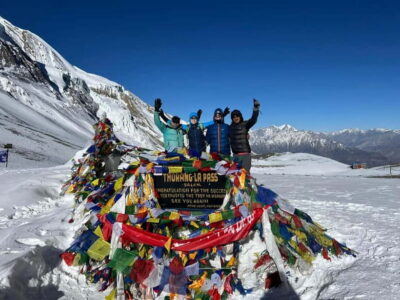
Annapurna Circuit Trek with Tilicho Lake (16 Days)
Read our review →Browse the lists this tour appears in