
Reviewed · ANNAPURNA CIRCUIT TREKS
10 Days Annapurna Circuit Trek
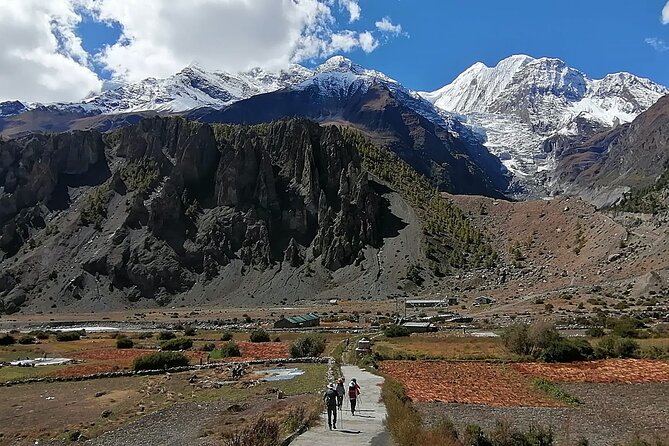
The great prize here is Thorong La Pass at 5,416 meters, reached after days of walking through pine forest, high valleys, Tibetan-style villages, and the stark Kali Gandaki Valley. This is a serious mountain trek, but it also brings you close to daily life in Manang and Mustang, far beyond a quick viewpoint stop.
I like two things right away. First, the package covers the practical basics: meals, a guide, porter support, sleeping bag, private transport, and the Jomsom to Pokhara flight. Second, the route gives you a real change of scenery, from green river valleys to dry mountain country and the sacred Muktinath area. The main caution is altitude. You will cross 5,416 meters, and the itinerary is demanding.
Key points to know
- Thorong La is the physical high point: The pass reaches 5,416 meters and requires a strenuous early climb from Thorung Phedi.
- Manang gives the trek its human side: You have time to explore the village, visit Gangapurna Lake, and see mountain life at close range.
- The scenery changes every few days: Expect forest, bridges, cliffs, snow peaks, dry Mustang, and the Kali Gandaki Valley.
- The package is fairly inclusive: Ten lunches, ten dinners, eleven breakfasts, guide and porter service, transport, a sleeping bag, and a domestic flight are included.
- Porter support is shared: One porter is assigned for every two people, so pack with that arrangement in mind.
- The schedule needs a careful pre-trip check: Some timing details are unclear, so confirm daily walking hours, overnight towns, and acclimatization plans before paying.
Why the Annapurna Circuit still earns its reputation
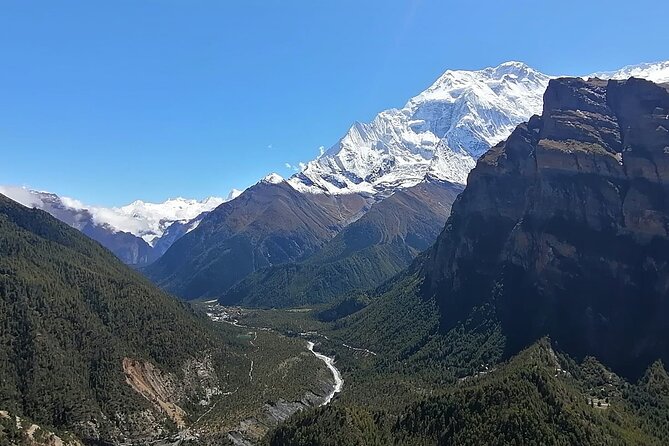
The Annapurna Circuit works because the scenery keeps changing. You do not walk through one repeated mountain setting for ten days. Instead, the route begins with a long road transfer from Kathmandu, follows the Marshyangdi River, enters forests near Chame, opens into the Manang Valley, climbs toward Thorong La, and then drops into dry Mustang.
That variety gives the trek a strong sense of progress. Each day looks and feels different. Forest shade gives way to exposed ridges. Green hills become bare rock. Buddhist and Tibetan-influenced villages replace the lower valley settlements. By the time you reach Muktinath, the route feels like a crossing between two very different parts of Nepal.
The trek is listed at $1,430 per person. That is not a bargain-basement trip, but the price covers many costly and useful parts of a Nepal trek. You get three meals each day as listed, a guide, porter service, private transport, a sleeping bag, fees and taxes, and the flight from Jomsom to Pokhara.
The value depends on what you want. If you prefer to arrange every lodge, transfer, meal, and permit detail yourself, you may find a guided package less flexible. If you want one company handling the moving parts, this price removes much of the daily fuss. It also matters that the group is capped at 15 people, a more manageable size than a large hiking party.
More Annapurna Circuit Treks in Kathmandu
- Annapurna Circuit Trek with Tilicho Lake
★ 5.0 · 368 reviews - Annapurna Circuit Trek
★ 5.0 · 94 reviews - Annapurna Circuit Trek
★ 5.0 · 35 reviews
Day 1: Kathmandu to Besisahar with a Manakamana stop
The day begins with pickup at about 7:00 am, with the official start time listed as 7:15 am. The drive from Kathmandu to Besisahar covers roughly 185 kilometers and takes about seven hours. That is a long first day, and you should think of it as a transport day rather than a walking day.
The stated first stop is Manakamana Temple. The temple adds a cultural note to what would otherwise be a long road journey. After the drive, Besisahar introduces you to the lower part of the Annapurna route, with mountain views beginning to appear.
The practical drawback is simple: road travel in Nepal can be tiring. You will want a good breakfast, water you can refill, and a small day bag with anything you need during the ride. Bottled water is not included, so budget for drinks separately.
There is also an itinerary detail worth checking. The first day says you reach Besisahar, while the next description begins much farther along near Chame. Ask the company exactly where you sleep on the first night and how the road transfer connects with the walking route.
Days 2 and 3: Forest trails, bridges, and the approach to Chame
The route climbs toward Tyanja at about 2,360 meters, then continues through forest and beside the river toward Kopar at about 2,590 meters. This is where the trek starts to feel like a proper mountain walk. The trail follows the Marshyangdi Valley, with water, trees, steep slopes, and changing views around you.
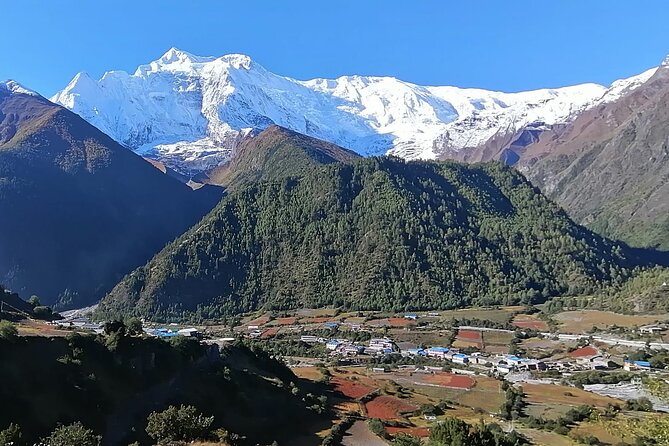
Chame is the headquarters of Manang district and is associated with views of Annapurna II. Its setting gives you the first strong sense that the mountains are becoming the main event, not simply a backdrop to the road.
The following day begins in a narrow valley with thick forest. You cross a long bridge at about 2,910 meters and another at approximately 3,040 meters. The rock face of Paungda Danda comes into view, adding a dramatic cliff section to the route.
These days are valuable because they build the trek gradually. You gain height, but you are not yet facing the pass. At the same time, the trail is not a gentle park walk. Forest paths, steep sections, bridges, and narrow valley routes require steady footing and a reasonable level of fitness.
Day 4: Pine forest and the mountain wall near Manang
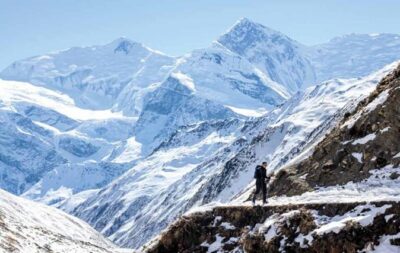
The walk continues through aromatic pine forest before opening to close views of Gangapurna, Annapurna II and III, Tilicho, Chulu East, and Pisang Peak. This is one of the strongest visual days because the high peaks begin to feel close rather than distant.
The route toward Manang also marks a change in the character of the trek. The valley opens up, the air becomes thinner, and the settlements begin to reflect the dry, high-country culture of the region. You should resist the urge to race ahead simply because the path looks inviting. The real challenge is coming later.
Manang is more than an overnight name on a schedule. It is a useful base for adjusting to altitude and for seeing how people live in a high mountain setting. The program gives you time to explore it on the next day, which is one of the best features of this itinerary.
Same mountains, a completely different kind of day:
- Everest Base Camp Trek – 14 Days
★ 5.0 · 1,499 reviews - Private Kathmandu Sightseeing Tour | UNESCO World Heritage sites
★ 5.0 · 756 reviews - Everest Base Camp Helicopter Tour landing at Everest View Hotel
★ 5.0 · 668 reviews - Half day cooking class in Thamel kathmandu
★ 5.0 · 607 reviews
Day 5: Manang village and Gangapurna Lake
This is the gentler cultural day in the middle of the trek. You explore Manang village, interact with local people, and visit Gangapurna Lake. The lake gives you a memorable mountain setting without requiring another major push toward the pass.
I like this pause because it breaks up the hard walking days. You get time to look around instead of simply eating, sleeping, and preparing for the next climb. It also gives your body a chance to adjust before the route rises higher.
The listed duration for this day says 20 hours, which is clearly not a useful walking estimate. Treat it as an itinerary error and ask for the intended schedule. More important than the exact number is whether the guide plans a proper acclimatization day in Manang.
At this point, pay attention to how you feel. Headache, unusual tiredness, nausea, or poor coordination should be reported to your guide. The pass is not a place to prove toughness. A careful guide should take altitude symptoms seriously and adjust the plan if needed.
Day 6: Manang to Yak Kharka and Ledar
Leaving Manang, the route climbs through the Marshyangdi Valley toward Gunsang, Yak Kharka, and then Ledar. The surroundings become more open and exposed, and the air feels thinner as you gain height.
This section is strenuous because the trail keeps climbing while the vegetation becomes less substantial. You will notice that even ordinary walking takes more effort. The goal is not speed. A slow pace, regular rests, and enough food matter more than arriving early.
The program says you reach Ledar before sunset. That is a useful target, since mountain paths are less forgiving late in the day. Your guide and porter arrangement should make the day easier, but you still need to carry your personal essentials, warm layers, water, and any medication you require.
Day 7: The narrow trail to Thorung Phedi
The trail follows the east bank of the Jorsang Khola toward Thorung Phedi. This is one of the more serious approach days, with narrow paths and unstable slopes. The route is not simply hard because of distance. Exposure, loose ground, and altitude add to the work.
Thorung Phedi is the overnight stop before the pass. Sleeping here puts you in position for the early climb, but it also means you are spending a night at a high point before the toughest day. Follow your guide’s instructions closely and keep your evening calm.
This is the point where the trek’s moderate fitness rating deserves a careful reading. You do not need to be an elite athlete, but you should be comfortable with several consecutive days of uphill walking and rough trails. If you rarely hike, this itinerary may feel much harder than the label suggests.
Day 8: Thorong La Pass and Muktinath
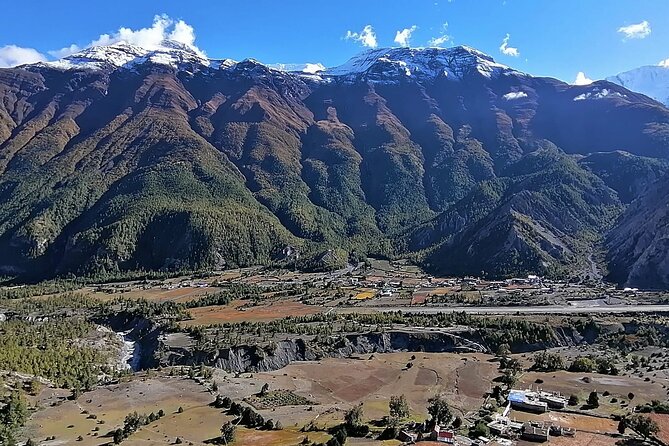
The pass day is the reason many people choose this route. You climb from Thorung Phedi over rocky ridges to Thorong La, at 5,416 meters. From the high point, you can see across toward the Dhaulagiri range.
The climb is likely to be slow and demanding. Take small steps, drink regularly, and keep your warm clothing easy to reach. The package includes a sleeping bag, but the information does not specify the full range of equipment supplied, so bring suitable trekking clothes and footwear yourself.
After reaching the pass, you descend toward Muktinath. This is not a small add-on. The day combines the highest altitude of the trek with a long descent, so it can be tiring even after the pass has been crossed.
Muktinath Temple is one of the most important religious sites in the Mustang region. Admission is not included, and the listed visit is brief, only about ten minutes. Even with limited time, the stop gives the route a strong spiritual and cultural dimension. You are not only crossing mountains. You are moving through a place important to Hindu and Buddhist traditions.
Day 9: Down the Kali Gandaki Valley
The route descends through the dramatic Kali Gandaki Valley, where the setting becomes dry and stark. You pass through Jharkot and Khingar, villages with a Tibetan character, then follow the valley floor toward Jomsom.
This day brings relief after the pass, but do not assume the work is over. Long descents can be hard on knees and ankles, especially after several days of effort. Trekking poles can be useful, though the tour information does not say that they are supplied.
The villages are part of what makes this route special. They give you a closer look at mountain settlements rather than only grand views of peaks. Take time to notice the change in building styles, terrain, and daily rhythm as you move into Mustang.
Day 10: Jomsom to Pokhara by air
After breakfast, you take a morning flight from Jomsom to Pokhara. The flight passes above the Kali Gandaki Gorge and offers views toward Dhaulagiri and the Annapurna ranges.
This is an excellent finish in principle because it avoids repeating a long overland journey. It also gives you a final aerial look at the route you have just crossed. Flights in mountain regions can be sensitive to conditions, so keep your plans in Pokhara flexible.
The day includes free time around Pokhara, with boating at Fewa Lake listed as an option. The information does not say that boating fees are included, so ask before treating it as part of the package price.
What the price covers, and what it does not
At $1,430, the package gives you a useful level of support. Included items are:
- Breakfast, lunch, and dinner as listed
- Coffee and tea
- Guide service
- One porter for every two people
- Sleeping bag
- Private transportation
- Domestic flight from Jomsom to Pokhara
- Fees and taxes
Bottled water and alcoholic drinks are extra. An air-conditioned vehicle is not included, though that is not usually the deciding issue on a mountain transfer. You should also confirm whether personal trekking gear, entry charges at Muktinath, and any optional Pokhara activity cost extra.
The shared porter arrangement is worth understanding. One porter for two people is common in guided trekking, but it means you should pack efficiently and keep your personal day bag light. Do not assume the porter carries everything you bring.
The company has used guides including Babu and Resham, and porters including Rojit. Names alone cannot guarantee who will lead your departure, so ask for your guide’s name and experience before the trek. The strongest service detail in the available feedback is repeated praise for organization, flexibility, guide care, and help when altitude became a problem.
Who should book this trek?
This trek suits you if you want a guided crossing with major mountain scenery, local villages, a high pass, and meals arranged each day. It is also a good fit if you would rather have a company manage transport and porters than build the trip piece by piece.
It is less suitable if you want a relaxed holiday or a short scenic walk. Ten days is a compressed schedule for a route with a 5,416-meter pass, and the itinerary details should be clarified before booking. Ask specifically about the first night, daily walking hours, the Manang acclimatization plan, and what happens if altitude symptoms appear.
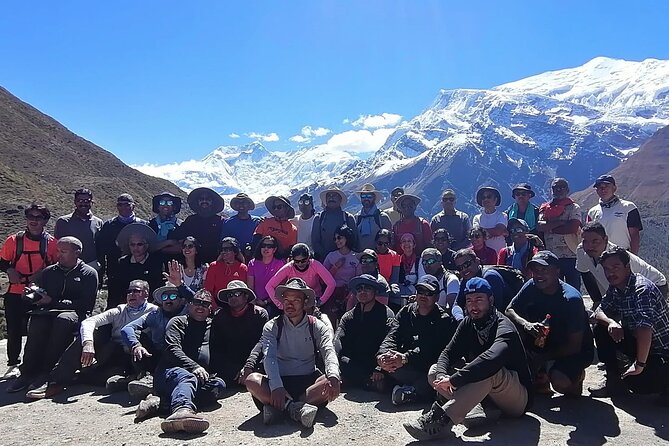
The maximum group size of 15 keeps the trip from becoming enormous, but it is not a private trek. If you need a very slow pace or one-to-one support, ask about a private departure.
Cancellation is free if you cancel at least 24 hours before the start time. Changes or cancellations inside that window are not accepted for a refund.
Should you book the 10-day Annapurna Circuit Trek?
Book it if you want a well-supported, high-altitude trek with a strong mix of nature and local culture, and if you are prepared for long walking days. The included meals, guide, porter, sleeping bag, transport, and Jomsom flight make the $1,430 price reasonable for a packaged experience.
Before you commit, get the daily schedule in writing. The unclear first-day transfer and incorrect 20-hour entry on Day 5 need cleaning up. If the company confirms a sensible acclimatization plan and explains its altitude procedures, this can be a practical way to tackle one of Nepal’s great mountain crossings.
FAQ
Where does the Annapurna Circuit Trek start?
The activity starts at Himalayan Trekking and Tours on Yapikhya Marg 17 in Kathmandu, Nepal. Pickup is listed for around 7:00 am, with a start time of 7:15 am.
How long is the trek?
The experience lasts approximately 10 days. The route covers about 160 to 230 kilometers, or roughly 100 to 145 miles, depending on the exact path and transport sections.
What is the highest point of the trek?
The highest point is Thorong La Pass, which reaches 5,416 meters.
Is a guide included?
Yes. Guide service is included in the price. Guides associated with the company have included Babu and Resham.
Is porter service included?
Yes. One porter is assigned for every two people.
Are meals included?
Yes. The package includes breakfast, lunch, and dinner as listed, along with coffee and tea. It specifies 11 breakfasts, 10 lunches, and 10 dinners.
Is the flight to Pokhara included?
Yes. The domestic flight from Jomsom to Pokhara is included.
Is the visit to Muktinath Temple included?
The stop at Muktinath Temple is part of the route, but admission is listed as not included.
Is bottled water included?
No. Bottled water is not included. Alcoholic drinks are also excluded.
How fit do I need to be?
You should have a moderate level of physical fitness. The route includes strenuous climbs, narrow trails, unstable slopes, and a high-altitude crossing at Thorong La Pass.
What is the cancellation policy?
You can cancel for a full refund up to 24 hours before the experience start time. Cancellations or changes made less than 24 hours before the start are not accepted for a refund.
More Hiking & Trekking in Kathmandu
- Everest Base Camp Trekking
★ 5.0 · 485 reviews - Nagarkot Sunrise View and Day Hiking from Kathmandu
★ 5.0 · 471 reviews - Everest Base Camp Trekking – 13 Day
★ 5.0 · 365 reviews - Everest Base Camp Trek -14 Days
★ 5.0 · 321 reviews
Just added around Kathmandu
- Private Half-Day Tour of Boudhanath and Pashupatinath Temples in Kathmandu★ 4.5 · 9 reviews
- Private Half-Day Tour of Kathmandu Durbar Square and Swayambhunath Temple★ 4.5 · 11 reviews
- Namobuddha Monastery Hiking Day Tour via Panauti from Kathmandu★ 5.0 · 15 reviews
- Private Full-Day Kathmandu City Tour★ 5.0 · 9 reviews
- Private Day Tour in Kathmandu Valley Rim with Bhaktapur Sightseeing★ 5.0 · 3 reviews
- Private Half Day Budhanilkantha Tour★ 5.0 · 6 reviews
- Private Day Tour: Patan and Bhaktapur from Kathmandu★ 4.5 · 6 reviews
- Private Day Tour – Sacred Journey to Namo Buddha★ 5.0 · 5 reviews
Annapurna Circuit Treks, compared.
15-Day Private Annapurna Circuit Trek from Kathmandu
Read our review →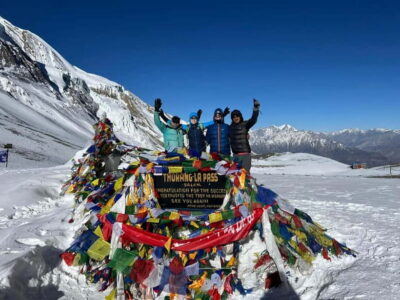
Browse the lists this tour appears in