
Reviewed · ANNAPURNA BASE CAMP TREKS
Annapurna Base Camp Trek – 11 Days
Annapurna Base Camp is the reward at the end of a superb Himalayan route, but the route earns its place long before you reach the snow and moraine. You move from river valleys and terraced farms to rhododendron forest, stone stairways, mountain villages, hot springs, and the great peaks of the Annapurna and Dhaulagiri ranges.
I like the Poon Hill sunrise and the chance to pair it with the base camp trek rather than choose between them. I also like the practical inclusions: a guide, permits, meals, guesthouse stays, sleeping bag, down jacket, first-aid kit, and an oxygen monitor are all covered.
The main concern is the pace. This is an 11-day walking trip with repeated uphill and downhill sections, early starts, and a high point at Annapurna Base Camp. You need moderate fitness, and the itinerary should be checked carefully because several days involve similar villages and trail sections on the return.
Key points to know before booking
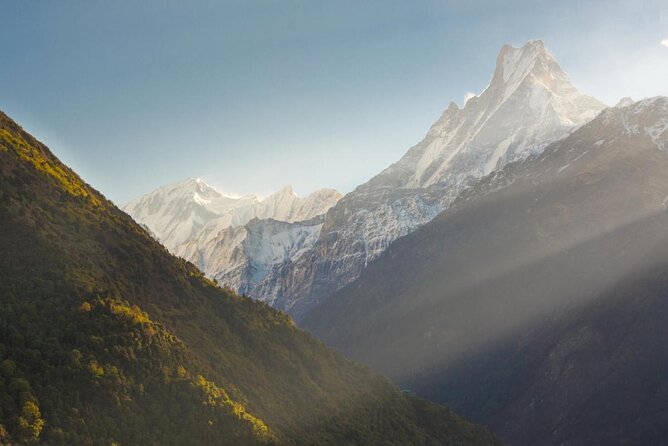
- Poon Hill sunrise comes early: You climb from Ghorepani before breakfast for views of Annapurna, Dhaulagiri, Nilgiri, and Lamjung Himal.
- The route mixes scenery and culture: Expect terraced farms, suspension bridges, ethnic villages, rhododendron woods, orchids, ferns, and mountain lodges.
- Annapurna Base Camp reaches 4,130 meters: Machhapuchhre Base Camp is listed at 3,700 meters, so altitude and cold become more serious near the end.
- A private trip gives your group its own guide: Past departures have included guides named Prakash, Shiva, Naba, and Saroj Dhakal.
- The $986 price covers a lot: Transport from and back to Kathmandu, permits, food, accommodation, staff costs, basic gear, and medical support are included.
- You return by the same general valley system: The trek includes descents, stairways, Jhinu Danda hot springs, Nayapul, Pokhara, and a final bus ride to Kathmandu.
Why this Annapurna route works so well
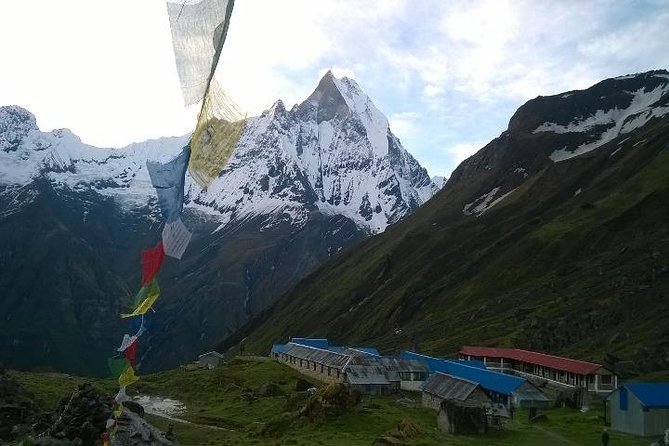
I like this trek because it gives you several different Nepal experiences in one trip. You are not simply walking toward a single viewpoint. The route starts with ordinary life along the Prithvi Highway, then gradually trades roads and towns for footpaths, forests, suspension bridges, and high mountain scenery.
The cultural side is just as important as the peaks. You pass through local villages and stay in the best available guesthouses, mainly in twin rooms. That means the trip has a practical, village-based feel rather than the polish of a resort holiday.
The route also has a satisfying rhythm. Poon Hill gives you an early taste of Himalayan views, Jhinu Danda adds hot springs, and the final climb to base camp brings the biggest scenery. These stops break up the physical effort and make the trek feel like a journey instead of eleven identical walking days.
This is a private activity, so only your own group takes part. That matters if you want to move at your group’s pace or prefer to ask your guide more questions along the way. The exact guide depends on the departure, but named guides connected with past trips include Prakash, Shiva, Naba, and Saroj Dhakal.
More Annapurna Base Camp Treks in Kathmandu
- Annapurna base camp trek 5 Days
★ 5.0 · 252 reviews - Annapurna Base Camp Trek
★ 5.0 · 111 reviews - Kathmandu to Annapurna Base Camp (ABC) 5-Day Trek
★ 5.0 · 102 reviews
Day 1: Kathmandu to Pokhara beside the Prithvi Highway
The trip begins early, with a 6:15 am start in Kathmandu. After breakfast, you take a tourist bus toward Pokhara along the Prithvi Highway.
This is not a flight or a quick private transfer. You spend the day moving through river scenery, terraced farms, villages, and towns. The long road journey can be tiring, but it gives you a useful sense of Nepal beyond the capital. You see how quickly the built-up Kathmandu Valley gives way to farmland and mountain foothills.
Pack snacks and water where you can, and expect the road transfer to take a large part of the day. The program describes a tourist bus, not a luxury coach, so comfort and traffic conditions may vary. This is one of the less glamorous days, but it is part of the overland connection that keeps the tour price below many fully private trekking packages.
Day 2: Nayapul, Birethanti, and the first walking trails
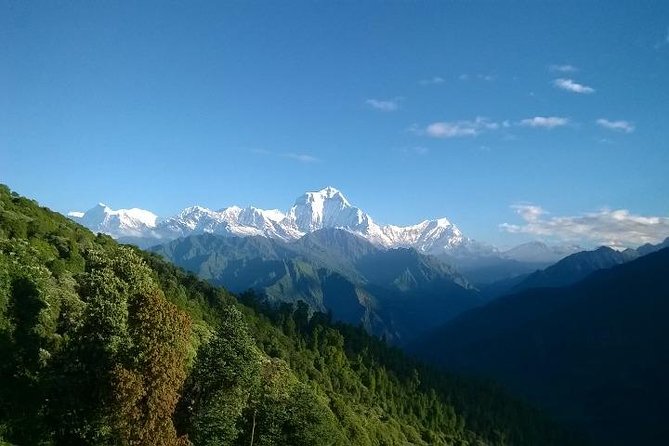
From Pokhara, you drive about two hours to Nayapul. The trek starts by crossing a suspension bridge over the Modi River and continuing toward Birethanti.
This first walking day introduces the basic pattern of the trip: river crossings, village paths, forest sections, and steady changes in elevation. You are no longer watching Nepal through a bus window. You are walking through it, with the trail connecting farms and settlements at a slower pace.
The day is a useful test of your boots and your fitness. If your pack feels too heavy here, tell your guide early. The company provides a duffel bag, but you are still responsible for personal trekking equipment and any items you choose to carry.
Day 3: Rhododendron forest on the way to Ghorepani
The route continues through thick rhododendron forest, with Banthanti and Nangethanti along the way. You climb stone stairs toward Ghorepani, a well-known stop on the Annapurna route.
This is one of the prettiest walking days, especially when the forest is in flower. Orchids and ferns appear in later sections, while the rhododendron woods give the trail a cool, enclosed feel. The greenery also softens the climb, though the stone stairs still demand steady legs.
Ghorepani is important because it sets up the next morning’s sunrise walk. You should not treat this as a relaxed overnight stop. The Poon Hill climb begins early, and a good night’s sleep matters more than a late meal or long conversation in the lodge.
Same mountains, a completely different kind of day:
- Everest Base Camp Trek – 14 Days
★ 5.0 · 1,499 reviews - Private Kathmandu Sightseeing Tour | UNESCO World Heritage sites
★ 5.0 · 756 reviews - Everest Base Camp Helicopter Tour landing at Everest View Hotel
★ 5.0 · 668 reviews - Half day cooking class in Thamel kathmandu
★ 5.0 · 607 reviews
Day 4: Poon Hill sunrise, then the trail toward Tadapani
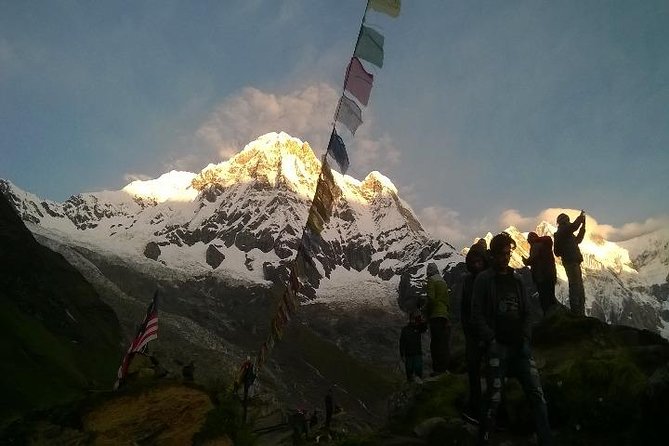
The early climb to Poon Hill is one of the signature moments of the trip. The trail can be snowy, and you climb before dawn to see the first light reach Annapurna and Dhaulagiri.
The listed views include Nilgiri at 7,061 meters and Lamjung Himal at 6,983 meters. Mountain visibility depends on weather, so the sunrise is never guaranteed. Still, the early start gives you the best chance of seeing the peaks before clouds build later in the day.
After Poon Hill, you continue through forest and mountain villages. The morning combines a short, intense climb with a longer walking day, so it can feel demanding. I would keep breakfast simple, carry water, and avoid packing your morning with extra plans.
Day 5: Stone stairways, Kimrong Khola, and Jhinu Danda
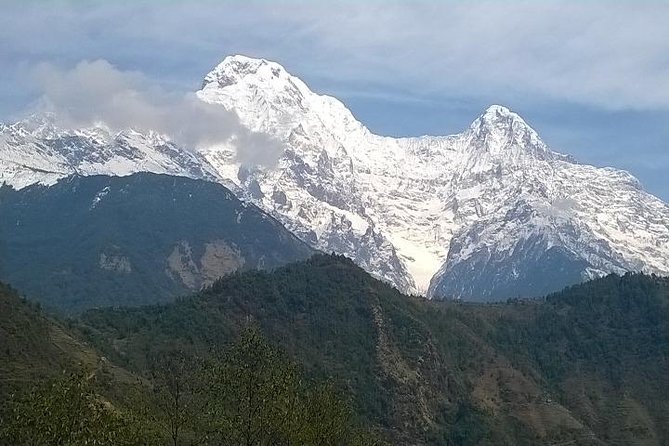
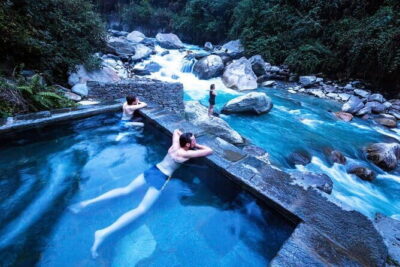
The trail rises and falls through forest before crossing the suspension bridge over Kimrong Khola. You then reach Jhinu Danda, known for its hot spring.
The hot spring is a welcome change from another viewpoint or temple stop. After several days on stone steps, sitting in warm water gives your legs a break. Bring a swimsuit and keep your valuables secure, since the experience is outdoors and the walk to the spring forms part of the day.
The route description places Jhinu Danda in this part of the trek, but later days also return through Jhinu and nearby villages. Ask your guide for the exact overnight stop and walking distance at the start of the day. That small clarification will help you understand where you are in the overall route.
Day 6: Forest trails, Chhomrong Khola, and Sinuwa
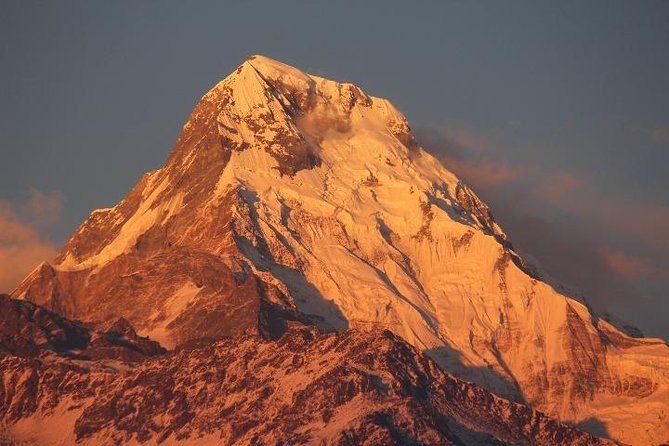
This is described as an easier walk through rhododendron forest, with orchids and ferns along the trail. You descend stone stairs, cross Chhomrong Khola, and climb again toward Sinuwa.
The repeated changes in direction are typical of the Annapurna foothills. A downhill section does not always mean an easy day, because every descent may be followed by another staircase. Trekking poles can be useful here, though personal trekking equipment is not included.
Sinuwa is part of the approach to the higher valley. From this point, the forest begins to feel more remote, and the route follows the Modi Khola corridor toward the base camp. Keep your layers accessible. Weather can change quickly as you gain altitude.
Day 7: Deurali, Machhapuchhre Base Camp, and the high valley
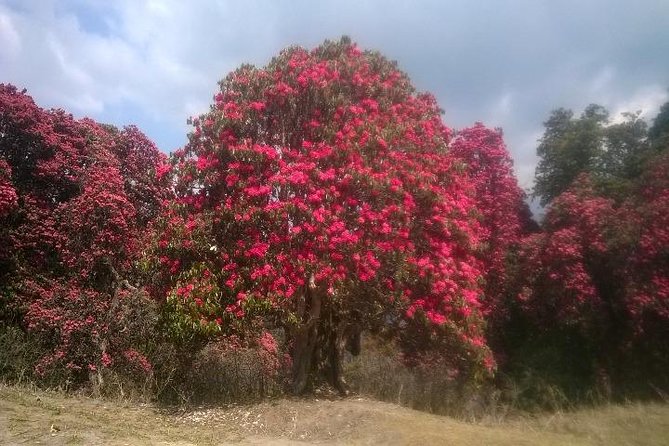
You climb toward Deurali on stone stairs, then continue to Machhapuchhre Base Camp at 3,700 meters. The setting changes sharply here, with open views of snow-covered peaks and a more rugged route beside the moraines.
This is where the trek becomes a serious high-altitude walk. The air may feel thinner, the nights colder, and the trail less forgiving. Your guide carries an oximeter to check pulse, oxygen saturation, and heart rate, which is a useful safety measure, though it cannot replace attention to symptoms.
The program then follows the moraine route toward Annapurna Base Camp. Keep your pace slow and even. You gain little by racing ahead, especially when the whole group must stay together.
Day 8: Annapurna Base Camp and the return through Modi Khola
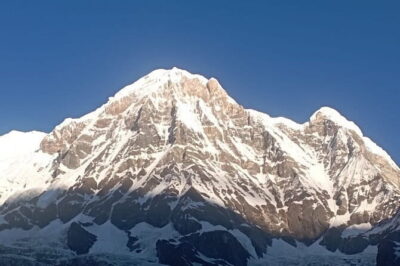
The route reaches Annapurna Base Camp after following the moraine system. This is the central goal of the trek, with snowy peaks surrounding the high valley.
The experience is less about a single activity than about the setting. You have moved from subtropical forest and village paths into a bowl of high mountain rock, ice, and snow. The contrast is the payoff. Take time for photographs, but also protect your hands, face, and camera batteries from the cold.
The return begins by descending toward Machhapuchhre Base Camp and then following Modi Khola through rhododendron and fir forest. This is a long day in reverse, and descending can be hard on knees and toes. Good socks and properly fitted footwear matter here.
Day 9: Chhomrong, Jhinu Danda, and another hot spring chance
The route climbs through forest toward Sinuwa, descends to Chhomrong Khola, and then climbs the stone stairs to upper Chhomrong. From there, you descend to Jhinu Danda and have another chance to use the hot spring.
This day includes a lot of up-and-down walking. It may look easier on paper because you are returning from base camp, but tired legs can make the stairways feel longer than they did on the way up.
The repeat visit to Jhinu Danda is practical rather than wasteful. It gives you a familiar rest point after the high section and breaks up the return journey. If the weather or trail conditions change the schedule, your guide may adjust the exact overnight location.
Day 10: Descend to Nayapul, then return to Pokhara
The final trek day follows the Modi Khola toward Nayapul. You pass back through the lower scenery of farms, villages, and river valleys before taking transport to Pokhara.
After the high mountains, the lower trail can feel warm and busy. It also brings a clear sense of progress because the route shifts from remote footpaths to roads and regular transport. In Pokhara, you have the evening to rest or explore, though the schedule does not promise a particular sightseeing activity.
This is a good night to organize luggage before the final bus ride. Keep documents, phones, chargers, and any essential medication in your day bag rather than in checked or stored luggage.
Day 11: Pokhara to Kathmandu by tourist bus
The last day begins early with the drive back to Kathmandu. The same highway scenery returns: greenery, villages, rivers, farms, and roadside towns.
The bus journey is a practical finish, not a grand finale. You arrive back at the original meeting point in Kathmandu, and the activity ends there. Since road travel can be affected by traffic and weather, avoid booking an important flight or tightly timed connection immediately after the scheduled arrival.
What the $986 price really covers
At $986 per person, the price is strong if you want a guided trek with many major costs bundled together. You receive surface transfers from and to Kathmandu, trekking permits and entry fees, guesthouse accommodation, a route map, an English-speaking licensed guide, and support costs for the trekking staff.
Food is also included: 10 breakfasts, nine lunches, and eight dinners. The meal count reflects the structure of the trip, but drinks are not included. Alcohol, hot and cold drinks, laundry, international airfare, airport departure tax, personal gear, insurance, and staff tips are extra.
The equipment package is useful. You receive a down jacket, sleeping bag, and duffel bag, plus access to first-aid supplies and an oxygen monitor. You should still bring your own boots, clothing layers, personal hygiene items, and any trekking accessories you prefer.
The strongest value comes from the staff costs being covered, including food, accommodation, salary, insurance, equipment, medicine, and transport for the trekking team. That makes the package easier to budget than a low headline price that adds major charges later.
Who should book this trek
I would consider this trip if you want a classic Nepal trek with a guide and a private group, but do not want to arrange every permit, meal, lodge, and transfer yourself. It suits someone who values scenery and local village life as much as reaching the base camp sign.
You should be comfortable with long walking days, stone stairways, early mornings, and changing weather. The stated requirement is moderate physical fitness, but the high point and repeated climbs make this more than a casual holiday walk.
Solo visitors can join as a private booking, but the price and exact arrangements should be confirmed for one person. Named guides from past trips include Prakash, Shiva, Naba, and Saroj Dhakal, yet you should ask who is assigned to your departure and how many porters or support staff are planned.
The experience may not suit you if you need fixed meal choices, private rooms, luxury transport, or a short walking schedule. Guesthouses are the best available along the route and mainly use twin sharing, so this is a practical trekking trip rather than a comfort-first tour.
Booking confirmation is provided at the time of purchase. You can cancel for a full refund up to 24 hours before the local start time, but late cancellations and late changes are not accepted. Poor weather can also cancel the trip, in which case you are offered another date or a full refund.
Should you book the Annapurna Base Camp Trek?
Book it if you want a well-supported route that combines Poon Hill, Annapurna Base Camp, forest villages, and Jhinu hot springs in one 11-day plan. The included permits, meals, gear, guide, staff support, and Kathmandu transfers make $986 a reasonable package price.
Before paying, confirm the exact daily distances, overnight villages, assigned guide, room arrangements, and transport schedule. If you accept basic guesthouses and demanding stairways, this is a strong choice for a first guided Himalayan trek. If you want an easy holiday, choose something shorter and lower.
FAQ
Where does the Annapurna Base Camp Trek start and finish?
The activity starts in Kathmandu at 6:15 am and ends back at the meeting point in Kathmandu after the return from Pokhara.
How long does the trek last?
The complete experience lasts approximately 11 days, including bus transfers between Kathmandu and Pokhara and the walking route from Nayapul to Annapurna Base Camp.
Is transportation from Kathmandu included?
Yes. Surface transfers from and to Kathmandu are included. The itinerary uses tourist buses between Kathmandu and Pokhara, plus road transport between Pokhara and Nayapul.
What meals are included?
The package includes 10 breakfasts, nine lunches, and eight dinners. Alcoholic drinks, hot drinks, cold drinks, and laundry are not included.
Is trekking equipment provided?
A down jacket, sleeping bag, duffel bag, first-aid medical kits, and an oxygen monitor are included. Personal trekking equipment is not included.
What happens if bad weather cancels the trek?
This experience requires good weather. If poor weather causes cancellation, you are offered a different date or a full refund.
More Hiking & Trekking in Kathmandu
- Everest Base Camp Trekking
★ 5.0 · 485 reviews - Nagarkot Sunrise View and Day Hiking from Kathmandu
★ 5.0 · 471 reviews - Annapurna Circuit Trek with Tilicho Lake
★ 5.0 · 368 reviews - Everest Base Camp Trekking – 13 Day
★ 5.0 · 365 reviews
Just added around Kathmandu
- Private Half-Day Tour of Boudhanath and Pashupatinath Temples in Kathmandu★ 4.5 · 9 reviews
- Private Half-Day Tour of Kathmandu Durbar Square and Swayambhunath Temple★ 4.5 · 11 reviews
- Namobuddha Monastery Hiking Day Tour via Panauti from Kathmandu★ 5.0 · 15 reviews
- Private Full-Day Kathmandu City Tour★ 5.0 · 9 reviews
- Private Day Tour in Kathmandu Valley Rim with Bhaktapur Sightseeing★ 5.0 · 3 reviews
- Private Half Day Budhanilkantha Tour★ 5.0 · 6 reviews
- Private Day Tour: Patan and Bhaktapur from Kathmandu★ 4.5 · 6 reviews
- Private Day Tour – Sacred Journey to Namo Buddha★ 5.0 · 5 reviews
Annapurna Base Camp Treks, compared.
Kathmandu to Annapurna Base Camp (ABC) 5-Day Trek
Read our review →
Kathmandu/Pokhara: 5-Day Annapurna Base Camp (ABC) Trek
Read our review →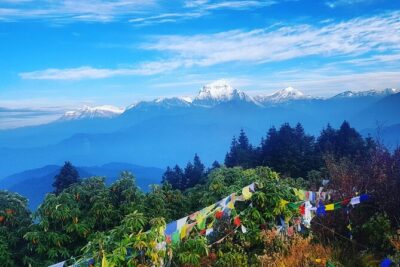
11-Day Hike Tour to Annapurna Base Camp Bliss in Kathmandu
Read our review →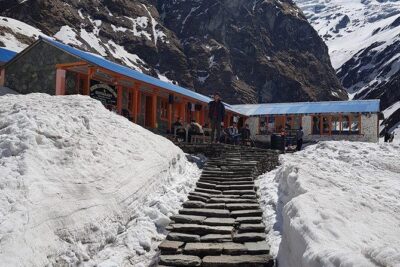
Browse the lists this tour appears in