
Reviewed · ANNAPURNA BASE CAMP TREKS
Annapurna Base Camp Trek 10 Days
Annapurna Base Camp gives you a rare mountain journey with a clear finish line: the amphitheater of peaks at 4,130 meters. Over 10 days, you move from Kathmandu and Pokhara into Gurung and Magar villages, rhododendron country, stone stairways, river valleys, and high mountain ground.
I like two things right away. First, the trip includes the unglamorous but costly pieces, such as permits, meals, a porter, a sleeping bag, and a down jacket. Second, guides Sudam and Ganesh are repeatedly named for attentive care, good humor, and solid support. The main drawback is the pace: several days run six to eight hours, and the endless steps near Chhomrong are not a small detail.
Key points at a glance
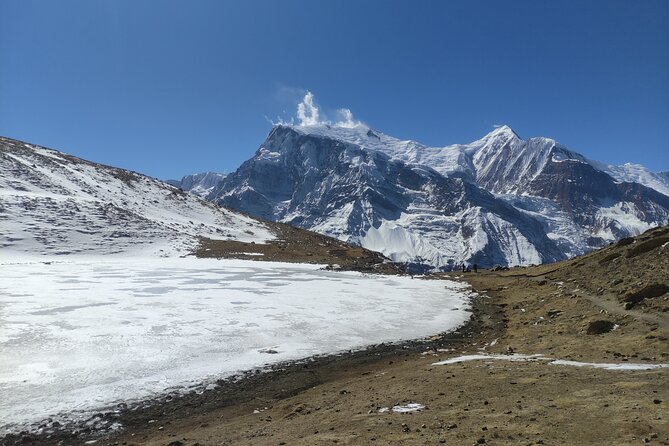
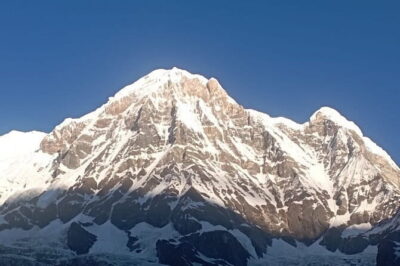
- Annapurna Base Camp at 4,130 meters: The trek ends beneath Annapurna I, Machhapuchhre, and other major peaks.
- A useful support package: A licensed guide, porter service, ACAP permit, TIMS card, meals, sleeping bag, and down jacket are included.
- Strong guide team: Sudam and Ganesh are named as experienced, attentive guides, with past groups ranging from teenagers to people in their late fifties.
- A real mix of scenery: You move through villages, forest, river valleys, stone steps, and bare high-altitude terrain.
- Two nights in Pokhara: You get one rest and sightseeing day after the trek, which helps soften the return to city life.
- Moderate fitness is required: The schedule includes steep climbs, long descents, and days of up to eight hours.
Why Annapurna Base Camp is such a good first Himalayan trek
Annapurna Base Camp is one of Nepal’s most approachable major trekking goals. You do not need a technical climbing background, but you do need to be ready for sustained walking at altitude. The trail takes you into serious mountain country without asking you to summit a peak.
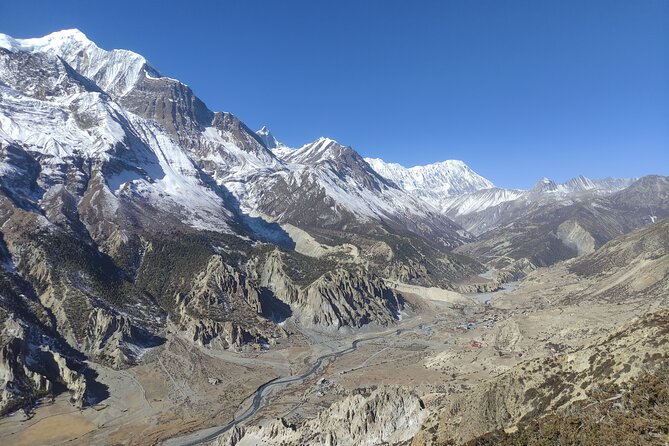
The reward is visual variety. Lower sections bring green hills, forest, farms, and traditional villages. Higher up, trees thin out and the route opens toward huge walls of rock and snow. At Base Camp, the feeling is less about a single viewpoint and more about being surrounded by mountains on every side.
The cultural side matters, too. Ghandruk and the villages along the route are home to Gurung and Magar communities. You are not simply walking through scenery. You are passing through lived-in mountain settlements, where the route connects homes, lodges, fields, and old footpaths.
At $996 per person, the price needs to be judged as a package rather than as a simple walking tour. You receive airport pickup and hotel transfer, Kathmandu sightseeing by private vehicle, transport between Kathmandu and Pokhara, a licensed guide, porter support, permits, meals, basic cold-weather gear, guide and porter costs, and a first aid kit.
That is meaningful value for a guided Himalayan trek. The price does not cover every possible personal expense, and emergency rescue is covered by your own travel insurance rather than by the operator. Still, the included services remove many of the costs and planning chores that can catch first-time trekkers off guard.
More Annapurna Base Camp Treks in Kathmandu
- Annapurna base camp trek 5 Days
★ 5.0 · 252 reviews - Annapurna Base Camp Trek
★ 5.0 · 111 reviews - Kathmandu to Annapurna Base Camp (ABC) 5-Day Trek
★ 5.0 · 102 reviews
Day 1: Kathmandu to Pokhara by tourist bus
The trip begins at 8:15 in the morning from The Great Adventure Treks and Expedition office on Chhusya Galli in Kathmandu. Airport pickup and transfer to your hotel are included, along with Kathmandu sightseeing by private vehicle as part of the wider program.
The bus ride to Pokhara takes about six to seven hours. It is not a quick transfer, but it gives you a gradual change from the capital to the hill country. The route is described as scenic, and Pokhara is a worthwhile base, with mountain views and access to lakes and outdoor activities.
A practical point: this is a full first day. You should not expect much trekking after arrival. The value is in getting into position for the trail while avoiding the cost of a separate domestic flight.
Day 2: Ghandruk, a mountain village with character
After breakfast, you drive from Pokhara to Ghandruk for roughly three to three and a half hours. At about 1,940 meters, Ghandruk gives you an early taste of highland village life without beginning the trek at the highest elevations.
The village is largely associated with Gurung culture, and its position offers impressive views toward Annapurna South, Hiunchuli, Machhapuchhre, and Gangapurna. This is one of the more appealing parts of the route because the cultural setting and mountain scenery arrive together.
The drawback is that the drive is rougher and slower than a normal city transfer may be. You are trading comfort for access to the trail. That is a fair exchange, but pack anything you need during the ride where you can reach it.
Day 3: Ghandruk to Chhomrong and the first hard steps
The route from Ghandruk begins with an uphill walk of about an hour to Kimrungdanda. This section is a good preview of the trek’s basic rhythm: climb, pause for views, then continue along a trail that repeatedly changes height.
From Kimrungdanda, the views include Annapurna South, Hiunchuli, Machhapuchhre, and Gangapurna. These are not distant decorations. They help you see the scale of the country you are entering, even before you reach the high base camp.
Chhomrong is reached after about six hours of trekking. The village is an important point on the route and a useful place to settle into the walking schedule. The day is not the highest or longest, but the uphill work makes it a proper trekking day.
Same mountains, a completely different kind of day:
- Everest Base Camp Trek – 14 Days
★ 5.0 · 1,499 reviews - Private Kathmandu Sightseeing Tour | UNESCO World Heritage sites
★ 5.0 · 756 reviews - Everest Base Camp Helicopter Tour landing at Everest View Hotel
★ 5.0 · 668 reviews - Half day cooking class in Thamel kathmandu
★ 5.0 · 607 reviews
Day 4: Stone stairs, the Chhomrong Khola, and Himalayan Hotel
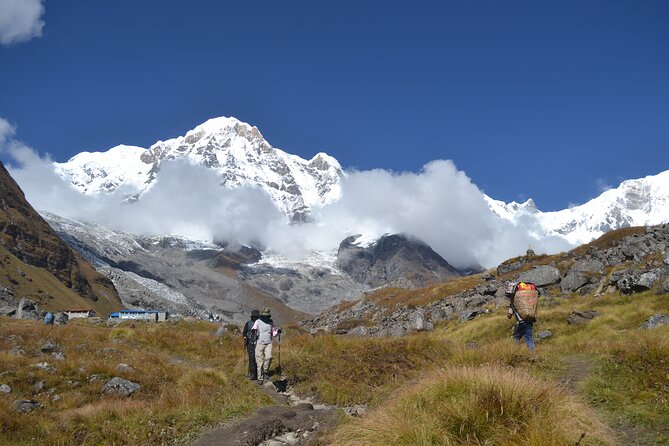
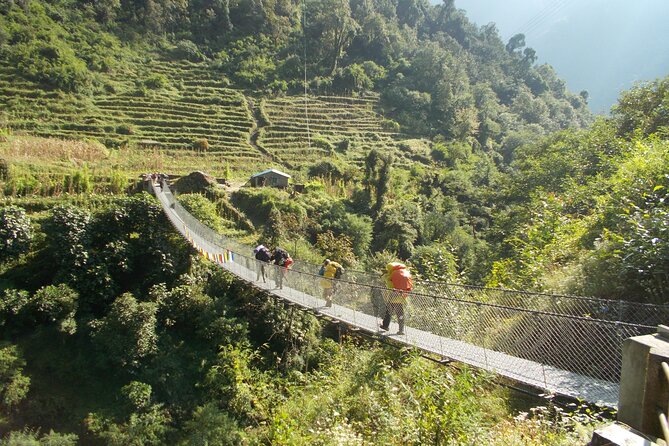
Day 4 brings one of the route’s signature challenges. From Chhomrong, you descend through thousands of steps toward the Chhomrong Khola. You then cross a suspension bridge before climbing again toward Khuldighar at about 2,380 meters.
This up and down pattern can be harder than a steady climb. Your legs lose height, then have to regain it. The route passes through forest, and the changing vegetation helps break up the effort. The day ends at The Himalayan Hotel after about seven hours.
I would pay close attention to your knees here. Trekking poles can be useful, although the provided equipment specifically lists a sleeping bag and down jacket rather than poles. The long stair sections reward a patient pace. Trying to race the first half can make the final climb unpleasant.
Day 5: Machhapuchhre Base Camp to Annapurna Base Camp
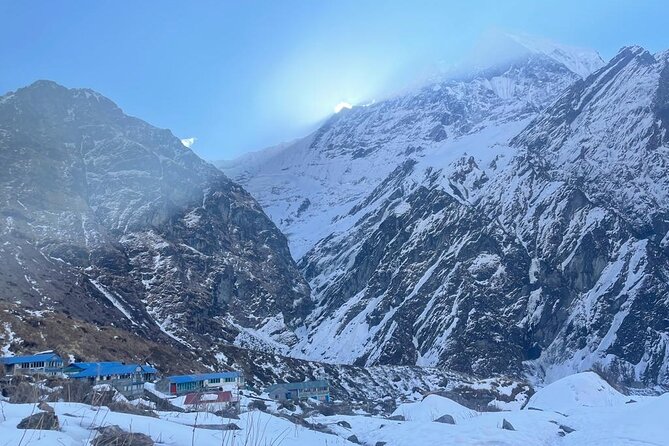
This is the central day of the experience. From the Himalayan Hotel, it is about an hour to Deurali. The route then follows a riverbed before climbing steeply toward Bagar and continuing toward Machhapuchhre Base Camp.
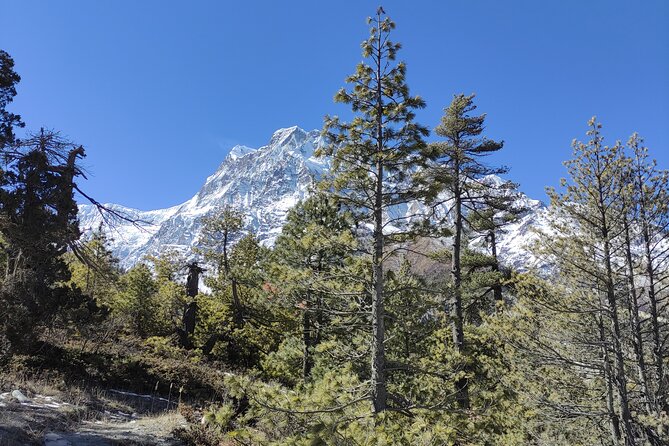
The scenery changes as you gain height. Forested ground, a major feature of the lower ABC route, gradually fades away. Near Machhapuchhre Base Camp, the setting becomes more open and severe, with rock, snow, and high mountain air taking over.
From Machhapuchhre Base Camp, you continue to Annapurna Base Camp. The final section is not simply a walk to a sign. It takes you into a natural bowl surrounded by the Annapurna massif, with Annapurna I and Machhapuchhre among the major peaks in view.
The listed trekking time is about six hours, but the altitude can make this day feel longer than the clock suggests. Move steadily, drink what you can, and listen carefully to your guide. Sudam and Ganesh are specifically praised for watching over group members and handling different needs, including dietary requests and varied ages.
Day 6: Sunrise at Base Camp and the long return to Bamboo
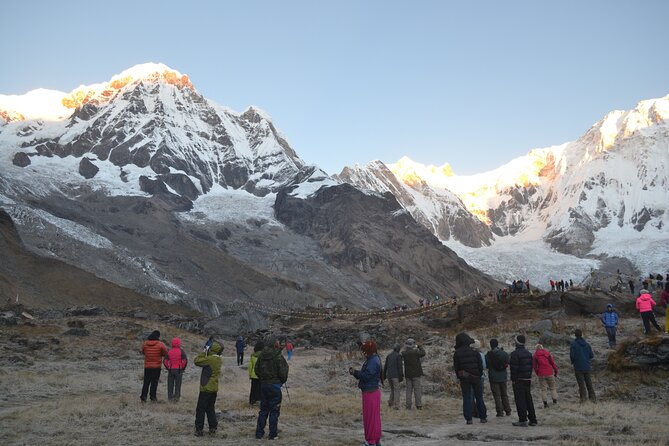
Morning at Annapurna Base Camp is the moment to protect. The plan allows you to enjoy sunrise over the mountains before descending on the same trail. Light changes quickly in the high country, so this is when the peaks may look their clearest and most dramatic.
The return to Bamboo takes about eight hours. Descending does not mean easy. The trail still has steps, uneven ground, and long stretches that test tired legs. You are also retracing sections that felt manageable on the way up but may seem much less friendly after the Base Camp push.
Bamboo is lower and surrounded by forest, which makes it a logical overnight stop. The descent also helps your body recover from the high point of the trek.
Day 7: From Bamboo to Jhinu Danda
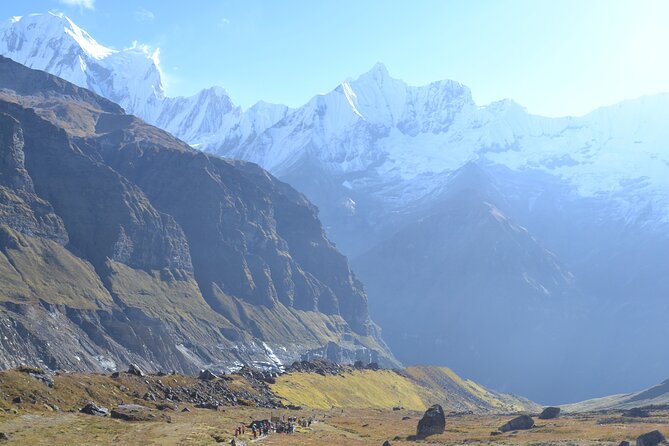
The route first climbs toward Kuldighar, then drops to the Chhomrong Khola. After that, you climb again through stone steps toward Chhomrong before continuing to Jhinu Danda. The walking time is about six hours.
This is another day when the map can be misleading. The total distance may not sound extreme, but repeated climbs and descents keep the effort high. Chhomrong’s stairways return to the story, and you will know by now that altitude gained and distance covered are not the same thing.
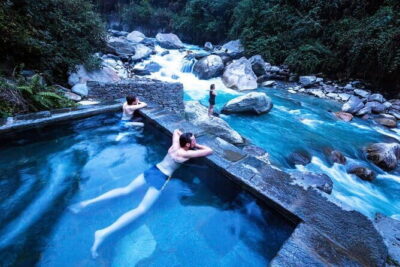
Jhinu Danda is a welcome stop after the demanding central section. The itinerary places it on the return route, giving you a lower, more settled place to spend the night before the final walk out.
Day 8: Jhinu Danda to Naya Pul, then Pokhara
You follow the Modi Khola for roughly four to five hours, passing through the hills of the Annapurna Conservation Area before reaching Birethanti and continuing to Naya Pul. The walking time is listed at about five hours.
This final trail section is a gentler way to leave the mountains than a sudden vehicle transfer. You still get rural scenery and river views, but the focus shifts from high peaks to cultivated hills and the working countryside.
A private vehicle takes you from Naya Pul to Pokhara in about an hour. Having transport arranged at this point is useful. After several long walking days, you can leave the trail without negotiating a local ride while tired and carrying gear.
Day 9: A free day in Pokhara
The ninth day is set aside for leisure in Pokhara. This is a smart part of the schedule, not wasted time. It gives your legs a break and leaves room for sightseeing after the trek rather than forcing you straight back to Kathmandu.
You can visit Phewa Lake or Begnas Lake on your own, and the town is known as one of Nepal’s most popular tourism bases. The plan does not include a guided sightseeing program for this day, so your activities and any extra costs are your responsibility.
I like having this buffer before the final transfer. Mountain schedules can feel relentless, and a quiet day in Pokhara lets you enjoy the achievement without immediately packing for the next departure.
Day 10: Returning to Kathmandu
The final transfer from Pokhara to Kathmandu is described as a scenic flight or bus, while the included services list a tourist bus. Confirm the exact arrangement before departure, because the time, comfort, and mountain views differ greatly between the two.
If you fly, the route gives you one last chance to see the Annapurna region from above. If you take the bus, expect another long road transfer, listed at about eight hours. Either way, the organized return closes the loop at the Kathmandu meeting point.
This is a useful question to settle early: do not assume the scenic flight is included simply because it appears in the day description. Ask the operator which transport is booked for your departure date.
Guides, porters, meals, and what the price covers
The package includes a government-licensed trekking guide and one porter for every two people, with a maximum porter load of 25 kilograms. That ratio is helpful for a small pair or a group that wants to keep personal packs light.
Sudam and Ganesh are the guide names most closely linked to this experience. They are described as attentive, professional, funny, and flexible. One guide, Sudam, also speaks Chinese, which may help Chinese-speaking trekkers communicate more easily.
The operator covers food, salary, transport, clothing, and insurance for the guide and porter. Your package includes eight breakfasts, eight lunches, and eight dinners. That matches the main trekking and travel days, but you should clarify what happens on any hotel day or transfer day if meal timing changes.
The ACAP permit and TIMS card are included. These are not decorative extras. They handle key trekking administration and help ensure you are properly registered for the route.
A sleeping bag and down jacket are supplied. This saves you from buying bulky gear for one trek, though you should confirm sizes and condition before leaving Kathmandu. Emergency rescue is not included as a free operator benefit. You need travel insurance that covers trekking and rescue costs.
Who should book this 10-day route?
This trip suits you if you want a guided introduction to Nepal’s mountain trails, prefer a fixed plan, and value having transport, meals, permits, and gear arranged. It is also a good fit if you want village culture and mountain scenery rather than a trip focused only on reaching a high point.
You should have moderate physical fitness. The schedule includes six to eight hours of walking, steep ascents, long descents, thousands of steps, and an overnight stay at 4,130 meters. The itinerary is attainable for many fit trekkers, but it is not a casual holiday.
The maximum group size is 16 people. That is large enough for a social atmosphere and small enough for guides to keep track of the group, especially with two guides on some departures. If you want a private, very quiet trek, ask about group composition before booking.
Cancellation terms are worth noting. Cancel at least six full days before the local start time for a full refund. A cancellation two to six days ahead receives 50 percent, while cancellation less than two full days ahead is nonrefundable.
Should you book the Annapurna Base Camp Trek?
I would book this trek if you want strong logistical support and a clear balance between mountain scenery, local villages, and time in Pokhara. The included porter, licensed guide, permits, meals, cold-weather gear, and arranged transport make the $996 price look reasonable for a 10-day program.
I would pause if you are not ready for long walking days or repeated stair climbs. Also confirm the Kathmandu to Pokhara and Pokhara to Kathmandu transport, the exact guide team, and what personal expenses are not covered.
For a first Himalayan trek, this is a practical choice with a memorable payoff. You get the high mountain bowl at Annapurna Base Camp, but you also get the slower pleasures of Ghandruk, river valleys, village paths, and a proper rest day in Pokhara.
FAQ
Where does the Annapurna Base Camp trek start?
The experience starts at The Great Adventure Treks & Expedition office on Chhusya Galli in Kathmandu, Nepal. The stated start time is 8:15 am.
How long is the Annapurna Base Camp trek?
The full program lasts approximately 10 days, including travel from Kathmandu to Pokhara, the trek, a leisure day in Pokhara, and the return to Kathmandu.
How high is Annapurna Base Camp?
Annapurna Base Camp is at 4,130 meters above sea level.
Is airport pickup included?
Yes. Airport pickup and transfer to your hotel are included.
Is transport from Kathmandu to Pokhara included?
Yes. The program includes transport from Kathmandu to Pokhara by tourist bus.
Is a guide included?
Yes. A professional trekking guide with a government license is included.
Is porter service included?
Yes. One porter is provided for every two trekkers, with a maximum load of 25 kilograms.
Are meals included?
Yes. The package includes eight breakfasts, eight lunches, and eight dinners.
Are trekking permits included?
Yes. The Annapurna Conservation Area Project permit and TIMS card are included.
Is emergency rescue included?
Emergency rescue is covered by your own travel insurance, not included as a free part of the tour package. Ensure your policy covers trekking and rescue costs.
More Hiking & Trekking in Kathmandu
- Everest Base Camp Trekking
★ 5.0 · 485 reviews - Nagarkot Sunrise View and Day Hiking from Kathmandu
★ 5.0 · 471 reviews - Annapurna Circuit Trek with Tilicho Lake
★ 5.0 · 368 reviews - Everest Base Camp Trekking – 13 Day
★ 5.0 · 365 reviews
Just added around Kathmandu
- Private Half-Day Tour of Boudhanath and Pashupatinath Temples in Kathmandu★ 4.5 · 9 reviews
- Private Half-Day Tour of Kathmandu Durbar Square and Swayambhunath Temple★ 4.5 · 11 reviews
- Namobuddha Monastery Hiking Day Tour via Panauti from Kathmandu★ 5.0 · 15 reviews
- Private Full-Day Kathmandu City Tour★ 5.0 · 9 reviews
- Private Day Tour in Kathmandu Valley Rim with Bhaktapur Sightseeing★ 5.0 · 3 reviews
- Private Half Day Budhanilkantha Tour★ 5.0 · 6 reviews
- Private Day Tour: Patan and Bhaktapur from Kathmandu★ 4.5 · 6 reviews
- Private Day Tour – Sacred Journey to Namo Buddha★ 5.0 · 5 reviews
Annapurna Base Camp Treks, compared.
Kathmandu to Annapurna Base Camp (ABC) 5-Day Trek
Read our review →
Kathmandu/Pokhara: 5-Day Annapurna Base Camp (ABC) Trek
Read our review →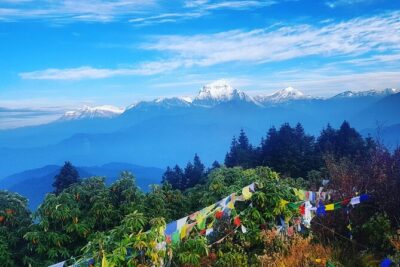
11-Day Hike Tour to Annapurna Base Camp Bliss in Kathmandu
Read our review →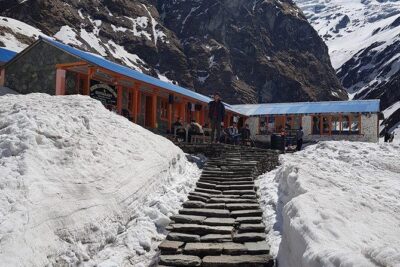
Browse the lists this tour appears in