
Reviewed · COOKING CLASSES
Kathmandu: Local Women-Lead Nepali Cooking & Momo Class
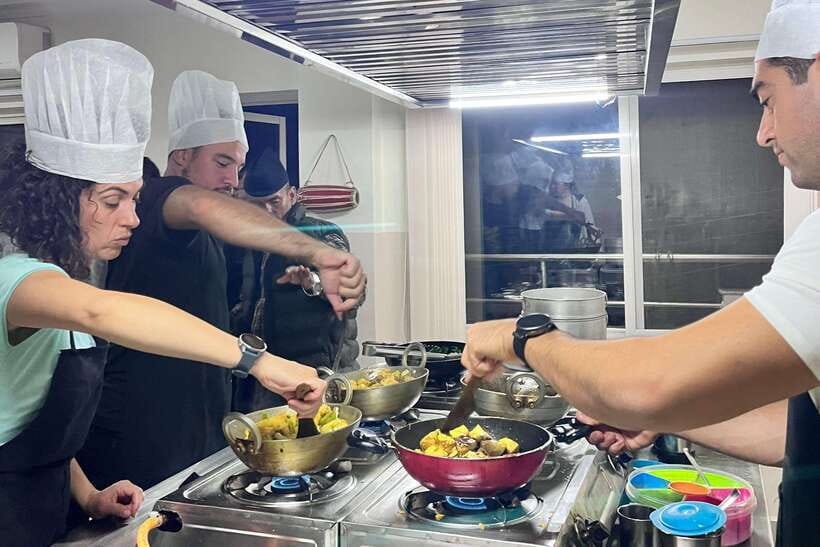
The best part of this Kathmandu class is that you do not simply watch someone cook. You visit a nearby market, help choose ingredients, then prepare a full Nepali meal with guidance from a local chef. Momo making is the natural star, but dal bhat and a choice of other dishes give the lesson more range.
I like the small groups of up to 10, which leave room for questions and hands-on work. I also like the practical finish: you eat the food you made, and a PDF of the recipes can be sent afterward. The main thing to check is the menu. The group chooses the dishes together, so you may need to speak up if momos are your priority.
Key points at a glance
- A market visit comes first: You help select fresh ingredients before returning to the kitchen.
- Momos are not guaranteed by default: The class menu is chosen by the group, so confirm your preferred dishes early.
- You cook more than one dish: The usual format includes a starter, main course, and dessert, with dal bhat and momos among the choices.
- Nish and Nishma are named instructors: Both are praised for clear English, patience, and friendly teaching.
- The class is based in Thamel: You can make your own way to Kathmandu Cooking Academy, or select pickup and drop-off within Kathmandu Valley.
- The meal is generous: Come hungry, especially if several dishes are prepared.
A cooking class with a market at the center
Many cooking lessons begin with ingredients already measured and lined up. This one adds a useful Kathmandu touch: you go to a market or nearby shop first and help buy the important ingredients.
That short outing matters. It shows you what the ingredients look like before they are chopped, mixed, or hidden in a sauce. It also connects the cooking to daily life in Nepal rather than treating the food as a set of restaurant recipes.
The market visit is close to the school in Thamel, so it does not take up the whole afternoon. Still, you should arrive at least 15 minutes early. The class itself generally lasts about three hours, though the advertised duration is 3 to 4 hours depending on the schedule and pace of the group.
Do not expect a formal food tour with long explanations at every stall. The purpose is practical: choose what you need, learn a little about the ingredients, and get back to the kitchen. That makes the visit useful without turning the class into a sightseeing program.
A few more Kathmandu trips to weigh up
- Half day cooking class in Thamel kathmandu
★ 5.0 · 607 reviews - Kathmandu: Local Women-Led Nepali Cooking & Momo Class
★ 4.9 · 360 reviews - Kathmandu: Local Lead Nepali Cooking & Momo-Making Class
★ 5.0 · 212 reviews
What you cook: momos, dal bhat, and a flexible menu
The core dishes are momo and dal bhat. These are two of the best choices for a first Nepali food lesson.
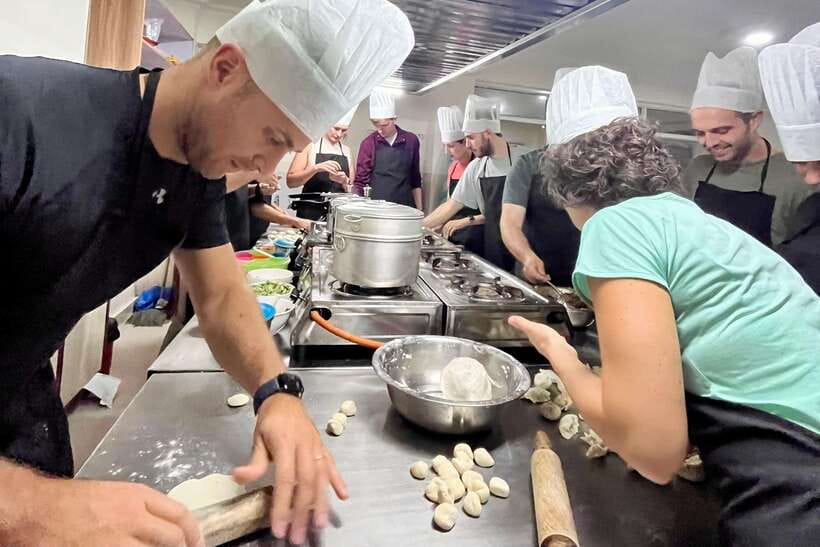
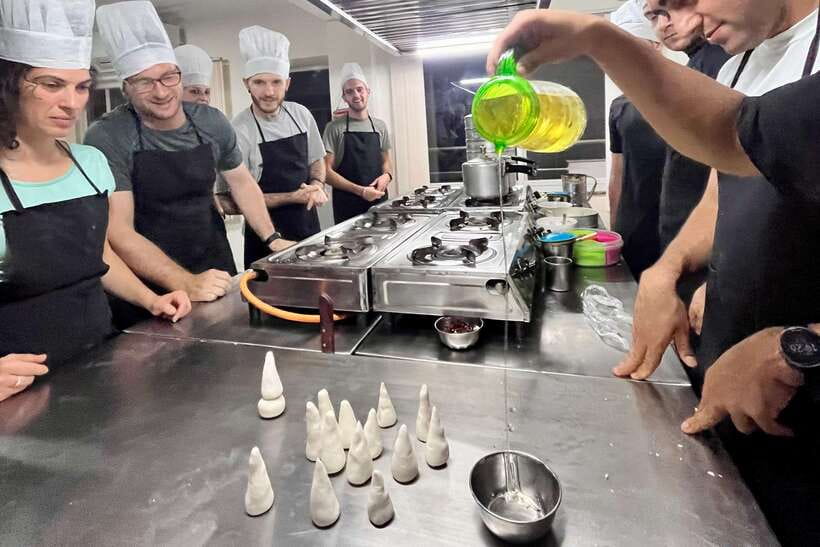
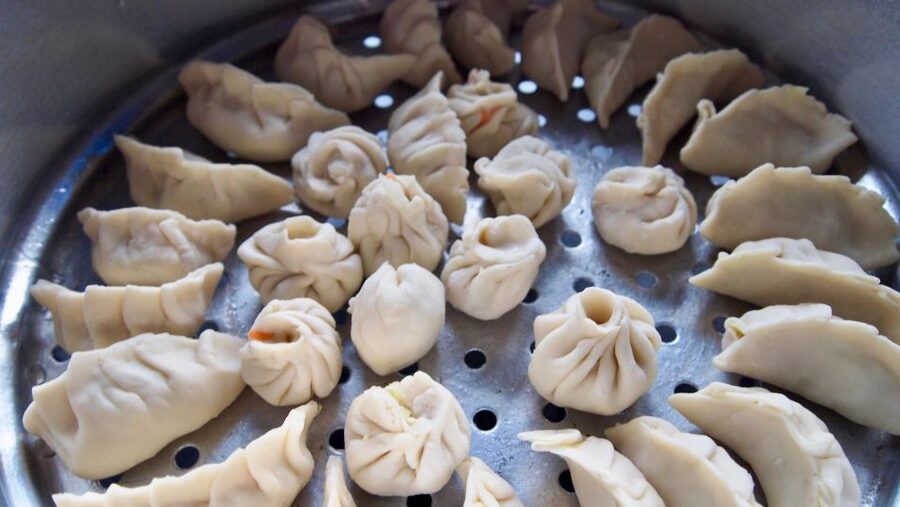
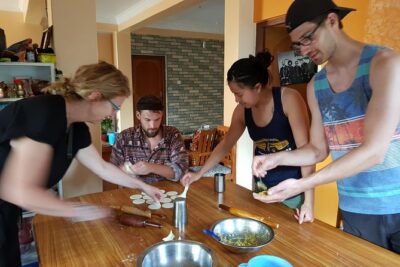
Momos are Nepali dumplings, usually folded around a seasoned filling and cooked before being served with a dipping sauce. Folding them is a hands-on task, and you will get the most from the class if you are happy to make a few imperfect shapes before getting the technique right. The class focuses on showing you how to prepare them, not simply handing you a finished plate.
Dal bhat is Nepal’s everyday staple, built around lentils, rice, and accompanying vegetable or curry dishes. It is less of a single recipe than a complete meal pattern. Learning it gives you a better sense of how Nepali food works at home and in local kitchens.
The menu has some flexibility. Several sessions allow the group to choose a starter, a main course, and a dessert from a selection of dishes. Choices mentioned by past participants include aloo chop, spiced mashed potato patties, mushroom choila, and barra, along with chicken momos and dal bhat.
This flexibility is useful for families and mixed groups, but it creates one small risk. If you book mainly for momos, say so at the beginning. One participant expected the class to include them and had to persuade the group to choose them. The group agreed, but it is better not to leave your main goal to chance.
The instructors and the pace of the lesson
The teaching is in English, and the named instructors include Nish and Nishma. Nishma is praised for patience, clear explanations, and strong English. Nish is also described as thorough and informative, with a relaxed teaching style.
The lesson is built around step-by-step instruction. You receive help with the preparation, cooking methods, and handling of the equipment. That makes the class suitable even if your kitchen skills are basic. One participant who described having little confidence in the kitchen still found the explanations easy to follow.
You should expect to work rather than sit through a demonstration. You may chop, mix, shape, season, and cook, depending on the dishes selected. Comfortable clothing is a good idea because you will be actively involved.
The tone appears friendly and informal. The staff are also happy to adjust dishes for vegetarian preferences and different spice levels when told in advance. If you have allergies or other dietary restrictions, contact the provider before the class rather than waiting until the cooking begins.
Nepali masala tea is served during the lesson. It is a modest detail, but it gives you a local drink to try while the food comes together. Specialty and alcoholic drinks are not included.
Eating what you made
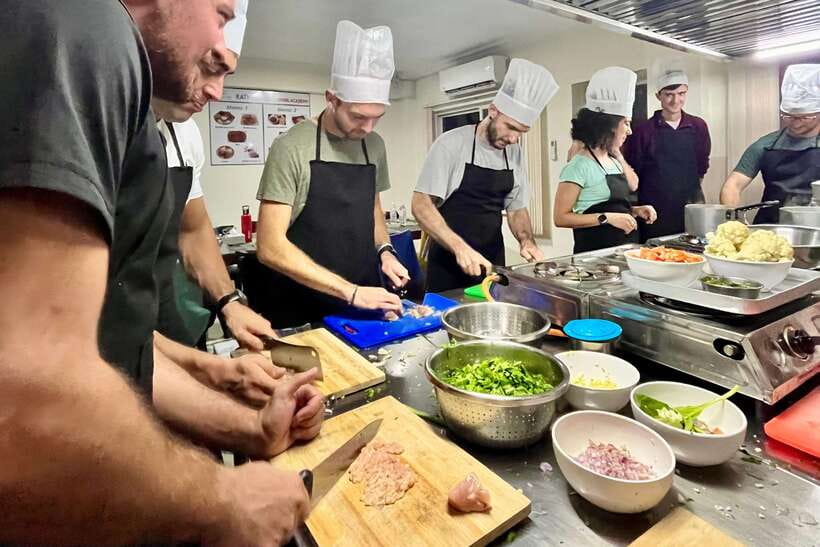
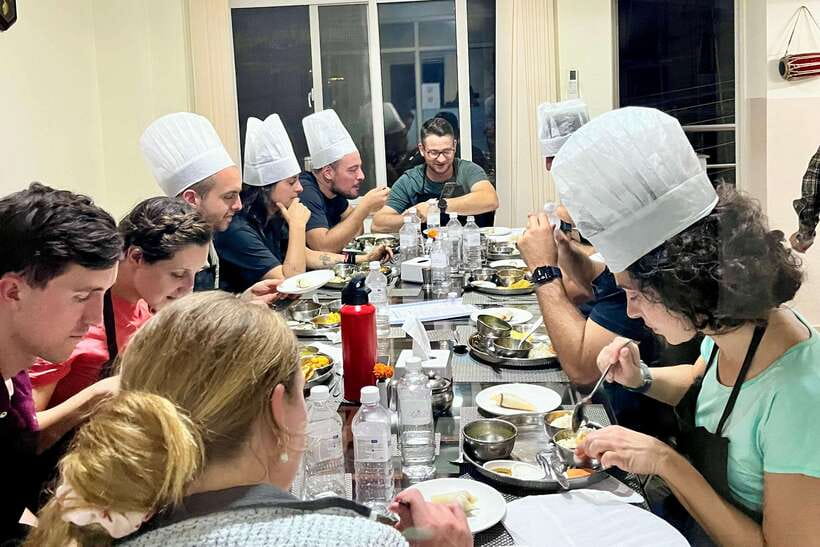
The meal at the end is a major part of the value. You are not paying only for a demonstration or a small tasting plate. The food prepared during the class is served for you to eat, and the portions can be large.
That is especially true if the group makes several dishes. A session may include a starter, main course, dessert, and additional items such as momos or dal bhat. Plan for a filling meal rather than a light snack.
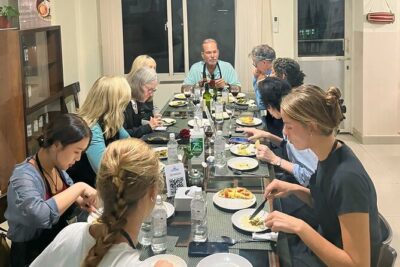
The class also works well for solo participants. You may be the only person booked, or you may join a small group of two to four people. In one case, the school ran the session for a single student, making it feel close to a private lesson.
A solo booking can have a slight social drawback. One person found the meal less comfortable when eating separately from the staff. That is not a reason to avoid the class, but it is worth knowing if you are hoping for a group dining experience. The food and instruction remain the main attractions.
If you are traveling with family or friends, this is an easy activity to share. Cooking creates natural jobs for everyone, and the meal gives the group a clear reward at the end.
Same mountains, a completely different kind of day:
- Everest Base Camp Trek – 14 Days
★ 5.0 · 1,499 reviews - Private Kathmandu Sightseeing Tour | UNESCO World Heritage sites
★ 5.0 · 756 reviews - Everest Base Camp Helicopter Tour landing at Everest View Hotel
★ 5.0 · 668 reviews - Everest Base Camp Trekking
★ 5.0 · 485 reviews
Why the class offers good value at $5
At the stated price of $5 per person, this is unusually inexpensive for a 3 to 4 hour activity that includes instruction, ingredients, equipment, market shopping, tea, and the meal you prepare.
The value is strongest if you want more than a recipe card. You receive direct help from a chef, a look at ingredient shopping, practice with Nepali techniques, and food at the end. That makes the class useful both as a cultural activity and as a practical introduction to the dishes you have been eating around Kathmandu.
The price does not cover specialty or alcoholic drinks. Hotel transport is also optional, so check the booking choice before assuming pickup is included. If you make your own way there, Kathmandu Cooking Academy is in Thamel and can be located through Google Maps.
The advertised transport covers pickup and drop-off from locations within Kathmandu Valley when that option is selected. Kathmandu traffic can cause delays, and one participant experienced late pickup and drop-off. If you have a flight, bus, or timed appointment afterward, leave plenty of extra room.
Thamel location and transport choices
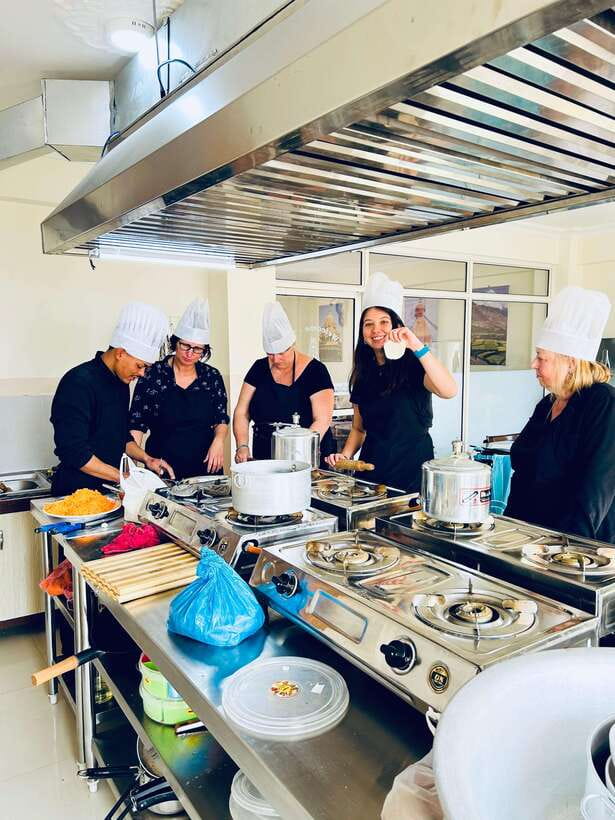
Thamel is a practical base for this activity. The cooking school is in the middle of the area, making it fairly easy to reach if you are already staying nearby. A self-guided arrival also keeps the $5 price more attractive.
Pickup is helpful if you are staying farther away or do not want to navigate Kathmandu streets. It comes at the cost of depending on traffic, which can be slow. Ask yourself how much convenience you need before adding it.
The itinerary lists Kathmandu as the final drop-off area, with two possible drop-off locations depending on the selected option. Read the transport details carefully at booking. If pickup is not selected, you are responsible for reaching the school yourself.
Wheelchair access is available. Children over seven can participate with adult supervision, while the activity is not suitable for children under five. A minimum of two participants may be required for a session, although the school has sometimes run a class for one person.
The small details that improve the experience
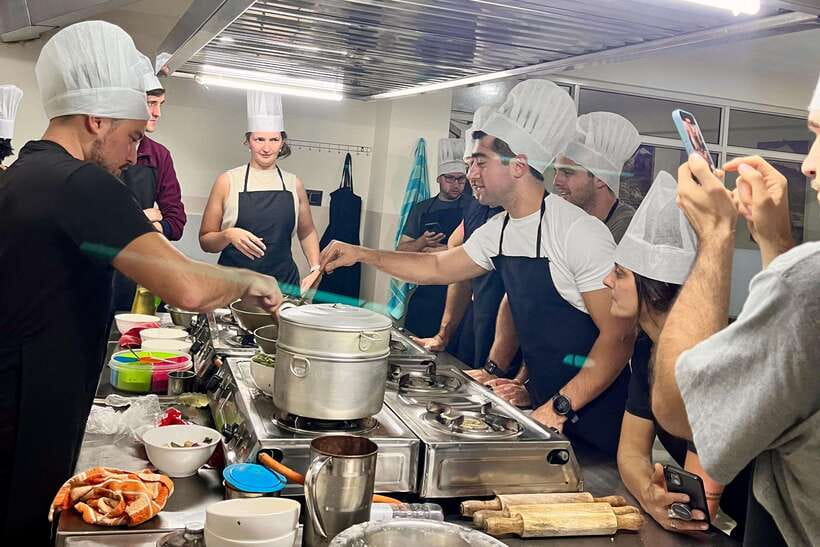
Bring a camera if you want photos of the market, cooking process, or finished dishes. You should also wear clothes that are comfortable for kitchen work.
Tell the provider about dietary needs before arrival. Vegetarian adjustments and spice changes have been accommodated, but advance notice gives the instructor time to plan the shopping and menu.
Ask early about the dishes being prepared. This is the most useful tip for anyone booking specifically for momos. The group menu can be flexible, but the choice may be shared rather than personal.
If you want to cook the food again at home, ask about the recipe material. A PDF of the dishes prepared can be sent afterward, and the school has also sold a cookbook for 400 Nepalese rupees. That turns a one-time activity into something you can use after leaving Nepal.
The class has a 4.9 rating from 45 reviews, with particularly strong praise for the food, friendly instruction, patience, and hands-on format. The transport score is lower than the overall experience, with 86 percent giving transport a perfect score. I would treat that as a reminder to allow for Kathmandu traffic, not as a problem with the cooking lesson itself.
Who should book this Kathmandu cooking class?
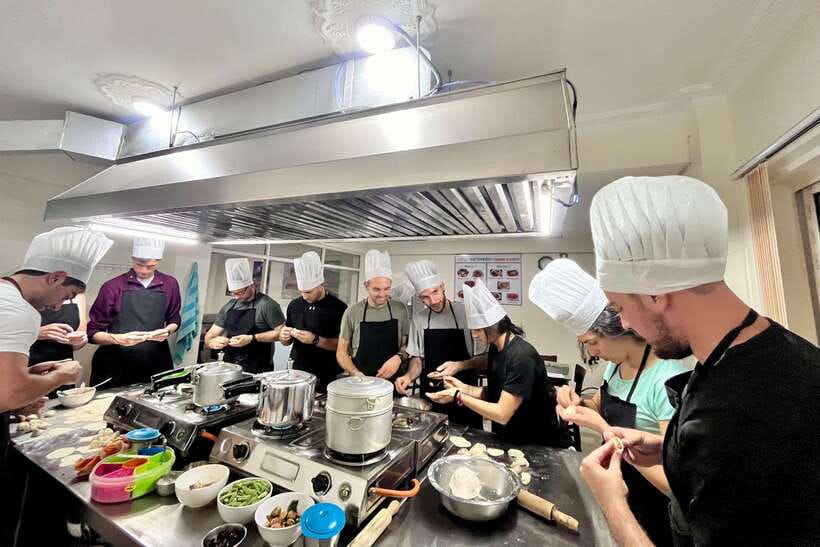
I would recommend it to food-focused visitors, solo travelers who want a structured local activity, couples, families with older children, and anyone who has enjoyed Nepali food but wants to understand how it is made.
It is also a good choice near the end of a Nepal trip. You can recognize dishes you have already eaten, ask about ingredients, and leave with recipes that help you recreate part of the trip at home.
It may be less suitable if you dislike group decisions, want a fixed menu, or prefer a quiet restaurant meal. The activity is active and social, and the final dishes depend on what the group chooses.
The class is also not a substitute for a dedicated market tour. The shopping stop is included to support the cooking, so keep your expectations focused on ingredients and preparation rather than a long market exploration.
Should you book it?
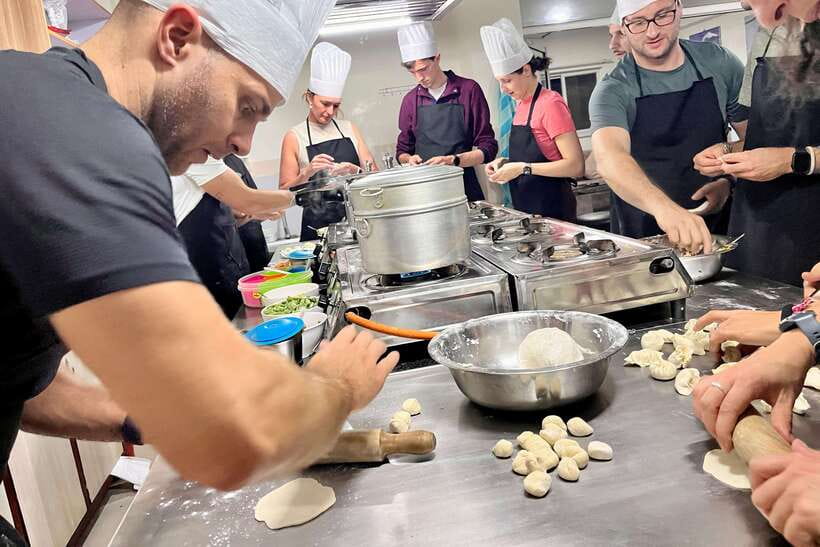
Yes, if you want a low-cost, practical way to meet Nepali food through your own hands. The combination of a short market visit, patient English instruction, flexible menu, and generous meal makes the class a strong use of a half-day in Kathmandu.
Book with two points in mind: request momos early if they are essential, and select hotel transport only if you need it. I would also arrive early, mention dietary needs in advance, and avoid scheduling a tight connection afterward.
For $5, the class offers much more than a meal. You get cooking practice, local context, tea, and recipes to take home. That is a useful bargain in Thamel, provided you are ready to work for your lunch.
FAQ
How long does the Kathmandu cooking class last?
The activity lasts about three hours in most cases, with an advertised duration of 3 to 4 hours. This includes the market visit, food preparation, cooking, and eating.
Where is the cooking class held?
The class is held at Kathmandu Cooking Academy in Thamel, Kathmandu. You can find the meeting point on Google Maps using the location supplied by the provider.
Is hotel pickup included?
Hotel pickup and drop-off are available only if you select that option when booking. Pickup service is offered from locations within Kathmandu Valley.
What dishes will I cook?
The class focuses on momo and dal bhat. Depending on the group’s choice, you may also prepare a starter, main course, and dessert. Possible dishes include aloo chop, mushroom choila, barra, and chicken momos.
Are ingredients and cooking equipment provided?
Yes. The experience includes a market or shop visit to purchase important ingredients, plus use of the cooking equipment and accessories.
Is the class taught in English?
Yes. English is the listed language for the instructor and class.
Can vegetarian or less spicy dishes be prepared?
Vegetarian preferences and spice levels can be adjusted. You should tell the provider about dietary restrictions or allergies in advance.
Can I cancel or pay later?
You can cancel up to 24 hours before the activity for a full refund. Reserve now and pay later is available, so you do not have to pay at the time of booking.
Just added around Kathmandu
- Private Half-Day Tour of Boudhanath and Pashupatinath Temples in Kathmandu★ 4.5 · 9 reviews
- Private Half-Day Tour of Kathmandu Durbar Square and Swayambhunath Temple★ 4.5 · 11 reviews
- Namobuddha Monastery Hiking Day Tour via Panauti from Kathmandu★ 5.0 · 15 reviews
- Private Full-Day Kathmandu City Tour★ 5.0 · 9 reviews
- Private Day Tour in Kathmandu Valley Rim with Bhaktapur Sightseeing★ 5.0 · 3 reviews
- Private Half Day Budhanilkantha Tour★ 5.0 · 6 reviews
- Private Day Tour: Patan and Bhaktapur from Kathmandu★ 4.5 · 6 reviews
- Private Day Tour – Sacred Journey to Namo Buddha★ 5.0 · 5 reviews
Cooking Classes, compared.
Nepalese Momos or Dal Bhat Cooking Class (Cook with Delight)
Read our review →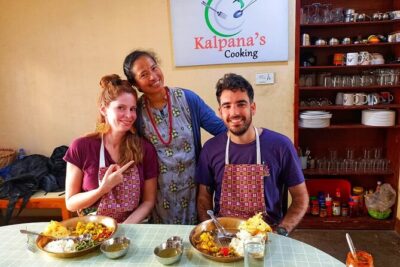
The best Private Nepali Cooking Class in Kathmandu
Read our review →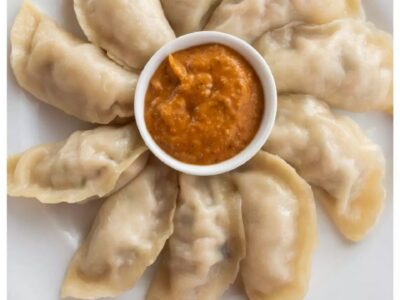
Nepalese Kitchen in Pokhara: Momos or Dal Bhat Cooking Class
Read our review →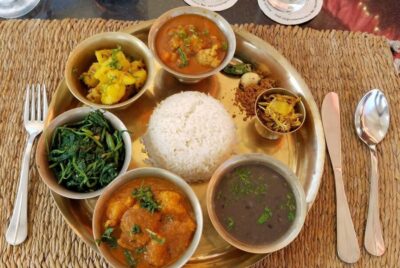
MoMo or Dal Bhat Cooking Class at Aama Kitchen in Pokhara
Read our review →Browse the lists this tour appears in