
Reviewed · UNESCO WORLD HERITAGE TOURS
Monkey Temple – Swayambhunath Tour – Private/Small Group
Kathmandu’s famous Monkey Temple is only part of this experience. The more interesting piece is the walk from Thamel through Swayambhu and Saraswotithan, where temples, shrines, neighborhood streets, and old stories set up your arrival at the hilltop stupa. I like the small group limit of five and the way the route connects Swayambhunath with the legend of Kathmandu Valley as a former lake.
I also like that guides such as Santosh explain both Hindu and Buddhist beliefs instead of treating the temple as a quick photo stop. The possible drawback is physical: you walk for about three hours and face the 365 stairs from Bhagwan Pau, so this is not a good pick if you have severe asthma or knee trouble.
Key points to know before you book
- A neighborhood walk, not just a temple visit: You begin at Pumpernickel Bakery in Thamel and approach Swayambhunath on foot.
- A maximum of five people: The small group makes it easier to ask questions and keep up with the guide.
- The 365-step entrance: Bhagwan Pau marks the bottom of the main stairway, with a rest and water break before the climb.
- Hindu and Buddhist stories together: Stops include Bijeshwori Temple, Harati Ajima, Manjushree Temple, and Shova Bhagawati.
- A useful three-hour introduction: You see the stupa, nearby shrines, giant Buddha statues, and city views without giving up a full day.
- Low price, with one extra fee: The tour costs $15 per person, but Swayambhunath entry is another 200 Nepalese rupees in cash.
Why this route gives you more than the Monkey Temple
Swayambhunath is one of Nepal’s holiest Buddhist stupas, but arriving by a direct taxi or bus can flatten the experience into a single stop. This tour gives you a gradual approach. You begin in Thamel, walk toward Bhagwan Pau, pause at several religious sites, and hear stories about how Kathmandu came to be.
That matters because Swayambhunath is tied to the origin story of the entire Kathmandu Valley. The local legend tells of a great lake that was changed into a place where people could live, with Manjushree playing an important role in the story. Your guide uses these myths and legends to explain why the hill, the stupa, and the surrounding shrines carry such weight.
The route also lets you see how Hindu and Buddhist traditions share the same city. Bijeshwori is sacred to both groups, and the temples dedicated to Harati Ajima and Manjushree add different layers to the visit. I find this far more useful than simply hearing that the Monkey Temple is old and important.
More UNESCO World Heritage Tours in Kathmandu:
- Private Kathmandu Sightseeing Tour | UNESCO World Heritage sites
★ 5.0 · 756 reviews - Kathmandu: Full Day 7 UNESCO Tour with Lunch – Private/Group
★ 5.0 · 415 reviews - Kathmandu: Full Day Top 4 UNESCO Tour with Lunch – Private/Group
★ 5.0 · 269 reviews
Starting in Thamel and walking toward Bhagwan Pau
The meeting point is Pumpernickel Bakery on Paryatan Marg in Thamel. The first walk toward Bhagwan Pau takes roughly 30 minutes. Since the tour returns to the same area, you do not need to arrange separate transport at the end.
This opening section is a practical way to get your bearings in Kathmandu. You are not dropped at the hill with no context. Instead, the guide leads you through the neighborhoods of Swayambhu and Saraswotithan, pointing out ancient architecture and religious sites along the way.
The route includes Indrayani, also called Luti Ajima. The temple is linked to the eight Matrikas established by Licchavi King Gunakamdev when Kathmandu was founded. That detail gives you a sense of how the city’s religious geography reaches beyond one famous monument.
You also stop at Bijeshwori Temple, an important place for Hindu worship and a pilgrimage site for Tibetan Buddhists. This is one of the strongest parts of the walk because it shows the shared religious life of the valley. You can ask the guide how the different traditions relate to one another while the setting is directly in front of you.
Bhagwan Pau and the 365 stairs
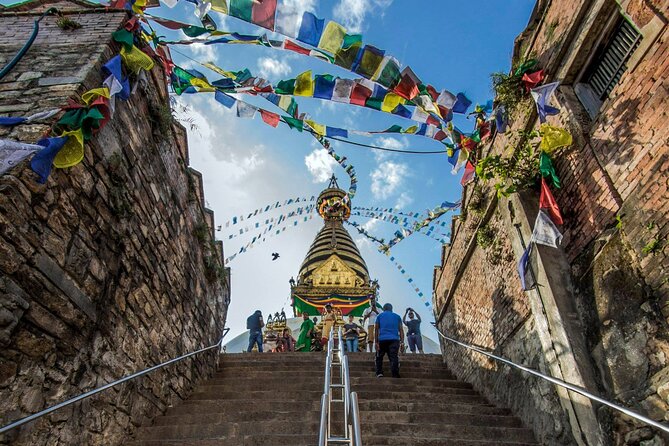
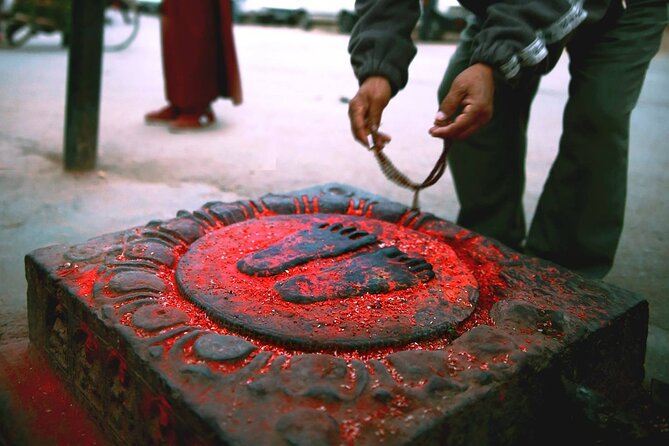
Bhagwan Pau sits at the foot of Swayambhu Hill. The name refers to the feet of Lord Buddha, and this is where the main entrance begins. From here, the climb includes 365 stairs.
The tour allows about 20 minutes at Bhagwan Pau. You can rest, drink water, and prepare for the steps before continuing upward. That break is useful, but you should still arrive ready for a genuine uphill walk. The tour information advises against joining if you have severe asthma or knee problems, and I would take that warning seriously.
The stairs are not a minor detail. They shape the pace of the visit and may be the hardest part for anyone unused to walking uphill. You should wear comfortable shoes, carry water, and avoid treating the three-hour estimate as a casual stroll.
At the same time, the climb gives the visit a sense of arrival. You are approaching the stupa on foot, as part of a route through the hill and its shrines, rather than stepping out of a vehicle at the final viewpoint.
Reaching Swayambhunath, the Monkey Temple
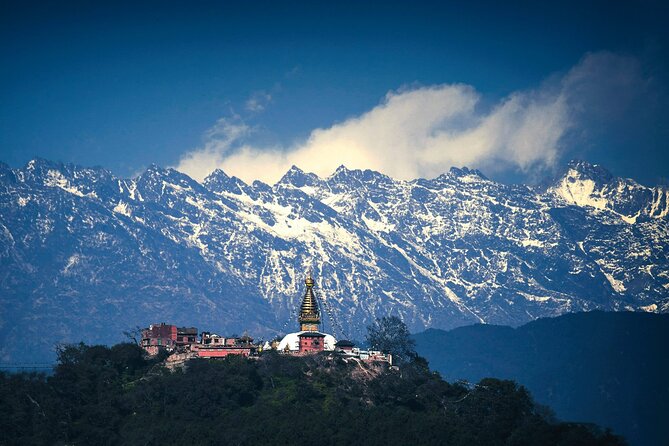
Swayambhunath is the main attraction and the heart of the tour. The name is often explained as self-originated, connecting the stupa with the belief that it appeared by itself. From the hilltop, you can look across Kathmandu, while the guide explains the stupa’s role in local Buddhist practice and the valley’s origin stories.
The timing at Swayambhunath is about 40 minutes. That gives you enough time to explore the area and listen to an explanation, though it is not an unlimited visit. If you want long periods for photography, quiet observation, or a detailed look at every shrine, you may feel the schedule is brisk.
One special benefit is the guide’s explanation when religious ceremonies are taking place. The setting is not treated as a museum display. You can gain a better sense of what people are doing and why the temple remains active for worship.
The well-regarded guide Santosh is specifically associated with several departures. His approach, based on the information available for this tour, includes stories about Hinduism and Buddhism, local history, and the neighborhood itself. That combination is important. Swayambhunath makes more sense when you understand both the religious symbols and the living customs around them.
The entrance fee is not included. You pay 200 rupees, about $1.50, directly to the temple authorities in cash. It is a small extra cost, but carry the correct type of payment so the stop does not become inconvenient.
A few more Kathmandu trips to weigh up
- Private Bhaktapur and Nagarkot Day Tour From Kathmandu
★ 5.0 · 305 reviews - Kathmandu: Full-Day 7 UNESCO Tour with Lunch – Private/Group
★ 4.9 · 247 reviews - Kathmandu: 7 UNESCO Sites Tour in 1 Day (Private Tour)
★ 4.9 · 204 reviews - Kathmandu: Top 4 UNESCO Tour with Lunch – Private/Group
★ 4.9 · 181 reviews
Harati Ajima and the story of a changed demon
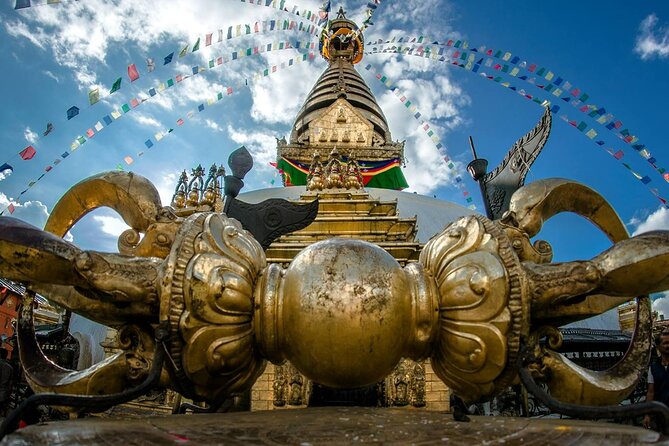
After the main stupa, the route continues to Harati Ajima Temple. The stop lasts about five minutes, so think of it as a focused explanation rather than a long visit.
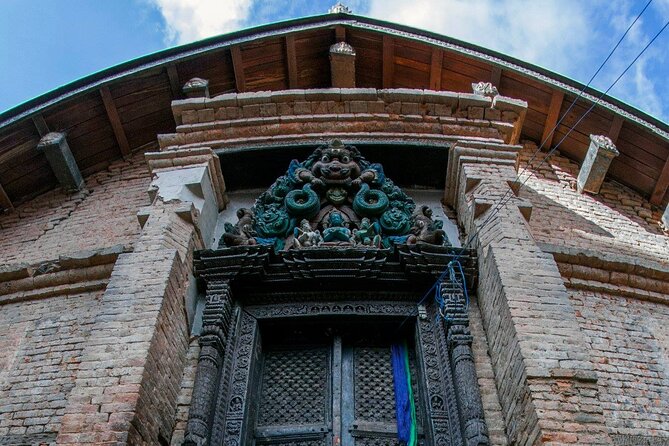
The temple’s unusual story is the main reason to stop. Your guide explains how a demon named Harati became Mother Harati, and why people across the valley worship her. The pagoda-style building also gives you a close look at a familiar form of Nepalese temple architecture.
This short stop works well as part of the wider route. You are not spending the whole morning at one monument. Instead, you collect several connected stories that show how gods, demons, protectors, and local communities fit into Nepal’s religious life.
World Peace Pond and Manjushree Temple
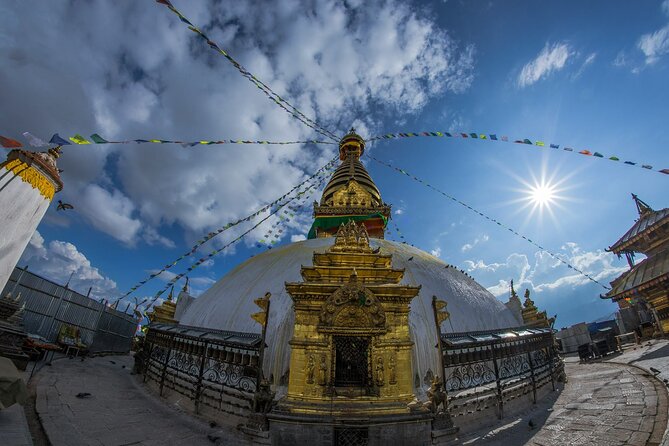
World Peace Pond lies on the western side of Swayambhunath. A brass Buddha standing on a lotus sits in the middle, and English words on the surrounding wall explain the site.
The pond is a quieter change of pace after the main temple and stairs. It also gives you another place to consider the symbols you have been hearing about. The itinerary does not specify a separate length of stay here, so the amount of time may depend on the group and the guide’s pace.
Manjushree Temple receives about 15 minutes. It is a small shrine dedicated to Maha Manjushree, the figure connected with the story of turning Kathmandu Valley from a great lake into a city.
This stop is especially useful if you want the valley’s origin legend explained in place, rather than as a detached piece of folklore. You also get a panoramic view of the western side of the area. I would pay attention here, since the view and the story are meant to work together.
Amideva Buddha Park and three giant statues
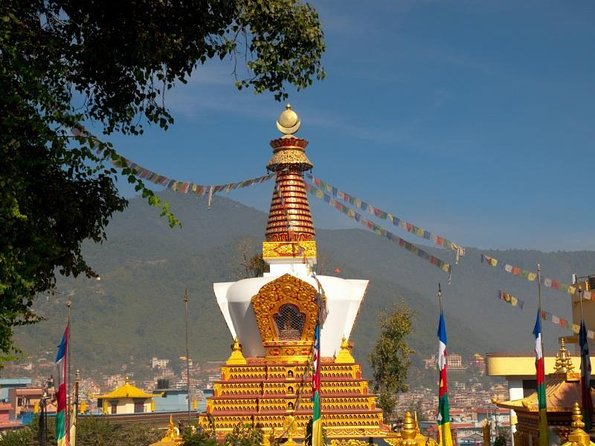
Amideva Buddha Park is one of the larger visual stops on the route. The park contains three huge statues: Amitabha Buddha, also called Amideva, at 67 feet in the center, with Chenrezig and Padmasambhava at 64 feet on either side.
The visit lasts about 20 minutes. You walk around the park while the guide explains the story of Siddhartha Gautama and the Buddhist figures represented there. The scale of the statues makes this stop easy to remember, even if you are not familiar with Buddhist art.
This part also breaks up the older temple architecture with an open park setting and monumental sculpture. It gives you another way to understand Buddhist devotion, moving from the compact stupa and shrines to large public images.
Shova Bhagawati and the return to Thamel
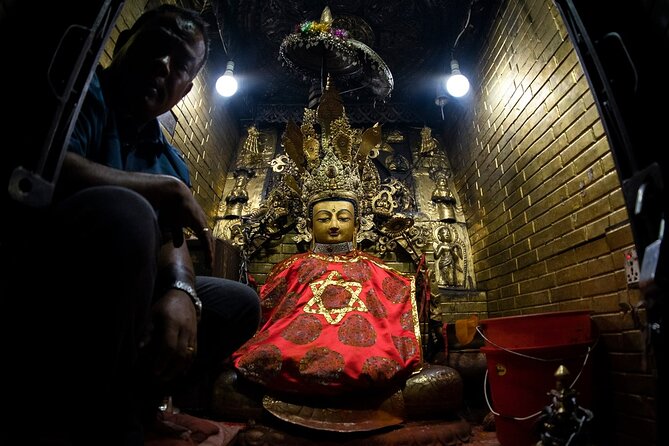
The route includes Shova Bhagawati, a shrine to the goddess Bhagwati on the bank of the Bishnumati River. It is one of four major Bhagwati temples in Kathmandu.
The supplied schedule does not give a separate duration for this stop, so you should expect a brief visit shaped by the group’s pace. Still, it adds another Hindu shrine to a tour that already moves between Buddhist and Hindu sites.
From Bhagwan Pau, you walk back toward the Kathmandu Eco Hotel area and the Pumpernickel Bakery meeting point. The return takes about 30 minutes. If you want to continue exploring Swayambhu on your own, the tour allows you to leave the group there and make your own way back to the meeting point.
That option gives you some flexibility, but confirm the arrangement with your guide before separating. The activity officially ends back at the meeting point.
What the $15 price really covers
At $15 per person, this is a strong-value introduction to Swayambhunath. You receive an English-speaking guide, a three-hour walking route, and explanations at several religious sites rather than only at the main stupa.
The small group limit improves the value. With no more than five people, you have a better chance of hearing the guide clearly and asking about a temple, ritual, or legend that catches your attention. Solo visitors can also benefit from the structure and company of a small outing without committing to a large coach group.
The price does not include coffee or tea, and the 200-rupee Swayambhunath entrance fee is paid separately in cash. Those costs are modest, but the tour is not fully prepaid from your point of view.
Group discounts are available, and mobile tickets make the booking side simple. Confirmation is provided at booking. Free cancellation is available up to 24 hours before the local start time. Changes or cancellations inside that period are not accepted for a refund.
Who will get the most from this walk
I would choose this tour if you want a guided introduction to Kathmandu that combines walking, religion, architecture, and local stories. It is particularly useful during a short stay, since you cover several places in about three hours and return to Thamel.
Solo visitors may appreciate the clear route and small group. The available feedback also points to a strong sense of safety for a solo woman traveling alone, along with praise for the guide’s explanations and the amount covered in a short time.
You should skip it if you need an easy, flat outing. The walk includes the 365 stairs and a total duration of about three hours. People with severe asthma or knee problems are specifically advised not to join.
Service animals are allowed, and the route is near public transportation. The tour calls for moderate physical fitness, so plan around walking rather than waiting for a vehicle between stops.
Should you book the Swayambhunath tour?
Book it if you want the Monkey Temple placed in context. The best parts are the approach through local neighborhoods, the shared Hindu and Buddhist sites, the valley origin stories, and the small group of no more than five people.
You may want a different plan if your main goal is a slow, private visit focused only on Swayambhunath. The three-hour route covers a lot, and the 40 minutes at the main stupa may feel short if you want extended time for photos or personal worship.
For most first visits, I see this as a sensible way to spend $15. Bring water, wear good walking shoes, carry 200 rupees in cash, and be ready for stairs. If you want a friendly guide-led walk with real local stories rather than a quick monument stop, this tour is a good fit.
FAQ
Where does the tour begin?
The tour begins at Pumpernickel Bakery on Paryatan Marg in Thamel, Kathmandu.
Where does the tour end?
The activity ends back at the meeting point near Pumpernickel Bakery. You may also be able to leave the group around Swayambhu and walk back independently if you arrange this with the guide.
How long does the tour last?
The tour lasts approximately three hours.
How large is the group?
The maximum group size is five people.
Is the Swayambhunath entrance fee included?
No. The entrance fee is 200 Nepalese rupees, about $1.50, paid in cash directly to the temple authorities.
Is the tour suitable for people with knee problems?
The tour requires moderate physical fitness and includes 365 stairs. People with severe asthma or knee problems are not advised to join.
Just added around Kathmandu
- Namobuddha Monastery Hiking Day Tour via Panauti from Kathmandu★ 5.0 · 15 reviews
- Private Half-Day Tour of Boudhanath and Pashupatinath Temples in Kathmandu★ 4.5 · 9 reviews
- Private Half-Day Tour of Kathmandu Durbar Square and Swayambhunath Temple★ 4.5 · 11 reviews
- Private Full-Day Kathmandu City Tour★ 5.0 · 9 reviews
- Private Day Tour in Kathmandu Valley Rim with Bhaktapur Sightseeing★ 5.0 · 3 reviews
- Private Half Day Budhanilkantha Tour★ 5.0 · 6 reviews
- Private Day Tour: Patan and Bhaktapur from Kathmandu★ 4.5 · 6 reviews
- Private Day Tour – Sacred Journey to Namo Buddha★ 5.0 · 5 reviews
UNESCO World Heritage Tours, compared.
Private Kathmandu Sightseeing Tour | UNESCO World Heritage sites
Read our review →
Full Day 7 UNESCO Tour with Lunch – Private/Group
Read our review →
Full Day Top 4 UNESCO Tour with Lunch – Private/Group
Read our review →
Kathmandu Spiritual Sites: Bodhnath & Pashupatinath Tour
Read our review →
Kathmandu Private Sightseeing Tour | UNESCO World Heritage Sites
Read our review →Full Day 7 UNESCO Tour with Lunch – Private/Group
Read our review →Browse the lists this tour appears in