
Reviewed · UNESCO WORLD HERITAGE TOURS
PashupatiNath and BoudhaNath – Private/Small Group
Pashupatinath and Boudhanath give you two very different ways to understand Kathmandu: one faces death beside the Bagmati River, while the other turns prayer into a daily walk around a giant white stupa. The contrast is the point, and a good guide helps you see the connection between belief, ritual, food, art, and ordinary life in Nepal.
I like the small maximum-five-person group, which leaves room for questions instead of forcing you to trail behind a crowd. I also like the way the tour moves beyond famous buildings, explaining Hindu rites of passage, Buddhist ideas, the story of Shiva, Shaktipeeth traditions, mandalas, and singing bowls.
The main consideration is cost and pace. The advertised $15 price does not include about $13 in entrance fees, and three hours is enough for an introduction rather than a slow, reflective visit. The cremation ghats are also a serious religious site, not a sightseeing show, so you need to approach them with care.
Key points at a glance
- Two major faiths in one morning: Compare Hindu traditions at Pashupatinath with Vajrayana Buddhism at Boudhanath.
- A genuinely small group: The tour accepts no more than five people, making questions and schedule adjustments easier.
- Sensitive guidance at Aryaghat: Learn about Hindu last rites and the sixteen Samskaras while observing proper respect at the cremation area.
- A useful route through Kathmandu: Start near Gaushala and finish at Boudhanath, where you can continue exploring on your own.
- More than temple sightseeing: The tour includes a monastery, thangka painting, mandalas, prayer flags, and the basic idea behind healing bowls.
- Ask for an adaptable guide: Santosh has been especially praised for clear explanations, cultural knowledge, and adjusting timing for the evening aarati ceremony when possible.
Why Pashupatinath and Boudhanath belong together
Kathmandu is often presented as a collection of temples, stupas, shrines, and narrow streets. That can leave you with plenty of photographs but little sense of what these places mean. This tour gives you a simple framework: Hinduism at Pashupatinath, Buddhism at Boudhanath, and the shared daily life that links the two.
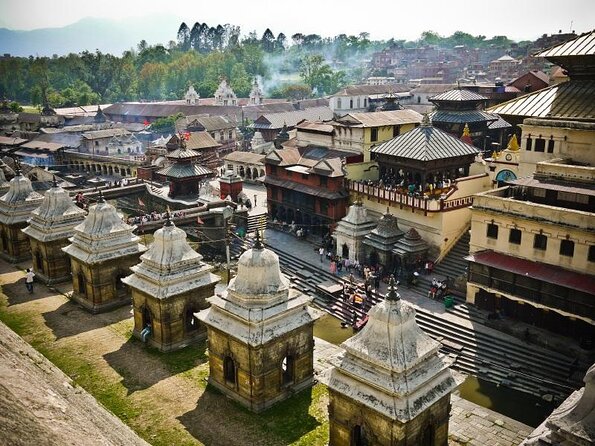
Pashupatinath is the oldest Hindu temple in Kathmandu Valley and one of the most important Hindu pilgrimage sites in the region. Boudhanath is a major center of Tibetan, or Vajrayana, Buddhism. They are not interchangeable religious monuments. Their rituals, symbols, buildings, and ideas differ, and the guide’s job is to explain those differences without turning the visit into a lecture.
I especially like the focus on religious harmony in Nepal. The tour also touches on the way Hindu and Buddhist traditions influence food and local customs. That broader view is useful if you are new to Nepal and want to understand why shrines from different traditions can appear so close together.
The group limit matters here. With up to five people, you can stop to ask what a symbol means, request a little more time, or tell the guide which topic interests you most. Several guides have been praised for answering many questions, and Santosh is noted for his flexibility when a visitor was not feeling well or wanted to fit in the aarati ceremony.
More UNESCO World Heritage Tours in Kathmandu:
- Private Kathmandu Sightseeing Tour | UNESCO World Heritage sites
★ 5.0 · 756 reviews - Kathmandu: Full Day 7 UNESCO Tour with Lunch – Private/Group
★ 5.0 · 415 reviews - Kathmandu: Full Day Top 4 UNESCO Tour with Lunch – Private/Group
★ 5.0 · 269 reviews
Starting at Gaushala and entering Pashupatinath
The meeting point is Gaushala Bus Stop on Ring Road, listed as P84V+VR2 in Kathmandu. The tour then heads toward Pashupatinath Temple. The starting point is close to public transportation, but you should confirm the exact meeting instructions when booking because the experience does not include hotel pickup in the information provided.
The main temple is closed to non-Hindus. That is not a minor detail. You will not be walking into the central shrine, but the surrounding complex and river area still offer plenty to discuss, including the role of Pashupatinath in Hindu worship and pilgrimage.
Your guide should help you understand what you are seeing rather than simply point out carved roofs and shrines. This is where a guide with training in culture, history, and archaeology can make a real difference. Santosh has been singled out for explaining religion alongside local customs and food, while Shreya has been praised for patience and for giving people time to explore at their own pace.
The Pashupatinath entrance fee is about NRP 1,000, or roughly $9, and is paid in cash. The fee is not part of the $15 tour price. Even though non-Hindus cannot enter the main temple, the stated tour cost still lists the Pashupatinath admission charge separately, so carry enough Nepali currency and ask the guide exactly which access the fee covers.
Aryaghat and the Hindu sixteen rites of passage
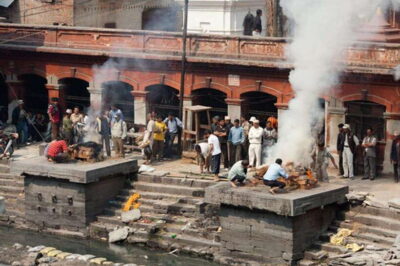
The most serious part of the morning takes place at Aryaghat, the cremation area beside the river. You may see Hindu last rites taking place. The guide explains the Shodasha Samskaras, the sixteen rites of passage that mark important stages in a Hindu life, and places cremation within that larger religious idea.
This can be one of the most meaningful parts of the experience, but it is also where respectful behavior matters most. Keep your voice low, follow the guide’s instructions, and avoid treating funeral activity as a performance. The supplied details do not promise a particular ceremony on the day you visit, so think of this as an educational visit to a working religious site, not a guaranteed event.
The planned stop is about 30 minutes. That is enough time for a careful explanation, but not necessarily enough for a long period of quiet observation. If you prefer a slower visit, tell the guide early. A three-hour tour has to keep moving.
One useful feature is the chance to ask questions that would be difficult to answer from a guidebook. You can ask how the sixteen rites relate to birth, adulthood, marriage, and death, rather than seeing cremation as an isolated custom. That context turns an intense scene into a clearer lesson in Hindu belief.
Deer Park and the story of Shiva
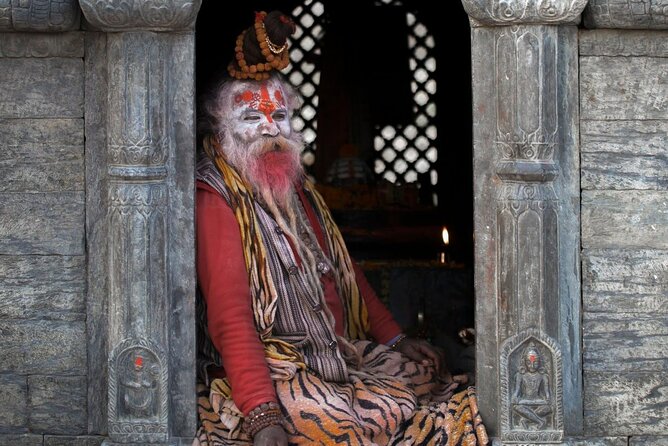
Mrigasthali Deer Park is a shorter stop, planned for about 15 minutes. Here, the guide tells the story of Lord Shiva’s journey to the area and explains how the place received its name.
This stop provides a change of pace after the cremation ghats. You have a chance to walk and explore rather than remain at the river. The visit is brief, so do not expect a long nature outing. Its value is mainly cultural and mythological, with the surrounding area serving as a setting for stories linked to Pashupatinath.
For me, this is the kind of stop that makes a guided visit feel less mechanical. It connects a place name with a religious story and gives you a little breathing room before the next temple.
A few more Kathmandu trips to weigh up
- Private Bhaktapur and Nagarkot Day Tour From Kathmandu
★ 5.0 · 305 reviews - Kathmandu: Full-Day 7 UNESCO Tour with Lunch – Private/Group
★ 4.9 · 247 reviews - Kathmandu: 7 UNESCO Sites Tour in 1 Day (Private Tour)
★ 4.9 · 204 reviews - Kathmandu: Top 4 UNESCO Tour with Lunch – Private/Group
★ 4.9 · 181 reviews
Gorakhnath and Guhyeshwari on the way to Boudhanath
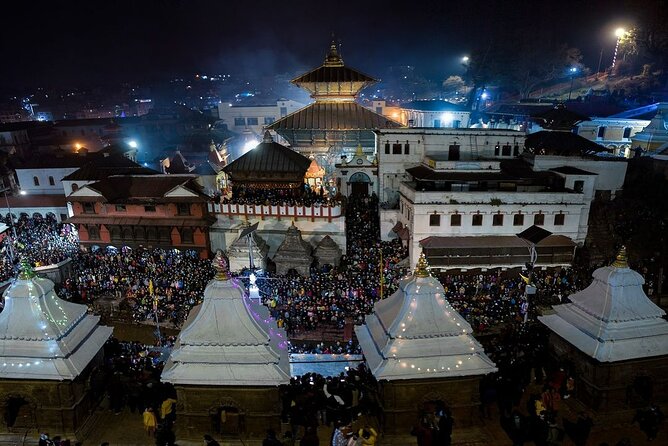
The route continues to Gorakhnath Mandir Temple, where the group takes a short rest and hears about Guru Gorakhnath. The planned visit is about 30 minutes. This is not simply a pause in the walking route. It adds another layer to the religious picture around Pashupatinath and helps explain why smaller shrines matter alongside the major temples.
Next comes Guhyeshwari Shaktipeeth Temple. The guide explains the story of Satidevi and the idea of a Shaktipeeth, a sacred place associated with the goddess tradition. The stop is listed as about 20 minutes, followed by roughly 20 minutes to reach Boudhanath.
These temples may be less familiar to first-time visitors than Pashupatinath. That is a good reason to have a guide. Without explanation, you might see another shrine and move on. With context, you can understand how stories of Shiva, Satidevi, guru figures, and sacred geography fit into Nepal’s religious life.
The walk and transfer also make the tour feel like a connected route rather than two unrelated attractions. Still, the total schedule is tight. If you want extended time at every shrine, this tour may feel rushed.
Boudhanath Stupa and the basics of Vajrayana Buddhism
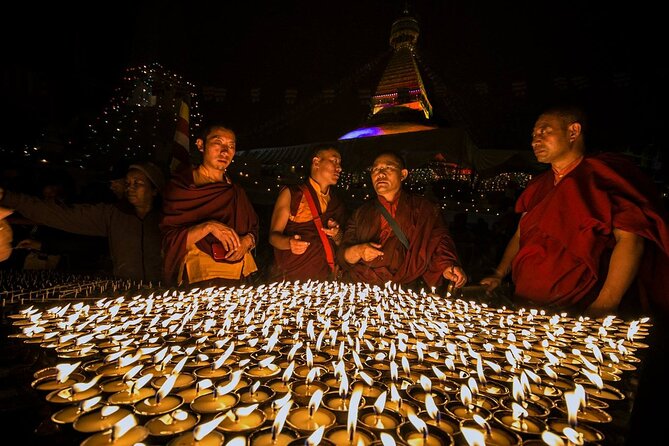
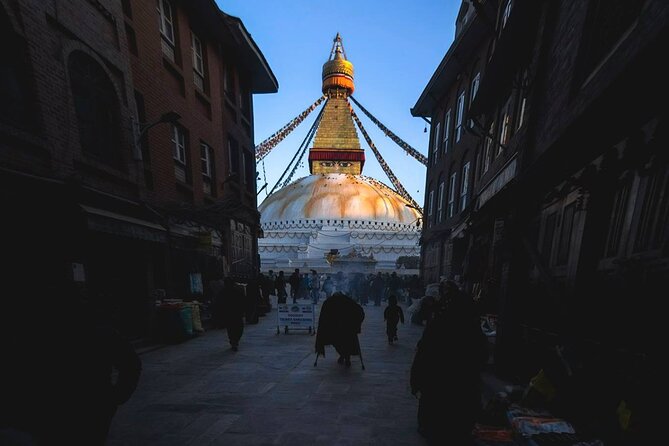
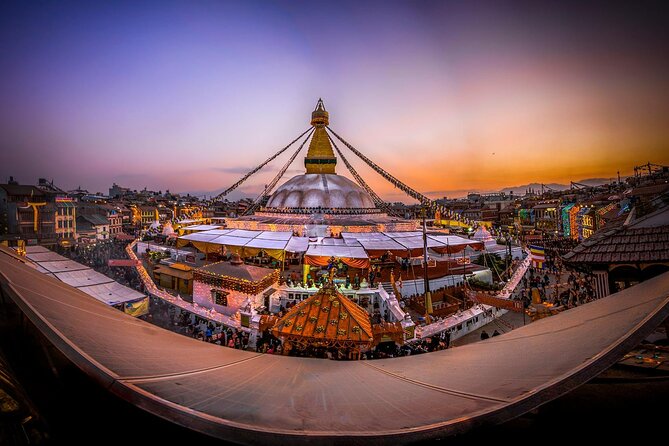
Boudhanath is the centerpiece of the second half. It is described as the second-largest stupa of its kind in the world and is closely linked with Tibetan Buddhism, also called Vajrayana Buddhism.
The planned stop is about 45 minutes, with an additional entrance fee of about NRP 400, or roughly $4, payable in cash. The stupa is a place for walking, prayer, ritual, and study. Your guide explains prayer flags, the five elements, the Four Noble Truths, and the Eightfold Path.
That list may sound like a lot for 45 minutes, but it gives you the key vocabulary for understanding Buddhist symbols and practice. Instead of seeing flags as colorful decoration, you learn what they represent. Instead of treating the stupa as a photogenic monument, you get an introduction to the religious ideas that shape how people move around it.
The tour does not promise an advanced lesson in Buddhist philosophy. Think of it as a clear first introduction. If you already study Buddhism, you may want more time for questions. If you are starting from scratch, the basic structure should help you make sense of later visits to monasteries and Buddhist sites.
Boudhanath also works well as the ending point because you are free to remain there after the guide leaves. You can continue exploring around the stupa, eat nearby, or make your own way back. The tour ends at the Boudhanath Gate, not at your hotel.
Guru Lhakhang and a working Buddhist monastery
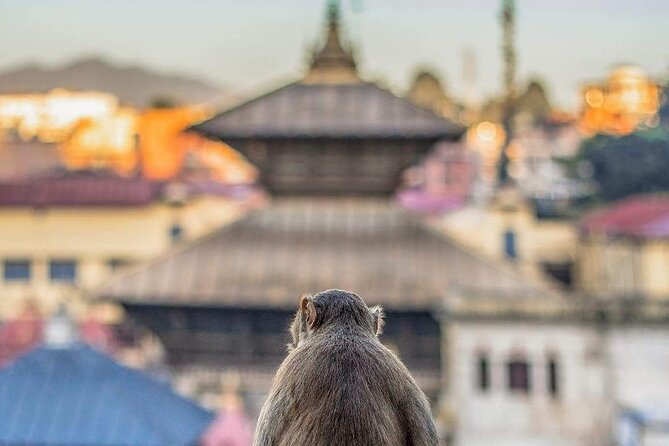
Guru Lhakhang Monastery is a short, 10-minute stop. You see what a typical Buddhist monastery looks like and hear about Guru Padmasambhava and Dharma Chakra Pariwartana.
The short timing means this is an orientation, not a long monastery visit. Even so, it helps you connect Buddhist teachings with a real place of practice. The guide can explain the role of the guru figure and the meaning of the Dharma Chakra, often translated as the wheel of teaching.
I would pay attention here to the difference between seeing a sacred building and understanding how it functions. The stop is brief, but it gives you another perspective on Boudhanath beyond the main stupa.
Thangka painting, mandalas, and singing bowls
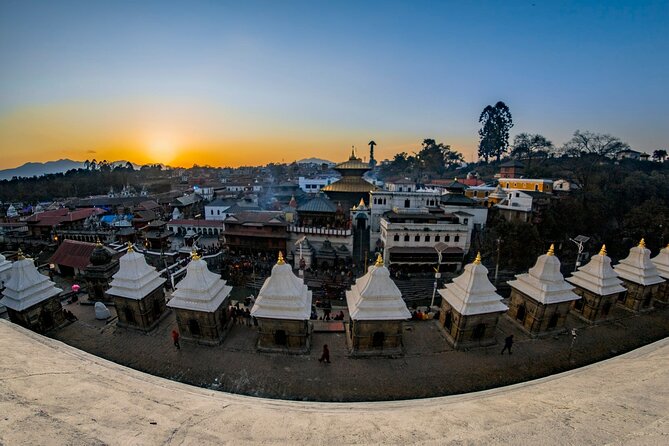
The final stop is the Boudha Stupa Thangka Center, where you learn about thangka painting and the concept of the mandala. The visit also covers the basics of healing bowls. The planned time is about 15 minutes, and admission is included.
Thangka painting is detailed Buddhist religious art, and mandalas are visual designs used to express Buddhist ideas about the universe and spiritual practice. A short visit cannot teach you to read every symbol, but it can help you recognize that these paintings are not simply souvenirs or wall decoration.
The singing bowl lesson adds a practical element. You learn the basics of how the bowls are connected with sound and healing practices. Be aware that a stop at an art center can sometimes feel more commercial than a temple visit. The information provided does not promise a purchase-free setting, so if you are not shopping, listen to the explanation and move on comfortably.
The tour ends after this stop near Boudhanath. That arrangement is useful if you want to spend the rest of the day in the area. It is less convenient if you need to return immediately to another part of Kathmandu, since your own transport afterward is not included.
What the $15 price really means
At $15 per person, the basic price is low for a private or small-group guided visit lasting about three hours. But you should budget for approximately $13 more in cash entrance fees: about $9 for Pashupatinath and $4 for Boudhanath. Your practical total is therefore around $28 per person, before any personal spending.
That still can be good value if you want explanations rather than a quick look at two major sites. A guide who can discuss Hindu rites, Buddhist teachings, local myths, food, art, and social customs gives you more than directions and dates.
The value is strongest for a first visit to Kathmandu, especially if you are unsure how to behave at religious sites or how to interpret ceremonies. It is less compelling if you only want photographs, dislike a planned schedule, or already have a strong background in Hindu and Buddhist traditions.
The group discount option may improve the price for a larger booking, but the group itself is capped at five people. The service includes an English-speaking guide only. Entrance fees, food, transport beyond the stated route, and personal purchases are not included.
Guides, timing, and who will enjoy it most
Santosh receives the clearest praise in the information available. He is described as attentive, flexible, and able to explain religion, culture, and history in an engaging way. He also adjusted timing for a visitor who wanted to see the aarati ceremony, which suggests you should ask early if a particular ceremony matters to you.
Shreya is also named as a patient guide who takes personal interests into account. Since guide availability can vary, you should not assume a specific person unless the booking confirms it. If Santosh or Shreya is assigned, tell the guide what you hope to learn before the walk begins.
This tour suits you best if you:
- Want a short introduction to Hinduism and Buddhism in Nepal
- Prefer a small group where you can ask questions
- Are comfortable visiting a working cremation site respectfully
- Want Boudhanath as your final stop
- Appreciate cultural explanation more than a fast checklist of monuments
You may want a different format if you need hotel pickup, want a full-day cultural tour, or prefer to avoid religious ceremonies and cremation grounds. The tour is listed as suitable for most people, near public transportation, and service animals are allowed.
The schedule totals roughly three hours, including the movement from Pashupatinath toward Boudhanath. Wear practical footwear and leave room for pauses, but the supplied information does not specify a dress code or walking distance, so ask the operator if you have mobility concerns.
Should you book Pashupatinath and Boudhanath?
I would book this tour if you want the meaning behind Kathmandu’s religious sites, not just a series of impressive buildings. The strongest features are the five-person limit, the clear contrast between Hindu and Buddhist traditions, and the chance to ask detailed questions of a guide such as Santosh.
Go in with realistic expectations. You will pay entrance fees separately, spend time at a sensitive cremation site, and cover several stops in only three hours. You will not enter the main Pashupatinath shrine unless you are Hindu, and the monastery and thangka center visits are short.
For a first Kathmandu visit, the tour offers a useful base. It gives you the symbols, stories, and basic customs you need to explore Pashupatinath and Boudhanath with more understanding later. Free cancellation is available up to 24 hours before the start time, which gives you some flexibility when planning your Nepal schedule.
FAQ
How long does the Pashupatinath and Boudhanath tour last?
The tour lasts approximately three hours.
How many people can join the tour?
The group has a maximum of five people.
What is included in the price?
An English-speaking guide is included.
Are entrance fees included?
No. Pashupatinath costs about NRP 1,000 and Boudhanath costs about NRP 400. Both fees are paid in cash at the entrance.
Can non-Hindus enter the main Pashupatinath Temple?
No. Only Hindus are allowed inside the main temple. The tour continues around the complex and toward Aryaghat.
Where does the tour start and end?
It starts at Gaushala Bus Stop on Ring Road in Kathmandu and ends at the Boudhanath Gate.
Can I cancel for a full refund?
Yes. You can cancel at least 24 hours before the experience start time for a full refund. Cancellations or changes made within 24 hours are not refunded or accepted.
Just added around Kathmandu
- Private Half-Day Tour of Boudhanath and Pashupatinath Temples in Kathmandu★ 4.5 · 9 reviews
- Private Half-Day Tour of Kathmandu Durbar Square and Swayambhunath Temple★ 4.5 · 11 reviews
- Namobuddha Monastery Hiking Day Tour via Panauti from Kathmandu★ 5.0 · 15 reviews
- Private Full-Day Kathmandu City Tour★ 5.0 · 9 reviews
- Private Day Tour in Kathmandu Valley Rim with Bhaktapur Sightseeing★ 5.0 · 3 reviews
- Private Half Day Budhanilkantha Tour★ 5.0 · 6 reviews
- Private Day Tour: Patan and Bhaktapur from Kathmandu★ 4.5 · 6 reviews
- Private Day Tour – Sacred Journey to Namo Buddha★ 5.0 · 5 reviews
UNESCO World Heritage Tours, compared.
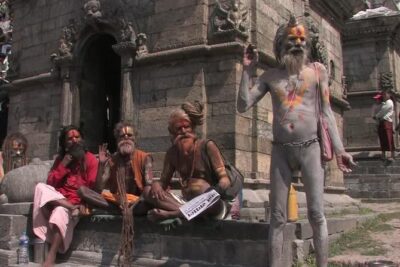
Private Kathmandu Sightseeing Tour | UNESCO World Heritage sites
Read our review →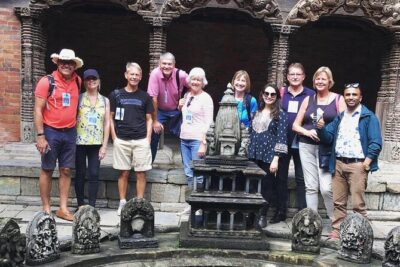
Full Day 7 UNESCO Tour with Lunch – Private/Group
Read our review →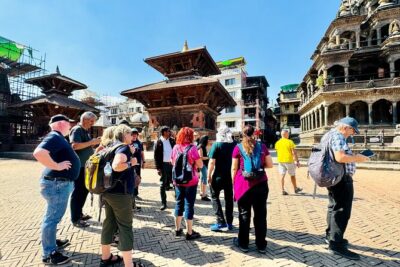
Full Day Top 4 UNESCO Tour with Lunch – Private/Group
Read our review →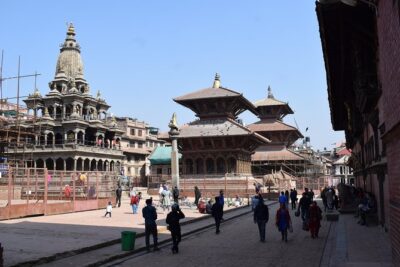
Kathmandu Spiritual Sites: Bodhnath & Pashupatinath Tour
Read our review →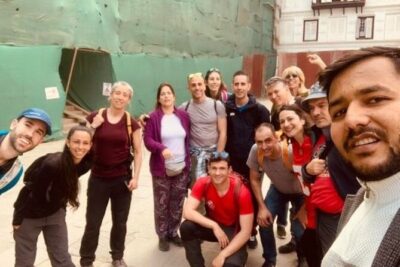
Kathmandu Private Sightseeing Tour | UNESCO World Heritage Sites
Read our review →Full Day 7 UNESCO Tour with Lunch – Private/Group
Read our review →Browse the lists this tour appears in