
Reviewed · MANASLU CIRCUIT TREKS
Manaslu Circuit Trek 8th Highest in the World
Manaslu is Nepal’s quieter big trek, circling the world’s eighth-highest mountain through river valleys, Buddhist villages, high pastures, and the demanding Larkya La Pass. The scenery changes almost every day, from hot lowland gorges to cold, high Himalayan country.
I like the trek’s remote feel and the strong Tibetan influence around Samagaun and Samdo. I also like that the $1,600 price covers permits, transport, guide, porters, guesthouses, meals, and three nights in Kathmandu. The drawback is the rough road travel and long mountain days, including a pass-crossing day of up to 12 hours.
Key points worth knowing
- Restricted-area trekking: You need special permits and a registered Nepali trekking company, and at least two trekkers are required in the group.
- Manaslu views: The route brings you close to Manaslu at 8,163 meters, along with Manaslu North and Naike Peak.
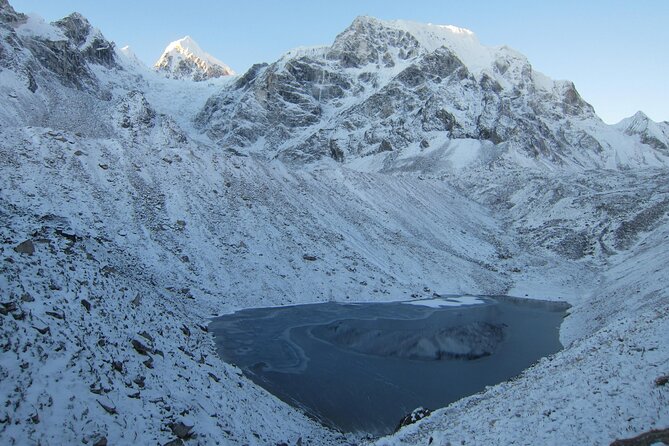
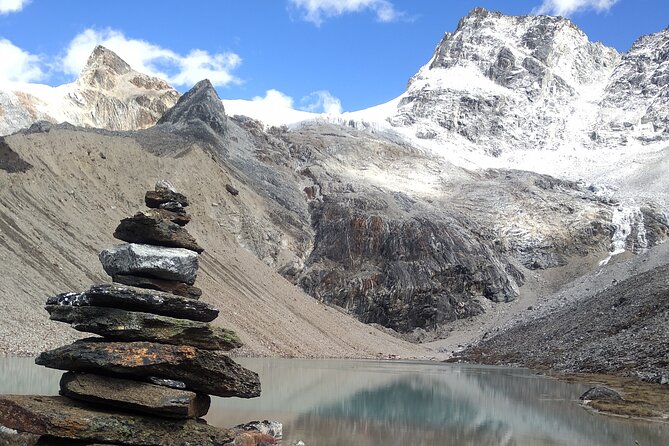
- Real mountain variety: Expect waterfalls, suspension crossings, forests, pastures, Tibetan-style villages, tundra, and high Himalayan ridges.
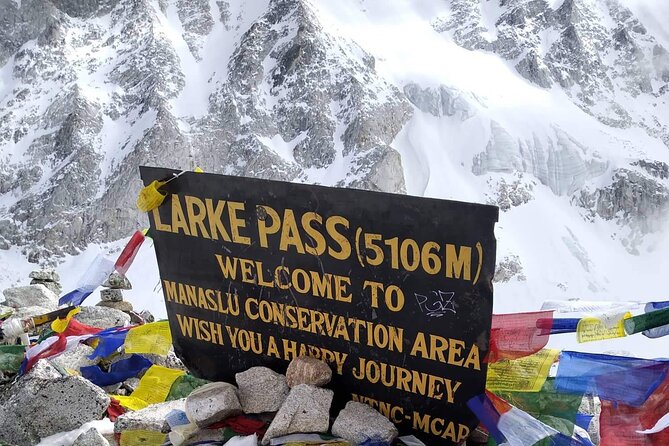
- Larkya La is the test: The pass day begins early and can last about 12 hours, with steep walking at high altitude.
- A practical package: Airport transfers, permits, guide, porters, lodging, transport, and most meals are included.
- Private group format: Only your own group takes part, rather than joining a large public departure.
Why Manaslu feels different from Nepal’s busier treks
The Manaslu Circuit opened to trekking in 1992 and remains a controlled, less-developed route. That restriction is not just paperwork. It helps preserve a quieter feel as you move through villages where Buddhist culture and mountain life remain part of the daily scene.
You follow the Budhi Gandaki River for much of the approach, then climb toward the high villages before crossing Larkya La. The route ends near Dharapani, where it joins the more popular Annapurna Circuit trail. That final connection is a useful reminder that the Manaslu Circuit is remote, but not isolated forever.
The most appealing part for me is the steady change in scenery. Early days bring rough roads, river crossings, waterfalls, and warmer valleys. Higher up, the cliffs open into broad mountain views, and Manaslu begins to dominate the horizon.
You should not mistake the word circuit for an easy walking holiday. The route includes long ascents, steep sections, basic guesthouses, and a major pass. The package is best for someone with strong physical fitness, not for a relaxed sightseeing trip with a few short walks.
More Manaslu Circuit Treks in Kathmandu:
- Manaslu Circuit Trek (15 Days)
★ 5.0 · 50 reviews - 16 Day Private Manaslu Circuit Trek from Kathmandu
★ 5.0 · 42 reviews - 10 Days Manaslu Circuit Trek in Larke La Pass
★ 5.0 · 30 reviews
Days 1 and 2: Kathmandu preparation and old-city sights
Your first day begins with an airport pickup arranged around your flight arrival. A representative takes you to a tourist-standard hotel in Kathmandu, where you check in and receive a briefing about the trek.
That arrival help matters. Kathmandu can feel confusing after a long flight, and having transport arranged lets you focus on getting settled. You also have time to check your equipment before leaving the city.
Day two combines gear planning with a Kathmandu Valley visit. The team examines what you need and can advise you about buying, renting, or receiving additional equipment. This is the moment to raise concerns about footwear, warm layers, rain protection, or trekking poles.
The planned cultural stop is Kathmandu Durbar Square. The entrance ticket is not included, so set aside money for that visit. You also have the option of arranging another Kathmandu Valley trip, depending on time and interest.
Three nights in Kathmandu are included in the overall package, though the itinerary details only the first two days before the trek. Breakfast is included in Kathmandu, but other city meals are not. That is a small cost, but worth remembering when you compare the headline price.
Day 3: The rough road to Machha Khola
The road journey to Machha Khola is part of the adventure, but it is also one of the least comfortable sections. The route can be lengthy and bumpy, with changing road conditions and local bus travel.
You will see rural scenery along the way, but do not expect a smooth transfer. This is a good day to keep water and small snacks close at hand. The transport is included, which saves you from arranging a separate mountain transfer, but the rough ride remains part of the bargain.
Machha Khola marks the beginning of the main walking route. From here, the trek follows river valleys and climbs gradually toward the high country.
Days 4 and 5: Waterfalls, hot springs, and the first Buddhist signs
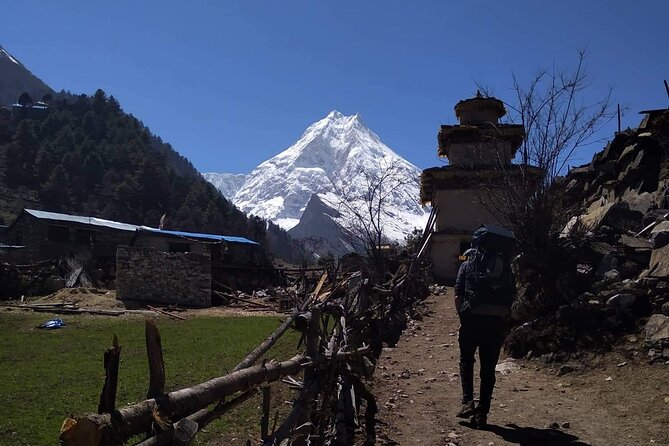
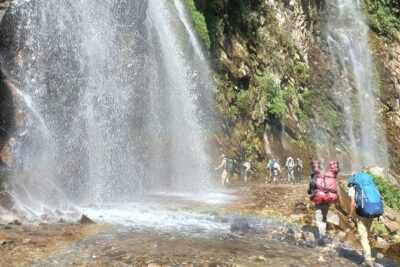
From Machha Khola, you cross a river and climb toward Khorla Besi. The path follows the river valley, passing waterfalls and areas affected by landslides. These details give the opening days a raw, unsettled character. The route is not manicured, and conditions can change.
You continue toward Tatopani, a village known for natural hot springs. The stop offers a welcome contrast to the walking, though the program does not promise a specific amount of time at the springs. Treat it as a feature of the village, not a guaranteed spa session.
The next day takes you toward Sirdibas at 1,430 meters. You walk along the riverbed, then climb a rocky ridge to Salleri at about 1,440 meters. This is where Buddhist culture first becomes more visible on the route.
The day also brings views of Sringi Himal, which rises to 7,187 meters. The altitude is still moderate, but the walking begins to feel more like a mountain trek than a valley outing. Your guide and porter team handle the route support, while you focus on pace and footing.
A few more Kathmandu trips to weigh up
- Everest Base Camp Trek – 14 Days
★ 5.0 · 1,499 reviews - Everest Base Camp Trekking
★ 5.0 · 485 reviews - Nagarkot Sunrise View and Day Hiking from Kathmandu
★ 5.0 · 471 reviews - Annapurna Circuit Trek with Tilicho Lake
★ 5.0 · 368 reviews
Day 6: Ghap and Namrung, with cooler nights ahead
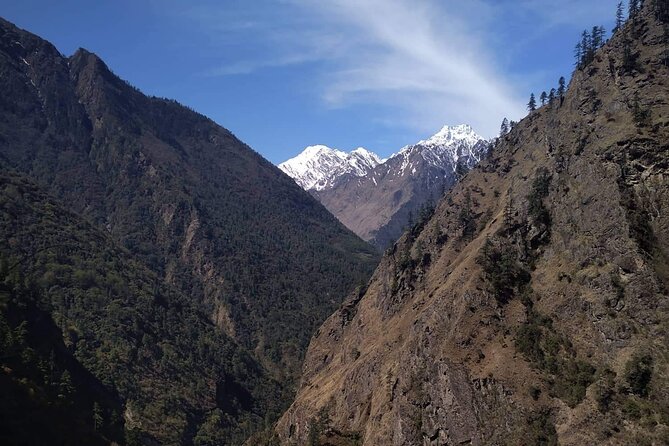
You descend into the Sringi Khola Valley, cross the river, and walk through forests toward Ghap. The path gains height, and the temperature begins to drop at night.
Namrung is an important point in the route because the Himalayan views become more pronounced from here. The forested approach also gives you a change from the exposed river sections below. It is a good example of why this trek feels fresh from one day to the next.
The altitude is now becoming a serious consideration. You should walk steadily rather than race uphill. The itinerary includes guesthouse lodging and three daily meals, but conditions remain basic compared with a city hotel. Expect simple mountain accommodation, not polished resort service.
Day 7: Samagaun and the first great Manaslu views
The route toward Samagaun enters a broad valley shaped by Tibetan cultural influence. The cliffs begin to recede, and the mountain views open up.
This is one of the trek’s strongest days for scenery. You can see Manaslu at 8,163 meters, Manaslu North at 7,157 meters, and Naike Peak at 5,515 meters. The mountains are not just distant backdrops. They become the focus of the route as the trail reaches higher settlements.
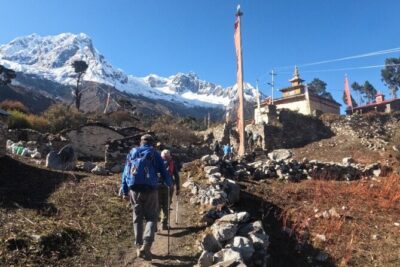
Samagaun also gives you a stronger sense of the local culture. The itinerary describes Tibetan influence in the area, and the village is a useful place to slow down and observe daily life rather than treating every stop as a sleep-only point.
At this height, cold nights and altitude can affect your energy. A good guide should help monitor how you are coping, but you still need to speak up if you feel unwell. The operator has used guides named Roshan, Dil, and Samir on its treks, with porter support including Sudip on one trip. Ask who is assigned to your group before departure.
Days 8 and 9: Samdo, rest, and the Tibetan border option
The trail from Samagaun to Samdo is described as mostly easy and fairly flat at first, passing through juniper and birch forest via Kermo Kharka. You then descend to cross the river before continuing toward Samdo.
Samdo is more than a stop between villages. Day nine provides a choice. You can take an approximately eight-hour side trip toward the Tibetan border with a packed lunch and plenty of drinking water, or stay near Samdo and observe village life.
That choice lets you match the day to your energy and altitude response. The border excursion is appealing for strong walkers who want extra time in the high country, but it adds a long day before the pass. Staying in Samdo is not a wasted option. Rest and acclimatization can be more valuable than squeezing in another demanding walk.
The itinerary does not give a separate admission charge for these mountain days, and the package includes lodging and meals. Personal drinks, snacks, and other individual expenses are extra.
Day 10: Dharamsala and the final approach to Larkya La
The route drops to about 3,850 meters to cross the Budhi Gandaki, then climbs again through juniper and tundra. You pass in and out of ravines before reaching the Larkya Guest House, also known as Dharamsala, the final stop before Larkya La.
This is a demanding approach day because you lose altitude and then regain it. The scenery becomes more severe and open, with fewer trees and a stronger sense of exposure.
The next morning starts early. Keep your torch close, as the route begins before sunrise. You will need warm clothing, water, food supplied or packed for the day, and a steady pace. The 12-hour estimate is important. This is not a casual pass walk with a quick photo stop.
Day 11: Crossing Larkya La
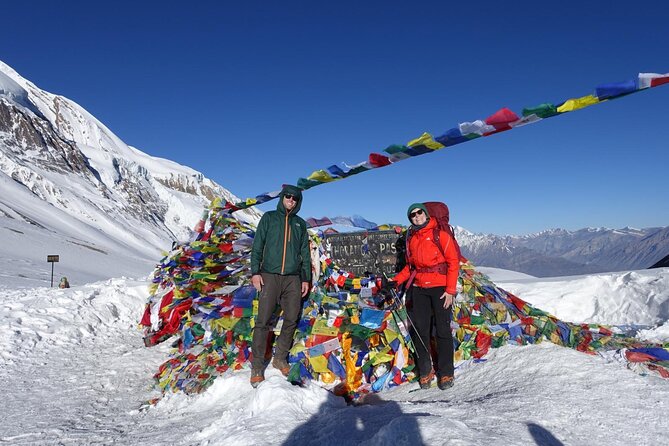
The pass day is the physical centerpiece of the circuit. You leave early to catch sunrise over the pass and to reduce the chance of strong midday winds.
The ascent is steep and crosses several misleading ridges before reaching Larkya La. The route can feel longer than it looks because each ridge may hide another rise. At high altitude, distance becomes harder to judge, and the cold and wind add to the effort.
After reaching the pass, you descend through more dramatic mountain country. The itinerary connects this day with Samagaun, although the route description centers on the pass crossing and the long mountain day. Confirm the exact overnight arrangement and walking direction with the operator before setting out.
This is where a private group can help. Your guide can set a pace for your own party rather than a large mixed group. Still, a private format does not make the pass easier. You need stamina, suitable equipment, and flexibility if weather or trail conditions affect the plan.
Days 12 and 13: Bimtang, Dharapani, and the Annapurna connection
From Bimtang, you walk through forests and pastures in the Dudh Khola Valley toward Dharapani. The day is estimated at about seven hours.
After the stark high-country crossing, the return to forests feels like a major shift. Dharapani is also where the Manaslu route joins the Annapurna Circuit trail. The village is therefore less remote in character than the settlements earlier in the trek, though it remains part of a mountain route.
Day thirteen descends from Dharapani toward Jagat, near the Marsyangdi River gorge. The walk is estimated at six hours. Because roads now reach parts of the region, the itinerary notes that you may charter a Jeep in place of some walking, depending on road conditions and your preference.
That option can be useful if your legs are tired after the pass. It also changes the feel of the final days, so decide if you want to prioritize walking or a quicker, more practical transfer.
Day 14: Jeep and bus back to Kathmandu
The final day begins with a shared Jeep to Besisahar. You pass villages around the town, have time to refresh, and then continue by bus to Kathmandu.
The transfer takes much of the day and may feel long after two weeks in the mountains. Still, the route offers a useful view of rural Nepal and brings the trip back to the city without requiring you to arrange separate transport.
The activity ends at the meeting point in Kathmandu. Airport pickup and drop-off are included, so confirm the timing of your onward flight with the operator rather than assuming the final transfer will be quick.
What the $1,600 price really covers
At $1,600 per person, this is not simply a guided walk. The cost includes three nights of tourist-standard accommodation in Kathmandu, airport transfers, ground transport, necessary permits, entrance fees, a special permit listed at $100, guide and porter services, porter insurance and equipment, guesthouse accommodation, and meals on the trek.
Breakfast is included 13 times, lunch 12 times, and dinner 12 times. Drinks, tips, insurance, personal purchases, and food in Kathmandu beyond daily breakfast are not included.
That makes the price look reasonable for a restricted-area trek. Permits alone are a meaningful part of the cost, and arranging road transfers, porters, lodging, and meals independently would take time and local contacts.
The value depends on what you want. If you prefer a polished lodge trek with a lighter schedule, this may feel too demanding. If you want one company handling the complicated parts of a remote route, the package offers practical value.
Guides, porters, and the private format
The trip is private, so only your group participates. That gives you more control over walking speed and rest choices than a large shared departure.
A registered Nepali company and guide are required for this restricted route. The package also includes porters, along with their expenses, insurance, and equipment. That support matters on a trek where the pass day is long and the altitude is high.
The operator has been connected with guides including Roshan, Dil, and Samir, and with porter Sudip. Since staff assignments can vary, ask for the names and experience of your actual guide and porter before paying the balance. Past experiences connected with this team include strong praise for kindness, helpfulness, safety, genuine advice, and family-run service.
Who should book this trek
I would choose this circuit if you want mountain scenery, remote villages, Tibetan cultural influence, and a major pass crossing in one trip. It suits people who are comfortable with basic guesthouses, long walking days, rough roads, and changing conditions.
I would hesitate if your fitness is low, if you dislike early starts, or if you need guaranteed comfort each night. The itinerary clearly calls for strong physical fitness, and the 12-hour Larkya La day is the main warning sign.
Confirmation is provided when you book. The activity offers free cancellation up to 24 hours before the start time, but cancellations or changes inside that window are not accepted for a refund. The advertised operating period runs from September 1, 2024, through November 26, 2026, with daily opening hours shown as 12:15 AM to 12:15 PM.
Should you book the Manaslu Circuit Trek?
Book it if your priority is a quieter Himalayan route with powerful views, living mountain culture, and a real sense of remoteness. The combination of Manaslu, Samagaun, Samdo, and Larkya La gives you more variety than a simple out-and-back mountain trek.
Think twice if you want short walks, easy roads, or flexible comfort. The package is well suited to an active private group that values local support and clear logistics. Before booking, confirm your assigned guide, porter arrangement, exact overnight plan around the pass, and the meals and transport schedule. If those details fit your expectations, the Manaslu Circuit offers strong value at $1,600.
FAQ
Where does the Manaslu Circuit Trek start and finish?
It starts at the Adventure Glacier Treks and Expedition meeting point on Chaksibari Marg in Kathmandu. The activity ends back at the same meeting point after the return from Besisahar.
How long does the trek take?
The itinerary lasts approximately 14 days, including arrival and preparation in Kathmandu, the mountain trek, and the return journey by Jeep and bus.
Is airport pickup included?
Yes. Airport pickup and drop-off are included, and the airport representative meets you according to your flight arrival time.
Are permits included in the price?
Yes. Necessary permits and entrance fees are included, including the listed special permit cost of $100.
Are meals included?
Yes. The package includes three meals a day as described in the itinerary. It lists 13 breakfasts, 12 lunches, and 12 dinners. Drinks and food in Kathmandu beyond daily breakfast are not included.
Do I need strong fitness for this trek?
Yes. The additional information states that participants should have a strong physical fitness level. The itinerary includes long walking days and a Larkya La pass day estimated at 12 hours.
Can I cancel for a full refund?
You can cancel at least 24 hours before the experience start time for a full refund. Cancellations or changes made less than 24 hours before the start time are not accepted for a refund.
Just added around Kathmandu
- Private Half-Day Tour of Boudhanath and Pashupatinath Temples in Kathmandu★ 4.5 · 9 reviews
- Private Half-Day Tour of Kathmandu Durbar Square and Swayambhunath Temple★ 4.5 · 11 reviews
- Namobuddha Monastery Hiking Day Tour via Panauti from Kathmandu★ 5.0 · 15 reviews
- Private Full-Day Kathmandu City Tour★ 5.0 · 9 reviews
- Private Day Tour in Kathmandu Valley Rim with Bhaktapur Sightseeing★ 5.0 · 3 reviews
- Private Half Day Budhanilkantha Tour★ 5.0 · 6 reviews
- Private Day Tour: Patan and Bhaktapur from Kathmandu★ 4.5 · 6 reviews
- Private Day Tour – Sacred Journey to Namo Buddha★ 5.0 · 5 reviews
Manaslu Circuit Treks, compared.
16 Day Private Manaslu Circuit Trek from Kathmandu
Read our review →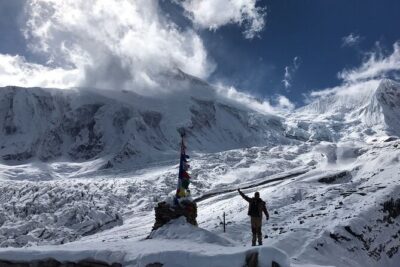
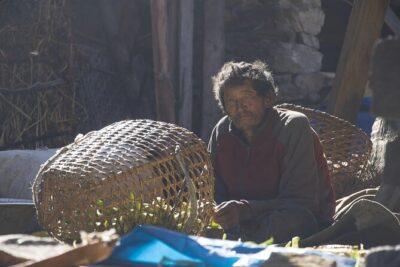
10 Days Manaslu Circuit Trek in Larke La Pass
Read our review →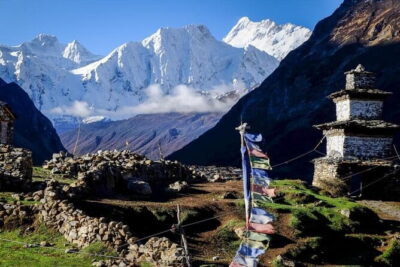
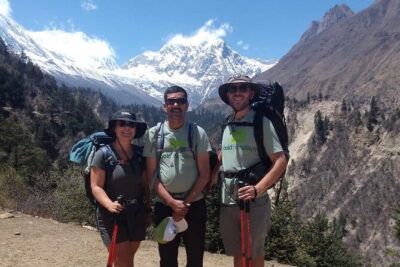
Manaslu Circuit Trek to the Beauty of 8th Highest Mountain
Read our review →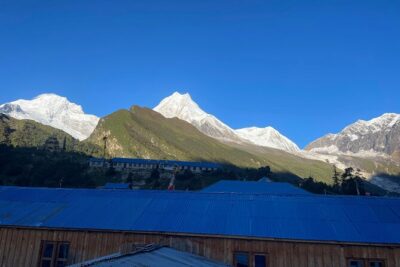
Manaslu Circuit Trek – 14 days of Himalayan Adventure
Read our review →Browse the lists this tour appears in