
Reviewed · MANASLU CIRCUIT TREKS
Dancing in the Manaslu Circuit Trek
The Manaslu Circuit gives you Nepal at its most rewarding and demanding: subtropical river valleys rise toward Tibetan-style villages, glaciers, monasteries, and the high Larkya La Pass. I like the quiet restricted region and the steady change in scenery, from hot springs and jungle to ice and snow.
I also like that the price includes meals, permits, government taxes, transport, a certified English-speaking guide, and twin-share rooms. Guides such as Bijaya, Tenji, Lakpa, and Krishna have led this route, but your assigned guide may differ. The main drawback is the schedule: several days are listed as roughly 12 hours, and the pass crossing demands solid fitness and careful pacing.
Key points to know before booking
- Larkya La reaches about 5,100 meters, making the pass day the physical high point of the trek.
- The route enters a restricted area, so permits and an organized guide are part of the experience.
- A full acclimatization day near Samagaun includes an optional hike toward Manaslu Base Camp and Birendra Lake.
- Transport takes up a large part of the first and final days, including a long drive from Kathmandu.
- Meals, permits, guide service, and twin-share rooms are included, while insurance, porter service, drinks, and tips are extra.
- This is a private trip for your own group, useful if you prefer a more personal pace and direct contact with your guide.
Why the Manaslu Circuit feels different
Mount Manaslu is Nepal’s eighth-highest peak, and the circuit around it offers a strong sense of distance from the country’s better-known trekking corridors. Access is restricted, which helps keep the route quieter and gives villages a less commercial feel.
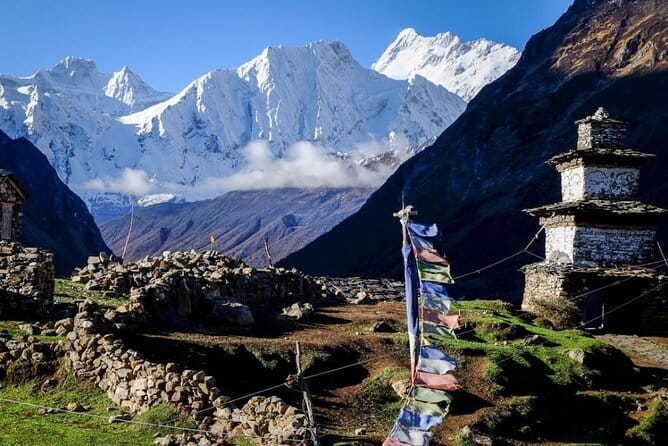
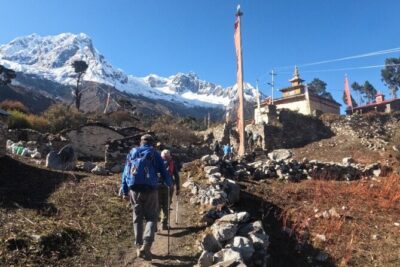
You follow the Budhi Gandaki River through narrow gorges, cross wooden bridges, pass stone houses and Mani walls, and gradually enter a Tibetan-influenced mountain world. Prayer flags, monasteries, and local customs become more common as you gain height.
The title includes dancing, and cultural moments involving local music and dance are part of the appeal. Do not expect a staged performance at every stop. The cultural side is more likely to appear through village life, lodge conversations, monasteries, and spontaneous moments with local people.
I especially like the route’s dramatic changes. Early days bring green hillsides, forests, and hot springs. Later, the trail reaches Shyala and Samagaun, where the views open toward high peaks and glaciers. Near the pass, the setting becomes stark and icy.
More Manaslu Circuit Treks in Kathmandu:
- Manaslu Circuit Trek (15 Days)
★ 5.0 · 50 reviews - 16 Day Private Manaslu Circuit Trek from Kathmandu
★ 5.0 · 42 reviews - 10 Days Manaslu Circuit Trek in Larke La Pass
★ 5.0 · 30 reviews
Day 1: Kathmandu to Maccha Khola by road
The first day is mostly transport. You drive from Kathmandu through rural villages and green hill country toward Maccha Khola, with a possible vehicle change at Soti Khola.
The listed travel time is about 12 hours, so you should prepare for a long and tiring road day. This is not a gentle sightseeing transfer. The value is practical: it gets you to the trailhead without requiring an extra overnight stop.
The service includes a deluxe bus transfer from Kathmandu to Soti Khola, followed by the onward connection toward Maccha Khola. Road conditions and local transport arrangements can affect the exact timing, so keep this day flexible.
Day 2: Maccha Khola, Tatopani, and Jagat
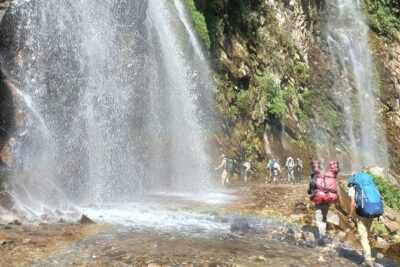
After breakfast, you begin walking beside the Budhi Gandaki River. The route passes through changing vegetation and reaches Tatopani, known for its natural hot spring.
A stop at the hot spring can be a welcome break after the first road journey. You then enter the restricted region and continue toward Jagat, a village marked by stone houses and a rural setting.
This day is shown as about 12 hours, which is a demanding length when combined with uneven trail conditions. Your guide should help set a pace that suits the group. Guides who have led this trip, including Bijaya and Tenji, are praised for looking after mixed-age groups and sharing information about Nepal along the way.
Day 3: Jagat to Deng through the river valley
The trek continues from Jagat toward Deng. You remain close to the Budhi Gandaki for much of the route, moving through river scenery, forest, and steep valley sections.
This is where the circuit begins to feel like a real multi-day trek rather than a series of scenic stops. The days are long, and the trail requires steady effort. You should be comfortable walking for many hours and handling changing surfaces.
Deng marks a clear shift in the character of the route. The villages become more remote, and the Tibetan influence grows stronger as you move farther from the lower valley.
A few more Kathmandu trips to weigh up
- Everest Base Camp Trek – 14 Days
★ 5.0 · 1,499 reviews - Everest Base Camp Trekking
★ 5.0 · 485 reviews - Nagarkot Sunrise View and Day Hiking from Kathmandu
★ 5.0 · 471 reviews - Annapurna Circuit Trek with Tilicho Lake
★ 5.0 · 368 reviews
Day 4: Prok village, Mani walls, and forest
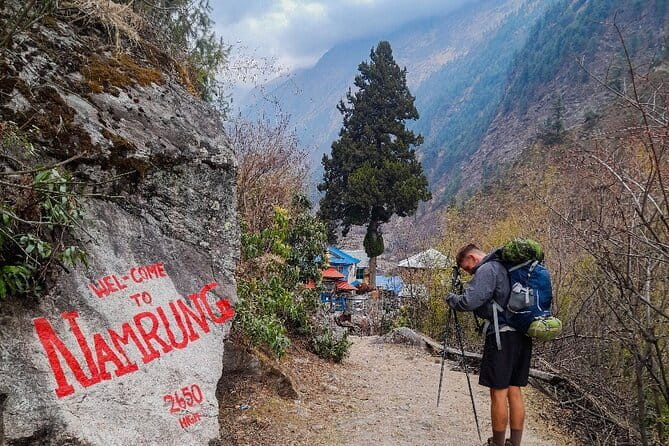
The day centers on Prok village, Mani walls, and forest trails before reaching Namrung. Mani walls are built from inscribed prayer stones, and they are one of the quiet details that make this route feel culturally distinct.
You will see signs of Buddhist practice in the architecture and religious features along the path. Walk respectfully around monasteries, prayer wheels, and walls, and follow your guide’s advice about local customs.
The forest sections provide shade and a change from the exposed river gorge. Namrung is an important stop because the scenery begins to open toward higher mountains.
Day 5: Namrung to Shyala
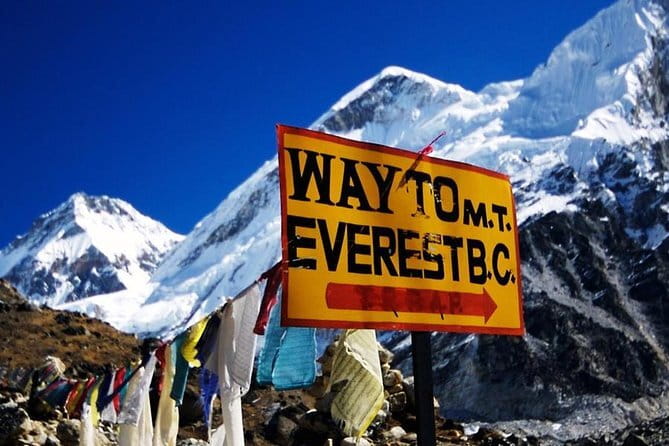
From Namrung, you trek toward Shyala. The route gains height and the mountain setting becomes more pronounced.
Shyala is valued for its broad views and high-altitude atmosphere. After several days of river valleys and forest, you begin to see the scale of the Manaslu region more clearly.
This is also a point where altitude starts to matter more. Walk slowly, drink water, and tell your guide if you develop a headache, nausea, unusual fatigue, or other symptoms. Personal medical costs and drinks such as mineral water are not included, so budget for them.
Day 6: Shyala to Samagaun and Pungyen Gompa
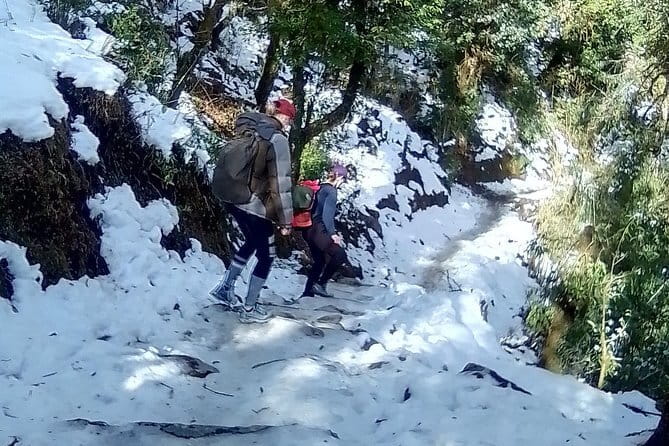
The walk from Shyala to Samagaun is one of the most memorable days. You also hike to Pungyen Gompa, a monastery with strong cultural importance in the Manaslu area.
Samagaun is a major village on the circuit and an important base for acclimatization. The scenery here feels more open, colder, and more alpine than it did at the start.
The schedule lists another long day of about 12 hours. That timing may include the monastery hike and depends on trail pace, stops, and local conditions. The private format helps because you are not tied to a large group’s fixed rhythm.
Day 7: Acclimatization near Manaslu
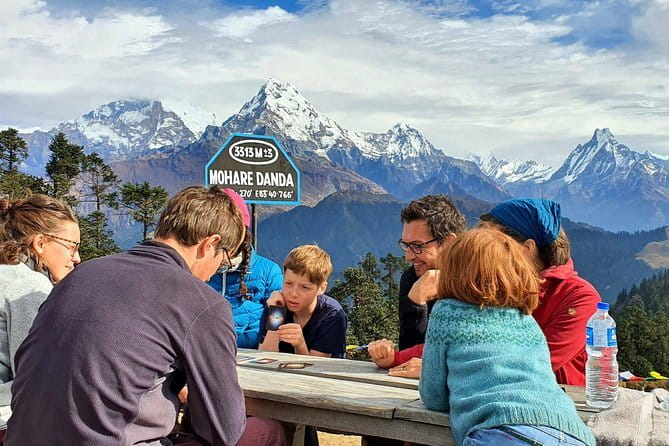
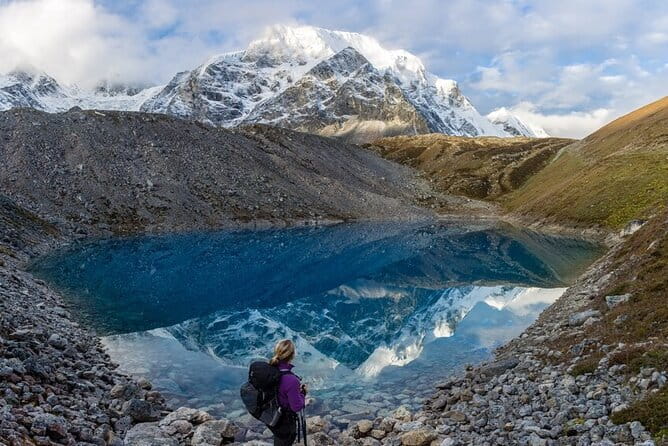
Day seven is set aside for acclimatization near Manaslu. You can rest, explore the area, or take the optional hike toward Manaslu Base Camp and Birendra Lake.
This rest day is not wasted time. It gives your body a chance to adjust before the route reaches its highest point. If you feel strong and conditions allow, the optional hike adds a worthwhile mountain experience. If you feel tired, staying closer to Samagaun is the sensible choice.
The inclusion of this day improves the trip’s value and safety. A rushed schedule might cost less in time, but it would give you less room to respond to altitude.
Day 8: Toward the Larkya Glacier and Dharmasala
The route descends toward the Budhi Gandaki River, crosses a wooden bridge, and continues toward the Larkya Glacier area. The trail becomes more exposed and the scenery more severe.
You pass monasteries and Mani walls while moving toward Dharmasala, also known as the lodging area before the pass. The route includes icy streams and Larke Bazaar, adding a distinctly high-mountain feel.
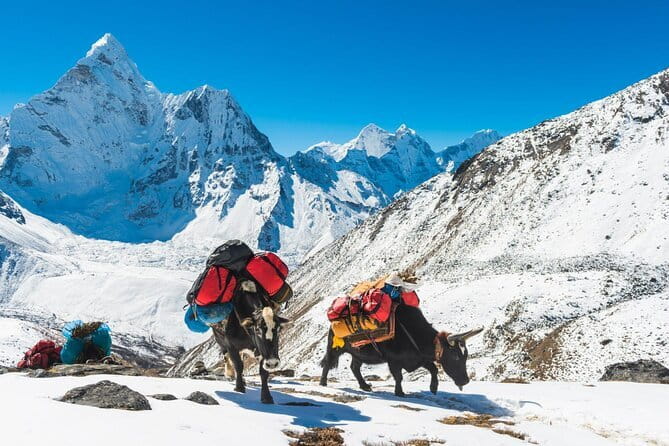
This is another day listed at about 12 hours. The combination of cold, altitude, and limited facilities makes it important to carry warm layers and keep your day pack light. A porter is not included, so you must either carry your own equipment or hire one in Kathmandu or at Soti Khola.
Day 9: Larke Bazaar and the approach to the pass
The schedule places the approach to Dharmasala and the pass area across days eight and nine, so you should confirm the exact overnight arrangement before departure. The broad plan is clear: you move through icy terrain, pass Larke Bazaar, and prepare for the crossing of Larkya La.
This section is less about village life and more about endurance. The trail can feel stark and demanding, while views toward the Larkya Glacier provide the reward.
Your guide’s role becomes especially important here. The named guides who have led this route, including Lakpa and Tenji, are noted for trail support, local knowledge, and keeping groups together. Confirm your guide’s experience with high-altitude trekking during your pre-trip planning.
Day 10: Crossing Larkya La at 5,100 meters
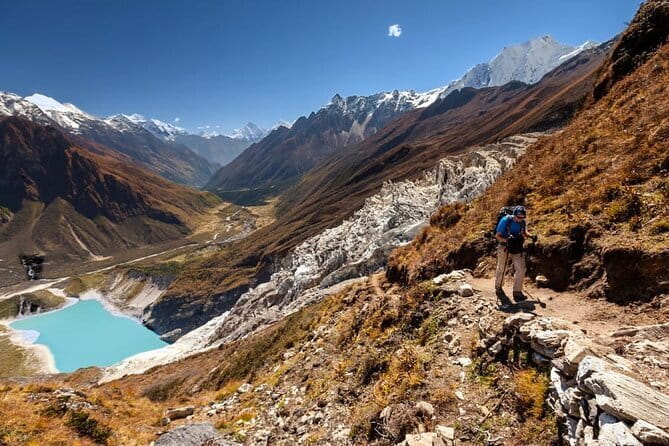
The pass day is the central challenge of the circuit. You climb through difficult terrain toward Larkya La, with views of Cho Danda, Larkya Peak, and four frozen lakes.
At about 5,100 meters, this is not a casual walk. You need good physical fitness, patience, warm clothing, and the ability to handle a long day at altitude. Weather can change quickly, and the tour requires suitable conditions for the crossing.
The reward is a powerful high-Himalayan setting, with frozen water, glaciers, ridges, and wide mountain views. Reaching the pass is an achievement, but safe pacing matters more than speed or photographs.
The itinerary places the pass on day ten, though the preceding approach days should be clarified with the operator. A small private group can make this easier, since the guide can respond to how you are feeling instead of managing a large crowd.
Day 11: Descending through forests to Dharapani
After the pass, the route descends through greener country. You cross the Dudh Khola, pass through Karche Village, and continue to Dharapani.
The return of forests and lower elevations feels welcome after the cold pass region. Descending does not mean the day is effortless, though. Knees and ankles often work hard on steep downhill trails, so trekking poles can be useful if you already use them.
Dharapani marks the end of the main walking section. A shared jeep transfer is included for the next stage, so you do not need to arrange that connection yourself.
Day 12: Dharapani to Besisahar and Kathmandu
The final day begins with a shared jeep from Dharapani to Besisahar, followed by a roughly five-hour drive to Kathmandu. The listed total is about eight hours, though road conditions can influence the actual arrival time.
This is another substantial transport day. If you have an onward flight, allow a generous buffer rather than planning a tight connection.
The experience ends back at the Kathmandu meeting point at P897+443, Kathmandu 44600. Pickup is offered, and the activity begins and ends at the stated meeting point.
What the $1,390 price really covers
At $1,390 per person, this trek offers solid value if you want an organized Manaslu Circuit without arranging each permit, meal, transfer, and lodge yourself.
The price includes:
- Breakfast, lunch, and dinner during the trek
- Required permits and government taxes
- Deluxe bus travel from Kathmandu to Soti Khola
- Shared jeep travel from Dharapani to Besisahar
- Besisahar to Kathmandu transport
- A government-certified English-speaking guide
- Twin-share private rooms
- A first aid kit
- A farewell dinner
That bundle matters on a restricted route. Permits and transport can be awkward to arrange alone, and a guide helps with route decisions, village communication, and altitude concerns.
The price does not include travel insurance, a porter, personal expenses, phone charging, laundry, mineral water, hot water, or tips. A porter is the main extra cost to plan for. If you do not want to carry a full pack over the pass, arrange one from Kathmandu or Soti Khola.
Food, rooms, and the practical side of trekking
Three meals a day are included, which makes daily budgeting easier. Lodge food is generally a basic part of the trekking experience, so keep expectations practical rather than restaurant-like.
Twin-share rooms are included throughout the trek. This suits couples and friends, but solo participants should confirm how room sharing is handled. The trip is private for your own group, yet private does not mean single rooms.
Facilities become simpler as you go higher. Personal charges such as hot water, charging, laundry, and bottled water are extra. Carry some cash for these costs and for tips, since the provided information does not state that card payment is available along the route.
How the guide service shapes the experience
The guide is one of the strongest reasons to choose an organized trip here. Bijaya, Tenji, Lakpa, and Krishna are among the guides associated with this route, and their roles have included explaining Himalayan culture, supporting first-time trekkers, and helping groups manage long days.
One useful detail is the personal contact available before departure. Communication through WhatsApp has been used to discuss questions, insurance, and preparation. You should use that contact to confirm the exact day-by-day plan, guide assignment, porter arrangements, and transport details.
The guide may also help make the cultural side more personal. At village lodges, you might share time with local families, learn a few Nepali words, or hear stories about life in the mountains. Those simple exchanges can be more memorable than a quick photo stop.
Fitness, altitude, and who should book
You should book this trek if you have a moderate to strong fitness base and enjoy long walking days. The route includes steep and uneven sections, high-altitude terrain, and a pass at 5,100 meters.
You do not need to be an elite mountaineer, but you do need to prepare. Regular hill walking, stair training, and long weekend hikes will help. Break in your boots before arrival, and plan clothing for both warm valleys and freezing high country.
This trip suits:
- Experienced hikers seeking a quieter route
- Couples, families, or friends wanting a private group
- People interested in Tibetan-influenced villages and Buddhist culture
- Hikers who value included permits, meals, and transport
- Those comfortable with basic lodge accommodation and extra personal costs
It is less suitable if you dislike long road journeys, shared rooms, cold conditions, or days that can last around 12 hours. The pass also makes travel insurance essential, and arranging that coverage is your responsibility.
Booking details and cancellation terms
Confirmation is normally provided at booking. If you reserve within one day of departure, confirmation comes as soon as possible and depends on availability.
You can cancel at least 24 hours before the local start time for a full refund. Cancellations within 24 hours are not refunded, and late changes are not accepted. Poor weather or failure to meet the minimum number of participants can lead to a new date, another experience, or a full refund.
Should you book the Manaslu Circuit?
I would choose this trek if you want a serious Himalayan route with cultural depth, a quieter trail, and the satisfaction of crossing Larkya La. The strongest value comes from the combination of permits, full-board meals, transport, guide service, and an acclimatization day.
Before paying, confirm the exact transport sequence, the overnight plan before the pass, the name and experience of your assigned guide, and the cost and availability of a porter. If you are ready for long days and basic mountain lodges, this is a strong choice for an authentic 12-day Nepal adventure. If you want short walks, polished hotels, or easy road travel, choose a gentler trip instead.
FAQ
Where does the Manaslu Circuit trek start and finish?
It starts at P897+443 in Kathmandu, Nepal, and ends back at the same meeting point after the return journey from Besisahar.
How long does the trek last?
The experience lasts approximately 12 days, including road transfers from Kathmandu to the trail area and from Besisahar back to Kathmandu.
Is the Larkya La Pass included?
Yes. The route crosses Larkya La at approximately 5,100 meters, with views of Cho Danda, Larkya Peak, glaciers, and four frozen lakes.
Is an acclimatization day included?
Yes. Day seven is set aside for acclimatization near Samagaun. You may optionally hike toward Manaslu Base Camp and Birendra Lake.
Are meals included?
Yes. Breakfast, lunch, and dinner are included during the trek. Mineral water, hot water, and other personal purchases are extra.
Is a porter included?
No. You are responsible for arranging a porter if you want one. A porter can be hired in Kathmandu or at Soti Khola.
What happens if bad weather cancels the trek?
If poor weather causes cancellation, you will be offered a different date or a full refund. A full refund also applies if the minimum number of participants is not reached and the experience is canceled.
Just added around Kathmandu
- Namobuddha Monastery Hiking Day Tour via Panauti from Kathmandu★ 5.0 · 15 reviews
- Private Half-Day Tour of Boudhanath and Pashupatinath Temples in Kathmandu★ 4.5 · 9 reviews
- Private Half-Day Tour of Kathmandu Durbar Square and Swayambhunath Temple★ 4.5 · 11 reviews
- Private Full-Day Kathmandu City Tour★ 5.0 · 9 reviews
- Private Day Tour in Kathmandu Valley Rim with Bhaktapur Sightseeing★ 5.0 · 3 reviews
- Private Half Day Budhanilkantha Tour★ 5.0 · 6 reviews
- Private Day Tour: Patan and Bhaktapur from Kathmandu★ 4.5 · 6 reviews
- Private Day Tour – Sacred Journey to Namo Buddha★ 5.0 · 5 reviews
Manaslu Circuit Treks, compared.
16 Day Private Manaslu Circuit Trek from Kathmandu
Read our review →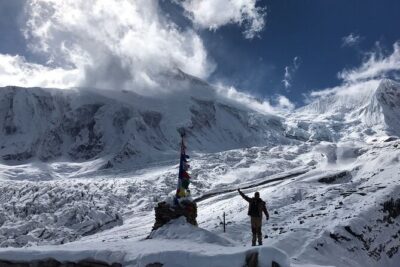
10 Days Manaslu Circuit Trek in Larke La Pass
Read our review →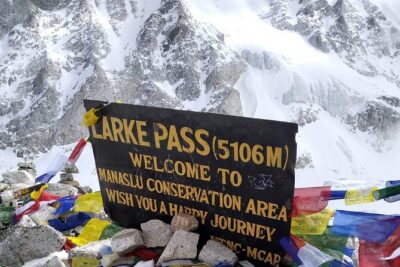
Manaslu Circuit Trek 8th Highest in the World
Read our review →
Manaslu Circuit Trek to the Beauty of 8th Highest Mountain
Read our review →
Manaslu Circuit Trek – 14 days of Himalayan Adventure
Read our review →Browse the lists this tour appears in