
Reviewed · MANASLU CIRCUIT TREKS
Manaslu Trekking
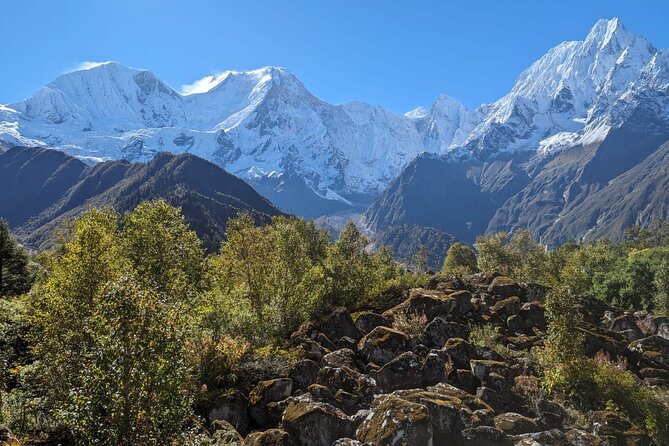
Mount Manaslu gives you Nepal at its most dramatic: a 17-day circuit around the world’s eighth-highest mountain, from humid river valleys and rice terraces to high tundra, glaciers, and the Larkya Pass. The route also passes through Gurung and Tibetan-influenced villages, so this is as much a cultural walk as a mountain journey.
I like the quieter feel compared with the Everest and Annapurna routes, and I like that the price includes permits, full-board trekking meals, a guide, porters, and mountain lodging. The main consideration is effort: this is a serious high-altitude trek, not a gentle walking holiday, and some itinerary details need clarification before you book.
Key points to know before booking
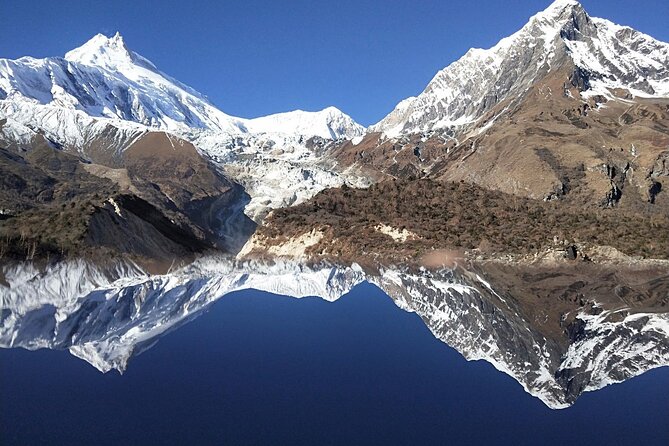
- Larkya Pass is the big test: You reach the pass before descending to Bimthang, with long uphill and downhill walking at altitude.
- Mount Manaslu is the star: The best mountain views gather around Namrung, Samagaon, and the high route toward the pass.
- Kathmandu sightseeing is included: You visit Pashupatinath, Boudhanath Stupa, and Swayambhunath with a professional city guide.
- The route feels less commercial: Remote villages, suspension bridges, forests, and Buddhist settlements replace the busier feel of Nepal’s most famous trekking corridors.
- The package is fairly complete: Permits, TIMS, national park fees, meals, lodging, airport transfers, guide costs, porter support, and a medical kit are included.
- You get a private departure: Only your own group participates, with group discounts available and confirmation provided at booking.
Why the Manaslu Circuit feels different
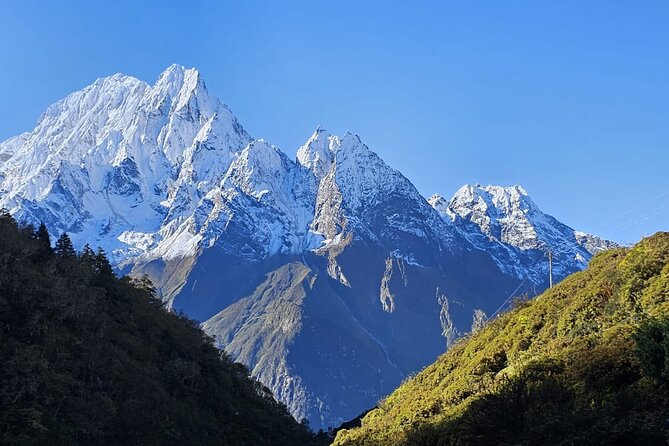
The Manaslu Circuit follows the Budhi Gandaki River for much of its first half. That means the walk changes constantly. You start among Sal forests, waterfalls, rice terraces, and warm river valleys. Later, the trail enters narrow gorges, bamboo woods, rhododendron forests, and high mountain country.
I like this steady change more than a trek that gives you the same view for days. One morning you may be crossing a suspension bridge above fast water. A few hours later, you may be walking through a stone village with Buddhist prayer features and snowy peaks behind it.
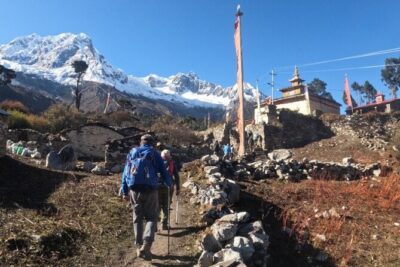
The route circles Mount Manaslu, which rises to 8,163 meters. The itinerary names views of Peak 29 and Manaslu around Samagaon, where you also have a separate day to explore the monastery and village. That rest day matters. It breaks up the long ascent and gives you time to adjust before the highest part of the trek.
You should also know that this is not a polished resort route. Accommodation is in teahouses or mountain lodges during the trek. They are described as neat and clean, but the information does not promise luxury. At this price, you are paying for a supported mountain journey, not five-star comfort in remote villages.
More Manaslu Circuit Treks in Kathmandu:
- Manaslu Circuit Trek (15 Days)
★ 5.0 · 50 reviews - 16 Day Private Manaslu Circuit Trek from Kathmandu
★ 5.0 · 42 reviews - 10 Days Manaslu Circuit Trek in Larke La Pass
★ 5.0 · 30 reviews
Kathmandu begins with temples and practical preparation
The first day is simple and useful. You are met at Tribhuvan International Airport, transferred to your Kathmandu hotel, and given time to freshen up before a welcome dinner at a typical Nepalese restaurant. A trip briefing follows, with the night at the hotel.
Day two combines sightseeing with preparation. Pashupatinath Temple gives you a first look at one of Kathmandu’s major religious sites. You then visit Boudhanath Stupa, one of Nepal’s largest stupas and a UNESCO World Heritage Site, before heading to Swayambhunath, the hilltop complex commonly called the Monkey Temple.
The timing is generous at Swayambhunath, listed at four hours, while Pashupatinath receives two hours and Boudhanath one hour. That mix lets you see the main sites without turning the whole day into a rushed checklist.
I like having the city guide included because Kathmandu is easier to understand with context. You also meet the trekking staff and prepare for the trail. The package includes three-star deluxe twin-share accommodation in Kathmandu with breakfast, airport pickup and drop-off, and sightseeing around the Kathmandu Valley and a local market.
Days 3 and 4 follow the Budhi Gandaki through rough country
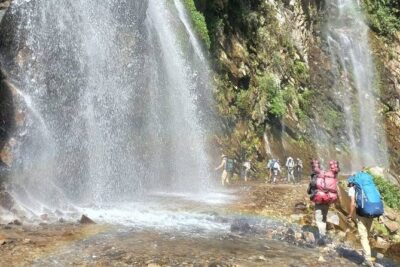
The trek starts with a six-hour walk toward Machha Khola. You cross a bridge and pass through Sal forest before climbing to a ridge above the Budhi Gandaki’s rapids. The trail then becomes rocky and uneven, passing two tropical waterfalls and clinging to a steep cliffside.
Rice terraces appear near Labubesi. After the valley opens around wide gravel bars, you drop toward the river, cross another suspension bridge, and reach Machha Khola. This is a strong opening day, with plenty of natural variety but little flat walking.
Day four takes you toward Jagat. You pass Khorlabesi and Tatopani, where a small hot spring offers a welcome pause. The route then crosses the Budhi Gandaki on a suspension bridge, climbs broad stone steps, crosses a landslide, and continues through Dobhan and Tharo Bharyang.
The repeated staircase sections are worth taking seriously. Six hours may sound manageable on paper, but steep steps, river crossings, uneven rocks, and heat in the lower valleys can make the day tiring. Jagat is an important point in the route because the valley begins to feel more enclosed and the trail more remote.
Days 5 to 8 bring forests, villages, and Manaslu views
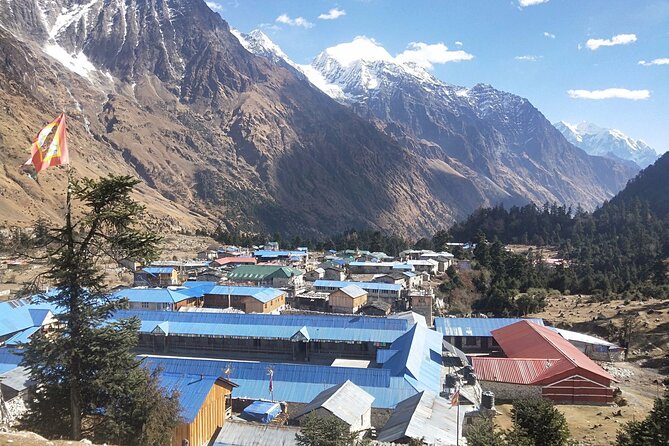
On day five, the trail climbs over a rocky ridge to Salleri before dropping to Sirdibas. You continue upstream to Philim, a large Gurung village, then cross millet fields and enter a steep, uninhabited gorge.
This part involves several crossings of the Budhi Gandaki. You move from one bank to another, pass bamboo forest, and reach Deng after about five hours. The shorter walking time helps, though the gorge and river crossings still make this a physical day.
Day six enters the Buddhist-influenced part of the route. The itinerary places the overnight near Ghap, with about six hours of walking. The forest becomes a larger part of the experience, and village architecture and religious culture begin to shift as you move toward Nupri.
Day seven is described as a six-hour climb through bamboo and rhododendron forest toward Namrung and into the Nupri region. The stop is labeled Manaslu Base Camp, but the written route description points to Namrung rather than a base camp visit. Ask the operator to confirm the exact overnight location and whether Manaslu Base Camp is actually included.
That small clarification matters. It affects altitude, walking time, and what you should pack for the night. The route itself is the important part here: forests give way to broader mountain views, and the first clear sense of Manaslu’s high setting develops.
Day eight follows the river with views of Peak 29 before reaching Samagaon. You are promised views of Manaslu, and the six-hour walk brings you to one of the key villages on the circuit. Samagaon is not just another overnight stop. It is the place where the route slows down before the final push toward the pass.
A few more Kathmandu trips to weigh up
- Everest Base Camp Trek – 14 Days
★ 5.0 · 1,499 reviews - Everest Base Camp Trekking
★ 5.0 · 485 reviews - Nagarkot Sunrise View and Day Hiking from Kathmandu
★ 5.0 · 471 reviews - Annapurna Circuit Trek with Tilicho Lake
★ 5.0 · 368 reviews
Samagaon is your essential rest day
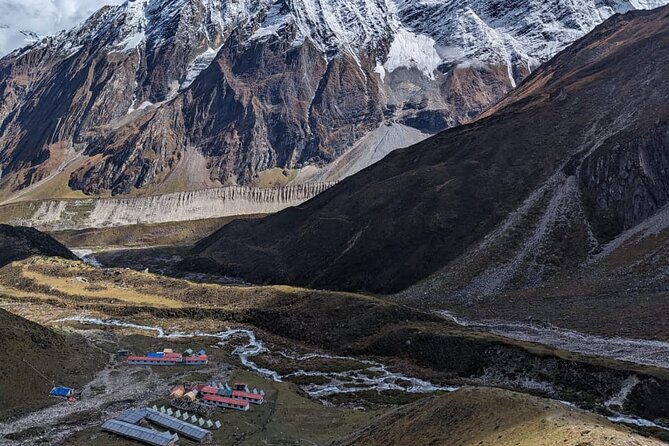
Day nine stays in Samagaon for four hours of exploration. You visit the monastery and walk through the village, with mountain views around you. This is one of the best-designed parts of the schedule.
A rest day at this point gives your body time to adjust before Samdo and Larkya Pass. It also keeps the trip from becoming a march from breakfast to dinner. You can use the day to move at an easier pace, take in the village, and organize your clothing and daypack for colder, higher walking.
The itinerary uses the word camp for several nights, but the general accommodation description says teahouse or mountain lodge. Confirm whether Samagaon means a lodge bed, a tented camp, or another arrangement. The package includes mountain accommodation, but the precise standard can vary along a remote route.
Samdo and Larkya Pass are the trek’s hardest section
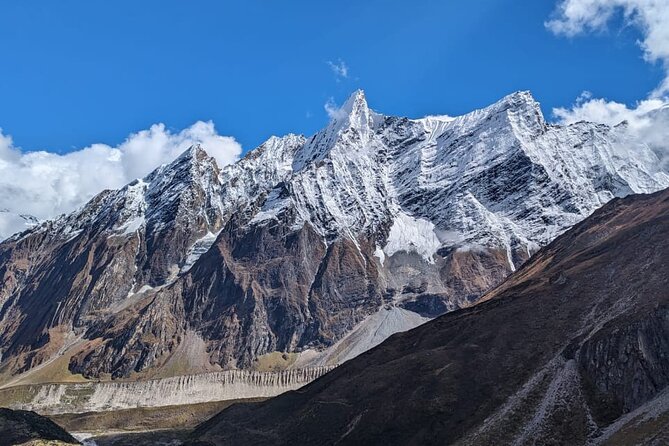
Day ten follows the Budhi Gandaki to Samdo in about six hours. This is the approach to the highest part of the circuit, so pacing becomes more important than speed. You should keep your daypack light, drink regularly, and tell your guide early if you feel unwell.
Day eleven begins the ascent toward Larkya Bhanjyang through tundra and juniper. The itinerary lists another six-hour day and an overnight camp. This is where the route leaves the softer forest country and feels fully alpine.
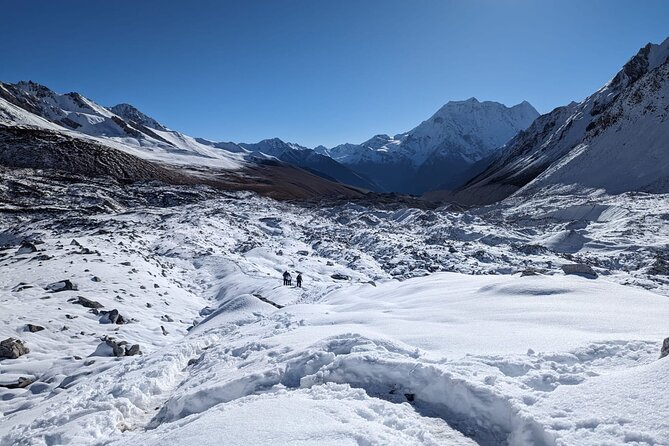
Day twelve is the major achievement. You reach the summit of the pass, take in panoramic views, and descend to Bimthang. The day is listed at six hours, but you should confirm the expected start time and actual walking duration with the operator. Pass days can feel much longer because of altitude, cold, wind, and the steep descent.
The route description calls this the summit, but it means the summit of Larkya Pass, not Mount Manaslu. You do not climb Manaslu itself on this trek. That distinction is important if you are comparing the circuit with a mountaineering expedition.
The price includes an experienced guide, porters, porter insurance, porter equipment such as trekking boots and a jacket as required, and one porter for every two people. That support is valuable here. You still need reasonable fitness, but you do not have to carry every item yourself.
The descent through Bimthang and Tilje changes the mood
After the pass, day thirteen descends through forests toward Tilje, with a stop at the Bhimtang Lake viewpoint. The day is listed at five hours, making it a little shorter than the surrounding stages.
This is a good point to notice the route’s changing character. The high pass is open and severe. The descent brings back trees, softer colors, and more signs of settled life. The viewpoint adds a defined scenic stop rather than leaving the day as a simple downhill walk.
Day fourteen follows scrub forest to Chamje in about six hours. By now, the physical challenge has shifted from gaining altitude to managing tired legs and long descents. You may find downhill walking harder than expected, especially after the pass, so trekking poles and well-tested footwear are practical choices.
The listed route begins in Arughat and ends around Besisahar, though the daily stops supplied here finish with Chamje before the drive to Kathmandu. Ask for the exact road transfer plan from Chamje or Besisahar. Road conditions can affect the final day, and the written schedule does not give a detailed vehicle itinerary.
Kathmandu adds two useful buffer days
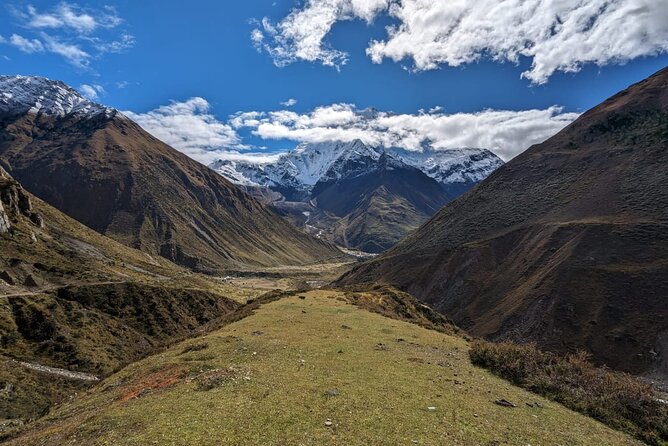
Day fifteen is a five-hour drive back to Kathmandu through the countryside, followed by hotel rest. I value this buffer. It gives you time to recover after the trek and leaves room for a delayed road journey before your flight.
Day sixteen is free for rest or exploring Thamel. That is useful if you want a slow day rather than another guided activity. You can also use it to handle laundry, shopping, or any last-minute arrangements, although personal purchases are not included.
Day seventeen provides free time for final shopping or activities, then airport transfer for departure. The schedule is close to 17 days, but the walking portion is about 12 days when you count the Kathmandu arrival, sightseeing, rest, transfer, and departure days.
What the $1,900 price really covers
At $1,900 per person, the package is not just a trail guide and a bed. It includes airport transfers, Kathmandu hotel accommodation with breakfast, guided city sightseeing, trekking accommodation, three daily meals during the trek, permits, national park entry fees, TIMS, guide and porter expenses, porter insurance, a duffel bag, T-shirt, first-aid kit, and government and local taxes.
That makes the price easier to judge. The included permits and full-board meals remove several large planning jobs, while the porter arrangement reduces the load you carry. The Kathmandu hotel and airport handling also make the arrival and departure simpler.
The exclusions are normal but worth budgeting for. Beverages, personal expenses, tips, and travel insurance are not included. Tips are accepted in Nepal, and travel insurance is especially important for a demanding high-altitude route, though the package does not provide it.
A private departure adds value if you want your own group rather than joining strangers. Group discounts are offered, so ask how the price changes with two or more people. The overall rating shown for the experience is 4.8 from five reviews, a positive signal, though the sample is small. I would treat it as encouragement, not proof that every departure will be identical.
Fitness, packing, and small details that matter
The tour asks for moderate physical fitness, but that phrase deserves a practical reading. You face repeated six-hour days, steep stone steps, rocky trails, suspension bridges, long ascents, a high pass, and a full descent afterward.
You do not need to be a mountaineer based on the supplied information, but you should be comfortable walking for several hours on uneven ground. Build your preparation around sustained walking, hills, and carrying a daypack.
The operator supplies a duffel bag, T-shirt, first-aid kit, and certain porter equipment. Still, confirm exactly which personal gear is provided and what you need to bring. The information says porter boots and jackets are available as required for trekking, but it does not list a full personal equipment set.
I would ask these questions before paying:
- What is the exact overnight location on day seven?
- Is Manaslu Base Camp visited, or is Namrung the actual stop?
- Are the nights labeled camp in teahouses, lodges, or tents?
- How long is the Larkya Pass day expected to take?
- Does the return drive finish from Chamje or Besisahar?
- What drinks and snacks are available, and how much should you budget?
- What happens if road conditions change the return schedule?
The activity is near public transportation, starts at World Himalaya Treks & Expeditions in Kathmandu, and ends back at the meeting point. Confirmation is provided when you book. Cancellation is allowed up to six days before the experience for a full refund, which gives you some flexibility while you arrange flights and insurance.
Who should book the Manaslu Circuit Trek?
I would choose this trek if you want serious mountain scenery, village life, Buddhist culture, and a route that feels less commercial than Everest or Annapurna. The private format is also useful if your group wants to control its own pace and share porter support.
I would not choose it for a first-ever walking holiday, a luxury lodge trip, or a schedule with no room for hard days. The itinerary is demanding, and the details around day seven, camping, and the road transfer deserve confirmation.
FAQ
How long is the Manaslu Circuit Trek?
The experience lasts approximately 17 days. This includes arrival and sightseeing in Kathmandu, the trekking section, a rest day in Samagaon, the return drive, leisure time, and departure.
What is the price per person?
The listed price is $1,900 per person. Group discounts are available, so you can ask the operator for the current rate for your party.
Are meals included during the trek?
Yes. Breakfast, lunch, and dinner are included during the trekking portion. Beverages are not included.
What accommodation is provided?
You receive three-star deluxe twin-share accommodation in Kathmandu with breakfast. During the trek, accommodation is described as neat and clean teahouses or mountain lodges.
Is a guide and porter included?
Yes. An experienced guide and porters are included, with one porter for every two people. Their expenses and insurance are included, and porter equipment such as trekking boots and a jacket is provided as required for trekking.
Are permits and park fees included?
Yes. The package includes the necessary trekking permits, national park entry fees, and the TIMS card.
What is not included in the price?
Beverages, personal or natural expenses, tips for guides and porters, and travel insurance are not included. Airport pickup and drop-off are included.
Should you book it?
Book this Manaslu trek if you want a demanding, well-supported circuit with major mountain views, a quieter route, full-board meals, and cultural stops in Kathmandu and the high villages. The $1,900 price has solid practical value because it covers permits, staff, meals, lodging, transfers, and taxes.
Before booking, get written answers about day seven, the meaning of camp, the actual Larkya Pass timing, and the return drive from Chamje or Besisahar. If those details line up with your expectations and you are ready for long mountain days, this is a strong choice for a remote Nepal trekking experience.
Just added around Kathmandu
- Traditional Momo Making Class★ 5.0 · 10 reviews
- Kathmandu to Pokhara Premium sofa bus ticket★ 4.0 · 17 reviews
- Women Empowerment Project(Nepali cooking class & jewelry workshop★ 5.0 · 15 reviews
- Walking tour of Kathmandu with awesome local guides★ 5.0 · 4 reviews
- Wildlife Adventure in Chitwan Nepal★ 4.0 · 4 reviews
- Kathmandu 2 Nights 3 Days Chitwan Jungle Safari Tour★ 5.0 · 9 reviews
- Kathmandu Street Food Walking Tour – Eat Like a Local★ 5.0 · 3 reviews
- Walking tour of real Kathmandu through back streets.★ 5.0 · 3 reviews
Manaslu Circuit Treks, compared.
16 Day Private Manaslu Circuit Trek from Kathmandu
Read our review →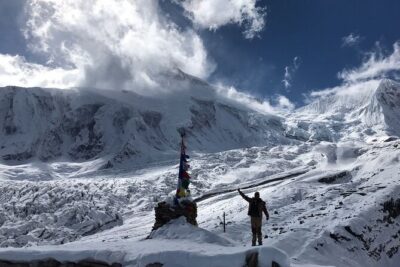
10 Days Manaslu Circuit Trek in Larke La Pass
Read our review →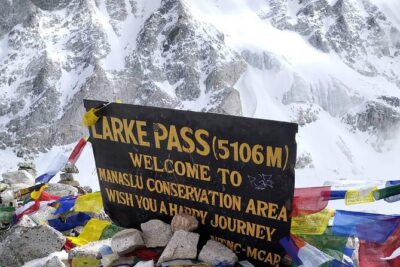
Manaslu Circuit Trek 8th Highest in the World
Read our review →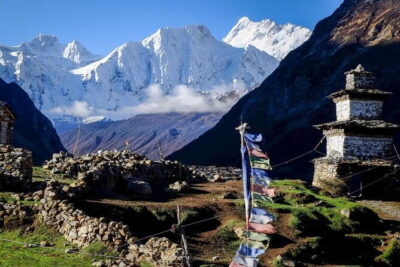
Manaslu Circuit Trek to the Beauty of 8th Highest Mountain
Read our review →
Manaslu Circuit Trek – 14 days of Himalayan Adventure
Read our review →Browse the lists this tour appears in