
Reviewed · COOKING CLASSES
Half day cooking class in Thamel kathmandu
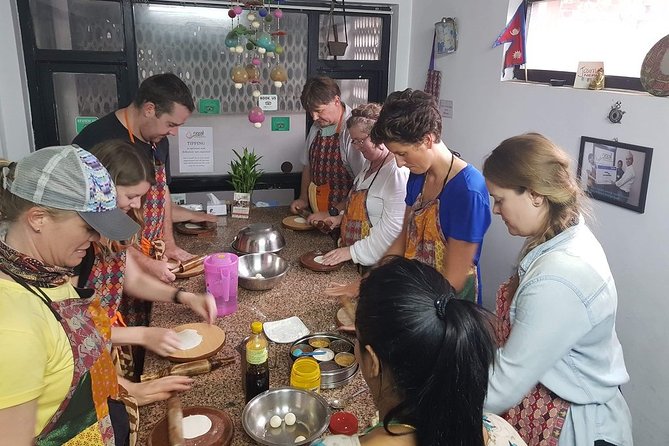
Making momos from scratch is the star of this half-day cooking class in Thamel. You learn the dough, filling, folding, and cooking steps, then eat the dumplings while they are hot. The class also covers three other Nepali dishes, so you leave with more than a single party trick.
I like the choice of three menus, since you can pick the food that best suits your taste. I also like the market visit and the way instructors adjust spice levels, ingredients, and menus for individual needs. The main consideration is the setting: the kitchen is reached by four flights of stairs, and the market stop can feel long if you would rather spend the full time cooking.
Key points at a glance
- Momos appear on every menu, so you can work on Nepal’s best-known dumplings regardless of your food choice.
- Three menus include four traditional dishes each, with examples such as chicken curry, dal, chapati egg rolls, chatamari, and chocolate momos.
- A local market and spice stop adds context before you begin cooking, though it may use time that some people would prefer to spend in the kitchen.
- Small groups are capped at eight, with instructors guiding you through each stage rather than leaving you to watch from the side.
- You eat each course fresh, and you can control the amount of chili and other strong flavors.
- The $28 price includes food and drinks, making this both a meal and a practical cultural activity.
What the Thamel cooking class is really like
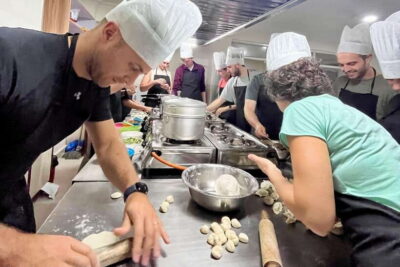
This is not a demonstration where you sit quietly while someone else chops. The chef takes you through the work step by step, then gives you time to prepare the food yourself. You cook one course, eat it fresh, and move on to the next.
That order makes sense. You are not staring at a growing pile of dishes that will sit around for hours. You get to taste each recipe while its texture and heat are right, then adjust the next batch based on what you have learned.
The class lasts about two and a half hours, although the stated shifts do not all match that length. The afternoon session runs from 1:30 to 4:00 pm, while the morning is listed as 9:00 am to 12:30 pm and the evening as 4:30 to 8:00 pm. Check the exact time offered when you book.
The meeting point is Divine Kathmandu Hotel on Paknajol Marg, near Thamel. The activity finishes back there, and pickup is offered, but private transportation is not included. Since the meeting point is near public transportation, you should be able to reach it without arranging a private car.
A few more Kathmandu trips to weigh up
- Kathmandu: Local Women-Led Nepali Cooking & Momo Class
★ 4.9 · 360 reviews - Kathmandu: Local Lead Nepali Cooking & Momo-Making Class
★ 5.0 · 212 reviews - The best Private Nepali Cooking Class in Kathmandu
★ 5.0 · 83 reviews
Choosing among three Nepali menus
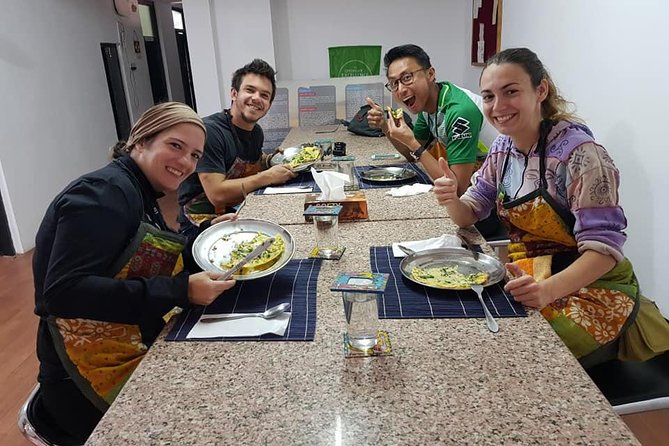
The menu choice is one of the best parts of the class. Each option contains four traditional dishes, and every menu includes momos. That gives you some control over the balance of dishes instead of forcing everyone into the same meal.
The exact menu options can vary, but examples described by participants include chicken curry with dal, a chapati egg roll made from dough prepared in class, chatamari, and chocolate momos. The food ranges from everyday savory dishes to a sweet finish, so you may want to ask what each menu contains before starting.
The instructors can adjust the food in sensible ways. A gluten-free menu was prepared for one class, and vegetarian cooking presented no problem. You can also control the chili. If you like heat, add more. If you do not, leave it out or use only a little.
That flexibility matters in Nepal, where a dish can taste quite different depending on the cook’s hand with spice. You are not just copying a fixed recipe. You are learning how to make the food work for your own kitchen and palate.
The market and spice stop before cooking
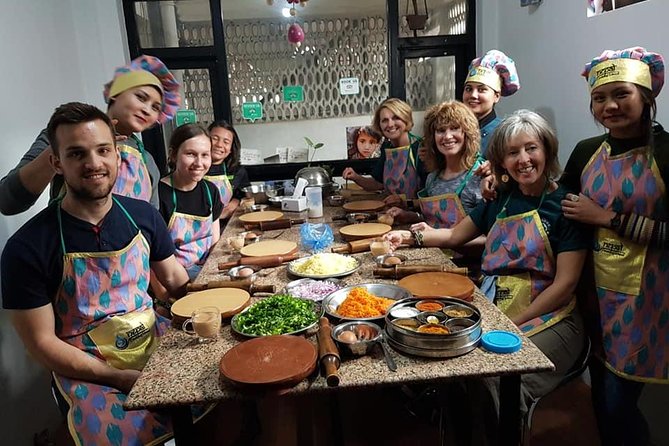
Some sessions begin with a short walk through local market streets to buy or examine ingredients. Instructors explain produce, spices, and their place in Nepali cooking. A spice shop may also be part of this outing, and you can buy spices to take home.
I see real value in this part if you are curious about ingredients. A restaurant menu tells you what a dish is called. Looking at the spices and produce before cooking helps you understand what actually gives the food its flavor.
Still, this is the clearest tradeoff in the schedule. One participant found the shopping stop useful but too limited and too time-consuming, with the outing focused mainly on spices. If you already know your cumin from your coriander, or if you are eager to start folding momos, you may wish the cooking began sooner.
Treat the market walk as an introduction, not as a full food tour. Its worth depends on your interest. I would welcome it on a first visit to Nepal, especially if you want to buy ingredients for cooking at home.
Making momos from dough to plate
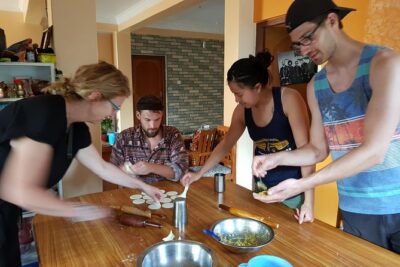
Momos are the hands-on challenge everyone gets. You work with the dough, prepare the filling, shape the dumplings, and cook them. That sounds simple until you try to make several dumplings with the same neat fold.
The class keeps the task manageable by showing you each stage. You do not need previous cooking experience, and the instruction is designed for beginners. At the same time, experienced cooks have enough to do, particularly when it comes to dough texture, filling balance, and shaping.
Momos also make the class useful after your Nepal trip. They are a dish you can repeat at home, and the skills transfer well to other filled dumplings. Several participants specifically wanted to learn momos and considered that goal achieved.
The chocolate momo option adds a playful touch. It is not the traditional savory version, but it gives the meal a dessert course and lets you see how the same dumpling idea can be used differently.
Same mountains, a completely different kind of day:
- Everest Base Camp Trek – 14 Days
★ 5.0 · 1,499 reviews - Private Kathmandu Sightseeing Tour | UNESCO World Heritage sites
★ 5.0 · 756 reviews - Everest Base Camp Helicopter Tour landing at Everest View Hotel
★ 5.0 · 668 reviews - Everest Base Camp Trekking
★ 5.0 · 485 reviews
Four dishes, cooked and eaten in stages
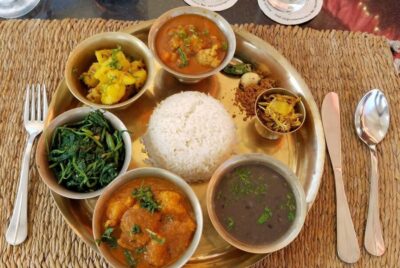
Beyond momos, the class introduces several familiar Nepali staples. Dal is especially practical because it is simple enough to repeat at home but depends on seasoning and timing. One participant still uses the class dal recipe at home.
Chicken curry and chapati egg rolls offer different lessons. The curry shows how spices build flavor, while the egg roll includes making the dough yourself. Chatamari, sometimes described as a Nepali rice-flour pancake, gives you another way to think about local street and home cooking.
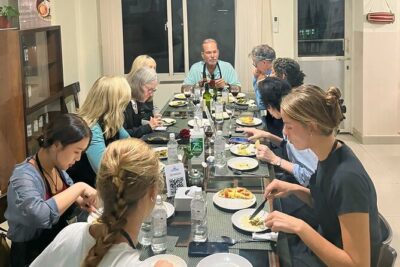
The structure is active. You prepare a course, finish it, and sit down to eat before starting the next. That keeps the session social and prevents the food from becoming an afterthought.
You should arrive hungry. The included meal is not a token tasting. The activity information includes breakfast, lunch, dinner, snacks, and coffee or tea, though the exact meal label depends on the shift. Alcohol is not included.
Instructors who make beginners feel at home
The strongest part of the class is the teaching style. Instructors such as Anshu and Nilam are named in the feedback, and the teaching team is described as friendly, patient, funny, and clear. One participant attended alone and still received the full class rather than having the session reduced.
That matters for solo visitors. A small class can feel awkward if the instructor rushes through the recipes or treats one person as an inconvenience. Here, the format can work well for a single student, a couple, or a family.
The group limit is eight. That is small enough for hands-on help, though the actual number may vary by booking. You should have room to ask questions and get corrections while working with dough or spices.
The class also has a light social side. One evening session ended with a short dance lesson. That is not the core promise, so I would not book solely for it, but it shows the class can be warm and informal rather than strictly technical.
Hygiene, stairs, and comfort
The kitchen has been described as clean and hygienic, an important point when you are handling dough, meat, vegetables, and spices. The teaching is organized, with ingredients and instructions handled in a way that lets beginners keep up.
The four flights of stairs are worth taking seriously. The kitchen is upstairs, and this is not an ideal activity for anyone who has difficulty climbing stairs. The provided information does not describe an accessible alternative, so ask before booking if this could affect you.
The class is family-friendly, but younger children may need help with chopping, hot pans, and dough work. The food itself can be made mild, so spice is less of a concern than the length of the session and the practical kitchen tasks.
Is $28 good value in Kathmandu?
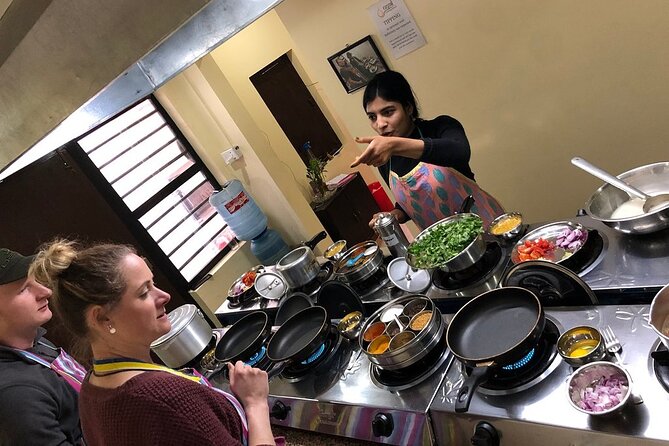
At $28 per person, this is good value if you want both a meal and a skill-based activity. Four dishes, beverages, market orientation, instruction, and the chance to eat your own cooking add up to more than a standard restaurant meal.
The value is strongest for food-focused visitors. You are paying for guidance, ingredients, and access to a cooking setup, not only for the final plate. You also get recipes and techniques that you can try again at home.
It is less attractive if you want a quick class with no walking or if your main goal is simply to eat momos. Kathmandu restaurants can satisfy that craving more quickly. Here, the point is learning how the food comes together.
The group maximum of eight helps protect the price. You are not paying for an expensive private lesson, but you also are not placed in a large auditorium-style class. Private transportation and alcoholic drinks cost extra or are not included, so budget accordingly.
Which session should you choose?
The morning shift is listed from 9:00 am to 12:30 pm. Choose it if you want your main meal early and would like the rest of the day free, but confirm the exact duration because the afternoon shift is shorter on the posted schedule.
The afternoon shift runs from 1:30 to 4:00 pm. For many people, this is the easiest choice. You can eat breakfast first, cook through the middle of the day, and still have the evening open for Thamel.
The evening shift is listed from 4:30 to 8:00 pm. This suits you if you want a dinner activity and prefer to finish the day with Nepali food. Again, check the time shown for your booking, since the listed shifts are not identical in length.
Pickup is offered, but the meeting point is Divine Kathmandu Hotel. If you are staying nearby, walking to the start may be simpler than arranging transport.
Who should book this class?
I would choose this for you if you enjoy food, want a useful memory from Kathmandu, or like bringing recipes home from a trip. It works especially well for couples, families, solo cooks, and anyone who has always wanted to learn momos.
You do not need cooking experience. The step-by-step format and adjustable spice levels make it approachable, while the menu choices give more confident cooks some room to explore.
Vegetarians and people needing gluten-free adjustments should ask about the menu when booking. The class has handled those needs, but the available dishes should be confirmed in advance.
I would hesitate only if stairs are a serious problem, if you dislike hands-on kitchen work, or if you have very little time in Thamel. The market stop may also feel unnecessary if you want a tightly packed cooking lesson.
Should you book the Nepal Cooking School?
Yes, if you want to understand Nepali food by making it yourself. The momos are the draw, but the dal, curry, dough work, spice lesson, and shared meal make the class more useful than a single recipe lesson.
Book it early if you have a fixed schedule, since the class is popular and capped at eight people. Ask which menu is available, confirm the shift length, and mention dietary needs before you arrive.
Skip it if you only want a restaurant meal or cannot manage four flights of stairs. For everyone else, $28 buys a friendly, practical afternoon or evening, plus food you can recreate long after Kathmandu is behind you. Free cancellation is available up to 24 hours before the start time, which gives you some flexibility.
FAQ
Where does the cooking class begin?
The class begins at Divine Kathmandu Hotel, Paknajol Marg, Amrit Marg, in Thamel, Kathmandu.
Where does the activity finish?
The activity ends back at the meeting point at Divine Kathmandu Hotel.
How long does the cooking class last?
The approximate duration is two hours and 30 minutes. The listed shifts vary, with morning and evening times shown as longer windows, so confirm your selected time when booking.
What are the available start times?
The morning shift starts at 9:00 am, the afternoon shift at 1:30 pm, and the evening shift at 4:30 pm.
Are momos included in every menu?
Yes. Each of the three menu choices includes momos.
How many dishes will I cook?
Each menu contains four traditional Nepali dishes.
Is food included in the price?
Yes. The class includes the cooking course and the meal you prepare. Snacks and coffee or tea are also listed as included.
Are alcoholic drinks included?
No. Alcoholic beverages are not included.
Do I need previous cooking experience?
No. The chef guides you through the entire process step by step, and the activity is suitable for beginners.
Can the class accommodate dietary needs?
The class has accommodated vegetarian and gluten-free requests. Contact the provider in advance to confirm the menu for your specific needs.
How many people can join the class?
The maximum group size is eight people.
Is transportation included?
Pickup is offered, but private transportation is not included. The meeting point is near public transportation.
Can I cancel for a full refund?
Yes, if you cancel at least 24 hours before the experience start time. Cancellations or changes made less than 24 hours in advance are not accepted for a refund.
Just added around Kathmandu
- Private Half-Day Tour of Boudhanath and Pashupatinath Temples in Kathmandu★ 4.5 · 9 reviews
- Private Half-Day Tour of Kathmandu Durbar Square and Swayambhunath Temple★ 4.5 · 11 reviews
- Namobuddha Monastery Hiking Day Tour via Panauti from Kathmandu★ 5.0 · 15 reviews
- Private Full-Day Kathmandu City Tour★ 5.0 · 9 reviews
- Private Day Tour in Kathmandu Valley Rim with Bhaktapur Sightseeing★ 5.0 · 3 reviews
- Private Half Day Budhanilkantha Tour★ 5.0 · 6 reviews
- Private Day Tour: Patan and Bhaktapur from Kathmandu★ 4.5 · 6 reviews
- Private Day Tour – Sacred Journey to Namo Buddha★ 5.0 · 5 reviews
Cooking Classes, compared.
Nepalese Momos or Dal Bhat Cooking Class (Cook with Delight)
Read our review →
The best Private Nepali Cooking Class in Kathmandu
Read our review →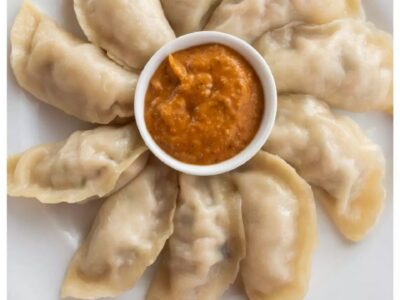
Nepalese Kitchen in Pokhara: Momos or Dal Bhat Cooking Class
Read our review →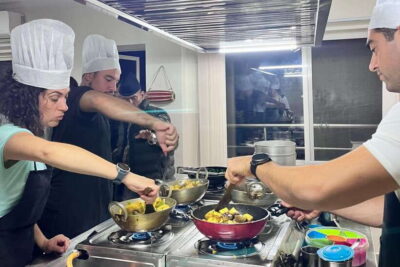
MoMo or Dal Bhat Cooking Class at Aama Kitchen in Pokhara
Read our review →Browse the lists this tour appears in