
Reviewed · ANNAPURNA CIRCUIT TREKS
20 Days Annapurna Circuit Trek
The great appeal of this 20-day Annapurna Circuit Trek is the rapid change in scenery. You move from subtropical hills and waterfalls to pine forests, Tibetan-style villages, high mountain valleys, and the dry Kali Gandaki region. The 5,416-meter crossing of Thorong La Pass is the big prize, but the villages and long river valleys give the journey its character.
I like the built-in acclimatization day in Manang, and I like that the price includes a licensed guide, porter support, permits, airport transfers, and most meals. The company has also received praise for caring staff, including guides named Jaya and porters Malik and Dinesh on other Himalayan trips. The main consideration is that this is a demanding trek with long transport days, high altitude, and some costs left out, including drinks, entrance fees, tips, insurance, and rescue.
Key Points to Know Before You Book
- Thorong La Pass reaches 5,416 meters: The crossing is the hardest and most memorable day, with an early start and a long descent to Muktinath.
- The scenery changes dramatically: Expect forest, farmland, snow peaks, barren high valleys, river gorges, and the dry Mustang side of the mountains.
- Manang provides one acclimatization day: You spend a full day at about 3,500 meters before climbing higher.
- A licensed guide and porter are included: One porter is provided for every two guests, with a stated maximum load of 25 kilograms.
- Most major costs are covered: Airport transfers, Kathmandu sightseeing transport, permits, trekking staff, and listed meals are included in the $1,200 price.
- The itinerary is physically serious: Trekking days run from about five to seven hours, while the Kathmandu to Syange journey takes roughly 10 hours.
Why the Annapurna Circuit Still Rewards a Long Trek
The Annapurna Circuit is not just a walk toward one viewpoint. It is a full crossing of the Annapurna region, with the scenery changing almost every few days.
You begin near Kathmandu and travel west by road to Besisahar and Syange. From there, the route follows valleys and mountain trails toward Manang, climbs through high pasture to Thorong La, then drops into the Kali Gandaki valley. The final section passes through Marpha, Tatopani, Ghorepani, and the Poon Hill area before reaching Pokhara.
That variety is the route’s strongest feature. You do not spend 20 days looking at the same type of mountain. One day may bring farm terraces and waterfalls. A few days later, the trail can feel stark and dry, with huge peaks rising above a broad river valley.
The trip is listed at about 160 to 230 kilometers, depending on the precise route and road conditions. This matters because the trek is not a short sampler. You need to be comfortable walking for several hours on consecutive days, often on steep or uneven trails.
More Annapurna Circuit Treks in Kathmandu
- Annapurna Circuit Trek with Tilicho Lake
★ 5.0 · 368 reviews - Annapurna Circuit Trek
★ 5.0 · 94 reviews - Annapurna Circuit Trek
★ 5.0 · 35 reviews
Kathmandu Gives You a Useful Cultural Start
Your first day is simple. A representative from Great Adventure Treks meets you outside Tribhuvan International Airport and takes you to your hotel. The airport transfer is included, which is useful after a long international flight and removes one early negotiation from your arrival.
Day two is devoted to Kathmandu sightseeing by car. You visit Pashupatinath Temple, Boudhanath Stupa, and Kathmandu Durbar Square. These are not filler stops. Together, they introduce three important parts of the Kathmandu Valley: Hindu religious practice, Tibetan Buddhism, and the former royal center of Kathmandu.
Pashupatinath sits beside the Bagmati River and is Nepal’s major Hindu temple complex dedicated to Shiva. Boudhanath offers a calmer change of pace, with its large Buddhist stupa and watchful painted eyes. Kathmandu Durbar Square adds palace courtyards and traditional architecture.
Entrance fees are not included. The listed charges are NPR 1,000 for Pashupatinath, NPR 400 for Boudhanath for foreign nationals, and NPR 1,000 for Kathmandu Durbar Square for foreign nationals. SAARC and BIMSTEC visitors pay different rates, and Indian visitors enter Pashupatinath free.
The Road to Syange Is Long but Necessary
Day three is the least glamorous part of the trip. You take a regular bus from Kathmandu toward Besisahar, then continue by shared jeep to Syange. The total drive is listed at about 10 hours, including roughly two hours from Besisahar to Syange.
That is a very long day on the road, but it moves you into the trekking region without using additional trekking days. You will see hill country, rivers, and mountain foothills along the route. Still, you should set your expectations correctly: this is transport, not a relaxed scenic excursion.
The change from bus to shared jeep is worth noting. Shared vehicles can be less private and less predictable than a dedicated car. The inclusion keeps the package price down, but you give up some comfort and control.
Syange to Manang: Forests, Villages, and Higher Peaks
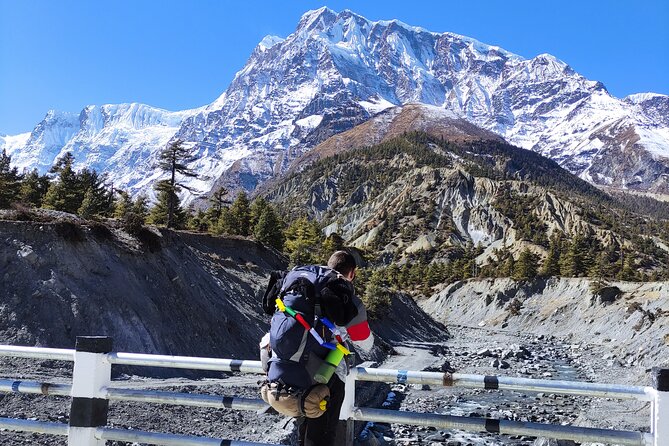
The walking begins on day four. The route from the Besisahar area toward Dharapani and beyond brings steep sections, farm terraces, waterfalls, gorges, and early views of snow-covered peaks.
From Dharapani to Chame on day five, the air becomes cooler and the vegetation changes. The trail passes through forest and Bagarchhap, described as the first village with a distinct Tibetan influence. This is where the trek begins to feel less like a hill walk and more like a high Himalayan route.
Day six takes you from Chame to Pisang, at about 3,200 meters, in five to six hours. You follow the river and walk through changing forest. From this point, the mountains feel closer and the high peaks begin to dominate the view.
The route from Pisang to Manang on day seven takes about five hours. The trail climbs after leaving Pisang, with views toward the Annapurna range and surrounding peaks. Manang is an important stopping point because it offers a larger village setting before the route moves into the more exposed high country.
Same mountains, a completely different kind of day:
- Everest Base Camp Trek – 14 Days
★ 5.0 · 1,499 reviews - Private Kathmandu Sightseeing Tour | UNESCO World Heritage sites
★ 5.0 · 756 reviews - Everest Base Camp Helicopter Tour landing at Everest View Hotel
★ 5.0 · 668 reviews - Half day cooking class in Thamel kathmandu
★ 5.0 · 607 reviews
Manang Is the Trip’s Most Important Rest Day
Day eight is a full acclimatization day in Manang. This is one of the best features of the plan. You are not simply being pushed higher each day. You have time to explore the village and let your body adjust before the trail climbs above 4,000 meters.
Manang is described as having roughly 500 flat-roofed houses, surrounded by dramatic mountain scenery. The village gives you a chance to walk at a slower pace, see local architecture, and prepare for the most demanding part of the trek.
You should treat this as a real acclimatization day, not as a chance to add a strenuous side trip. The schedule does not promise an excursion to Tilicho Lake or Annapurna Base Camp. Those places appear in company feedback about other journeys, but they are not part of this stated 20-day route.
Yak Kharka and High Camp Prepare You for Thorong La
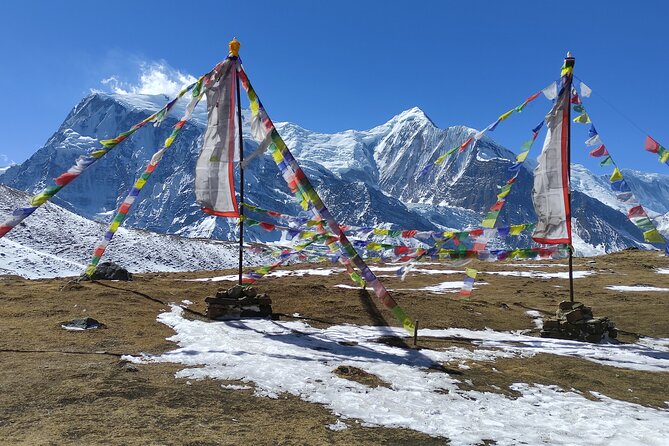
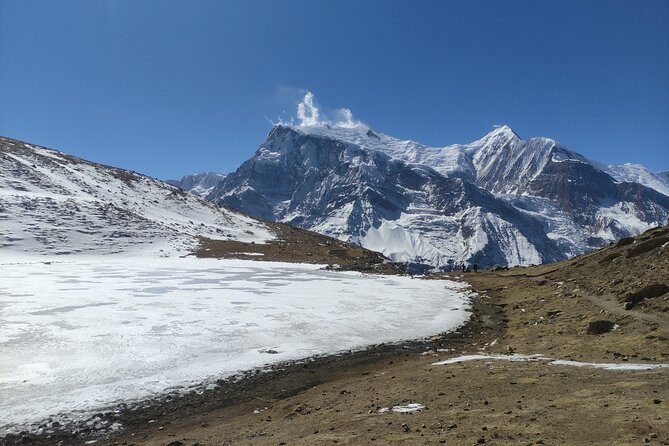
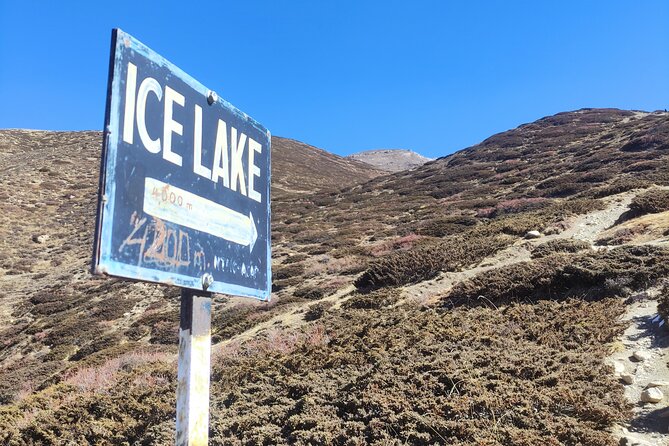
On day nine, you leave Manang for Yak Kharka. The five-hour walk is a gradual climb through increasingly barren country. The route offers views of Annapurna II, Gangapurna, Tilicho, and the Chulu peaks.
The surroundings become more exposed as trees thin out. You are now walking in a high-altitude environment where cold, wind, and fatigue matter more than they did in the lower valleys. Keep your pace steady and drink regularly. The schedule is designed around gradual progress, but altitude affects people differently.
Day 10 takes you toward Thorong High Camp in about six hours. The route passes Ledar, the last settlement mentioned before the pass, and continues upward. This is a demanding day even before the pass crossing, so conserve energy rather than treating every viewpoint as a photo stop.
The high camp section is valuable because it positions you for an early pass crossing. It also means you sleep at high altitude, which can be uncomfortable. The built-in Manang rest day helps, but it does not remove the need to monitor how you feel.
Thorong La Is the Trek’s Defining Challenge
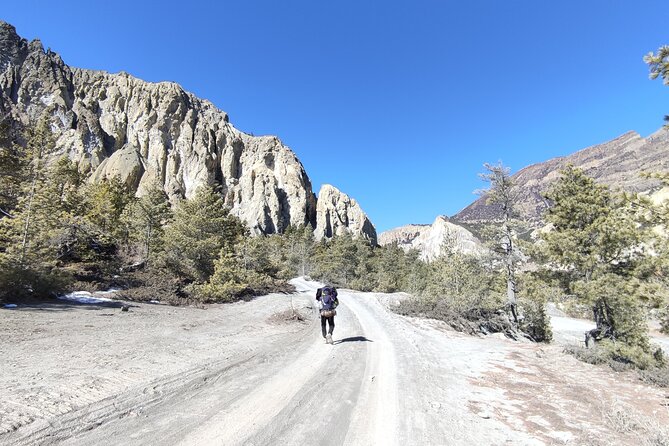
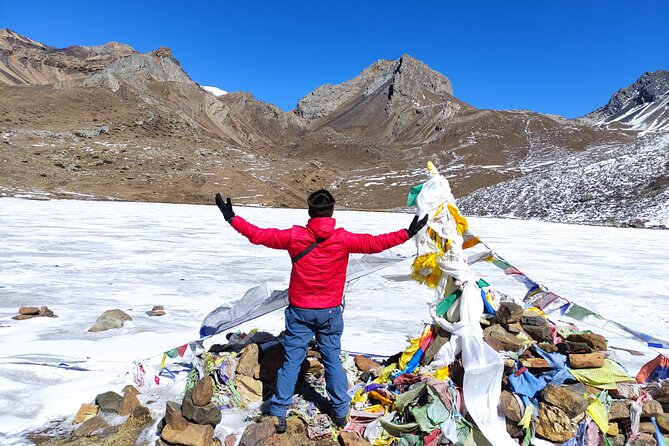
Day 11 begins early. The reason is practical: you want to reach Thorong La before strong afternoon winds develop. The climb is steep in places, and the altitude makes ordinary effort feel much harder.
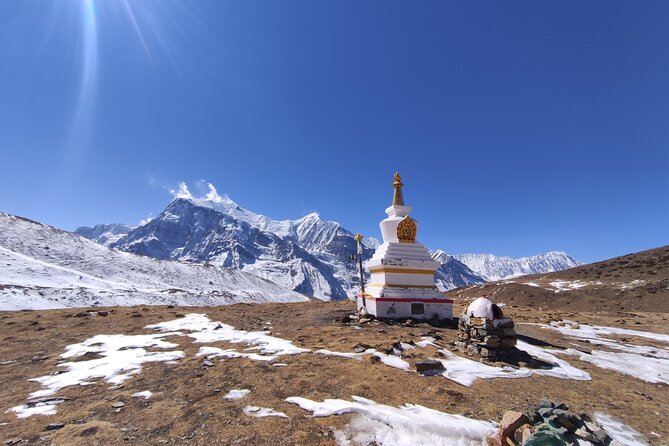
At 5,416 meters, Thorong La is the highest point of the circuit and the moment many people will remember most. The appeal is not only the elevation. You have spent days walking toward this crossing, and reaching the top gives the trek a clear sense of purpose.
The day does not end at the pass. You descend to Muktinath, a sacred village at about 3,800 meters. The descent is long and can be tough on tired knees. The itinerary allows about five hours for the pass section and another three hours for Muktinath, making this one of the most strenuous days of the trip.
Muktinath has religious importance for both Hindus and Buddhists. Even if you are not visiting as a pilgrim, the setting gives the route a strong cultural dimension after the physical effort of the pass.
Muktinath to Marpha Reveals a Drier Side of Nepal
Day 12 drops about 1,200 meters from Muktinath toward the Kali Gandaki River. You pass through Ekale Bhatti, whose name means lonely teahouse, then continue toward Marpha in about five hours.
The change is striking. The high country becomes dry and open, with a different feel from the forests and green terraces near the start. The Kali Gandaki valley provides a natural route through the mountains and links several communities with strong local character.
Marpha is one of the most appealing overnight stops on the plan. Day 13 follows the river downstream toward Tukuche and Lete. Tukuche sits below Tukuche Peak and Dhaulagiri, giving you a powerful mountain setting even as the route continues downward.
The six-hour walk to Lete is still a proper trekking day. Do not assume that descending means easy. Long downhill stretches can be tiring, especially after Thorong La.
Lete to Tatopani Brings Back Forest and Hot Springs
From Lete to Tatopani on day 14, the route passes between Dhaulagiri and Annapurna. The dry, open country gives way to pine and conifer forest, with another clear shift in vegetation.
Tatopani is a welcome change after the high pass. The name is associated with hot water, and the stop is known in the itinerary as a place to enjoy a break after the long mountain section. The walk takes about six hours, so you still need to arrive with some energy.
The route also includes river crossings and suspension bridges. These details make the final days feel different from the high-altitude section. You are returning to lower elevations, but the trail remains active and includes climbs.
Ghorepani and Poon Hill Add a Strong Finale
Day 15 takes you from Tatopani to Ghorepani in six to seven hours. You cross a suspension bridge over the Kali Gandaki and climb through rural country toward the village at about 2,860 meters.
This is another demanding day because the elevation gain returns after several days of descent. The reward is the approach to the Poon Hill area, one of the best-known sunrise viewpoints in the region.
On day 16, you may make the one-hour climb to Poon Hill at 3,195 meters, weather permitting. The view can include Dhaulagiri, Annapurna, and the Manaslu range. Sunrise timing means an early start, and clouds can spoil the panorama, so keep expectations flexible.
After Poon Hill, you continue toward Tikhedhunga. The day is listed at about five hours. The route then leads toward Pokhara on day 17, with farm villages, waterfalls, and a more relaxed rural setting. The seven-hour schedule makes this a full final walking day rather than a quick stroll into town.
Pokhara Offers Recovery Before the Return to Kathmandu
Day 18 is a leisure day in Pokhara. You can visit Phewa Lake, Begnas Lake, and Rupa Lake, or simply use the day to rest after nearly two weeks of walking.
The plan does not include a fixed sightseeing program in Pokhara, so activities beyond the stated trek are not clearly covered. That freedom is useful if you need a quiet day, but you should budget separately for anything you arrange.
Day 19 is an approximately eight-hour drive back to Kathmandu. The route follows hill roads and provides views of the Trisuli and Marsyangdi rivers. Like the outbound journey, it is a scenic but lengthy transfer.
On day 20, a company representative takes you to the international airport, aiming to drop you off about three hours before your flight. That gives the trip a clear ending, though you should confirm the pickup time against your flight details.
What the $1,200 Price Really Covers
At $1,200 per person, the package offers solid value if you want the main logistics handled. Included items are:
- Airport pickup and airport drop-off
- Kathmandu sightseeing by car
- Bus transport from Kathmandu to Besisahar
- Shared jeep transport from Besisahar to Syange
- A government-licensed trekking guide
- One porter for every two guests
- A stated porter load limit of 25 kilograms
- Annapurna Conservation Area Project permit
- TIMS card
- 18 breakfasts
- 15 lunches
- 15 dinners
The price does not include international flights, visa costs, drinks, personal expenses, staff tips, rescue or evacuation, or special accommodation. Kathmandu temple entrance fees are also extra.
The accommodation details deserve a direct question before booking. Standard lodging is not itemized in the included section, while special accommodation is specifically excluded. Ask what hotels and teahouses are covered, and whether any room supplements apply.
The meal count also suggests that not every meal is included on every travel day. Ask which meals are excluded, especially during the long road transfers and in Kathmandu or Pokhara.
Guide, Porter, and Group Arrangements
This is a private activity, so only your group participates. That gives you more flexibility than a large shared departure, although the transport from Kathmandu to the trailhead still uses regular bus and shared jeep services.
A licensed guide is included, which is important on a route with high passes, changing conditions, and multiple transport sections. A porter is included for every two guests, with a maximum load of 25 kilograms. You should still pack carefully and avoid treating that limit as a target.
The company’s feedback includes warm comments about the owner’s Chinese-language ability and polite service. It also names Jaya as a guide and Malik and Dinesh as porters on a Manaslu trip. Those names are useful context, but they do not guarantee who will lead your Annapurna departure. Ask for the guide’s name and language ability before you travel.
Who Should Choose This Trek
I would recommend this trip to you if you want a full Annapurna Circuit experience rather than a short mountain walk. It suits people who value cultural stops, changing scenery, guided logistics, and a defined schedule.
You should have a moderate level of physical fitness, as the operator states. In practical terms, you need to handle five to seven hours of walking on many days, a 10-hour approach drive, a steep pass climb, and a long descent afterward.
This may not suit you if you want luxury lodging, short travel days, or a flexible route. The schedule is full, the roads are long, and the highest section is physically serious. You also need suitable travel insurance because rescue and evacuation costs are not included.
The cancellation terms are relatively clear: you can receive a full refund if you cancel at least three full days before the local start time. Cancellations or changes made inside that window are not accepted for a refund.
Should You Book the Annapurna Circuit Trek?
Book it if you want the classic circuit in one organized package, with airport handling, permits, a guide, porter support, most meals, and a private group. The strongest reasons are the Manang acclimatization day, the Thorong La crossing, the cultural stops at Muktinath and Marpha, and the final Poon Hill sunrise option.
Before paying, confirm the accommodation standard, exact meal coverage, guide assignment, porter arrangement, and what happens if weather or road conditions alter the schedule. At $1,200, the trip can be good value, but the package is not all-inclusive.
If you are ready for long walking days, basic mountain lodging, high altitude, and a little road travel discomfort, this route gives you one of Nepal’s broadest trekking experiences in a single journey.
FAQ
How long does the Annapurna Circuit Trek last?
The experience lasts approximately 20 days, including arrival and departure days, Kathmandu sightseeing, the trek, transport between Kathmandu and the trail, and leisure time in Pokhara.
What is the highest point on the trek?
The highest point is Thorong La Pass at 5,416 meters.
Is airport pickup included?
Yes. Airport pickup on arrival and airport drop-off before departure are included.
Is Kathmandu sightseeing included?
Yes. Kathmandu sightseeing by car is included. The stated visits are Pashupatinath Temple, Boudhanath Stupa, and Kathmandu Durbar Square, but entrance fees are extra.
Are a guide and porter included?
Yes. The package includes a government-licensed trekking guide and one porter for every two guests. The stated porter limit is 25 kilograms.
Are meals included?
The package includes 18 breakfasts, 15 lunches, and 15 dinners. Drinks are not included, and you should confirm which specific days do not include meals.
Is this a private tour?
Yes. Only your group participates in the activity, although the included transport uses a regular bus and a shared jeep on the route to Syange.
What physical fitness level is required?
The operator states that you should have a moderate physical fitness level. The plan includes several five to seven-hour trekking days, a steep climb to Thorong La, and a long descent to Muktinath.
More Hiking & Trekking in Kathmandu
- Everest Base Camp Trekking
★ 5.0 · 485 reviews - Nagarkot Sunrise View and Day Hiking from Kathmandu
★ 5.0 · 471 reviews - Everest Base Camp Trekking – 13 Day
★ 5.0 · 365 reviews - Everest Base Camp Trek -14 Days
★ 5.0 · 321 reviews
Just added around Kathmandu
- Private Half-Day Tour of Boudhanath and Pashupatinath Temples in Kathmandu★ 4.5 · 9 reviews
- Private Half-Day Tour of Kathmandu Durbar Square and Swayambhunath Temple★ 4.5 · 11 reviews
- Namobuddha Monastery Hiking Day Tour via Panauti from Kathmandu★ 5.0 · 15 reviews
- Private Full-Day Kathmandu City Tour★ 5.0 · 9 reviews
- Private Day Tour in Kathmandu Valley Rim with Bhaktapur Sightseeing★ 5.0 · 3 reviews
- Private Half Day Budhanilkantha Tour★ 5.0 · 6 reviews
- Private Day Tour: Patan and Bhaktapur from Kathmandu★ 4.5 · 6 reviews
- Private Day Tour – Sacred Journey to Namo Buddha★ 5.0 · 5 reviews
Annapurna Circuit Treks, compared.
15-Day Private Annapurna Circuit Trek from Kathmandu
Read our review →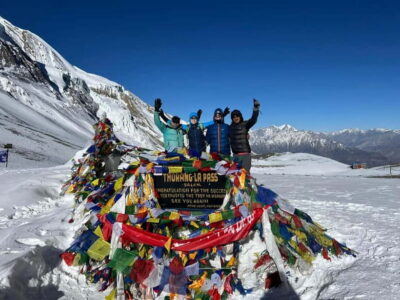
Browse the lists this tour appears in